Sodium Hypochlorite Generation

Custom Titanium Anodes for Sodium Hypochlorite Generators

We build MMO titanium anodes, matching cathodes and electrolysis electrode assemblies around your feed brine, available-chlorine target, current density, voltage, temperature, flow, duty cycle and cell geometry. You receive a titanium electrode that fits your electrolyzer and its real operating window, with an engineering review before you commit to a sample.

Have a generator drawing or an existing cell to match?

Titanium plate substrate prepared for an electrolysis electrode

Titanium Substrate

Plate, mesh, rod and fabricated forms cut and coated to your drawing, not a fixed catalogue size.

Brine Conditions Confirmed

Salt source, chloride concentration, pH, impurities and temperature.

Electrical Window Confirmed

Current density, total current, voltage, polarity and duty cycle.

Electrolyzer Geometry Confirmed

Active area, electrode count, spacing, mounting, flow and connections.

Output and Validation Defined

Available-chlorine target, solution concentration, test method and pilot plan.

On-Site Generation Process

From Brine to Sodium Hypochlorite: Four Stages That Shape Your Electrode

Every stage of on-site sodium hypochlorite generation changes what a titanium anode for electrochlorination has to withstand. Answering four questions up front gives you a quotation built on your process, fewer sample rounds, and an electrochlorination electrode sized for the duty it will actually see.

Salt crystals used to prepare brine for electrolysis STAGE 01

Water and Salt Preparation

What water source, salt type, brine concentration, filtration and pre-treatment will enter the electrolyzer?

Feed quality drives deposits and coating wear. Defining it first protects electrode life and keeps cleaning intervals predictable.

Water test strip being compared for chlorine, pH and hardness STAGE 02

Brine Condition Review

What chloride concentration, pH, temperature, hardness, impurities and normal operating range must be considered?

A known operating range lets us choose a coating direction with margin, instead of one tuned only for ideal conditions.

Electrodes running electrolysis of salt water STAGE 03

Electrolysis Cell and Electrodes

What current density, total current, voltage, active area, spacing, flow and connection arrangement will the cell use?

Matching active area and spacing to your rectifier keeps cell voltage and power use where your design expects them.

Chlorine level test kit used to check product solution STAGE 04

Product Solution and System Control

What available-chlorine output, solution concentration, operating cycle, monitoring method and acceptance test are required?

An agreed acceptance test means the sample is judged against your target output, not a generic catalogue claim.

An electrode cannot be selected from size alone. We review your complete process data before confirming the coating, geometry and cell interfaces, so you are not paying for a second sample round to correct a guess.

Share your brine and output targets, and we will propose the coating direction, geometry and interfaces for your review.

Send My Process Data
Inside the Electrolyzer

Inside a Sodium Hypochlorite Electrolyzer

Your output depends on more than the anode alone. The cathode, spacing, current distribution, brine flow, temperature, gas handling and power supply all shape the result, so we design each sodium hypochlorite generator titanium anode as part of your cell rather than as a loose part.

Electrolysis apparatus with electrodes immersed in electrolyte
ELECTROLYSIS IN ACTION

Simplified cell cross-section

BRINE IN PRODUCTOUTLET GAS OUT ANODE CATHODE SPACING 1 2 3 4

In a sodium hypochlorite generator, the coated titanium electrode supports the chlorine-evolution reaction. Under controlled system conditions, the active chlorine formed is converted into the hypochlorite solution your system doses. The four points below are where a well-matched electrode protects your output, your power budget and your maintenance schedule.

  1. 1

    Application-Matched Titanium Anode

    The coating direction and titanium form are evaluated against your brine chemistry, intended reaction, current load, temperature and operating cycle, so the anode suits the service interval you plan for.

  2. 2

    Matching Cathode and Electrode Pair

    Cathode material, geometry, polarity, spacing and assembly relationship are confirmed with the anode, so the pair installs as one set and you source both from one supplier.

  3. 3

    Active Area and Current Connections

    Dimensions, active area, holes, tabs, welding, busbar interfaces, current-feeding points and supports follow your equipment drawing. Even current feeding helps avoid local hot spots and uneven coating wear.

  4. 4

    Cell Flow and Maintenance Access

    Electrode count, spacing, inlet and outlet positions, flow direction, gas outlet, cleaning, disassembly and replacement access are defined before production, which shortens service work later.

The same outside dimensions do not guarantee the same electrochemical fit. Brine, reaction, electrical load, flow and validation conditions must be reviewed together.

Replacing an existing anode? Send photos of the old electrode and your cell drawing, and we will check the fit before quoting.

Request a Fit Review
Electrode Selection Inputs

Six Inputs That Define the Electrode and Cell Direction

Sodium hypochlorite generator electrode selection starts with your data, not with a catalogue. These six inputs decide the chlorine evolution titanium anode coating, its geometry and the cell layout. Supplying them early means your quotation reflects your real duty and your first sample has a better chance of passing your test.

Salt and Chloride Concentration

Provide the normal value, range, salt source and measurement basis.

Sets the coating direction and shows the deposit risk early.

Customer to provide

Current Density and Total Current

Provide the planned electrical load, active area or available test data.

Determines the active area your cell needs and how hard the coating works.

Customer to provide

Voltage and Power-Supply Limits

Provide the operating range, rectifier limits, polarity and connection arrangement.

Keeps the cell inside what your existing rectifier can deliver.

Customer to provide
System status · Project data review
Industrial control room console used to monitor a treatment process

Electrode direction: waiting for six inputs

  • Brine and chloride dataAwaiting data
  • Electrical load and voltage windowAwaiting data
  • Thermal, flow and geometry dataAwaiting data
  • Duty cycle and output targetAwaiting data

Unknown data can be marked for clarification. It should not be replaced with an unsupported assumption.

Temperature and Flow

Provide normal and peak temperature, flow rate, circulation method and inlet and outlet arrangement.

Shapes gas release, scaling risk and the coating's working conditions.

Customer to provide

Electrode Area and Spacing

Provide electrode count, active area, gap, mounting, supports and available installation space.

Confirms the assembly fits your housing without redesigning the cell.

Customer to provide

Duty Cycle and Target Output

Provide operating hours, start-stop frequency, available-chlorine target, solution concentration and test method.

Links the design directly to the output you have to guarantee.

Customer to provide

Missing one or two values? Send what you have, and we will flag what needs clarification before quoting.

Start My Data Review
Field Risk Alarm Log

Recognize the Alarm Before It Becomes a Field Failure

Most field complaints about a sodium hypochlorite generator appear as one of six alarms, and each one points to specific data. Reviewing that data with our engineers before you reorder shows whether the electrode, the brine or the cell needs to change, so your budget goes to the real fix.

ALARM 01Warning

Output Drift

Review
Brine concentration, current, temperature, flow, operating time, cell cleanliness and the output test method.
Your gain
Separating process causes from electrode causes avoids replacing anodes that are not the problem.
ALARM 02Warning

Rising Cell Voltage

Review
Electrode spacing, active area, connections, deposits, brine conductivity, temperature and current distribution.
Your gain
Catching it early limits extra power cost and keeps your rectifier away from its limit.
ALARM 03Critical

Premature Electrode Degradation

Review
Electrolyte impurities, current density, polarity, temperature, duty cycle, cleaning, deposits and coating suitability.
Your gain
Finding the root cause first means the replacement anode is specified to last, not just to fit.
ALARM 04Check

Scaling or Deposits

Review
Feed-water hardness, brine preparation, filtration, flow, temperature, local chemistry and cleaning history.
Your gain
Deposits are often solved upstream, which can save an unnecessary electrode change.
ALARM 05Critical

Connection Heating

Review
Welded tabs, conductor bars, contact area, fastening, current load, corrosion and busbar alignment.
Your gain
Correcting the connection design protects both the coating and your cell hardware.
ALARM 06Check

Sample-to-Batch Variation

Review
Drawing revision, coating requirement, dimensions, inspection points, identification, packaging and change record.
Your gain
A frozen specification keeps every repeat order performing like the sample you approved.
Electrical disconnect panels at a water treatment site

Data Required Before Root-Cause Review

Sending these records together lets our engineers judge the electrode, brine and cell side by side, so you get a clear answer instead of a guess.

  • Water and brine analysis
  • Current and voltage history
  • Temperature and flow
  • Cell drawing
  • Photos of electrodes and cell
  • Operating time
  • Cleaning record
  • Part number and batch reference

Seeing one of these alarms in the field? Send the operating history and photos, and we will help trace the cause.

Request a Root-Cause Review
Custom Electrode Assembly

Build the Electrode Assembly Around the Electrolyzer

Instead of adapting your cell to a standard part, we build the custom electrolyzer electrode assembly around your equipment. Each custom MMO titanium anode, cathode, frame and connection is defined from your drawing or sample, so the assembly drops into place and your service team can replace it without modification.

01

Coated Titanium Anode

Plate, mesh, expanded mesh, rod, tube or fabricated forms, developed around the active area and reaction you need.

02

Matching Cathode

Material, form, area, spacing, polarity and replacement relationship confirmed with the anode, so both parts are ordered as one set.

03

Current Connections

Welded tabs, conductor bars, busbar interfaces, current-feeding points, cable clearances and polarity marks that prevent wiring mistakes.

Electrolyzer stacks being assembled on a factory floor
ELECTROLYZER STACK ASSEMBLY
04

Frames and Supports

Custom frames, brackets, supports, stiffening, mounting holes and assembly features that hold spacing steady under flow.

05

Brine and Product Flow

Inlet, outlet, circulation, residence path, gas release, temperature and maintenance access planned with the electrode layout.

06

Replacement and Service Access

Disassembly sequence, cleaning access, spare-part identification and a repeat-order reference that makes reordering simple.

Start from whichever input you already have

Customer Drawing

The fastest route. We review your drawing and return comments on coating, tolerances and interfaces before quoting.

Existing Sample

Send a used or new electrode. We measure it and prepare a drawing for your approval, so the replacement matches the original.

Equipment Measurements and Photos

No drawing yet? Key dimensions and clear photos of the cell are enough for us to start a drawing proposal.

Final dimensions and interfaces are approved by you before sample production starts.

Ready to define your assembly? Upload a drawing, sample photos or cell measurements.

Upload My Drawing
Where Generators Run

One Electrolysis Principle, Different Equipment Requirements

The chemistry is the same in every on-site generator, but the duty is not. Each application changes the water, the output target, the operating cycle and the space available. We use your application to ask the right questions, then design the electrode around your answers.

On-Site Sodium Hypochlorite Generation System
Municipal water treatment plant with clarifier basins
MUNICIPAL

Municipal and Utility Water Systems

We define: target output, continuous or standby operation, water and salt preparation, redundancy, monitoring and replacement planning.

Electrodes planned around redundancy and scheduled replacement, so disinfection is not interrupted by a missing part.

Industrial cooling water tower system at a process plant
INDUSTRIAL

Industrial Process and Cooling-Water Systems

We define: process-water conditions, operating cycle, target dosing requirement, equipment integration and maintenance access.

An assembly that fits your existing skid and maintenance routine instead of forcing a redesign.

Indoor swimming pool and spa using treated water
POOL & LEISURE

Pool and Leisure-Water Systems

We define: salt concentration, equipment size, operating pattern, electrode replacement arrangement, connection and packaging.

Compact, easy-to-swap electrodes with packaging and labels ready for your distribution channel.

Food processing line where sanitation water is used
FOOD PROCESSING

Food-Processing and Equipment-Sanitation Systems

We define: water quality, target solution, validation requirement, cleaning, materials compatibility and system control.

Validation needs and material choices discussed before the sample is made, so your approval file is easier to build.

Aerial view of a wastewater treatment facility
WASTEWATER

Wastewater Disinfection Equipment

We define: feed conditions, required output, downstream process, control limits, maintenance and field environment.

Electrodes specified for variable feed conditions and outdoor field service, not only for clean test water.

Pilot plant skid used for process trials
PILOT & RETROFIT

Pilot, Replacement and Retrofit Projects

We define: the existing cell, old electrode, current and voltage history, failure observations, available space and test plan.

A drop-in replacement or upgrade for the cell you already own, with the old failure mode addressed.

The application category guides the questions. It does not define the electrode without actual operating data.

Tell us where your generator will run, and we will send the questions that matter for that application.

Discuss My Application
Engineering Handoff

Prepare One Complete Engineering Handoff

Send one complete data package instead of answering questions one email at a time. Your engineering, purchasing and quality teams can work from the same list, which shortens the path from first contact to an approved quotation. Copy any list below and fill it in with your values and units.

ZONE A

Water and Brine

  • Application
  • Water source
  • Salt source
  • Brine preparation
  • Chloride concentration
  • pH
  • Temperature
  • Hardness
  • Impurities
  • Filtration

Lets us judge coating suitability and deposit risk at the first review.

ZONE C · CENTRE OF THE HANDOFF

Electrode and Cell Drawing

SPACING CELL LENGTH
  • Anode and cathode form
  • Active area
  • Dimensions
  • Count
  • Spacing
  • Mounting
  • Tabs
  • Welding
  • Busbar
  • Flow
  • Gas outlet

Accepted inputs

  • PDF drawing
  • DWG / DXF
  • STEP / IGS
  • Photos with a ruler in frame
  • Hand sketch with key dimensions

The drawing ties every other zone together and becomes the reference for your sample and repeat orders.

ZONE B

Electrical Window

  • Current density
  • Total current
  • Voltage range
  • Polarity
  • Rectifier limits
  • Duty cycle
  • Daily operating hours

Sizes active area and connections to the power supply you already have.

ZONE D

Output and Validation

  • Available-chlorine target
  • Solution concentration
  • Test method
  • Acceptance criteria
  • Sample plan
  • Pilot conditions

Agreed up front, so the sample is judged against your own criteria.

ZONE E

Quantity and Delivery

  • Sample quantity
  • Repeat demand
  • Delivery country
  • Target date
  • Labels
  • Packaging
  • Requested documents
  • NDA requirement

Gives you a realistic lead time and a quotation that already includes labels and documents.

Have the lists ready? The guided inquiry form below follows the same order, so nothing gets missed.

Use This Checklist in the Inquiry Form
Batch Identity and Packaging

Keep the Approved Electrode Identity Connected to Every Repeat Order

Each approved electrode receives a product passport and a defined packaging build. Your buyers can reorder by part number, and your receiving team can check every delivery against the same record.

PRODUCT PASSPORT

Created at sample approval · used for every repeat order

Part Number
Your reference or an ARY reference, linked to the approved drawing.
Drawing Revision
The exact revision released for production.
Electrode Identity
Anode or cathode position, polarity, titanium form, active area and quantity.
Inspection Points
Dimensions, flatness, welding, connection, surface, identification and agreed project checks.
Packaging Requirement
Surface separation, fixed position, anti-bending support, labels and outer-package information.

Reorder by part number, and the same drawing, checks and packaging follow automatically.

Packed cartons stored in a warehouse before export
PACKAGING CROSS-SECTION

Five protection layers, from the coated surface outward

5 · Outer Packaging
4 · Part Identification
3 · Impact and Bending Protection
2 · Part Fixing
1 · Coated-Surface Separation
Your coated titanium electrode

Any change to the drawing, coating requirement, connection, inspection, label or packaging is communicated to you before repeat production, so nothing changes without your approval.

Need neutral packaging or your own part numbers on the labels? Tell us when you request the quote.

Specify My Labels and Packaging
Working With ARY Titanium

One Project Interface from Technical Review to Repeat Delivery

You work with one team that connects engineering, purchasing, quality and production. Each question is answered by the people who own it, and you can see where your project stands at every stage, from NDA to export delivery.

Project team reviewing technical notes at a desk

Who you are working with

ARY Titanium is the customer-facing titanium electrode brand of Guangdong Lezhong Intelligent Technology Co., Ltd., based in Foshan, Guangdong, China. We combine manufacturing, sourcing, sales and export communication for coated titanium electrodes, custom titanium components and electrochemical equipment parts.

  • Foshan, Guangdong, China
  • Integrated manufacturing and trading capability
  • Approximately 100 employees
Communication chain
Project stages you can track
  1. 1NDA or Confidentiality
  2. 2Drawing Review
  3. 3Sample
  4. 4Pilot Batch
  5. 5Repeat Production
  6. 6Protective Packaging
  7. 7Export Delivery

Each stage has a named owner and a record, so you always know what is complete and what is next.

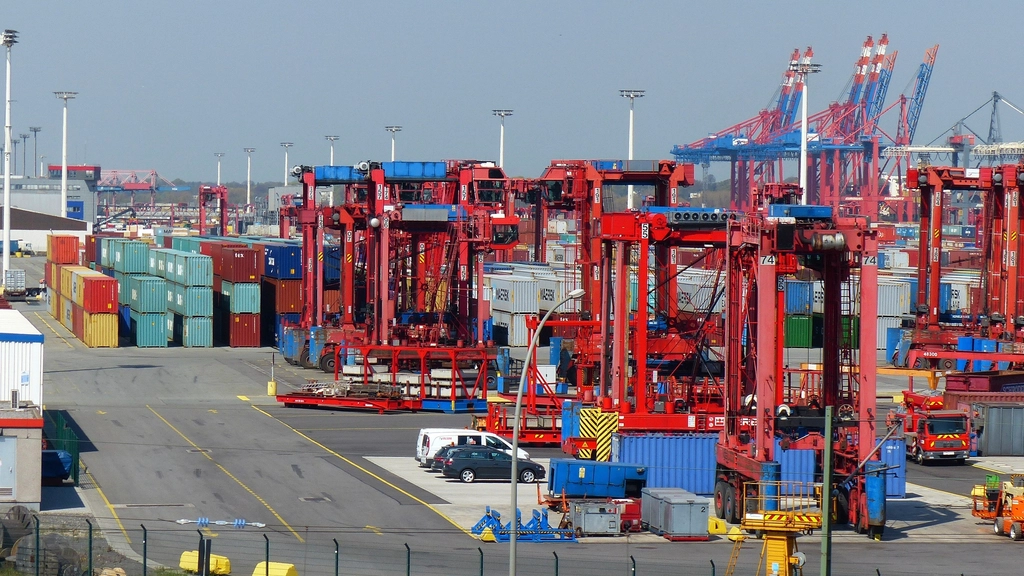
Container port cranes loading export shipments

Export delivery to customers worldwide

Our team already prepares documents, labels and protective packaging for customers in these markets, so your shipment follows a routine that works.

  • United States
  • India
  • Germany
  • Australia
  • United Kingdom
  • United Arab Emirates
  • Saudi Arabia

Need confidentiality before sharing drawings? Request an NDA first, then send your files once it is in place.

Request an NDA
Frequently Asked Questions

Technical Resources for Sodium Hypochlorite Generator Builders

Short answers to the questions engineers and buyers ask most while specifying an MMO titanium anode for on-site generation. Use them to prepare your data, then ask us for a review of your own project.

Laboratory flasks holding test solutions

Terms used on this page

The same words mean the same thing in our quotations, drawings and inspection records, which keeps both teams aligned.

  • MMO titanium anode
  • Mixed metal oxide anodes
  • Electrolysis electrode
  • Chlorine evolution
  • Current density
  • Active area
  • Available chlorine
  • Electrode spacing

Link the coating direction to the brine, target reaction, current load, temperature and cell design. Mixed metal oxide anodes for chlorine evolution are chosen differently from those for oxygen evolution, so the brine and operating window need to be known first. Sharing these early helps you avoid a sample that works in a short lab test but wears quickly in service.

Current density, total current, active area, electrode count and current-feeding design should be reviewed together. For the same total current, a larger active area lowers current density, which changes the load on the coating and the cell voltage. Reviewing them together lets us size the electrode to your rectifier instead of asking you to change the power supply.

Chloride concentration, hardness, pH, temperature, filtration, known impurities and the brine-preparation method. These values reveal deposit and contamination risks that can shorten electrode life, and they let us point out pre-treatment needs before you invest in samples.

Spacing, brine conductivity, deposits, geometry, connections and current distribution all influence electrical behavior. A narrower gap can lower voltage but may raise gas-release and flow concerns, while deposits and poor connections push voltage up. Reviewing these points together helps keep your power consumption predictable.

Confirm the deposit type, the cleaning method and chemicals, and how the coated surface will be supported and protected while it is handled. Coated surfaces can be damaged by scratching or unsuitable cleaning, so an agreed procedure protects the electrode you have invested in.

Check brine concentration, electrical data, flow, temperature, deposits, polarity, connections, cleaning practice and operating history before concluding that the electrode is worn. Many declines have process causes, so working through this checklist helps you avoid replacing parts that are still serviceable.

Need a project-specific answer? Submit your actual operating data and drawing.

Submit My Data for Review