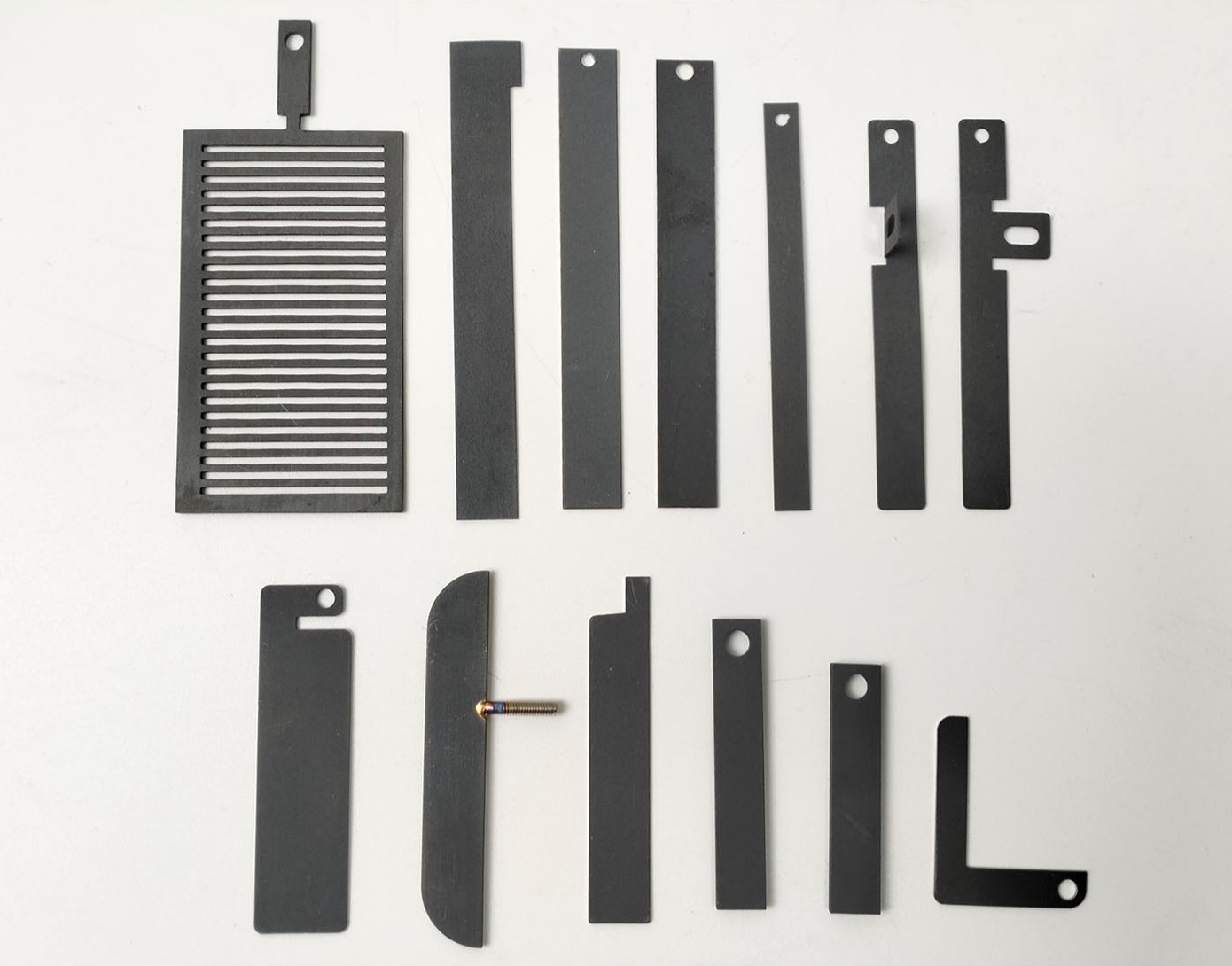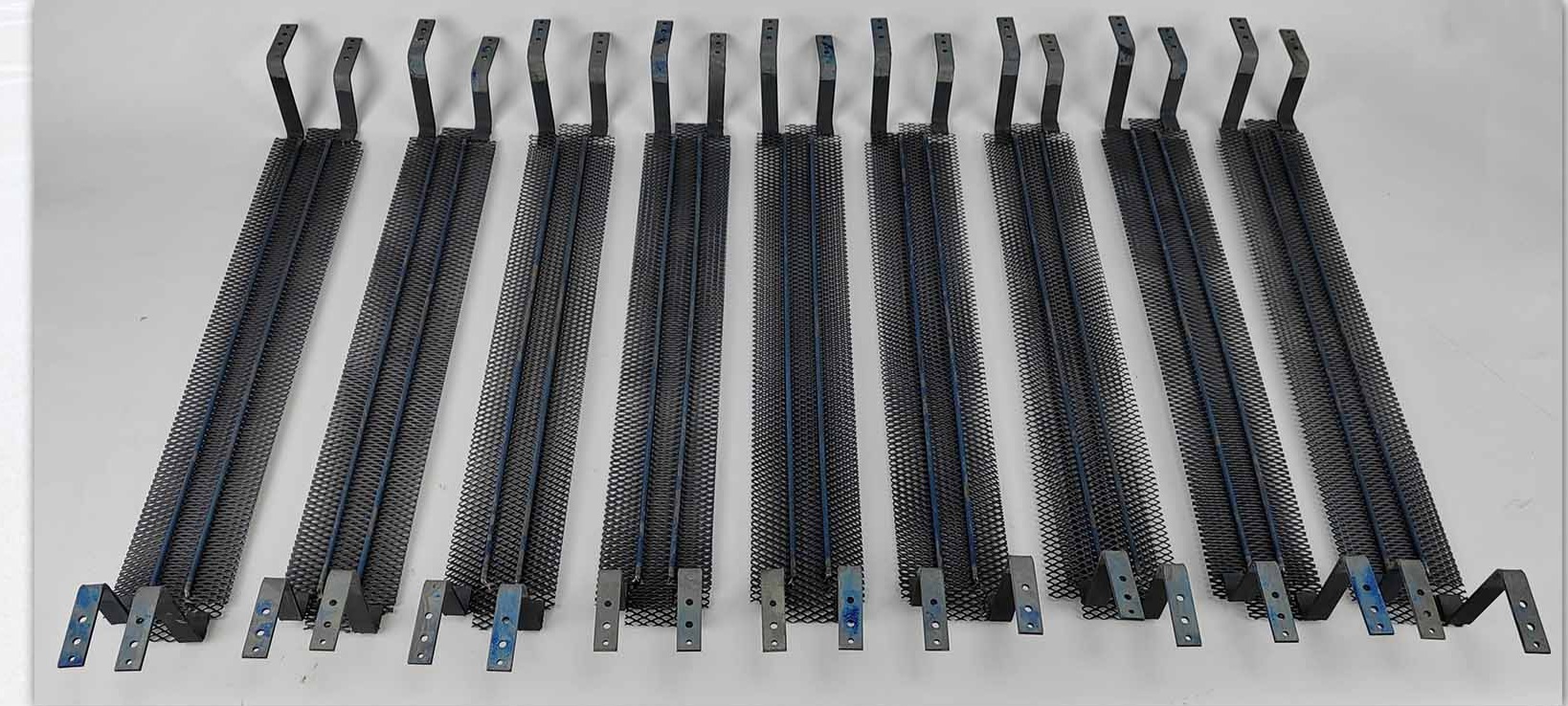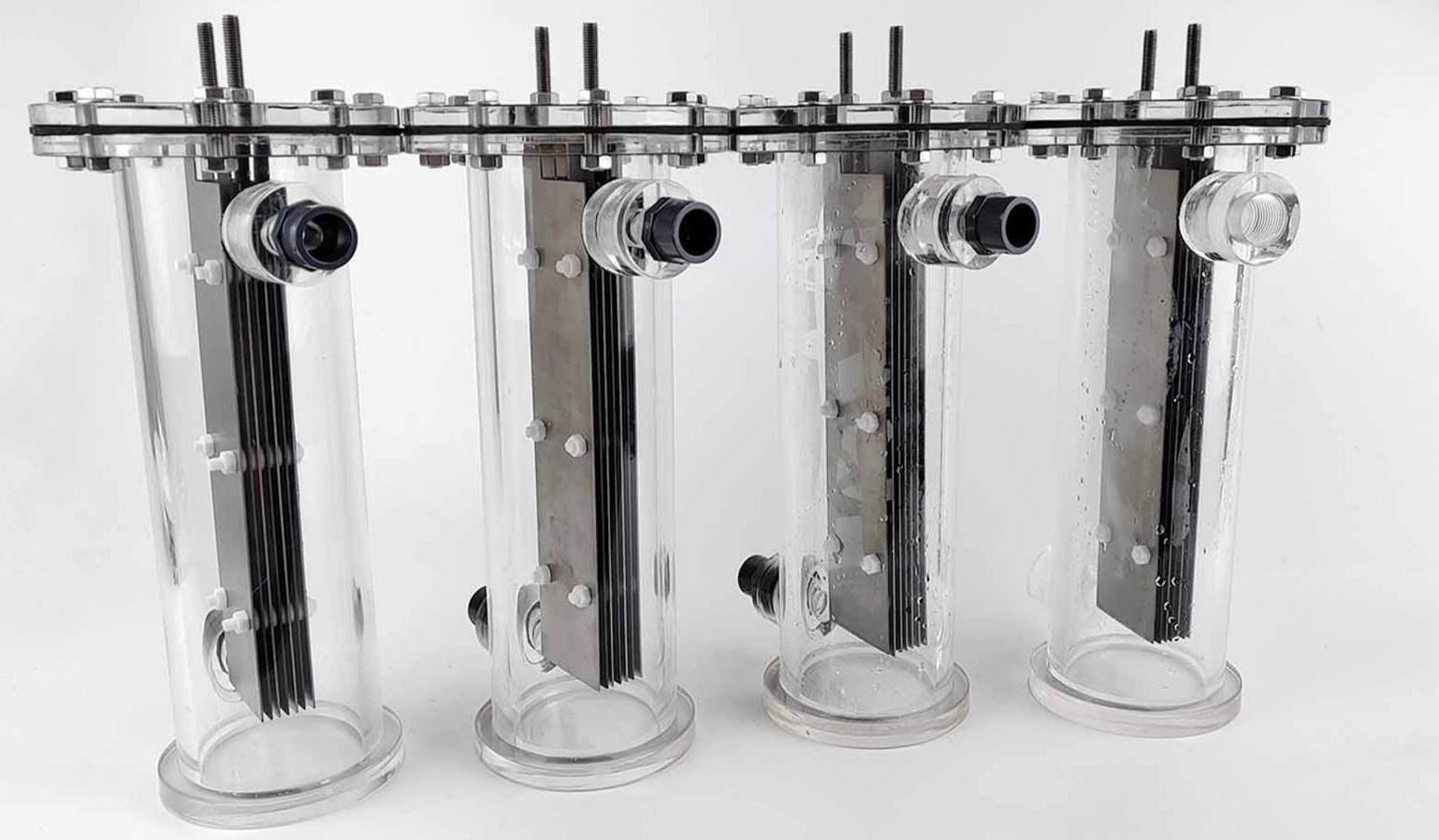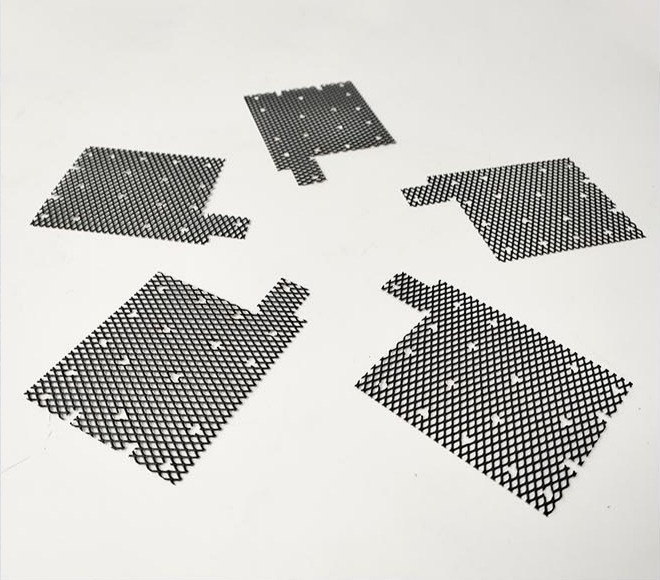
Illustration of MMO-coated titanium mesh, plate, rod and tubular anodes
MMO Titanium Anodes · Foshan, China

MMO Titanium Anodes for Chlorine and Oxygen Evolution

ARY Titanium manufactures MMO-coated anodes in plate, mesh, rod, tube and custom forms. Coating and dimensions are specified for your electrolyte and cell.

Share your operating data and drawing to discuss coating, connections and sample requirements.

Coating and Reaction

Coating Families for Chlorine and Oxygen Evolution

Start with the reaction you need at the anode. Electrolyte composition and electrical load then narrow the coating options.

Process conditions to share

  • Electrolyte
  • pH
  • Temperature
  • Current density
  • Duty cycle
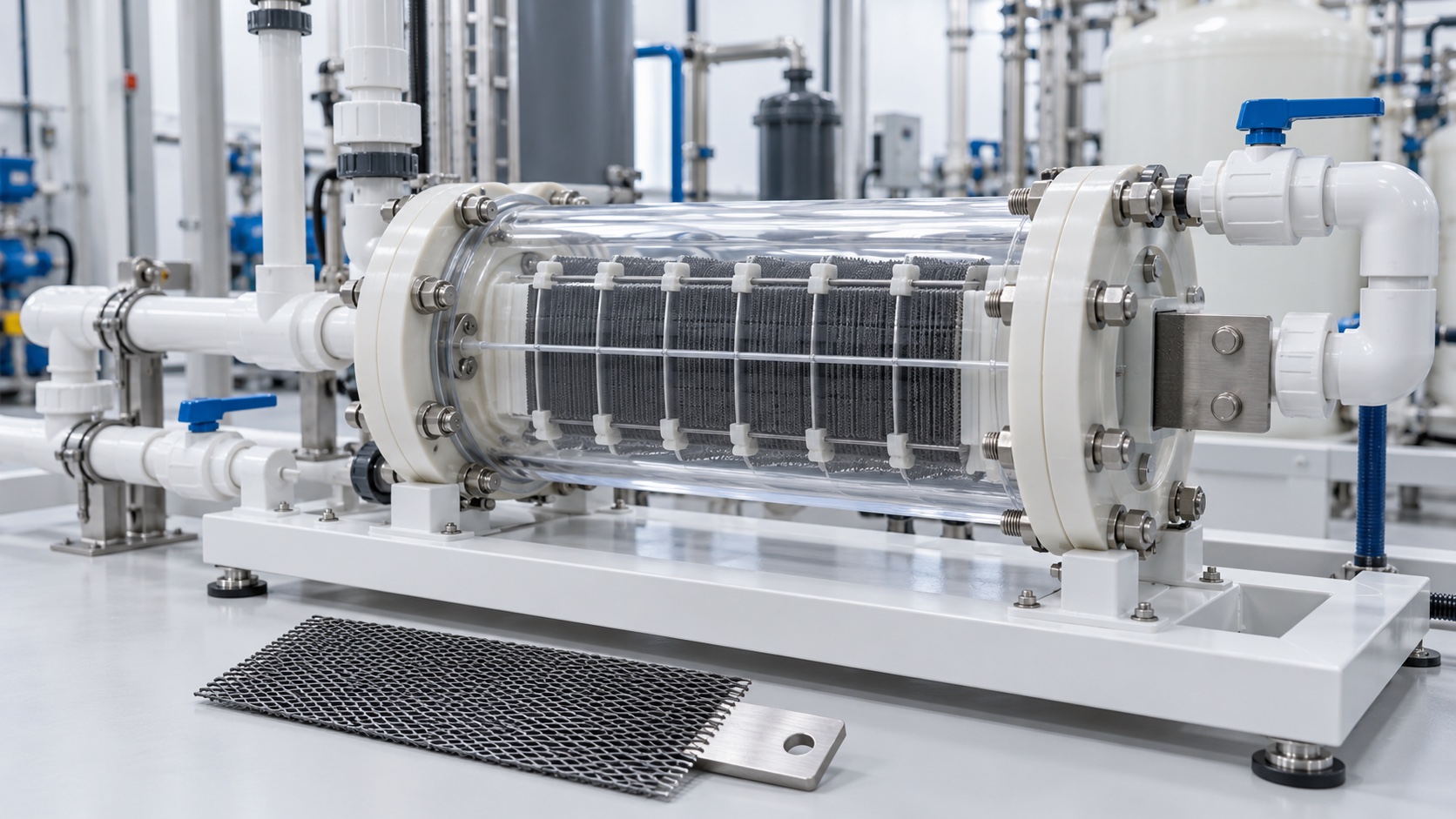
Application illustration of an enclosed chloride electrolysis cell with MMO titanium electrodes Chloride Electrolysis

Chlorine Evolution

For chloride electrolysis targeting chlorine or hypochlorite. Share the brine composition and duty.

Coating family
Ruthenium-iridium mixed oxides for evaluation in chloride electrolysis.
Conditions to specify
Chloride concentration, current density, flow and any polarity reversal.
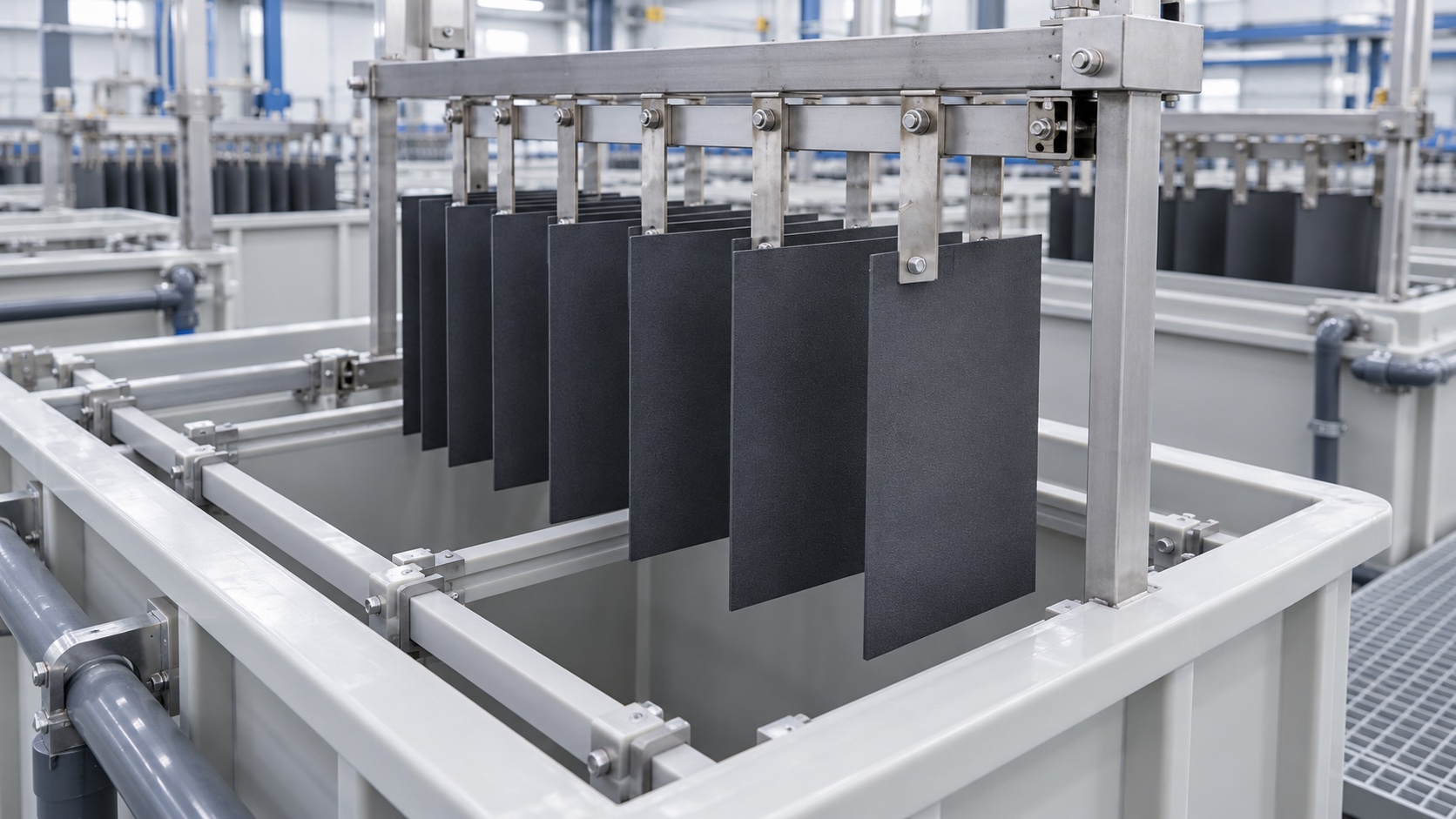
Application illustration of MMO-coated titanium plate anodes above an electroplating or electrowinning tank Electroplating & Electrowinning

Oxygen Evolution

For metal plating and recovery processes where oxygen is the intended anodic product. Share the bath chemistry and operating conditions.

Coating family
Iridium-tantalum mixed oxides for evaluation in oxygen-evolution duty.
Conditions to specify
Main salts, additives, temperature and operating current.

Anodic reactions can overlap. Chlorine and oxygen evolution can compete in chloride-containing electrolytes. Include the intended product, electrolyte and duty in your specification.

Have a process sheet or electrolyte analysis?

Send Your Process Data
Construction Details

MMO Titanium Anode: Titanium Substrate, Oxide Coating and Connections

An MMO anode has a titanium substrate with an active mixed-oxide coating. Specify its form, coated area and connection against the cell drawing.

  1. Titanium substrate

    Choose plate, mesh, rod, tube or a custom profile for the cell geometry; include dimensions on the drawing.

  2. Mixed-oxide coating

    Ruthenium-iridium and iridium-tantalum oxide families cover different anodic duties. Selection depends on electrolyte chemistry and electrical load.

  3. Coating coverage

    Show fully or partially coated surfaces and any uncoated connection zones on the drawing.

  4. Form and mounting

    Mark cut-outs, fixing holes, clearances and formed tabs in the equipment drawing.

  5. Electrical connection

    Specify the terminal arrangement and whether a titanium-clad copper conductor is required.

Manufacturing stages

  1. Substrate pretreatment
  2. Coating preparation and application
  3. Thermal decomposition / oxidation

Send a drawing with substrate dimensions, coating coverage and terminal details.

Discuss Your Drawing
Inquiry Checklist

Details for an MMO Titanium Anode Specification

A process sheet, equipment drawing or photos of the existing anode can answer many of these questions. Share available data and mark unknown values.

  1. Application and target reaction

    Name the electrochemical process and intended anodic reaction, such as chlorine or oxygen evolution.

  2. Electrolyte composition and pH

    List the main constituents, concentrations, pH range and known impurities or additives.

  3. Temperature and duty cycle

    Give the normal operating temperature, run schedule, start-stop pattern and any polarity reversal.

  4. Operating current and active area

    Share current and active electrode area; add the current-density range if known.

  5. Dimensions, coated area and terminals

    Attach a drawing with overall dimensions, coated faces, mounting points and terminal positions.

Turn process data into a sample specification

Use these inputs to define a candidate coating, geometry and test conditions before evaluating a sample in your equipment.

Share Your Application Data
Operating Data

Operating Conditions for an MMO Anode Specification

Use this matrix to organize process data and design questions for your project. Share measured values, operating limits and unknowns.

MMO titanium anode assembly reference image for operating-window review

Start with the Process Conditions

A coating suited to one electrolyte may not suit another. Provide the chemistry and electrical load together.

Coordinate the Cell Design

Coating coverage, active area, spacing and terminals need to fit the equipment drawing.

Plan Validation and Upkeep

Record flow, cleaning method and duty cycle so the plan reflects actual operation.

ParameterCoating discussionCell geometryElectrical connectionValidation dataOperation and maintenance
ElectrolyteCompare families against chemistry.Note flow path and gap.Note wetted contact materials.Log pH and impurities.Note scale and cleaning.
Current densityRelate current to area.Set active area.Specify conductor size.Log current and voltage.Track current and voltage.
VoltageAssess anode potential under load.Note gap and flow path.Specify contact details.Log cell voltage.Track voltage trend.
TemperatureShare temperature range.Allow for cell clearance.Note terminal materials.Test across the specified range.Record cooling limits.
Duty cycleState run and reversal duty.Show the cell layout for reversal.Include peak and reverse current.Define validation cycle.Log reversal schedule.
FlowShare flow rate and direction.Specify mesh opening and direction.Specify mesh support.Plan a test at process flow.Note deposits and clogging.
CleaningList cleaning method and agents.Allow cleaning access.Protect contacts during cleaning.Include cleaning in validation.Log method and frequency.
Acceptance criteriaState output targets.Set dimensional and fit limits.Define connection criteria.Agree pass/fail measures.Set inspection triggers.

Use the matrix to identify missing data, agreed limits and validation inputs.

Start with a specification, log or drawing; add missing data later.

Share Your Operating Data
Substrate Forms

Titanium Forms for MMO Anodes

Specify plate, mesh, rod, tube or a custom shape to suit your cell. Send the drawing and operating data to review dimensions, connections and coating zones.

MMO coated titanium plate form with a connection tabPlate

Plate Anode

Flat titanium substrate for parallel-electrode cells and plate stacks.

  • Geometry: Set spacing, flatness and active area on the drawing.
  • Flow access: Show flow direction and clearance at each coated face.
  • Connection: Mark a tab, stud or titanium-clad copper connection.
MMO coated titanium mesh form with a terminal connectionMesh

Mesh Anode

Open titanium substrate for cells that need through-flow or gas release.

  • Geometry: Specify mesh type, opening, strand size and orientation.
  • Flow access: Check flow, gas path and supports against the cell layout.
  • Connection: Show the frame, conductor bar and terminal details.
Expanded titanium mesh formExpanded Mesh

Expanded Mesh Substrate

Diamond openings; specify strand width, opening and orientation.

  • Geometry: Set opening, strand width and orientation on the drawing.
  • Flow access: Review clearance for flow and gas release.
  • Connection: Mark the ribs, frame and terminal details.
Titanium rod substrate form among plate, mesh and tube formsRod

Rod Anode

Rod substrate for narrow or tubular cell layouts.

  • Geometry: Set diameter, length and gap to the counter-electrode.
  • Flow access: Specify flow direction and support spacing.
  • Connection: Show thread, weld or other terminal detail.
Titanium tube substrate formTube

Tube Anode

Hollow titanium substrate. Identify the surface to be coated for a feasibility check.

  • Geometry: Set inner and outer diameters and identify the coated surface.
  • Flow access: Show the flow path, clearance and end features.
  • Connection: Specify flanges, welds or other connection details.
Custom titanium basket and mesh assembly formCustom

Custom Fabricated Form

Custom shapes or assemblies are specified from the project drawing.

  • Geometry: Define bends, clearances, frame size and tolerances.
  • Flow access: Place openings and supports around the required flow path.
  • Connection: Mark electrical feed points and terminal details.

Choose by application: Use the cell drawing and operating data to choose a form. Plate, mesh, rod and tube can be combined in a custom assembly when specified.

Send the cell drawing for a geometry and connection review.

Review My Drawing
Applications

Start With Reaction and Cell Design

Share the electrolyte, target anodic reaction, current, temperature, duty cycle and cell layout to evaluate substrate form and coating direction.

Water-treatment electrolysis equipment imageChloride chemistry

Water Treatment and Disinfection

For electrochemical disinfection, share feed-water chemistry, target species, flow and required output.

Electrolyte
Water chemistry
Reaction
Target disinfectant / oxidant
Electrical
Current and duty cycle
Geometry
Plate or mesh
Validation
Measure target species at set flow
Explore Water Treatment
Sodium hypochlorite generation equipment imageChloride chemistry

Sodium Hypochlorite Generation

For brine electrolysis, share salt concentration, flow, output target and operating schedule.

Electrolyte
Brine concentration
Reaction
Chlorine / hypochlorite
Electrical
Current, voltage and duty
Geometry
Cell layout and electrode spacing
Validation
Measure available chlorine and energy use
Explore Hypochlorite Systems
Pool salt chlorination equipment imageChloride chemistry

Pool Salt Chlorination

For saltwater pool cells, provide salinity, cell dimensions, cleaning practice and polarity-reversal schedule.

Electrolyte
Pool-water salinity
Reaction
Chlorine evolution
Electrical
Current and reversal schedule
Geometry
Plate spacing and cell format
Validation
Check output and scale after cleaning
Explore Pool Water Treatment

Target anodic reactionChloride chemistry above; oxygen and mixed duties below

Electrodialysis and descaling equipment imageMembrane and scale control

Electrodialysis and Descaling

For membrane or scale-control cells, share water chemistry, flow, membrane layout and polarity schedule.

Electrolyte
Water and electrode-rinse chemistry
Reaction
Anodic reaction to confirm
Electrical
Continuous or reversing duty
Geometry
Plate or mesh to cell layout
Validation
Agree a process-specific test measure
Explore Electrodialysis
Electroplating and metal-recovery equipment imageOxygen-related use

Electroplating and Electrowinning

For metal deposition or recovery, share bath chemistry, current, active area and product criteria.

Electrolyte
Bath composition and pH
Reaction
Confirm from bath chemistry
Electrical
Record current and current density
Geometry
Plate or mesh to tank layout
Validation
Track cell voltage and deposit criteria
Explore Metal Recovery
Cathodic-protection and electrochemical equipment imageCustom duty

Impressed Current Cathodic Protection

For ICCP systems, share the protected structure, surrounding medium, current demand and installation constraints.

Electrolyte
Soil, seawater or process water
Reaction
Confirm anodic duty at site
Electrical
Current demand and duty cycle
Geometry
Anode and connection drawing
Validation
Agree site measurement criteria
Explore Cathodic Protection

Form, coating direction, output and service life depend on the electrolyte, operating window, cell layout and validation results.

Not sure which path fits? Send the process name, electrolyte and cell drawing.

Discuss Your Application
Project Specification

Project Details for an MMO Anode Quote

Share what you know across these six areas to start a technical review and quotation. Use a drawing, process sheet or current-anode photos to fill in details.

MMO anode project documentation image
MMO Anode Buyer ChecklistQuote DetailsFile Handling

What to Share for a Quote

List available values, drawing details and order needs. Confirm the specification before a quotation is prepared.

01

Electrolyte and Anodic Duty

  • Main ions and concentrations
  • pH and known additives
  • Target product (Cl₂ / O₂ / other)

Starts the chemistry and reaction review.

02

Electrical and Thermal Conditions

  • Current and current-density range
  • Cell voltage and temperature range
  • Continuous, intermittent or reversing

Defines the electrical and thermal limits.

03

Substrate Form and Dimensions

  • Plate, mesh, rod, tube or custom
  • Active area and coated sides
  • Overall size and tolerance

Defines the part geometry and coated area.

04

Mounting and Electrical Connections

  • Terminal type and position
  • Busbar or conductor material
  • Sealing or insulation requirements

Checks fit and the current path.

05

Output and Validation Criteria

  • Output target or process measure
  • Test method or acceptance criteria
  • Service-life target for evaluation

Sets project test and acceptance goals.

06

Quantity, Files and Delivery

  • Sample or order quantity
  • Drawing (PDF / DWG / STEP)
  • Destination and confidentiality request

Records quantity, files, delivery and handling needs.

Have a drawing or process sheet? Start with the details available and flag missing values for review.

Start the Inquiry
Troubleshooting Records

Record the Symptom Alongside Operating Data

Collect photos and operating records that describe what changed. Compare readings from similar operating conditions where available.

Coated titanium anode surface image

Observation 01

Coating or Surface Change

Note colour, dull areas, deposits or exposed substrate with the electrolyte and cleaning history.

Records to collect

  • Electrolyte / pH
  • Deposits or scale
  • Cleaning record
Used titanium electrode measurement image

Observation 02

Higher Cell Voltage

Compare voltage readings at similar current; include temperature and connection records.

Records to collect

  • Current at reading
  • Cell temperature
  • Voltage log
Electrolysis output-review image

Observation 03

Lower Process Output

Record measured output with flow, electrolyte concentration, setpoints and instrument calibration.

Records to collect

  • Flow rate
  • Electrolyte concentration
  • Setpoint and calibration
Titanium connection and welding image

Observation 04

Warm or Discoloured Connection

Note terminal temperature under load, contact area, connection details and the current reading.

Records to collect

  • Connection details
  • Contact surface
  • Current and load
Titanium electrode geometry-check image

Observation 05

Physical Damage

Photograph bends, cracks or short-circuit marks; note handling, electrode gap and support layout.

Records to collect

  • Handling record
  • Electrode gap
  • Support layout

For a focused review: Send photos, operating logs, electrolyte details, electrode dimensions, cleaning history and recent process changes. These records help narrow the investigation before ordering a replacement or changing the design.

Share the used anode photos and operating records for comparison.

Send Photos and Data
Sample to Repeat Order

From Drawing Review to Repeat Orders

Use the project drawing, sample observations and revision record to keep engineering and purchasing aligned. Agree quantities, inspection scope and order references at each stage.

Customer drawing review with calipers and micrometer during MMO anode sample planningProject Record
Revision
Technician preparing an MMO titanium mesh anode sampleEngineering & Revision Record

Project Brief

Provide: cell layout, electrolyte and target reaction. Attach: drawing or sketch with operating data.

1V0

Drawing Check

Check reaction, coated area and connections against the drawing before sampling. Next: agree sample quantity and scope.

Sample Fit

Check on receipt: dimensions, fit and terminal position. Quantity: confirm before the sample order.

2V1

Sample Build

Build to the confirmed drawing and process scope. Agree inspection items and records in the sample quality plan.

Operating Test

Log: voltage, output, temperature and visible surface changes under the test conditions. Share: your readings and test notes.

3V1.x

Design Revision

Use test records to decide whether to change coating loading, mesh geometry or connections. Approve the next drawing revision before another build.

Pilot Batch

Review: fit and operating records from the agreed cells or sites. Record: differences and follow-up items.

4V2

Pilot Build

Build against the approved drawing and agreed process scope. Confirm inspection items before shipment.

Repeat Order Review

Confirm: the drawing revision, part number and any requested changes before placing a repeat order.

5Current

Order Reference

Keep the approved drawing revision, process scope and part number together. Raise changes before the next order.

Engineering and Purchasing Checkpoints

Review these four checkpoints before sampling and repeat supply.

Industrial water treatment skid with titanium electrode cells

Drawing input: Provide electrolyte and target reaction; mark active area and terminal positions on the drawing.

Engineering reviewApplication and fit
Automated electroplating line with titanium anode tanks

Inspection plan: Agree dimensions, tolerances and documents against the active drawing revision.

Quality reviewDrawing and inspection scope
Commercial saline chlorinator titanium cell installation

Operating test: Log voltage, output, temperature, duty cycle and any polarity reversal during validation.

Test recordsOperating data log
Industrial wastewater electrochemical oxidation treatment unit

Delivery plan: Confirm packing, labels, destination and order quantity against delivery requirements.

Purchasing reviewDelivery and repeat-order details

Have a drawing and test brief ready?

Discuss a Sample Scope
Quality Planning

Set Inspection Criteria Before a Repeat Order

Use the approved drawing to define checks for titanium grade, surface preparation, MMO coating, dimensions, connections, marking and packing. List the tolerances and records needed before production.

Inspector recording an approved MMO titanium anode sample with precision gauges

Approved Sample

Inspection workstation reviewing a production batch of titanium anodes

Production Inspection Plan

  • Titanium grade and material records requiredMaterialCompare material records with the purchase specification
  • Surface-preparation method and appearance criteriaSurface PreparationCheck against the agreed preparation criteria
  • Coating family, coverage and specified process checksCoatingDocument the coating checks agreed for the order
  • Drawing dimensions and tolerances for inspectionDimensionsMeasure specified features against the current drawing
  • Weld locations, joint method and fit requirementsWeldingRecord visual and fit checks when specified
  • Terminal type and contact area shown on the drawingConnectionsCheck terminal position and contact against the drawing
  • Part number, drawing revision and marking formatIdentificationMatch labels and marks to the order documents
  • Surface protection, labels and delivery instructionsPackingCompare packing with the shipping instructions

Out-of-Limit Results

Record the measurement and discuss disposition before release or installation.

Drawing Revision and Change Log

Keep the drawing revision, part number and inspection scope together for engineering and purchasing.

Material documents, inspection records and witness checks depend on the order. List required records and witness points so their availability can be addressed in the quotation.

Planning checks for a repeat order?

Set the Inspection Plan
Manufacturing and Supply

From Titanium Substrate to Finished MMO Anode

Based in Foshan, ARY Titanium supports custom electrodes, sample development and repeat production. These stages connect substrate preparation, coating and assembly with inspection and shipment. The sequence and process requirements depend on the design.

Foshan, GuangdongBased in China
About 100 staffCompany team
Custom / OEM / ODMCustom electrode projects
Manufacturing and tradingIntegrated supply
  1. Industrial cutting and machining of titanium plate for anode substrates
    Step 1

    Substrate Shaping

    The titanium substrate is cut and formed to the specified dimensions, mounting features and clearances.

  2. Surface-preparation equipment for titanium substrates
    Step 2

    Preparing the Titanium Surface

    The substrate surface is prepared before coating. The preparation method depends on the material and coating route.

  3. Coating application equipment for mixed metal oxide anodes
    Step 3

    MMO Coating Application

    The selected coating is applied to the defined active area. Connection zones can remain uncoated as shown on the drawing.

  4. High-temperature furnace for titanium anode coating cure
    Step 4

    Thermal Decomposition and Oxidation

    Thermal decomposition and oxidation convert the applied coating compounds into the active oxide layer.

  5. Technicians assembling and welding custom titanium anodes
    Step 5

    Connections and Assembly

    Frames, tabs and conductors follow the assembly drawing. The welding and coating sequence depends on the design.

  6. Inspection workstation reviewing coated titanium anode samples
    Step 6

    Specified Inspection Checks

    Dimensions, coated areas and connection details are checked against the inspection criteria agreed for the order.

  7. Finished titanium electrode assemblies prepared for protective packing
    Step 7

    Packing for Transport

    Packing is specified to separate coated faces and support the anode during handling and transport.

  8. Protective export crate prepared for titanium anode shipment
    Step 8

    Shipping Preparation

    Shipping instructions cover the destination, labels, required documents and delivery terms.

Supply from FoshanCountries we have supplied
  • United States
  • Germany
  • United Kingdom
  • India
  • Australia
  • United Arab Emirates
  • Saudi Arabia

Send your drawing, quantity and delivery destination to discuss production.

Discuss Production Requirements
Specification Builder

Outline Your Custom MMO Anode

Choose the details you know and add them to the inquiry. Use the drawing and operating data to define the final specification with the project team.

Engineers reviewing operating conditions for an OEM electrolysis projectStep 1

Operating Conditions

Choose the closest electrolyte type. Add concentration, pH, current and temperature in the inquiry where known.

Illustrative engineering discussion with technical drawingsStep 2

Coating Preference

Select a coating preference or choose Please advise. Add the electrolyte and target reaction.

Custom titanium electrode forms laid out for geometry reviewStep 3

Titanium Substrate Form

Choose a form, then give dimensions, active area, coated sides and mounting details on the drawing.

OEM modular electrolytic cell assembly with titanium electrode connectionsStep 4

Mounting and Electrical Connections

Choose a connection concept. Mark terminal position, contact area, mounting and sealing details on the drawing.

Sample electrode set under validation testing at a test stationStep 5

Sample and Inspection Plan

Select the project stage and note the test conditions, sample quantity and inspection points to discuss.

MMO titanium anodes packed in labelled export crate for repeat OEM supplyStep 6

Quantity and Supply Plan

Choose one-off or repeat supply. Add the part number, drawing revision, packing and destination.

Selected Project Preferences

0 of 6 details selected
  • ConditionsNot specified
  • CoatingNot specified
  • FormNot specified
  • ConnectionNot specified
  • ValidationNot specified
  • SupplyNot specified

Choose an option above or enter the project details below.

Add Selected Preferences to Inquiry

Engineering Reference

MMO Titanium Anode Engineering Reference

Prepare an inquiry around coating direction, operating data, titanium geometry, application fit and anode symptoms.

Common Questions

Select a question to read the answer.

What is an MMO titanium anode?

It consists of a titanium substrate with an active mixed metal oxide coating. Shape, coated area, connection and coating direction depend on the electrolyte, target anodic reaction and equipment.

How do Ru-based and Ir-based coatings differ?

Ruthenium-iridium oxide coatings are commonly considered for chlorine evolution in chloride media; iridium-tantalum oxides are commonly considered for oxygen evolution. These are starting points. Electrolyte chemistry, current density, temperature and duty determine which formulation needs testing in your cell.

What affects the service life of an MMO anode?

Service life varies with current density, electrolyte composition and impurities, temperature, flow, cleaning and duty cycle. Use operating records and a test under intended conditions to set a project-specific service target.

Is recoating possible for a used MMO anode?

Recoating may be possible if the titanium substrate and connections remain suitable. Share photos, dimensions, operating history and contamination details for a feasibility assessment before assuming the anode can be reused.

Can MMO anodes operate with polarity reversal?

Include reversal frequency, current, timing and duty in the specification. These conditions affect the reaction and electrode arrangement, so suitability must be evaluated for the intended cycle and cell.

How are price and quantity determined?

Quote scope depends on the drawing, titanium form, coating direction, dimensions, connections, inspection requirements, packing, destination and requested quantity. Include sample, pilot or production quantities where available.

What details help prepare a quotation?

Provide the application, target reaction, electrolyte and pH, current or current density, temperature, duty, dimensions, active area, titanium form, connection and quantity. A drawing or current-anode photos help define fit.

Can I discuss confidentiality before sharing a drawing?

Yes. Request a confidentiality discussion before sending detailed drawings or process data. Agree on file handling and any required arrangements before sharing sensitive material.

Need help with a project detail? Send a technical question.

Discuss a Technical Question
Project Inquiry

Tell Us About Your MMO Anode Project

Share application, operating conditions and drawing details. Include units and ranges where possible; use the notes field for questions or unknowns.

Illustrative titanium electrode inspection scene
  • Coating and geometry matched to the electrolyte, reaction and cell drawing.
  • Quotation scope based on the specified design, inspection needs and quantity.
  • Confidential files shared after handling requirements are agreed.

Specification Checklist 0%

  • Application
  • Target reaction
  • Electrolyte
  • Current
  • Temperature
  • Titanium form
  • Dimensions
  • Quantity

For direct contact, email sales@arytitanium.com

1Contact Details and Application
2Electrolyte and Operating Conditions
3Anode Shape and Installation
4Drawings, Validation, Quantity and Delivery

Check your contact and project details before submitting this inquiry.

You can request a confidentiality discussion using the checkbox above, or contact us by email before sending project files.