

Titanium Anodes for Water Treatment Matched to the Water You Actually Run
Every water treatment titanium electrode we make starts from your water analysis, current window and cell drawing – not from a catalogue name. You receive an electrolysis electrode specified for the reaction you need, so what passes your pilot keeps performing in the units you ship.
Have a water analysis or cell drawing on hand?
01 · Start
Actual Water Conditions
Chloride, hardness, pH and temperature define what your anode faces every operating hour.
02 · Through
Application-Matched Titanium Electrodes
Coating, geometry and connections sized to your current density and duty cycle.
03 · Arrive
Defined Treatment or Disinfection Objective
A measurable target – residual chlorine, COD reduction or recovery – agreed before sampling starts.
What Should Your Water Treatment Electrode Achieve?
Pick the treatment objective first. It tells our engineers which reaction to favour, which data to request and which risks to check – so your quotation is built on the right questions from the first email.
Same Application Name, Different Electrode
“Pool” or “wastewater” alone cannot define a coating. Your water and operating window decide it.

Objective 01
Generate an Active Species
On-site hypochlorite, mixed oxidants or another active species produced inside your cell. A coating matched to brine strength and current density keeps output steady after commissioning instead of drifting within months.
Questions we will ask you
- What salt or brine concentration feeds the cell?
- What output rate and concentration do you need per hour?
- Does the cell run continuously or in batches?

Objective 02
Disinfect Water or Equipment
Electrolytic disinfection for pools, process water or rinse lines. Specifying for low-salinity water up front prevents under-dosing and the voltage climb that usually follows.
Questions we will ask you
- What chloride level and conductivity does the water carry?
- What free-chlorine residual must you hold?
- Do you reverse polarity to control scaling?

Objective 03
Remove or Reduce a Target Component
Electro-oxidation duty to cut COD, ammonia, colour or a specific pollutant. Knowing the target early steers you away from coatings that waste current on side reactions and inflate power cost.
Questions we will ask you
- Which component, and what start and target concentration?
- What suspended solids and oils reach the electrode?
- How will removal be measured and accepted?

Objective 04
Transform a Contaminant Electrochemically
Converting a compound into a less harmful or easier-to-separate form. We align the coating direction with the reaction pathway, so the result from your lab cell can be reproduced in a scaled cell.
Questions we will ask you
- Which compound, and what product do you want?
- What pH and temperature window applies?
- Do you already have lab or literature results?

Objective 05
Recover a Material or Resource
Recovering metals or reusable chemicals from process or rinse water. An anode chosen for oxygen-evolution load and acid content protects both recovered-product purity and your cathode deposit.
Questions we will ask you
- Which metal or material, and at what concentration?
- What acid and sulfate content is in the electrolyte?
- What deposit quality does your buyer require?
Not sure which objective your project belongs to?
Ask an Engineer to Classify ItHow a Titanium Electrode for Water Treatment Really Performs
An MMO titanium anode never works alone. Its result depends on six linked conditions, and we review all six together – that is how a custom electrolysis electrode becomes a predictable part of your system rather than a recurring service call.
Titanium Anode & Coating Direction
Pure titanium substrate with Ru-Ir, Ir-Ta or platinum coatings selected for chlorine or oxygen evolution, so the active layer serves the reaction you are paying for.
Cathode or Matching Electrode
Titanium, stainless steel or a second coated anode for polarity reversal. Matching both sides stops one electrode from limiting the life of the whole cell.
Water or Electrolyte Chemistry
Chloride, sulfate, pH, hardness and organics change which reaction wins at the surface. Your water analysis keeps the coating choice grounded in facts.
 Anode · Cathode · Water · Power · Geometry · Result
Current, Voltage, Temperature & Duty Cycle
Current density and on/off cycling drive coating consumption. Real operating windows let us size active area for the service life you expect.
Cell Geometry, Flow & Connections
Plate, mesh, tube or rod forms, electrode gap and conductor design shape current distribution. We machine and weld to your drawing so parts drop straight into your cell.
Target Result & Validation
Output, removal rate or residual chlorine defined with a test method, so every sample is judged pass or fail on data – not on opinion.
Want these six conditions reviewed against your own cell?
Send Your Operating DataYour Water Analysis Shapes the Electrode Before Any Drawing Does
We read every parameter for what it does to reaction selectivity, scaling, flow and coating wear. The result is an electrode specification built for the water your system will really see – not an idealised test solution.
Chloride
Sets how readily chlorine forms at the anode and decides between chlorine- and oxygen-evolution coatings.
Hardness & Alkalinity
Calcium and carbonate scale the cathode, push voltage up and block flow paths. Tells us whether to plan polarity reversal or acid cleaning.
pH
Shifts reaction pathways and coating stability, especially in acidic recovery streams or alkaline wastewater.
Temperature
Warmer water lowers cell voltage but can accelerate coating wear. We factor it into your current-density limit.

Dissolved Solids & Conductivity
Determines the voltage, and therefore the power cost, for your target current. Low-conductivity water may need tighter gaps.
Suspended Solids
Particles abrade coatings and lodge in mesh openings. Guides mesh size, spacing and pre-filtration advice.
Organics & Oils
Consume oxidant and foul surfaces. Lets us estimate a realistic output and a cleaning interval you can plan around.
Target Contaminant
The compound you must remove or convert. Defines which reaction to favour and how the result will be validated.
Already have a lab report? Attach it to your inquiry as PDF, Excel or a photo. Our engineers flag any missing parameter before quoting, so you avoid a second round of questions.
Turn your water analysis into a clear electrode recommendation.
Upload Your Water AnalysisRoute the Reaction First, Then Choose the Coating
Chlorine evolution, oxygen evolution and other electrochemical routes call for different anode chemistry. Routing your project before quoting avoids the most common – and most expensive – mismatch in water treatment electrodes.
Electrolyte & Target Reaction
What is in the water, and what must happen at the anode surface?

Chlorine-Evolution Discussion
For chloride-bearing water where you want hypochlorite or mixed oxidants. Usually discussed with Ru-Ir based MMO coatings, which favour chlorine generation at lower cell voltage.
Typical fit
- Sodium hypochlorite generators
- Pool and spa salt chlorinators
- Seawater or brine electrochlorination

Oxygen-Evolution Discussion
For sulfate-rich or acidic electrolytes where oxygen forms at the anode. Usually discussed with Ir-Ta coatings, which are built to withstand this harsher duty.
Typical fit
- Metal recovery from rinse water
- Acidic process streams
- Oxidation in low-chloride water

Other Electrochemical Direction
When the target is a specific contaminant, a combined route or a process not yet characterised. We propose bench or pilot tests before you commit to a coating.
Typical fit
- Organic or ammonia oxidation
- Combined disinfection and removal
- New process development
Coating Direction for Technical Review
Every route ends in a written coating direction listing the assumptions behind it, reviewed by your engineers before any sample is made.
A coating direction is a starting point, not a performance guarantee. Final selection depends on your verified water data, operating window and pilot results.
Unsure which route your water belongs to?
Get a Reaction Routing ReviewFrom Water Sample to Equipment Interface, One Connected Specification
An electrode that suits the chemistry but not the busbar, flow path or cleaning routine still fails in the field. We carry your project through six linked stages so every interface is settled before production starts.

Water Sample & Objective
Your analysis and treatment target fix the reaction we design for – no guesswork in the coating choice.

Electrode & Coating Direction
Coating family and loading matched to current density and target life, documented for your engineers to approve.

Geometry, Spacing & Flow
Plate, mesh or tube form and electrode gap set for even current and clear flow, so gas and solids leave the cell.

Power, Connections & Monitoring
Terminal type, conductor size and sealing matched to your rectifier and housing to prevent hot spots at the joint.

Validation, Cleaning & Replacement
Test method, cleaning routine and replacement criteria agreed early, so your field service follows a plan.

Drawing & Repeat Supply
A controlled drawing and part number lock the design, so your 50th order matches the sample you approved.
Ready to map your project from water sample to repeat supply?
Start Your System ReviewWhere Our Water Treatment Titanium Electrodes Work
Each site changes the water, output, power, space and maintenance conditions your electrode must handle. Select an area to see what shifts – and how we adjust the electrode so it fits that duty instead of a generic one.


Municipal Drinking Water
Electrodes sized for round-the-clock duty and seasonal hardness hold a stable residual without oversizing the cell or the rectifier.

Industrial Process & Cooling Water
Hard, warm and recirculating water scales quickly. Electrode spacing and polarity strategy chosen for that load keep voltage – and your energy bill – under control.

Swimming Pool & Spa Disinfection
Low-salt pools and warm spas punish the wrong coating. Cells specified for your salt level and reversal cycle stay effective season after season, reducing warranty returns.

Food & Beverage Hygiene Water
Rinse and wash-water disinfection needs consistent dosing near product lines. Clean-design cells and documented materials make your hygiene audits easier.

Industrial Wastewater Treatment
Variable COD, solids and oils change by the hour. Robust geometry and a coating route chosen for your effluent keep removal stable when the feed is not.

Pilot & Laboratory Testing
Small electrodes built to production specification give you test data you can scale. Samples start from 1–10 pieces, so you validate before you invest.
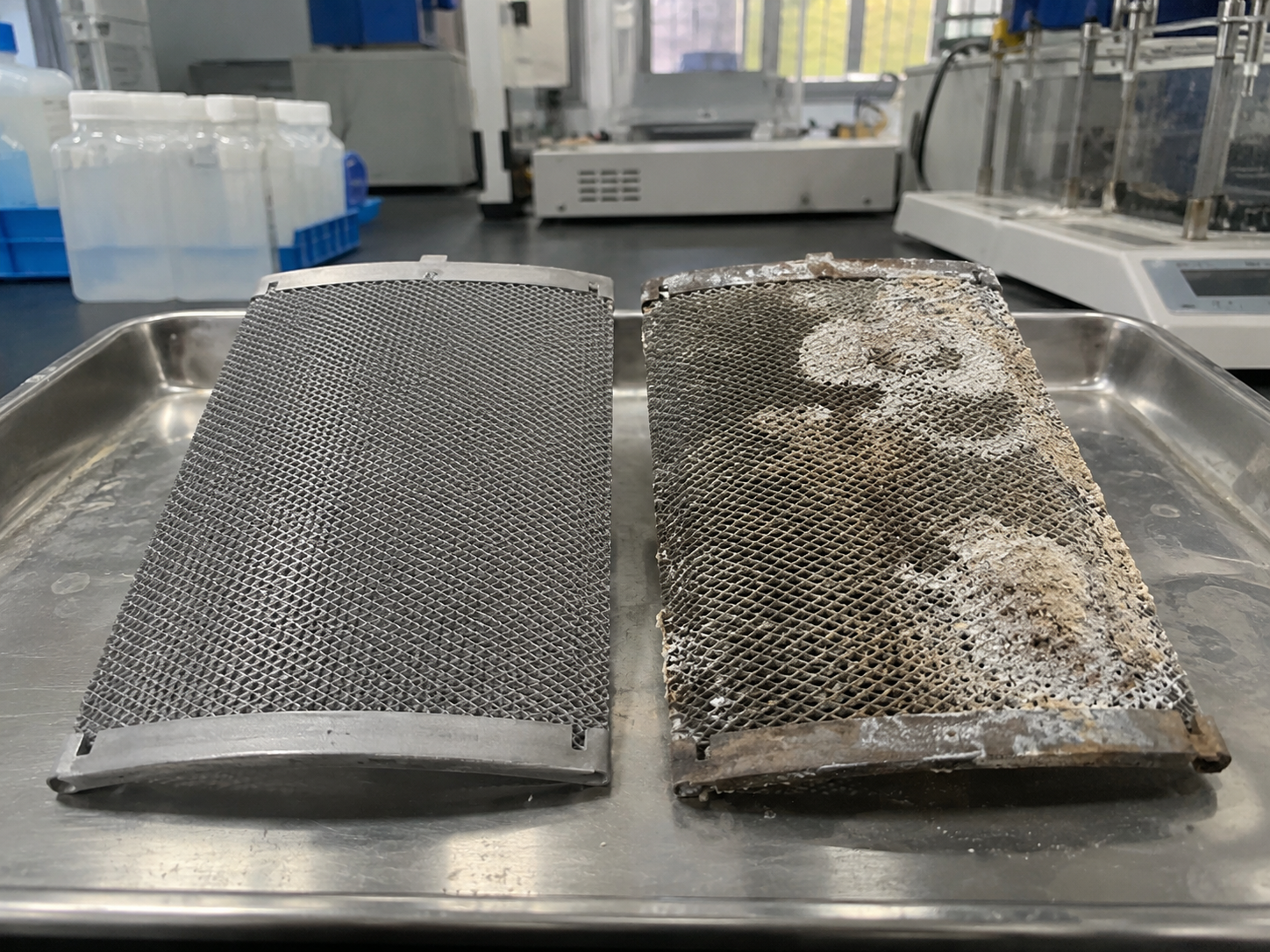
Replacement Electrodes for Existing Cells
Send the worn part or its drawing. We reproduce fit and connections, review why it wore out, and propose a coating that lasts longer in the same housing.
Your site is not listed, or combines several areas?
Describe Your ApplicationOne Page of Data, One Accurate Quotation
These six blocks hold everything our engineers need to quote a water treatment electrode correctly the first time. Share what you have – we mark any gap in our first reply, so you spend days on validation instead of weeks on emails.
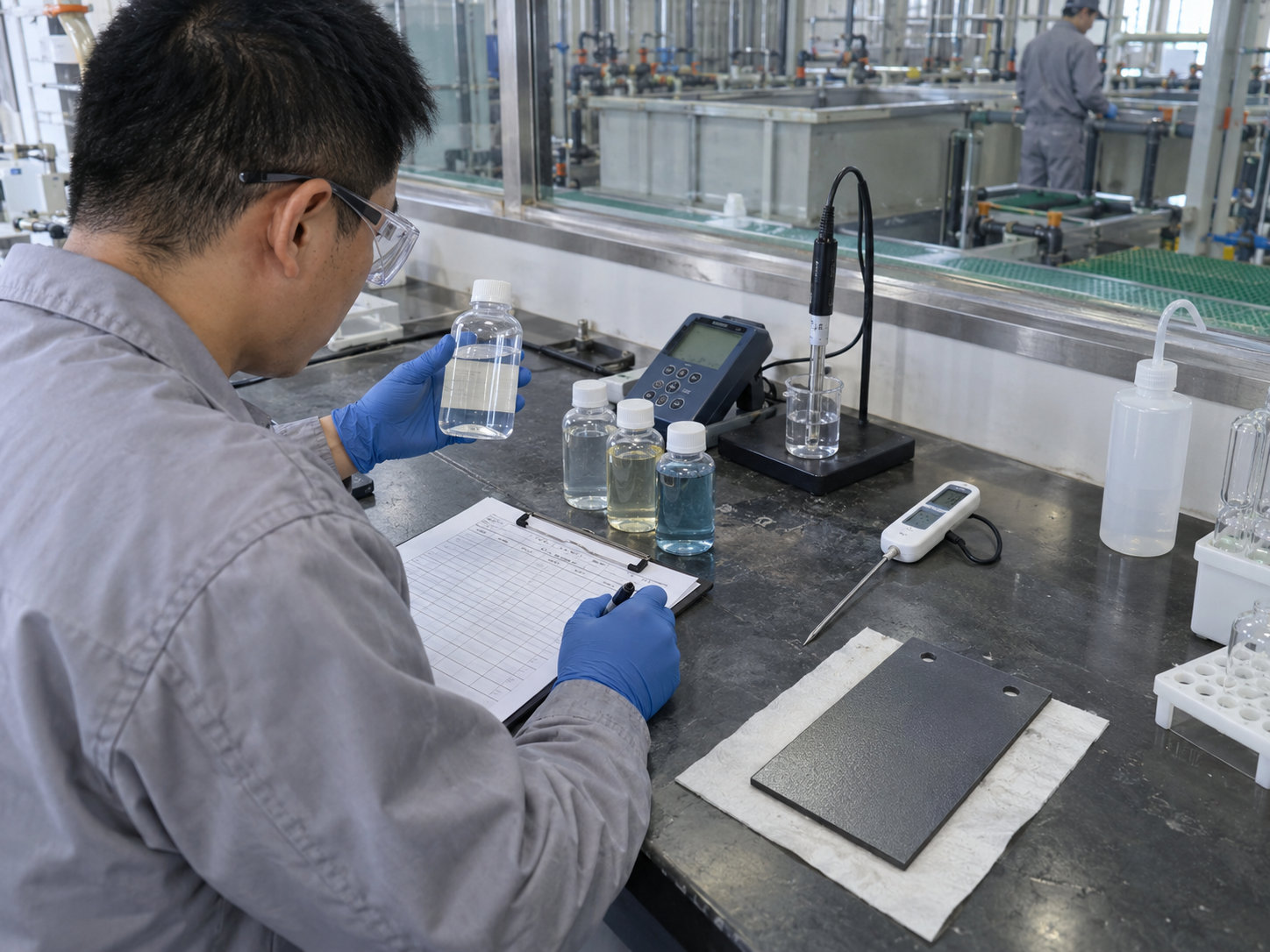
Application & Treatment Objective
- Equipment type and end use
- Objective: generate, disinfect, remove…
- Target value and unit
Lets us pick the reaction route before talking coatings.
Water or Electrolyte Analysis
- Chloride, hardness, pH, temperature
- Conductivity or TDS
- Solids, organics, target compound
Prevents a coating that suits a lab solution but not your site.
Current, Voltage, Temperature & Duty Cycle
- Operating current and voltage
- Current density or active area
- Run hours and polarity reversal
Sizes the coating for the service life you expect.
Electrode, Cell, Flow & Connections
- Form and dimensions or drawing
- Gap, flow direction and rate
- Terminal and sealing method
Ensures parts fit your housing at the first installation.
Output, Test & Acceptance
- Measured output or removal
- Test method and sampling point
- Pass / fail criteria
Makes sample approval objective for both teams.
Quantity, Delivery, Documents & NDA
- Sample quantity and pilot batch
- Annual volume and delivery terms
- Required documents and NDA
Gives purchasing a realistic price, MOQ and lead time.
Missing a value? Send what you have. A partial sheet with a drawing is enough to start the technical review.
Fill it once and skip the back-and-forth.
Start Your Project SheetWhen Treatment Results Change, Start With Evidence
Most electrode complaints trace back to water, power or installation – not only the coating. This notebook shows how our engineers read symptoms, which evidence to collect and what to do next, so you fix the real cause instead of replacing parts blindly.

Page 01 · Performance
Output, Voltage & Deposits
Output or Treatment Change
Rising Voltage or Heat
Deposits, Scaling or Fouling

Page 02 · Hardware & Supply
Surface, Connections & Batches
Electrode Surface Change
Connection or Installation Problem
Sample-to-Batch Difference
Seeing one of these symptoms in your system right now?
Send Photos & Data for DiagnosisAgree on the Test Before the Sample Ships
A written protocol turns sample evaluation into a clear yes or no. We draft it with your engineers, so the same conditions and acceptance criteria carry from the first sample through the pilot batch to every repeat order.

Protocol ARY-WT-TP · Rev. A
Water Treatment Electrode Sample & Pilot Test Protocol
Six clauses, one shared definition of “approved”.
Joint Review
Test Objective
One measurable result – for example free chlorine at a stated flow – so pass or fail is never a debate.
Record: target value, unit, tolerance
Defined Water & Operating Conditions
Water source or recipe, temperature, current, duty cycle and duration kept identical for sample and batch.
Record: water analysis, power settings, run time
Mechanical & Electrical Checks
Dimensions against drawing, flatness, terminal fit and insulation checked before power-on to avoid installation surprises.
Record: dimension report, connection check
Process Result & Test Method
Measurement method, sampling point and frequency fixed in advance, so your lab and ours read the same numbers.
Record: method, sampling plan, raw data
Surface, Deposit & Cleaning Observations
Photos at start, mid-test and end, with deposit type and cleaning response – early warnings you can act on.
Record: photo set, cleaning steps, findings
Pilot Batch & Repeat Approval
Pilot quantity and acceptance criteria frozen with the drawing, then applied to every repeat order.
Record: approved drawing revision, batch ID
Want a protocol drafted for your next electrode sample?
Request a Draft Test ProtocolNine Controlled Steps Between Titanium Stock and Your Receiving Dock
As a titanium electrode manufacturer in Foshan, we run every step in-house and attach a quality check to each one. That is why the part you approve as a sample is the part you receive in volume.

Titanium Substrate
Check: commercially pure plate, mesh, rod or tube verified against the material certificate before cutting.

Cutting & Machining
Check: laser cutting, punching and CNC work to your drawing, with first-piece dimensions confirmed.

Welding & Conductor Joints
Check: titanium tabs and rods welded under shielding; each joint inspected for fusion and alignment.

Surface Preparation
Check: blasting and acid etching build the clean, rough surface the coating needs to anchor.

Coating & Thermal Curing
Check: repeated coat-and-bake cycles with coating loading tracked per batch for repeatable output.

Dimensional Check
Check: key dimensions, flatness and hole positions measured against the current drawing revision.
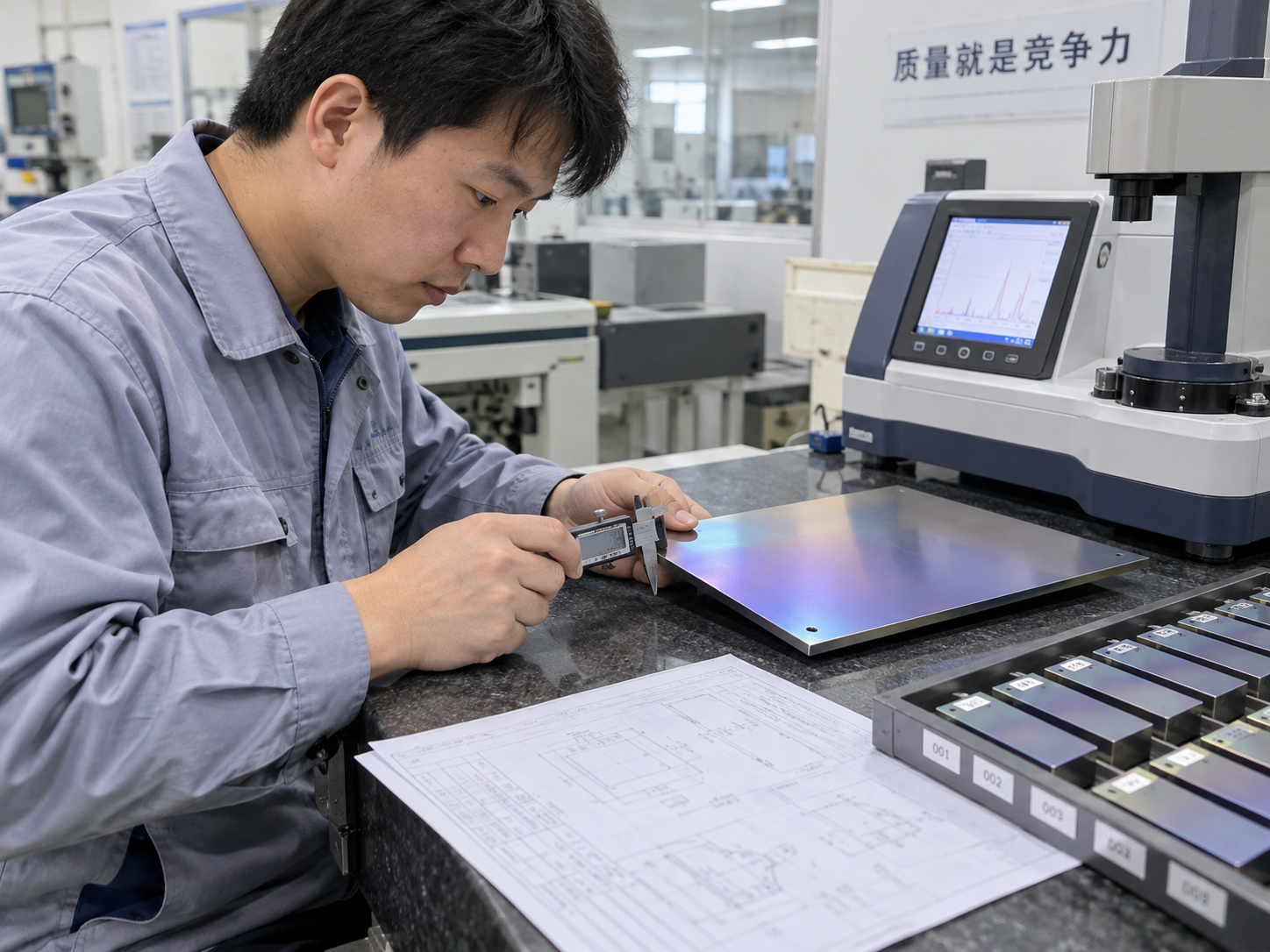
Coating & Function Inspection
Check: visual coating review and electrical checks, with retained samples kept from each batch.

Part Marking & Identity
Check: part number and batch ID marked on the part or tag, so any field part traces back to its records.

Protective Packaging
Check: coated faces separated and fixed in export crates to arrive without scratches or bent tabs.
SampleBuilt on the same nine steps, with its route recorded against the drawing revision.
BatchRepeats that recorded route, so production parts match the sample you signed off.
Want to see how your part would move through this chain?
Request a Manufacturing PlanEvery Person Who Signs Off Gets What They Need
An electrode order passes engineering, purchasing, quality and production before it is approved. We answer each of them directly, so your internal review moves forward instead of waiting on the supplier.
Engineering
Operating conditions, reaction route, drawings and tests.
Receives: a coating direction with stated assumptions and a protocol to verify it.

ARY Project Team
One contact who links your team with our engineers, workshop and export desk.
- Technical clarification
- Manufacturing coordination
- Export communication
Purchasing
Price, MOQ, lead time and repeat demand.
Receives: quotes tied to a frozen spec, samples from 1–10 pieces and clear repeat-order terms.
Quality
Inspection, traceability, issue handling and change control.
Receives: dimension reports, batch IDs and no unannounced specification changes.
Production
Installation, assembly, packaging and supply rhythm.
Receives: parts that fit the housing, labelled kits and deliveries planned around the build schedule.
What Our Customers' Teams Tell Us
Feedback from engineering, purchasing, quality and project roles at water treatment equipment builders.

“They asked for our brine analysis and duty cycle before quoting. The sample matched our drawing, and the pilot ran inside our target range.”

“Five sample pieces let us validate without a large order. Repeat batches arrive with the same part markings and reports every time.”

“Each delivery comes with a dimension report and batch ID. When a terminal question came up, they traced it through their records quickly.”

“Their engineer challenged our current-density assumption early. Adjusting the active area saved us from an undersized cell on site.”
Bring engineering, purchasing and quality questions to one call.
Book a Joint Project CallA Factory-Direct Route From First Drawing to Export Delivery
R&D, production and sales sit under one roof in Foshan. You deal with the people who design, make and ship your electrodes – fewer hand-offs, faster answers and one party accountable for the result.

~100 People
R&D, production and sales working on the same project file.
1–10 Pieces
Sample quantities, so you validate before committing to volume.
OEM / ODM
Built to your drawing and brand, with your part numbers.
NDA on Request
Drawings and process data handled confidentially.
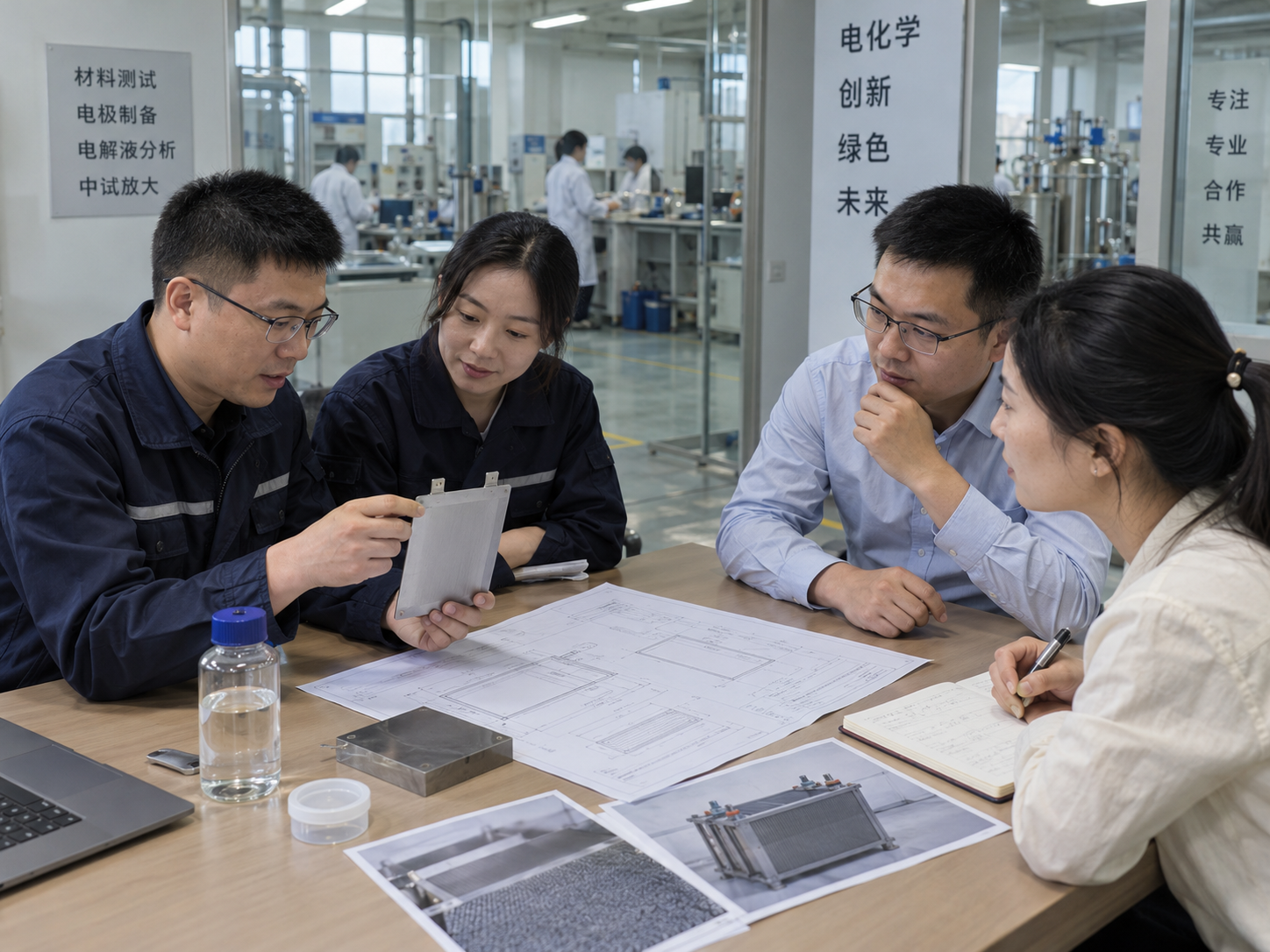
Stage 1
Application Review & Drawing Support
We check your conditions and drawing, or draft one from your sketch, before you pay for anything.

Stage 2
Sample, Pilot & Repeat Supply
Samples, then a pilot batch, then repeat orders on the same frozen specification.

Stage 3
Inspection, Part Identity & Packaging
Reports, part marking and protective crates that make receiving inspection quick.

Stage 4
NDA Protection & Export Delivery
Confidential handling of your design and export documents prepared for your customs broker.

Where Our Electrodes Are Already Working
We ship titanium electrodes and anodes to equipment builders and distributors in these markets:
- United States
- Germany
- United Kingdom
- Australia
- India
- United Arab Emirates
- Saudi Arabia
- Your market next
Export experience means fewer surprises with packing, documents and transit.
See where your project would enter this route.
Talk to the Foshan Project TeamAnswers Engineers Ask About Titanium Anodes for Water Treatment
Choose a topic and open a question. Each answer comes from day-to-day work as a titanium electrode manufacturer – practical guidance you can apply to your MMO titanium anode or electrolysis electrode project today.

Water & Electrolyte Data
Good data is the cheapest way to avoid a wrong electrode. Learn what to measure and how to share it.
Read related articlesWhich water parameters do you need before quoting?
Chloride, hardness, alkalinity, pH, temperature, conductivity or TDS, suspended solids, organics and your target compound. A recent lab report is ideal; partial data plus a description of the water source is enough to start.
Can you work from a synthetic test solution?
Yes, for early screening. The final coating direction should be confirmed on real site water, because trace components can shift reaction selectivity and fouling behaviour.
How do you handle seasonal changes in water quality?
Share the worst-case values – highest hardness, lowest temperature, lowest salinity. We size the electrode for the whole range, not only the average, so performance holds all year.

Chlorine vs Oxygen Evolution
The reaction at the anode decides the coating family. Get this right and most other choices follow.
See MMO titanium anodesHow do I know if my process is chlorine- or oxygen-evolution?
Chloride level, pH and the product you want decide it. With chloride present and hypochlorite as the goal, chlorine evolution dominates. In sulfate or acidic media with little chloride, oxygen evolution does.
What happens if the wrong coating family is used?
Usually higher voltage, lower output and faster coating loss. It is the most frequent root cause we find when customers ask us to replace electrodes from another source.
Can one electrode handle both reactions?
Some mixed duties exist. We assess them case by case and normally recommend a short bench test before you commit to a production coating.

Titanium Substrate & MMO Coatings
Substrate form and coating chemistry together set life, cost and fit. Compare the options here.
See platinized titanium anodesWhich titanium do you use for the substrate?
Commercially pure titanium in plate, mesh, rod, tube or wire form, chosen for your geometry. Material certificates are available on request.
What is the difference between Ru-Ir, Ir-Ta and platinized coatings?
Ru-Ir MMO favours chlorine evolution; Ir-Ta suits oxygen evolution and acidic media; platinized titanium is used where a platinum surface is preferred. We select by your operating conditions, not by habit.
Can worn titanium electrodes be recoated?
Often yes, if the substrate is not pitted or deformed. Recoating can lower your replacement cost; we assess photos or the returned part first.

Current Density, Spacing & Connections
How current reaches and spreads over the electrode decides both efficiency and life.
See electrolytic cellsWhy does current density matter so much?
It sets how fast the coating is consumed. Running above design density shortens life even with the right coating, so we size active area from your real operating current.
How close should the anode and cathode be?
Narrow gaps lower voltage but raise the risk of scaling and blockage. We balance the gap against your water's hardness, solids and flow rate.
What connection types can you make?
Welded titanium tabs, threaded rods, bolted terminals and custom conductor designs, all built to your housing and current requirement.

Installation, Cleaning & Maintenance
Correct handling and cleaning protect the coating you paid for and keep output stable.
Read maintenance guidesHow should coated electrodes be handled during installation?
Hold them by edges or tabs, keep tools off the coated surface and keep insulation spacers in place. Scratches expose titanium and create weak spots.
How do I remove scale safely?
Use a dilute acid clean suited to your deposit for a limited time, then rinse well. Avoid scraping the coating. We provide guidance for your specific deposit type.
When should an electrode be replaced?
When cleaning no longer restores output at normal voltage, or titanium is visibly exposed across the active area. Logging voltage trends makes this predictable.

Common Causes of Premature Problems
Most early failures repeat the same few patterns. Recognise them before they reach your customers.
See custom titanium electrodesWhat causes most early electrode failures?
A coating that does not match the reaction, current density above design, scaling without a cleaning plan, and weak connections that overheat locally.
Does polarity reversal damage MMO anodes?
It can if the coating is not specified for it or the reversal is too frequent. Tell us your reversal cycle and we specify the electrode for it.
How do you investigate a failed electrode?
Send photos, operating logs and, if possible, the part. We review the surface, joints and data, then give you a written finding with corrective options.
Have a question that is not covered here?
Ask Our Electrode EngineersTell Us the Objective. We Will Build the Electrode Around It.
Four short steps, starting with what your water treatment system must achieve. An application engineer – not an automated reply – reviews your data and tells you exactly what is still missing.

- Coating direction and design notes based on your real conditions
- Samples from 1–10 pieces before volume orders
- Drawings and process data protected under NDA on request
Your Project Summary
- ApplicationMissing
- Treatment objectiveMissing
- Water dataMissing
- Electrical dataMissing
- Electrode formMissing
- Sample quantityMissing
Thank you – your project is with our engineers.
We will reply with a technical review and a list of any missing data.