
Titanium electrodes for water treatment must match the target reaction, water matrix, current loading, hydraulics, byproducts, and maintenance plan. “Water treatment” alone does not identify a suitable coating or cell.
A poorly matched surface can shift reactions, build scale, draw more voltage, or miss treatment goals. Selection becomes safer when water analysis and performance targets lead the process.
1. What Treatment Goal Should the Electrode Serve?

Titanium electrodes for water treatment should be selected around a named treatment objective, such as disinfection, oxidation, contaminant conversion, or supporting chemistry. Each objective changes reaction and monitoring needs.
How should the goal be written?
Use a measurable inlet-to-outlet requirement. Start with the water problem. Define:
- Target contaminant, organism, or chemical product
- Inlet range and required outlet condition
- Flow, contact time, and sampling method
Why is equipment type not enough?
Two skids with similar tanks may treat different matrices and reactions. The electrode follows chemistry and duty rather than enclosure shape.
| Goal field | Useful input | Weak input |
|---|---|---|
| Inlet | Range and variability | One sample |
| Outlet | Measured criterion | “Better water” |
| Reaction | Defined mechanism | Equipment label |
Key Takeaway: Convert the treatment goal into measurable water and reaction requirements before choosing an electrode.
2. Which Water-Chemistry Data Matter?
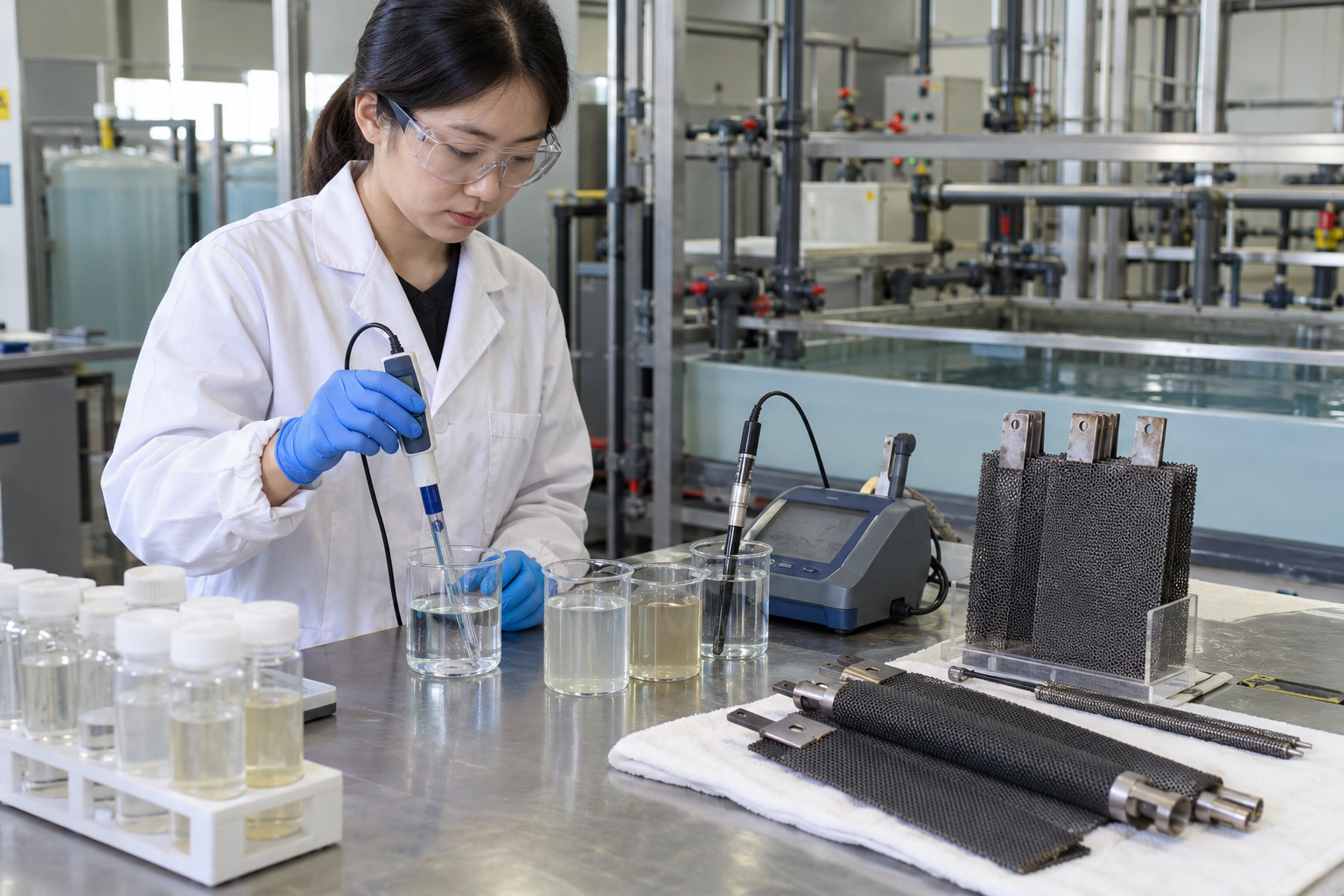
Titanium electrodes for water treatment respond to chloride, sulfate, hardness, organics, pH, conductivity, temperature, and other matrix components. Variability can matter as much as average composition.
What should the water analysis include?
Use current data from representative operating periods. The matrix drives the reaction mix. Include:
- Major ions, conductivity, pH, temperature, and hardness
- Organics, suspended solids, metals, and treatment chemicals
- Seasonal, batch, and upset ranges
How should unknown components be handled?
Flag unknowns and plan sampling or pilot work. Do not convert missing analysis into a universal coating recommendation.
| Water factor | Possible influence | Buyer response |
|---|---|---|
| Chloride | Reactive chlorine pathway | Define concentration range |
| Hardness | Scale formation | Plan pretreatment or cleaning |
| Organics | Competing oxidation demand | Measure and pilot-test |
Key Takeaway: Send a water-quality envelope that captures normal and difficult conditions.
3. Which Anodic Reaction Is Desired?
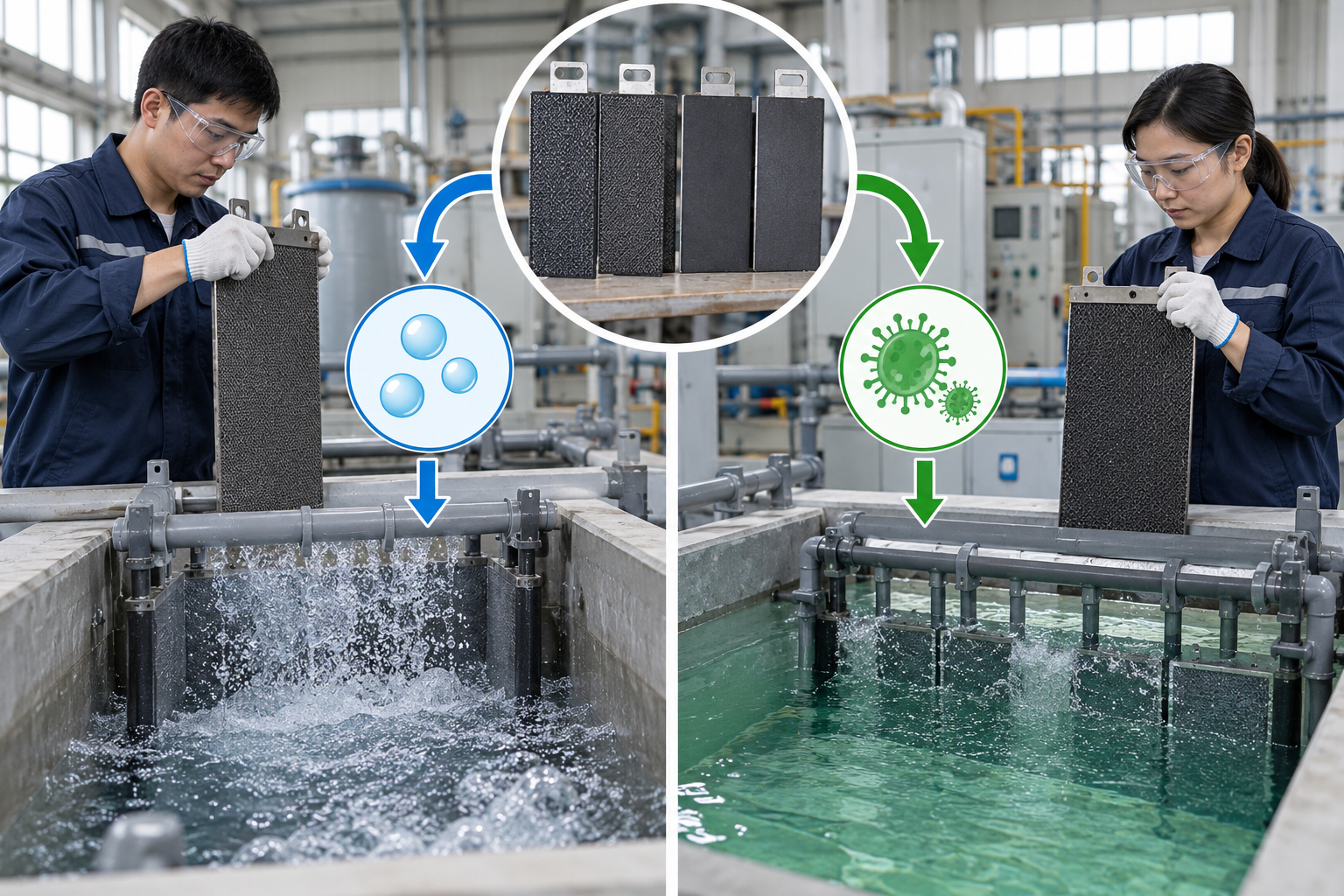
Titanium electrodes for water treatment must favor a reaction that supports your treatment objective while managing unwanted byproducts. Coating choice cannot be separated from water chemistry.
How do direct and mediated oxidation differ?
Some pollutants react at the anode surface, while others respond to species generated in water. Know what performs the treatment. Review:
- Direct electron-transfer pathway
- Oxygen-evolution competition
- Reactive chlorine or other mediated pathways
What byproduct questions belong in the review?
Identify compounds that may form under real water chemistry and operating dose. Add analytical checks where risk warrants them.
| Reaction route | Design question | Monitoring need |
|---|---|---|
| Direct oxidation | Does target reach the surface? | Removal response |
| Mediated oxidation | Which species forms? | Residual and byproducts |
| Gas evolution | Can gas leave safely? | Venting and level |
Key Takeaway: Select and monitor the treatment pathway, not only electrode material.
4. How Do Current and Contact Time Affect Treatment?
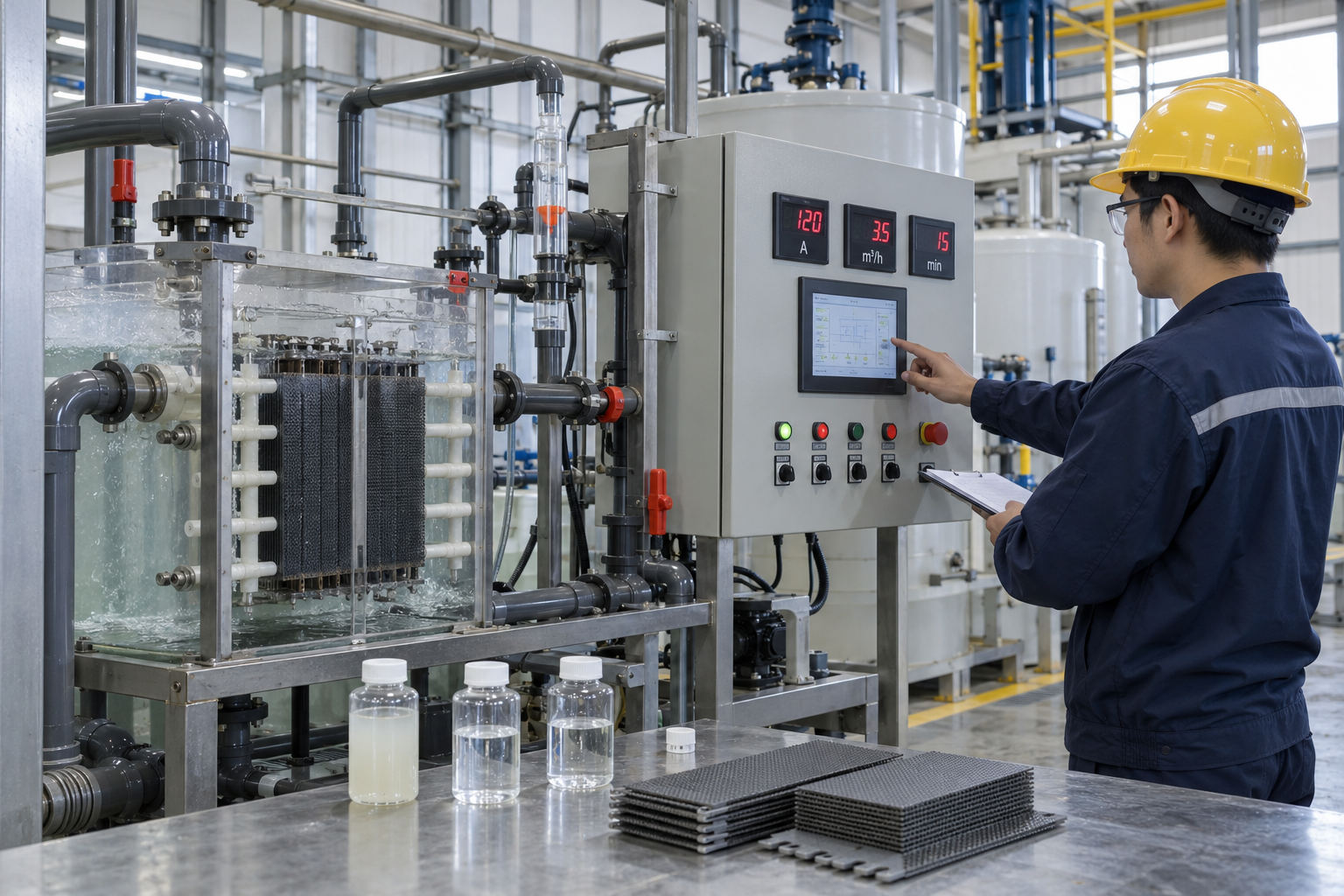
Titanium electrodes for water treatment operate within a balance of current density, active area, flow, contact time, and water demand. Increasing current does not automatically improve useful treatment.
Which electrical data should be controlled?
Record normal and peak values with active area. Dose needs an electrical basis. Include:
- Current density, voltage, polarity, and runtime
- Electrode area, spacing, and current distribution
- Energy input tied to flow or treated volume
How should hydraulic data be linked?
Map flow, residence time, recirculation, mixing, and bypass. Sampling locations should represent actual exposure.
| Variable | If too low | If too high |
|---|---|---|
| Current density | Limited reaction rate | Heat or unwanted reactions |
| Contact time | Incomplete treatment | Excess exposure |
| Flow mixing | Uneven dose | Added pumping demand |
Key Takeaway: Evaluate electrical dose together with hydraulic exposure and measured treatment response.
5. Which Geometry Fits a Treatment Reactor?
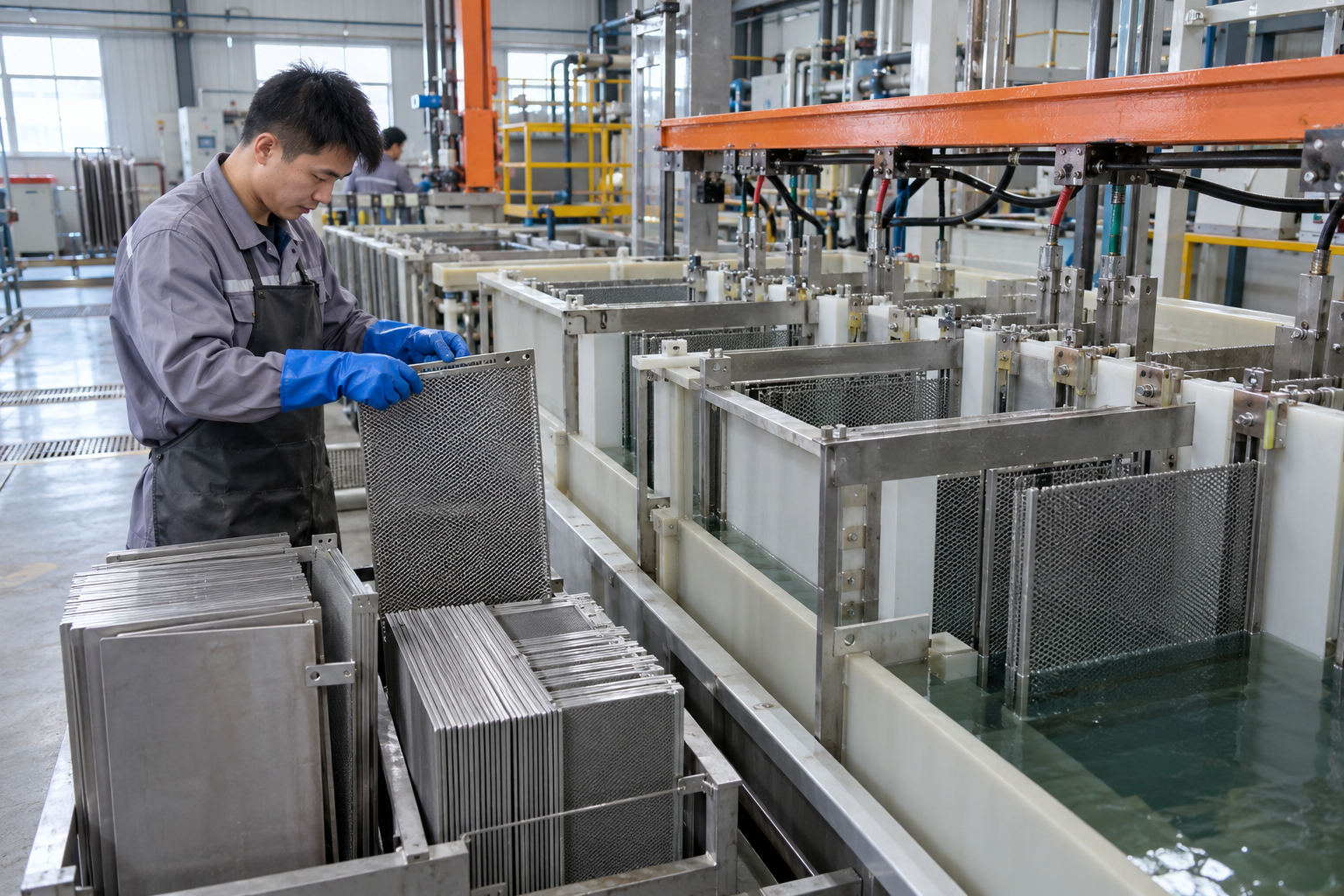
Titanium electrodes for water treatment need geometry that supports flow, active area, gas release, cleaning, and controlled spacing. Reactor layout shapes current distribution.
When are plate or mesh forms considered?
Plates provide a flat face, while mesh opens flow and bubble paths. Geometry changes transport. Compare:
- Open area and hydraulic resistance
- Edge fields and anode-to-cathode gap
- Stiffness, support, and removable cassettes
How should the reactor drawing be controlled?
Mark electrode order, polarity, spacing, flow direction, ports, vents, and service access. Define coated boundaries and contacts.
| Geometry item | Treatment effect | Drawing control |
|---|---|---|
| Gap | Resistance and field | Spacer dimension |
| Open area | Flow and bubble release | Mesh specification |
| Cassette | Maintenance access | Mounting interface |
Key Takeaway: Choose geometry through current distribution, hydraulics, gas release, and maintenance rather than surface area alone.
6. How Do Scale and Fouling Change Performance?
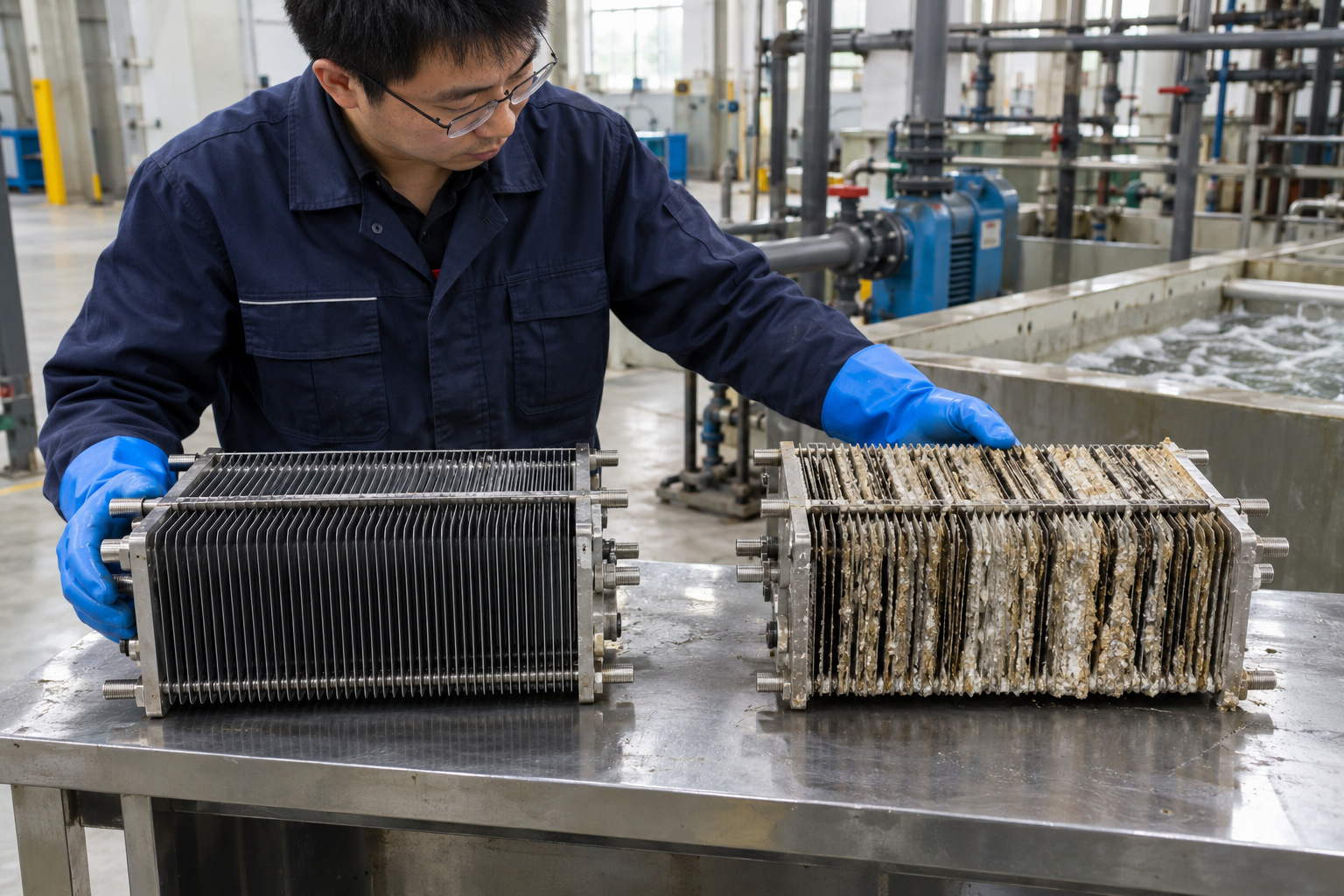
Titanium electrodes for water treatment can lose effective area when mineral scale, suspended solids, or organic fouling covers the surface. Deposits may also change flow and local current.
Which conditions promote deposits?
Water chemistry, cathodic reactions, pH shifts, temperature, and low-flow zones all matter. Look for the source before choosing a cleaner. Check:
- Hardness, alkalinity, metals, and suspended solids
- Local pH and temperature near electrodes
- Flow distribution and shutdown drying
How should cleaning be qualified?
Use methods compatible with coating, substrate, seals, and housing. Record concentration, time, temperature, tools, and rinse.
| Deposit issue | Diagnostic clue | Response |
|---|---|---|
| Mineral scale | Hardness and white deposit | Chemistry and cleaning review |
| Organic fouling | Film and output decline | Pretreatment and cleaning |
| Solids blockage | Uneven flow | Filtration and reactor access |
Key Takeaway: Control deposit sources and approve cleaning methods before they contact the active surface.
7. What Byproduct and Gas Controls Are Needed?
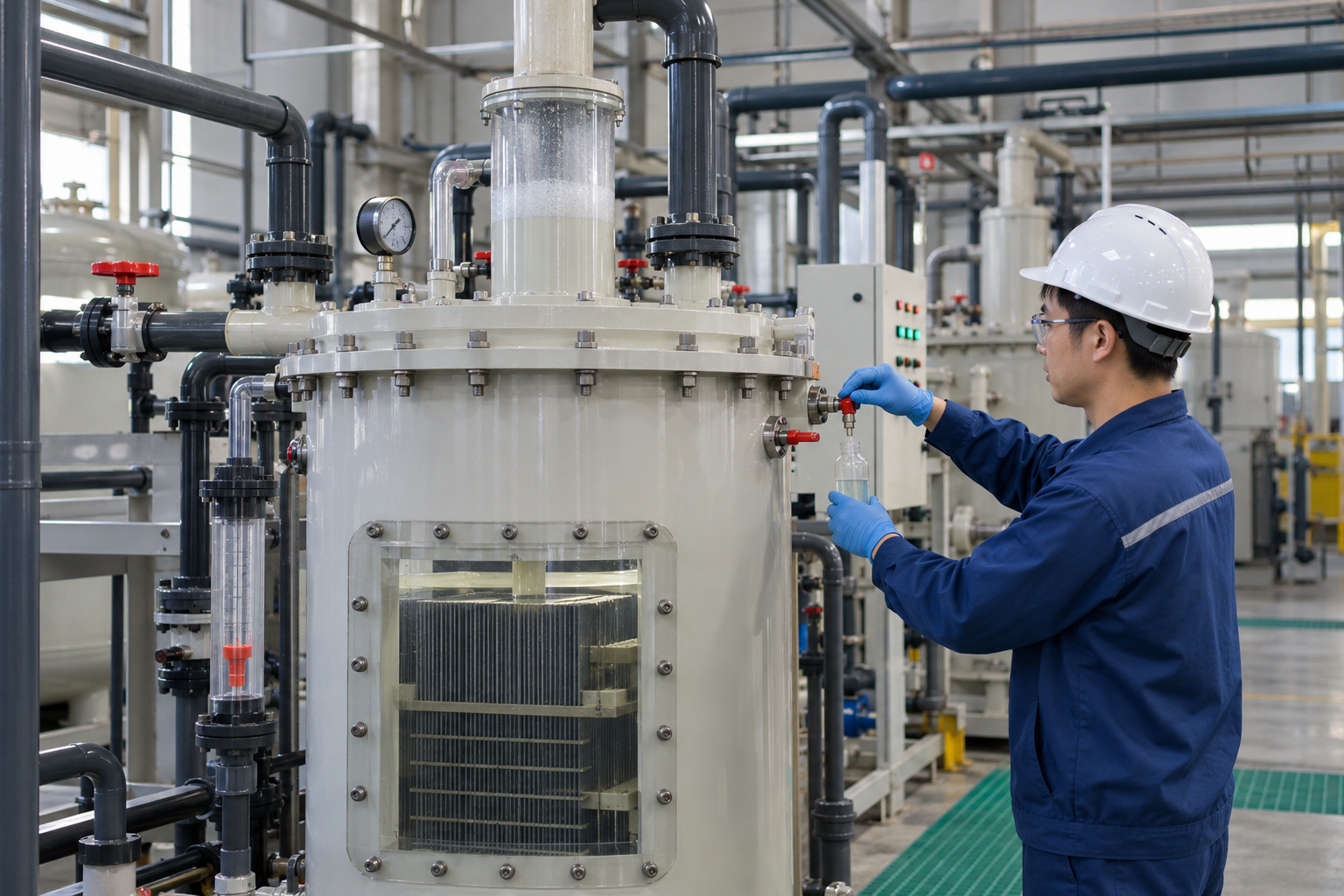
Titanium electrodes for water treatment may generate gases and oxidizing species that require ventilation, monitoring, residual control, or downstream treatment. Safety belongs in process design.
Which hazards should be reviewed?
Base the review on actual reactions and water matrix. Do not design gas handling from guesswork. Consider:
- Anodic and cathodic gases
- Reactive residuals and transformation products
- Enclosure, ventilation, detection, and shutdown
How should controls be tested?
Simulate high gas rate, low flow, high temperature, and sensor failure where relevant. Document alarm and shutdown behavior.
| Control | Trigger | Expected action |
|---|---|---|
| Ventilation | Gas generation | Safe removal |
| Residual monitor | Product concentration | Dose adjustment |
| Interlock | Flow or level loss | Power shutdown |
Key Takeaway: Link reaction hazards to measurable controls, responsible owners, and acceptance tests.
8. How Should You Validate Treatment Performance?
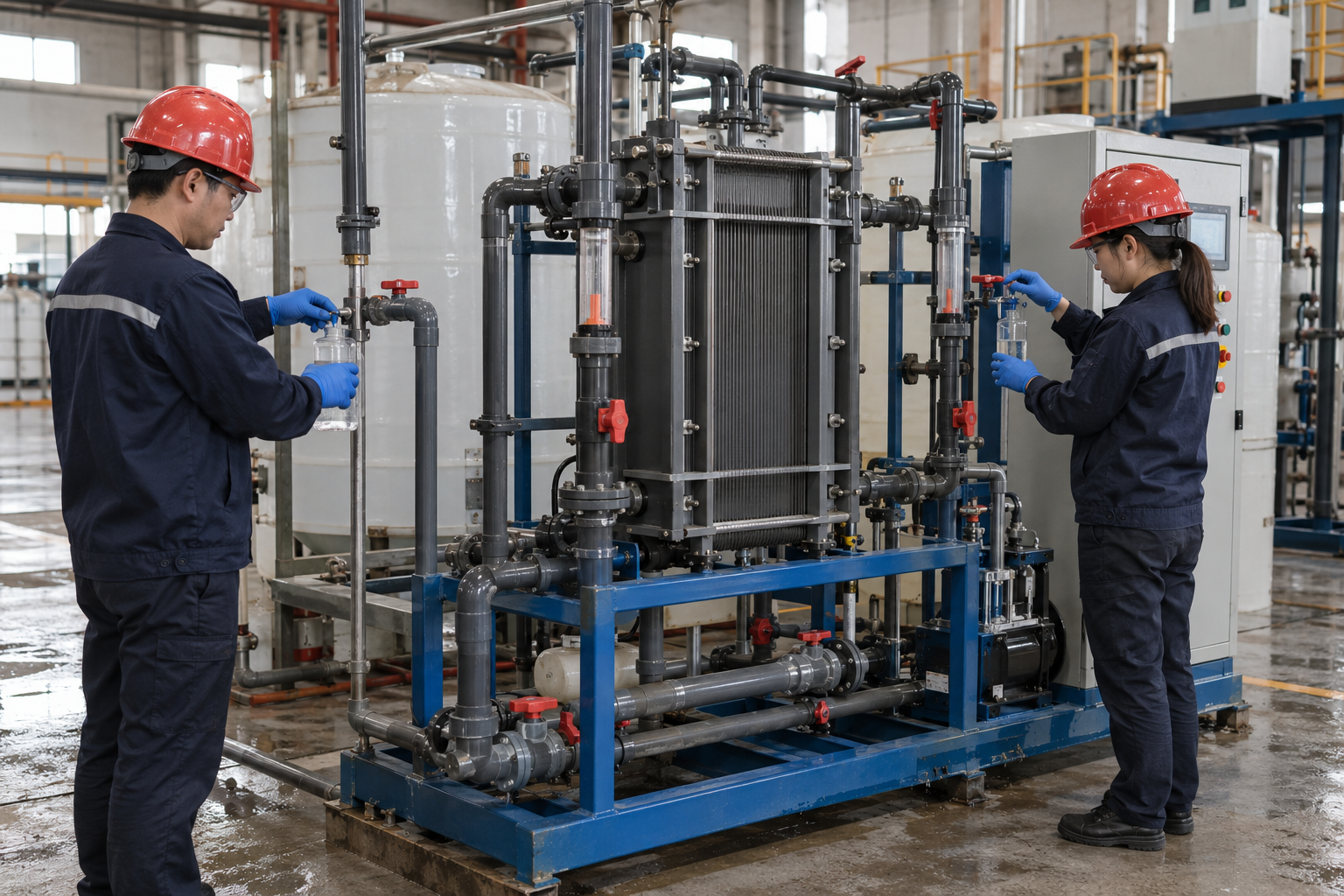
Titanium electrodes for water treatment should be validated with representative water, defined analytical methods, controlled operation, and a release criterion. A clear-looking sample is not sufficient evidence.
What belongs in a pilot plan?
Test the difficult edge of expected operation where practical. Validation needs comparable samples. Record:
- Inlet and outlet sampling points and timing
- Chemistry, flow, current, temperature, and runtime
- Treatment result, byproducts, voltage, and surface condition
How can factory quality data support the pilot?
The site's quality-control page can supply part and batch evidence. Field data confirms process behavior.
| Evidence set | Purpose | Release use |
|---|---|---|
| Batch record | Identify tested electrode | Traceability |
| Pilot data | Confirm treatment response | Technical approval |
| Inspection | Confirm fit and condition | Production baseline |
Key Takeaway: Pair traceable electrodes with representative water and predefined analytical acceptance criteria.
9. What Should Operators Trend After Startup?
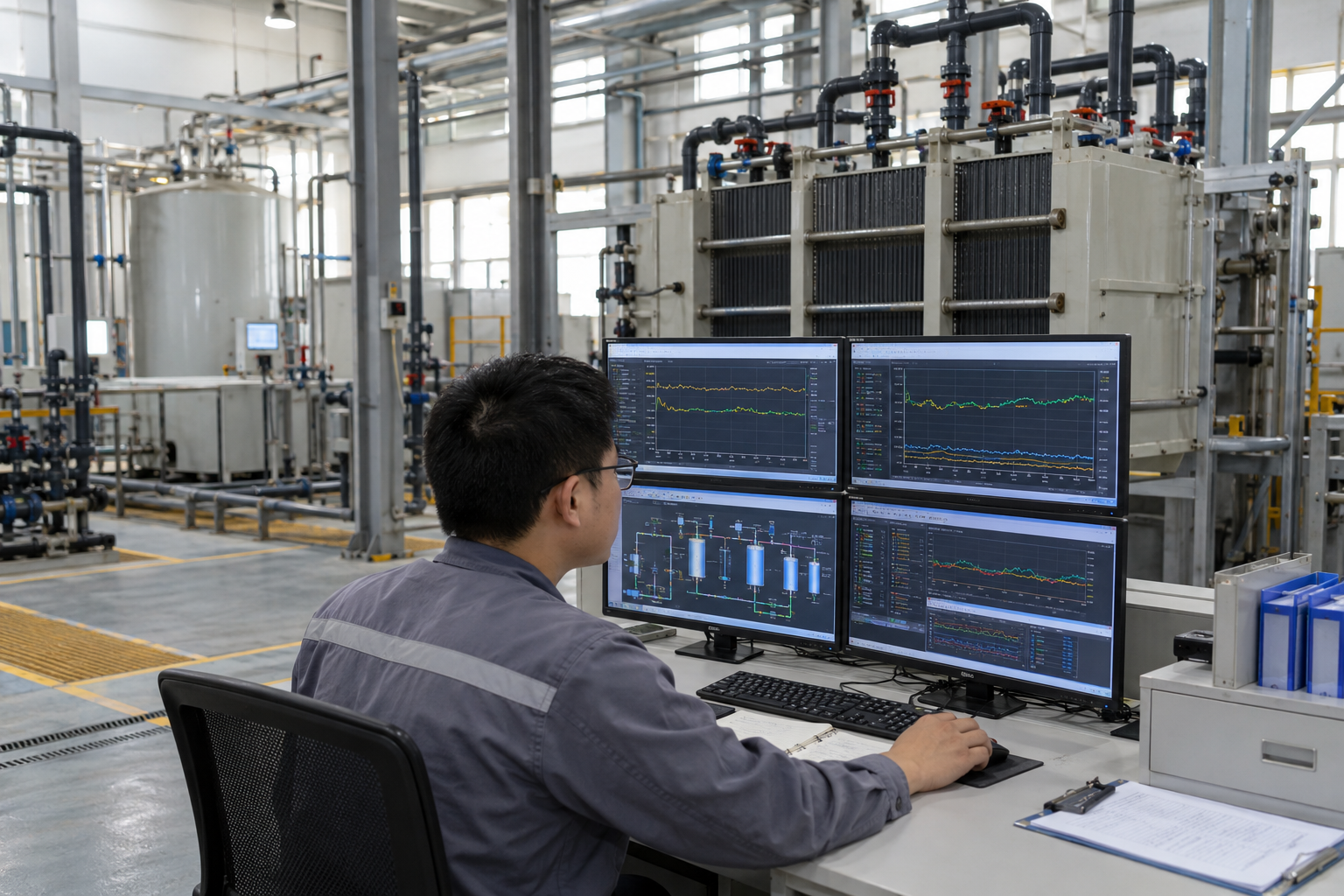
Titanium electrodes for water treatment should be monitored through electrical, hydraulic, chemical, and maintenance trends. Changes often reveal system issues before visible damage.
Which routine values are useful?
Choose data that supports action. Trend values under comparable duty. Track:
- Current, voltage, temperature, flow, and runtime
- Inlet and outlet water indicators
- Cleaning, alarms, shutdowns, and inspections
How should a deviation be investigated?
Check water chemistry, deposits, flow, contacts, sensors, and electrode condition before assigning cause. Preserve samples and records.
| Trend change | Possible source | First response |
|---|---|---|
| Voltage rises | Scale or connection | Inspect and clean |
| Treatment falls | Water demand or active area | Check chemistry and current |
| Temperature rises | Flow or loading | Check cooling and dose |
Key Takeaway: Operating trends connect water variability, maintenance, and electrode condition into one diagnostic record.
10. What Should a Water-Treatment RFQ Include?

Titanium electrodes for water treatment should be requested with treatment goal, water analysis, operating range, reactor geometry, controls, and validation. That package supports a responsible coating and cell proposal.
Which files should you send?
Use one process sheet and one controlled drawing. Make the water visible in the RFQ. Include:
- Inlet range, outlet target, chemistry, and flow
- Current, voltage, temperature, runtime, and controls
- Geometry, quantity, cleaning, sample plan, and evidence
Where should the review begin?
Use the site's request-a-quote page to send the package. Ask suppliers to list assumptions and excluded conditions.
| RFQ section | Buyer provides | Supplier returns |
|---|---|---|
| Treatment basis | Water and target | Reaction and surface proposal |
| Reactor basis | Flow and drawing | Geometry and electrical design |
| Validation | Acceptance need | Pilot method |
Key Takeaway: Start selection with water and treatment evidence. When your process sheet is ready, contact us today for review.
Frequently Asked Questions
Can I use one MMO coating for every wastewater? No. Water matrix, target reaction, current, byproducts, and fouling risk require project-specific review.
What's the best water sample to send? Send representative analyses across normal and difficult periods, including ranges and known treatment chemicals.
Can I increase current to improve treatment? Not automatically. Excess current may add heat, side reactions, gas, and cost without proportional useful treatment.
How do I know if scale comes from water chemistry? Review hardness, local chemistry, flow, pretreatment, polarity, and deposit location.
How do I know if a pilot proves enough? It should meet defined treatment, byproduct, electrical, hydraulic, safety, and maintenance criteria.