
A titanium anode for sodium hypochlorite generator duty should support chlorine evolution in controlled brine while fitting the cell, power supply, flow, gas handling, and cleaning plan. Size alone cannot define a suitable anode.
Early output loss, rising voltage, scale, or uneven gas release often traces back to chemistry, loading, hydraulics, or maintenance. A complete selection brief connects those conditions before a pilot unit is built.
1. What Reaction Must the Generator Control?
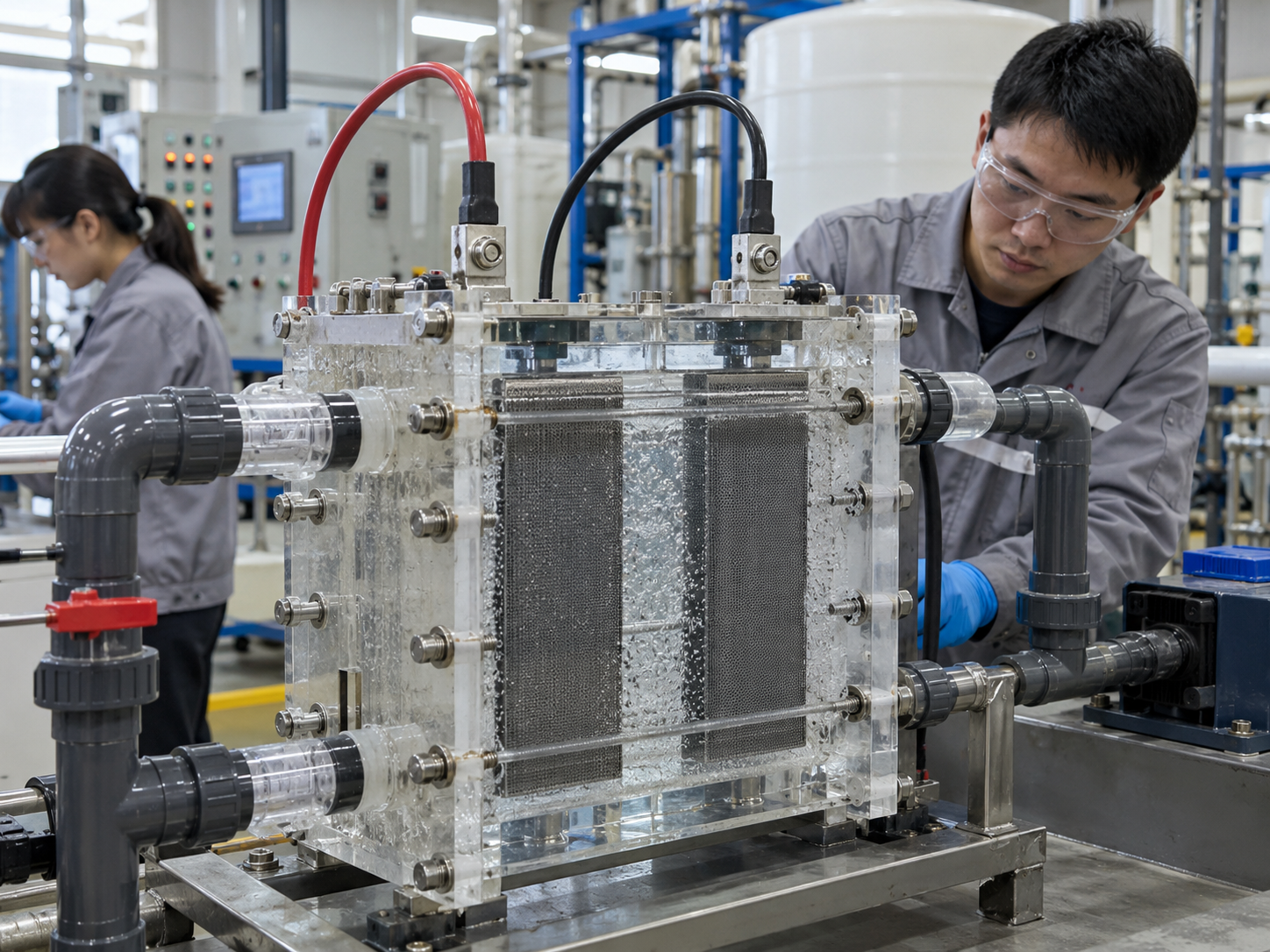
A titanium anode for sodium hypochlorite generator service supports anodic chlorine generation as part of an on-site brine-electrolysis process. The complete system must also manage cathodic hydrogen and solution chemistry.
Which products and byproducts matter?
Define desired hypochlorite output and relevant gas handling. Follow both half-reactions. Review:
- Chlorine-related anodic chemistry
- Cathodic hydrogen generation and separation
- Residual, pH, and product-storage requirements
Why should cell and storage be reviewed together?
Generation, venting, transfer, storage, and dosing affect safe system behavior. Electrode selection belongs inside that process boundary.
| Process element | Main question | Required control |
|---|---|---|
| Anode | Does surface favor intended duty? | Coating basis |
| Cathode | How is hydrogen released? | Separation and venting |
| Product | How is concentration managed? | Sampling and storage |
Key Takeaway: Specify anode duty together with hydrogen handling, product control, and complete cell operation.
2. Which Brine Data Should You Provide?
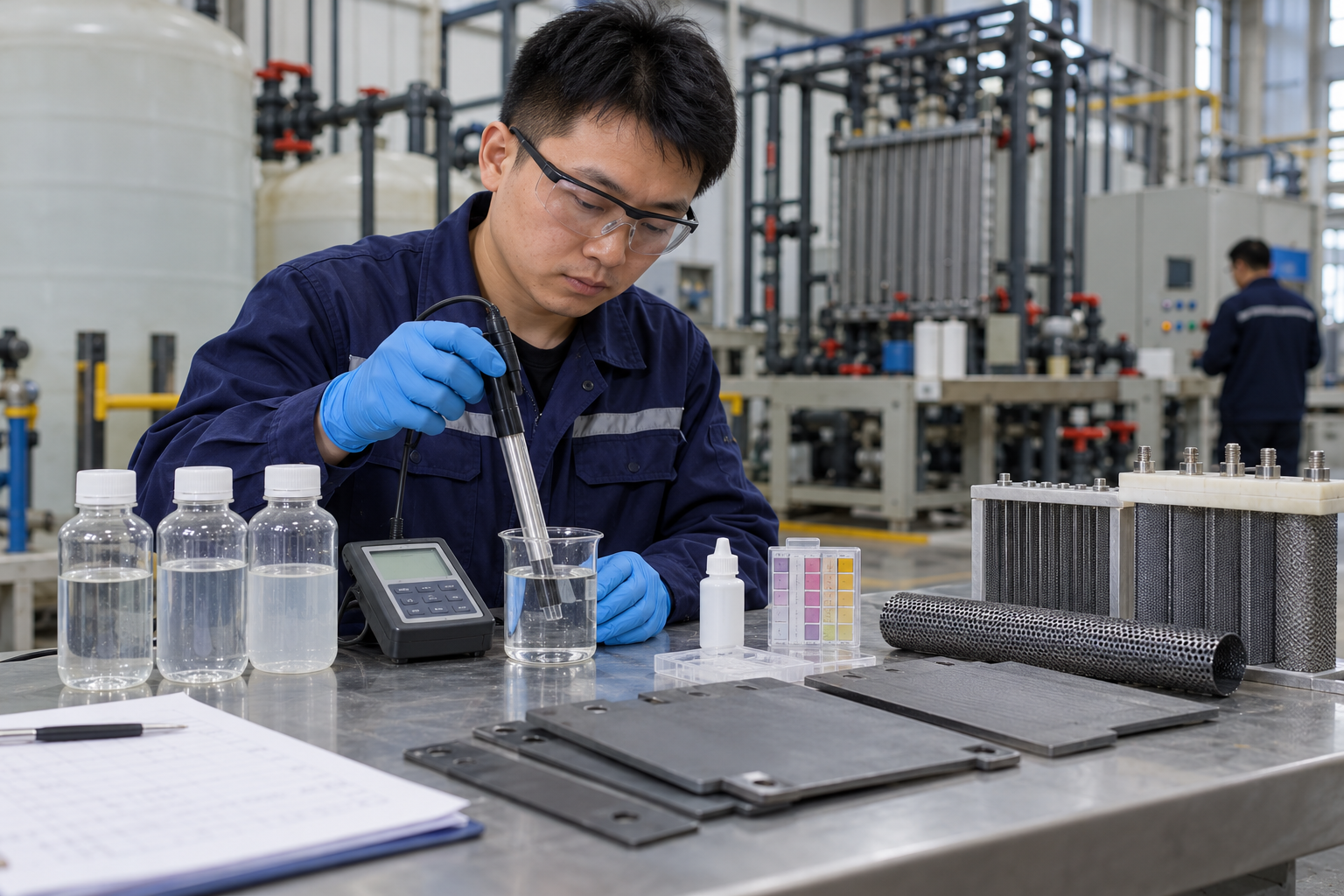
A titanium anode for sodium hypochlorite generator selection depends on salt concentration, water quality, pH, temperature, conductivity, and impurities. Brine preparation can change electrode and cleaning behavior.
What belongs in the water and salt analysis?
Send ranges rather than a brand name. Brine quality begins before the cell. Include:
- Salt purity and working concentration range
- Makeup-water hardness, metals, and conductivity
- Temperature, pH, treatment chemicals, and variability
Why do hardness and impurities matter?
Deposits can cover active area, change flow, and increase maintenance. Aggressive impurities may also affect coating or exposed titanium.
| Brine factor | Possible effect | Buyer response |
|---|---|---|
| Hardness | Scale and blocked area | Water treatment review |
| Concentration drift | Output and voltage change | Mixing and monitoring |
| Impurity | Side reaction or attack | Compatibility test |
Key Takeaway: Control salt and makeup-water quality as part of the anode specification.
3. Which MMO Surface Fits Chlorine Duty?
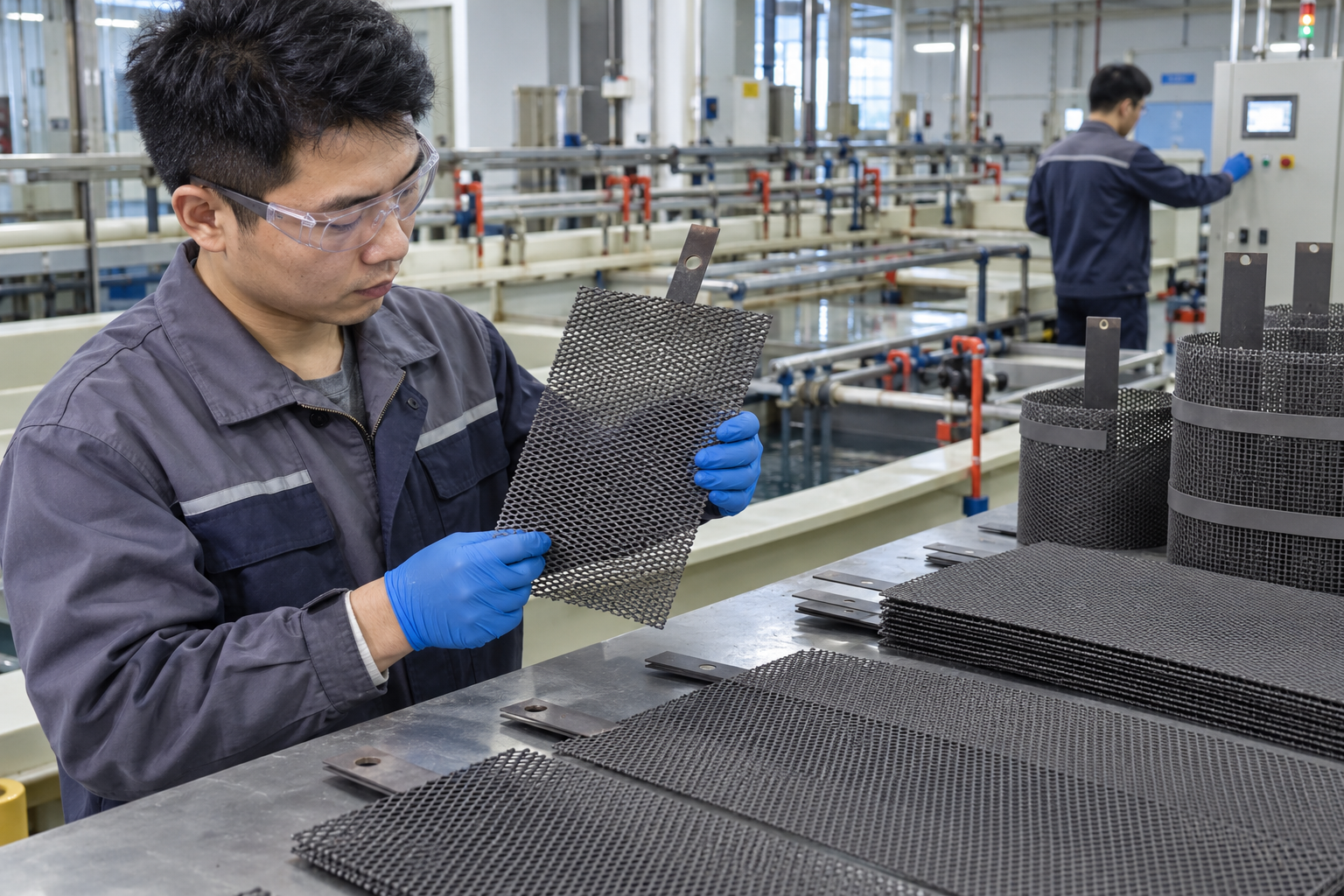
A titanium anode for sodium hypochlorite generator duty commonly leads engineers to chlorine-evolution MMO families. Exact oxide selection still depends on brine, current, temperature, output, and operating cycle.
What should the supplier explain?
Ask for selection logic tied to supplied conditions. A coating name needs a duty statement. Request:
- Intended chlorine-evolution basis
- Supported current, temperature, and chemistry ranges
- Conditions that require a pilot or another material
Which claims should be treated carefully?
Universal lifetime, one coating for every brine, and output claims without test conditions are weak evidence. Use bounded assumptions.
| Supplier claim | Useful evidence | Missing evidence |
|---|---|---|
| Coating fits brine | Chemistry and reaction basis | Generic label |
| Output target | Cell and test conditions | Unqualified number |
| Service interval | Duty and maintenance basis | Universal years |
Key Takeaway: Select a chlorine-duty MMO surface against defined brine and electrical conditions, then validate it.
4. How Do Current and Active Area Affect Output?
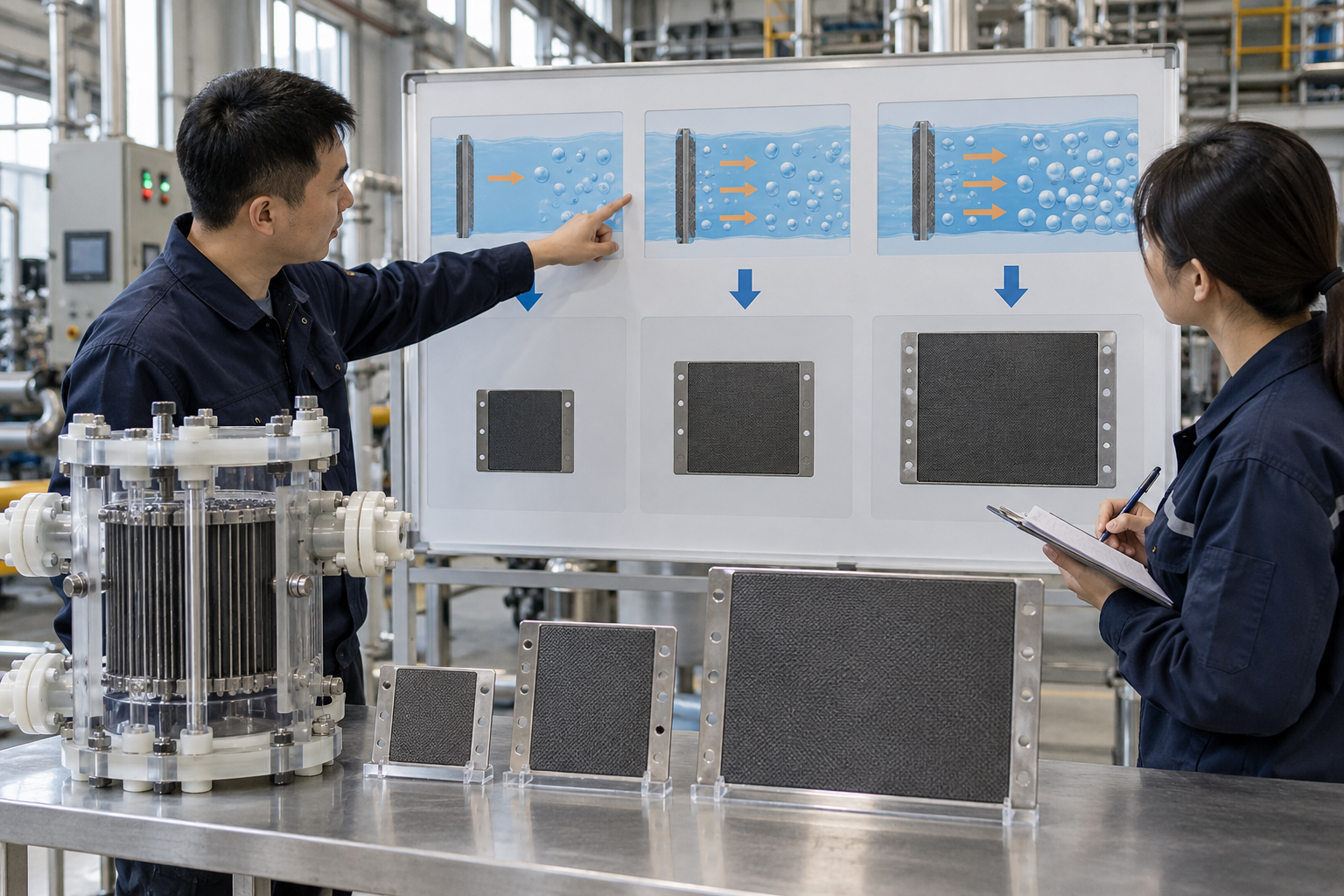
A titanium anode for sodium hypochlorite generator operation uses current across a defined active area. Current density, spacing, conductivity, flow, and temperature work together.
Which electrical values belong in the data sheet?
Provide normal and maximum duty. Current needs an area and a timeline. Include:
- DC current, voltage, active area, and current density
- Startup, steady-state, intermittent, or continuous operation
- Rectifier control, polarity, alarms, and shutdown limits
How should output be compared?
Measure product concentration and flow with electrical input under the same test window. Record brine and temperature too.
| Measurement | Why it matters | Comparison basis |
|---|---|---|
| Current density | Surface loading | Active area |
| Product output | Useful reaction result | Flow and concentration |
| Cell voltage | Electrical condition | Constant-current trend |
Key Takeaway: Link output to current, active area, brine, temperature, and flow rather than one isolated number.
5. How Should Electrode Geometry Be Designed?
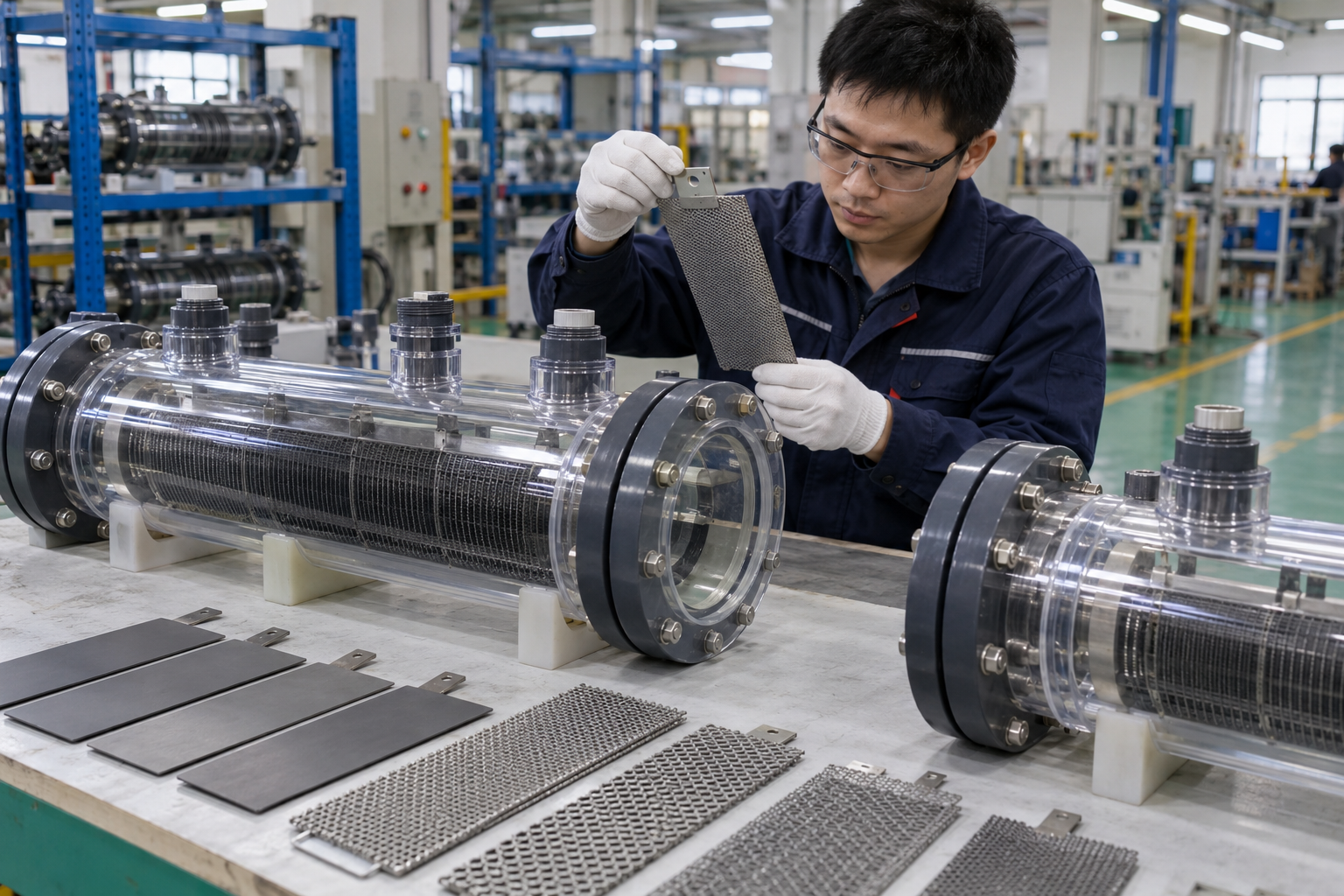
A titanium anode for sodium hypochlorite generator must fit housing, cathode, spacers, flow path, gas release, and removable assembly. Geometry affects current and maintenance.
Which dimensions need control?
Mark functional interfaces on the drawing. Gap and alignment shape the cell. Include:
- Active area, plate or mesh form, and coated boundaries
- Anode-to-cathode spacing and insulation
- Tabs, busbars, seals, housing, and removal clearance
What helps gas leave the surface?
Orientation, open area, flow, and top venting can reduce gas hold-up. Verify operation with the assembled cell.
| Geometry field | Main effect | Inspection |
|---|---|---|
| Gap | Resistance and current field | Spacer measurement |
| Open area | Flow and bubble release | Mesh or plate check |
| Alignment | Shorting and distribution | Assembly fixture |
Key Takeaway: Design anode geometry around current distribution, brine flow, gas release, sealing, and service access.
6. How Should Hydrogen Be Managed?
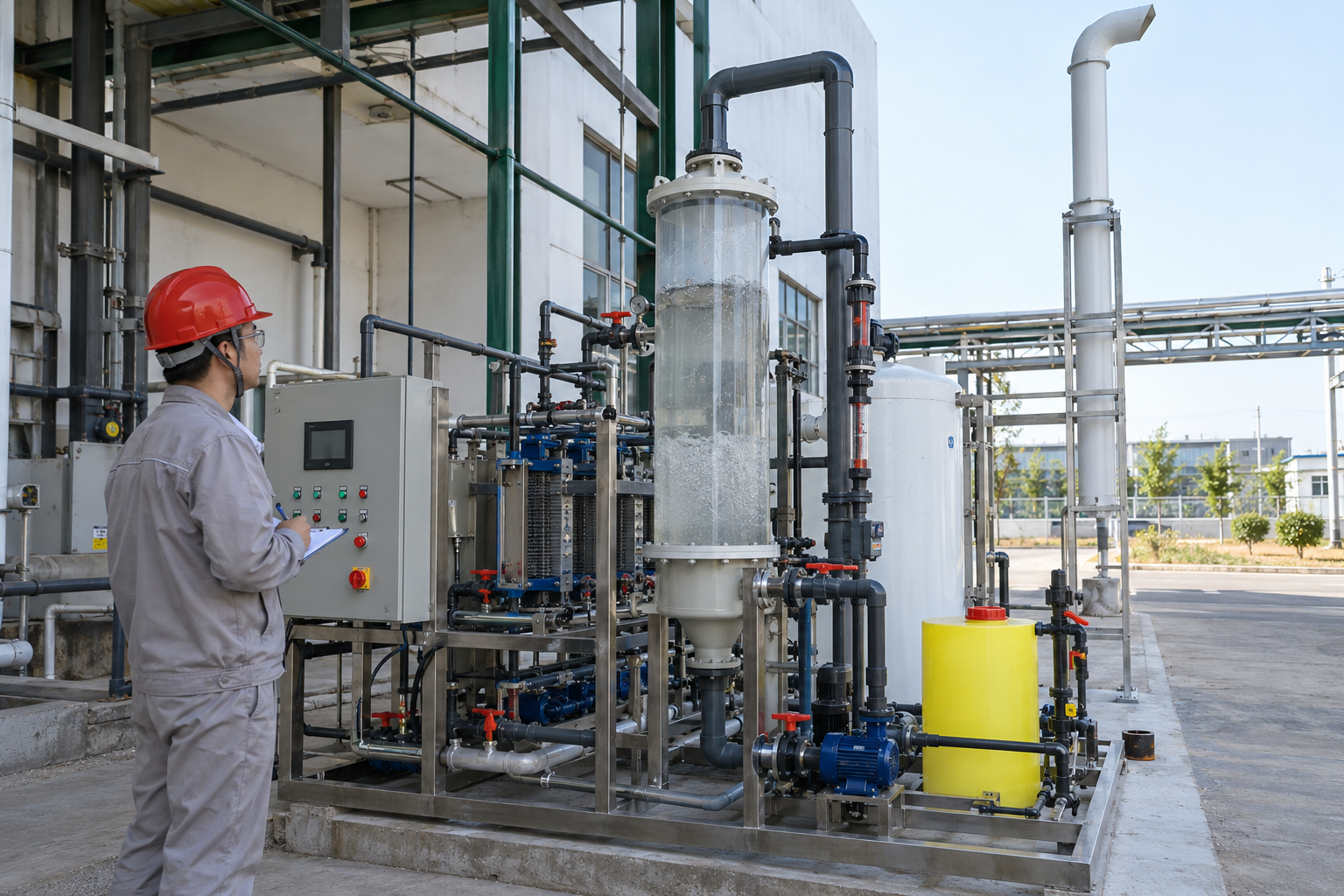
A titanium anode for sodium hypochlorite generator system operates alongside cathodic hydrogen production. The equipment must separate, vent, and monitor gas safely.
Which design questions belong in review?
Trace gas from cell to discharge location. Hydrogen does not end at the cathode. Review:
- Expected generation under maximum current
- Cell level, separator, vent, dilution, and enclosure
- Sensors, alarms, interlocks, and facility interface
How should shutdowns protect the cell?
Loss of flow, level, ventilation, or temperature control should trigger defined action. Test the interlocks before release.
| Condition | Detection | Protective action |
|---|---|---|
| Low liquid level | Level signal | Stop rectifier |
| High temperature | Temperature signal | Alarm and shutdown |
| Vent fault | Flow or gas monitoring | Safe stop |
Key Takeaway: Treat hydrogen handling and automatic shutdown as core cell requirements, not optional accessories.
7. What Causes Scale and Output Loss?
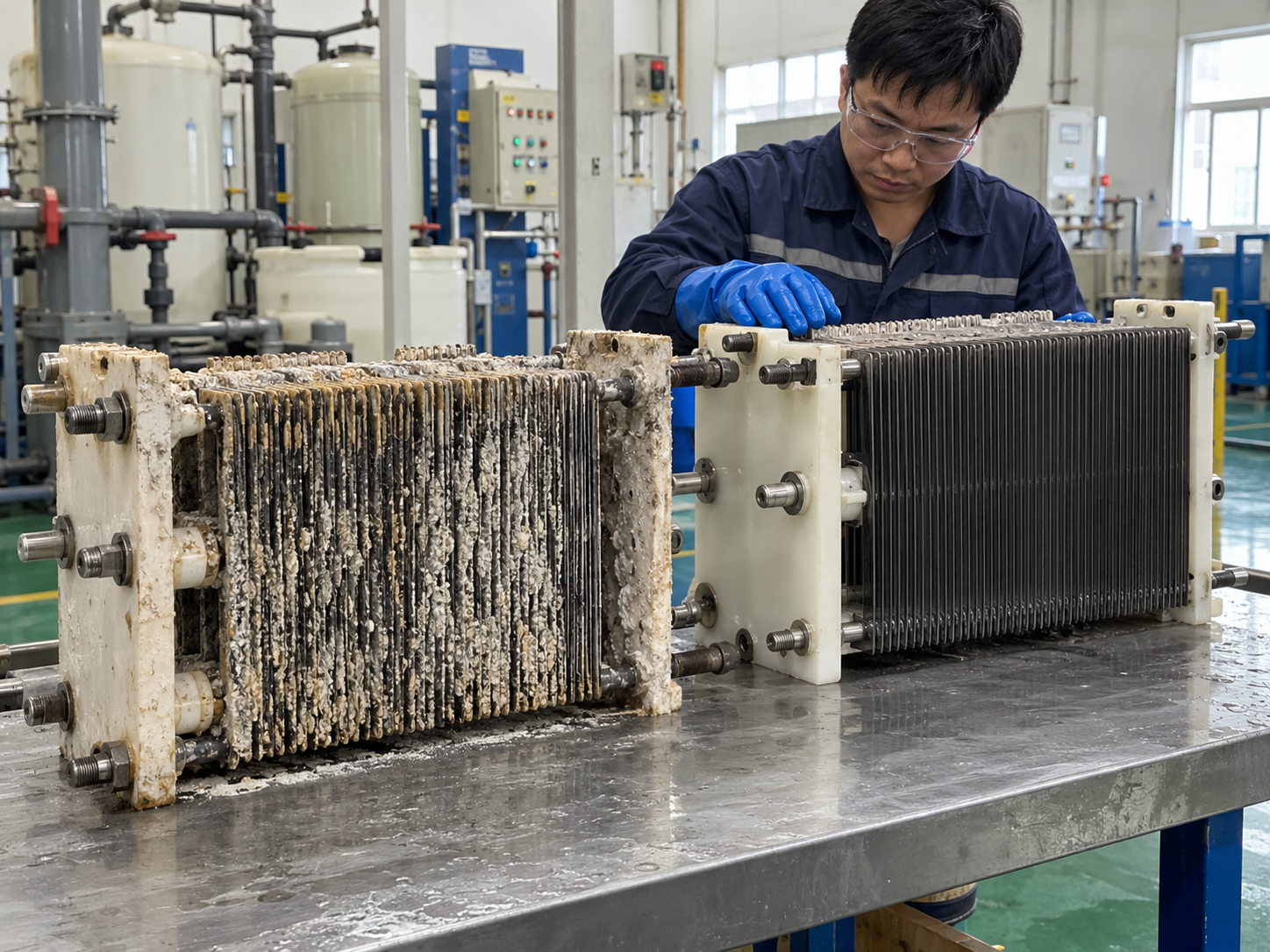
A titanium anode for sodium hypochlorite generator can lose effective area when scale or deposits cover the surface. Chemistry, local pH, water hardness, flow, and shutdown drying can contribute.
How should the cause be investigated?
Check the whole process before increasing cleaning strength. Scale is a symptom with a source. Review:
- Makeup-water treatment and brine preparation
- Deposit location, composition, and growth pattern
- Flow, polarity, current, temperature, and cleaning history
How should cleaning be approved?
Use methods compatible with coating, titanium, seals, and housing. Define chemical, concentration, time, temperature, tools, and rinse.
| Cleaning field | Control | Risk prevented |
|---|---|---|
| Chemical | Approved compatibility | Coating attack |
| Contact time | Defined limit | Overexposure |
| Tool | Non-damaging method | Scratches and impact |
Key Takeaway: Control water and brine conditions, then use a coating-compatible cleaning procedure.
8. How Should the Generator Be Pilot-Tested?
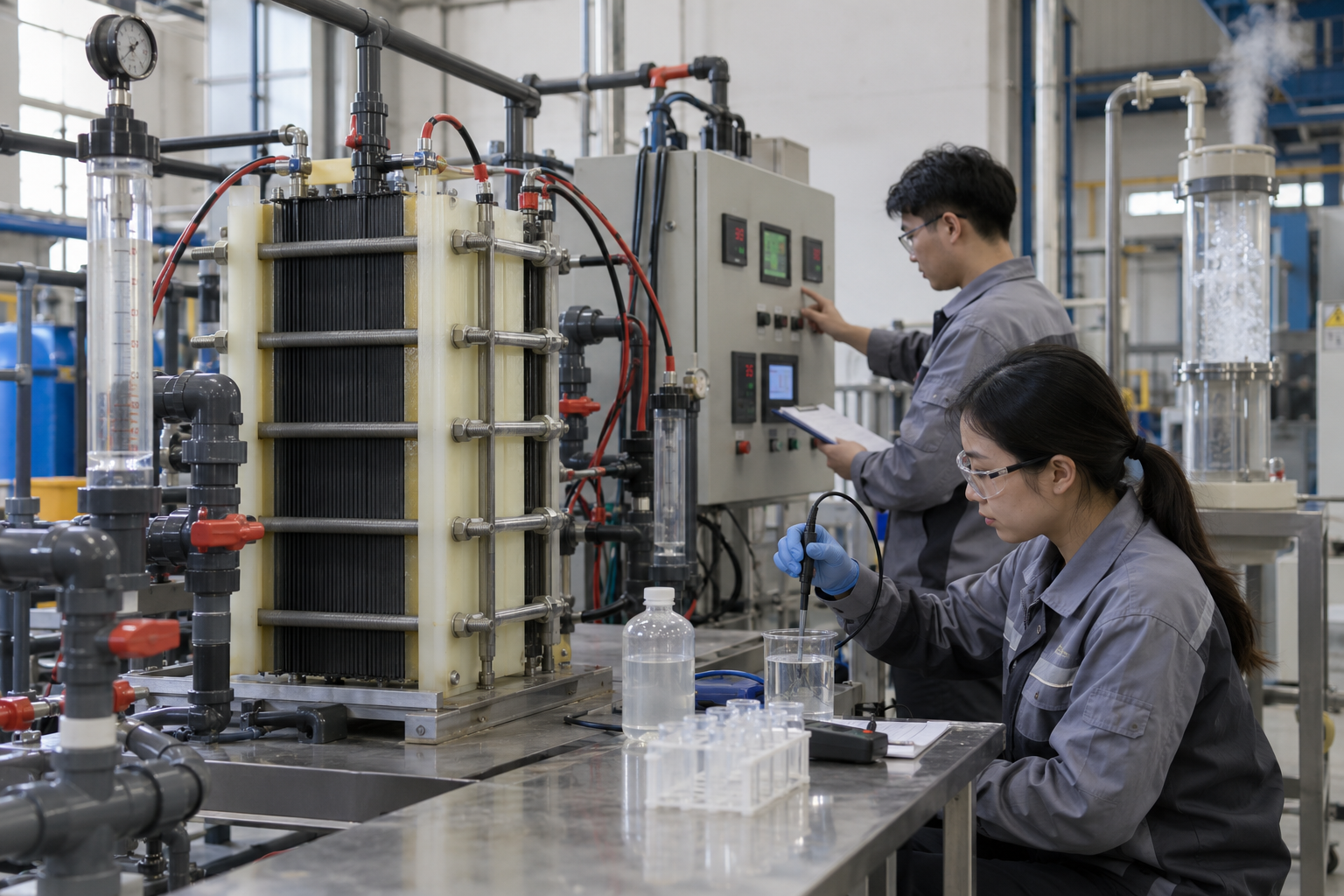
A titanium anode for sodium hypochlorite generator pilot should verify output, electrical behavior, heat, flow, gas handling, scaling, controls, and maintainability. Test conditions need to resemble expected duty.
Which data should be collected?
Use synchronized process and electrical records. Every result needs its conditions. Record:
- Brine, water, flow, product sampling, and temperature
- Current, voltage, runtime, alarms, and shutdowns
- Gas handling, deposits, cleaning, and surface condition
How does quality evidence support the pilot?
The site's quality-control page can provide electrode identity and inspection baseline. Preserve that link to field results.
| Evidence | Purpose | Release decision |
|---|---|---|
| Batch identity | Trace tested electrodes | Part approval |
| Pilot trend | Confirm operation | Technical approval |
| Maintenance result | Confirm service method | Operating approval |
Key Takeaway: Release production only after a traceable pilot meets defined output, safety, and maintenance criteria.
9. What Should Operators Monitor?

A titanium anode for sodium hypochlorite generator should be monitored through output, current, voltage, temperature, flow, brine, gas, and cleaning trends. Comparable records support diagnosis.
Which values deserve routine trending?
Select data that triggers action. Trends tell the operating story. Track:
- Product concentration and production rate
- Current, voltage, temperature, and flow
- Salt, water quality, cleaning, and alarms
How should a decline be investigated?
Check brine, water, scale, flow, contacts, rectifier, sensors, and electrode condition before replacing anodes.
| Trend | Possible source | First check |
|---|---|---|
| Output falls | Brine, current, or active area | Process inputs |
| Voltage rises | Scale or contact | Cell inspection |
| Temperature rises | Flow or loading | Cooling and interlock |
Key Takeaway: Use aligned process and electrical trends to separate anode wear from system problems.
10. What Should the Generator RFQ Include?
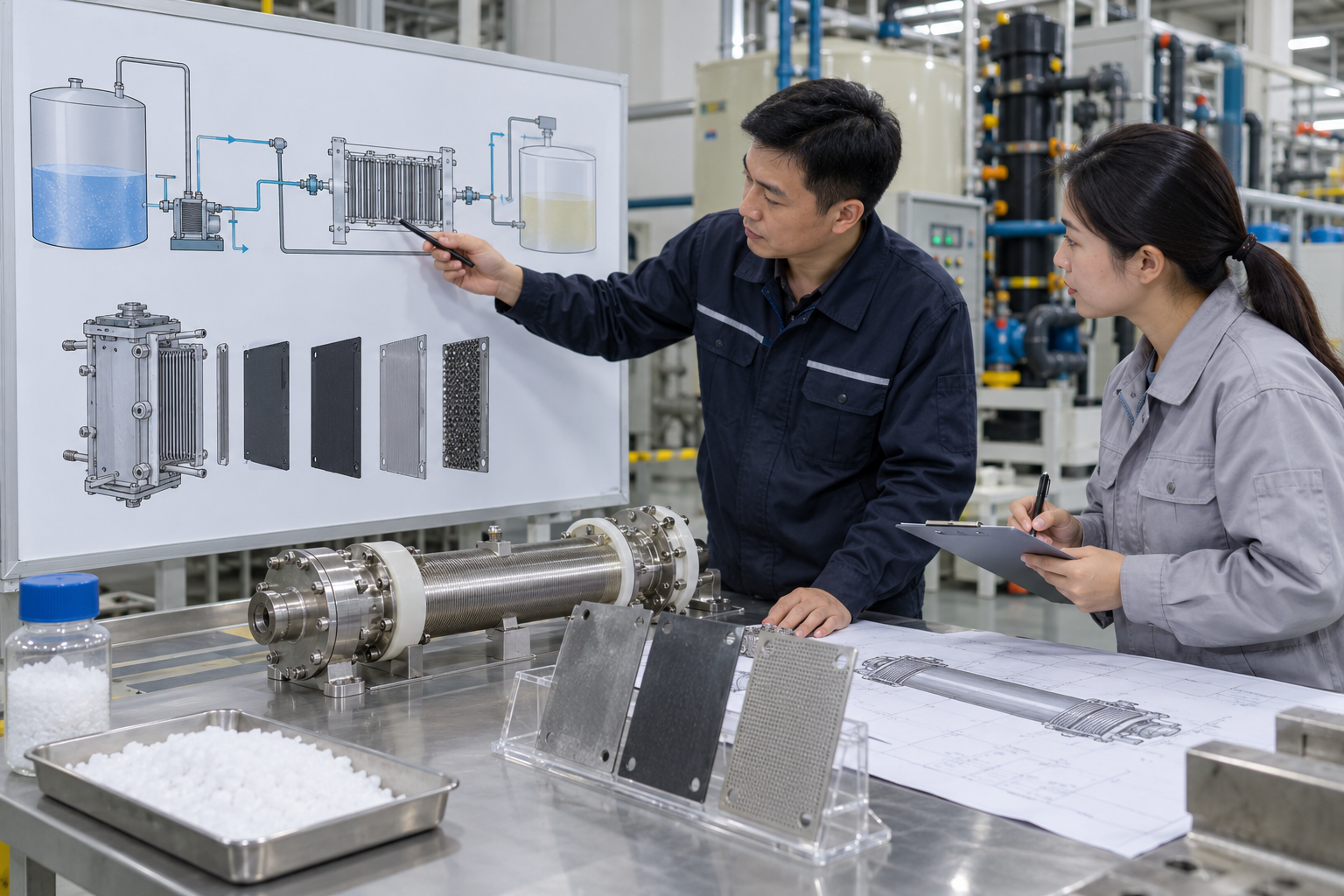
A titanium anode for sodium hypochlorite generator RFQ should include output target, brine and water data, electrical duty, cell drawing, gas handling, controls, cleaning, and validation. Suppliers can then expose assumptions.
Which documents should you send?
Use one controlled technical package. Make safety and chemistry visible. Include:
- Process flow, output target, brine, water, and product data
- Current, voltage, temperature, flow, gas, and interlocks
- Cell drawing, quantity, cleaning, sample, and acceptance plan
How should the review begin?
Use the request-a-quote page and request a written design basis. Compare all suppliers against the same inputs.
| RFQ section | Buyer input | Supplier response |
|---|---|---|
| Process | Output and chemistry | Reaction and cell basis |
| Equipment | Electrical and hydraulic data | Electrode and control proposal |
| Validation | Acceptance need | Pilot method |
Key Takeaway: A complete generator RFQ aligns chemistry, equipment, safety, and validation. When it is ready, contact us today for review.
Frequently Asked Questions
Can I select an anode from salt concentration alone? No. Current, temperature, pH, water quality, output, flow, geometry, and runtime also matter.
What's the best way to manage hydrogen venting? Separate and remove cathodic hydrogen through a designed gas path with appropriate controls.
How do I know if electrode scale is controlled? Review makeup water, brine, flow, local chemistry, cleaning frequency, and operating trends.
How do I know if a pilot test is complete? It should meet defined output, electrical, thermal, hydraulic, gas, scale, control, and service criteria.
Can I request a custom electrolytic cell? Yes, when chemistry, output, interfaces, controls, and acceptance criteria are defined for engineering review.