
An electrolysis electrode supplier needs chemistry, reaction, electrical loading, flow, geometry, control, and validation data before proposing a cell. A drawing without operating conditions describes a container, not a working electrochemical system.
Incomplete inputs create hidden assumptions that later appear as poor output, high voltage, heat, deposits, or installation changes. A structured data package lets engineering risks surface before quotation and prototype work.
1. What Reaction Must the Cell Deliver?

An electrolysis electrode design begins with the reaction and product your cell must deliver. The same dimensions can support very different chemistry and electrode surfaces.
Which process outcome should you define?
State the target product, treatment effect, and acceptable byproducts. Start with what leaves the cell. Include:
- Target anodic and cathodic reactions
- Output rate or treatment objective
- Purity, conversion, and byproduct limits
Why is an application name insufficient?
Terms such as water treatment or electrolysis cover many chemistries. The supplier needs a measurable operating objective.
| Input | Useful form | Weak form |
|---|---|---|
| Reaction | Named anodic and cathodic duty | “Electrolysis” |
| Output | Rate and test method | “High output” |
| Byproduct | Allowed limit | “Clean process” |
Key Takeaway: Define reactions and measurable output before selecting electrodes, power, or cell architecture.
2. Which Electrolyte Data Are Required?

An electrolysis electrode recommendation depends on full electrolyte composition, concentration range, pH, temperature, conductivity, and impurities. A trade name rarely provides enough detail.
What belongs in the chemical analysis?
Share normal and boundary conditions. One sample is only one moment. Record:
- Main ions, solvents, additives, and concentration ranges
- pH, conductivity, temperature, and suspended matter
- Makeup water, drag-in, and cleaning chemistry
How should variability be reported?
Separate startup, steady operation, seasonal change, and upset chemistry. Note which limits are controlled and which are observed.
| Chemistry field | Normal data | Boundary data |
|---|---|---|
| Main solute | Typical concentration | Minimum and maximum |
| Impurity | Current analysis | Credible worst case |
| Temperature | Running value | Maximum cycle |
Key Takeaway: Give the supplier a chemistry envelope so material selection covers real variation, not one laboratory point.
3. How Much Electrical Loading Will the Cell See?
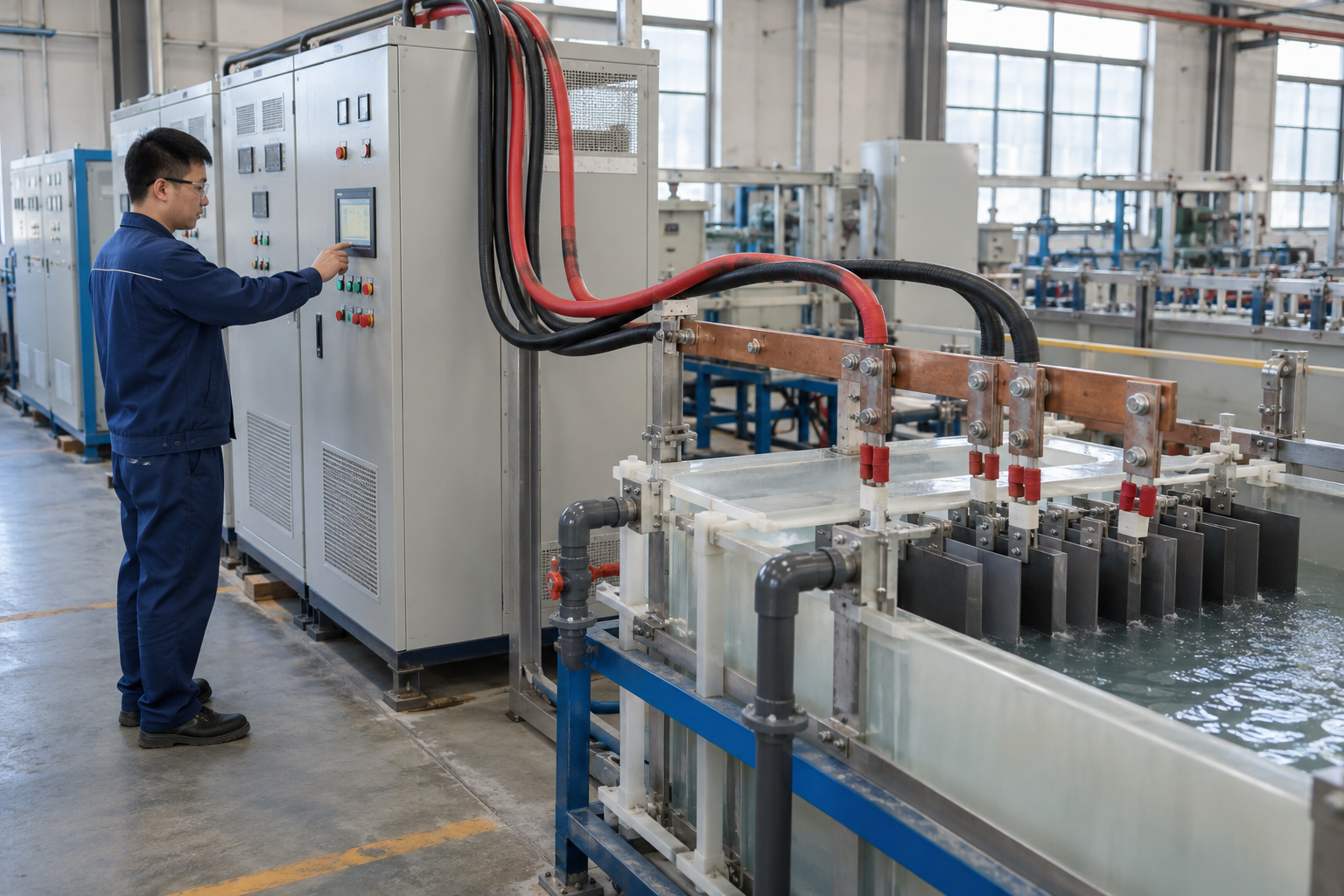
An electrolysis electrode must be sized around active area, current density, voltage, duty cycle, and connection losses. Total current alone does not show local loading.
Which electrical values should you send?
Provide normal, startup, and maximum conditions. Separate the number from its area. Include:
- DC current, voltage range, polarity, and control mode
- Active electrode area and expected current density
- Continuous, intermittent, pulsed, or reversing duty
What should the supplier calculate?
The response should state assumptions for area, gap, resistance, current distribution, and heat. Any unavailable data should remain a stated assumption.
| Electrical item | Buyer provides | Supplier confirms |
|---|---|---|
| Current | Normal and peak | Conductor and rectifier basis |
| Active area | Drawing or target | Calculated current density |
| Voltage | Available range | Expected operating window |
Key Takeaway: Link current to coated area, spacing, and duty so electrical design reflects the actual cell.
4. What Flow and Gas Data Matter?
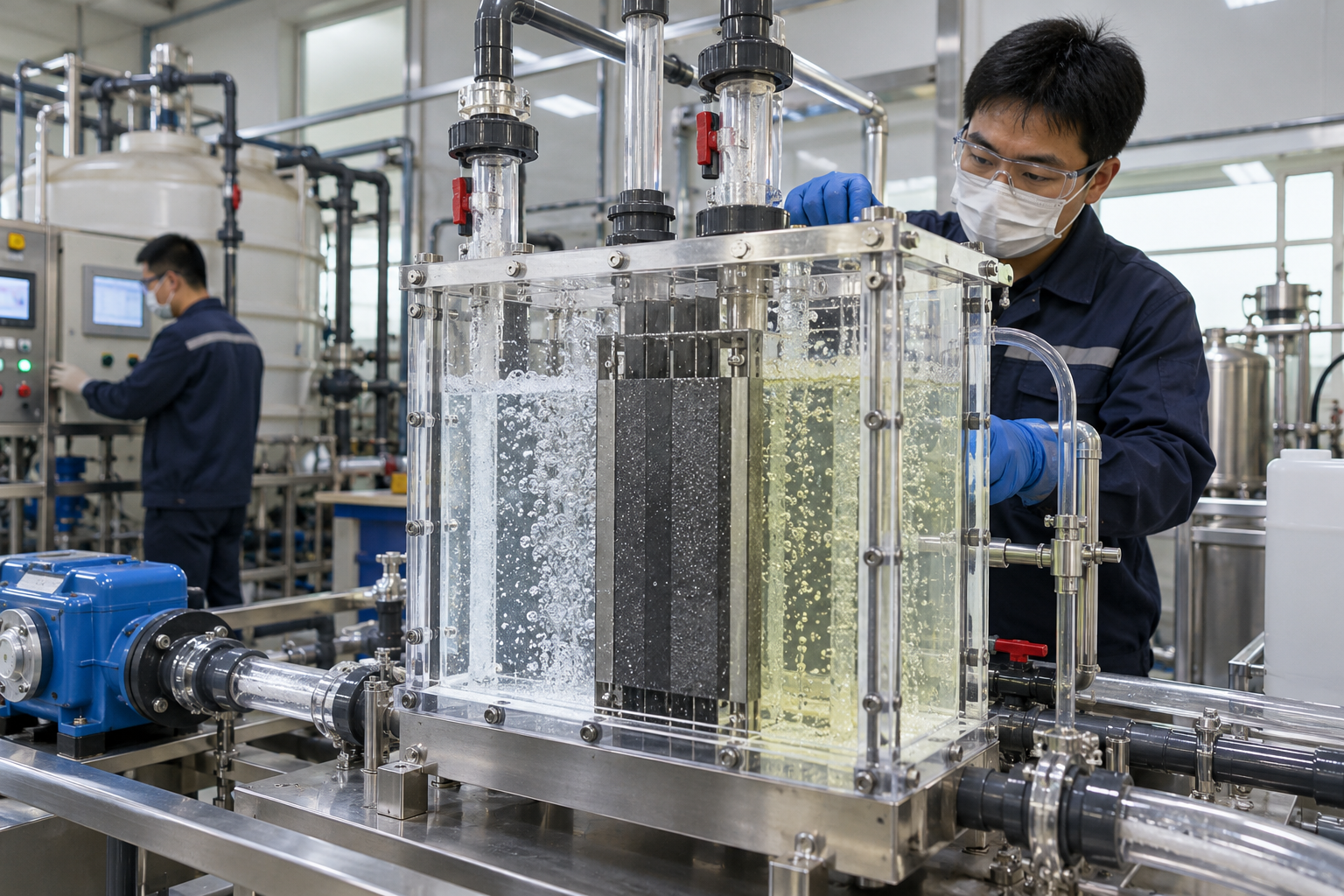
An electrolysis electrode operates inside a hydraulic system where flow, pressure, gas, heat, and solids affect mass transfer. Poor transport can make a sound surface behave badly.
Which hydraulic inputs are useful?
State flow direction and operating range, not only pump size. Show what moves around the electrodes. Include:
- Flow rate, pressure, residence time, and recirculation
- Gas type, production estimate, separation, and venting
- Solids, deposits, filters, and cleaning access
Why should gas handling be designed early?
Gas can block active area, disturb level control, or create safety hazards. Venting and separation belong in the cell concept.
| Transport issue | Possible effect | Design response |
|---|---|---|
| Low flow | Concentration gradient | Flow-path review |
| Gas hold-up | Lost active area | Release and venting path |
| Solids | Blockage or abrasion | Filtration and cleaning |
Key Takeaway: Treat liquid and gas transport as part of electrode performance and equipment safety.
5. Which Geometry and Interface Data Are Needed?
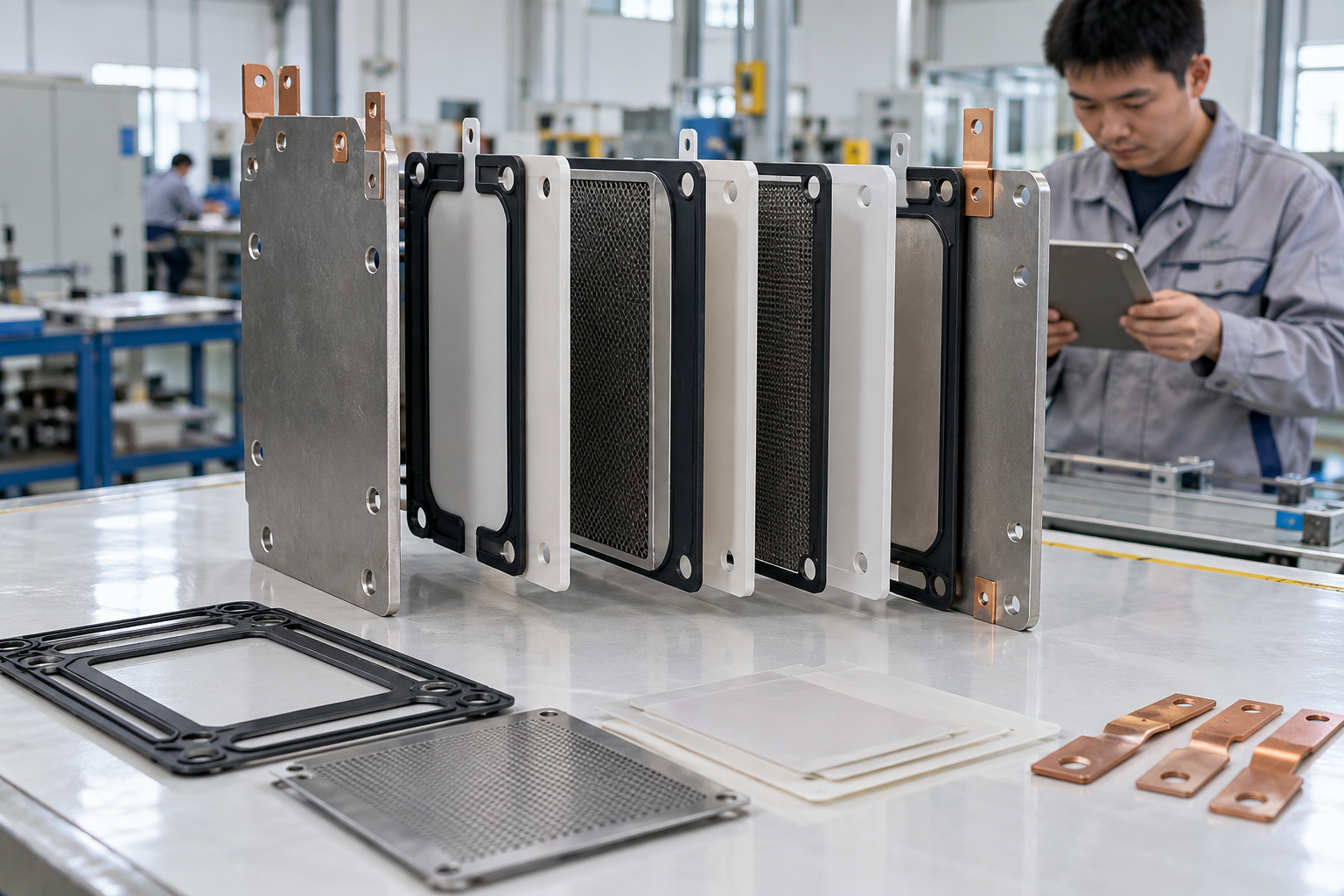
An electrolysis electrode must fit housing, seals, spacers, busbars, piping, and maintenance access. Mechanical interfaces should be dimensioned before prototype release.
Which drawings should accompany the RFQ?
Provide assembly and component views with revision status. Interfaces cause expensive surprises. Mark:
- Electrode, spacer, gasket, and housing dimensions
- Ports, flow direction, vents, drains, and sensors
- Busbar faces, welds, insulation, and mounting points
Which tolerances matter most?
Focus on gap, sealing, alignment, coated boundaries, and connection fit. Avoid generic tight tolerances that add cost without function.
| Interface | Functional risk | Drawing control |
|---|---|---|
| Electrode gap | Uneven field or shorting | Spacer dimension |
| Seal face | Leakage | Flatness and finish |
| Current tab | Resistance and heat | Contact geometry |
Key Takeaway: Dimension functional interfaces and let their failure risk determine tolerances.
6. What Materials Must Be Compatible?

An electrolysis electrode works with housing, gasket, fastener, conductor, membrane, and piping materials that all contact chemistry or process heat. One incompatible item can stop the cell.
Which wetted materials need review?
List every material and exposure zone. Compatibility belongs to the assembly. Review:
- Electrode substrate and active surface
- Housing, gasket, membrane, fasteners, and fittings
- Cleaning tools and maintenance chemicals
How should unknown compatibility be handled?
Use supplier evidence, coupon testing, or a pilot under bounded conditions. Record assumptions rather than hiding them.
| Material group | Exposure | Evidence path |
|---|---|---|
| Electrode | Anodic or cathodic duty | Electrochemical test |
| Seal | Chemical and compression | Compatibility data |
| Conductor | Heat and atmosphere | Electrical and thermal check |
Key Takeaway: Review complete cell materials against chemistry, temperature, voltage, and maintenance practice.
7. Which Controls and Safety Inputs Are Required?
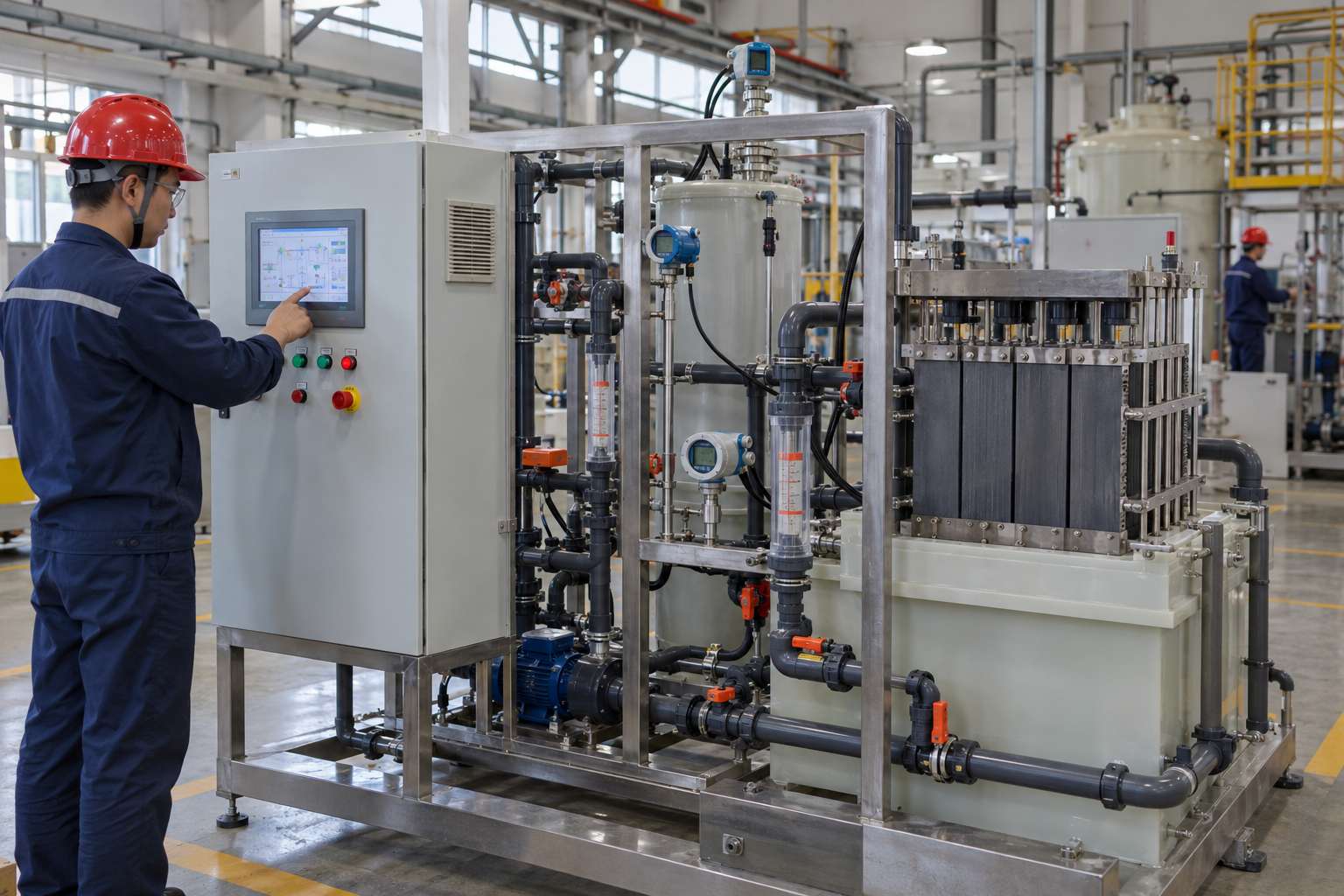
An electrolysis electrode can be damaged when flow, level, temperature, polarity, or gas handling leaves its safe operating window. Controls should react before damage develops.
Which interlocks belong in the design review?
Base interlocks on process hazards and equipment limits. An alarm without action is only noise. Consider:
- Low flow, low level, and high temperature
- Overcurrent, overvoltage, and polarity error
- Gas detection, vent failure, and enclosure condition
Who supplies each control function?
Define boundaries for rectifier, PLC, sensors, valves, remote signals, and emergency shutdown. Assign testing responsibility.
| Control item | Owner | Acceptance test |
|---|---|---|
| Rectifier limit | Buyer or supplier | Current and voltage trip |
| Flow interlock | System integrator | Simulated low-flow stop |
| Gas handling | Facility and skid team | Vent and alarm check |
Key Takeaway: Turn every critical operating limit into a defined control, owner, and test.
8. How Should Maintenance Be Described?
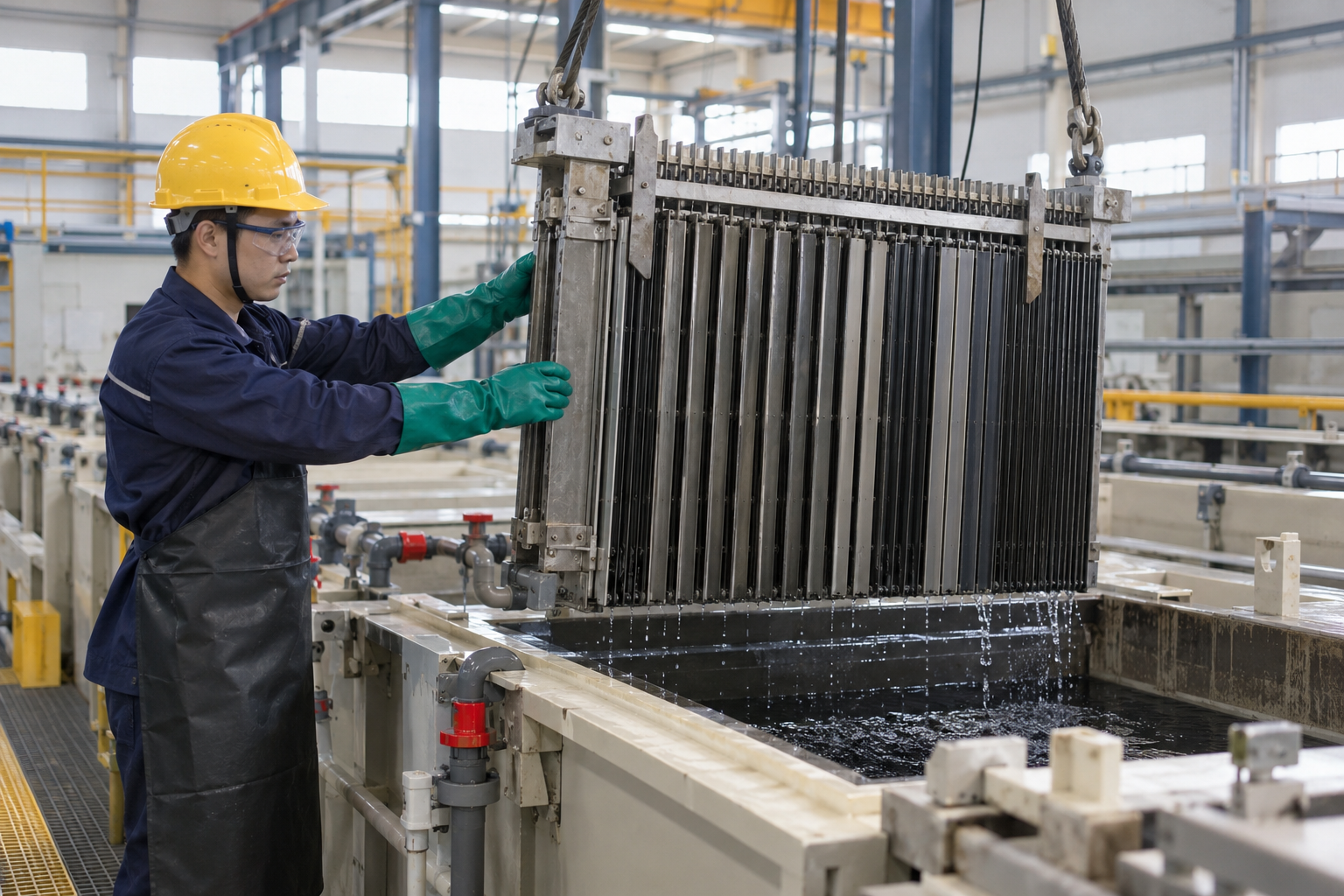
An electrolysis electrode maintenance plan should define inspection, cleaning, disassembly, spare parts, and safe isolation. Equipment design decides whether those jobs take minutes or a shutdown shift.
Which maintenance data should the buyer provide?
Share available labor, tools, water, chemicals, and shutdown windows. Design for the hands doing the work. Include:
- Cleaning frequency and approved method
- Access, lifting, drainage, and isolation constraints
- Spare electrodes, gaskets, sensors, and part-number rules
How can quality records support service?
The site's quality-control page can guide inspection discussions. Preserve baseline photos, dimensions, and test results for later comparison.
| Maintenance task | Design feature | Record |
|---|---|---|
| Cleaning | Removable cassette or access | Procedure and interval |
| Inspection | Visible active surface | Baseline photo |
| Replacement | Controlled part number | Revision and batch |
Key Takeaway: Include maintenance access and records in cell design before production drawings are frozen.
9. What Should a Pilot Test Prove?
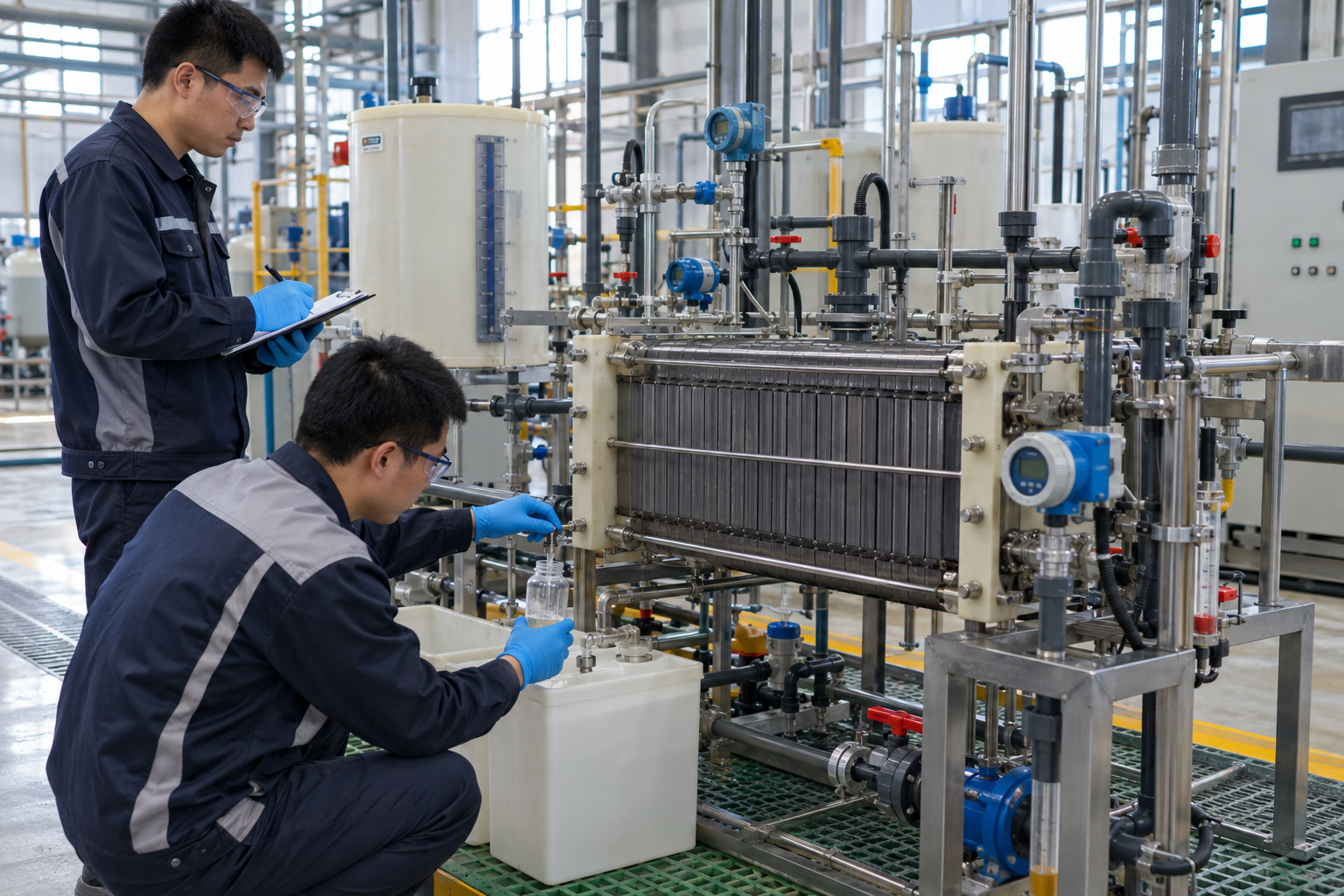
An electrolysis electrode pilot should prove reaction output, voltage, heat, flow, gas handling, fit, and maintenance under defined conditions. A demonstration without acceptance limits cannot release production.
Which measurements belong in the plan?
Choose values tied to technical and purchasing decisions. A pilot must answer a release question. Measure:
- Output, conversion, byproduct, or treatment response
- Current, voltage, temperature, flow, and pressure
- Surface condition, deposits, leakage, and control events
How do you scale after a successful pilot?
Freeze inputs, drawings, software settings, part numbers, and inspection methods. Identify which parameters change with scale.
| Pilot result | Scale question | Record |
|---|---|---|
| Output | Does area scale linearly? | Mass balance |
| Voltage | Does resistance change? | Electrical trend |
| Flow | Does distribution remain even? | Hydraulic basis |
Key Takeaway: Use pilot evidence to freeze a reproducible design basis, not merely to show that electrolysis occurred.
10. What Should the Supplier RFQ Package Contain?
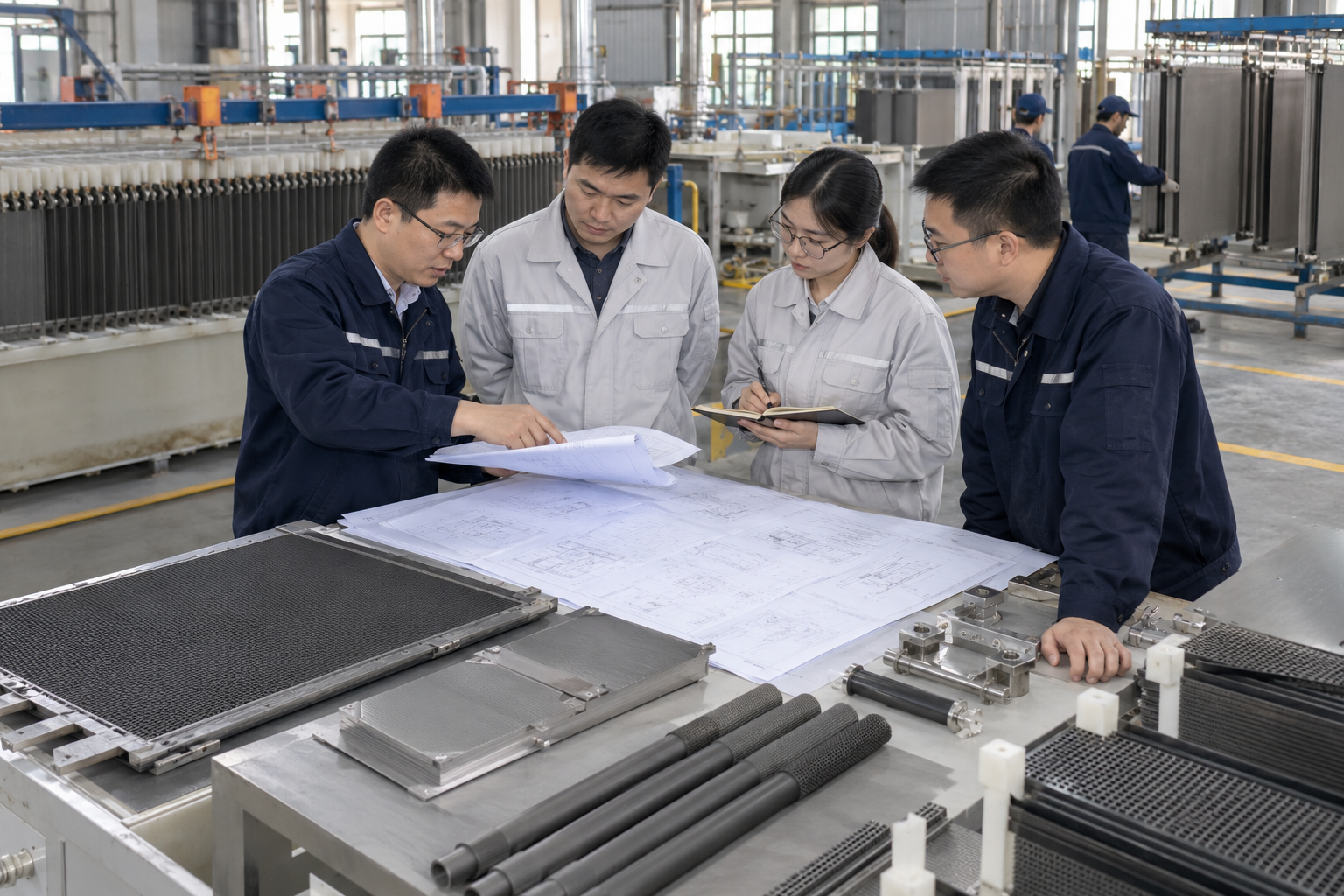
An electrolysis electrode RFQ package should combine reaction, chemistry, electrical, hydraulic, mechanical, material, control, maintenance, and validation data. One structured package lets suppliers price the same scope.
How should the files be organized?
Use revision-controlled documents and a clear responsibility list. Make omissions visible before quotation. Include:
- Process and operating-data sheet
- Assembly and interface drawings
- Control narrative, test plan, quantity, and delivery scope
How should you start supplier review?
Use the request-a-quote page to send the package and list unresolved items. Ask each supplier to return assumptions and exclusions.
| RFQ document | Buyer owns | Supplier returns |
|---|---|---|
| Operating sheet | Process limits | Design basis |
| Drawings | Interfaces | Confirmed or revised concept |
| Test plan | Acceptance goal | Proposed method |
Key Takeaway: A complete package shortens clarification and exposes technical differences. When your files are ready, contact us today for review.
Frequently Asked Questions
Can I request a cell using only a sample electrode? You can start there, but chemistry, loading, flow, interfaces, controls, and output still need definition.
What's the best electrical starting point? No single value stands alone. Current, active area, voltage, spacing, conductivity, and duty work together.
How do I know if my electrolyte data is complete? Send the known composition, range, impurities, pH, temperature, and cleaning chemistry.
Can I ask the supplier to design controls too? Possibly, but scope boundaries must state who owns rectifier, PLC, sensors, valves, safety, and commissioning.
How do I know if a pilot cell is approved? Use written acceptance criteria for output, electrical behavior, heat, flow, gas, leakage, controls, and maintainability.