
A platinized titanium anode combines a titanium support with an active platinum surface for selected electrochemical duties. It can suit processes that value platinum behavior, stable geometry, and custom fabricated forms.
Your bath may still attack exposed titanium, consume platinum, or perform poorly when current, temperature, chemistry, and geometry fall outside the design basis. Selection starts with the electrolyte and reaction, then moves to coating method, thickness, structure, connection, and pilot evidence.
1. What Is a Platinized Titanium Anode?
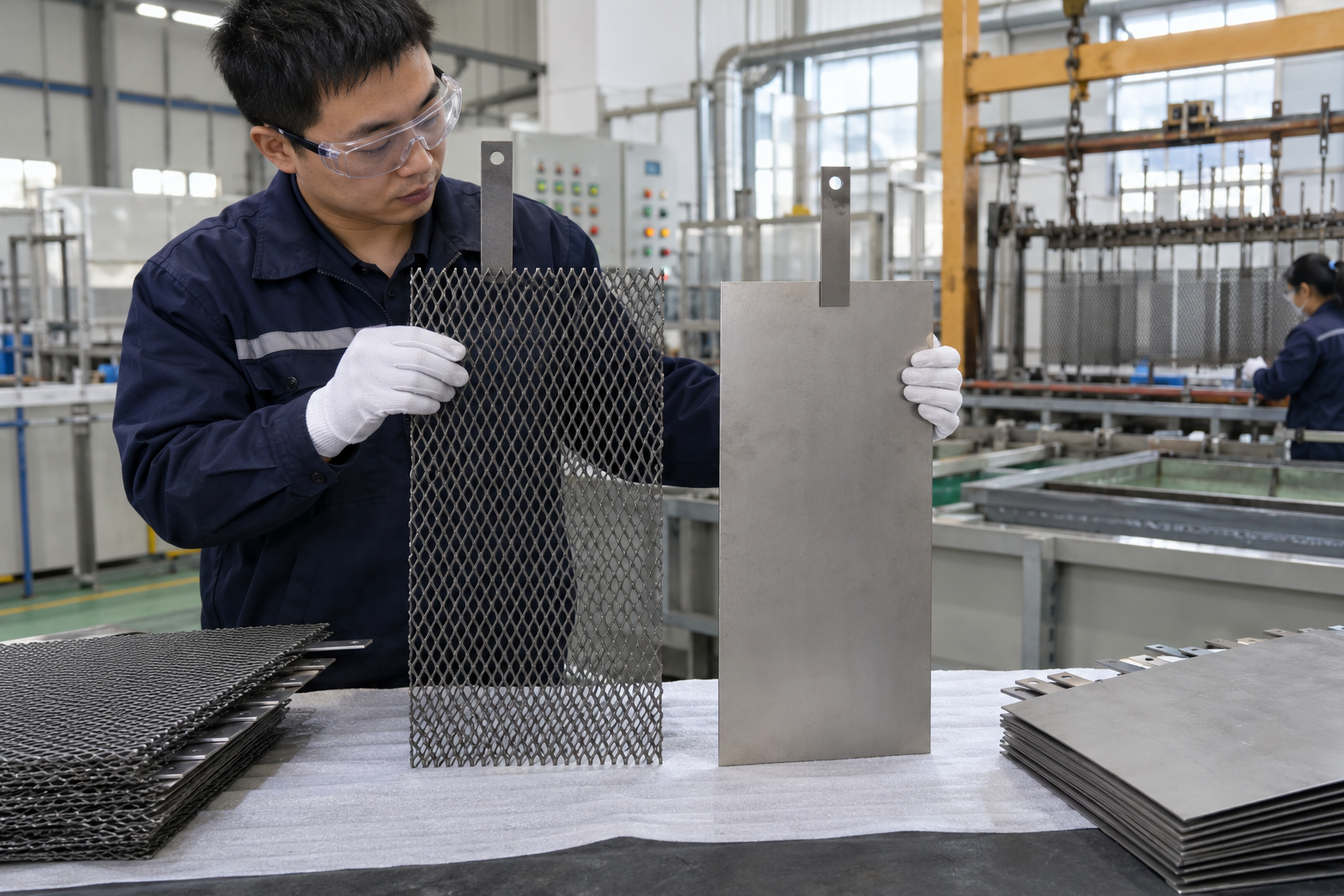
A platinized titanium anode uses titanium as the carrier and platinum as the working electrochemical surface. The titanium provides a lightweight fabricable structure, while platinum contacts the electrolyte.
How do carrier and coating divide the work?
The carrier holds shape and transfers current to the surface. Separate structure from activity. Specify:
- Titanium grade, form, dimensions, and welded details
- Platinum-coated area and uncoated contact zones
- Electrical connection and supported current path
What should a product description state?
It should identify carrier form, platinum application method, active area, connection, and operating basis. A single phrase such as “platinum titanium” leaves too many variables open.
| Product field | Buyer question | Risk if absent |
|---|---|---|
| Carrier | Which titanium form is used? | Poor fit or strength |
| Platinum surface | Where and how is it applied? | Unknown active area |
| Connection | How is current supplied? | Local heat or voltage loss |
Key Takeaway: Treat platinum surface, titanium carrier, and current connection as separate but linked design choices.
2. Which Electrolytes Can It Serve?

A platinized titanium anode can serve several electrochemical baths when both platinum and exposed carrier areas remain compatible. Bath identity alone does not finish the review.
What chemistry should be disclosed?
Provide the complete formulation and credible operating range. The small print lives in the bath. Include:
- Main salts, acids, alkalis, and concentration ranges
- pH, temperature, conductivity, and impurities
- Additives, drag-in, cleaning agents, and makeup water
Why do exposed areas matter?
Coating boundaries, pores, scratches, and contact zones can expose titanium to electrolyte. Compatibility review must cover the assembled part, not only platinum.
| Chemistry input | Design question | Buyer action |
|---|---|---|
| Main bath | Does platinum support the reaction? | Confirm reaction basis |
| Aggressive impurity | Can carrier be attacked? | Define limit or alternative |
| Cleaning chemistry | Can surface be damaged? | Approve cleaning method |
Key Takeaway: Review platinum and every exposed titanium area against the real bath and cleaning cycle.
3. Which Reactions Favor a Platinum Surface?

A platinized titanium anode may fit duties where platinum catalysis and low contamination from a soluble anode matter. Reaction requirements must be defined before coating thickness.
What should the buyer call the target reaction?
State the desired product and relevant competing reactions. A process name is not a reaction sheet. Record:
- Target anodic reaction and product-quality requirement
- Cathodic process and cell separation, when relevant
- Gas, byproduct, and contamination limits
When should MMO also be compared?
MMO may offer a different balance of selectivity, stability, cost, and duty fit. Compare both options against the same chemistry and electrical limits rather than brand familiarity.
| Selection question | Platinum option | MMO comparison |
|---|---|---|
| Reaction fit | Platinum catalytic behavior | Oxide family and selectivity |
| Bath purity | Insoluble active surface | Coating-specific residue risk |
| Maintenance | Replatinization route | Recoating route |
Key Takeaway: Choose a surface after defining reaction, bath purity, operating limits, and a realistic maintenance route.
4. How Does Platinum Thickness Affect the Project?
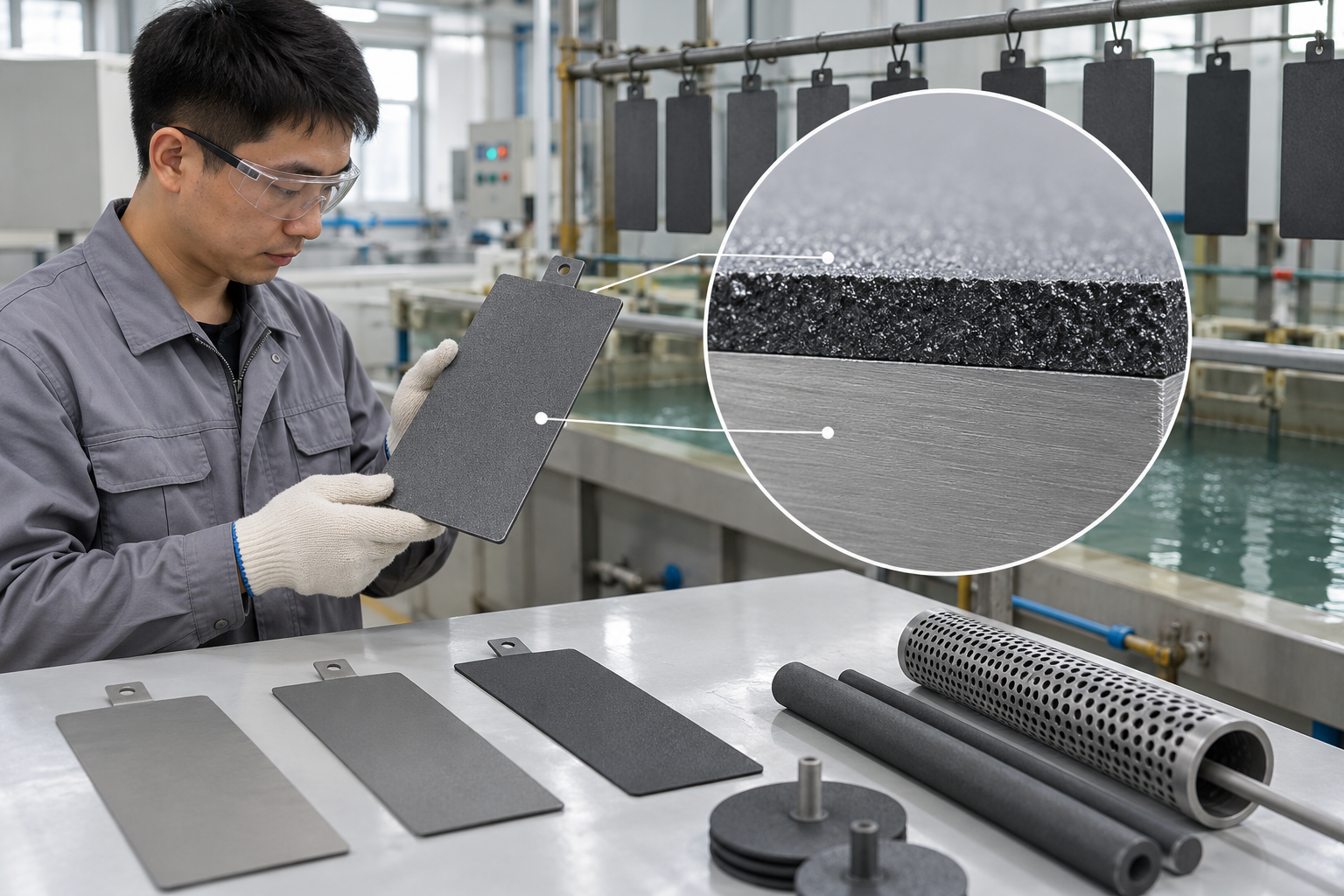
A platinized titanium anode needs platinum loading suited to current, bath, temperature, runtime, and expected maintenance. More platinum is not a substitute for incorrect chemistry or poor current distribution.
Which inputs influence loading?
Ask how the supplier connects thickness to duty. Loading needs a reason. Provide:
- Current density and active area
- Temperature, bath composition, and runtime
- Target service interval and replatinization strategy
How should thickness be verified?
Agree on the measurement method, sampling plan, units, and acceptance rule before production. One spot reading may not describe a complex shape.
| Verification field | Question | Control |
|---|---|---|
| Method | How is platinum measured? | Approved procedure |
| Sampling | Which locations are checked? | Drawing map |
| Acceptance | What range applies? | Purchase specification |
Key Takeaway: Tie platinum loading and its measurement plan to operating duty before approving a quotation.
5. Which Anode Geometry Fits the Cell?
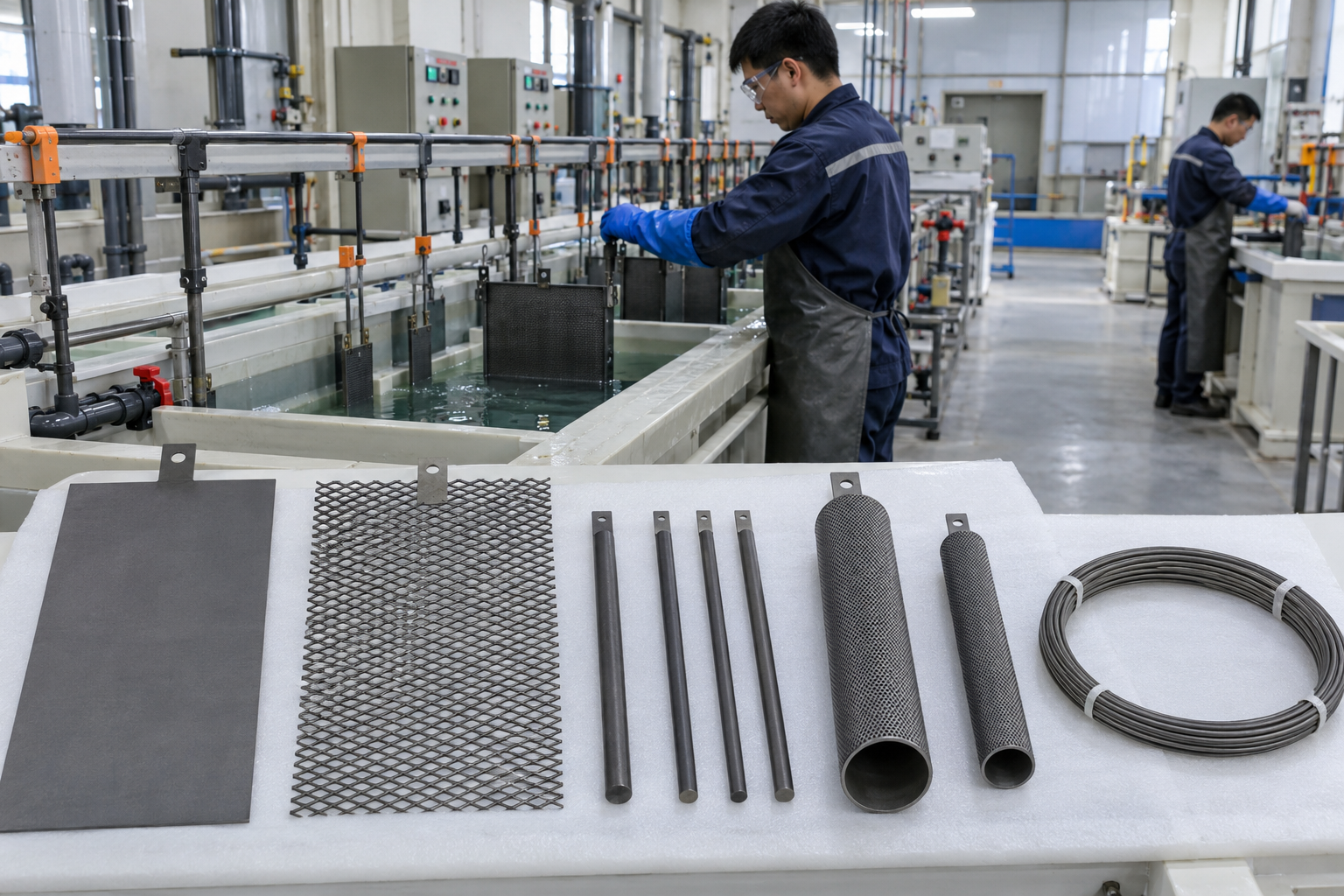
A platinized titanium anode can be built as expanded mesh, sheet, tube, rod, wire, or a custom structure. Geometry affects current distribution, electrolyte exchange, mass, and installation.
Why is expanded mesh often considered?
Open area can support liquid exchange and current distribution while keeping mass low. Open structure changes the field. Review:
- Strand dimensions and open-area pattern
- Distance to the cathode and edge effects
- Mounting stiffness and electrical feed points
When do plate, tube, or rod forms make sense?
Flat cells may favor plates, while cylindrical equipment may suit tube or rod forms. A custom shape must still remain inspectable and cleanable.
| Form | Design benefit | Check before approval |
|---|---|---|
| Expanded mesh | Open flow and broad area | Strand and edge condition |
| Plate | Controlled flat face | Flatness and gap |
| Tube or rod | Cylindrical fit | Radial spacing and contact |
Key Takeaway: Select geometry through current distribution, bath movement, fit, stiffness, and maintenance access.
6. How Do Current and Temperature Affect Wear?
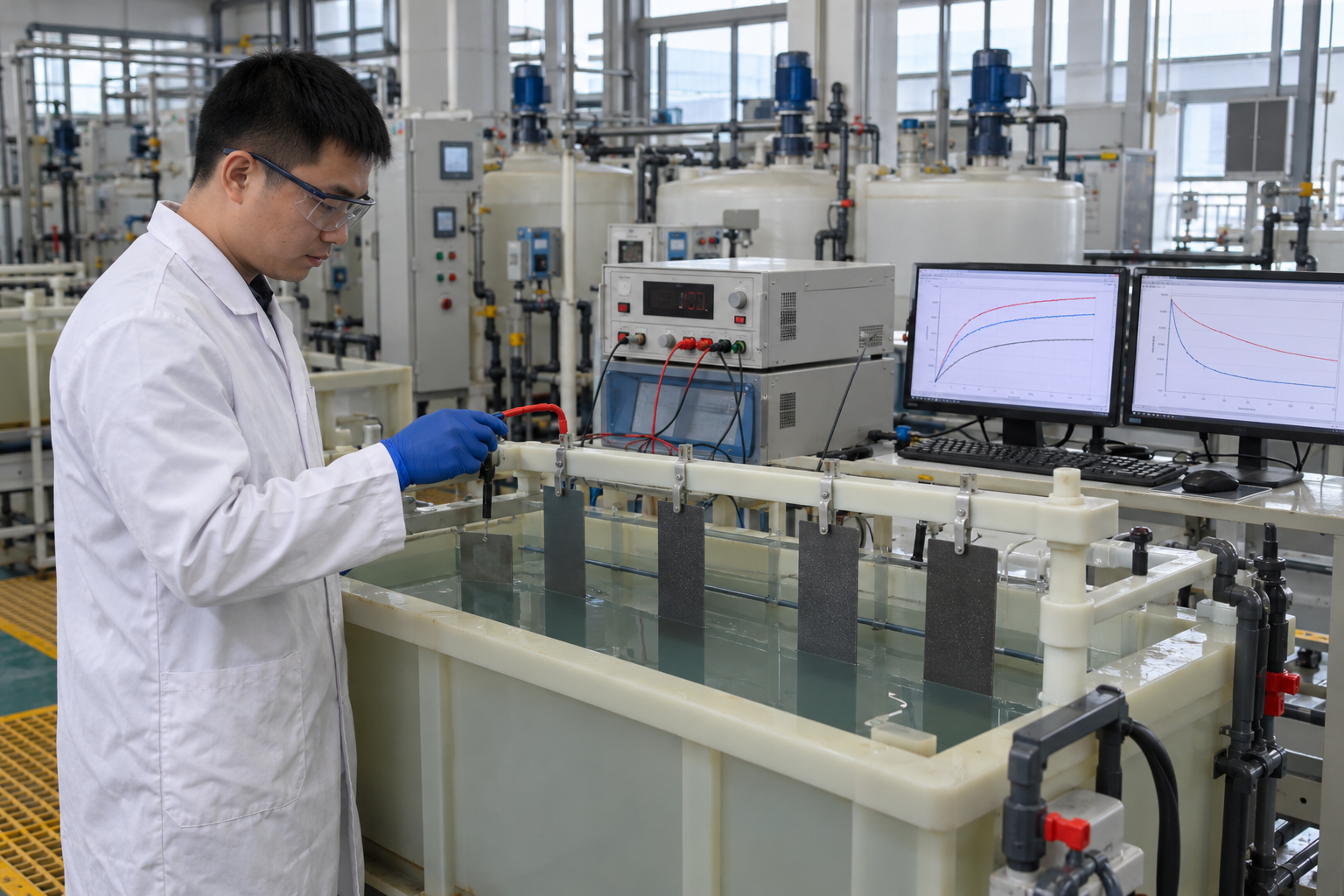
A platinized titanium anode can consume platinum faster when anodic current, temperature, or chemistry becomes more demanding. Actual wear depends on their combined effect.
Which limits belong in the specification?
Separate normal operation from startup and upset conditions. Peak duty belongs on the page. Include:
- Normal and maximum current density
- Normal and maximum bath temperature
- Continuous, intermittent, pulsed, or reversing operation
What should operators trend?
Track voltage, current, temperature, product response, and maintenance under comparable conditions. Sudden changes deserve inspection.
| Trend | Possible meaning | Next action |
|---|---|---|
| Rising voltage | Contact, scale, or surface change | Inspect cell and anode |
| Falling output | Chemistry or active-area issue | Check bath and loading |
| Local heating | Current crowding or poor contact | Review connection |
Key Takeaway: Define peak duty and monitor trends so wear is evaluated against real operating history.
7. How Should Connections Be Designed?

A platinized titanium anode connection must carry current with controlled resistance while keeping vulnerable materials isolated from electrolyte. High-current designs may need a composite current-feed approach.
What does a connection drawing need?
Mark materials, welds, threads, sealing, contact faces, and coated boundaries. Connections fail at interfaces. Specify:
- Busbar and lead materials
- Wet and dry zones
- Mechanical load, sealing, and assembly method
Which checks confirm a sound connection?
Dimensional fit, electrical continuity, joint condition, and insulation should be verified before installation. Field assembly instructions matter too.
| Connection risk | Inspection | Result needed |
|---|---|---|
| High resistance | Continuity or resistance check | Stable current path |
| Electrolyte ingress | Seal and boundary check | Protected core material |
| Mechanical movement | Fit and load review | Secure assembly |
Key Takeaway: Treat the current feed as part of the electrode design, not as an accessory added after coating.
8. How Should Quality Be Verified?

A platinized titanium anode quality plan should cover carrier identity, dimensions, platinum surface, connections, and agreed functional evidence. The acceptance method must match part shape and project risk.
Which records should be retained?
Keep records that connect each part to an approved baseline. Traceability makes repeat orders useful. Request:
- Part number, drawing revision, and batch identity
- Dimensional and active-area inspection
- Platinum measurement and connection checks where agreed
How can factory controls support validation?
The site's quality-control framework can support the discussion, while your purchase specification defines required evidence.
| Record | What it confirms | Buyer gate |
|---|---|---|
| Drawing report | Geometry and fit | Mechanical release |
| Surface record | Platinum acceptance | Coating release |
| Test record | Behavior under agreed duty | Technical release |
Key Takeaway: Approve geometry, platinum evidence, connection, and test results as one traceable package.
9. When Should You Run a Pilot Test?
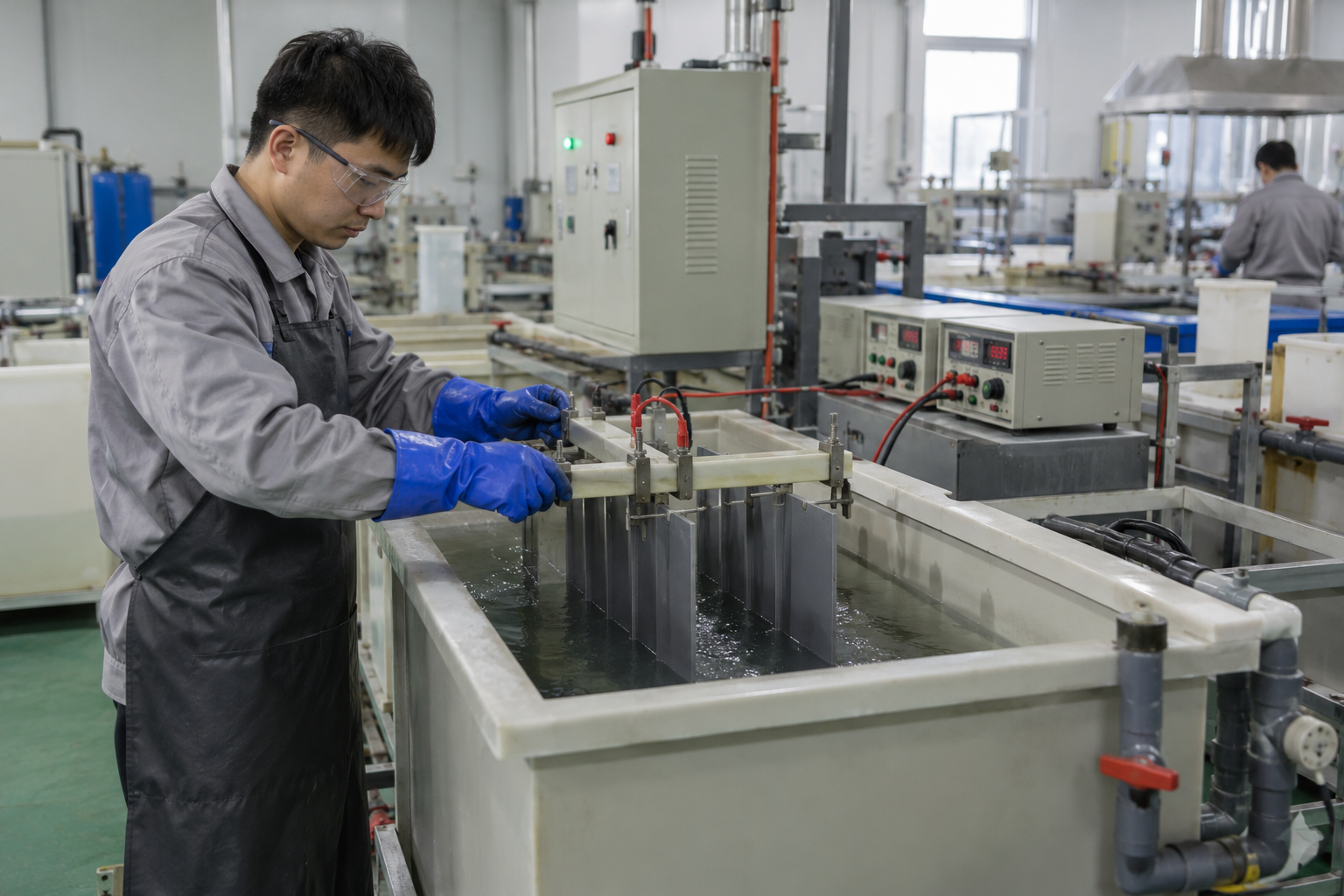
A platinized titanium anode deserves pilot testing when bath chemistry, geometry, current, or contamination limits differ from proven duty. A useful test mirrors production conditions closely enough to guide release.
What should the pilot measure?
Choose measurements tied to the purchase decision. A pilot needs a pass line. Track:
- Voltage and current at defined operating points
- Product quality or process response
- Temperature, surface condition, and bath change
How does a sample become a repeat-order part?
Freeze drawing revision, operating assumptions, inspection method, and approved results. Compare pilot batches against the same baseline.
| Stage | Decision | Evidence |
|---|---|---|
| Sample | Fit and initial behavior | Drawing and test notes |
| Pilot batch | Repeatability | Batch inspection |
| Series supply | Stable control | Part and revision history |
Key Takeaway: Pilot testing reduces risk when conditions, measurements, and release criteria resemble production duty.
10. What Should a Platinized-Anode RFQ Include?

A platinized titanium anode RFQ should define reaction, bath chemistry, current, temperature, geometry, platinum requirement, connection, and validation route. Clear inputs let suppliers expose assumptions before quoting.
Which details should you send?
Use one controlled drawing and one operating sheet. Make every comparison use the same basis. Include:
- Chemistry, pH, temperature, impurities, and cleaning
- Current, active area, voltage, runtime, and polarity
- Shape, dimensions, contact, quantity, and inspection
How should suppliers answer?
Responses should state design basis, exceptions, surface requirement, manufacturing route, sample plan, and evidence. The custom-service page provides a path for drawing review.
| RFQ field | Strong response | Warning sign |
|---|---|---|
| Bath compatibility | Limits tied to chemistry | Generic corrosion claim |
| Platinum requirement | Method and acceptance basis | Thickness without duty |
| Validation | Defined sample and readback | No test plan |
Key Takeaway: Compare complete technical responses, not one thickness or price. When your project package is ready, contact us today for review.
Frequently Asked Questions
Can I use platinized titanium in every acid bath? No. Bath chemistry, impurities, current, temperature, and exposed titanium areas require review.
What's the best platinum thickness for my duty? Specify duty first, then agree on loading and measurement with the supplier. A universal value can misstate your risk.
Can I replatinize a titanium anode? Often, yes, when the carrier remains suitable. Inspection should confirm geometry and surface condition before reuse.
How do I know if mesh is better than plate? Mesh supports open flow, while plate may fit controlled flat gaps. Cell geometry decides.
How do I know if MMO or platinum fits better? Compare reaction, bath, contamination limits, current, temperature, geometry, maintenance, and validation on one operating sheet.