
Test a Titanium electrode coating's adhesion with a method suited to its coating structure, substrate geometry and intended acceptance decision. Your inspection sheet asks for a tape rating, but the supplier provides a scratch-test result from a flat coupon. Those records cannot be treated as interchangeable proof, and the mismatch can delay an otherwise usable order. Agree on the method, specimen and failure interpretation before testing begins.
1. How should Titanium electrode adhesion be evaluated?
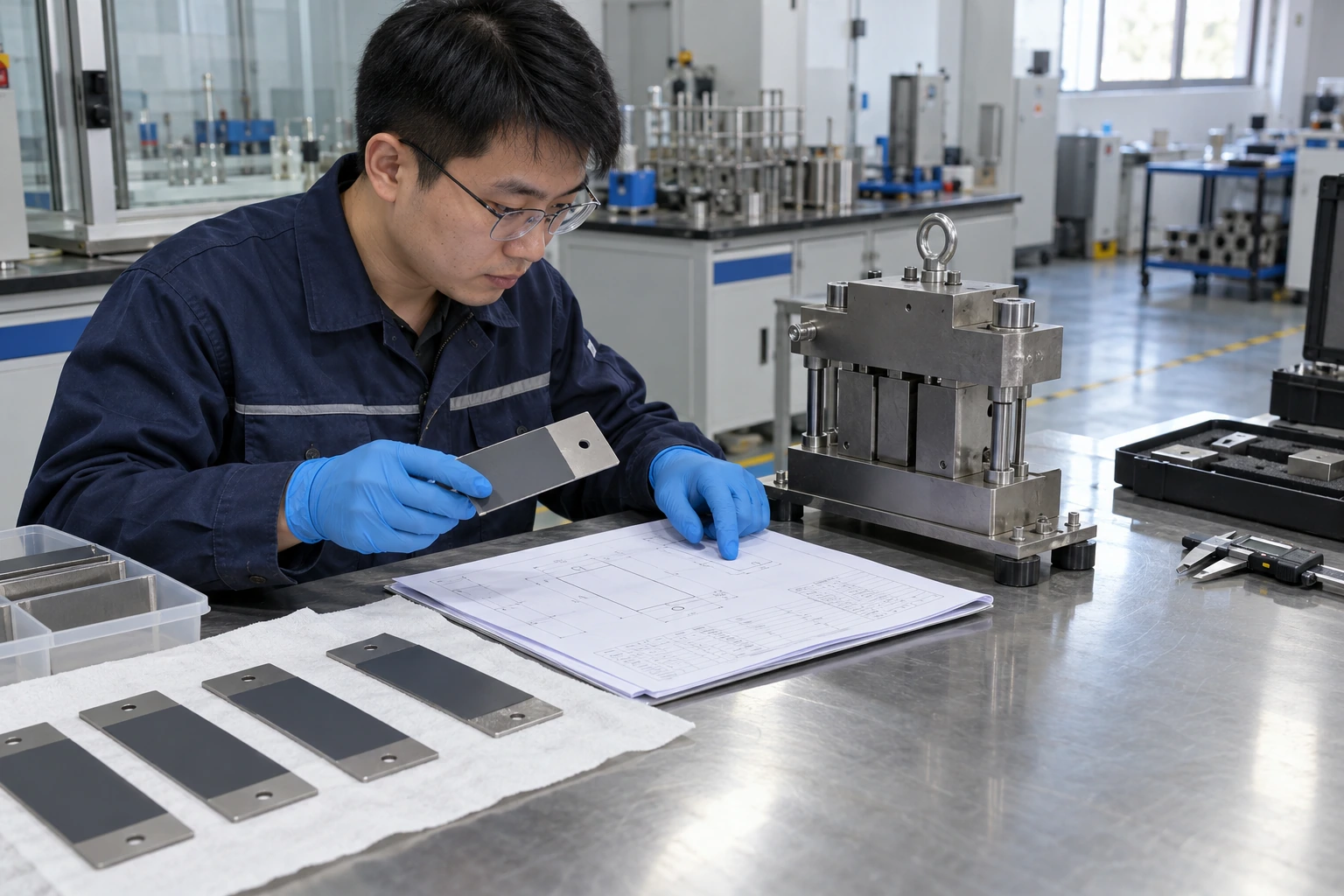
Evaluate Titanium electrode adhesion through an agreed test that measures a defined mechanical response under declared conditions. The selected method must suit the coating rather than merely resemble a familiar paint inspection.
What must the acceptance test decide?
Decide whether you are qualifying a process, screening a production lot or investigating detached material from a returned part. Give the test a defined job. Those decisions may require different specimens, conditioning and supporting observations even when they concern the same coating family.
- State which coating-substrate interface or failure mode concerns your team.
- Record whether the result supports development, lot release or an investigation.
| Check | Decision |
|---|---|
| Process qualification | Evaluate representative specimens and relevant failure mechanisms |
| Lot screening | Use the agreed repeatable method and acceptance rule |
A method name alone does not define what passing means. Key Takeaway: Write the acceptance question before requesting an adhesion result.
2. Which Titanium electrode failure are you measuring?
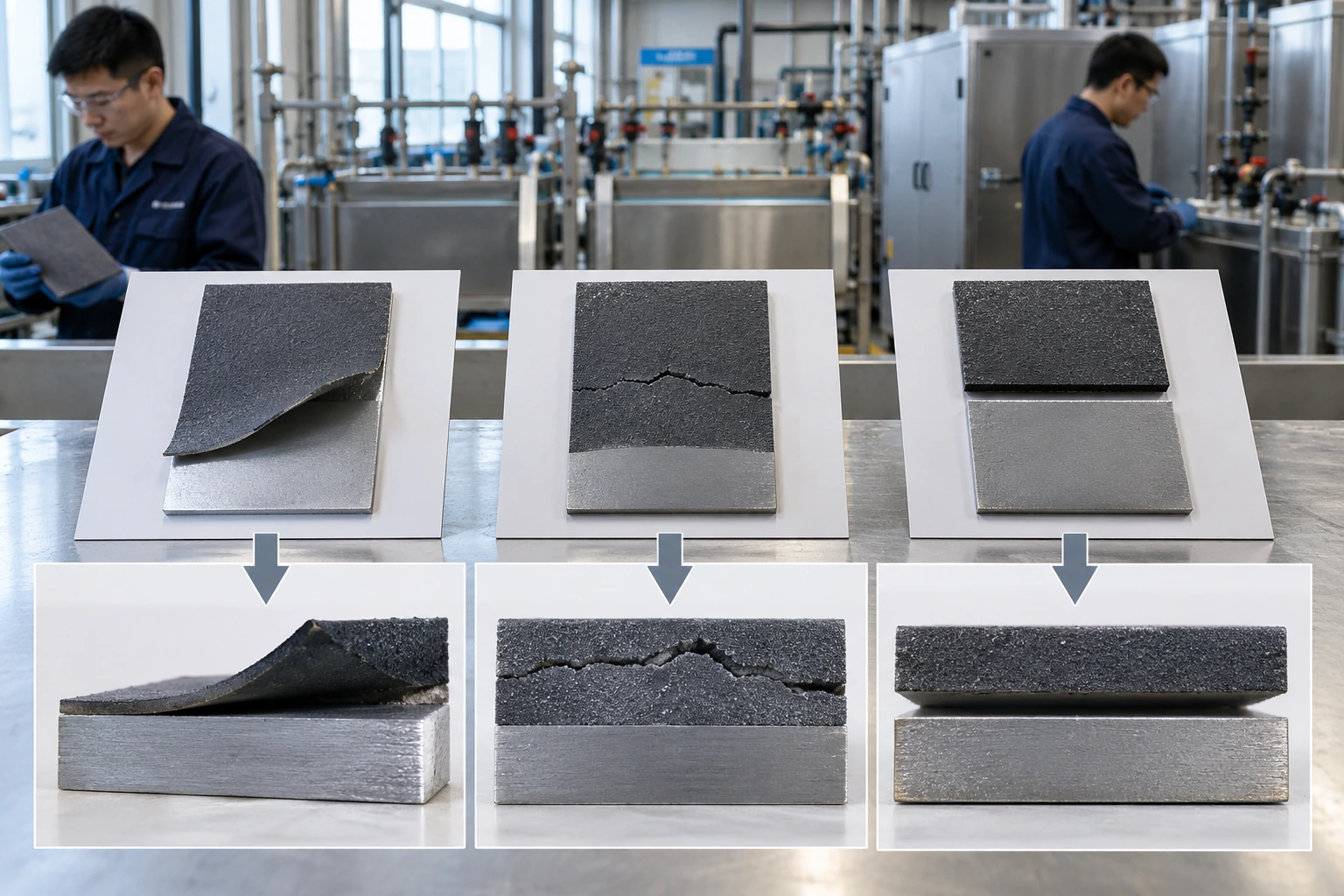
A Titanium electrode test can fail within the coating, at its substrate interface or within the test attachment. Identify the failure location before interpreting a reported load or rating.
Where did separation happen?
Photograph both exposed faces when the method permits inspection and keep the specimen identification visible in the record. Name the fracture location. Fixture release or adhesive failure can limit the information available about the coating-substrate bond.
- Distinguish interfacial separation from fracture inside the coating.
- Report mixed failure locations rather than assigning a single unsupported explanation.
| Check | Decision |
|---|---|
| Coating or interface failure | Interpret within the selected test method |
| Attachment failure | Check whether the coating result remains interpretable |
The same recorded load can accompany different physical failures. Key Takeaway: Require failure-mode evidence beside the reported test value.
3. Does a Titanium electrode suit a paint tape test?
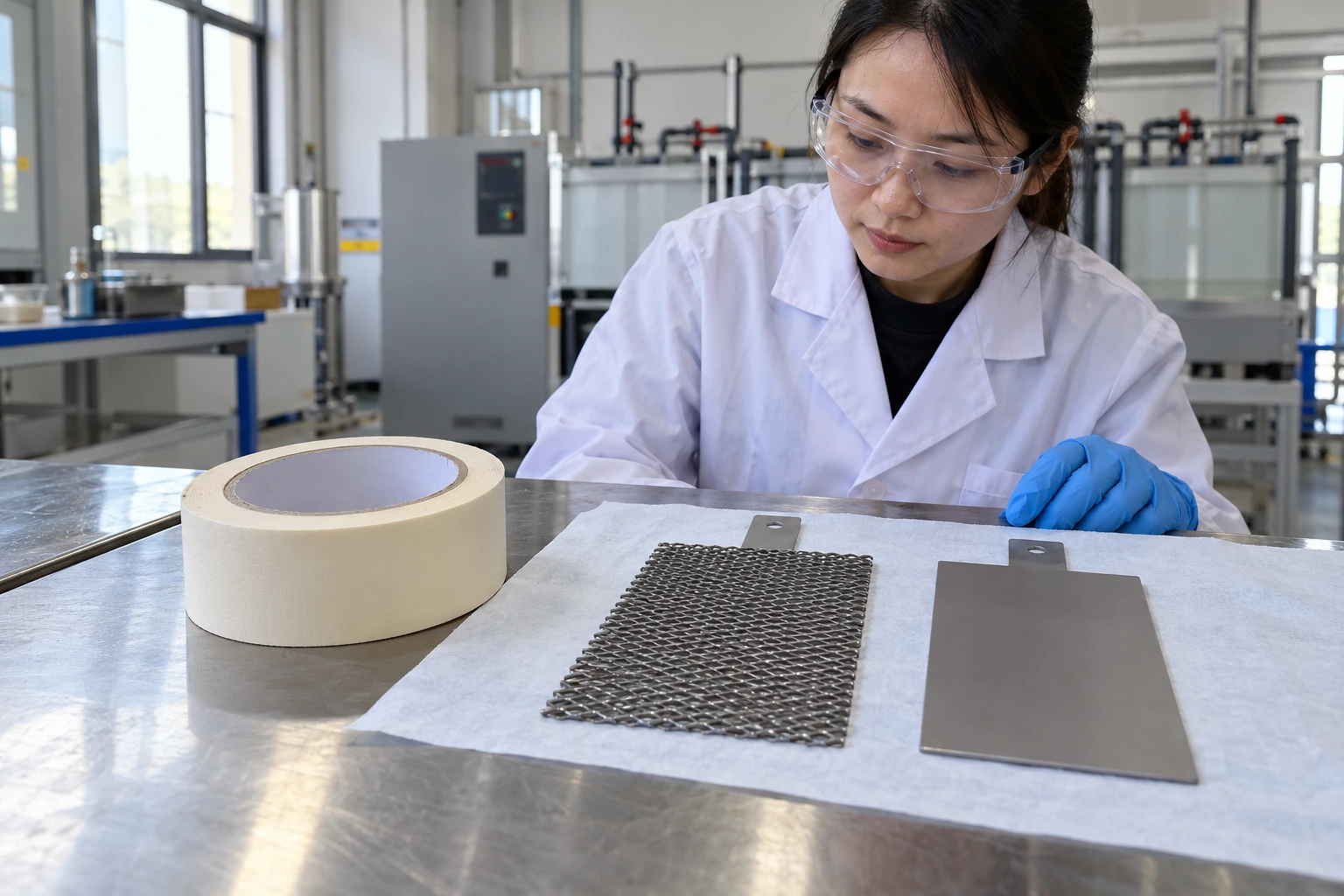
A Titanium electrode catalytic coating should not receive a paint tape test by default, because coating behavior and method scope may differ. Suitability requires agreement on the actual material and geometry.
Is the test measuring what you expect?
Tape tests depend on the test surface and execution, and their ratings do not express an absolute bond strength. Check the method's scope before using it. A porous or brittle catalytic layer may need a different interpretation from a relatively ductile coating film.
- Ask which method and revision were used and why they fit this coating.
- Do not convert a tape classification into a service-life guarantee.
| Check | Decision |
|---|---|
| Agreed applicable method | Use its defined interpretation and reporting limits |
| Unqualified borrowed method | Resolve suitability before making an acceptance decision |
A familiar rating can still be irrelevant to your coating system. Key Takeaway: Have buyer, supplier and laboratory agree on applicability before cutting a finished part.
4. Can Titanium electrode pull-off results be compared?
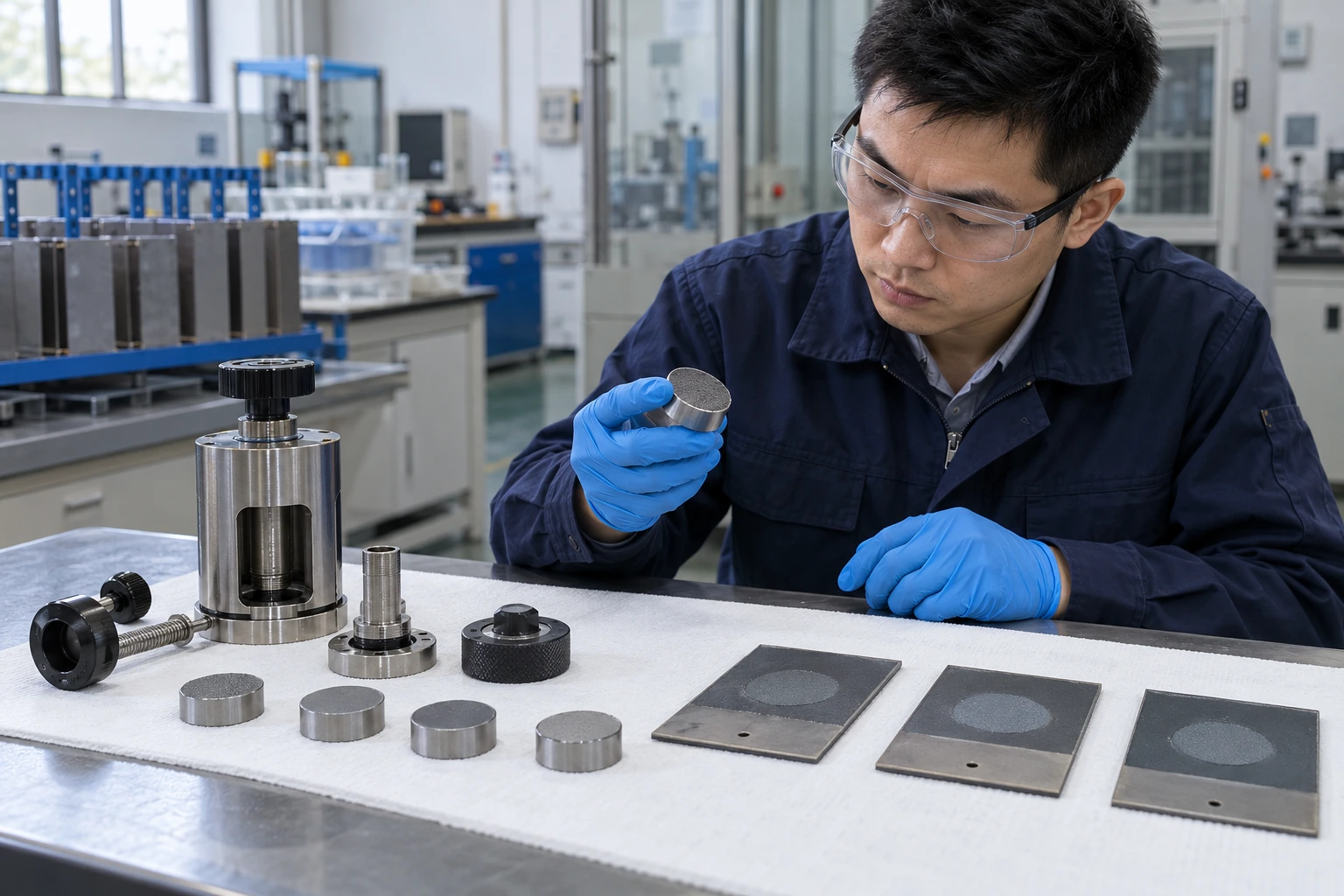
Compare Titanium electrode pull-off results only when specimens, fixtures, conditioning and interpretation are sufficiently matched. The reported result concerns the tested assembly and its weakest failure path.
What needs to match between laboratories?
Record attachment geometry, adhesive, cure conditions and how the tested area was prepared where those details apply. Compare the setup alongside the number. Put the proposed test boundary into your custom engineering review so a quotation does not imply an unapproved destructive procedure.
- Retain fixture details and photographs of the exposed failure surfaces.
- Declare departures from the agreed method before comparing results.
| Check | Decision |
|---|---|
| Matched test configuration | Supports a bounded comparison between specimens |
| Different configuration | Investigate method effects before ranking suppliers |
A larger value can reflect a different setup rather than a stronger electrode coating. Key Takeaway: Compare reports only after checking their test conditions and failure locations.
5. What does a Titanium electrode scratch result measure?
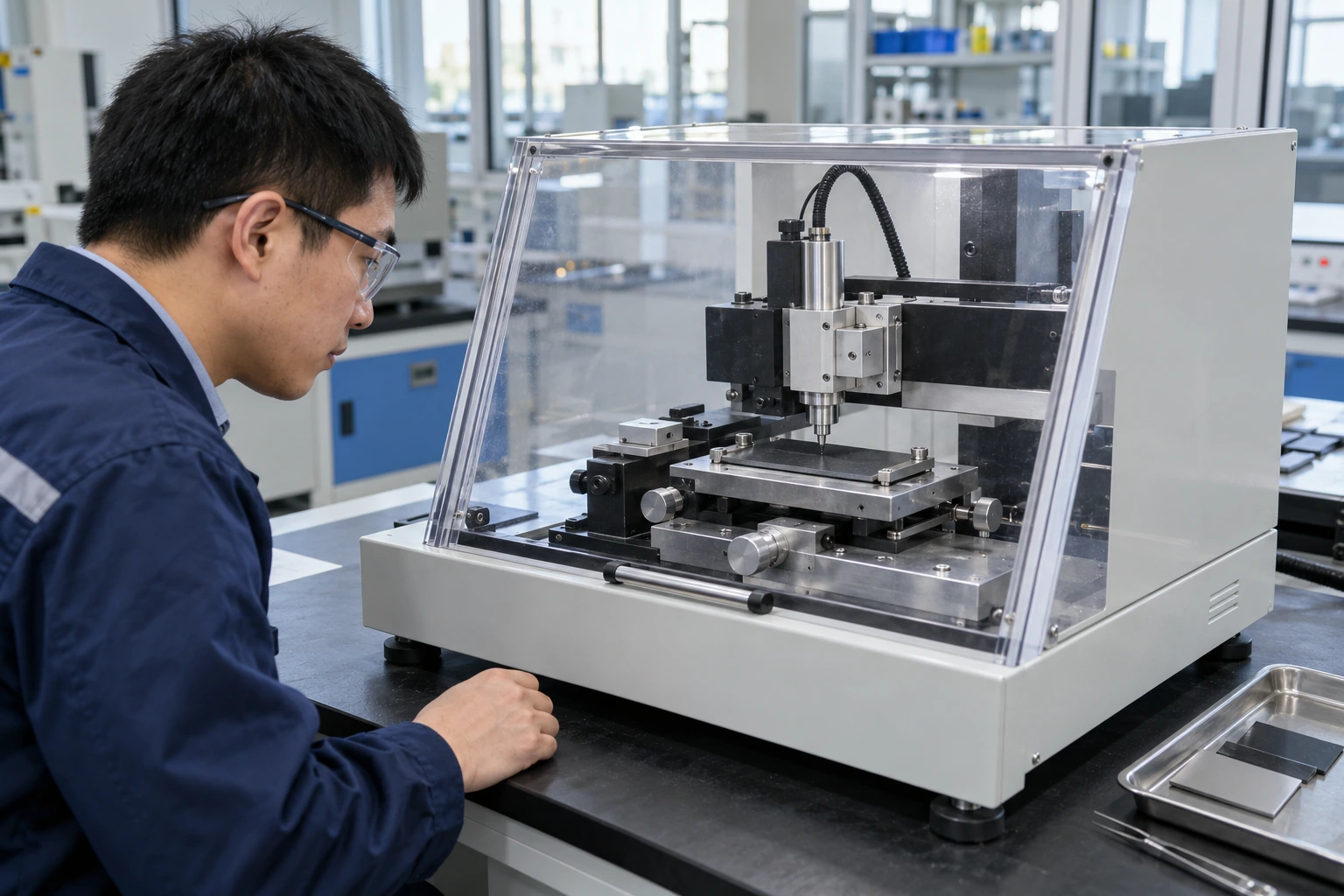
A Titanium electrode scratch result describes mechanical damage under a particular stylus, loading sequence and specimen support. It does not directly measure a universal coating-substrate bond strength.
Which damage event defines the result?
A scratch track can contain several damage events, so the laboratory must identify the event used for its reported load. Keep the damage criterion explicit. Coating thickness, roughness and substrate response can influence the result and complicate comparisons between unlike specimens.
- Ask how damage was identified and where the corresponding image is recorded.
- Keep stylus geometry, loading conditions and specimen support with the result.
| Check | Decision |
|---|---|
| Defined damage event | Provides a reproducible interpretation target |
| Unspecified scratch mark | Cannot establish a comparable acceptance value |
An instrument output needs a physical damage interpretation. Key Takeaway: Use scratch testing only with a qualified method and agreed event criteria.
6. Can Titanium electrode mesh use a flat-coupon method?
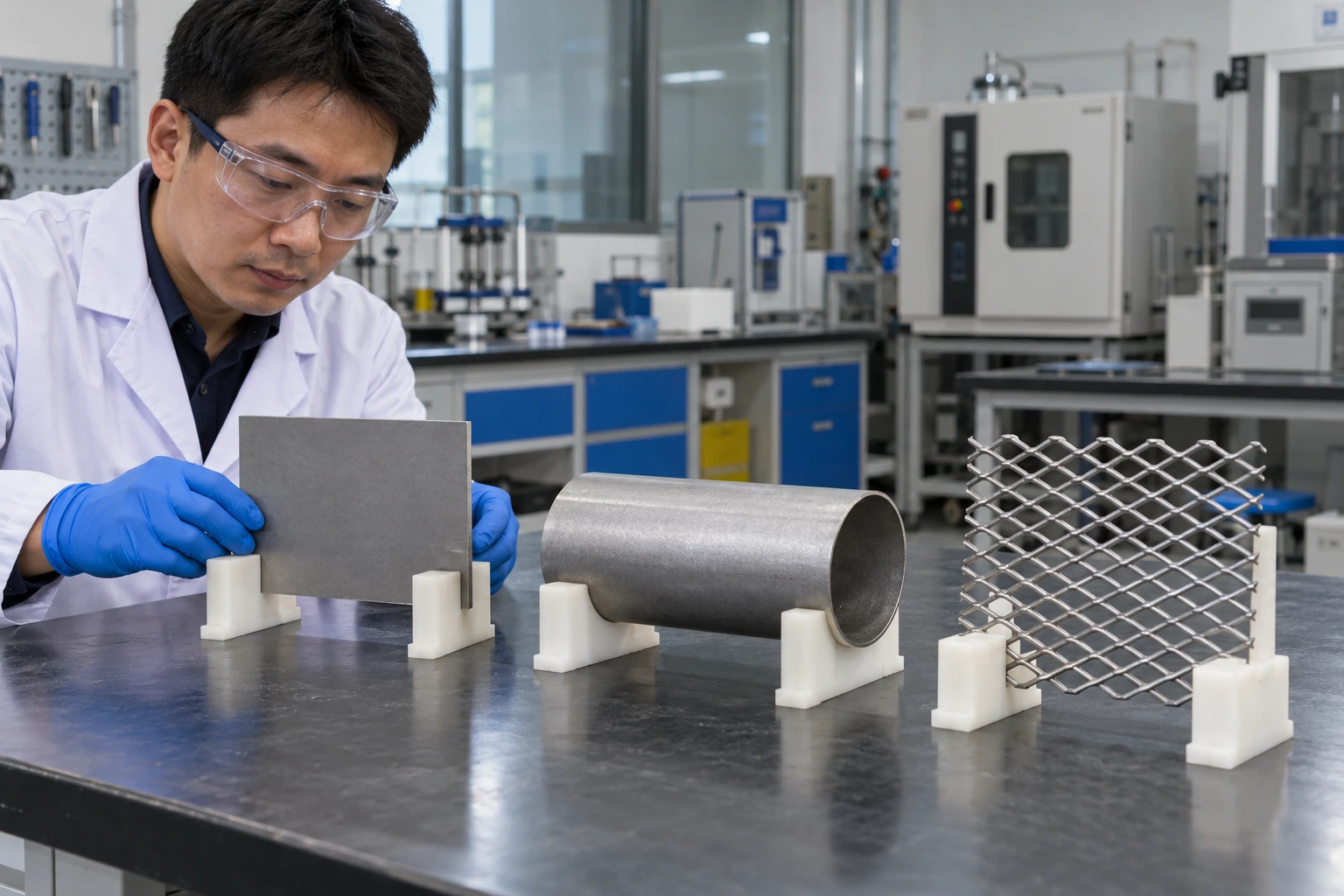
A flat-coupon method cannot automatically represent a Titanium electrode mesh or curved component, because support and contact geometry change. Method adaptation needs a documented justification.
Does the specimen fit the fixture?
Open mesh interrupts a continuous test area while curved parts may alter alignment or loading. Review the geometry before scheduling the test. If a witness coupon is used, explain which manufacturing conditions it represents and which finished-part features it omits.
- Record thickness, curvature, openings and support conditions relevant to the test.
- Separate evidence from a witness coupon from direct evidence on the finished component.
| Check | Decision |
|---|---|
| Finished component | Captures its geometry if the method can accommodate it |
| Flat witness coupon | Requires a stated relationship with production parts |
A convenient specimen does not automatically become a representative specimen. Key Takeaway: Approve the coupon-to-part relationship before using a result for lot release.
7. How should Titanium electrode coupons represent a batch?
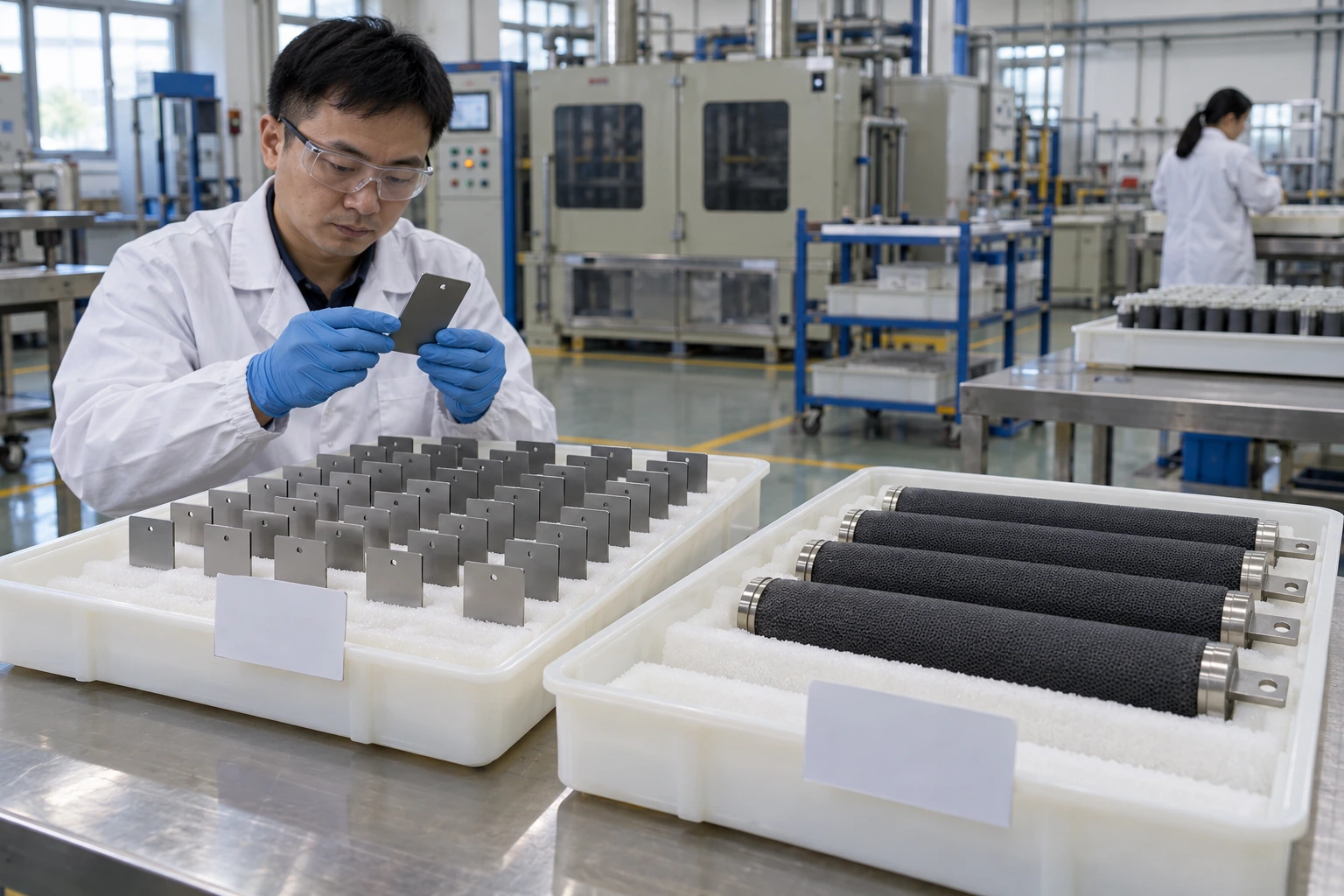
A Titanium electrode witness coupon should be traceable to the relevant preparation and coating process, with any differences declared. A similar-looking coupon from another run provides weaker evidence.
Which production conditions were shared?
Link the coupon identifier with the finished-part lot and record the process stages included in that relationship. Keep the manufacturing trail attached. Where geometry changes coating exposure or subsequent handling, note why the coupon still supports the proposed acceptance decision.
- Record coupon origin, lot association and applicable process stages.
- Keep an untouched reference where the agreed sampling plan requires one.
| Check | Decision |
|---|---|
| Traceable witness specimen | Supports the documented production relationship |
| Untraceable demonstration sample | Shows a test can run but not which lot it represents |
Traceability turns a laboratory result into evidence about a particular order. Key Takeaway: Ask for the specimen identity and process link with every acceptance report.
8. Should Titanium electrode conditioning precede testing?

Condition a Titanium electrode specimen before adhesion testing only when the agreed question requires it. Dry acceptance, exposure aging and returned-part investigation answer different questions.
What condition should the specimen represent?
Define whether testing concerns a new dry coating or a material after a specified exposure, then preserve that distinction in the report. Separate acceptance from exposure studies. For water-treatment applications, chemistry and operating history should guide any proposed conditioning rather than an arbitrary soak.
- Agree on conditioning, storage and the interval between exposure and testing.
- Do not treat an improvised accelerated exposure as a validated lifetime model.
| Check | Decision |
|---|---|
| New specimen | Supports the agreed production-condition check |
| Conditioned specimen | Supports only the declared exposure and test boundary |
A changed specimen condition changes the meaning of the result. Key Takeaway: Require an exposure rationale before using conditioned results for purchasing decisions.
9. What Titanium electrode adhesion criteria are defensible?

Defensible Titanium electrode adhesion criteria connect a suitable method with a defined specimen and an application-relevant acceptance basis. There is no single rating that qualifies every catalytic coating.
Who should agree on the pass condition?
Engineering, quality, the supplier and any testing laboratory should resolve method suitability before a purchase order invokes it. Set the decision rule in advance. Include how ambiguous attachment failures, damaged samples and retests will be handled without changing the rule after results arrive.
- Identify who reviews a result that cannot distinguish the required failure mode.
- Keep numerical criteria tied to an agreed qualification basis rather than a competitor's datasheet.
| Check | Decision |
|---|---|
| Defined acceptance rule | Supports a consistent release or investigation decision |
| Unexplained minimum value | Needs technical justification before use |
An agreed rule reduces disputes without pretending the test predicts every service condition. Key Takeaway: Approve the method and interpretation together, not as separate purchasing line items.
10. What Titanium electrode test scope should you approve?

Approve a Titanium electrode test scope that specifies purpose, specimens, method, conditioning, reporting and disposition of tested parts. That package resolves the method and geometry mismatches that delay supplier comparisons.
What can you send for a review?
For a drawing-based electrode inquiry, contact us today with your application, coating request and proposed inspection requirement. Confirm specialist testing before ordering. We support application-led electrode review; the test method and any external laboratory work need explicit agreement rather than an assumed standard service.
- List which samples may be destroyed and which finished parts must remain untouched.
- Request the method justification, failure evidence and agreed decision rule in the report.
| Check | Decision |
|---|---|
| Defined supply scope | Separates electrode manufacture from specialist testing |
| Defined evidence scope | Makes the inspection result useful to your quality team |
The useful outcome is a justified acceptance decision with its limits visible. Key Takeaway: Send the complete test requirement with the drawing so both parties quote the same scope.
Frequently Asked Questions
Can I use a tape test on every MMO coating? No. Check whether the method suits the coating structure and component geometry, then agree on how the result will be interpreted.
What's the best adhesion test for a titanium mesh electrode? There is no universal choice. The method must accommodate open geometry or use a justified representative specimen.
How do I know if a pull-off result measures coating adhesion? Inspect the failure location. Failure in an attachment can prevent the test from establishing the coating-interface result you wanted.
Can I request destructive testing on delivered parts? Yes, if agreed beforehand. Define sampling, ownership and disposition so tested parts are not mistakenly returned to service.
What's the best evidence to request with a test value? Request the full test record. Specimen identity, conditions and failure photographs explain what the reported value actually represents.