
A Titanium electrode can distribute impressed protective current through an approved concrete overlay toward electrically connected reinforcing steel. Poor bond, discontinuous mesh, or disconnected rebar can leave parts of a structure outside the intended circuit. Review structural condition, overlay materials, electrical continuity, reference locations, and acceptance criteria with the concrete CP engineer before selecting an anode assembly.
1. What does a Titanium electrode do in concrete?
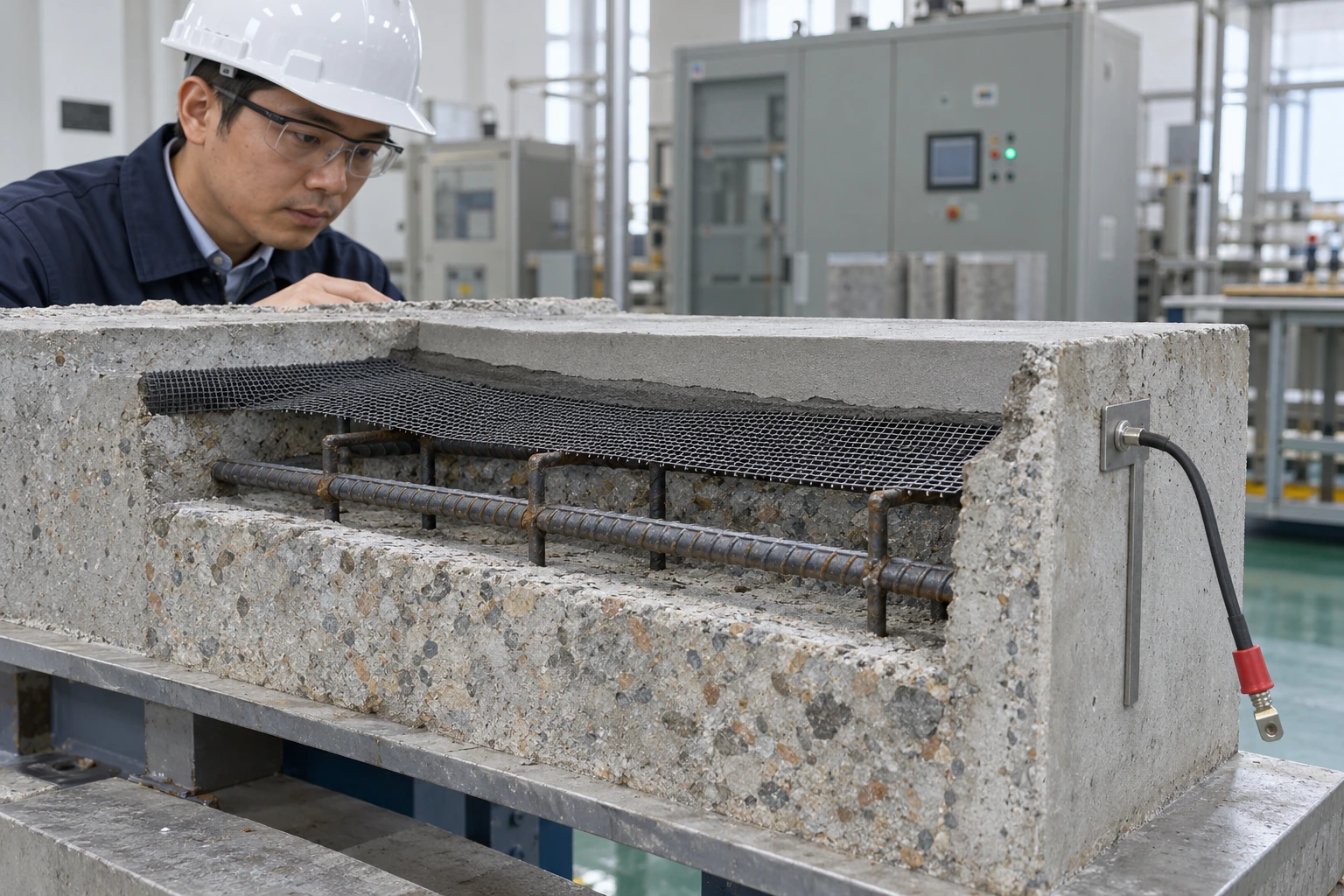
A Titanium electrode mesh anode distributes impressed current through an electrolyte path in concrete toward connected reinforcing steel. Each zone needs clear electrical and electrolyte boundaries.
Separate anode function from structural design
An impressed-current CP circuit releases current at an anode into an ionic medium, while connected steel serves as its cathode. Start with the circuit map. Titanium mesh can serve as an anode in suitable concrete systems, but geometry, coating, overlay, wiring, and zones require engineering review.
- Identify reinforcement zones, bonds, isolations, and any embedded metal.
- Show power feeds, anode connections, reference locations, and proposed overlay limits.
| Check | Decision |
|---|---|
| Titanium mesh | Distributes current at an anode interface |
| Reinforcing steel | Acts as cathode when continuity is established |
Anode mesh cannot compensate for a structure whose steel connections remain undefined. Key Takeaway: Have a concrete CP designer approve circuit boundaries before detailing mesh.
2. How does current from a Titanium electrode cross concrete?
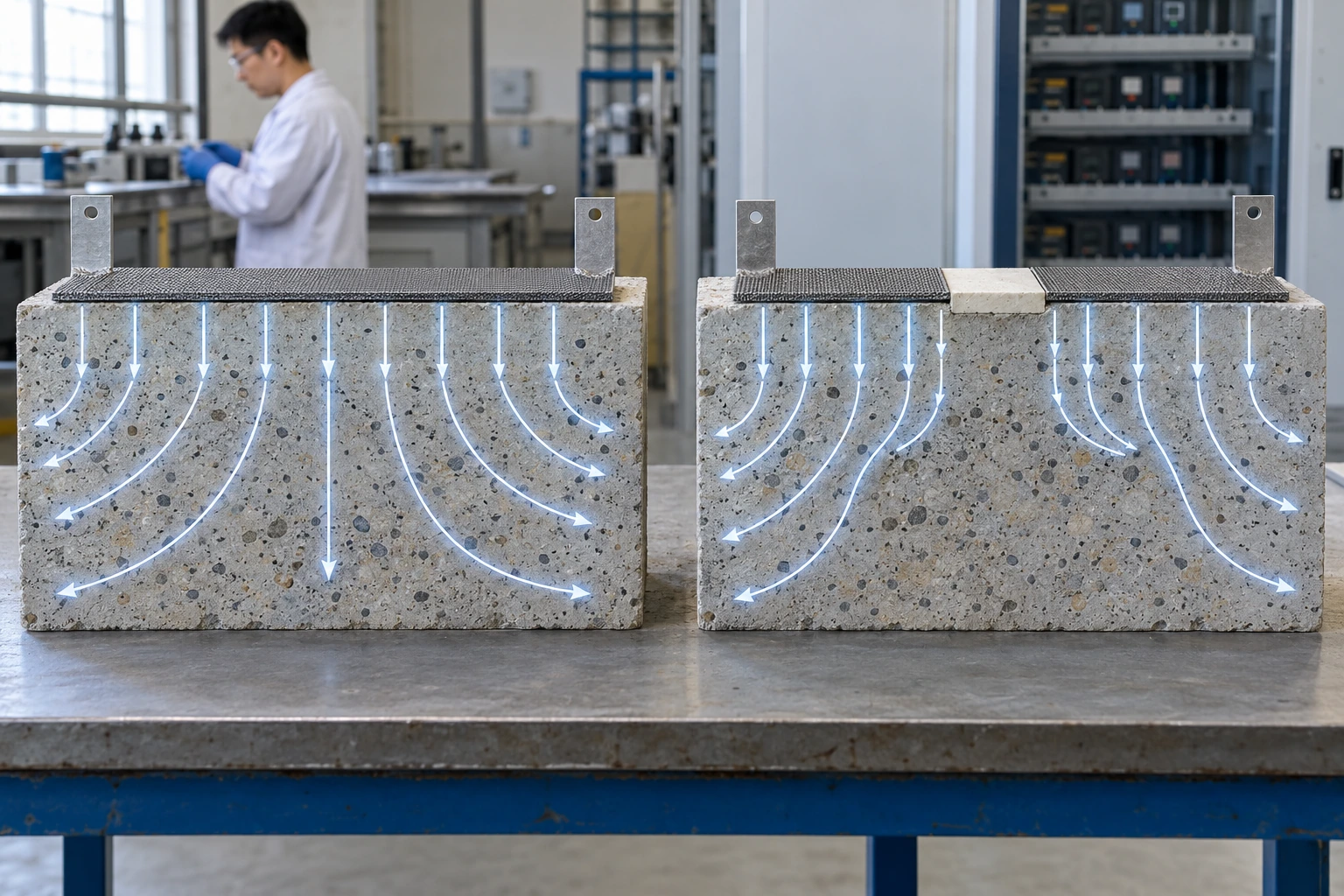
In a Titanium electrode system, concrete pore solution and sound overlay contact carry ionic current between anode and reinforcement. Inspect bond condition before mesh receives cover.
Treat overlay contact as an electrical interface
Mesh attachment and overlay bond affect how current reaches concrete surfaces. Review contact early, because delamination, voids, cracks, or unsuitable repairs can change local resistance. Surface preparation and overlay acceptance belong in installation planning.
- Record substrate condition and repair boundaries before mesh placement.
- Specify how bond, coverage, and exposed mesh will be inspected.
| Check | Decision |
|---|---|
| Continuous contact | Supports a defined current path |
| Local separation | Can interrupt or alter distribution |
A visible mesh layout says little about hidden bond quality after an overlay covers it. Key Takeaway: Tie overlay inspection records to mapped anode zones and photographs.
3. Where should Titanium electrode mesh sit?
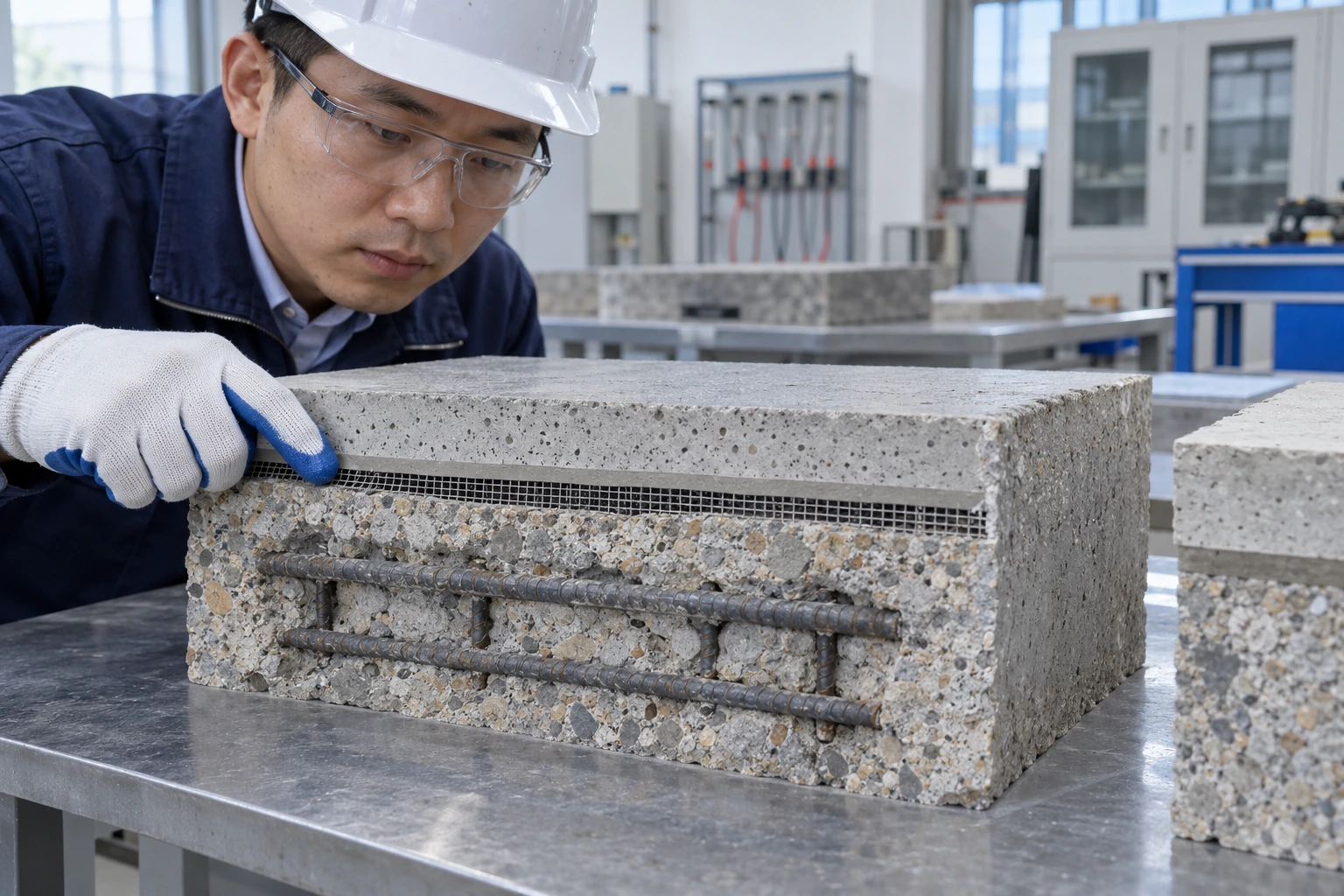
A Titanium electrode mesh placement must follow a designed anode layout and concrete build-up rather than a universal cover depth.
Coordinate mesh position with overlay layers
Designers place anodes relative to concrete surfaces, reinforcement, repairs, and planned overlay thickness. Use a section view to define layers, then show mesh plane, fasteners, joints, edge clearances, feeds, and overlay material. Avoid copying one bridge detail as a universal rule.
- Dimension mesh edges, overlaps, zones, and connection strips.
- Mark areas where geometry or repair history changes the overlay detail.
| Check | Decision |
|---|---|
| Mesh plane | Defines anode location |
| Overlay section | Defines coverage and contact boundary |
A section view makes concealed interfaces reviewable before concrete work begins. Key Takeaway: Request design approval for mesh spacing and overlay build-up together.
4. What continuity must a Titanium electrode mesh maintain?

A Titanium electrode mesh circuit needs continuity within joined anode panels, while reinforcing steel needs its own continuous network. Keep these networks electrically separate in an ICCP layout.
Map continuity through mesh and rebar
Separated panels or disconnected reinforcement can leave a concrete CP circuit incomplete. Mark each network separately, then use the electrode product range to compare mesh feeds, rebar continuity, isolation, and reference points against a drawing.
- Show each panel connection and steel continuity path.
- Assign continuity checks and results to named inspection stages.
| Check | Decision |
|---|---|
| Anode continuity | Joins active mesh areas to power feeds |
| Steel continuity | Connects reinforcing sections within a zone |
Continuity records turn hidden electrical assumptions into checkable project evidence. Key Takeaway: Use an approved continuity procedure before covering mesh or reinforcement.
5. How does overlay contact affect Titanium electrode duty?

Overlay contact influences current transfer and mechanical protection around a Titanium electrode mesh assembly.
Check substrate preparation and overlay bond
Concrete CP case records show that bond problems can disrupt current distribution across reinforcement. Keep each surface record traceable. Document repairs, preparation, material batches, application conditions, and delamination checks; no overlay recipe suits every orientation or substrate.
- Record repair limits and substrate preparation methods.
- Inspect overhead, vertical, and horizontal areas under the approved quality plan.
| Check | Decision |
|---|---|
| Preparation record | Documents concrete condition before mesh |
| Bond record | Shows overlay acceptance after application |
A durable electrical path also depends on a mechanically sound overlay interface. Key Takeaway: Ask the project engineer to approve preparation and bond acceptance criteria.
6. Which materials surround a Titanium electrode mesh?

Concrete chemistry, moisture, overlay composition, and service exposure all shape coating and substrate review for a Titanium electrode mesh.
Name every material touching the anode
Review proposed coating and titanium substrate against concrete materials and expected operating conditions. List every adjacent material, then note repair mortar, overlay, reinforcement coatings, sealers, moisture exposure, and known chemical ingress. Those inputs can change the electrochemical interface.
- Provide overlay and repair material specifications.
- Identify marine spray, deicing salts, wetting cycles, or other site exposures.
| Check | Decision |
|---|---|
| Anode surface | Needs a defined concrete CP duty |
| Adjacent layer | Can alter contact and material exposure |
A substrate-and-coating review works only when all adjacent layers are visible in the brief. Key Takeaway: Submit project materials for compatibility review before fixing the mesh specification.
7. Where can current miss steel near a Titanium electrode?
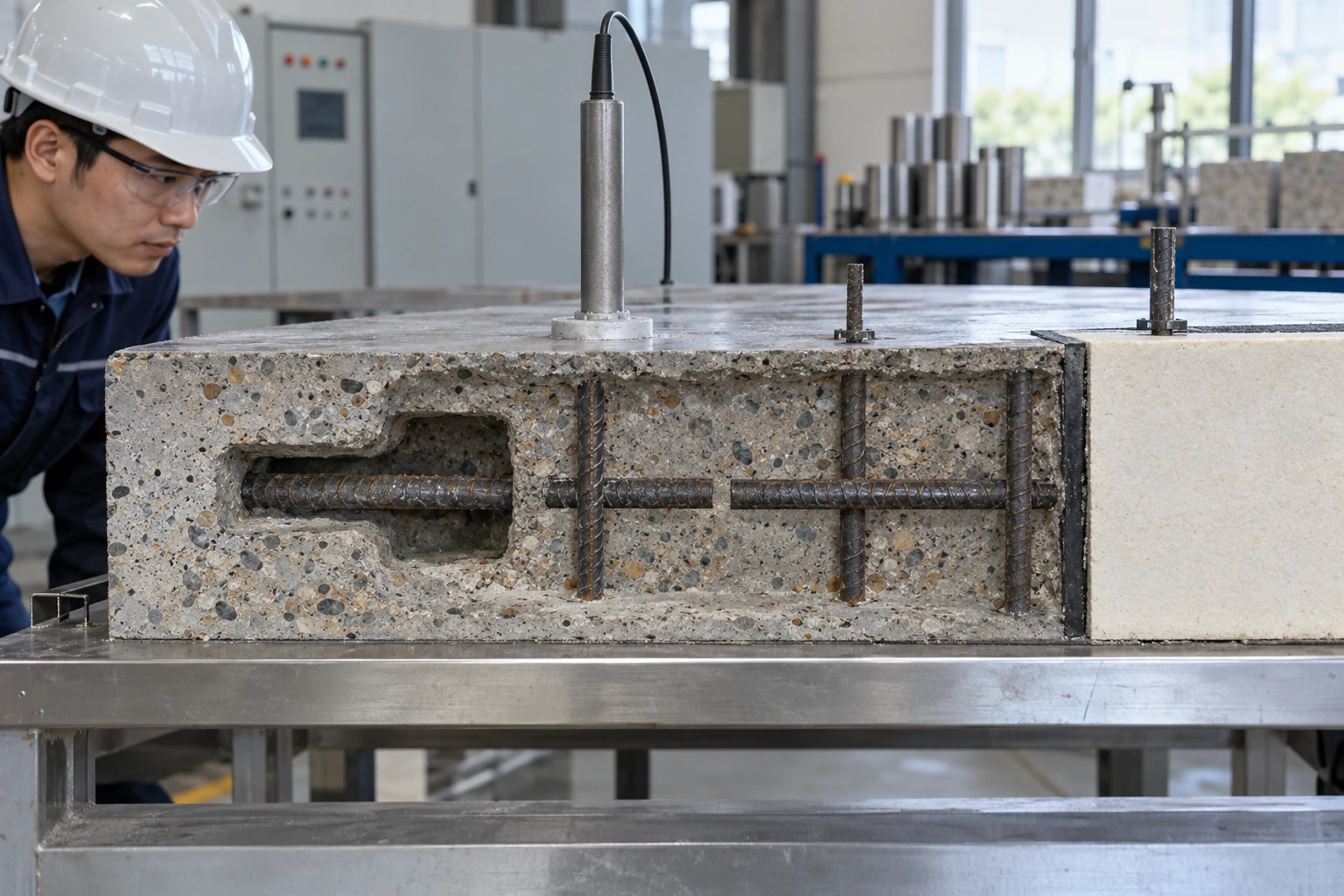
Current may miss reinforcing steel behind gaps, isolated bars, geometry, or nearby barriers around a Titanium electrode system.
Look for steel outside the current path
Ribs, ducts, embedded fixtures, delaminations, and unbonded steel can change current access. Map likely shadows before sampling, then ask a CP designer to review continuity, geometry, and monitoring locations in difficult and open regions.
- Mark congested reinforcement, joints, ducts, embeds, and inaccessible faces.
- Relate reference locations to actual steel zones and overlay boundaries.
| Check | Decision |
|---|---|
| Open concrete face | Offers a direct electrolyte route |
| Recess or barrier | May complicate current access |
A uniform anode drawing does not guarantee uniform polarization across complex reinforcement. Key Takeaway: Ask the designer to review shadowed regions and monitoring coverage.
8. How can a Titanium electrode CP interface be checked?
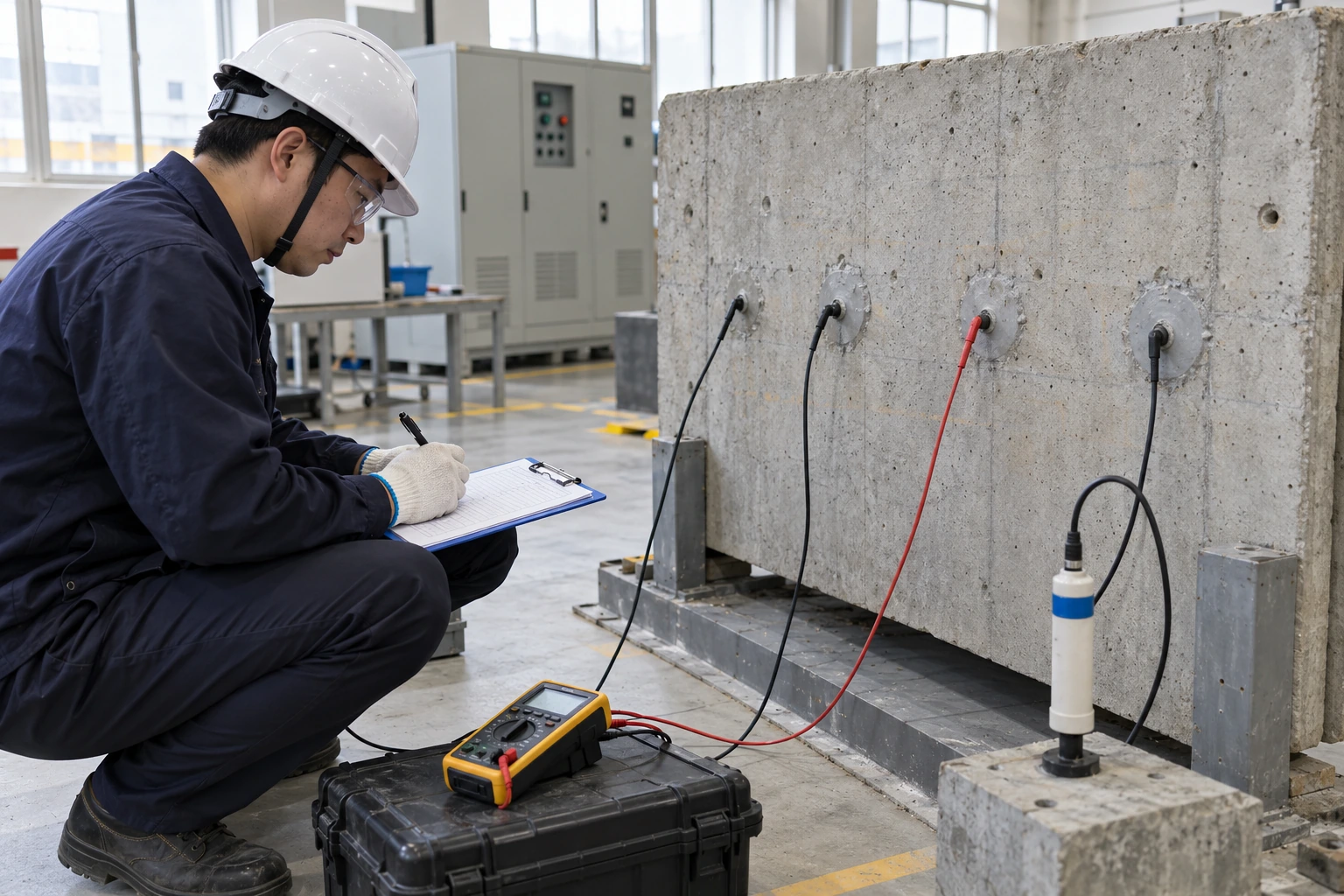
A Titanium electrode concrete CP acceptance review combines interface checks with measurements against project criteria. Assign evidence owners before hidden interfaces become inaccessible.
Plan checks before mesh disappears under overlay
Visual inspection alone cannot establish full CP response. Agree on evidence stages before cover-up, then use the project quotation requirements to assign owners for continuity, overlay, reference locations, zones, and commissioning.
- List checks before cover-up, after cure, and during commissioning.
- Attach instrument IDs, locations, timestamps, and approved criteria to results.
| Check | Decision |
|---|---|
| Before cover-up | Confirms visible interfaces and connections |
| Commissioning | Assesses electrical response at selected locations |
A traceable record links each measured value with its position and circuit zone. Key Takeaway: Approve measurement methods and criteria before installation begins.
9. What does a Titanium electrode CP acceptance record need?

A Titanium electrode concrete CP trial should assess representative zones, overlay condition, continuity, and agreed measurements together. Choose conditions that represent repair and geometry.
Match trial locations with difficult details
A small mock-up or pilot zone can expose layout and bonding issues before full coverage. Include a difficult geometry, such as an edge, vertical face, repair, joint, or congested steel. Document conditions and acceptance decisions with the CP engineer.
- Include one representative repair or geometry transition where practical.
- Record observations against drawings rather than relying on isolated photographs.
| Check | Decision |
|---|---|
| Open zone | Checks basic installation sequence |
| Complex zone | Tests a difficult interface detail |
A trial says something useful only when its geometry and materials resemble planned work. Key Takeaway: Keep pilot scope and acceptance decisions signed into the project record.
10. What should a Titanium electrode concrete CP review include?

A Titanium electrode concrete CP inquiry needs structure drawings, reinforcement continuity, overlay materials, interfaces, and test objectives.
Send the structure package with electrode questions
We review custom titanium mesh, plate, rod, tube, and assembly requests against drawings or samples. Separate supply from system design, then contact us today with structure, reinforcement, overlay, zone, and acceptance records. Qualified project engineers retain structural calculations and CP criteria.
- Attach elevations, sections, repair limits, and electrical interface details.
- Name requested product checks, field checks, quantities, and approval roles.
| Check | Decision |
|---|---|
| Product request | Defines mesh form and connections |
| Project package | Adds structure and acceptance context |
A coordinated package gives electrode review a clear boundary within the larger concrete CP design. Key Takeaway: Resolve structural and CP design questions before approving a procurement drawing.
Frequently Asked Questions
Can I place titanium mesh directly against reinforcing steel? No, titanium anode mesh should not make metallic contact with reinforcing steel in ICCP. Accidental contact can short anode against steel, bypassing the intended electrolyte path. Follow the CP designer's specified separation and mounting detail.
What's the best overlay for a titanium mesh anode? No single overlay suits every structure. The concrete engineer should match substrate preparation, orientation, exposure, bond needs, and electrical performance.
How do I know if reinforcing steel forms a continuous circuit? Use an approved continuity procedure and map results by zone before concealment. A qualified CP engineer should interpret discontinuities and decide next steps.
How do I know if mesh alone confirms protection across a concrete member? Mesh layout alone cannot establish protection at reinforcing steel. A qualified CP engineer should interpret measurements from representative steel locations against project criteria.
Can I ask ARY to design or certify a complete concrete CP system? ARY can review custom titanium electrode requests from drawings or samples. System design, structural engineering, and acceptance criteria require qualified project professionals.