
A Titanium electrode groundbed anode must match the designed current path, site soil, backfill system, and protected structure. A coating or form chosen without those inputs can leave engineers with mismatched output expectations and an incomplete procurement scope. Begin with a groundbed design basis, then review substrate, active area, cable interfaces, and acceptance evidence with a CP engineer.
1. Which Titanium electrode role suits a groundbed?
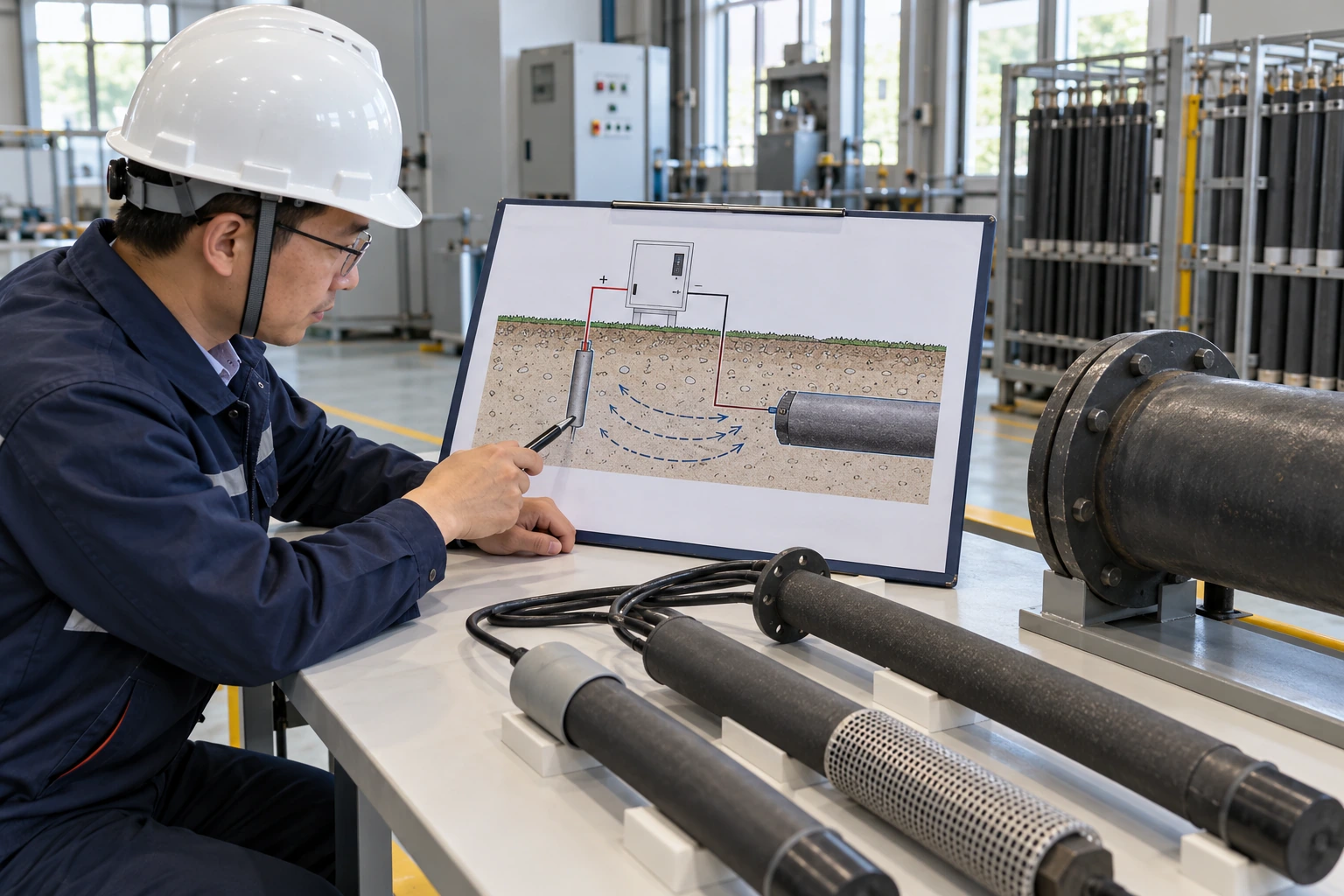
A Titanium electrode groundbed anode belongs inside a designed soil-electrolyte circuit, where its job depends on current demand and site conditions.
Define the anode's role before its form
An impressed-current groundbed includes an anode, power source, electrolyte path, and electrically continuous steel connected as protected cathode. Start with circuit duty, then state whether a titanium substrate suits a shallow or remote bed; a CP designer must confirm geometry and output.
- Identify protected assets, electrical bonds, isolation points, and nearby metallic structures.
- Give the approved current basis, operating window, and responsible CP design contact.
| Check | Decision |
|---|---|
| Anode interface | Discharges current into surrounding electrolyte |
| Protected steel | Receives current through a complete circuit |
Anode selection follows system design because field performance depends on more than electrode material. Key Takeaway: Ask the CP designer to approve anode duty before requesting a drawing or sample.
2. How does soil change Titanium electrode selection?

Soil resistivity and moisture affect how current moves around a groundbed, so site data belong in a Titanium electrode selection review.
Read soil conditions as an electrical input
Layered ground can present different current paths at different locations and depths. Put the site profile on one page, then share soil data, seasonal water conditions, and fill changes. A single assumed value can hide variation in groundbed resistance and current distribution.
- Provide soil survey methods, locations, and test dates.
- Mark fill, drainage, seasonal wetness, and nearby buried services on a site plan.
| Check | Decision |
|---|---|
| Uniform profile | May simplify a design model |
| Variable strata | Can alter local current paths |
A groundbed model should reflect measured conditions rather than a convenient average alone. Key Takeaway: Have a qualified CP designer interpret soil records against proposed bed geometry.
3. What does backfill do around a Titanium electrode?
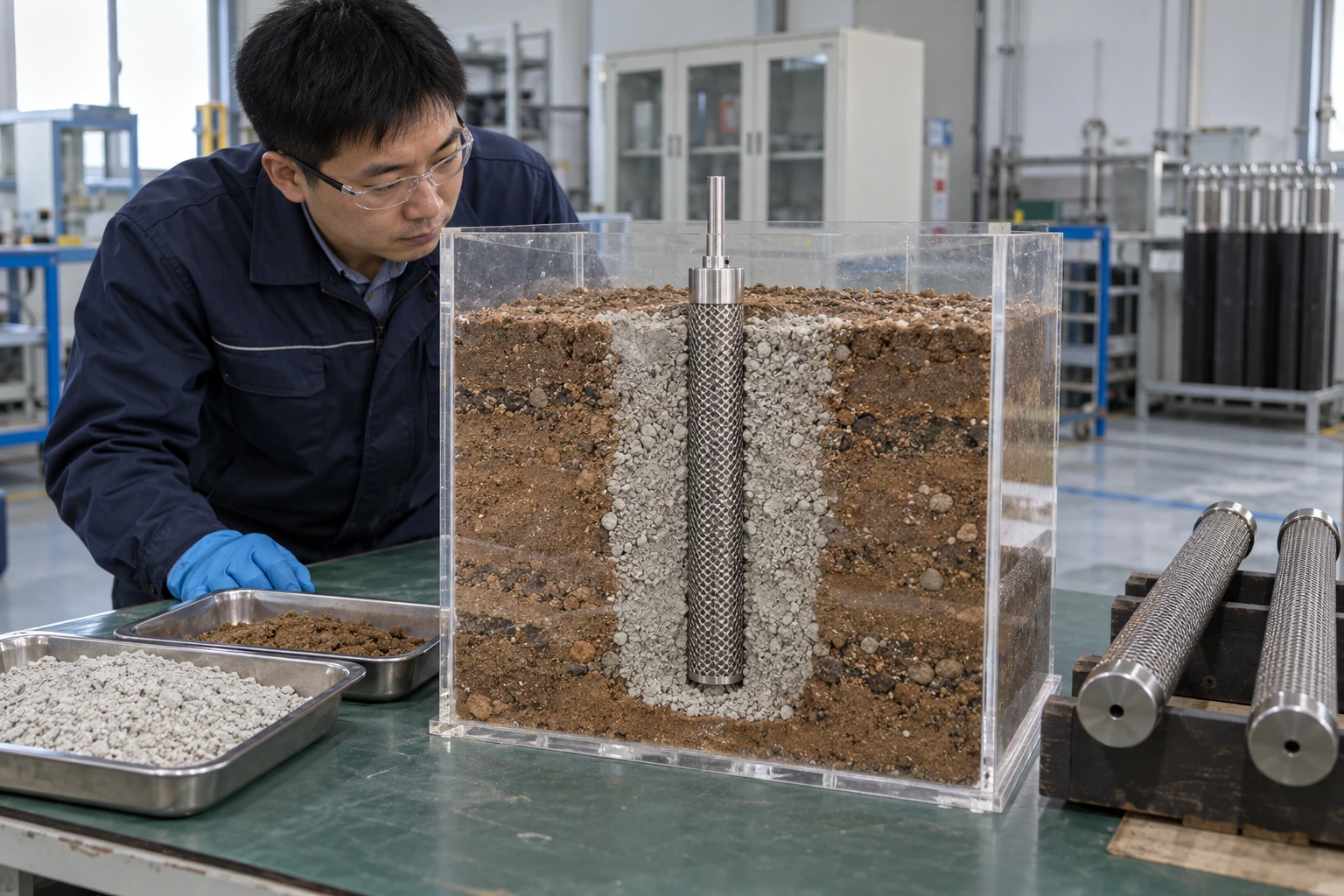
Backfill around a Titanium electrode groundbed forms part of its interface by helping current transfer into surrounding soil.
Treat backfill as part of the circuit
Groundbed backfill does not replace anode coating review or site engineering. Follow each interface outward, then document contact with active surfaces, column continuity, and inspection responsibility with the installer.
- Name backfill type and supplier in the project specification.
- Show how the assembly, backfill zone, soil boundary, and venting interface relate.
| Check | Decision |
|---|---|
| Anode surface | Transfers current into adjacent media |
| Backfill column | Connects active area with local soil |
Poor contact or discontinuity can change resistance even when an anode drawing looks correct. Key Takeaway: Review backfill assumptions with the designer and installation contractor before release.
4. How does current reach steel from a Titanium electrode?
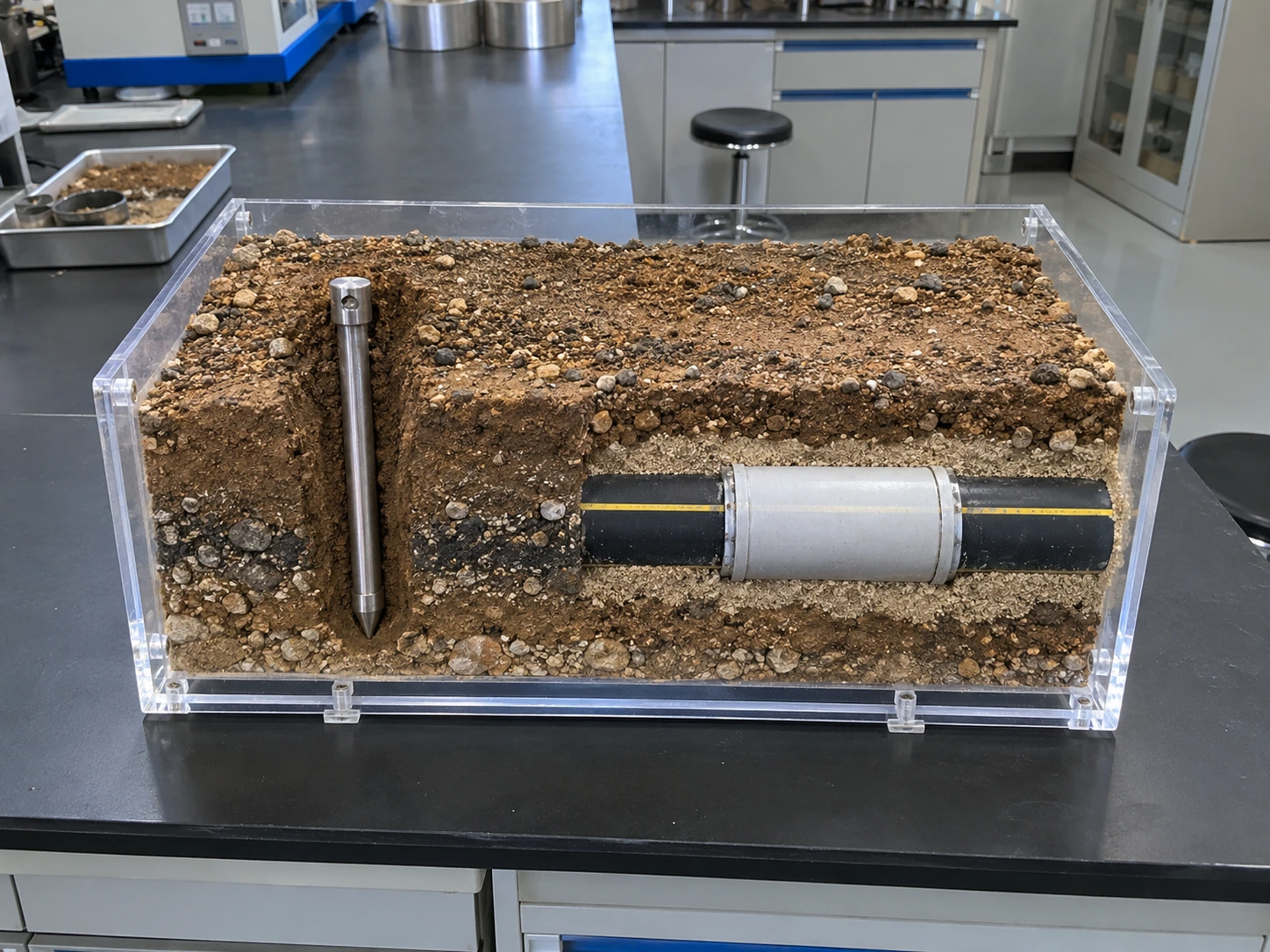
Current from a Titanium electrode reaches protected steel through an electrolyte path and a metallic return path.
Trace current from anode toward steel
Current leaves an impressed-current anode, passes through soil, and enters steel connected to a rectifier's negative side. Trace each current boundary, then review the electrode product range for substrate form, coating, connections, and exposed area; a CP designer assesses site effects.
- Mark anode location, protected-asset alignment, and electrical bonds.
- Include nearby foreign structures and any known isolation boundaries.
| Check | Decision |
|---|---|
| Electrolyte route | Soil carries ionic current |
| Metallic route | Cables and bonds complete the circuit |
Current flow depends on the complete system, not a stand-alone titanium component. Key Takeaway: Use one coordinated circuit drawing for product and system reviews.
5. Which coating suits a buried Titanium electrode?

A coating on a Titanium electrode must suit its assigned anodic duty, electrolyte, backfill, and operating conditions.
Match coating evidence with exposure
MMO and other catalytic coating families have specific electrochemical roles and operating limits. Name the environment, then provide chemistry, temperature range, current demand, and contact media for a project-specific coating and substrate review.
- State coating family only when supported by an approved specification.
- Ask which operating conditions or chemical exposures remain outside available evidence.
| Check | Decision |
|---|---|
| Coating review | Links electrochemistry with exposure |
| Substrate review | Covers shape, joints, and connections |
A coating label by itself does not prove suitability for every soil or backfill condition. Key Takeaway: Request written review of coating duty, substrate, and stated operating limits.
6. How should a Titanium electrode match groundbed depth?
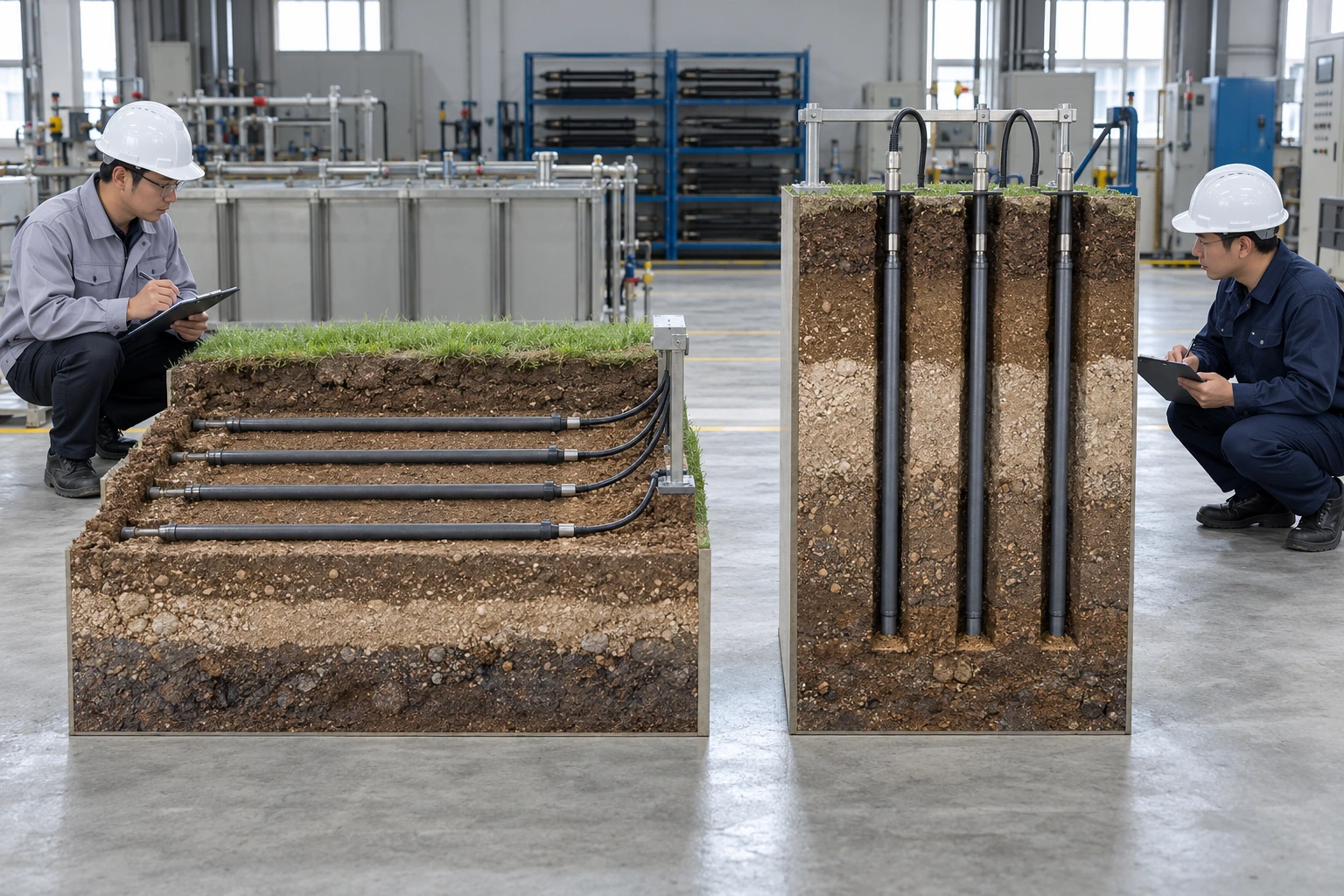
Groundbed depth changes soil layers and anode geometry, so a Titanium electrode concept must follow project design.
Compare bed concepts without assuming a standard string
Shallow distributed beds and deep vertical beds place active areas in different soil volumes with different access constraints. Compare design inputs before selection, including current distribution, interference, cable routing, access, and backfill placement. ARY does not list deep-well strings as standard products.
- Show the proposed active zone and surrounding soil layers.
- Flag drilling, venting, cable, or backfill components that require separate sourcing.
| Check | Decision |
|---|---|
| Shallow concept | Uses a broader near-surface layout |
| Deep concept | Places active area within a vertical profile |
Similar anode chemistry can serve different layouts only when geometry and interfaces receive separate review. Key Takeaway: Keep groundbed civil design with the responsible engineering team.
7. What changes Titanium electrode current paths?

Current paths also respond to nearby structures, bonds, and coating condition around a Titanium electrode groundbed.
Account for neighboring metal and coating
Buried pipelines, casings, tanks, and electrical bonds can influence current distribution. Map nearby conductors before reviewing coatings, since intact coatings reduce exposed demand while disbondment or shields can change local access. Designers should check each feature before adjusting output.
- Share utility maps and known CP systems within the study area.
- Record coating type, condition data, and electrical continuity assumptions.
| Check | Decision |
|---|---|
| Coated steel | Usually presents lower exposed area |
| Nearby metal | May alter the modeled current field |
A local increase in output may miss a shielded surface or affect another structure. Key Takeaway: Request an interference and current-distribution review where structures overlap.
8. Which tests support a Titanium electrode design?

Design evidence for a Titanium electrode should connect soil data, current assumptions, anode interfaces, and agreed inspection records.
Build a reviewable evidence package
An anode drawing can confirm dimensions and connections, but system acceptance also needs design and installation evidence. Separate product checks from field criteria. Use the project quotation requirements to assign checks for material identity, assembly condition, cable continuity, backfill placement, and commissioning records.
- List documents required at submittal, delivery, installation, and commissioning.
- Assign each check to the buyer, supplier, installer, or CP engineer.
| Check | Decision |
|---|---|
| Product evidence | Confirms supplied assembly details |
| System evidence | Confirms field behavior against design |
A clear responsibility matrix prevents a product inspection from being mistaken for CP commissioning. Key Takeaway: Attach an inspection and test plan to the approved purchase specification.
9. How should a Titanium electrode be assessed in service?

In-service review of a Titanium electrode should compare current trends and structure measurements with qualified CP criteria.
Judge system behavior at the protected structure
Rectifier output describes source delivery, not whether every steel surface receives protection. Check at representative locations, then compare potential data, interruptions, and reference positions with CP criteria. The owner and CP engineer can review current trends or shielded regions.
- Keep baseline readings and instrument locations traceable.
- Document changes in coating, nearby construction, grounding, or electrical bonds.
| Check | Decision |
|---|---|
| Rectifier record | Shows system output trend |
| Structure survey | Checks conditions at selected locations |
A stable output reading cannot substitute for qualified interpretation of structure measurements. Key Takeaway: Use an approved survey plan and escalate unexplained changes to the CP engineer.
10. What should a groundbed Titanium electrode quote include?

A useful Titanium electrode groundbed inquiry states design duty, soil profile, chosen concept, interfaces, and review responsibility before fabrication.
Send design context with the anode request
We review custom titanium plate, expanded mesh, rods, tubes, and assemblies from drawings or samples. Keep scope specific in your RFQ, then contact us today with a circuit sketch, soil records, current basis, geometry, coating exposure, connections, and acceptance documents. Deep-well hardware and field installation need confirmation.
- Attach site and circuit drawings with dimensions and connection details.
- List requested tests, quantities, service conditions, and any unconfirmed system components.
| Check | Decision |
|---|---|
| Basic inquiry | Identifies requested anode form |
| Design package | Adds site and operating context |
A bounded scope lets both teams separate electrode review from complete groundbed design. Key Takeaway: Obtain CP-engineer approval for the system basis before placing an electrode order.
Frequently Asked Questions
Can I choose a groundbed titanium anode from soil type alone? No, soil data alone cannot settle selection. Current demand, geometry, backfill, structure layout, and coating duty also shape the review.
What's the best titanium electrode shape for a groundbed? There is no universal shape. Match a reviewed plate, mesh, rod, tube, or assembly concept with active area, access, connections, and the designed current field.
How do I know if a titanium anode suits deep-well service? Request project-specific review of coating, substrate, chemistry, cable exposure, backfill, current, and design limits. ARY does not list deep-well strings as standard supply.
Can I ask a supplier to determine the groundbed current requirement? A supplier can review electrode details, while a qualified CP designer determines system demand and protection criteria from the structure and site.
How do I know if every buried surface receives protection? Rectifier output alone cannot confirm protection at every buried surface. Qualified surveys and structure measurements should assess selected areas under CP-engineer criteria.