
Verify Titanium electrode feed conductivity with a suitable calibrated sensor, defined temperature basis and representative sampling location. A changed reading may reflect a dirty probe or another compensation setting rather than a different brine batch. Adjusting feed around that error can create a real process problem. Check the measurement chain before changing chemistry or current.
1. What does Titanium electrode feed conductivity tell you?

Titanium electrode feed conductivity indicates the liquid's ability to conduct ionic current under stated conditions. It does not identify every dissolved constituent or prove a particular salt concentration.
What can this reading establish?
Use it for its defined purpose. Compare conductivity with composition data when chemistry matters. Two liquids can have similar conductivity while differing in constituents relevant to electrode or product requirements.
- Record units and temperature basis.
- Keep relevant composition analyses.
| Check | Decision |
|---|---|
| Conductivity | Bulk electrical property |
| Composition analysis | Constituent-specific information |
Keep the measurement within its scope. Key Takeaway: Conductivity supports process monitoring but does not replace chemical characterization.
2. How do Titanium electrode conductivity and concentration differ?
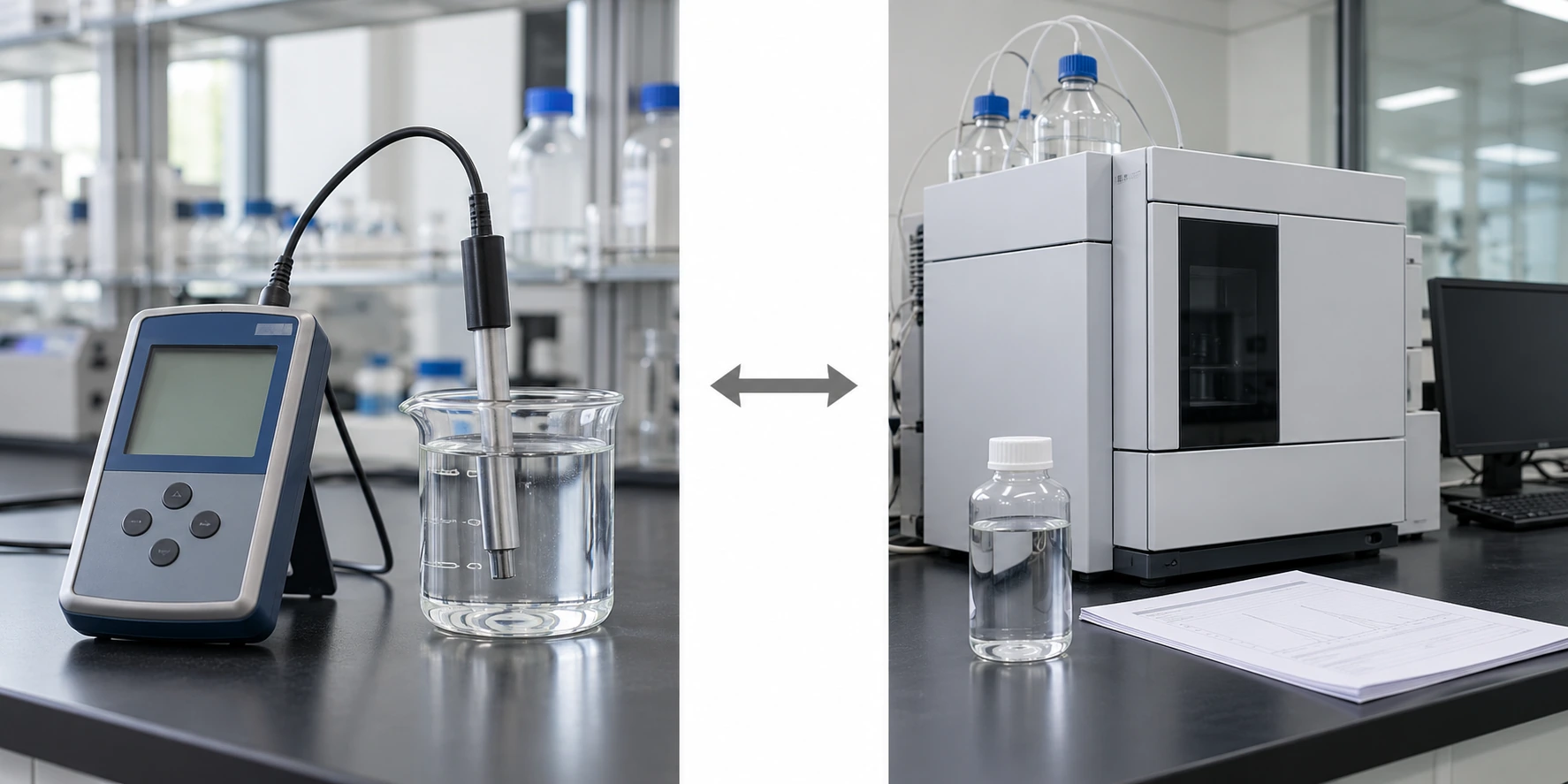
Titanium electrode conductivity and concentration differ because conductivity depends on ionic species, temperature and mixture behavior. A concentration conversion requires a validated relationship for the actual liquid.
Does the conversion fit your feed?
Check the assumed composition. A table for one salt solution may not apply to mixed or contaminated feed. Keep calculated concentration distinct from directly measured conductivity.
- Identify the conversion model.
- State applicable composition and range.
| Check | Decision |
|---|---|
| Measured conductivity | Instrument result |
| Inferred concentration | Depends on a validated relationship |
Review conversion assumptions before using the result. Key Takeaway: Do not infer composition from conductivity without an appropriate model.
3. Which range suits a Titanium electrode conductivity sensor?
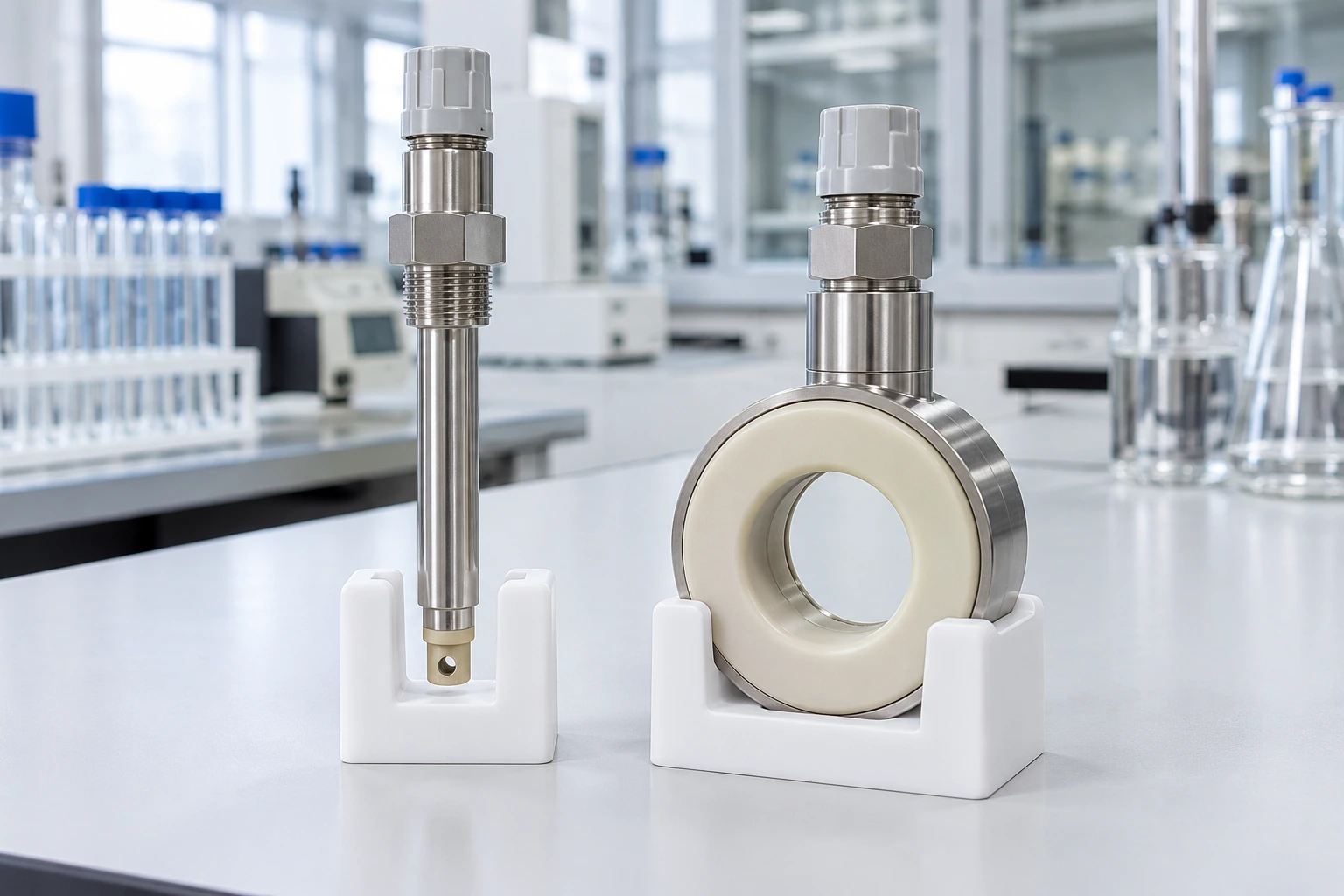
A Titanium electrode conductivity sensor must cover the intended measurement range with suitable accuracy and compatibility. Probe design and installation affect which applications it can serve.
Is the instrument operating within its capability?
Review the actual range. Ask the instrument supplier about the process matrix and required resolution. Avoid selecting only by display range while ignoring stated measurement limitations.
- Record sensor model and range.
- Check wetted-material compatibility.
| Check | Decision |
|---|---|
| Display capability | Not the complete accuracy specification |
| Suitable measurement range | Supports the intended decision |
Match instrument capability with the acceptance question. Key Takeaway: A readable number is not proof of a suitable measurement.
4. Why record Titanium electrode conductivity temperature?

Titanium electrode conductivity temperature must be recorded because temperature influences the measured property and any compensation. Results on different reference-temperature bases may not be directly comparable.
What temperature does the displayed value represent?
Separate measured and compensated values. Include actual temperature and compensation settings in a custom electrode review. Do not assume two instruments apply the same correction model.
- Record actual sample temperature.
- State compensation and reference basis.
| Check | Decision |
|---|---|
| Uncompensated result | Property at measured temperature |
| Compensated result | Model-based reference-temperature value |
Align the temperature basis before comparison. Key Takeaway: A conductivity record needs both units and temperature context.
5. How should a Titanium electrode conductivity probe be calibrated?

A Titanium electrode conductivity probe should be calibrated or verified according to its approved method using suitable reference materials and conditions. The procedure must fit the sensor and required range.
What evidence supports the calibration?
Keep the reference record. Identify solution value, condition and applicable temperature information. Follow supplier instructions rather than transferring a calibration sequence from another probe type.
- Record reference identity and expiry where applicable.
- Retain calibration or verification results.
| Check | Decision |
|---|---|
| Calibration claimed | Incomplete without supporting records |
| Traceable verification | Supports measurement confidence |
Check calibration relevance to actual service. Key Takeaway: Calibration records should show how the probe was judged suitable.
6. Can bubbles distort Titanium electrode conductivity readings?
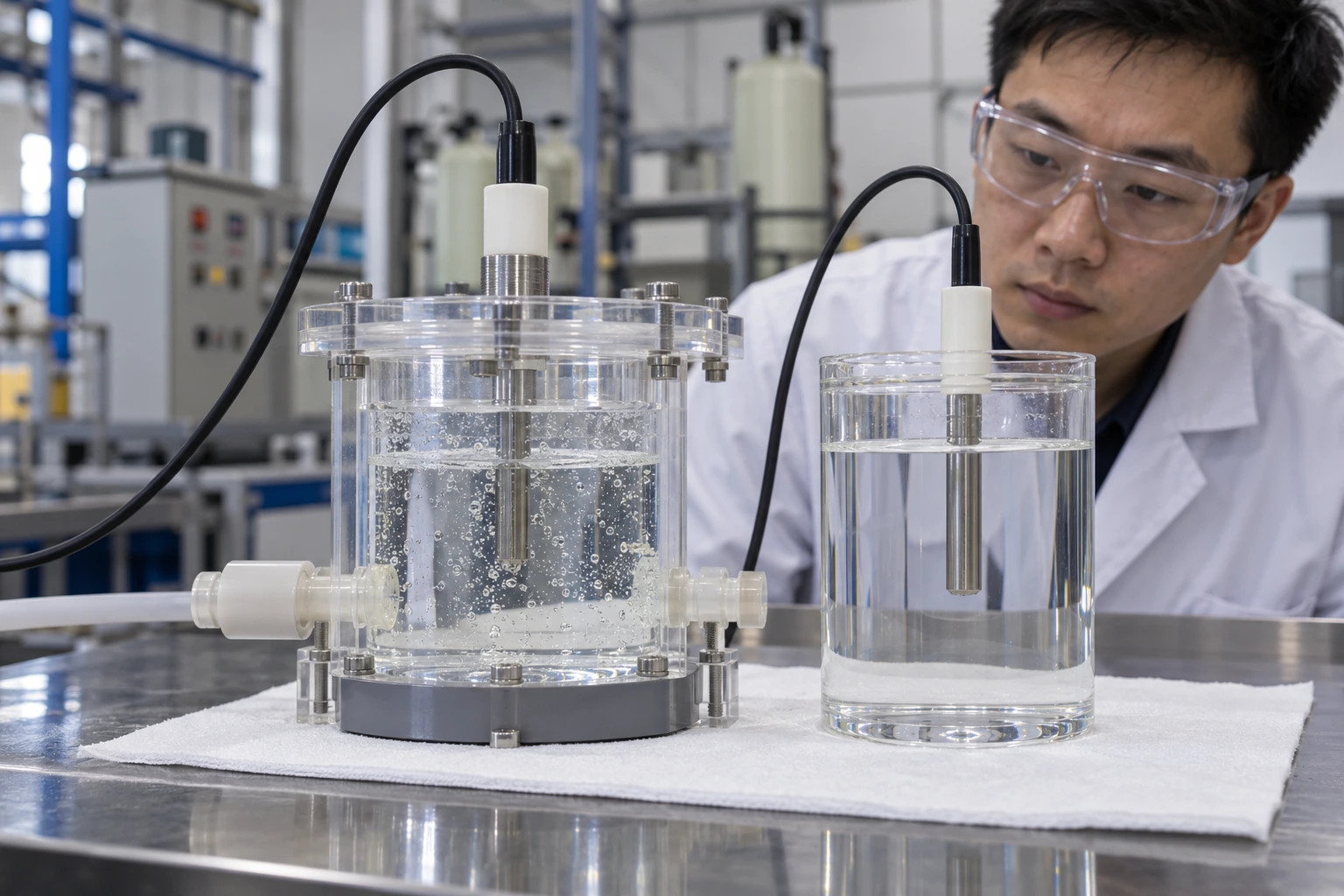
Bubbles can distort some Titanium electrode conductivity measurements when they interfere with the sensing region. The effect depends on sensor principle, installation and flow conditions.
Is the sensing region properly wetted?
Check the sample presentation. Review installation orientation and trapped-gas behavior through approved procedures. A difference between two locations may reflect sample handling rather than chemistry.
- Inspect relevant flow and wetting conditions.
- Record sensor placement.
| Check | Decision |
|---|---|
| Representative liquid contact | Supports the intended reading |
| Persistent gas interference | Needs installation review |
Resolve sensing-condition problems before adjusting feed. Key Takeaway: A probe must measure representative liquid rather than an unreviewed gas-liquid mixture.
7. Where should Titanium electrode conductivity be sampled?

Titanium electrode conductivity should be sampled at a location representative of the condition being controlled or investigated. Feed, recirculation and outlet measurements may describe different liquids.
Which part of the process does the value represent?
Name the sampling boundary. Keep location and timing consistent across comparisons. An outlet value should not silently replace an inlet specification when electrolysis changes the stream.
- Identify inlet and outlet points.
- Record recirculation and dilution conditions.
| Check | Decision |
|---|---|
| Inlet measurement | Describes supplied feed |
| Outlet measurement | Includes process effects |
Choose the location that answers the actual question. Key Takeaway: Sampling boundaries are part of the conductivity specification.
8. What checks reveal Titanium electrode sensor fouling?
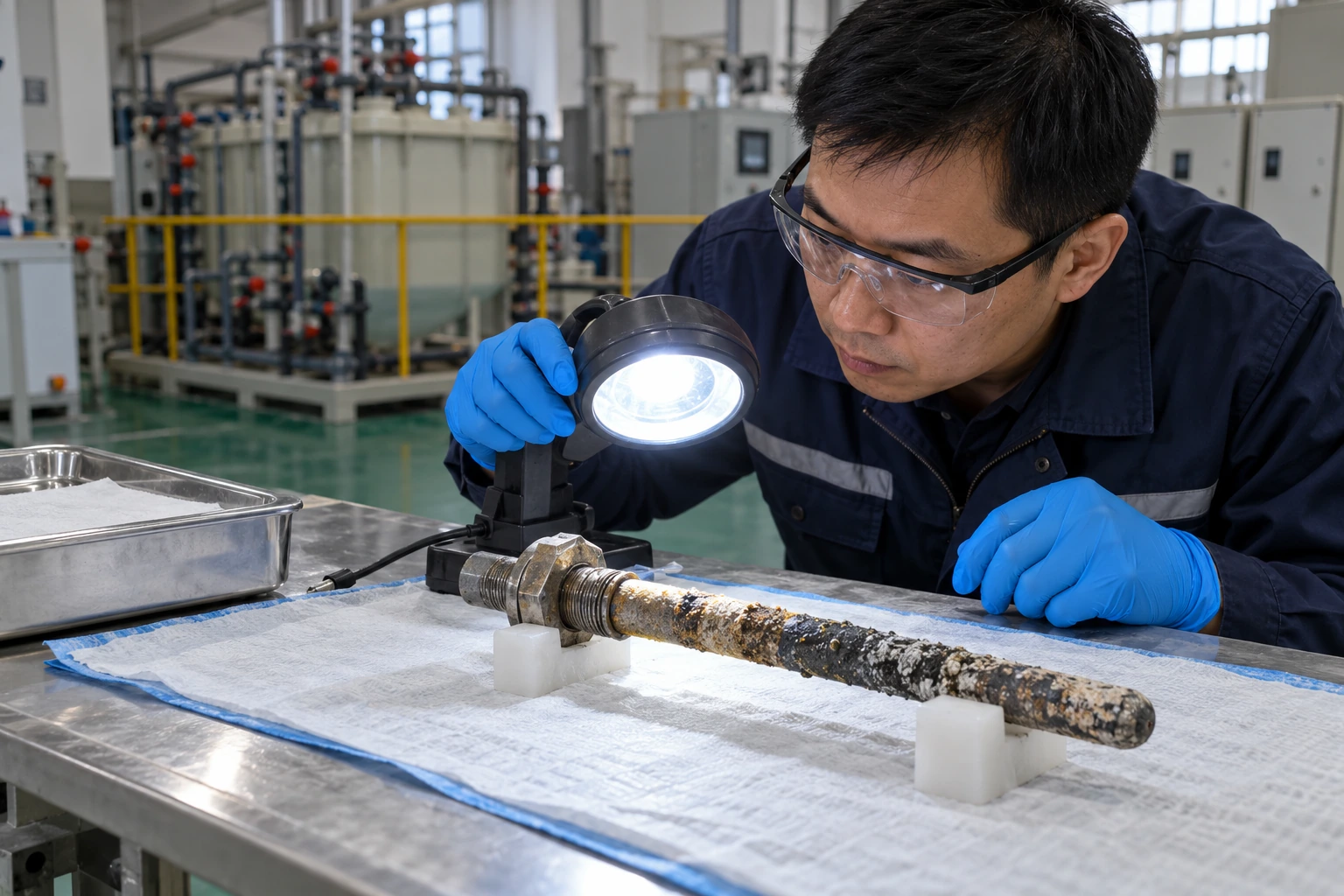
Titanium electrode sensor fouling can be investigated through approved inspection, verification and comparison with a suitable reference measurement. Cleaning must follow sensor-compatible instructions.
Did the probe change or did the liquid change?
Test the measurement hypothesis. For hypochlorite-generation systems, retain before-and-after verification records when cleaning a probe. Avoid correcting process chemistry solely because a fouled sensor drifted.
- Record deposit and maintenance history.
- Use approved cleaning procedures.
| Check | Decision |
|---|---|
| Probe condition uncertain | Alternative cause of drift |
| Verified probe response | Stronger basis for process interpretation |
Separate instrument changes from feed changes. Key Takeaway: Confirm the sensor before acting on an unexpected conductivity trend.
9. How do you compare Titanium electrode conductivity records?
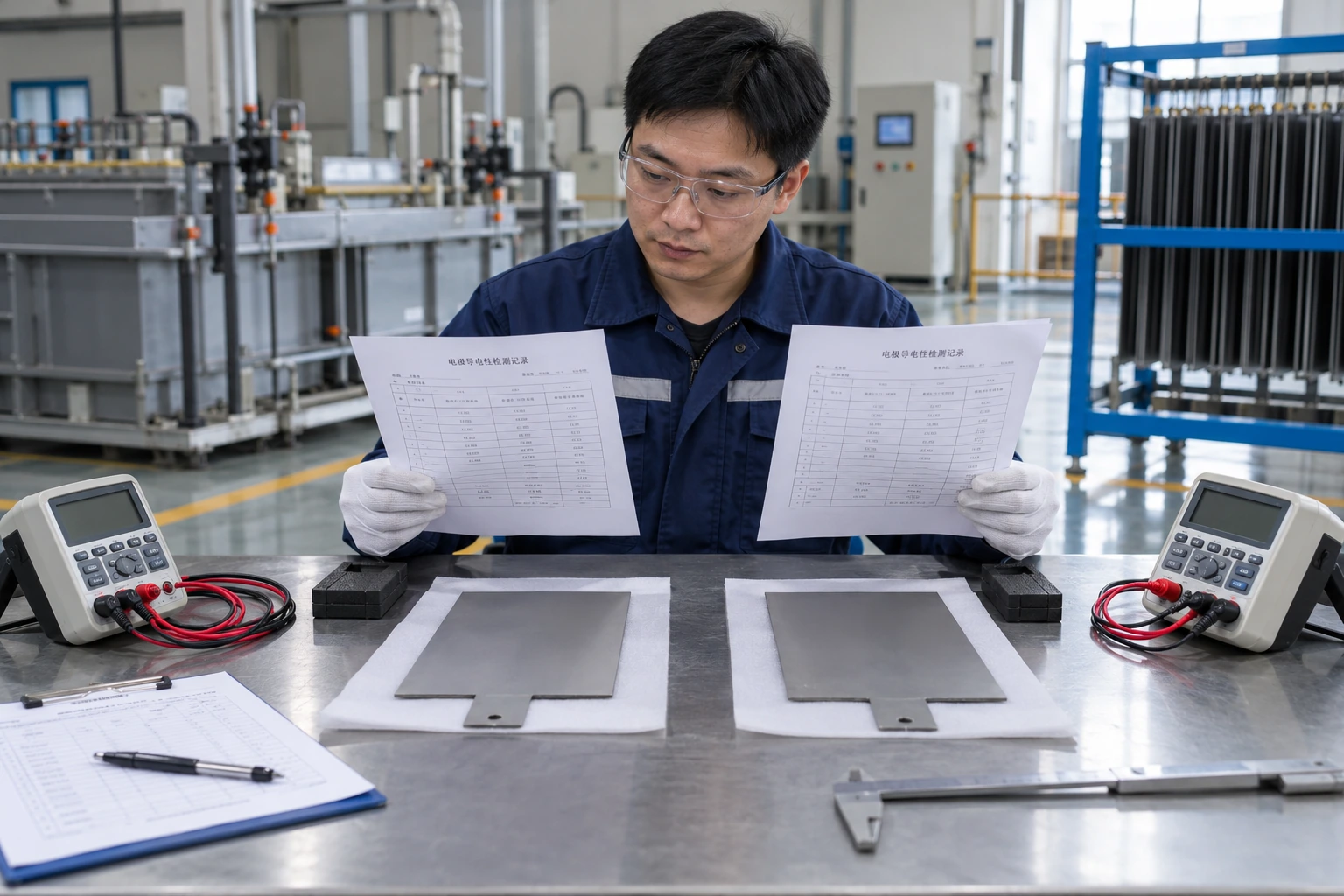
Titanium electrode conductivity records should be compared using consistent units, temperature basis, locations and methods. A unit mismatch can create a large apparent process change.
Are the numbers on the same scale?
Normalize before interpreting. For example, 1 mS/cm equals 100 mS/m; this is a unit conversion, not a recommended operating value. Keep conversion steps visible in reports.
- Check unit prefixes and length basis.
- Align temperature compensation settings.
| Check | Decision |
|---|---|
| Different units | Requires explicit conversion |
| Aligned records | Supports a valid trend comparison |
Resolve scale differences before diagnosing chemistry. Key Takeaway: A straightforward unit check can prevent an unnecessary process adjustment.
10. What Titanium electrode conductivity record should you send?
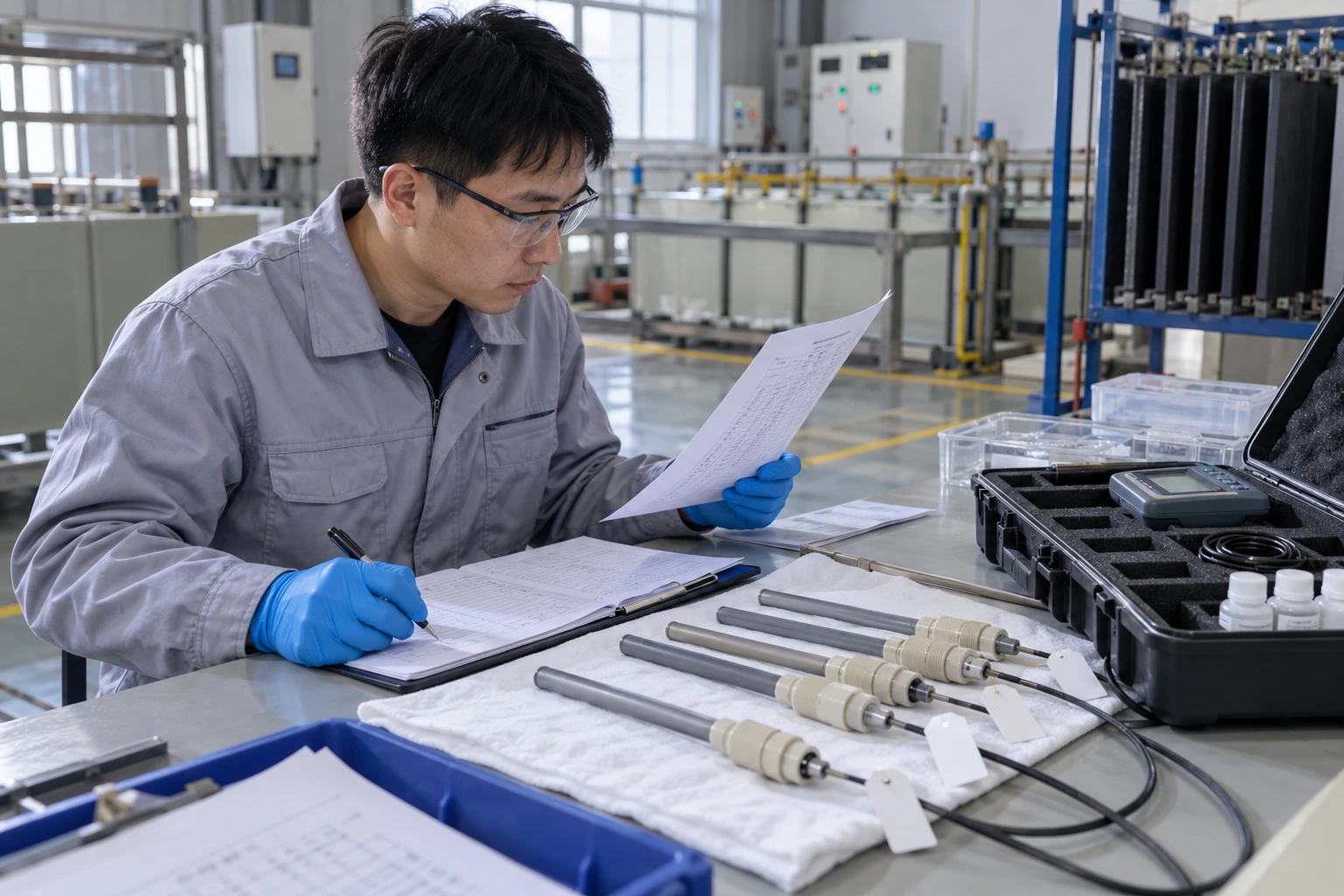
A Titanium electrode conductivity record should include sensor identity, calibration, temperature basis and sampling context. These details make feed trends useful for electrode and cell review.
Send the measurement context with the value
Bring the probe and process records. When you contact us today, we can review electrode requirements against your measured feed conditions. We favor verified process data over unexplained panel readings.
- Include relevant composition analysis.
- Identify recent instrument or feed changes.
| Check | Decision |
|---|---|
| Value alone | Limited diagnostic context |
| Complete record | Supports technical interpretation |
Confirm measurement quality before changing operating duty. Key Takeaway: Use conductivity as a traceable process measurement.
Frequently Asked Questions
Can I calculate salt concentration from any conductivity reading? Only with a validated relationship for the actual liquid and conditions.
How do I know if temperature compensation differs? Check instrument settings and record the stated reference-temperature basis.
What's the best sensor range? Choose for the actual feed and required measurement capability with the instrument supplier.
Can I adjust salt because a probe reading drifts? Verify the sensor and sampling conditions before changing chemistry.
Can I compare mS/cm with mS/m directly? No. Convert units explicitly before comparing the numbers.