
Check Titanium electrode stray-current paths by reviewing the complete electrical and conductive-liquid network with qualified specialists. Nearby corrosion can tempt you to blame an anode immediately, while a wet connection or unintended bridge remains unnoticed. Removing a protective earth to test that theory would create another risk. Map intended and unintended paths, then use an approved diagnostic plan.
1. What is a Titanium electrode stray current path?
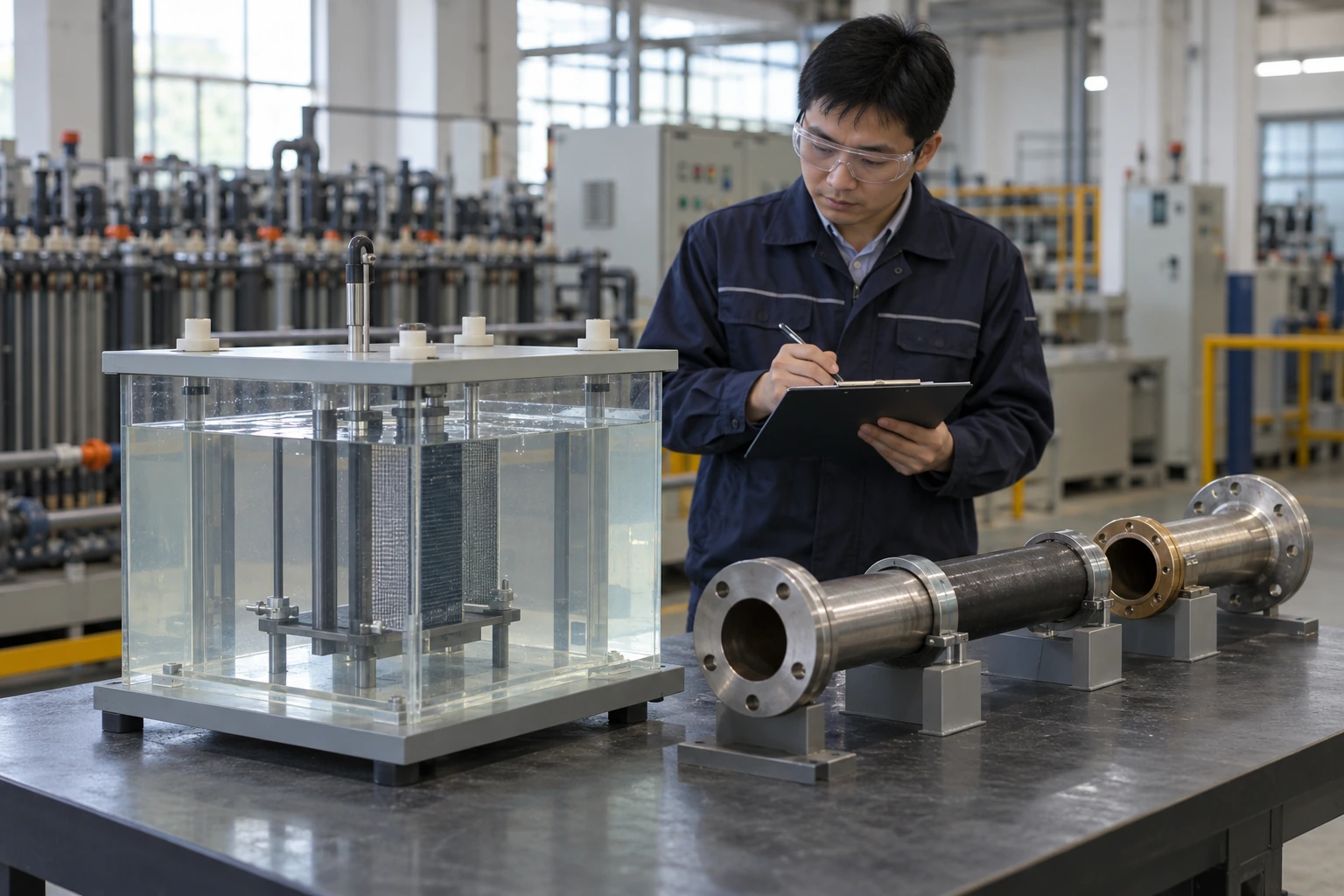
A Titanium electrode stray-current path is an unintended route for electrical current outside the designed process path. Conductors, liquid connections or contaminated interfaces may contribute.
What route was the design intended to use?
Start with the circuit boundary. Identify powered conductors, wetted metal and intended insulation. An unexplained corrosion mark alone does not establish where current flowed.
- Map intended current paths.
- Record adjacent conductive components.
| Check | Decision |
|---|---|
| Observed corrosion | A condition needing investigation |
| Verified unintended current path | A supported electrical finding |
Separate observation from mechanism. Key Takeaway: Investigate the path before assigning the cause.
2. How does stray current leave a Titanium electrode circuit?
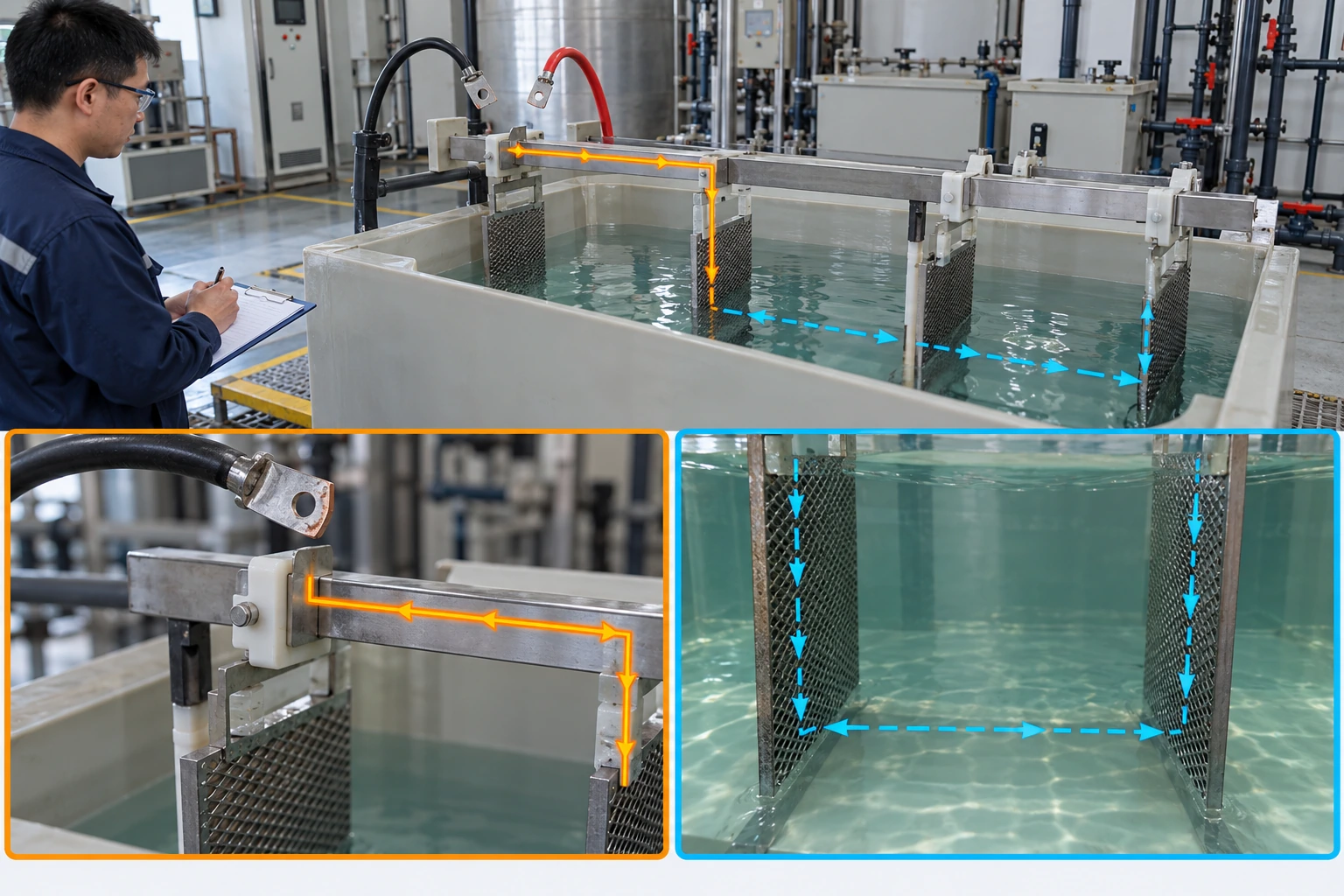
Current can leave a Titanium electrode circuit through unintended conductive connections when the complete electrical conditions permit it. Both solid and liquid pathways belong in the review.
Does the liquid connect separate regions?
Include the hydraulic network. Shared manifolds or liquid-filled lines may have electrical significance. Do not assess isolation only by looking at dry cable routing.
- Show shared liquid passages.
- Identify wetted metal connections.
| Check | Decision |
|---|---|
| Solid conductors | Visible electrical routes |
| Conductive liquids | Potential additional routes |
Review electrical and hydraulic drawings together. Key Takeaway: A cell's electrical boundary can extend through its liquid network.
3. Which Titanium electrode interfaces need isolation review?
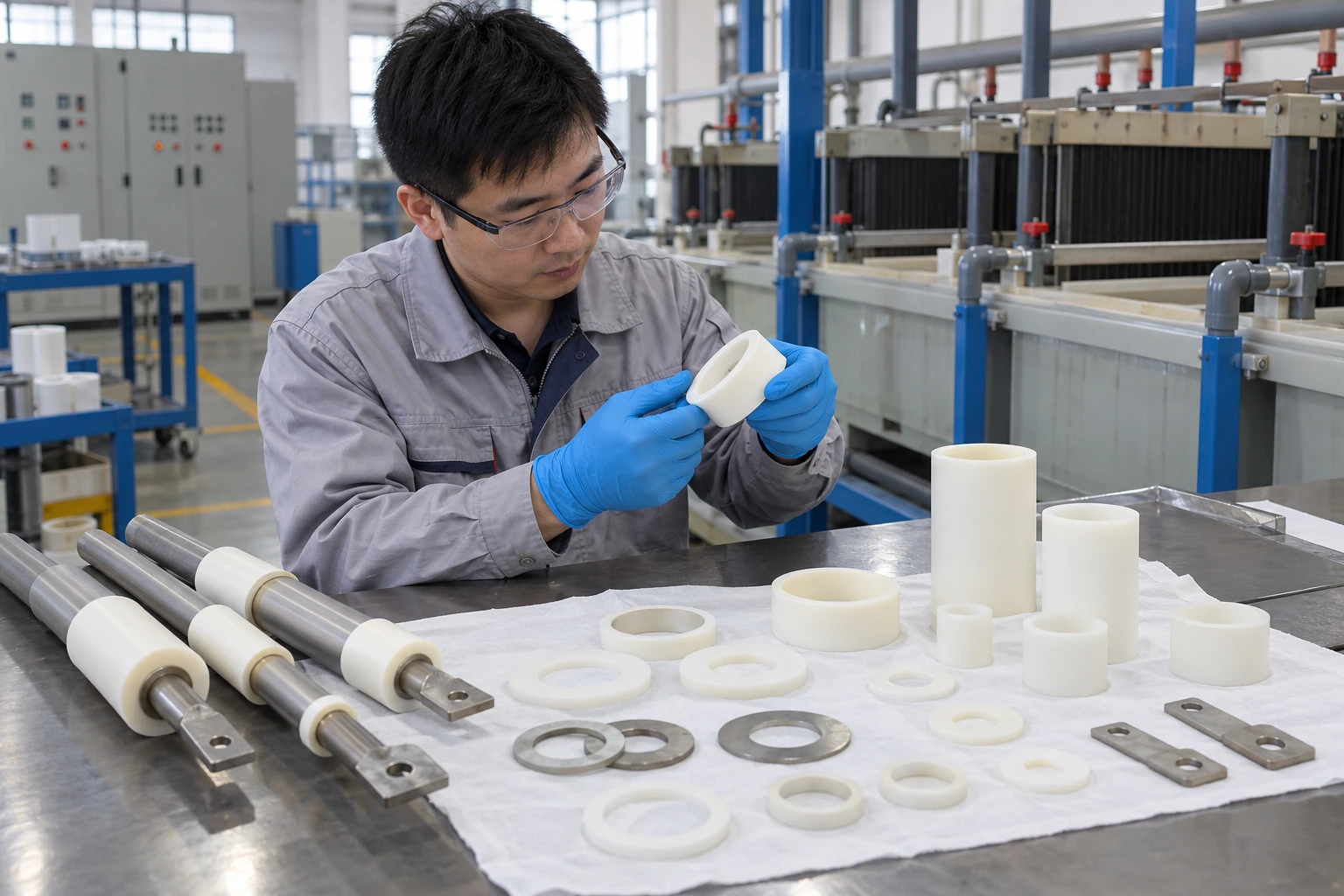
Titanium electrode interfaces needing isolation review include supports, fasteners, terminals and adjacent wetted structures where unintended contact could matter. The exact requirements depend on system design.
Which assembly features maintain separation?
Inspect the interface details. Check approved sleeves, washers and support arrangements against drawings. Do not substitute a visually similar component without reviewing its functional requirements.
- Identify insulating components.
- Record required assembly orientation.
| Check | Decision |
|---|---|
| Specified isolation feature | Part of the design |
| Unreviewed substitution | May change the current path |
Keep isolation features under configuration control. Key Takeaway: Small assembly parts can define consequential electrical boundaries.
4. Can conductive liquid bypass Titanium electrode insulation?
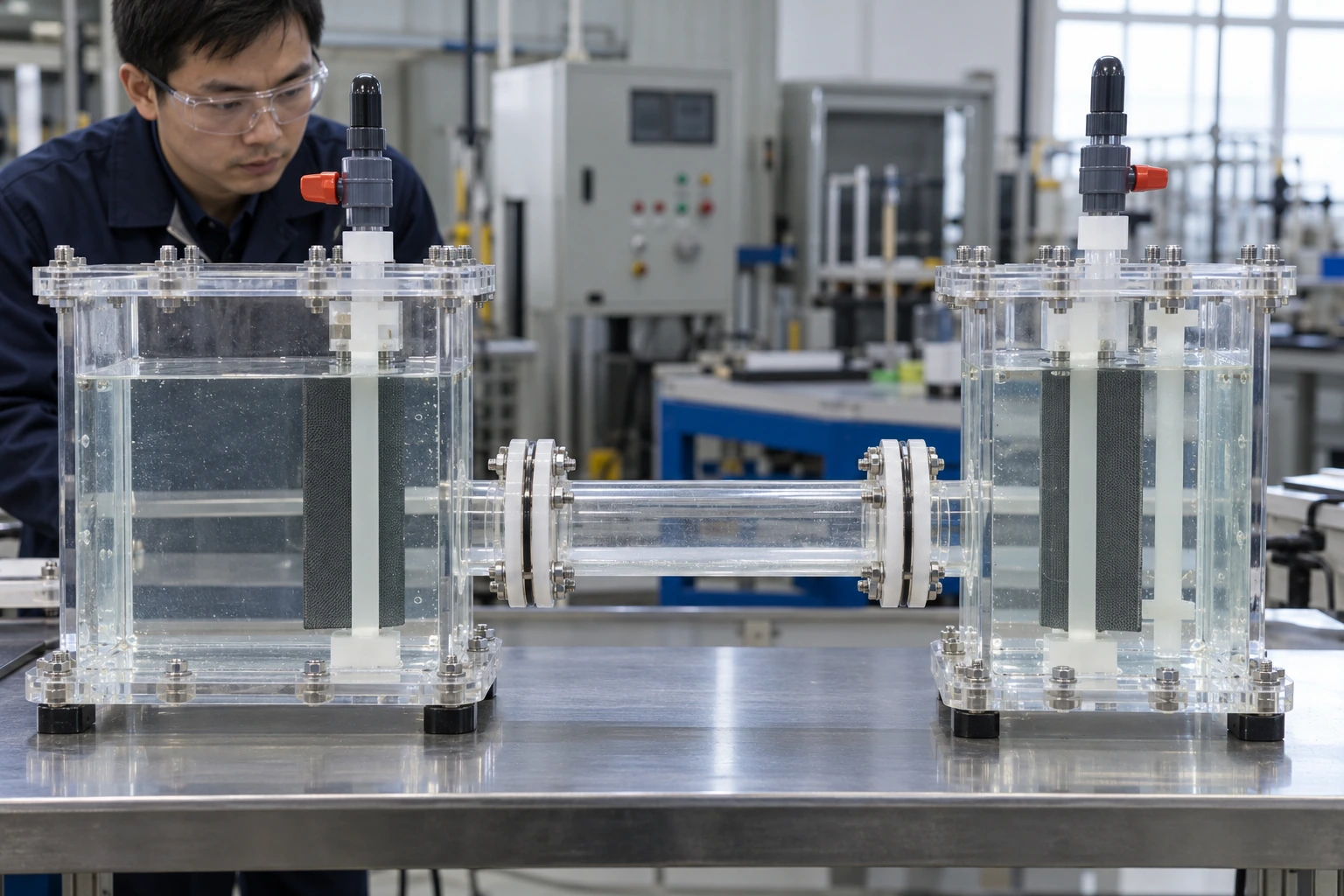
Conductive liquid can bypass some Titanium electrode insulating arrangements if the design leaves an alternate ionic path. Dry mechanical separation alone does not prove complete process isolation.
What happens when the system is filled?
Review the wetted configuration. Include electrolyte conductivity and manifold geometry in a custom engineering review. Ask the responsible engineer which pathways remain and how they are evaluated.
- Document filled and drained states.
- Identify shared feed and return routes.
| Check | Decision |
|---|---|
| Dry separation | Mechanical condition |
| Wetted electrical behavior | Requires additional analysis |
Test assumptions under relevant operating states. Key Takeaway: Isolation review must account for the liquid and solid hardware.
5. Does insulation replace Titanium electrode protective grounding?
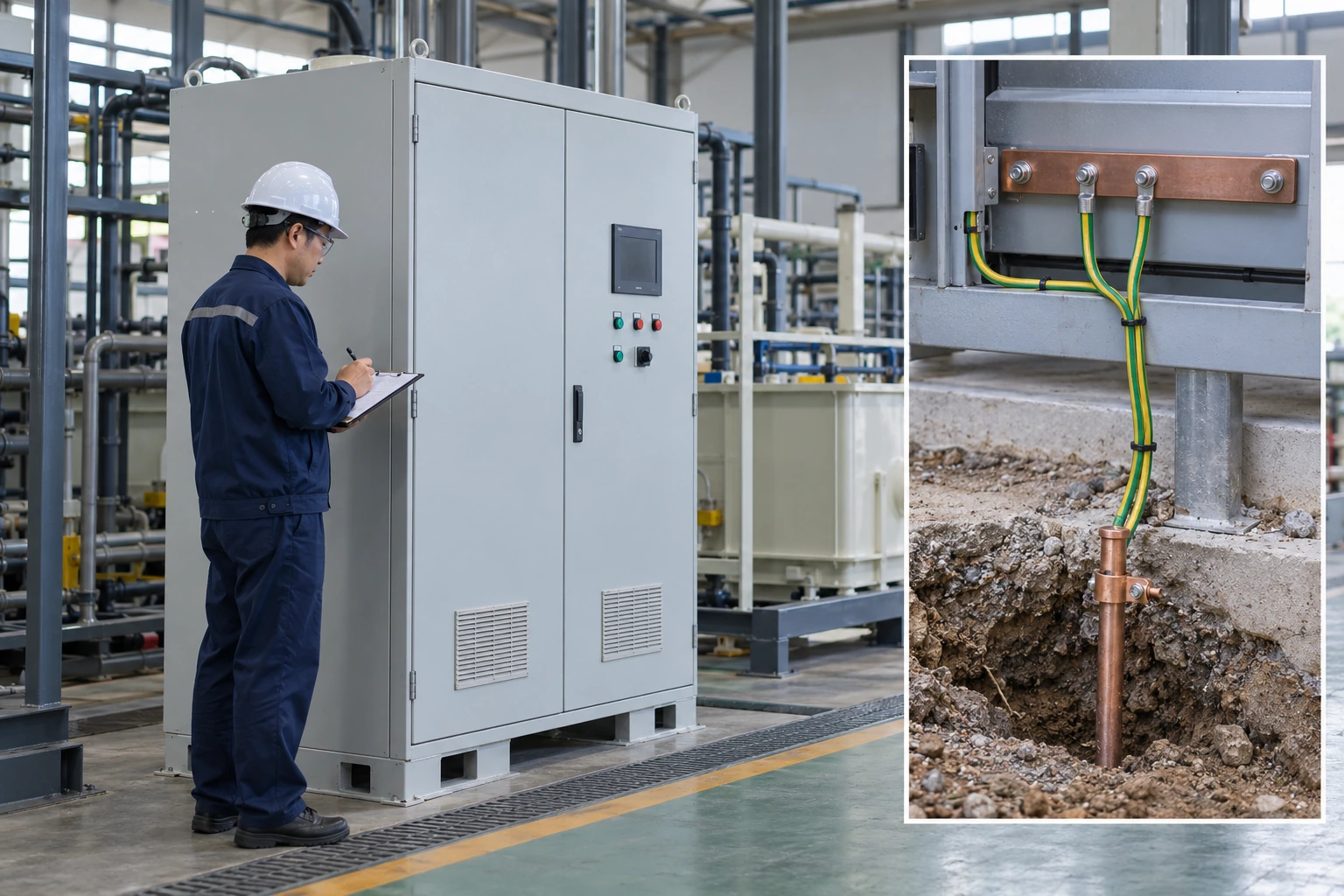
Titanium electrode process insulation does not replace protective grounding because the two serve different system functions. Protective-earth changes require qualified electrical engineering and applicable safety procedures.
Are two different protection concepts being confused?
Keep protective earth intact. Do not disconnect grounding as an improvised stray-current diagnostic step. Responsible specialists must resolve process isolation without weakening required electrical protection.
- Identify grounding responsibilities.
- Separate process and safety diagrams.
| Check | Decision |
|---|---|
| Process isolation | Controls intended current routes |
| Protective grounding | Supports electrical safety functions |
Resolve conflicts through qualified system review. Key Takeaway: Never treat removal of protective grounding as a troubleshooting shortcut.
6. How should Titanium electrode isolation be tested?
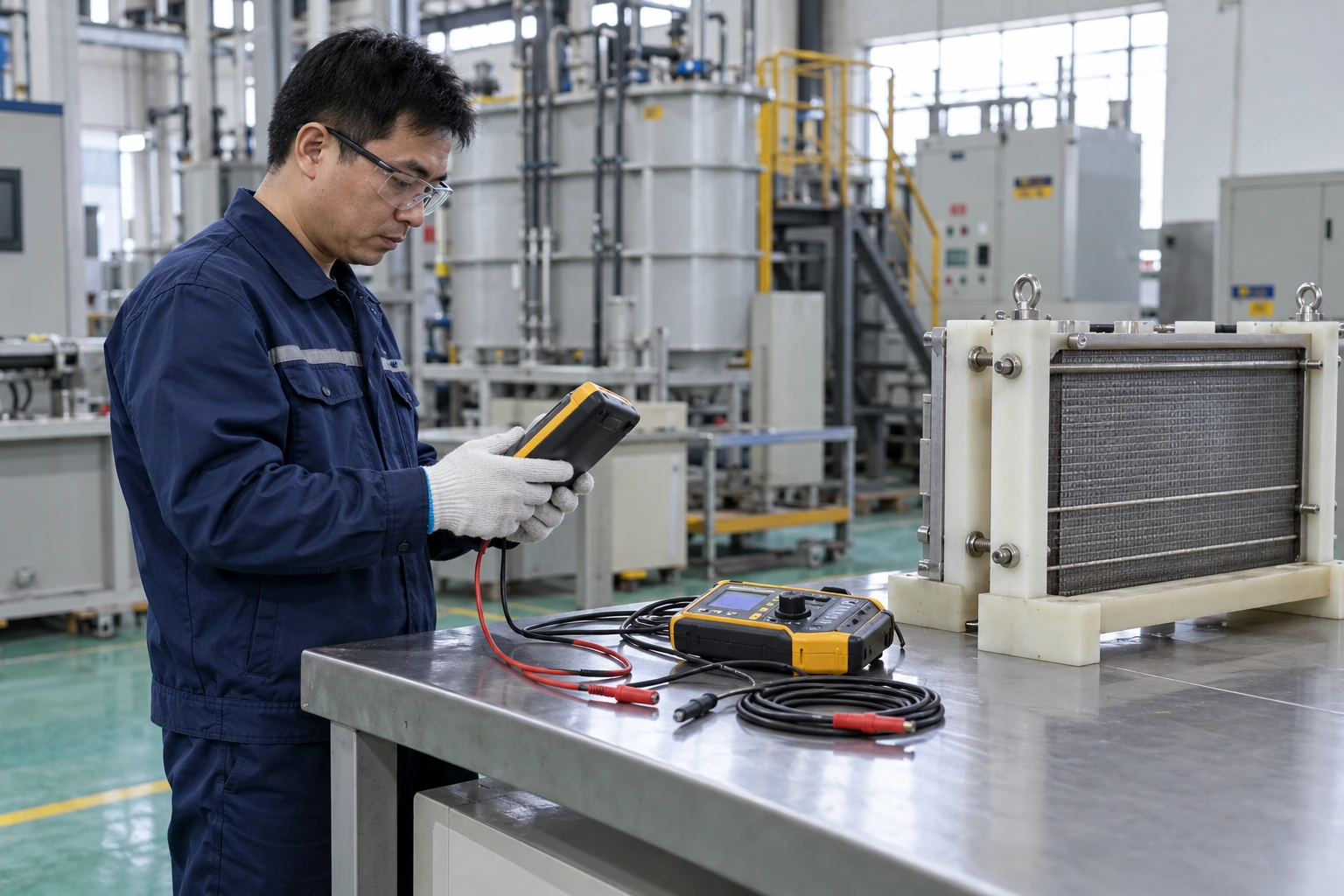
Titanium electrode isolation should be tested through a qualified procedure suitable for connected equipment and materials. Test voltages or methods must not be borrowed blindly from unrelated installations.
What components could the test itself affect?
Define the test boundary. Review sensors, electronics, membranes and other connected components before testing. Use approved isolation and stored-energy controls for the actual equipment.
- Assign qualified test personnel.
- Record configuration and acceptance criteria.
| Check | Decision |
|---|---|
| Generic test method | May not suit the assembly |
| Approved equipment-specific method | Addresses actual interfaces |
Plan the test before connecting instruments. Key Takeaway: An isolation measurement needs a safe and technically suitable procedure.
7. Can deposits bridge a Titanium electrode isolation gap?
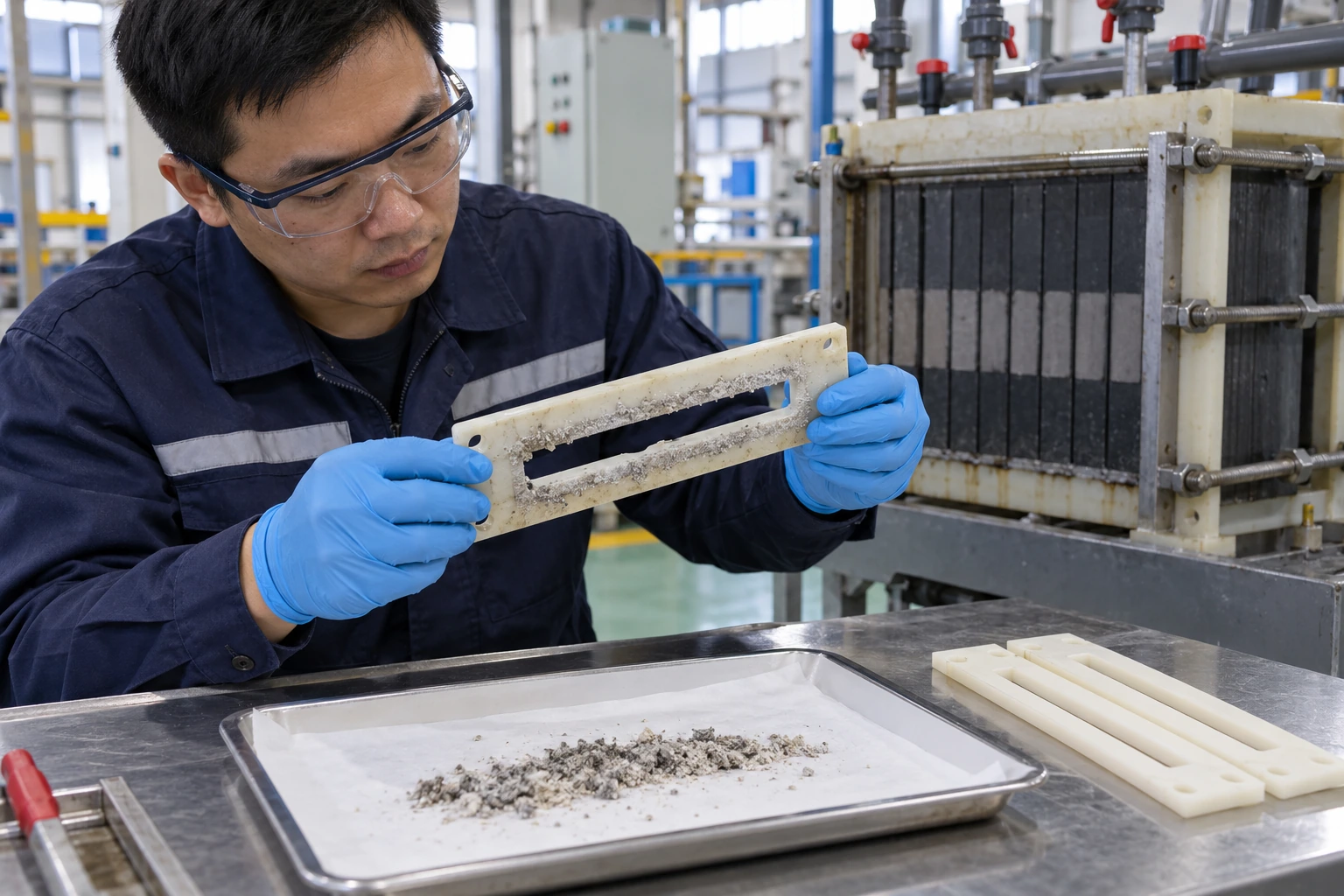
Deposits or moisture can bridge Titanium electrode isolation gaps depending on geometry and material conductivity. Their effect must be investigated through approved inspection and testing.
Has the interface changed during service?
Inspect the as-found condition. Preserve photographs and relevant residue information before approved cleaning. A dry bench check after cleaning may miss the condition that existed during operation.
- Record moisture and deposit locations.
- Keep maintenance history available.
| Check | Decision |
|---|---|
| Clean dry inspection | One condition |
| As-found service evidence | May reveal the fault pathway |
Compare states before deciding on corrective work. Key Takeaway: Service contamination can alter an otherwise correct assembly.
8. How do you investigate nearby Titanium electrode corrosion?
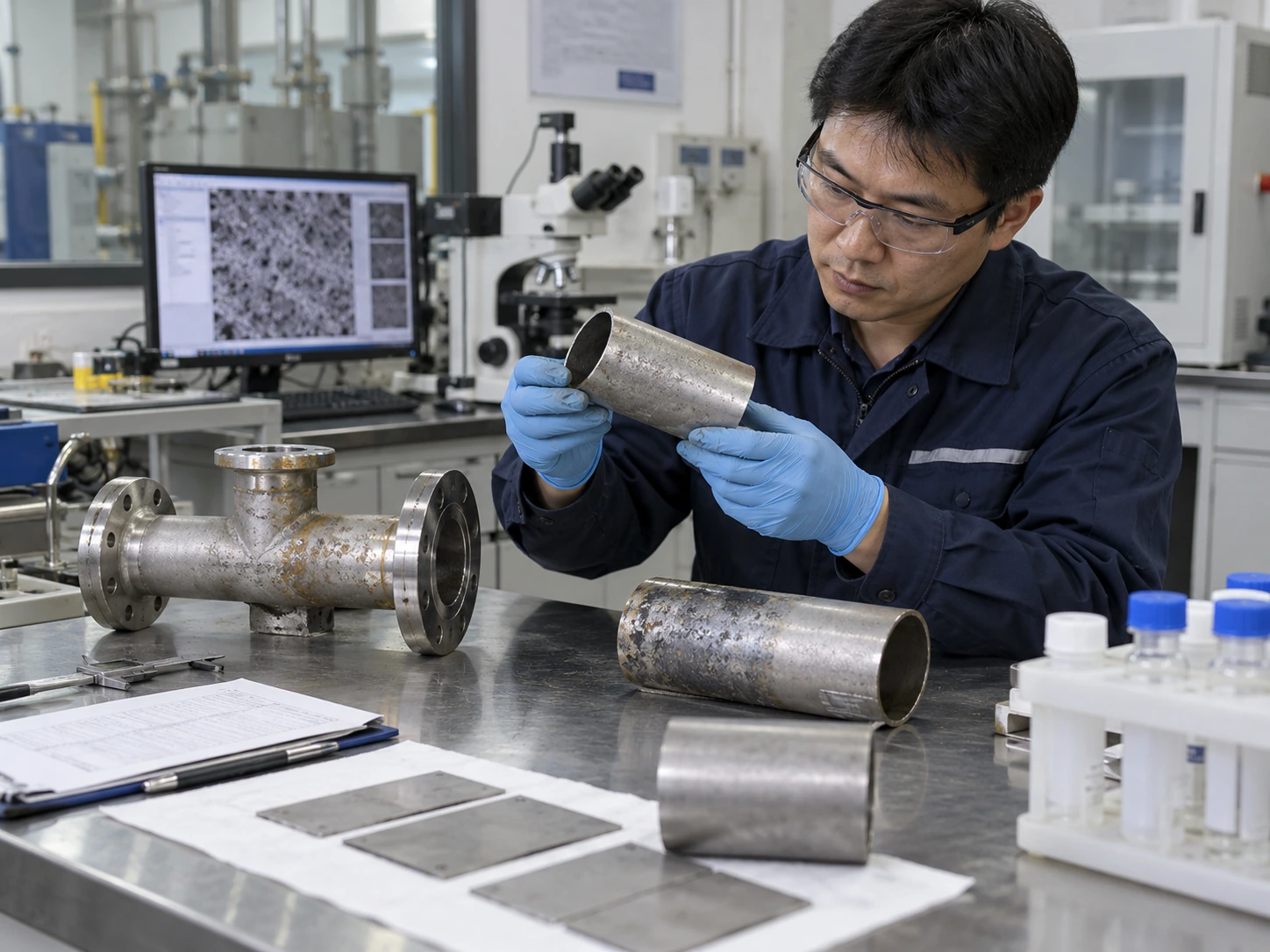
Nearby corrosion during Titanium electrode operation needs a cause-based investigation that considers material, chemistry and electrical pathways. Location alone does not establish stray-current damage.
What evidence would distinguish the causes?
Use competing hypotheses. For water-treatment applications, combine qualified electrical observations with material and liquid evidence. Do not present one photograph as proof of a specific current path.
- Record material and exposure conditions.
- Preserve time-aligned operating history.
| Check | Decision |
|---|---|
| Spatial proximity | Suggests a review area |
| Corroborating measurements | Can support a mechanism |
Choose tests that distinguish plausible explanations. Key Takeaway: A defensible diagnosis combines electrical and corrosion evidence.
9. What changes require Titanium electrode isolation rechecks?
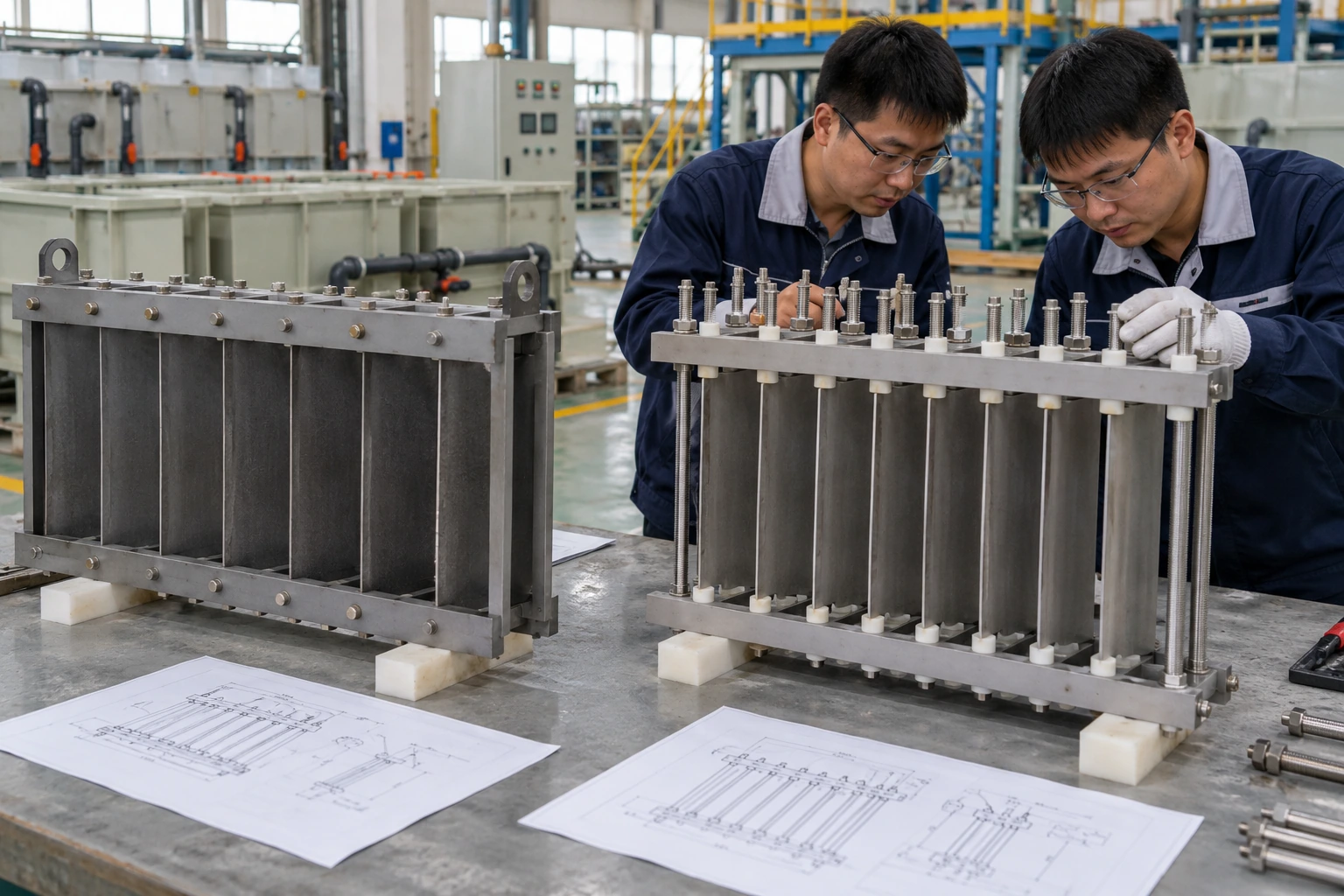
Titanium electrode isolation needs rechecking when changes affect supports, fasteners, liquid routes or electrical interfaces. An apparently minor revision may alter an intended boundary.
Which change touched the current path?
Review the changed function. Compare released and as-built configurations. Define verification proportional to the affected requirement rather than assuming prior approval covers every replacement part.
- Record interface revisions.
- Retain verification and release decisions.
| Check | Decision |
|---|---|
| Unchanged reviewed interface | Existing evidence may remain relevant |
| Changed current-path feature | Needs a new assessment |
Keep functional boundaries traceable through maintenance. Key Takeaway: Isolation belongs in engineering change control.
10. What Titanium electrode isolation evidence should you request?

A Titanium electrode isolation review needs electrical, hydraulic, grounding and assembly information. These documents help specialists identify unintended routes without compromising protective functions.
Request a coordinated interface review
Send the full boundary map. When you contact us today, we can review electrode geometry and connection requirements within your system design. We favor qualified investigation over improvised electrical fixes.
- Include as-found photographs and revisions.
- Name the responsible electrical designer.
| Check | Decision |
|---|---|
| Component details | Support interface review |
| System evidence | Defines current paths and protection |
Agree on a safe discriminating test. Key Takeaway: Resolve unintended current paths through documented system engineering.
Frequently Asked Questions
Can I diagnose stray current from corrosion photographs? Not alone. Electrical, material and exposure evidence must support the proposed mechanism.
Can I disconnect protective earth to test a theory? No. Keep required protection intact and obtain qualified electrical guidance.
How do I know if liquid creates another current path? Have the complete wetted network reviewed using suitable analysis and approved testing.
What's the best isolation test voltage? Use the equipment-specific approved procedure; there is no universal value for every assembly.
Can I substitute insulating washers by appearance? Only after confirming the required material, geometry and functional specification.