
A continuity test shows whether an electrical path exists across defined Titanium electrode points. It does not prove coating activity, electrochemical output, or performance in process media. ARY Titanium can review drawings and samples; qualified test owners define electrical and application acceptance.
1. What path does a Titanium electrode continuity check cover?

A Titanium electrode continuity check answers whether a defined conductive path remains between test points. It does not describe every joint, coating, or operating reaction.
Which electrical path does the test cover?
Name both endpoints. A measurement from terminal to substrate differs from a check across a bolted joint or connection lead. The record should show which path was isolated.
- Mark test points on the assembly drawing.
- Separate substrate path from terminal and joint interfaces.
| Check | Decision |
|---|---|
| Defined path | Identifies measured endpoints |
| Unstated endpoints | Leaves result scope unclear |
A continuity result applies to its stated points. Key Takeaway: Label the electrical path before comparing readings.
2. Why separate continuity from Titanium electrode activity?
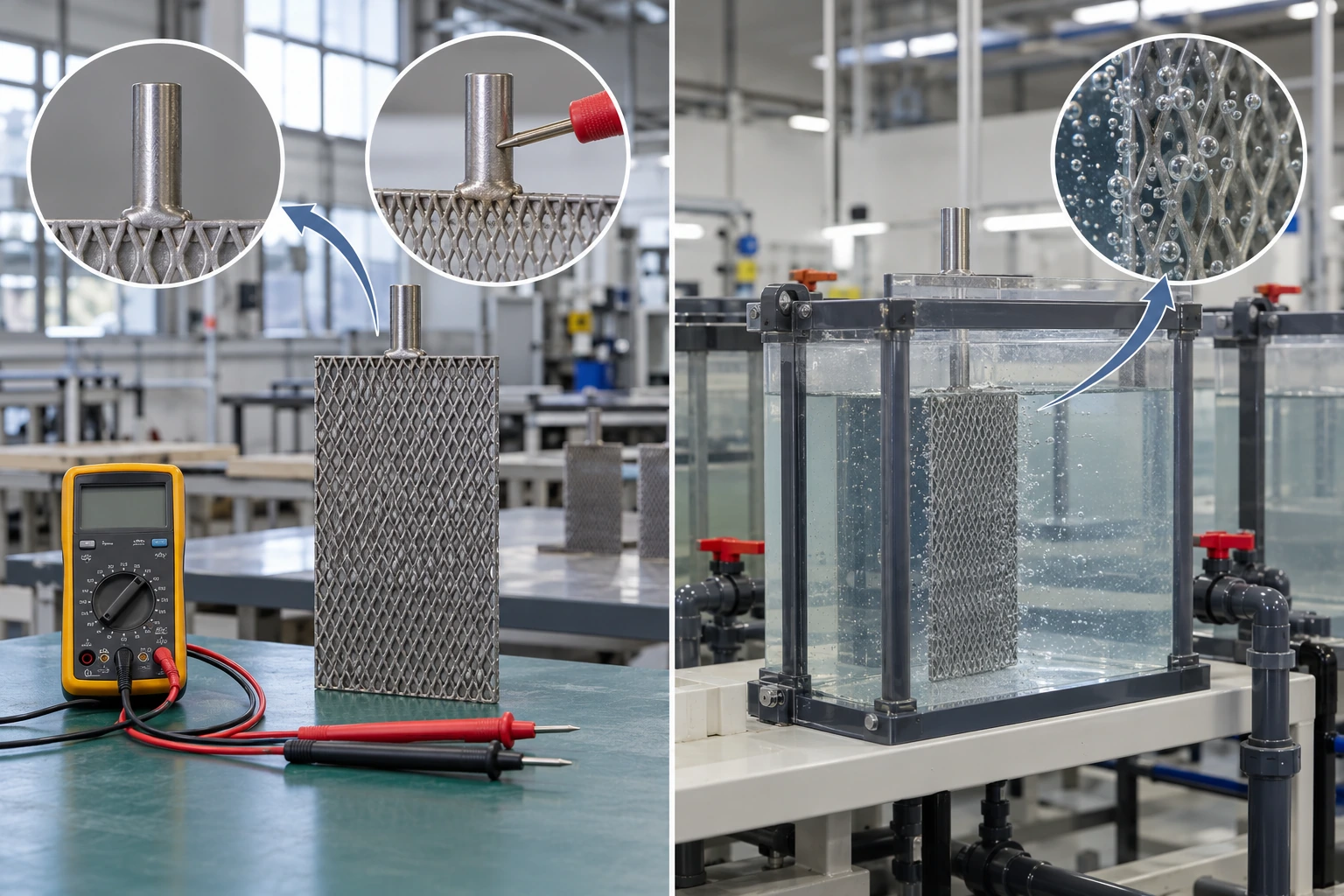
A Titanium electrode continuity result and catalytic activity result answer different questions. Electrical continuity checks a path; electrochemical activity needs application-relevant evidence.
Why are contact and activity separate checks?
Keep the two evidence chains apart. A low-resistance substrate path cannot show how a coating behaves in electrolyte. A catalytic surface test cannot identify every mechanical joint defect.
- Define separate acceptance criteria for each function.
- Match electrochemical evidence with intended media and duty.
| Check | Decision |
|---|---|
| Continuity | Checks conductive connection |
| Activity evidence | Checks reaction under defined duty |
One electrical reading cannot stand in for an electrochemical result. Key Takeaway: Choose each method for the question it must answer.
3. How do probe locations affect Titanium electrode readings?

A Titanium electrode resistance value depends on probe location and contact boundary. Poorly placed sense points may include lead or fixture resistance in the reported path.
Where should measurement points sit?
Name the measurement boundary. Place sense points around the joint or section under review, then preserve fixture and contact conditions. Compare only measurements using the same boundary.
- Record force or fixture conditions when relevant.
- Keep probe locations fixed across comparable samples.
| Check | Decision |
|---|---|
| Remote probe points | May include unrelated resistance |
| Defined boundary | Targets a stated interface |
Point placement changes what a resistance value contains. Key Takeaway: Document fixture and probe locations with each comparison.
4. Which method compares Titanium electrode contact resistance?
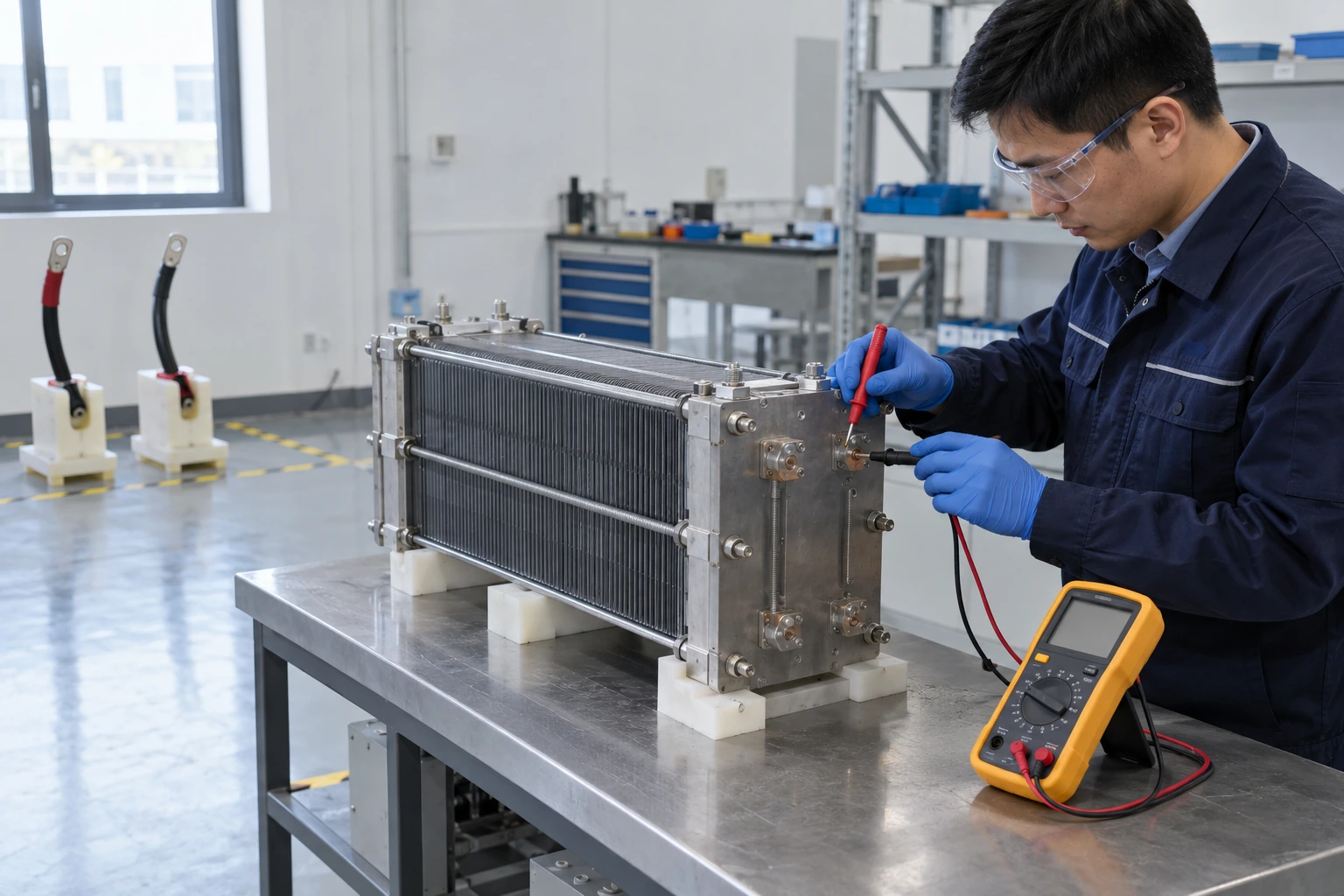
A Titanium electrode low-resistance contact comparison may benefit from a four-wire method under qualified test controls. The method reduces lead-resistance effects but does not remove every contact variable.
When does a four-wire method help?
Measure the boundary you care about. Qualified personnel can use a documented Kelvin setup for an isolated assembly during a custom engineering review. Sense leads should connect near the test region under an approved method.
- Use a method suited to expected resistance and assembly.
- Record current path and sense-point locations.
| Check | Decision |
|---|---|
| Two-wire reading | Includes more lead-path effect |
| Four-wire reading | Separates force and sense leads |
A method improvement still depends on controlled setup. Key Takeaway: Have a qualified lab define the resistance method and test boundary.
5. Does continuity prove Titanium electrode coating activity?

A Titanium electrode substrate continuity result cannot certify coating condition or catalytic activity. The current path may remain intact while surface properties require separate examination.
What does continuity say about a coating?
Do not stretch the result. A meter can confirm a defined electrical connection without measuring reaction rate or surface composition. Use coating inspection or qualified electrochemical evidence when those decisions matter.
- Keep substrate and coating records separate.
- Specify any surface inspection or activity test independently.
| Check | Decision |
|---|---|
| Substrate continuity | Checks an electrical route |
| Coating evidence | Addresses a surface question |
Electrical connection and catalytic function are distinct properties. Key Takeaway: Require a separate method for each coating acceptance question.
6. How can joints change Titanium electrode resistance readings?

A Titanium electrode contact resistance reading can include joints, leads, fasteners, and contact lands. The test boundary determines which interfaces contribute.
Could one joint dominate the result?
Break the assembly into interfaces. Inspect drawing notes and connection design before interpreting a high or changing reading. A total path may conceal which contact deserves review.
- List conductive interfaces along the test route.
- Retain joint configuration and assembly revision.
| Check | Decision |
|---|---|
| Total path reading | Combines included interfaces |
| Segmented checks | Can localize a boundary |
A single total may conceal more than one contact condition. Key Takeaway: Use the drawing to select a diagnostic boundary.
7. Which conditions make Titanium electrode readings comparable?
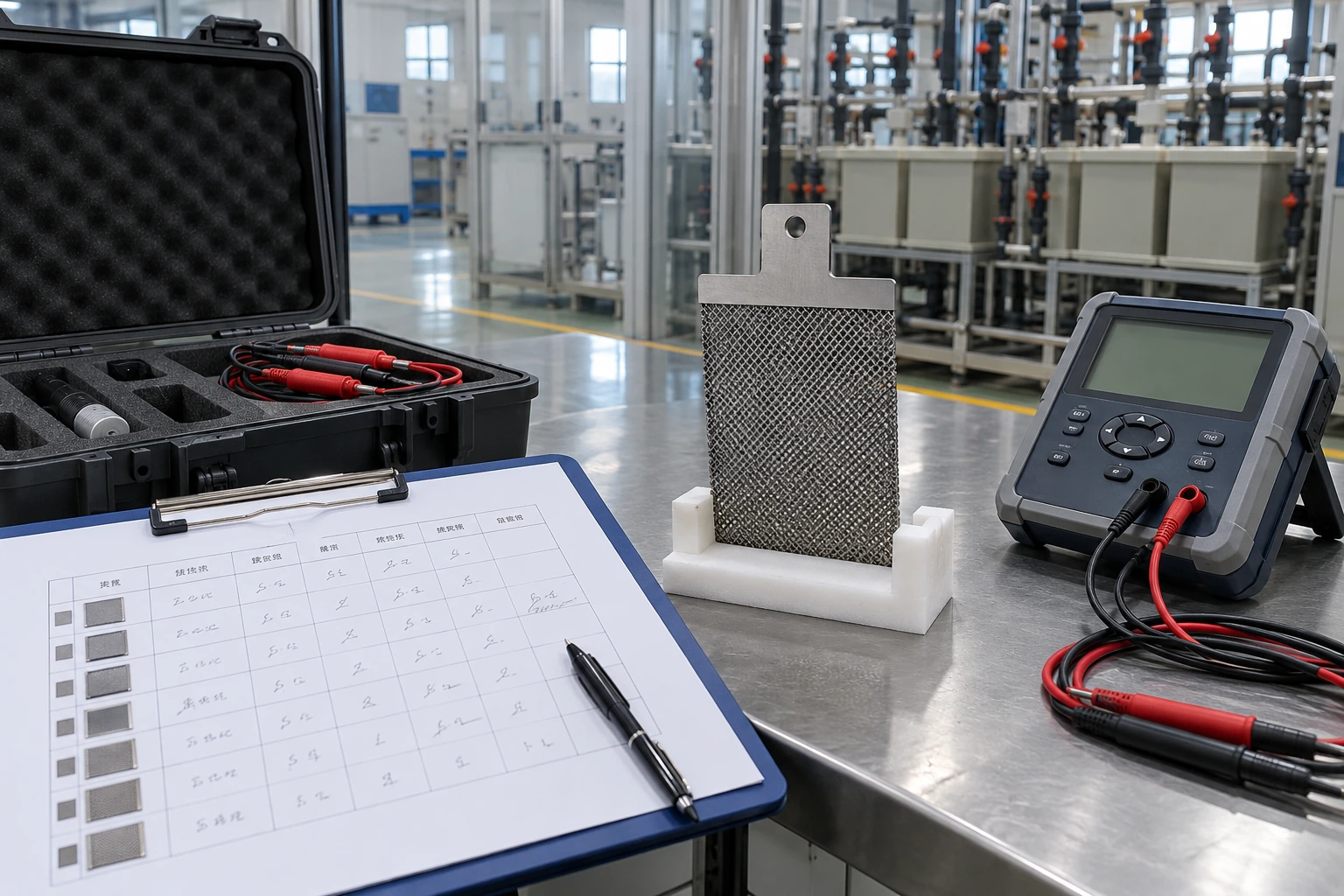
A Titanium electrode comparison needs consistent temperature, connection pressure, probe points, instrument status, and sample identity where these affect readings. An undocumented setup invites false differences.
What keeps readings comparable?
Fix the test conditions. Record instrument identification, fixture, assembly state, point locations, and relevant environmental conditions. Keep raw readings with approved interpretation.
- Use traceable equipment and documented setup.
- State whether each reading repeats or averages a defined method.
| Check | Decision |
|---|---|
| Number without setup | Cannot support a fair comparison |
| Controlled record | Allows review of variation |
Repeatability begins with a shared method. Key Takeaway: Agree on test conditions before comparing suppliers or lots.
8. How do activity tests complement Titanium electrode continuity?
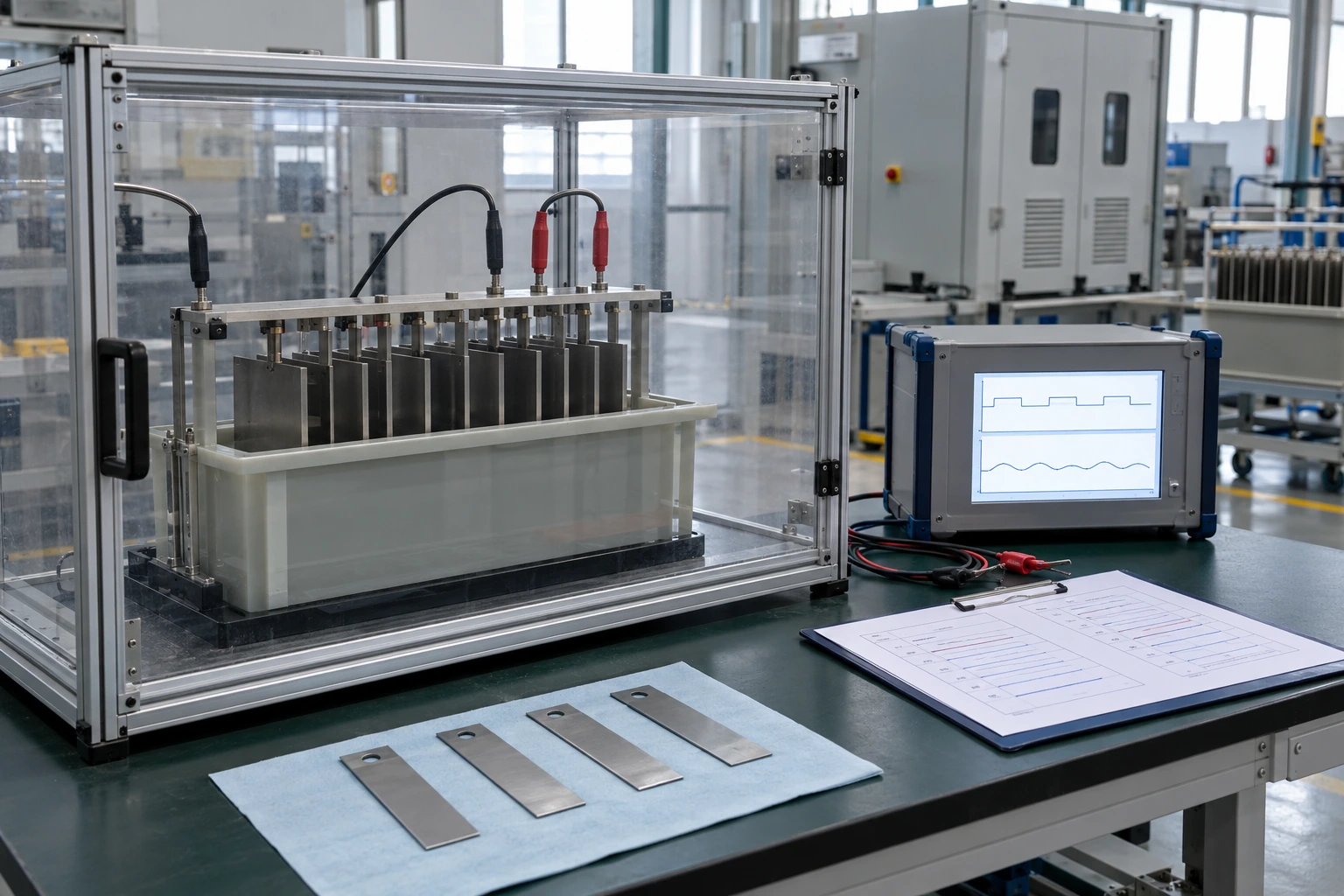
A Titanium electrode activity test should use qualified electrochemical methods matched with intended media and operating duty. Continuity remains a separate electrical check.
What evidence addresses activity in service?
Choose an electrochemical question. For water-treatment applications, define media, potential, product or current response, and safety controls with qualified test owners. Do not treat bench continuity as activity data.
- Define performance metric and test boundary.
- Keep surface identity and media conditions with the report.
| Check | Decision |
|---|---|
| Electrical path check | Confirms connection continuity |
| Electrochemical test | Evaluates defined reaction behavior |
Activity method depends on intended reaction. Key Takeaway: Keep electrochemical acceptance tied to the real application.
9. How should a Titanium electrode resistance report state limits?

A Titanium electrode resistance report should state measured points, method, setup, uncertainty or limitations, and acceptance owner. A number without boundaries cannot settle a dispute.
How should the report limit interpretation?
Write down what the result excludes. Identify interfaces outside the measurement boundary and distinguish observed continuity from surface activity. Qualified reviewers should decide acceptance against the agreed method.
- State test endpoints and method revision.
- List unmeasured functions and follow-up evidence.
| Check | Decision |
|---|---|
| Bounded report | Defines result scope |
| Unqualified number | Invites unsupported inference |
A useful report makes its limits visible. Key Takeaway: Approve readings against a documented test plan.
10. What should a Titanium electrode test plan separate?

A Titanium electrode test plan should separate substrate continuity, assembly contact resistance, coating condition, and electrochemical activity. Each result needs its own acceptance owner.
What belongs in an acceptance test plan?
Assign one question to each check. When you contact us today, include drawings, connection details, test points, duty, and requested evidence. ARY Titanium can review component drawings and samples; qualified owners set test limits.
- List test boundaries and responsible reviewers.
- Define evidence needed before component and system release.
| Check | Decision |
|---|---|
| Separated checks | Clarify acceptance scope |
| Combined claim | Can blur distinct properties |
Separate methods make the final acceptance easier to defend. Key Takeaway: Agree on test boundaries before sample or production approval.
Frequently Asked Questions
Can I prove coating activity with continuity? No. It checks a defined electrical path, while activity needs a suitable electrochemical method under relevant conditions.
What's the best method for comparing a low-resistance joint? A qualified four-wire method can reduce lead-resistance effects. Probe placement and fixture conditions still need control.
How do I know if a reading covers the whole assembly? Check stated endpoints and interfaces. Each unmeasured joint or lead lies outside that result's boundary.
Can I test an energized cell with a handheld meter? Do not use continuity or resistance mode on an energized cell. Qualified personnel should isolate the assembly and verify its de-energized state under the approved site procedure.
How do I know if electrical and activity results are comparable? Keep methods, boundaries, sample identity, and operating conditions separate. Each result answers a different technical question.