
A Titanium electrode may serve as a qualified counter-electrode in electropolishing, while metal dissolves from the anodic workpiece. Your drawing can confuse the polishing anode with the separate cathode material. That mistake sends coating selection toward the wrong reaction. Confirm polarity, bath chemistry, geometry and finish targets before comparing electrode designs.
1. How does a Titanium electrode fit an electropolishing cell?
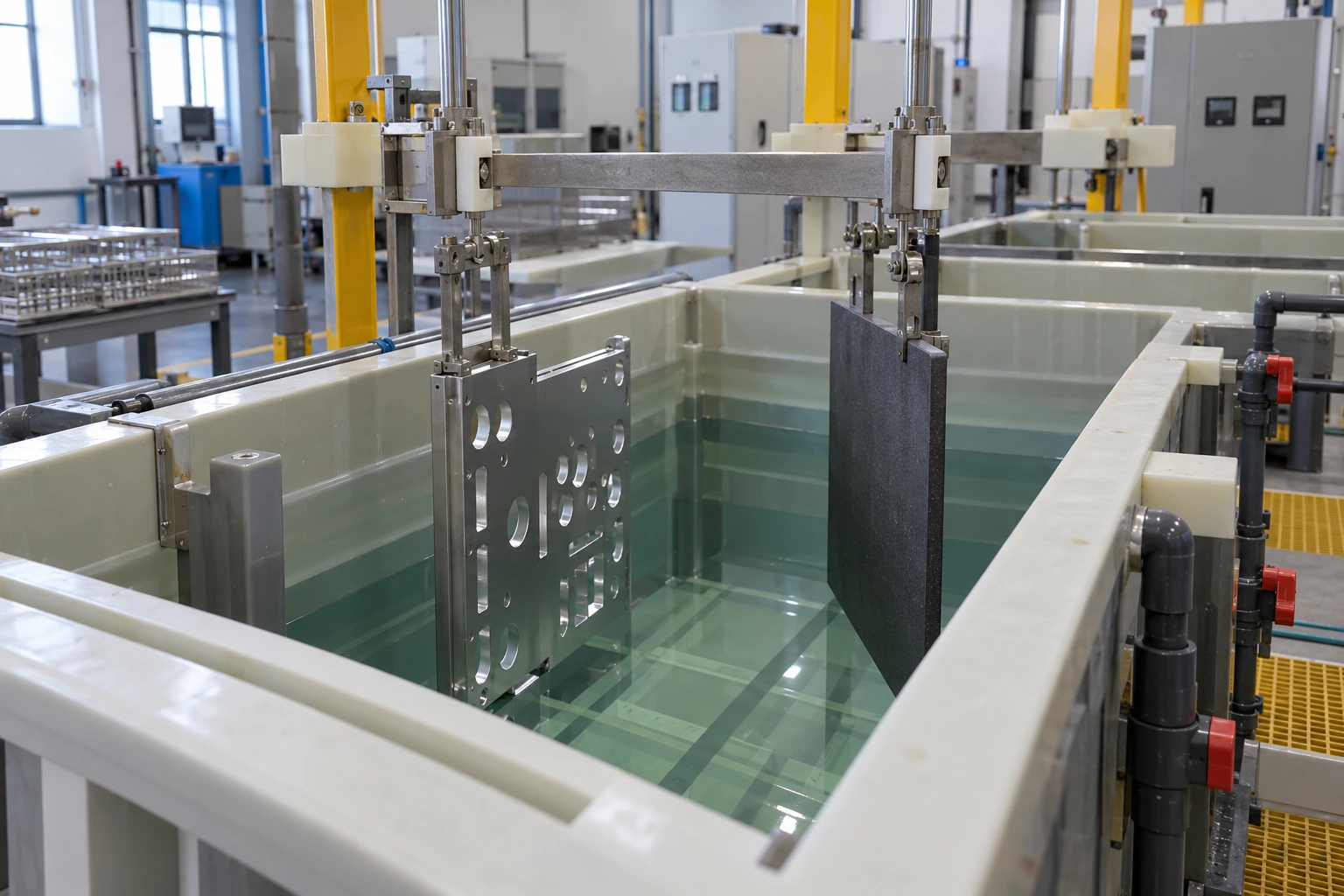
A Titanium electrode can serve as a counter-electrode when its polarity and exposure suit the electropolishing cell. The polished part remains anodic.
Separate part removal from counter-electrode duty
Start with the polarity map. Electropolishing removes metal through oxidation at the workpiece anode, while reduction occurs at its opposing cathode. Review a titanium assembly against its assigned reaction, coating, and bath.
- Mark positive and negative connections on the cell drawing.
- Identify which surfaces face each part and electrolyte zone.
| Check | Decision |
|---|---|
| Workpiece | Anodic metal removal |
| Counter-electrode | Opposing cathodic reaction |
A clear circuit diagram prevents a cathode material from being specified as the polishing anode. Key Takeaway: Approve electrode polarity and exposed surfaces before requesting a sample.
2. Why is the workpiece anodic beside a Titanium electrode?
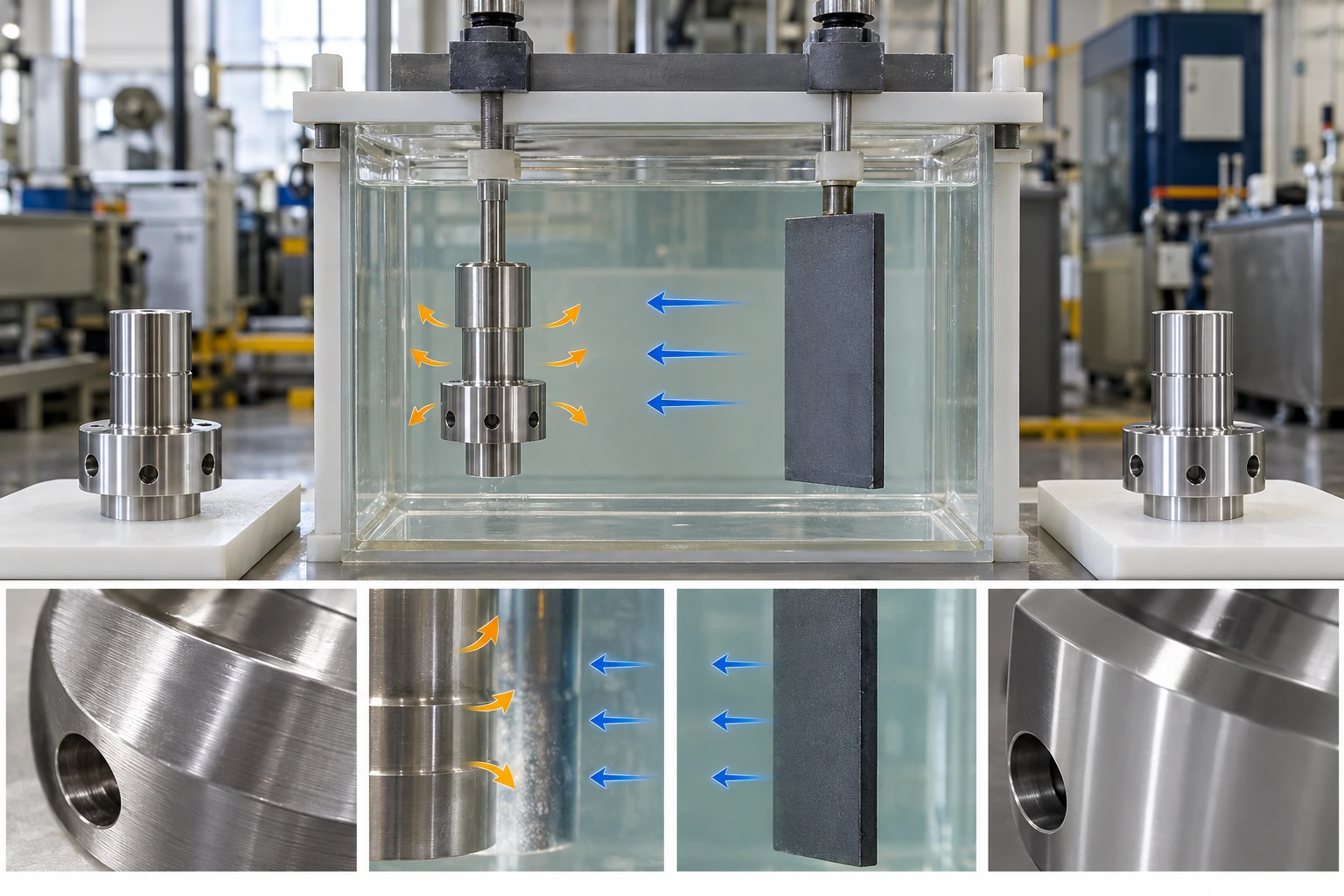
A Titanium electrode usually faces a workpiece connected as the anode in conventional electropolishing. The bath carries ionic current between both surfaces.
How anodic dissolution changes a metal surface
Track where metal leaves the part. Anodic dissolution removes material from raised regions under suitable transport conditions, which can smooth a surface. Chemistry, alloy, and current conditions shape that response; a counter-electrode completes the circuit.
- State alloy and incoming surface condition.
- Define roughness, brightness, or dimensional targets separately.
| Check | Decision |
|---|---|
| Anodic workpiece | Supplies dissolved metal species |
| Cathodic surface | Supports a reduction reaction |
A physically similar cell can produce a different finish when material or bath conditions change. Key Takeaway: Describe the part and finish target before fixing counter-electrode details.
3. What does the Titanium electrode counter-electrode control?
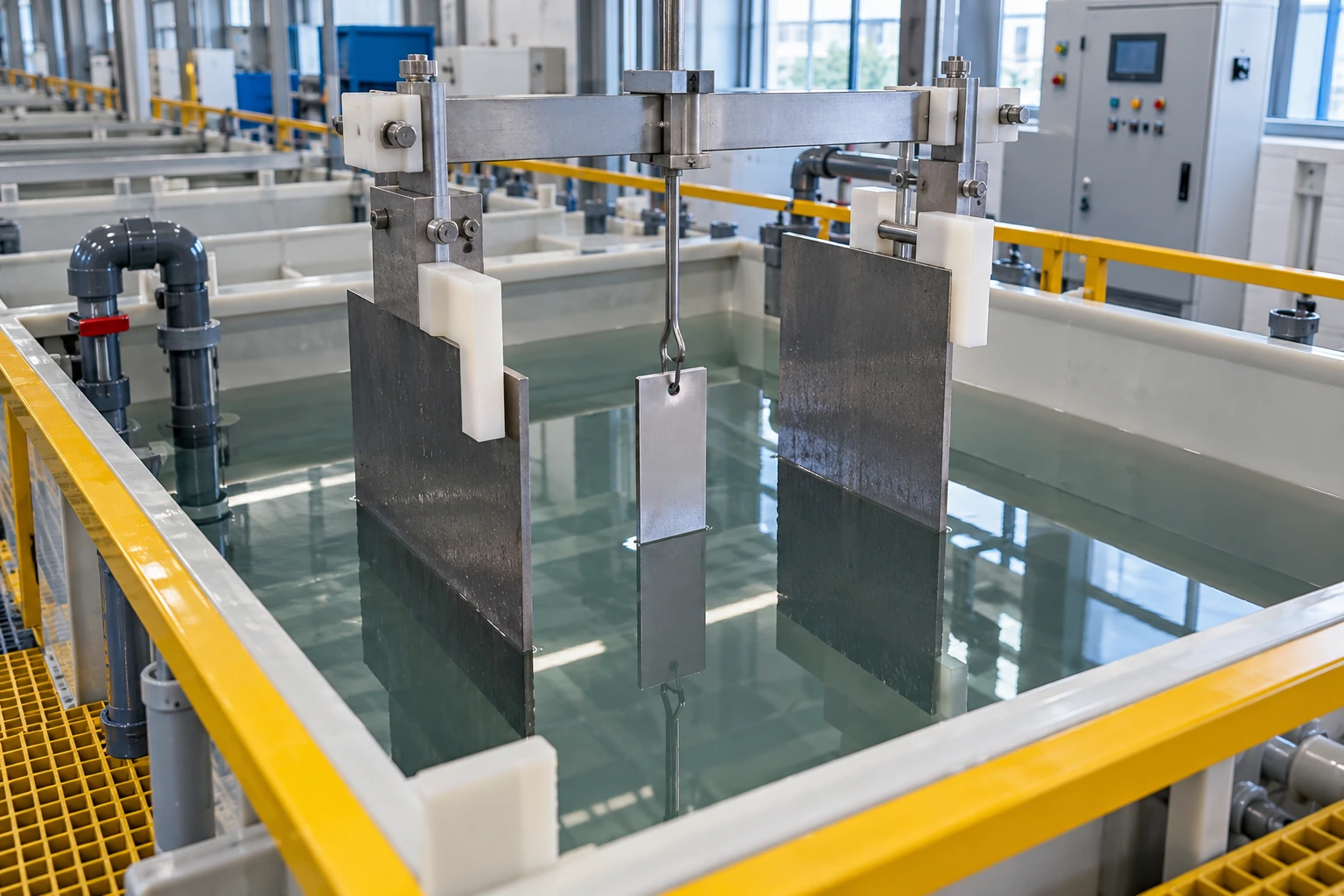
A Titanium electrode helps complete the circuit and shapes current around exposed workpiece surfaces. Its position can change local dissolution patterns.
What the opposing electrode controls around a part
Follow the current path around real features. Recesses, edges, holes, and part spacing alter local field strength and solution movement. Counter-electrode area and contour should be reviewed against those features, especially where uniform removal matters.
- Show part orientation, exposed area, and shadowed regions.
- Mark shields, fixtures, and any planned part movement.
| Check | Decision |
|---|---|
| Open face | Direct current path |
| Recessed feature | May need separate field review |
Current distribution belongs to the whole fixture layout, not a plate dimension viewed alone. Key Takeaway: Review electrode contour beside a drawing of the loaded rack.
4. How should a Titanium electrode match part geometry?
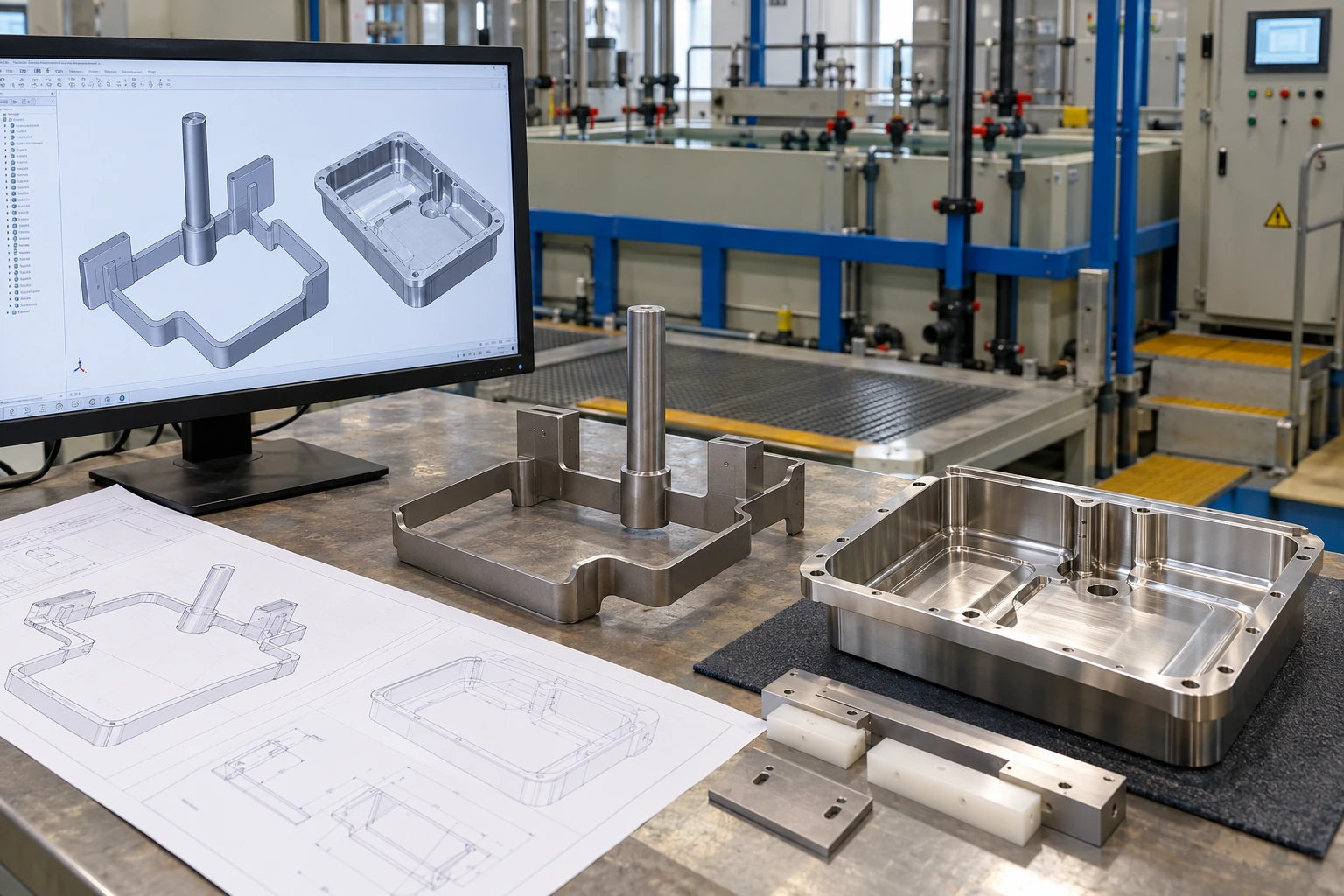
A Titanium electrode should match the part envelope, mounting method, and operating gap specified for each cell. Geometry affects access and local current paths.
Which drawing details shape electrode geometry?
Match electrode outline to the actual part envelope. A custom application review can assess panel outline, active faces, support bars, clearances, and removable areas as one assembly. State whether the part hangs, rotates, or moves through a defined cell zone.
- Include maximum and minimum part sizes.
- Show rack hooks, masking, shielding, and maintenance access.
| Check | Decision |
|---|---|
| Single fixed part | Match its exposed contour |
| Mixed rack load | Review variation across positions |
A generic flat counter-electrode may leave deep features with a different current environment. Key Takeaway: Send a loaded-rack drawing with the proposed electrode outline.
5. Which coating question belongs in a Titanium electrode review?

A Titanium electrode coating choice depends on cathodic duty, bath composition, temperature, and exposure time. Coating labels alone do not settle compatibility.
Which materials need a cathodic-duty review?
Match the surface to its assigned reaction. Some coated titanium electrodes are designed for anodic service, where oxidation occurs. A proposed cathodic use needs its own review of coating chemistry, substrate exposure, bath contaminants, and operating window.
- Name the electrolyte family and known contaminants.
- State whether the electrode sees shutdown, rinse, or idle exposure.
| Check | Decision |
|---|---|
| Uncoated metal | Check corrosion and conductivity needs |
| Coated titanium | Confirm coating polarity and chemistry |
A coating intended for one electrochemical reaction should not be presumed suitable under another. Key Takeaway: Request written compatibility review for the proposed polarity and bath.
6. How do electrolyte and temperature affect the Titanium electrode?
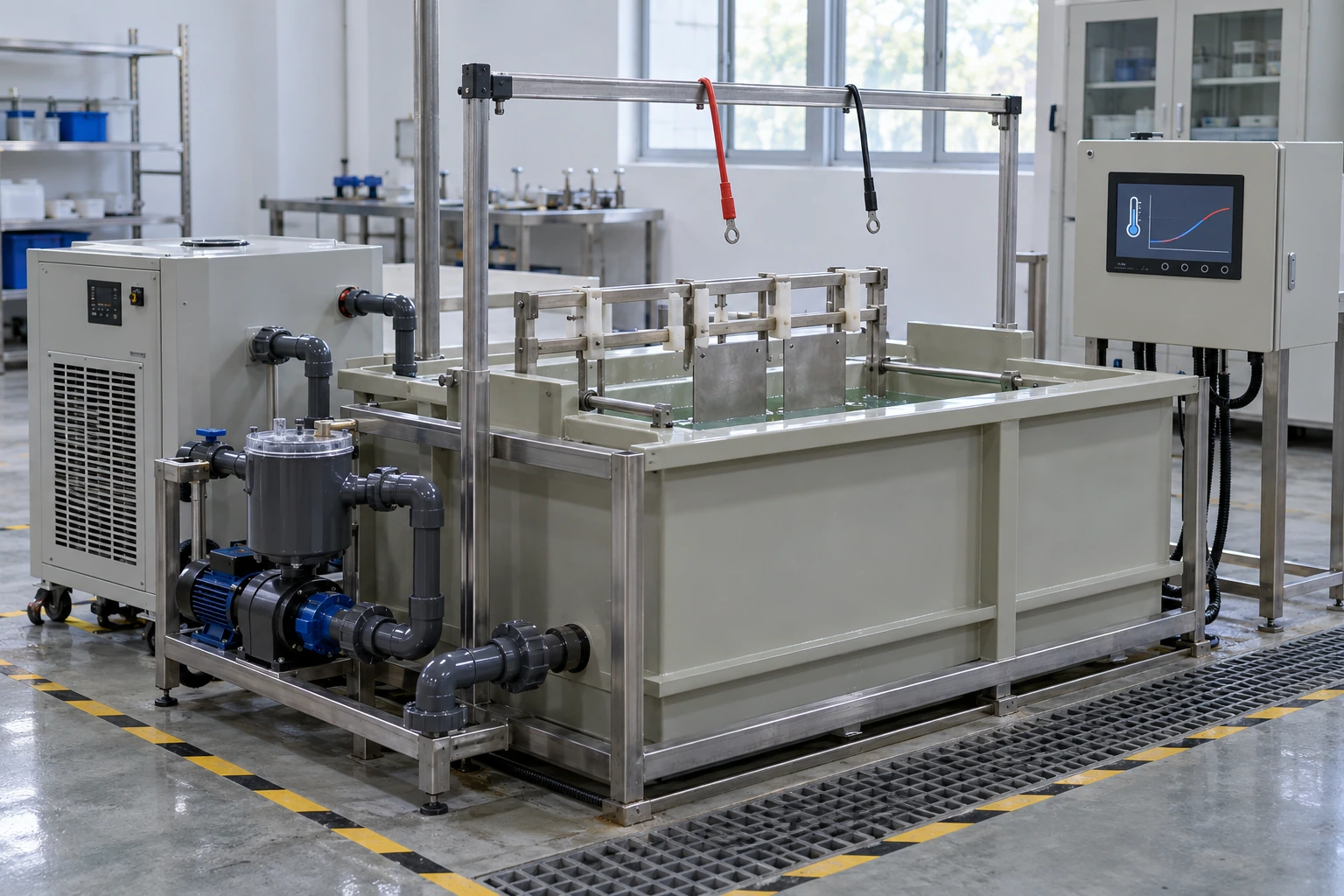
A Titanium electrode operates inside an electrolyte whose temperature, chemistry, and flow influence current response and material exposure. Those inputs belong in selection.
How do bath conditions affect the cell?
Include bath conditions in the design review. Electropolishing performance changes with electrolyte type, temperature, current density, and agitation. These variables also set the environment around a counter-electrode, so a material review without process conditions leaves gaps.
- Provide normal and upset temperature ranges.
- Describe circulation, filtration, and periods without current.
| Check | Decision |
|---|---|
| Stable circulation | Defines repeatable surface transport |
| Idle or stagnant zones | May change local exposure |
An electrode that fits the tank mechanically still needs chemical and electrical context. Key Takeaway: Share process records or a qualified operating envelope with the drawing.
7. What do surface finish goals mean for a Titanium electrode?

A Titanium electrode supports a finish process whose result depends on alloy, starting surface, and removal pattern. Define the acceptance method before a trial.
Which finish result should the trial measure?
Measure the property your buyer will accept. A smoother coupon can still miss dimensional limits or show nonuniform attack. Pair a roughness method with visual inspection and critical dimensions where those features affect fit or service.
- Record incoming and treated surface condition.
- Measure critical dimensions at named locations.
| Check | Decision |
|---|---|
| Roughness target | Use an agreed measurement method |
| Dimensional limit | Check before and after treatment |
Finish appearance and dimensional removal answer different quality questions. Key Takeaway: Agree on test locations and acceptance criteria before polishing a sample.
8. How should the Titanium electrode mount and connect?
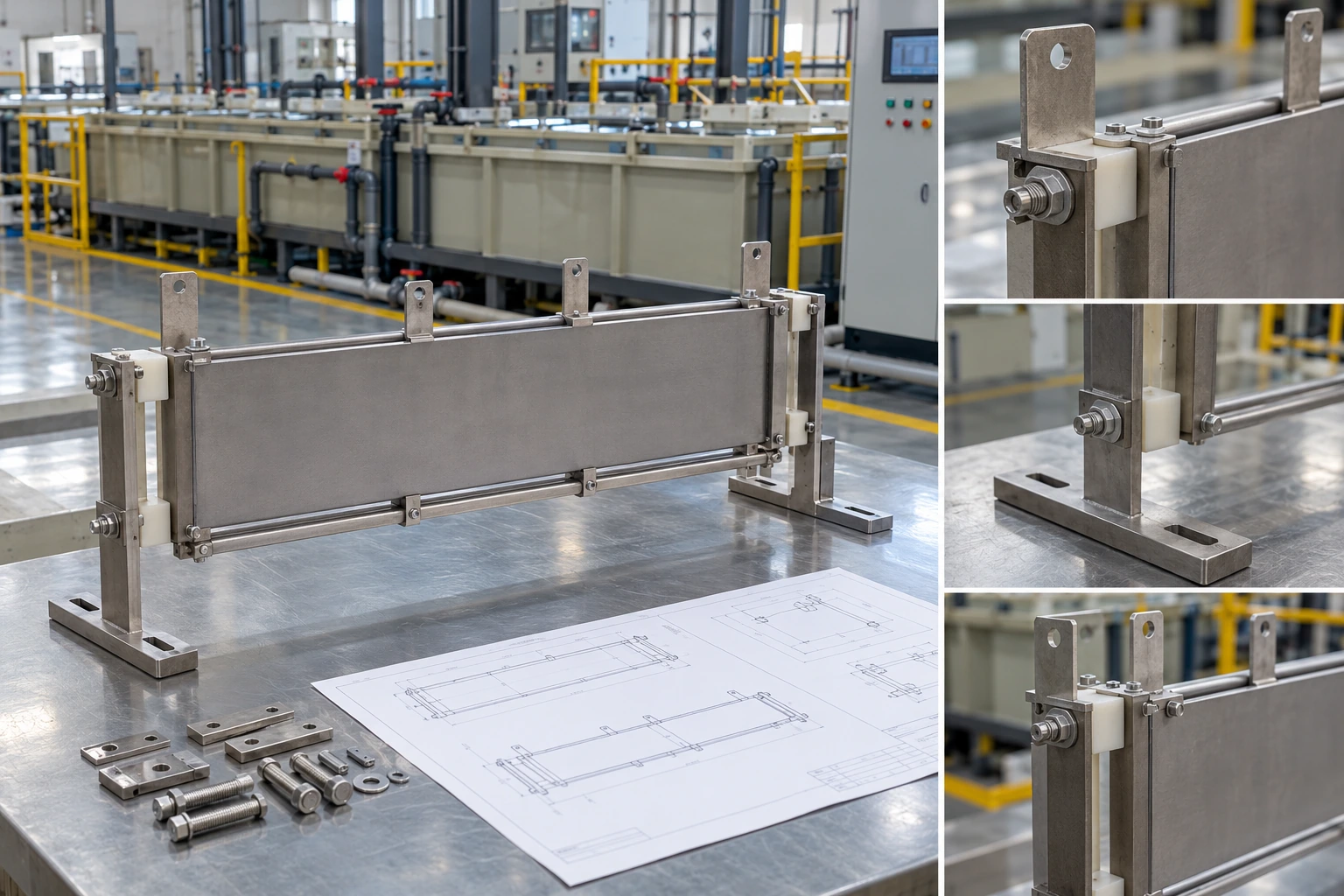
A Titanium electrode mount should keep its active face aligned, electrically connected, and serviceable throughout each cycle. The joint must suit its wet boundary.
How should the electrode connect and mount?
Trace each connection from busbar to active face. Support points can affect clearance, vibration, and exposed area. The drawing-based electrode options can be checked against current-feed location, insulation boundaries, seals, and maintenance sequence.
- Show terminal location and cable direction.
- Mark wetted, splash, and dry connection zones.
| Check | Decision |
|---|---|
| Fixed mount | Prioritize alignment and access |
| Removable mount | Specify repeatable contact surfaces |
Mounting references should share the cell datum. Key Takeaway: Dimension contact faces and support points from one drawing datum.
9. What should a sample test prove about the Titanium electrode?

A Titanium electrode sample should prove fit, polarity, material compatibility, and its effect on the agreed surface measurements. One coupon cannot represent every rack position.
What should a pilot cell confirm?
Define trial measures around the production question. Keep alloy, incoming finish, rack location, and bath records traceable. Compare surface maps across representative positions, then inspect dimensions and electrode condition after the run.
- Photograph each coupon before and after treatment.
- Log cell position, current profile, temperature, and inspection results.
| Check | Decision |
|---|---|
| Single coupon | Checks basic process response |
| Representative rack | Tests distribution across positions |
A sample demonstrates only the conditions actually tested. Key Takeaway: Repeat a pilot with representative loads before changing production drawings.
10. What should you send for a Titanium electrode review?

For a Titanium electrode review, send the part drawing, cell layout, bath description, polarity, and finish acceptance method. These inputs clarify what the counter-electrode must do.
What belongs in a useful request package?
Add operating context beside the part drawing. We review custom plate, mesh, rod, tube, and assembly requests from drawings or samples. contact us today with the target geometry, connection details, bath family, and proposed trial criteria for an engineering review.
- Attach a cell cross-section and loaded-rack view.
- List operating conditions, material compatibility questions, and release tests.
| Check | Decision |
|---|---|
| Drawing only | Defines form and interfaces |
| Drawing plus process data | Supports a more specific review |
Electrode selection is clearer when part geometry and reaction duty travel together. Key Takeaway: Send the part and cell package before finalizing a counter-electrode specification.
Frequently Asked Questions
Can I use a titanium electrode as the electropolishing anode? In conventional electropolishing, the workpiece is anodic and dissolves. A different arrangement would require its own process review.
What's the best counter-electrode material for electropolishing? There is no universal choice. Match material and any coating to polarity, electrolyte, temperature, and the required cell geometry.
How do I know if a counter-electrode suits my part? Compare trial results with agreed finish and dimensional targets. Include representative part positions and actual cell conditions.
Can I use a coated titanium electrode as the cathode? Possibly, subject to coating and electrolyte review. Confirm cathodic stability and compatibility for the exact operating window.
Can I approve a counter-electrode from one coupon? One coupon checks only its tested conditions. Include representative rack positions, bath records, and the agreed finish and dimension checks.