
A Titanium electrode may be reviewed for cathodic duty in aluminum anodizing, while the aluminum workpiece remains anodic. Your replacement drawing may identify titanium without stating which reaction its surface must support. A material-only specification can leave conductivity and bath compatibility unresolved. Compare polarity, bath exposure, cell geometry and idle conditions before choosing a material.
1. Which role can a Titanium electrode play in anodizing?
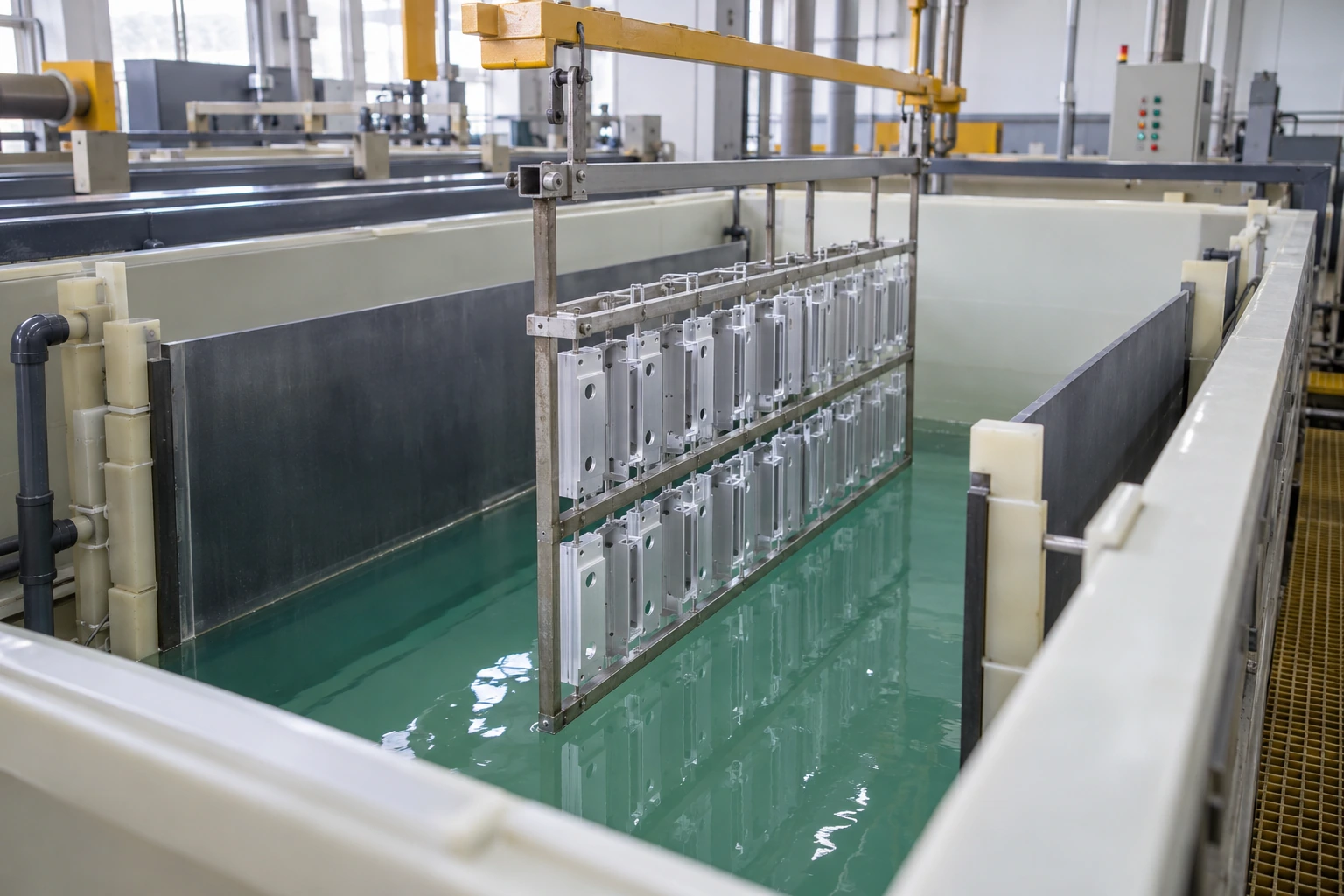
A Titanium electrode may be assessed as a cathode in an aluminum anodizing cell. Aluminum remains anodic while its surface forms oxide.
Keep workpiece and cathode roles separate
Start with the tank polarity. Anodizing makes the aluminum part anodic, so its surface undergoes oxidation. A separate cathode completes an ionic circuit; review its material and arrangement independently.
- Mark workpiece polarity on the tank drawing.
- Identify each cathode panel and its feed connection.
| Check | Decision |
|---|---|
| Aluminum part | Anodic oxide-forming workpiece |
| Tank cathode | Completes the cell circuit |
Confusing these roles can lead to a specification that describes the wrong electrode duty. Key Takeaway: Approve polarity and electrode labels before comparing cathode materials.
2. Why does aluminum stay anodic beside a Titanium electrode?
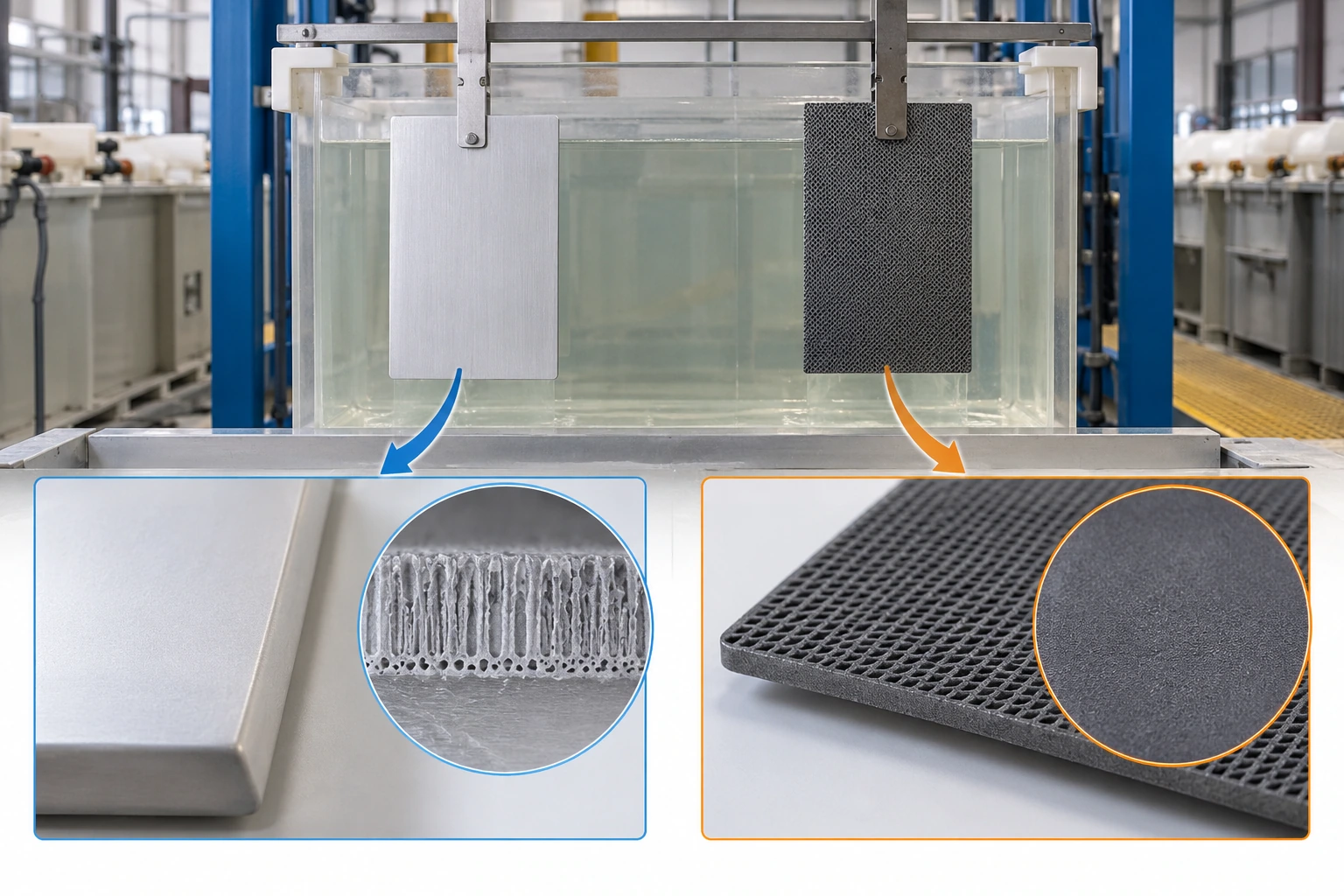
A Titanium electrode faces an aluminum workpiece connected as the anode in conventional anodizing. Oxide growth occurs at that anodic surface.
How the anodizing circuit treats aluminum
Trace anodic reaction at each part. Current enters the aluminum through its rack contact and returns through a separate cathode. Film formation depends on bath chemistry, electrical conditions, alloy, and heat removal, so a cathode change sits within a broader process review.
- State which alloy families enter the tank.
- Show rack contacts and exposed part area.
| Check | Decision |
|---|---|
| Anodic part | Receives the oxide-forming reaction |
| Cathode assembly | Carries the complementary cell reaction |
A cathode does not set oxide quality by itself, even when its area changes the cell field. Key Takeaway: Keep the cathode review connected to part alloy and production loading.
3. How does cathode shape affect a Titanium electrode cell?
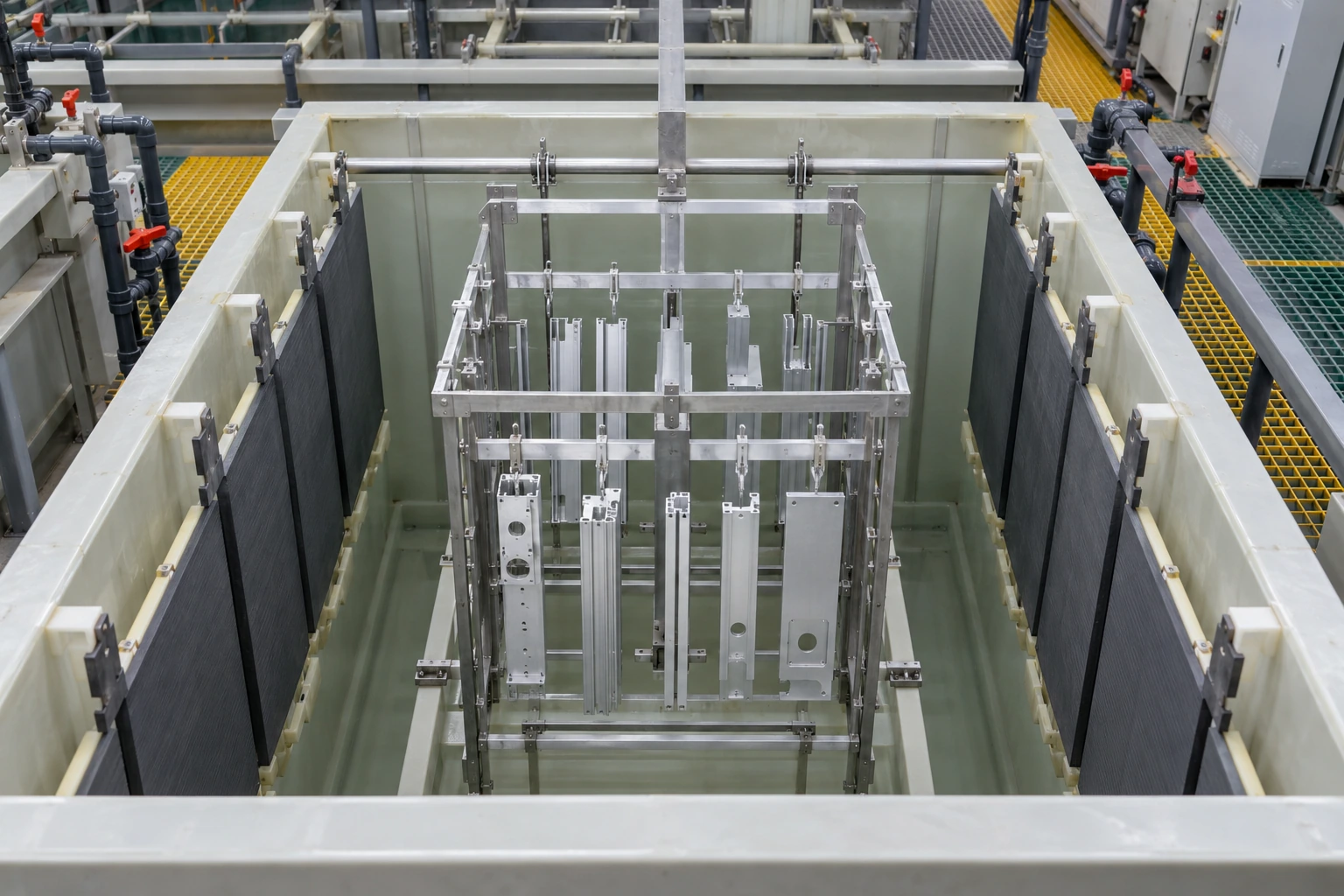
A Titanium electrode shape and position can affect current distribution around loaded aluminum parts. Rack geometry determines which surfaces face each panel.
How do cathode panels shape the tank field?
Map the loaded rack, not an empty tank. Spacing changes around wide parts, deep profiles, and mixed loads can shift local current paths. Panel area, symmetry, shielding, and rack position should be reviewed together.
- Show tank cross-sections at several rack positions.
- Mark narrow gaps, shields, and parts with recessed faces.
| Check | Decision |
|---|---|
| Opposing panels | Can balance a simple rack layout |
| Complex load | Needs position-specific review |
A balanced tank outline can still produce uneven exposure when racks change between loads. Key Takeaway: Compare cathode placement against representative production racks.
4. What makes a Titanium electrode compatible with an anodizing bath?

A Titanium electrode must suit the anodizing bath, temperature, current path, and planned idle periods. No material should be selected from polarity alone.
Which compatibility questions matter for cathodes?
Review chemistry and conductivity together. Titanium's bulk conductivity sits well below common aluminum cathode stock, so section size and feed layout deserve attention. A custom application review can compare exposure zones, connections, mounting, and material options against the actual tank.
- Provide bath family, temperature range, and known contaminants.
- Describe operation during shutdown and cleaning.
| Check | Decision |
|---|---|
| Material exposure | Check bath and idle conditions |
| Electrical path | Check section and busbar feed |
Chemical compatibility and current delivery are separate questions within one cathode design. Key Takeaway: Request a drawing review that names both the bath and operating polarity.
5. How does cathode area affect a Titanium electrode cell?

A Titanium electrode cathode area affects electrical loading and heat generation in the cell. The useful comparison includes both surface area and current feed.
How should cathode area be compared?
Size from the operating load and tank layout. Larger metal area can change current distribution, while thin sections and long feed paths add resistance. The final arrangement should follow measured cell needs rather than a universal area ratio.
- List production load and exposed cathode faces.
- Show feed points, joints, and longest current paths.
| Check | Decision |
|---|---|
| Adequate section | Limits avoidable path resistance |
| Poorly fed area | May carry current unevenly |
Area on a drawing does not reveal how current reaches each part of that area. Key Takeaway: Review cross-section and feed locations before releasing a cathode drawing.
6. Which conditions change Titanium electrode cathode selection?

A Titanium electrode selection changes with bath type, temperature, current schedule, and production pauses. Record those inputs before comparing candidates.
Which operating conditions shift a material decision?
Record each cycle, including idle hours. Anodizing loads can vary between ramp-up, steady operation, and shutdown. Candidate materials may face different exposure during those phases, so list each condition with its duration and electrical state.
- Share normal and upset temperature history.
- Record whether cathodes remain immersed while power is off.
| Check | Decision |
|---|---|
| Powered cycle | Defines current and thermal duty |
| Idle cycle | Defines open-circuit exposure |
A cathode tested only during powered operation may miss an idle corrosion concern. Key Takeaway: Include the full production and maintenance cycle in material review.
7. How do tank and rack layouts affect a Titanium electrode?
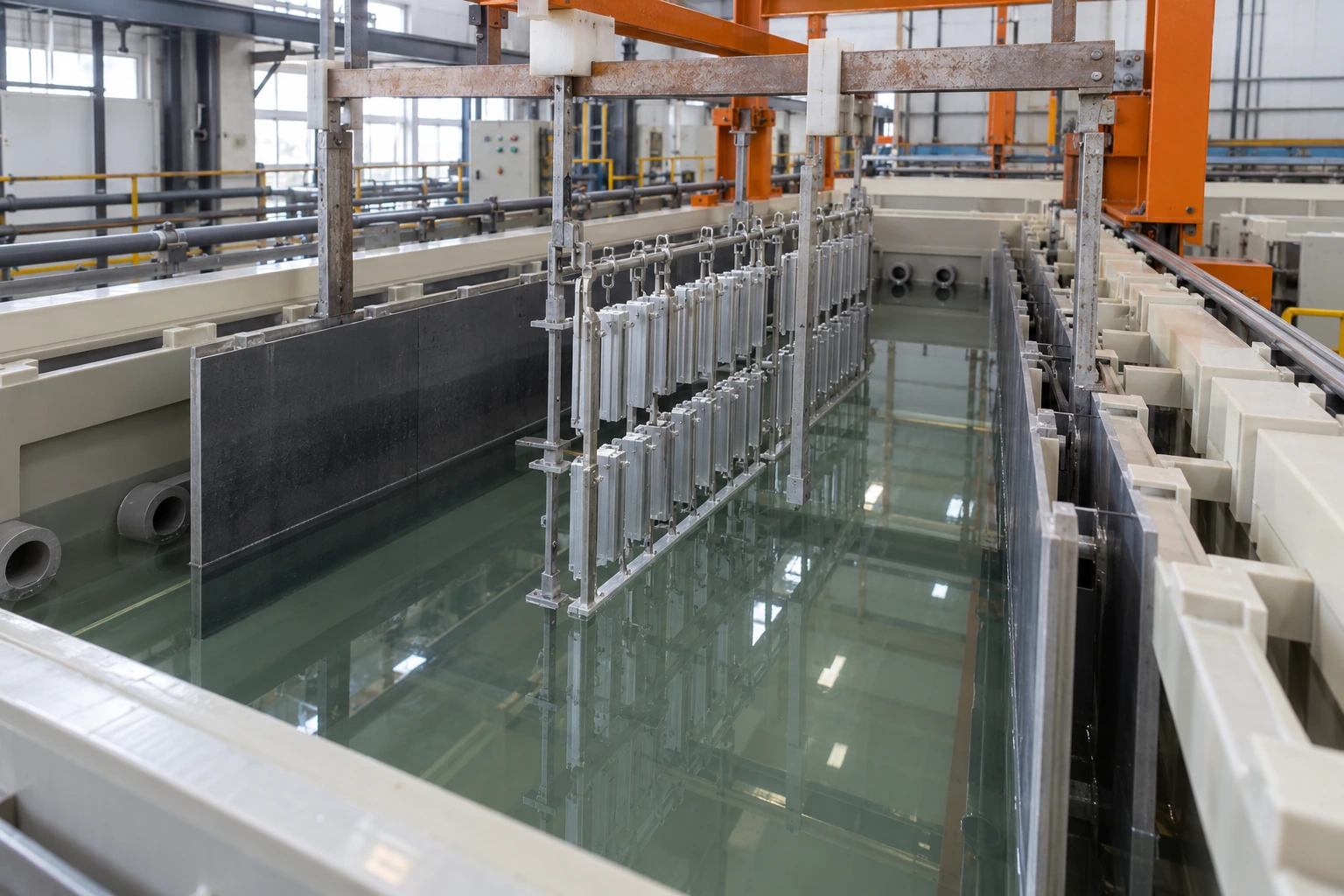
A Titanium electrode must work with the tank, rack, and circulation layout used in production. These boundaries affect access, alignment, and electrolyte movement.
How do racks and tank features shape cathode design?
Use the rack datum as a shared reference. A central cathode panel can fit one family of parts yet interfere with longer loads or circulation. Show supports, hoist path, busbar position, and tank openings on one drawing.
- Include maximum rack width and immersion depth.
- Mark lift clearance and return-flow paths.
| Check | Decision |
|---|---|
| Clear access | Supports inspection and service |
| Blocked path | May alter flow or rack travel |
Mechanical fit and current distribution often fail at different points in the same layout. Key Takeaway: Review a tank plan and side elevation with a loaded rack.
8. How should a Titanium electrode cathode be reviewed at idle?

A Titanium electrode cathode should be checked for surface condition and exposure after representative idle and powered cycles. Wear limits need an agreed method.
What should maintenance inspect between runs?
Inspect condition against a recorded baseline. Surface change, loose joints, or a shifted panel can alter electrical behavior. Review drawing-based electrode options against agreed inspection locations and traceable dimensional references for each candidate assembly.
- Photograph active faces at fixed inspection points.
- Record joint condition, panel position, and any material loss.
| Check | Decision |
|---|---|
| Visual review | Finds surface and mounting changes |
| Electrical check | Tracks path changes over time |
A clean-looking surface does not confirm unchanged conductivity or contact quality. Key Takeaway: Set inspection methods before a candidate enters routine service.
9. What should a Titanium electrode cathode trial measure?

A Titanium electrode trial should compare electrical behavior, bath condition, and anodized-part results under representative tank loading. Agree on measures in advance.
What should a cathode trial measure?
Use matched loads for a fair comparison. Record rack positions, bath history, current response, temperature, and film results with each run. Include parts from near and far tank positions to reveal distribution effects.
- Measure voltage drop at named feed points.
- Map film thickness or appearance using the site's approved method.
| Check | Decision |
|---|---|
| Single location | Checks local response |
| Several rack positions | Checks tank-wide variation |
A material comparison can be misleading when load position or bath history changes between runs. Key Takeaway: Run paired trials with repeatable loads and agreed acceptance limits.
10. What should you send for a Titanium electrode review?

For a Titanium electrode review, send the tank drawing, bath data, rack load, electrical schedule, and cathode interface. That package makes material comparison specific.
What belongs in a cathode review request?
Put operating data beside the tank drawing. We review custom titanium plate, mesh, rod, tube, and assembly requests against drawings or samples. contact us today with material, mounting, and trial details for a drawing-based discussion.
- Attach a tank plan, side view, and loaded-rack outline.
- List bath chemistry, duty, current feeds, and acceptance checks.
| Check | Decision |
|---|---|
| Tank geometry | Defines fit and circulation |
| Process data | Frames compatibility and current review |
A cathode specification becomes reviewable when chemistry and cell interfaces are both visible. Key Takeaway: Submit the tank package before freezing cathode material and dimensions.
Frequently Asked Questions
Can I use titanium as the cathode in sulfuric anodizing? Possibly, after material, section, and bath review. Titanium should be compared with current production practice under the actual tank conditions.
What's the best cathode material for aluminum anodizing? There is no universal choice. Conductivity, bath exposure, tank geometry, idle periods, and service needs all affect selection.
How do I know if a cathode fits my anodizing bath? Compare material condition and electrical behavior through representative powered and idle cycles. Track bath and part results during each trial.
Can I choose a cathode by conductivity alone? No, because conductivity alone cannot cover bath exposure, current path, tank geometry, idle conditions, or service access.
Can I approve a cathode from a single test load? A single load checks only its own positions and process history. Include representative racks and repeatable film and electrical measurements.