
A Titanium electrode cell can benefit from upstream particle control when solids threaten narrow passages or active surfaces. Particle filtration will not remove every dissolved species, so engineers should pair filter selection with feed chemistry and channel review.
1. How do particles threaten a Titanium electrode channel?
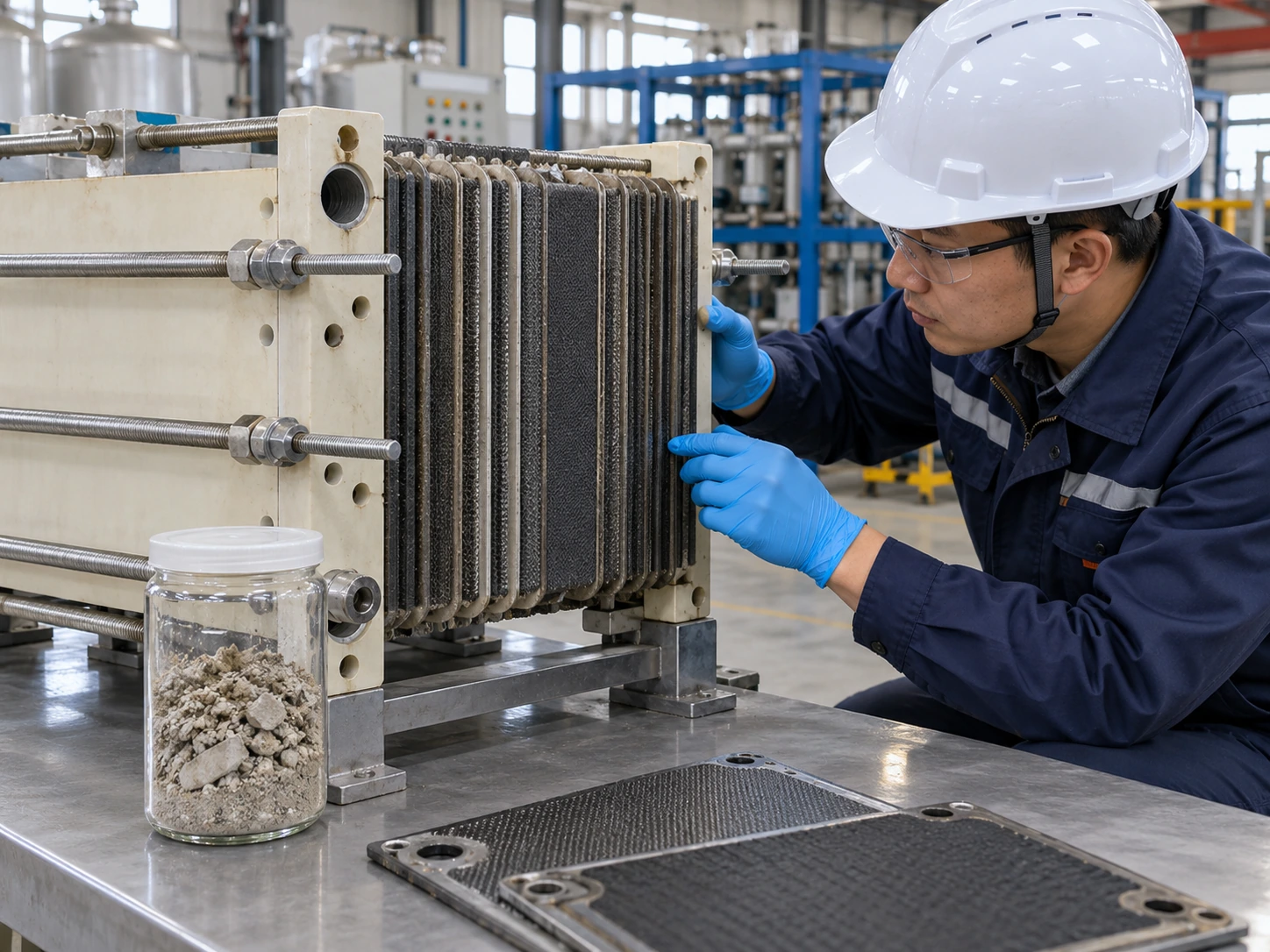
A Titanium electrode channel can lose flow area when suspended particles collect in narrow passages or on active surfaces. Particle loading and cell geometry determine where that risk appears.
Identify particles before choosing protection
Suspended particles can settle, bridge gaps, or accumulate at an inlet; settled samples can hide brief production spikes. Start with representative feed samples. Record solids levels and sampling conditions.
- Record suspended-solids trends and visible particle characteristics.
- Check whether samples were mixed, settled, or stored before analysis.
| Check | Decision |
|---|---|
| Feed evidence | Solids and particle trend |
| Cell evidence | Channel and surface geometry |
A filter decision needs both particle information and an understanding of the electrode passages. Key Takeaway: Sample the feed under conditions that reveal solids variation.
2. What can upstream filtration protect around a Titanium electrode?
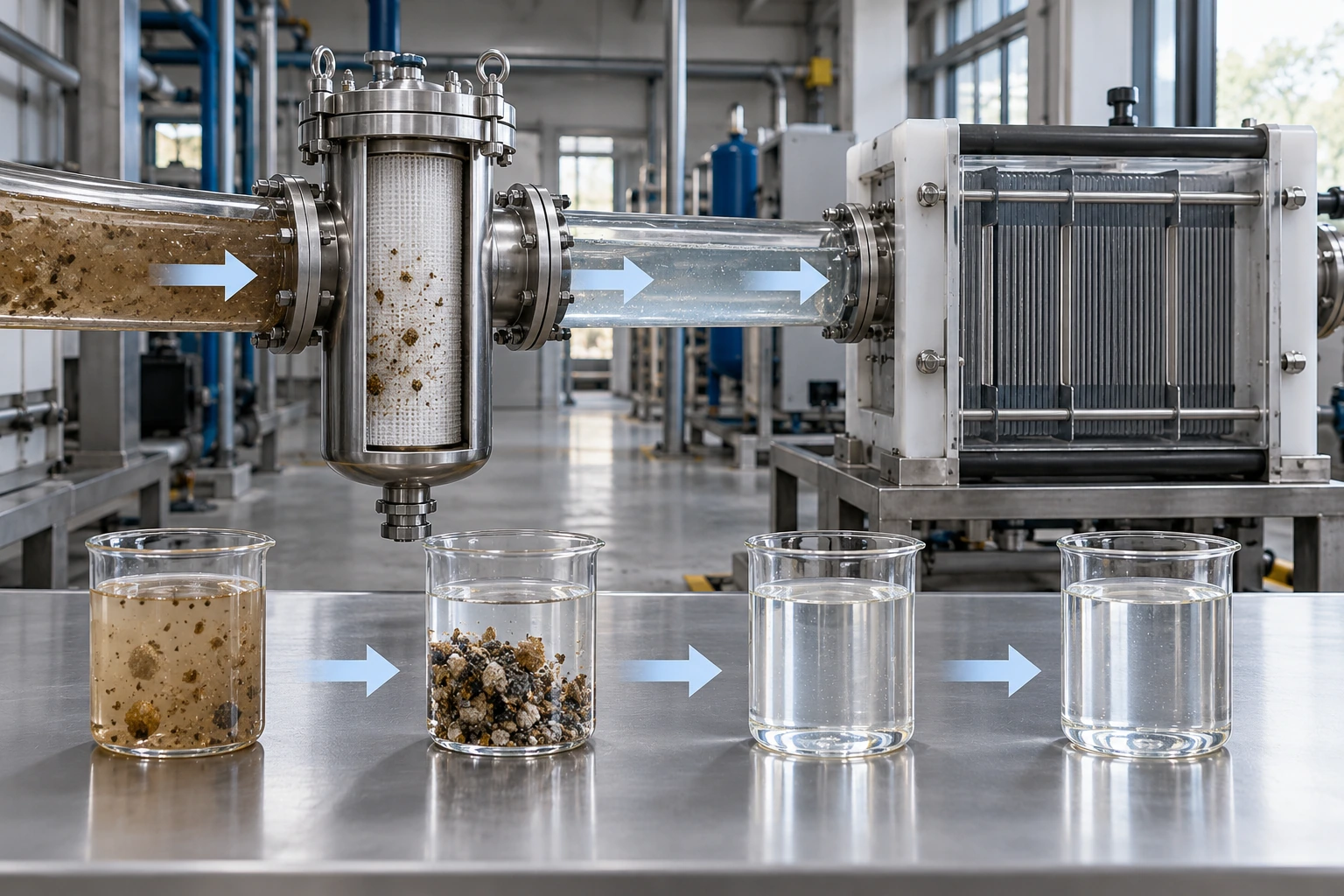
A Titanium electrode cell may benefit from upstream filtration when particles threaten its flow passages or electrode surfaces. Filtration captures a selected particle fraction, while dissolved ions can pass through.
Separate particulate capture from dissolved chemistry
A particle filter captures selected solids when retention and loading fit feed conditions; dissolved salts and metals pass through. Separate particle capture from dissolved chemistry. Use another process for soluble species.
- State which solids fraction needs capture.
- Keep dissolved-species control within a separate process review.
| Check | Decision |
|---|---|
| Particle filter | Captures selected solids |
| Dissolved ions | Remain unless another process removes them |
Clear filtrate does not prove dissolved chemistry is suitable for electrolysis. Key Takeaway: Pair particle control with a water-chemistry review.
3. Which particle data guide a Titanium electrode filter review?
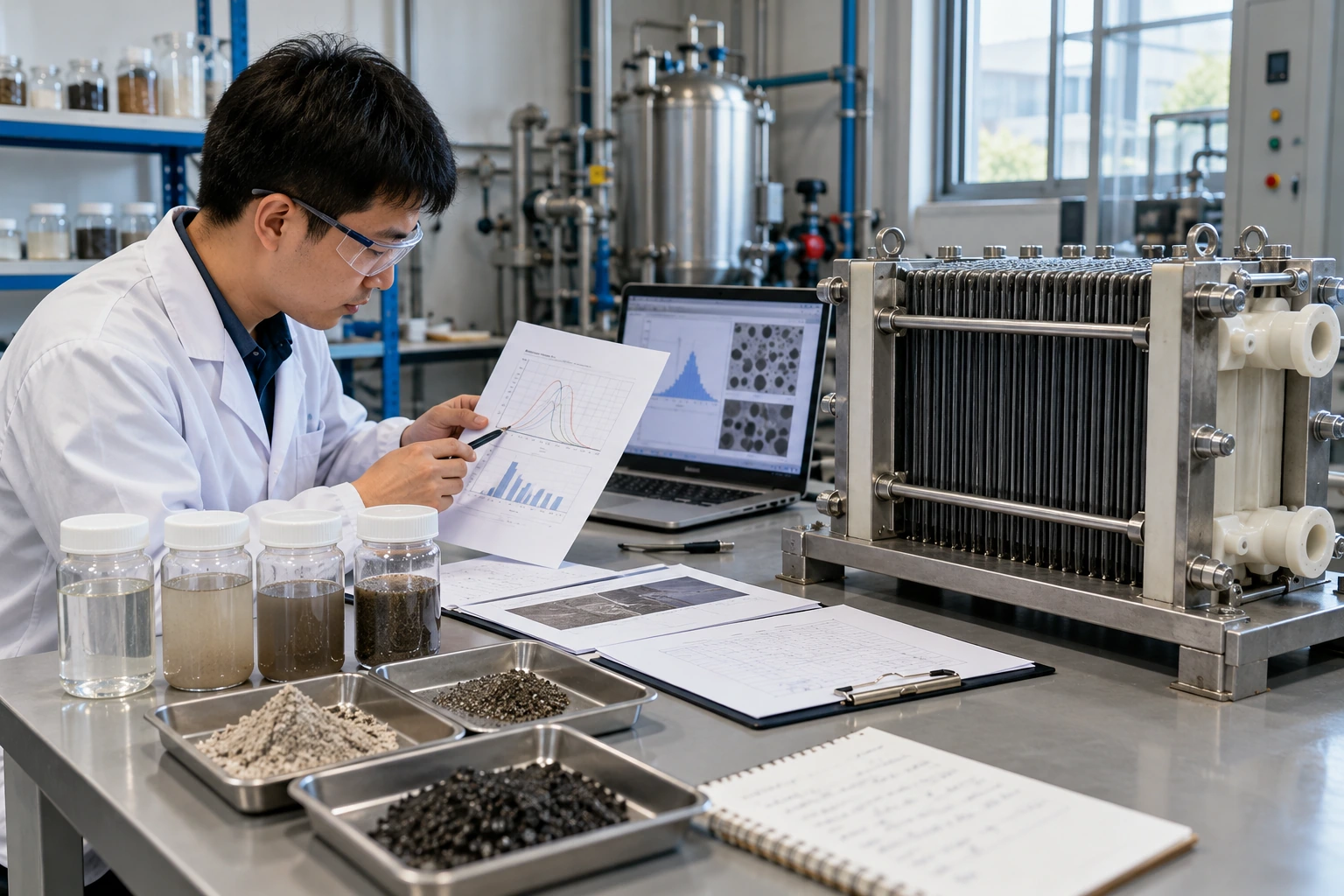
A Titanium electrode filter review needs particle-size distribution, suspended-solids load, and expected batch variation. A single turbidity value may not describe particles capable of bridging a cell gap.
Describe loading and particle size
Record particle size, solids concentration, shape, density, and whether material is sticky or deformable. Look past a single particle number. Settling or dilution can change the apparent size range and filter burden.
- Collect feed data during normal operation and solids excursions.
- Record sample mixing and preparation steps used for particle analysis.
| Check | Decision |
|---|---|
| Particle size | Relates to channel passage |
| Solids load | Relates to filter burden |
Filter capacity depends on solids mass and character, not pore designation alone. Key Takeaway: Send particle data with the filter and electrode gap under review.
4. How do filters affect Titanium electrode pressure loss?
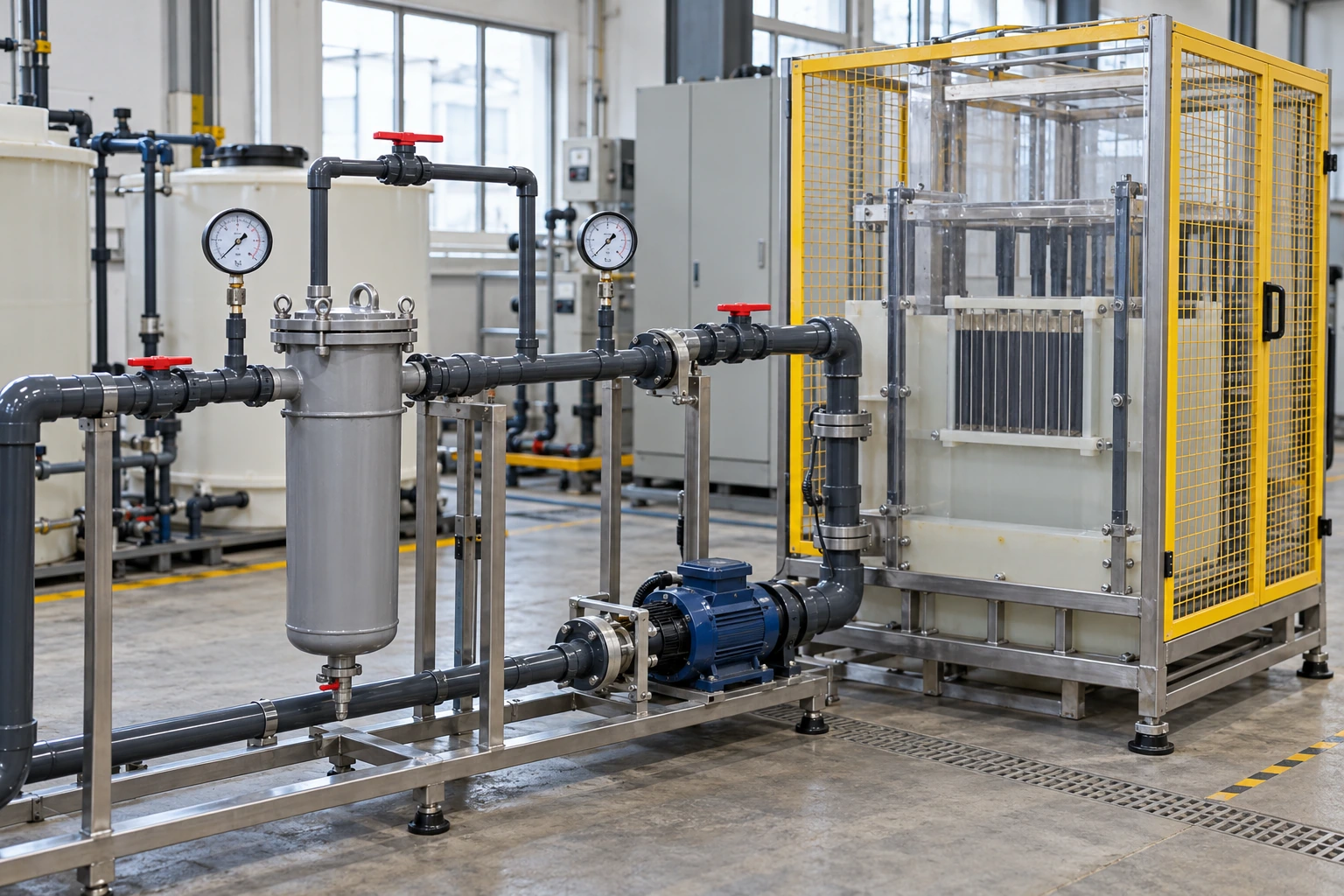
A Titanium electrode filter can add pressure loss as captured solids accumulate, changing flow available to the downstream cell.
Track filter loading across a run
A custom electrode review can compare pressure, bypass position, and flow with channel geometry under loading. Watch the whole flow path. A clean filter test may not represent longer production loading.
- Record pressure before and after the filter during representative operation.
- Define how bypass, isolation, and maintenance affect cell feed.
| Check | Decision |
|---|---|
| Clean condition | Initial pressure loss |
| Loaded condition | Flow and bypass response |
A protective filter can become a new hydraulic constraint as it loads. Key Takeaway: Review clean and loaded filter behavior before finalizing the flow boundary.
5. What passes through filtration toward a Titanium electrode?
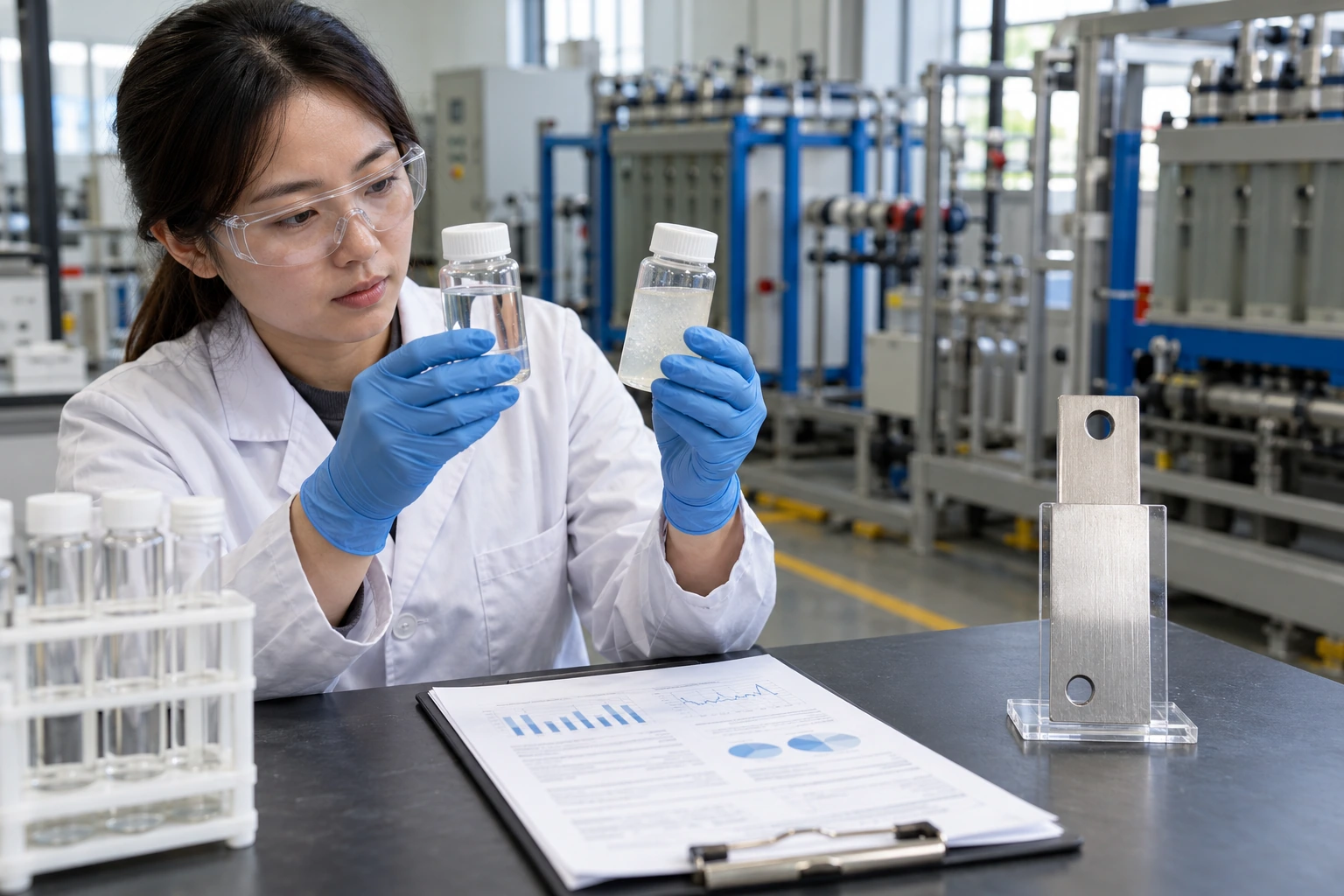
A Titanium electrode feed can carry dissolved salts and metals through a particle filter because they remain in solution at that point. Some dissolved species may later precipitate or scale inside equipment.
Do not ask a particle filter to solve dissolved chemistry
A filter removes particles within its separation mechanism; dissolved ions need a process matched to their solubility or charge. Keep dissolved feed chemistry visible. Compare filtered and unfiltered analyses when electrode compatibility or deposit risk depends on that distinction.
- Measure relevant dissolved ions using a suitable sample method.
- Review precipitation or scaling risk separately from suspended-particle capture.
| Check | Decision |
|---|---|
| Suspended solids | Potentially captured upstream |
| Dissolved species | Require another removal mechanism |
Particle control cannot demonstrate protection from soluble contaminants or future scale. Key Takeaway: Match dissolved-species treatment with actual water chemistry.
6. When can particles foul a Titanium electrode surface?
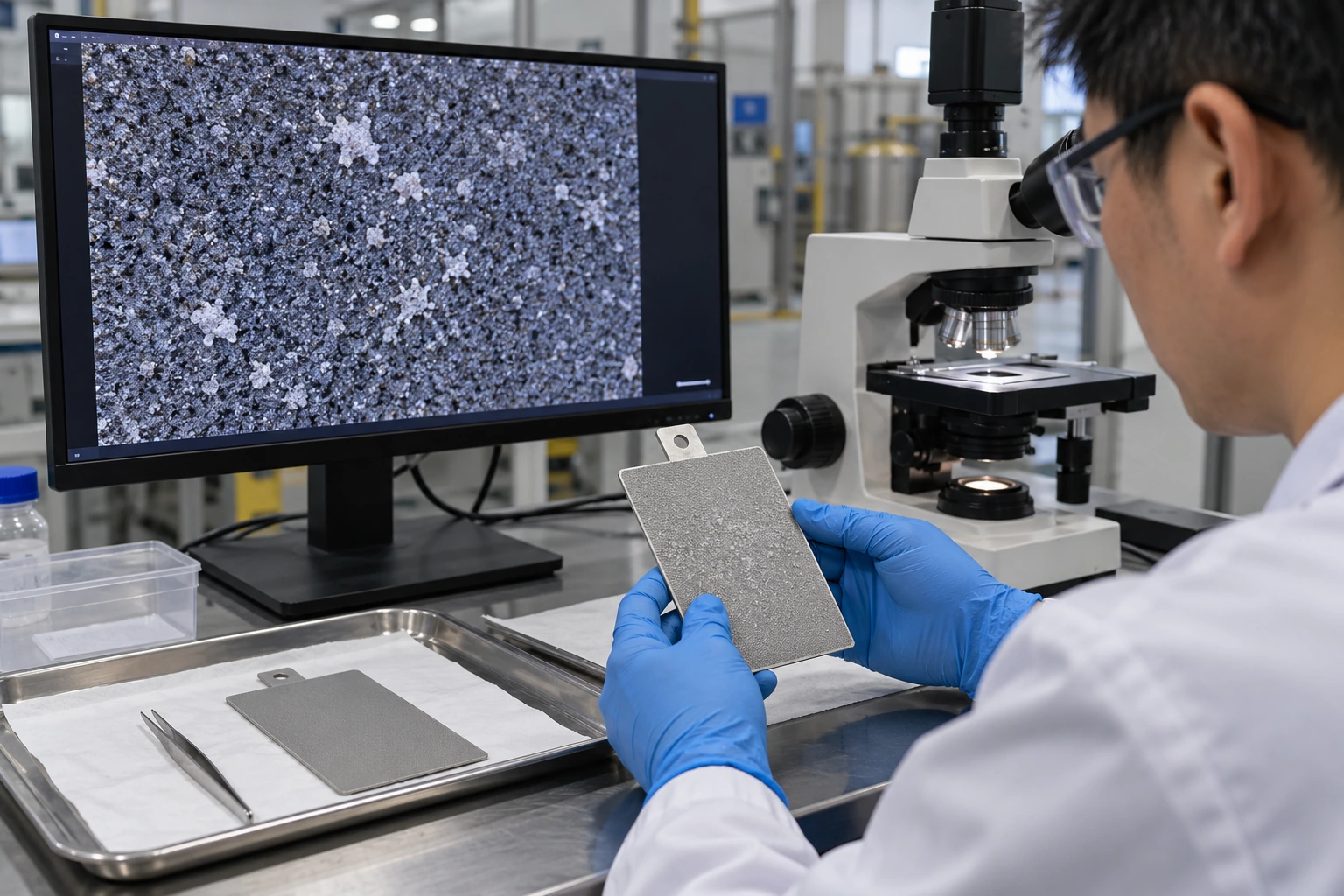
A Titanium electrode surface can foul when particles adhere or settle despite upstream filtration. Fine colloids, precipitates formed later, and material released within a loop may bypass the selected filter duty.
Follow deposits back to their source
A deposit can form from carried solids, precipitation, corrosion products, or reaction products. Compare deposit composition with feed samples. Collect representative material and inspect cell locations before changing a filter specification.
- Record where deposits appear and how quickly they return after maintenance.
- Compare feed solids and dissolved chemistry with recovered deposit material.
| Check | Decision |
|---|---|
| Loose particle | May enter with feed |
| Precipitate | May form inside process |
A fouled surface may reflect chemistry rather than inadequate particle retention. Key Takeaway: Identify deposit composition before changing upstream filtration.
7. How should bypasses be considered for a Titanium electrode?
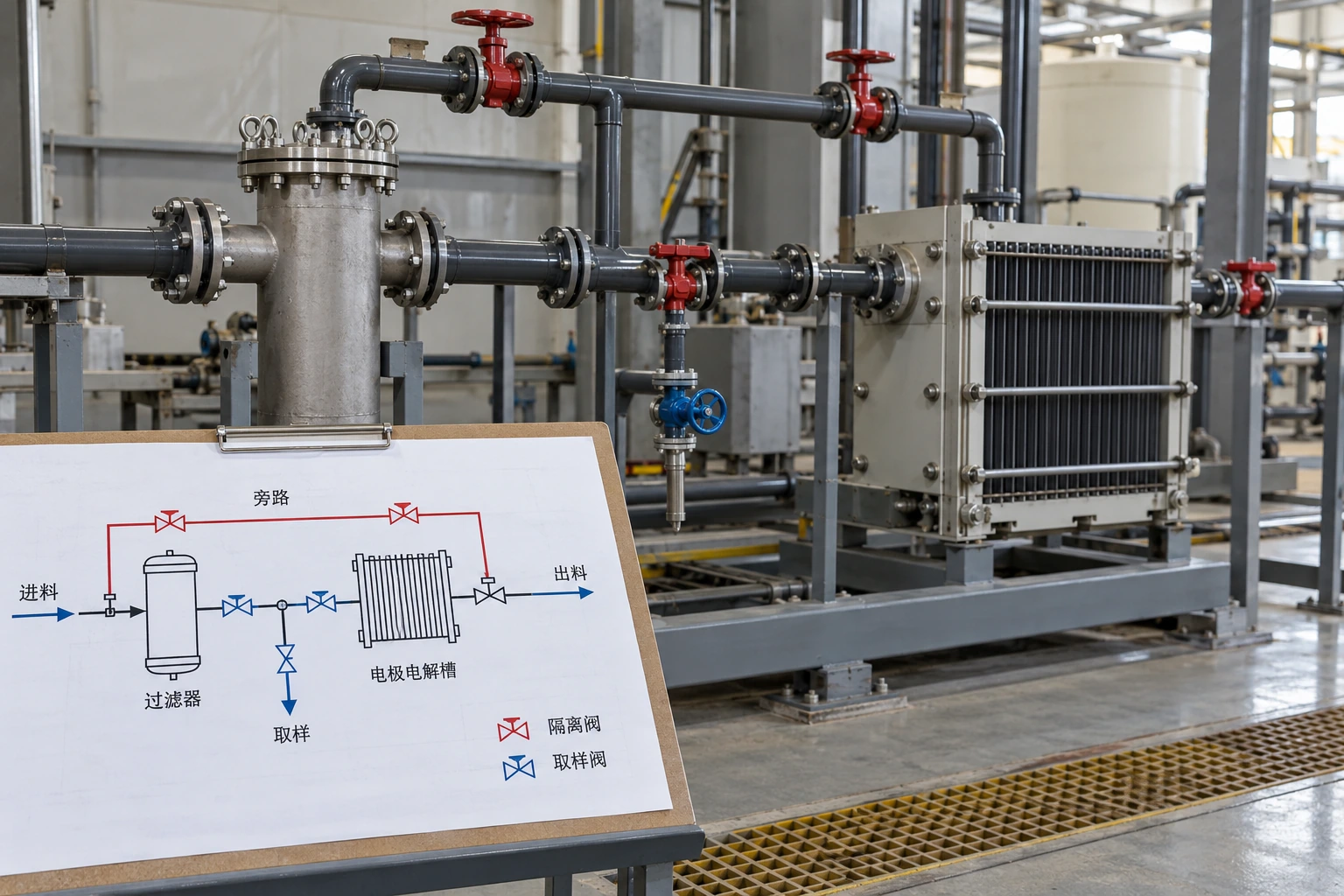
A Titanium electrode bypass can protect availability during filter service while allowing unfiltered water downstream. Its use changes the cell's feed condition and should be visible to operators.
Make bypass status part of process control
Isolation valves, alarms, and operator records define whether water passed through an intended filter path. Keep the filter valve route explicit. An open bypass changes feed conditions even when electrode drawings remain unchanged.
- Show filter isolation and bypass paths on the process flow diagram.
- Record bypass status with cell samples and maintenance events.
| Check | Decision |
|---|---|
| Filter path | Expected particle control |
| Bypass path | Changed cell feed condition |
Valve status is part of the water-quality boundary around an electrode cell. Key Takeaway: Include bypass state in operation and sampling records.
8. What does filtration miss in Titanium electrode feed?
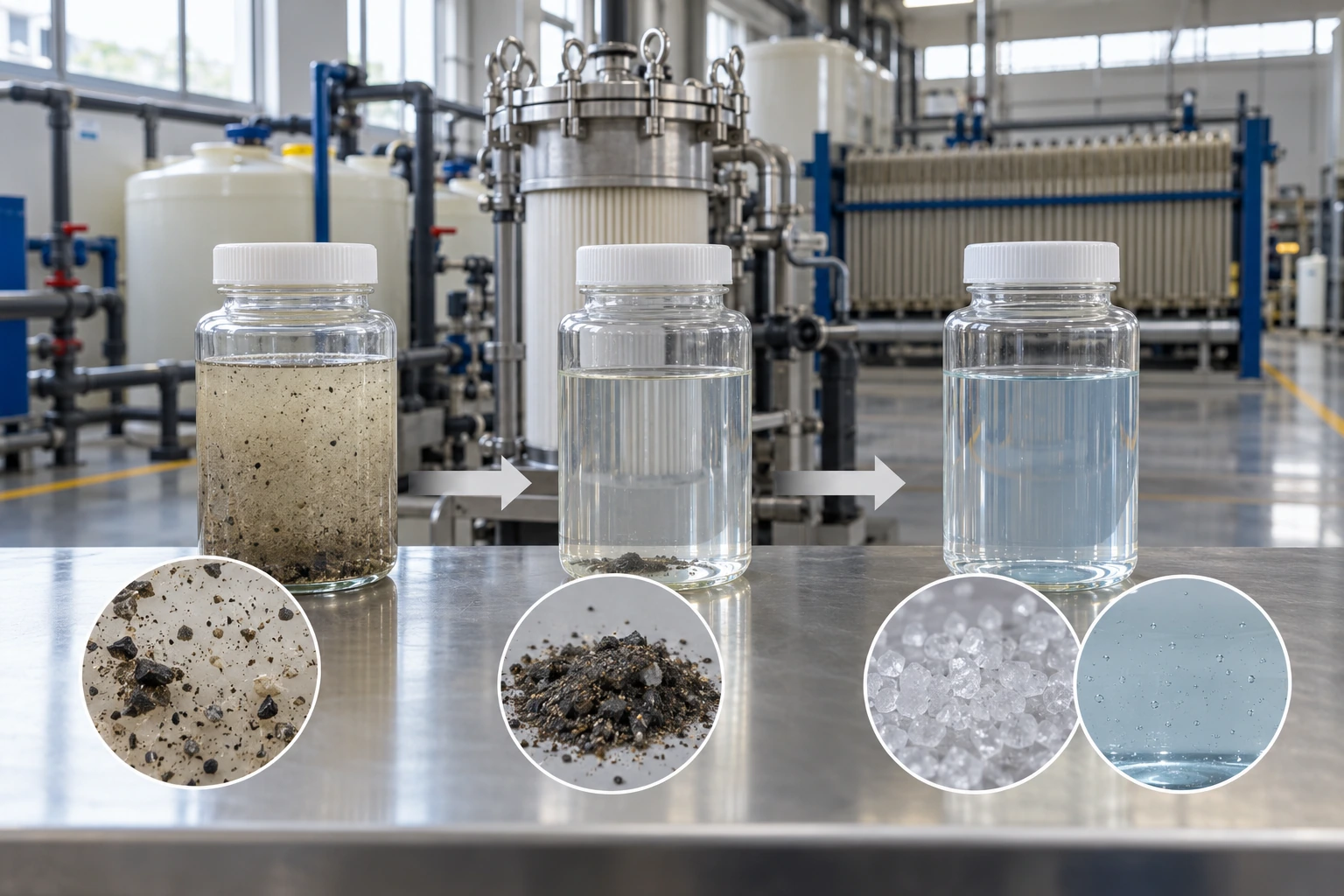
A Titanium electrode feed review should distinguish particles from dissolved salts, metals, and organics.
Track dissolved species in the feed
In hypochlorite-generation systems, clear water can still contain substantial dissolved material. Measure both particle and dissolved fractions. Use suitable methods for soluble species and suspended solids.
- List dissolved ions or compounds relevant to coating and process chemistry.
- Compare filtered and unfiltered samples only under a defined analytical protocol.
| Check | Decision |
|---|---|
| Filtered sample | Selected particle fraction removed |
| Dissolved analysis | Ions remain measurable |
Visual clarity cannot show whether soluble species will affect electrode reactions. Key Takeaway: Use chemistry data before treating filtration as a complete feed solution.
9. How should pilot sampling guide a Titanium electrode filter?
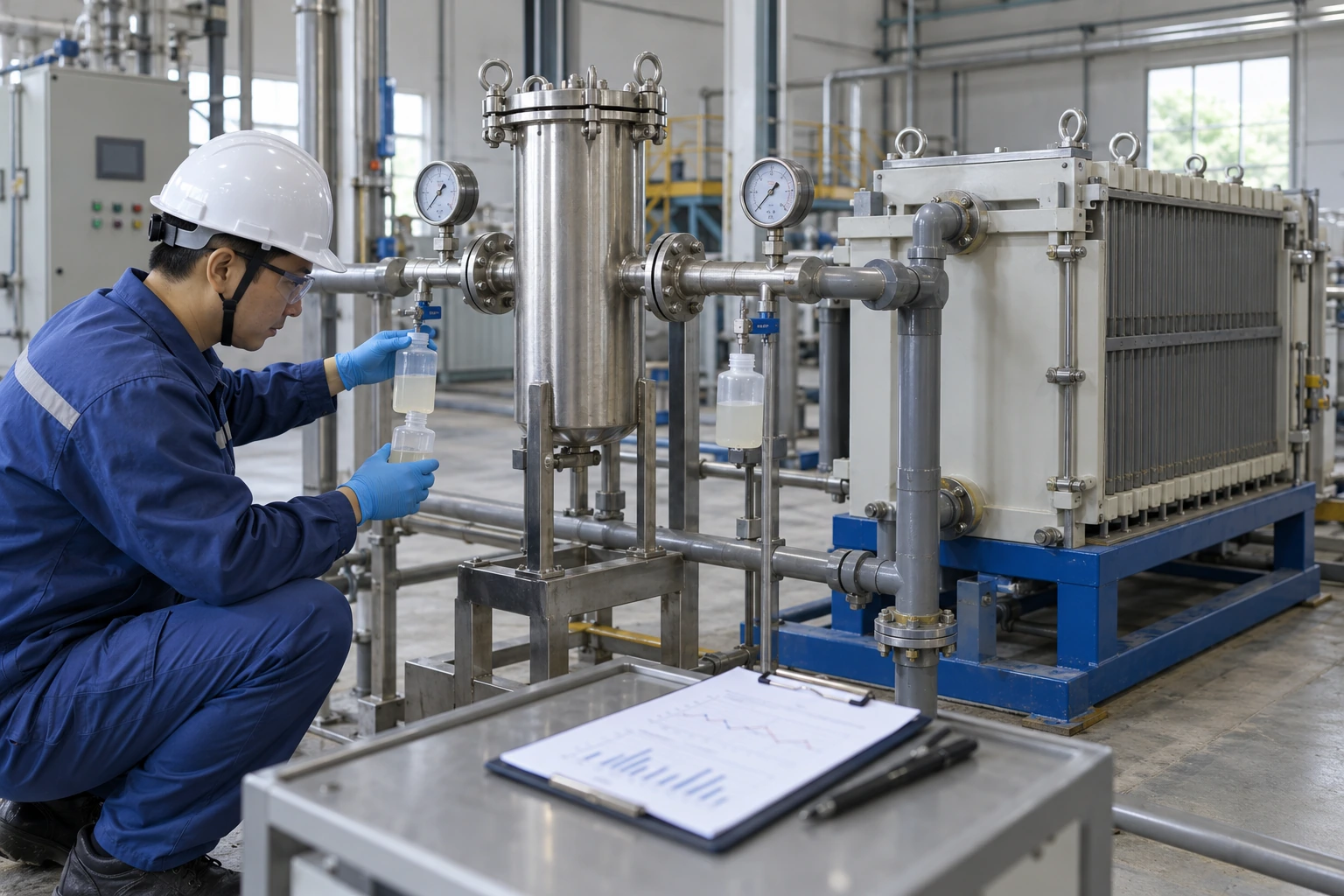
A Titanium electrode pilot should compare paired samples before and after filtration while tracking pressure, flow, and cell condition. That evidence shows whether a filter protects channels under real loading.
Test filtration and electrode response together
Collect upstream and downstream solids samples during representative operation; record pressure change, bypass events, and cell deposits. Keep paired samples together throughout testing. A clean-water filter test cannot establish behavior under wastewater loading.
- Sample both sides of the filter during stable and changing feed conditions.
- Correlate pressure, flow, filter service, and electrode inspection records.
| Check | Decision |
|---|---|
| Upstream sample | Incoming solids burden |
| Downstream sample | Solids reaching cell |
A paired test connects filter performance with actual electrode-channel exposure. Key Takeaway: Use a pilot record that captures solids and hydraulic changes together.
10. What feed records support Titanium electrode review?

A Titanium electrode review needs feed solids, dissolved chemistry, filter configuration, and channel dimensions. ARY Titanium can review titanium electrode forms against stated process conditions and buyer drawings.
Send filter and cell data in one package
Provide particle distribution, suspended-solids range, dissolved-ion analysis, filter type, pressure history, bypass layout, flow range, spacing, and deposit observations. Mark what remains technically unknown. To request a product review, contact us today with a drawing and feed record.
- Attach filter housing and electrode-cell drawings with flow direction.
- State whether a process engineer or equipment integrator owns dissolved-species treatment.
| Check | Decision |
|---|---|
| Filter data | Retention and loading |
| Cell data | Gap and feed boundary |
A component review cannot replace a dissolved-chemistry treatment design. Key Takeaway: Request an electrode fit review with paired feed and filter evidence.
Frequently Asked Questions
Can I remove dissolved salts with a particle filter? No; a particle filter captures selected solids, while dissolved ions need another removal mechanism.
What's the best way to choose a filter for an electrode cell? Match particle data and filter loading with channel geometry, flow, and maintenance boundaries.
How do I know if a deposit came through the filter? Compare deposit composition and location with upstream samples, downstream samples, and dissolved chemistry.
Can I rely on turbidity alone for electrode protection? Not always; particle size, solids mass, shape, and feed variation can affect channel blockage.
How do I know if my filter is restricting cell flow? Trend pressure and flow across clean and loaded conditions, then review bypass state and cell response.