
A Titanium electrode may be evaluated for a qualified insoluble-anode duty in nickel electroforming, while nickel deposits on a cathodic mandrel. Your trial can produce a visible shell yet miss its stress or release requirements. An anode change may also alter metal replenishment and bath reactions. Review those effects with deposit properties before approving the cell design.
1. Where does a Titanium electrode sit in nickel electroforming?
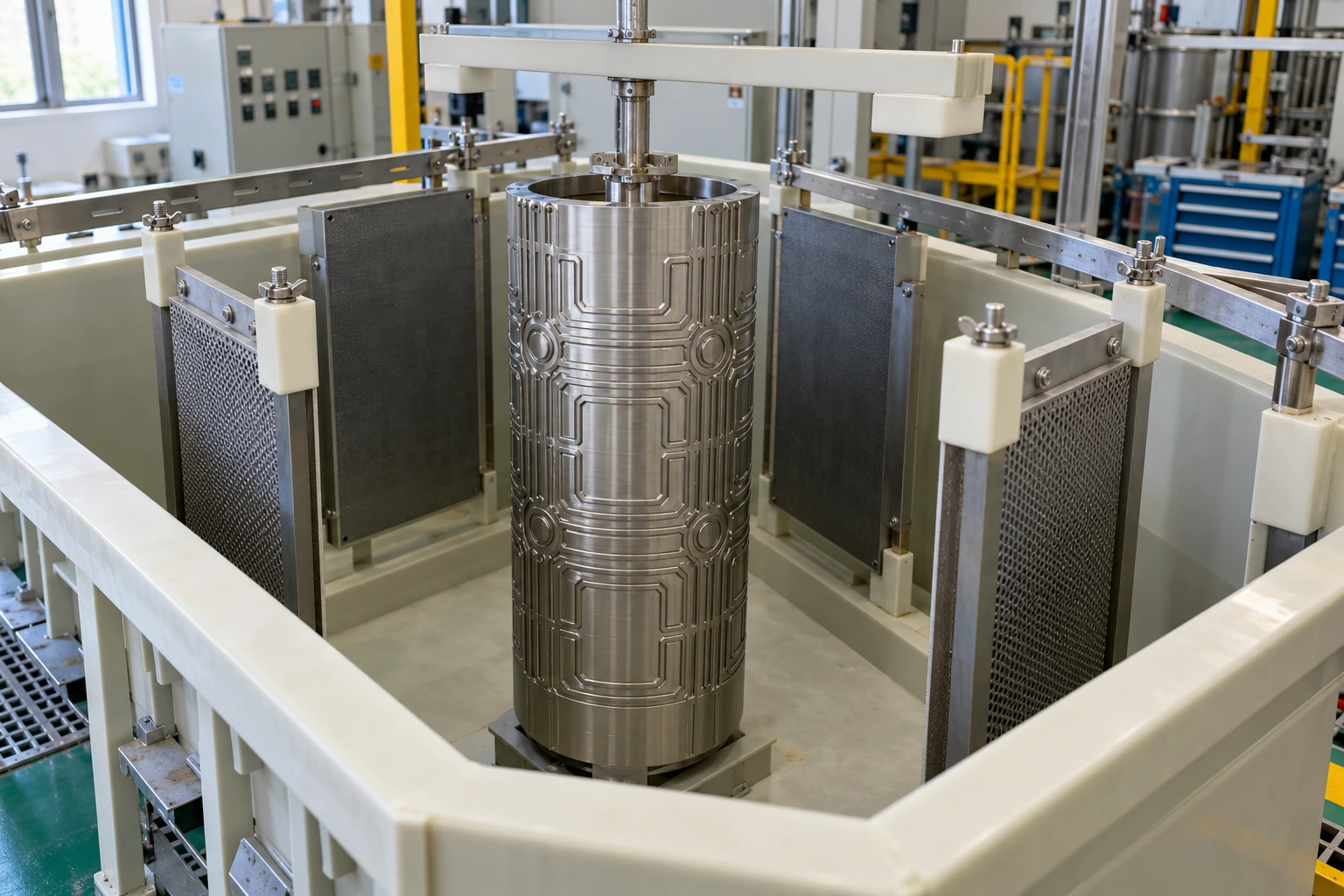
A Titanium electrode may be evaluated as an anode or support element around a nickel electroforming mandrel. Nickel grows on the cathodic mandrel surface.
Separate mandrel duty from anode duty
Start with the part being formed. A mandrel receives nickel ions and carries cathodic reaction. An anode closes an electrical circuit and influences bath chemistry, while its geometry shapes current around mandrel surfaces.
- Mark mandrel polarity and intended release method.
- Show anode locations around every active mandrel face.
| Check | Decision |
|---|---|
| Mandrel | Cathodic deposition surface |
| Cell anode | Supports oxidation and current flow |
Anode selection cannot replace a clear mandrel and release specification. Key Takeaway: Define the free-standing part and its cathode contact before selecting an anode.
2. What makes the mandrel cathodic beside a Titanium electrode?
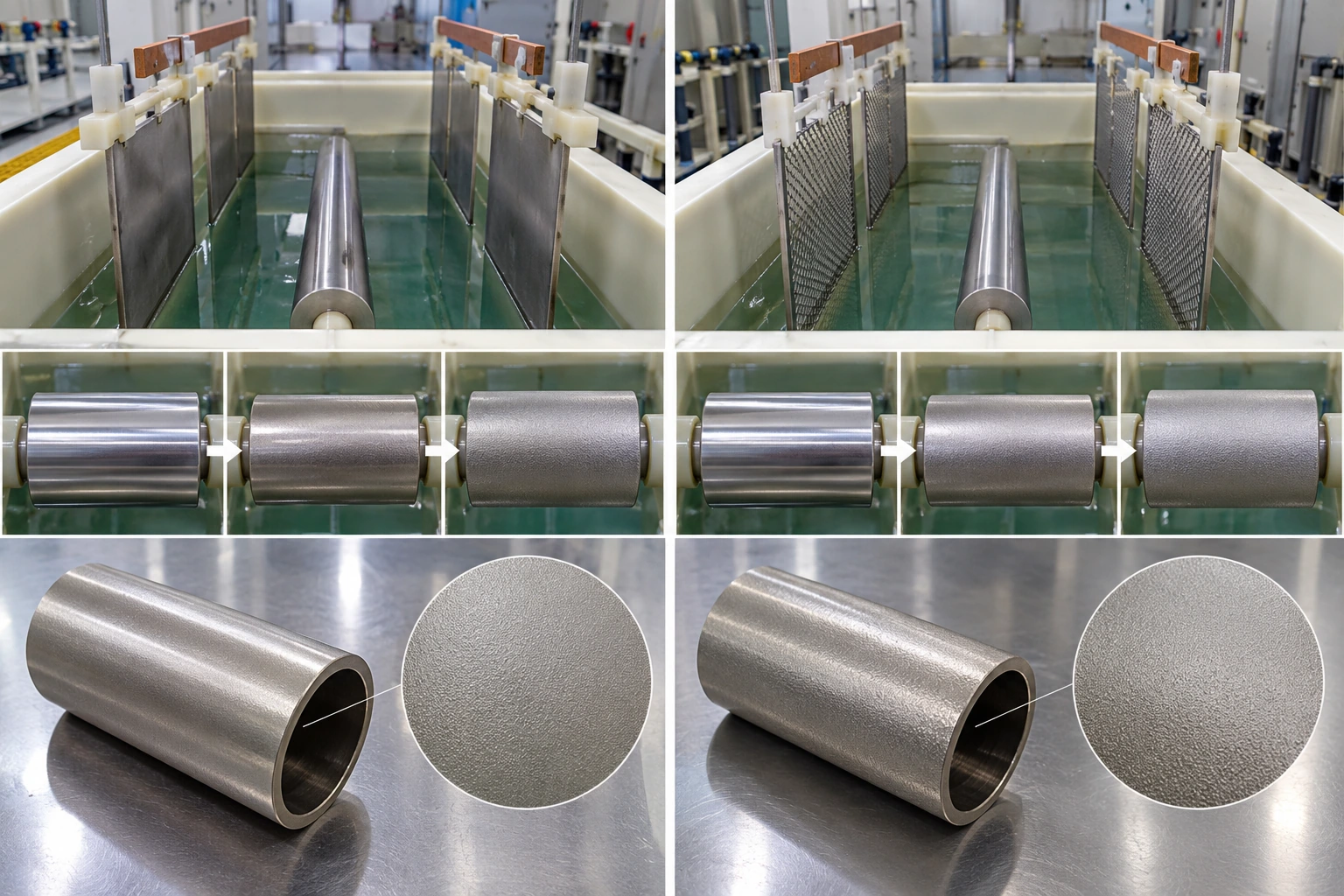
A Titanium electrode can occupy a separate anodic position while the electroforming mandrel remains cathodic. Nickel follows mandrel surfaces during deposition.
Why does the mandrel carry the nickel deposit?
Trace nickel from solution onto tooling. Dissolved nickel ions reduce at the cathode and build a layer that can later separate from its mandrel. Mandrel shape, surface preparation, and contact layout all influence release and finished geometry.
- Identify active and insulated mandrel regions.
- Show edge features and areas with restricted solution access.
| Check | Decision |
|---|---|
| Cathode face | Receives electroformed nickel |
| Mandrel interface | Controls shape and release conditions |
A good-looking anode drawing says little about whether the formed shell releases cleanly. Key Takeaway: Review tooling, release method, and current contacts with the anode layout.
3. Which deposit goals shape Titanium electrode selection?

A Titanium electrode specification should follow deposit thickness, dimensional accuracy, ductility, stress, and surface targets. Each target may change cell and bath choices.
Which deposit objectives guide electrode selection?
Name the property that will decide acceptance. A free-standing shell may need dimensional stability and predictable release, while a replicated surface may demand fine detail. These aims can put different demands on bath chemistry, current profile, and mandrel flow.
- List critical dimensions and thickness locations.
- State mechanical properties or surface criteria required for the part.
| Check | Decision |
|---|---|
| Dimensional replication | Review mandrel and field geometry |
| Mechanical performance | Review bath and deposit testing |
Let desired nickel structure guide cell discussion before selecting an anode form. Key Takeaway: Rank deposit requirements before comparing electrode assemblies.
4. When does nickel dissolve beside a Titanium electrode?
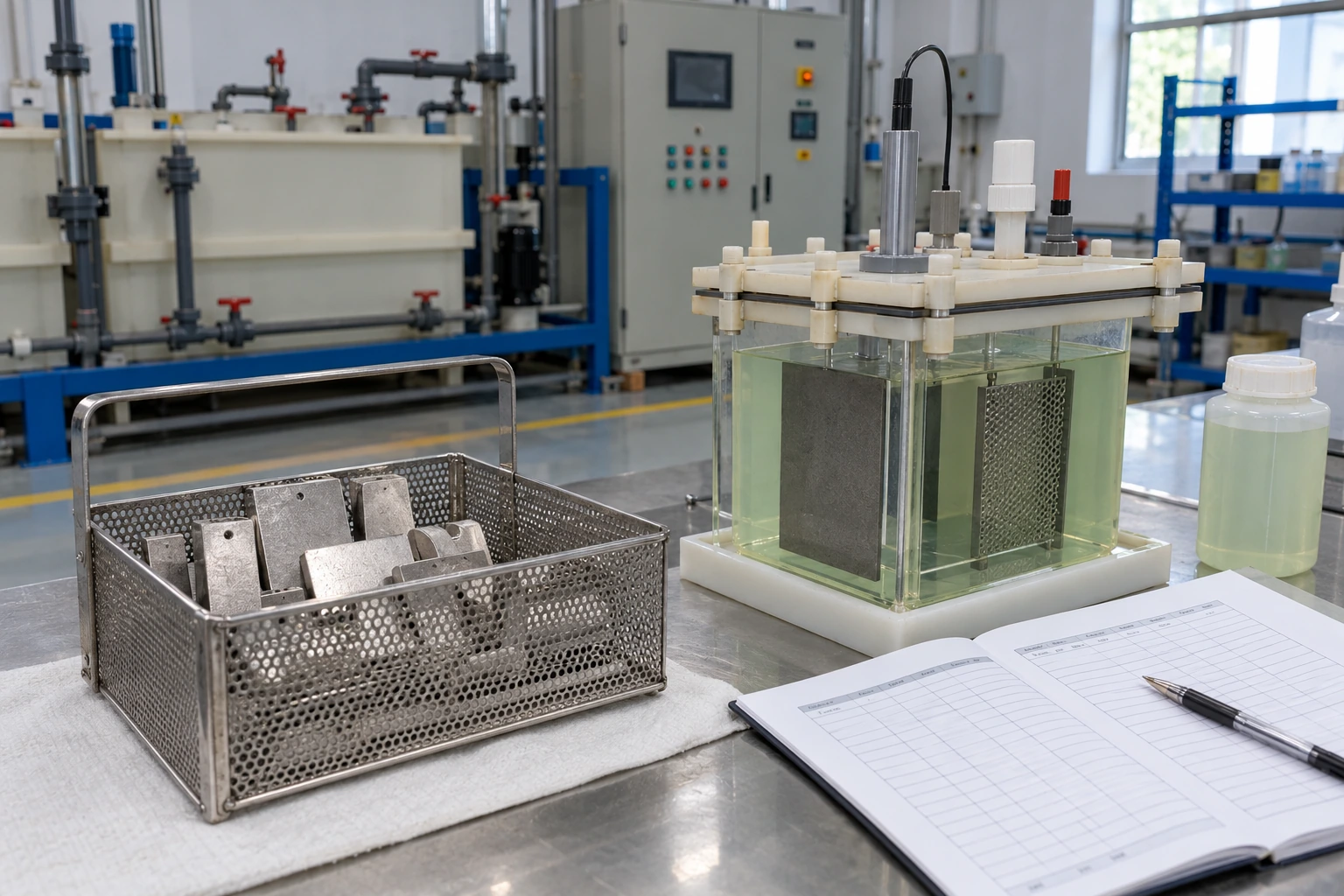
A Titanium electrode may be compared with soluble nickel anodes when a sulfamate bath needs metal replenishment. Anode composition also influences anodic reactions.
When can soluble nickel anodes suit the bath?
Match dissolution behavior to bath chemistry. Many sulfamate electroforming systems use soluble nickel anodes to replenish nickel consumed at the cathode. Anode composition and potential can affect sulfamate oxidation, so a custom application review should address both alongside bath limits.
- Specify nickel-anode form and alloy or sulfur condition.
- Track metal concentration and any bath decomposition indicators.
| Check | Decision |
|---|---|
| Soluble nickel | Can contribute nickel ions |
| Anode residue | May need containment and maintenance |
A metal anode can provide nickel while also changing bath impurity and oxidation behavior. Key Takeaway: Confirm the bath supplier's anode requirements before changing anode material.
5. What changes when a Titanium electrode is insoluble?
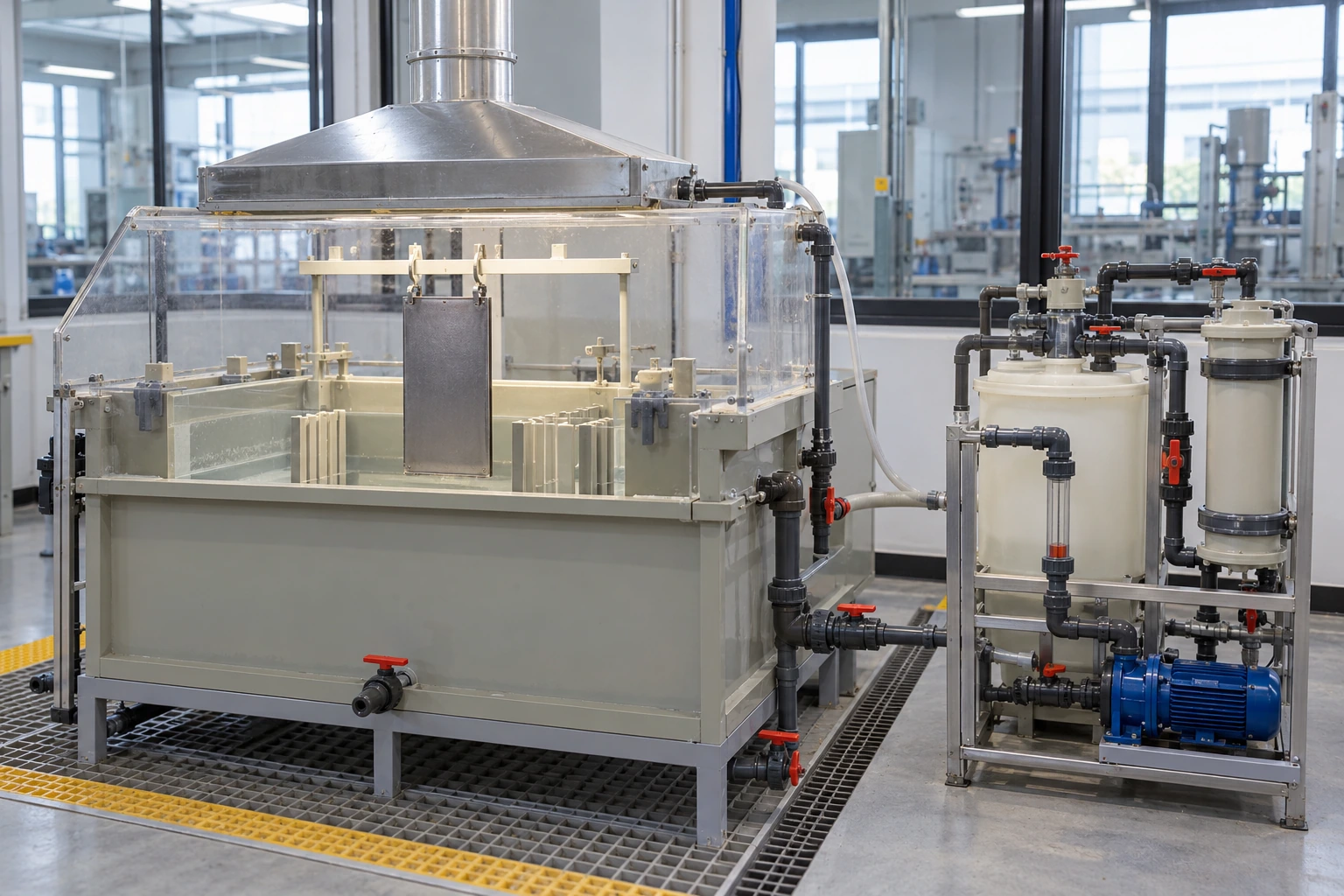
A Titanium electrode used as an insoluble anode changes both oxidation chemistry and nickel replenishment. Its surface reaction must be qualified in the selected bath.
What changes with an insoluble anode?
Account for the metal balance separately. An insoluble anode does not dissolve nickel into solution at the same interface. Nickel leaves the bath as deposit, so a separate replenishment route is needed; anode potential may drive other oxidation reactions.
- Name the proposed replenishment method.
- Review gas handling and bath separation needs for the selected reaction.
| Check | Decision |
|---|---|
| Insoluble surface | Carries current without nickel feed |
| External feed | Restores dissolved nickel by another route |
Titanium substrate alone does not establish compatibility with a nickel bath or its anodic reaction. Key Takeaway: Test the exact coating, bath, and replenishment arrangement before scale-up.
6. How do anode area and spacing affect a Titanium electrode?

A Titanium electrode size and spacing affect current distribution around a mandrel and across its surface. Curved tooling can expose local field differences.
How do area and spacing affect the deposit?
Compare anode position with the complete tool envelope. Long reaches, recesses, and edges can plate differently as current paths change. Flow and shielding may further modify local transport, so evaluate them with the loaded fixture.
- Show mandrel orientation and active-area boundaries.
- Mark gap, auxiliary contacts, and any field shields.
| Check | Decision |
|---|---|
| Even spacing | Supports a more consistent field |
| Shadowed recess | May need local process review |
Anode area per tank volume does not describe field quality around a complex mandrel. Key Takeaway: Use a cross-section through each critical mandrel feature.
7. What does nickel bath chemistry require from a Titanium electrode?

A Titanium electrode must be assessed alongside nickel salt, complexing agents, pH control, temperature, and additives. Chemistry determines which anodic reactions compete.
Which bath details affect anode compatibility?
Treat the electrolyte as part of electrode design. Nickel sulfamate and other nickel baths have different compositions and deposit behavior. In sulfamate systems, anode potential and material can affect sulfamate oxidation; transferring a result from another bath needs evidence.
- Share bath type, supplier guidance, and analysis history.
- List additives, temperature range, and operating current schedule.
| Check | Decision |
|---|---|
| Defined bath | Supports reaction compatibility review |
| Unknown bath history | Limits conclusions about anode behavior |
The same anode can face different reactions when electrolyte composition changes. Key Takeaway: Keep bath formulation and anode proposal in one review revision.
8. How should current delivery match a Titanium electrode mandrel?
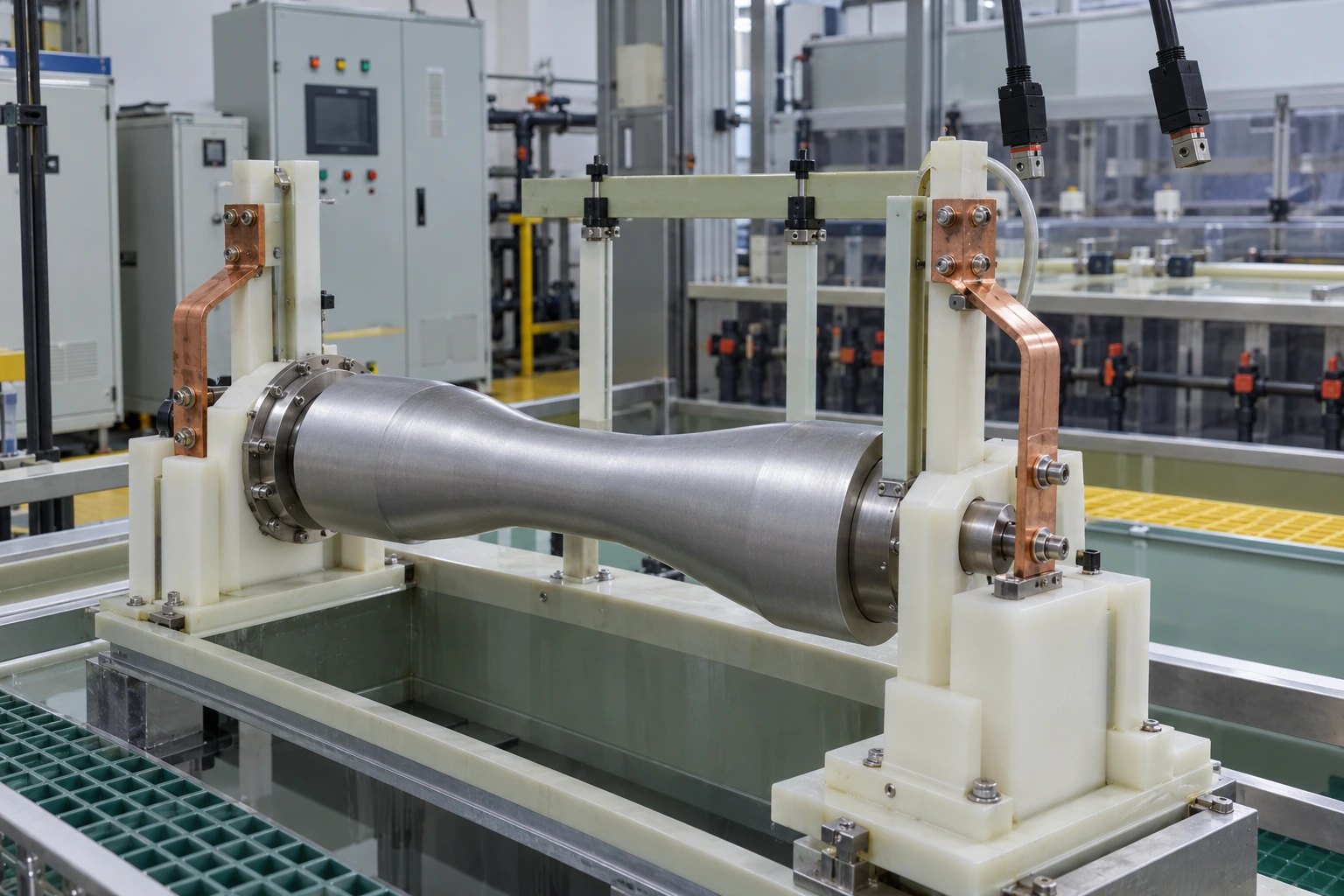
A Titanium electrode circuit should deliver current to the mandrel without obscuring release access or active area. Contact layout also affects local thickness.
How should current reach a shaped mandrel?
Map each contact before settling the fixture. Multiple feeds may be needed for a large or long tool, but each contact adds mechanical and masking constraints. drawing-based electrode options can be compared against the actual mandrel support and maintenance path.
- Identify contact areas that must remain free of nickel.
- Show rotation, movement, or removal path if used.
| Check | Decision |
|---|---|
| Single feed | Simplifies fixture layout |
| Distributed feeds | Can shorten long current paths |
Current access and shell release share the same physical envelope. Key Takeaway: Approve electrical contacts and release clearance on one assembly drawing.
9. What should a Titanium electrode trial measure in electroforming?

A Titanium electrode trial should measure deposit properties and bath response under a representative mandrel load. Compare results with the intended free-standing part.
Which outputs belong in a nickel trial?
Test each deposit after separation from its mandrel. Map thickness and surface condition, then measure required mechanical properties using an agreed method. Record bath analysis, anode condition, current profile, and tool position beside each specimen.
- Measure thickness at named edges, centers, and recesses.
- Keep stress, ductility, release, and surface checks tied to product requirements.
| Check | Decision |
|---|---|
| Coupon result | Checks a local process response |
| Representative tool | Tests geometry and release together |
A flat coupon cannot validate a deep or curved electroforming tool by itself. Key Takeaway: Use a representative mandrel before approving production geometry.
10. What should you send for a Titanium electrode review?

For a Titanium electrode review, send the mandrel drawing, bath analysis, deposit targets, anode layout, and replenishment route. Those records frame a useful comparison.
What should a nickel electroforming request include?
Include the intended finished shape. We review custom titanium plate, mesh, rod, tube, and assembly requests against drawings or samples. contact us today with mandrel details, chemistry, and test criteria for a scoped electrode discussion.
- Attach the tool drawing and release sequence.
- List bath family, metal-control route, electrical duty, and deposit acceptance tests.
| Check | Decision |
|---|---|
| Mandrel package | Defines deposit geometry |
| Bath and duty data | Frames electrode and chemistry review |
An electrode proposal becomes credible when the formed nickel part is clearly specified. Key Takeaway: Send process and product requirements together before selecting an anode route.
Frequently Asked Questions
Can I use a Titanium electrode as an insoluble nickel electroforming anode? Possibly, after coating and bath review. Verify anode reaction and nickel-replenishment route in the exact electrolyte.
What's the best anode for nickel sulfamate electroforming? No single anode suits every bath and deposit. Soluble nickel anodes are common, while material composition and potential can affect sulfamate chemistry.
How do I know if an anode change will affect deposits? Compare bath analysis and representative deposits before and after change. Track stress, thickness, surface condition, and release against agreed limits.
Can I qualify an anode change without checking deposit stress? Not when stress affects shell shape or release. Compare stress and other specified deposit properties under representative bath and mandrel conditions.
Can I approve an anode change with a flat coupon? A flat coupon checks local response but misses shaped-mandrel distribution and release. Include a representative tool for those decisions.