
A Titanium electrode may serve as a qualified insoluble anode in horizontal PCB copper plating, with bath control and panel transport reviewed together. A replacement panel can fit its frame while deposit distribution changes across boards or holes. Blaming coating alone can miss altered flow or additive exposure. Review anode geometry, waveform, chemistry and copper replenishment before approving the assembly.
1. Where does a Titanium electrode sit in horizontal PCB plating?

A Titanium electrode may form part of an insoluble anode assembly in a horizontal copper-plating line. PCB panels travel through the cell as cathodes.
Place the anode within panel transport
Follow panel travel through the cell. Many horizontal systems position anodes above and below a moving panel, but line geometry varies. Panel support, electrical contact, and immersed path determine how each board surface meets the anode field.
- Show travel direction, panel support, and active plating zone.
- Mark upper and lower electrode locations and contact points.
| Check | Decision |
|---|---|
| Panel path | Sets its cell exposure |
| Anode frame | Shapes the opposed current field |
A titanium assembly must fit the conveyor and panel path that production actually uses. Key Takeaway: Review the electrode beside a line cross-section and panel drawing.
2. How does an insoluble Titanium electrode change copper supply?
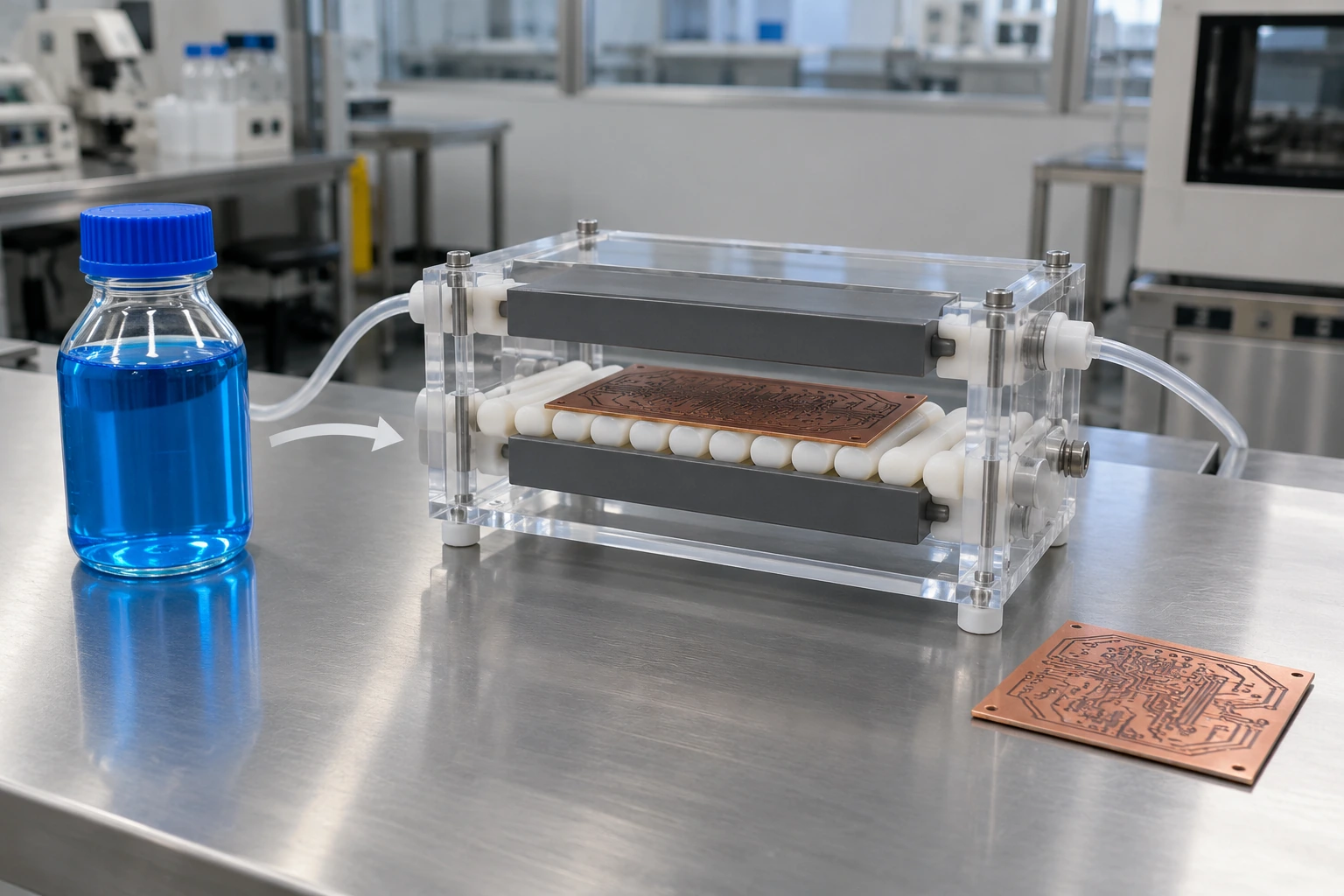
An insoluble Titanium electrode carries an anodic reaction but does not replenish copper by dissolving metal. A separate route must replace copper consumed at panels.
How does an insoluble anode change copper supply?
Map copper balance beside the electrical circuit. Copper deposits on PCB cathodes as current passes. In an insoluble-anode process, copper ions need a controlled external feed, such as solution replenishment or a dedicated dissolution system.
- Identify the copper-ion feed point and return loop.
- Record how bath concentration is monitored and corrected.
| Check | Decision |
|---|---|
| Soluble copper anode | May release copper into bath |
| Insoluble anode | Needs separate copper replenishment |
Replacing anode material changes bath housekeeping along with the electrode reaction. Key Takeaway: Confirm copper replenishment before specifying an insoluble anode frame.
3. What does a Titanium electrode field control across a panel?
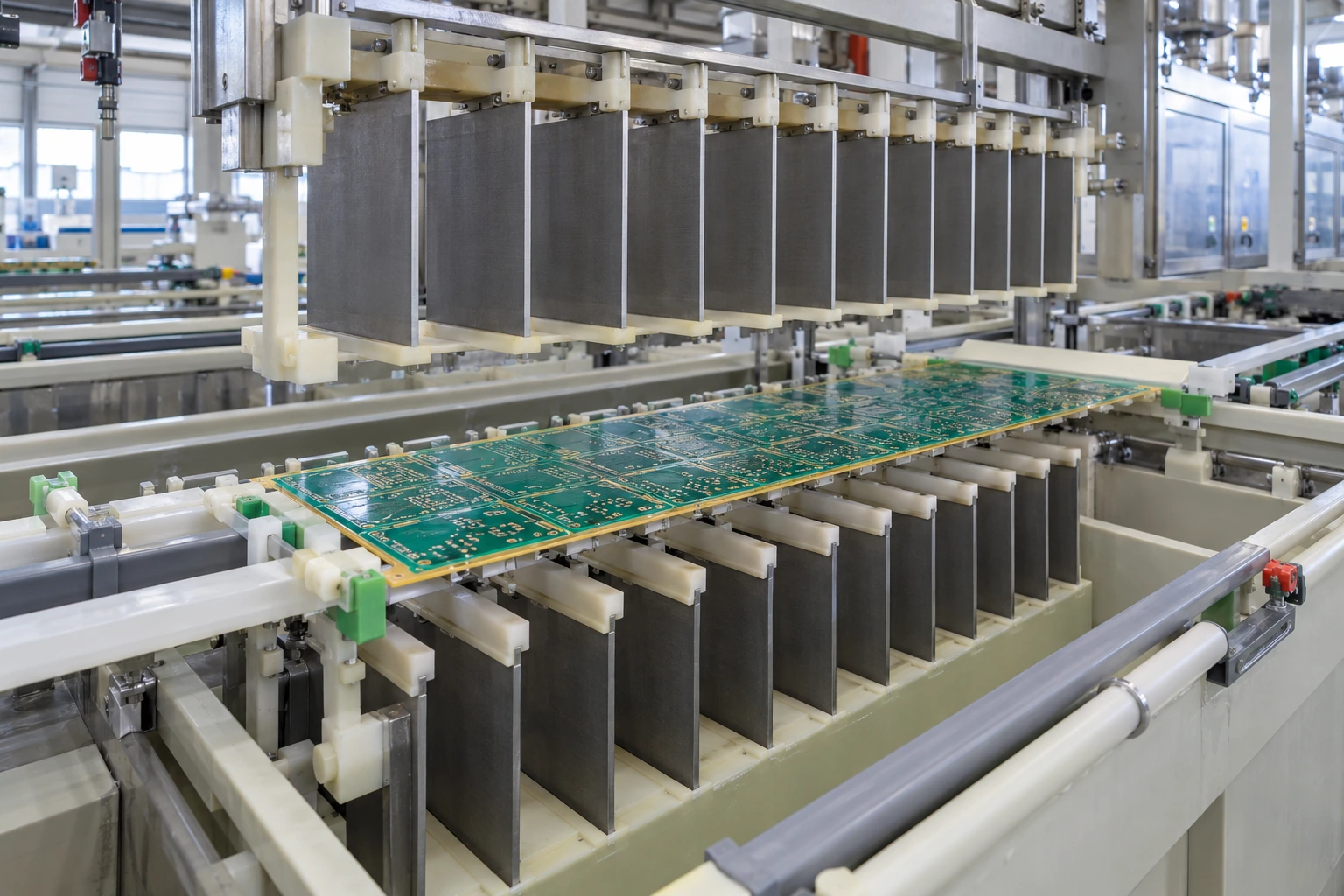
A Titanium electrode field affects copper distribution across moving panels, holes, and edge areas. Anode position is one part of that field.
What does the anode field control across a panel?
Map board features, not only panel edges. Through-holes, microvias, dense copper areas, and isolated tracks draw current differently. Shielding, spacing, waveform, and panel position can shift deposition alongside anode geometry.
- Mark high-density and isolated pattern regions.
- Include panel thickness and hole or via families.
| Check | Decision |
|---|---|
| Panel surface | Shows broad copper distribution |
| Hole and via features | Need cross-section inspection |
A flat thickness map can miss incomplete deposition inside a feature. Key Takeaway: Pair surface mapping with microsections from representative board locations.
4. How does flow reach a Titanium electrode and panel?
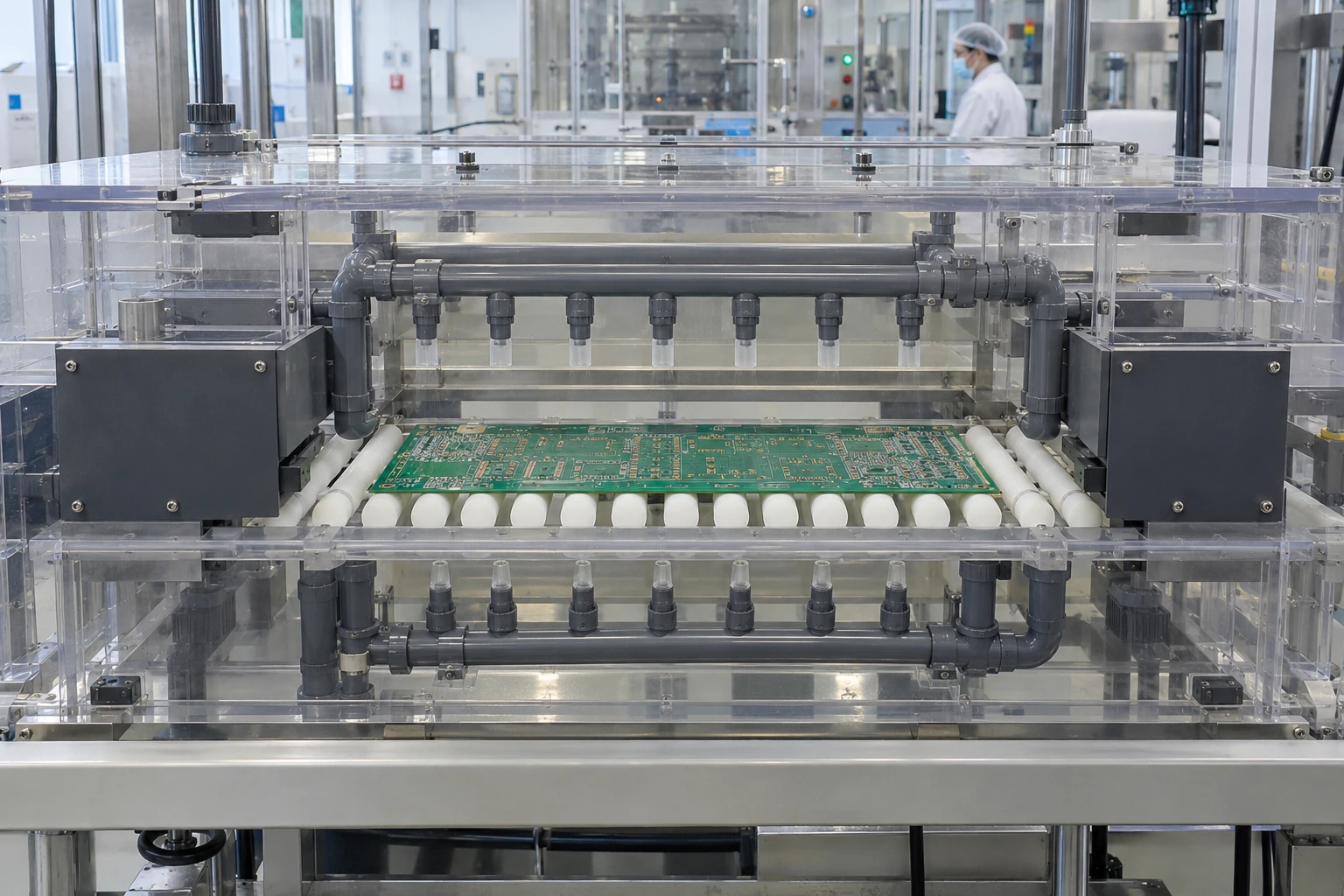
A Titanium electrode and moving PCB share an electrolyte flow field that affects ion transport and bubble removal. Flow geometry belongs in the electrode review.
How should flow reach the panel and anode?
Trace inlet, panel face, and return path. Header placement, nozzle pattern, panel speed, and anode open area shape local circulation. A custom application review can assess frame openings, mounting interfaces, and flow clearances against the cell drawing.
- Show manifolds, return channels, and panel orientation.
- Identify regions prone to shielding or poor circulation.
| Check | Decision |
|---|---|
| Open electrode face | Allows circulation through the cell |
| Blocked passage | May alter local transport |
A current map alone cannot explain defects driven by local mass transfer. Key Takeaway: Review flow and electrode geometry with a loaded panel in place.
5. Why do additives still shape a Titanium electrode plating result?
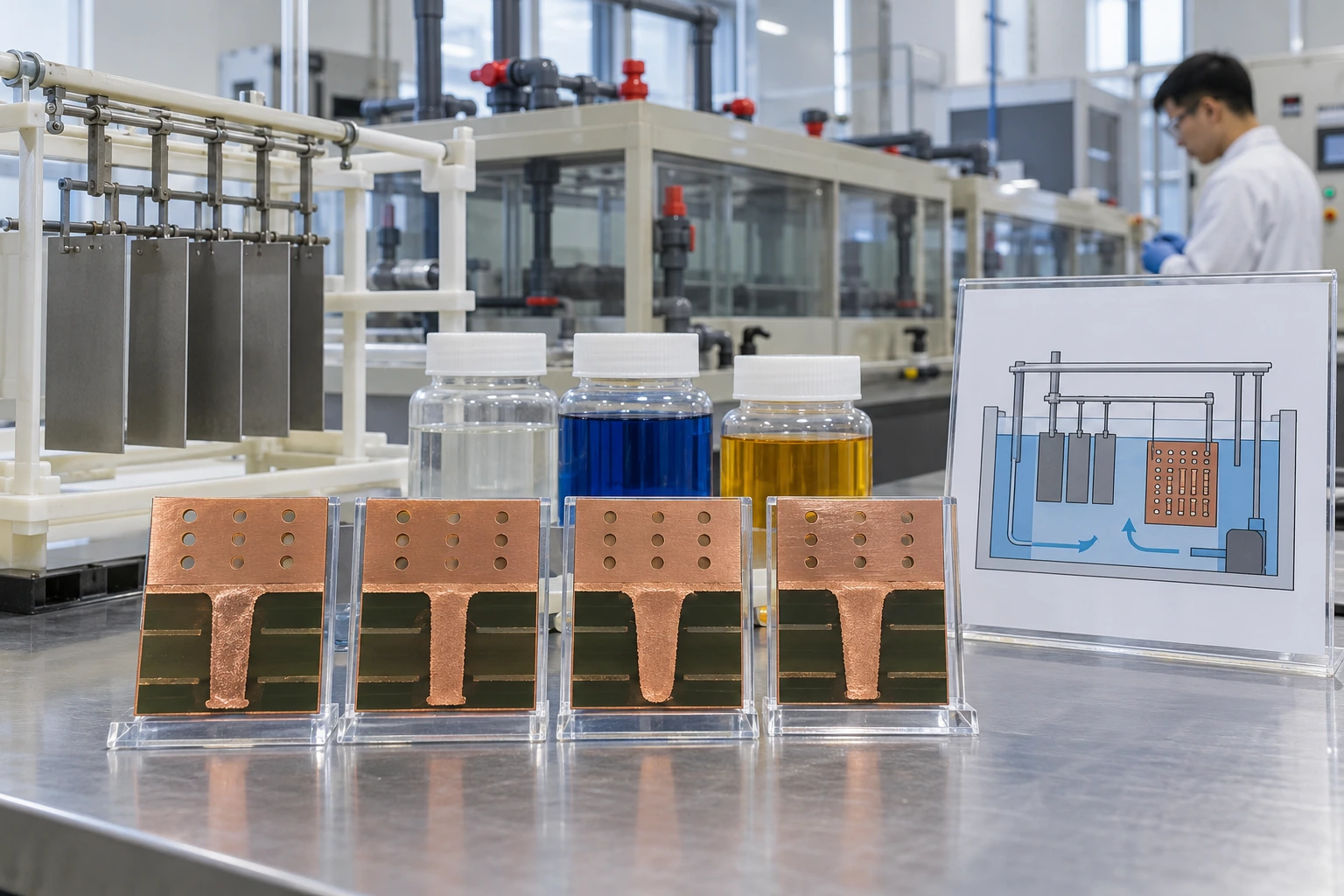
A Titanium electrode assembly supports current delivery, while plating additives control local copper growth and feature filling. Hardware cannot replace bath chemistry.
Why do additives still shape copper distribution?
Keep chemistry on the same process sheet. Accelerator, suppressor, and leveler interactions affect microvia filling and surface deposition. Flow, current waveform, panel geometry, and additive control then act together across the line.
- Name the additive system and control method.
- Record waveform and production mode for each panel family.
| Check | Decision |
|---|---|
| Additive balance | Shapes feature-level growth |
| Anode geometry | Influences cell current distribution |
A stable anode does not by itself guarantee a sound via-fill profile. Key Takeaway: Qualify electrode changes with the bath chemistry used in production.
6. How do panel contacts affect current at a Titanium electrode?
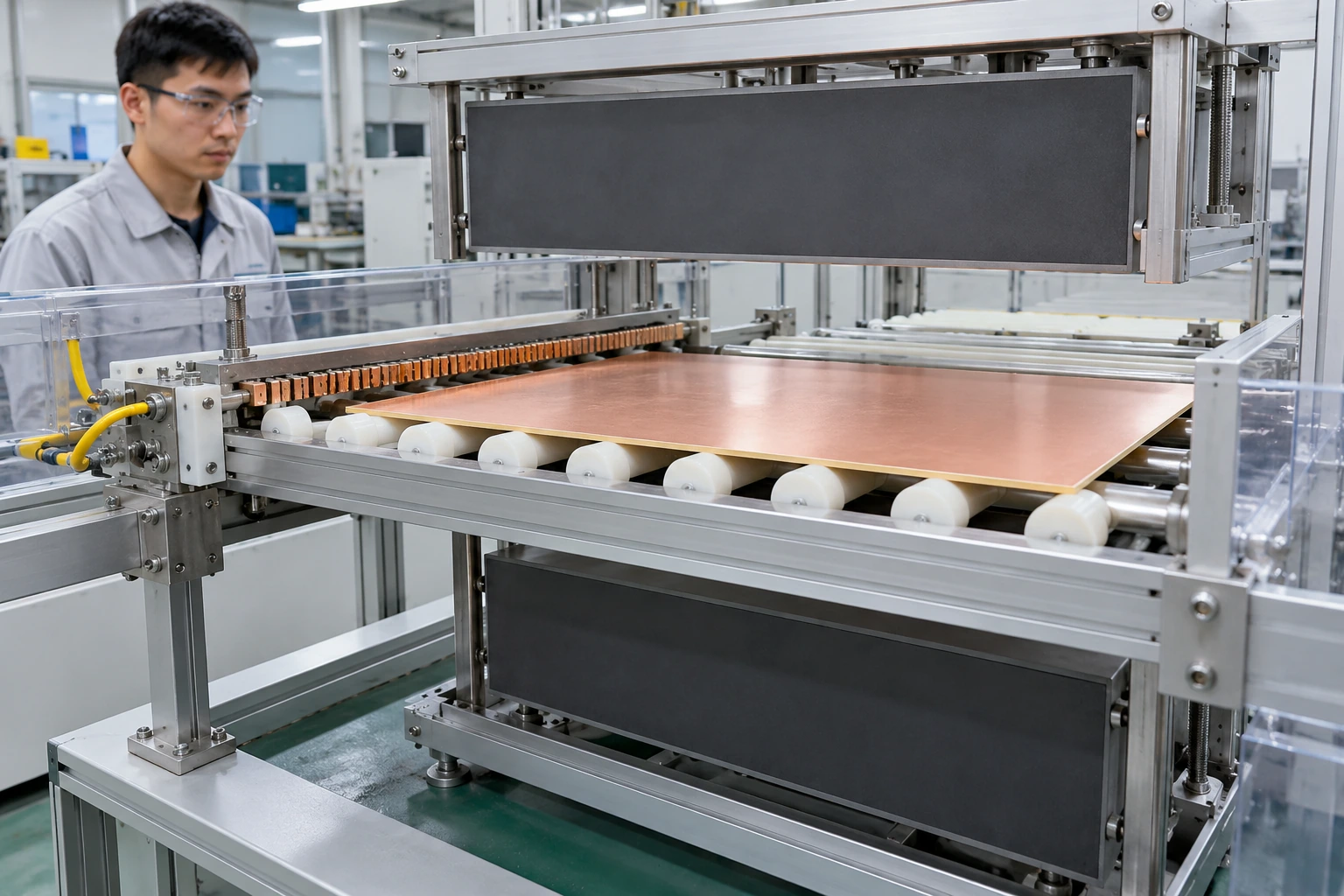
A Titanium electrode current path depends on panel contacts and conveyor transport. Contact condition can affect voltage delivery across a moving production load.
How do panel contacts affect current?
Inspect contacts where panels enter and leave the active zone. Dirty or worn contacts can change delivered current, while support hardware may shield board areas. Draw the contact sequence and identify cleaning or replacement criteria.
- Locate electrical contact points on the conveyor.
- Show supports that overlap active board surfaces.
| Check | Decision |
|---|---|
| Repeatable contact | Supports consistent current delivery |
| Changing contact | Can shift voltage and deposition |
An anode adjustment cannot correct a panel that receives inconsistent electrical contact. Key Takeaway: Include conveyor contact checks in any line trial.
7. What should a Titanium electrode frame preserve?
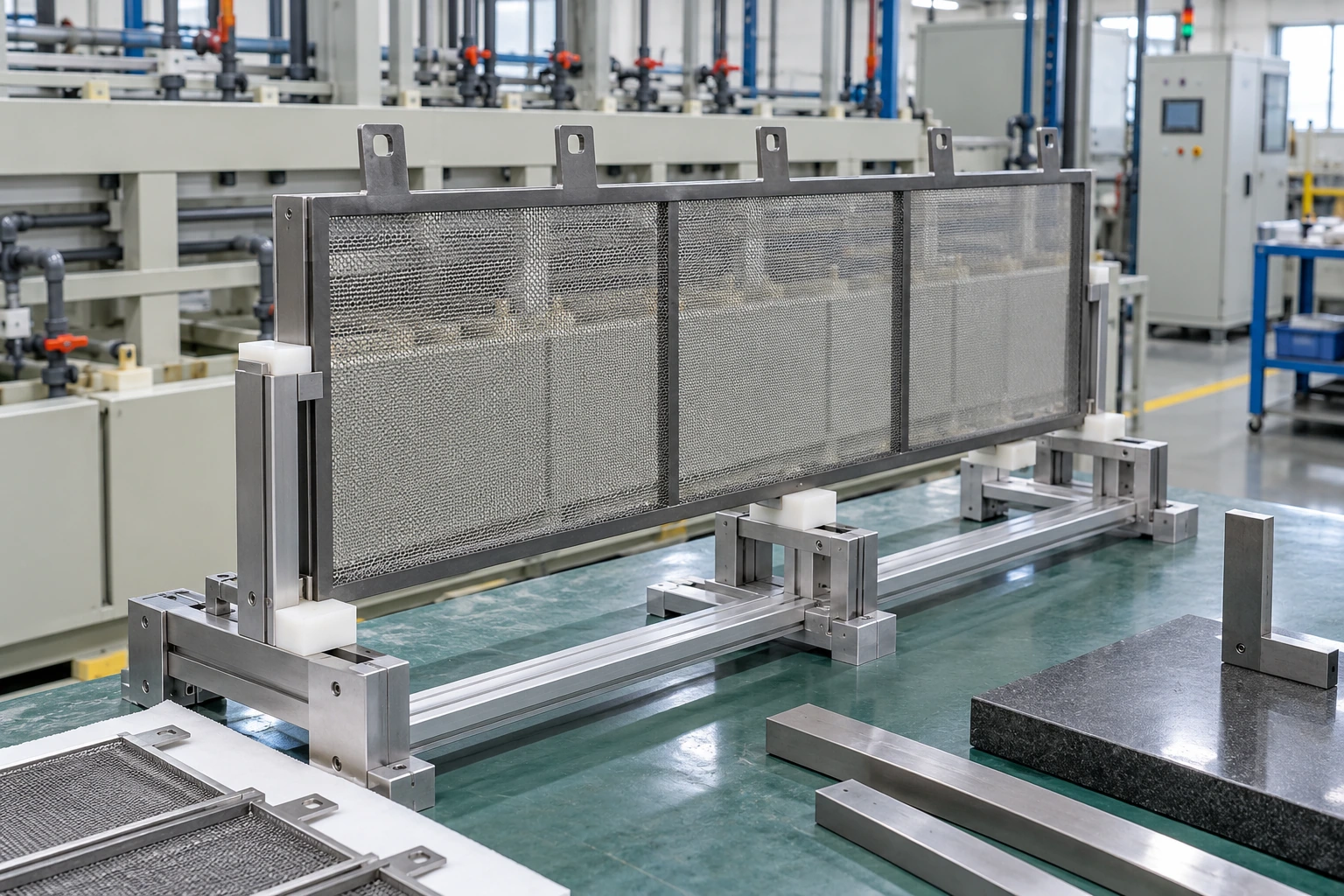
A Titanium electrode frame should preserve active area, open flow paths, panel clearance, and service access. Mesh or plate form must match the cell.
Which frame details should survive installation?
Dimension frame supports from cell datums. Check flatness, edge exposure, fastener zones, current-feed paths, and distance from panels. Keep clearances visible after service panels, shields, and upper or lower supports are installed.
- Provide frame envelope and mounting-hole locations.
- Show panel clearance and open-area restrictions.
| Check | Decision |
|---|---|
| Flat frame | Supports repeatable spacing |
| Open flow area | Preserves electrolyte circulation |
A frame that fits the tank wall can still interfere with panel motion. Key Takeaway: Verify installed clearance with the production conveyor loaded.
8. How should replenishment integrate with a Titanium electrode?

A Titanium electrode line needs copper-ion replenishment and bath control integrated with its anodic reaction. The route depends on chemistry and equipment architecture.
How should replenishment connect to the line?
Follow the solution from plating tank and back. External copper-dissolution or feed systems can serve different process designs. drawing-based electrode options should be reviewed beside circulation, bath analysis, gas management, and panel throughput records.
- Show feed, filtration, and recirculation locations.
- Identify controls for metal concentration and bath chemistry.
| Check | Decision |
|---|---|
| Integrated supply loop | Connects replenishment with process control |
| Unclear feed route | Leaves bath balance undefined |
Anode lifetime and copper concentration describe different parts of line readiness. Key Takeaway: Document the replenishment route before comparing anode assemblies.
9. What should a Titanium electrode horizontal-line trial compare?

A Titanium electrode trial should compare board thickness, via fill, panel position, and bath response under the intended line mode. Set sampling locations before each run.
What should a horizontal-line trial compare?
Use panels that represent real product families. Record conveyor position, contact condition, waveform, flow, additive status, and copper concentration. Inspect surface maps and cross-sections at matching locations before and after a controlled change.
- Map top, bottom, edge, center, and feature cross-sections.
- Tie each board sample to its line position and bath record.
| Check | Decision |
|---|---|
| Surface thickness | Checks broad distribution |
| Feature cross-section | Checks hole or via filling |
A line trial has little value when board features and operating records are unmatched. Key Takeaway: Agree on representative panels and acceptance methods before testing.
10. What should you send for a Titanium electrode review?

For a Titanium electrode review, send the cell cross-section, panel family, chemistry, flow, waveform, contacts, and copper replenishment method. This bounds the application discussion.
What should a PCB plating request include?
Place electrode beside the moving production load. We review custom titanium plate, mesh, rod, tube, and assembly requests from drawings or samples. contact us today with the cell envelope, bath information, transport details, and trial criteria for a scoped engineering review.
- Attach cell views and panel support drawings.
- List additive controls, current program, flow, and metal-ion feed route.
| Check | Decision |
|---|---|
| Panel data | Defines transport and plating features |
| Process data | Frames chemistry and electrode duty |
An electrode-only quotation cannot decide whether a horizontal line process will meet board targets. Key Takeaway: Send both cell interfaces and process conditions before fixing the frame.
Frequently Asked Questions
Can I use an insoluble titanium electrode for horizontal PCB plating? Possibly, if its coating, geometry, electrical duty, and bath compatibility fit the line. Copper replenishment must be handled separately.
What's the best way to replenish copper with an insoluble anode? The route depends on bath chemistry and equipment. Options include controlled copper-containing solution feed or a separate dissolution system.
How do I know if anode layout limits panel distribution? Map copper thickness and feature cross-sections by panel location. Compare results with flow, contact, waveform, and bath records.
Can I run an insoluble anode without a copper feed system? A finite batch may draw on initial dissolved copper inventory. Sustained production needs replenishment and bath analysis.
Can I qualify anode layout using only panel surface readings? Surface readings show broad thickness distribution but miss via interiors. Add cross-section checks for representative holes and microvias.