
Fluoride exposure can weaken titanium's passive film under some combinations of chemistry and process conditions. For a Titanium electrode, a bounded review needs media identity, exposure history, coating, and qualified evidence. ARY Titanium can review drawings and samples, while responsible process engineers retain application approval.
1. How can fluoride change Titanium electrode compatibility?
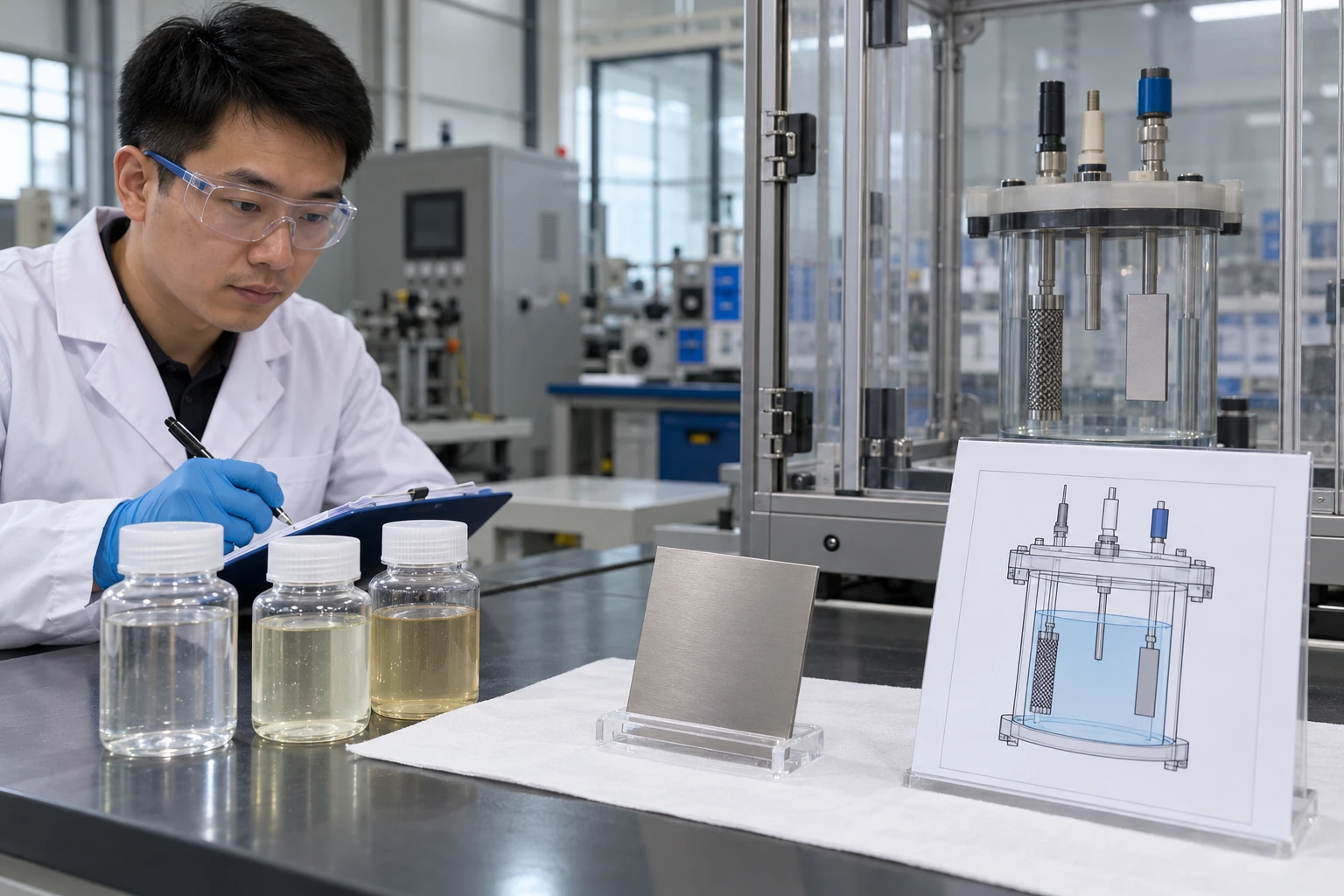
A Titanium electrode can lose compatibility when fluoride conditions disrupt surface protection or attack exposed substrate. The result depends on media chemistry, surface state, and service history.
Why a material label cannot settle exposure
Start with the media, not a grade label. A titanium nameplate identifies substrate family but cannot describe fluoride species, local acidity, oxidants, or coating condition. Use it as one input, not a service approval.
- Identify fluoride-bearing streams, additions, and credible upset sources.
- List media temperature, contact stages, and restart states.
| Check | Decision |
|---|---|
| Material name | Identifies a substrate family |
| Exposure record | Defines conditions needing review |
A generic alloy label leaves consequential chemistry undefined. Key Takeaway: Review actual media and duty before accepting a fluoride claim.
2. Which process variables shape Titanium electrode exposure?

A Titanium electrode review should capture fluoride form, pH history, temperature, dissolved salts, flow, and exposure duration together. One assay rarely describes every condition at the surface.
Which conditions reach the electrode surface?
Map the variables together. Total fluoride, acidity, temperature, dissolved ions, and flow can change exposure reaching an electrode surface. Process records should show routine states and excursions instead of one laboratory snapshot.
- Separate measured fluoride data from inferred species or activity.
- Record startup, idle, concentration, and upset events.
| Check | Decision |
|---|---|
| Single sample | Shows one point in time |
| Operating history | Captures changes across duty |
A useful review describes conditions across an operating cycle. Key Takeaway: Ask process owners for chemistry and exposure history together.
3. Does passivation protect Titanium electrode in fluoride media?
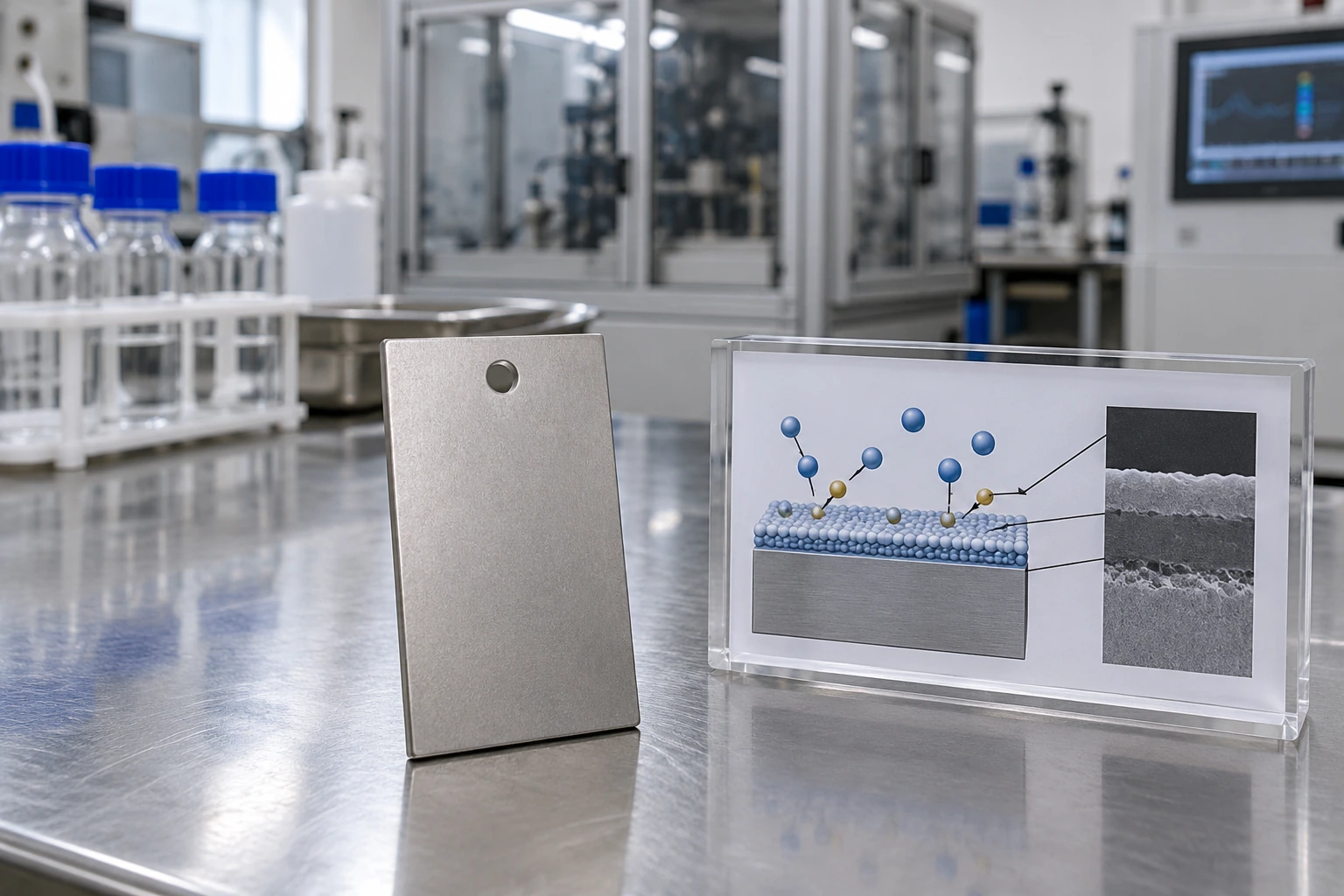
A Titanium electrode passive film can limit corrosion in suitable media, while fluoride-bearing conditions may destabilize that surface protection. A passive condition in one stream does not settle behavior in another.
What does passivation tell you?
Treat passivation as a condition, not a guarantee. Laboratory studies have linked fluoride exposure and acidity with passive-film damage on titanium. Their specific solutions and test setups cannot supply universal industrial thresholds.
- Distinguish substrate condition from coating response.
- Track pH and fluoride changes as separate evidence.
| Check | Decision |
|---|---|
| Passive-film observation | Applies to tested conditions |
| Industrial acceptance | Needs duty-specific evidence |
Surface protection can change when solution conditions change. Key Takeaway: Use corrosion evidence only within its tested chemistry and limits.
4. Which coating details matter for a Titanium electrode?

A Titanium electrode coating review should identify its specified composition, active area, edges, joints, and any exposed substrate. A coating family name alone cannot define fluoride resistance.
Which surfaces need separate attention?
Separate coated area from exposed metal. Share a drawing and coating identity during a custom engineering review; disclose whether edges, joints, or masked regions expose substrate. Review coating purpose and substrate protection as related but distinct questions.
- Mark intended immersed and active surfaces on the drawing.
- Identify welds, contacts, edges, and masked boundaries.
| Check | Decision |
|---|---|
| Coating label | Names a broad material family |
| Surface map | Shows interfaces needing review |
A component drawing reveals interfaces absent from a material name. Key Takeaway: Submit coating identity and geometry as one review package.
5. How do changing conditions affect Titanium electrode exposure?

A Titanium electrode exposure review must include changing process conditions when they alter media contact. Temperature or acidity excursions may make a brief sample unrepresentative.
Do excursions change your screening question?
Keep transients in view. Map routine operation, startup, idle holds, and abnormal feed events in a qualified test brief. Responsible process engineers should decide which states matter for acceptance.
- Compare normal records with recorded excursions.
- Include shutdown and restart conditions when relevant.
| Check | Decision |
|---|---|
| Steady-state sample | Represents a defined operating point |
| Transient history | Shows departures from that point |
Averages can hide short exposures that deserve separate review. Key Takeaway: Include realistic process changes in the evidence plan.
6. Which records belong in a Titanium electrode review?
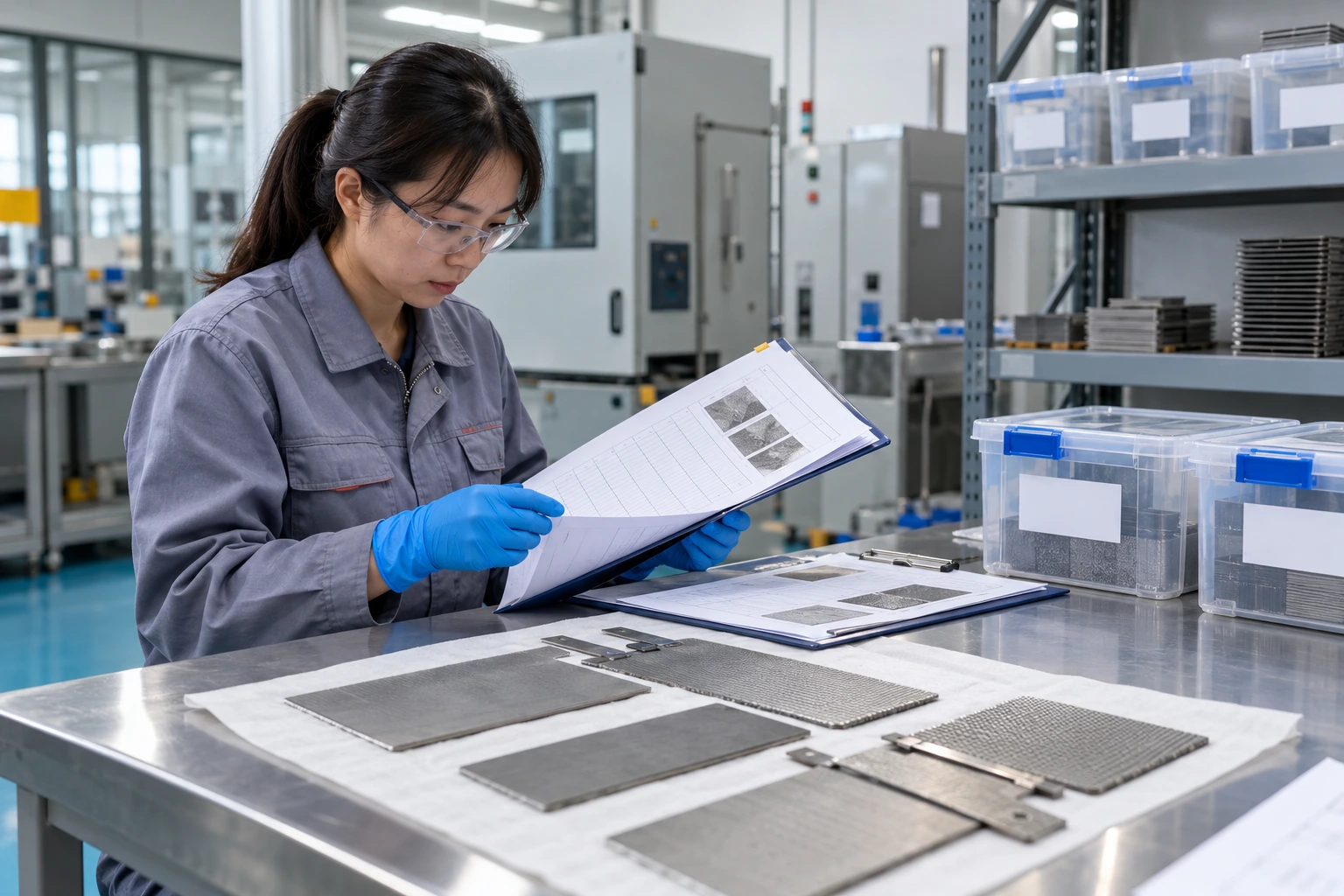
Cleaning history and cross-contamination can complicate a Titanium electrode compatibility screen. Residues or mixed process streams may change coupon exposure.
Could prior handling change a result?
Keep sample history attached. Record prior service, cleaning status, storage, and rinse evidence with each test item. Do not assume a visually clean surface carries no relevant residue.
- Record part identity and prior exposure.
- Note cleaning method ownership and sample storage conditions.
| Check | Decision |
|---|---|
| Untracked coupon | Leaves exposure history unclear |
| Traceable sample | Supports result interpretation |
An unexplained residue can obscure material behavior. Key Takeaway: Preserve sample identity from receipt through inspection.
7. When can a coupon screen a Titanium electrode question?
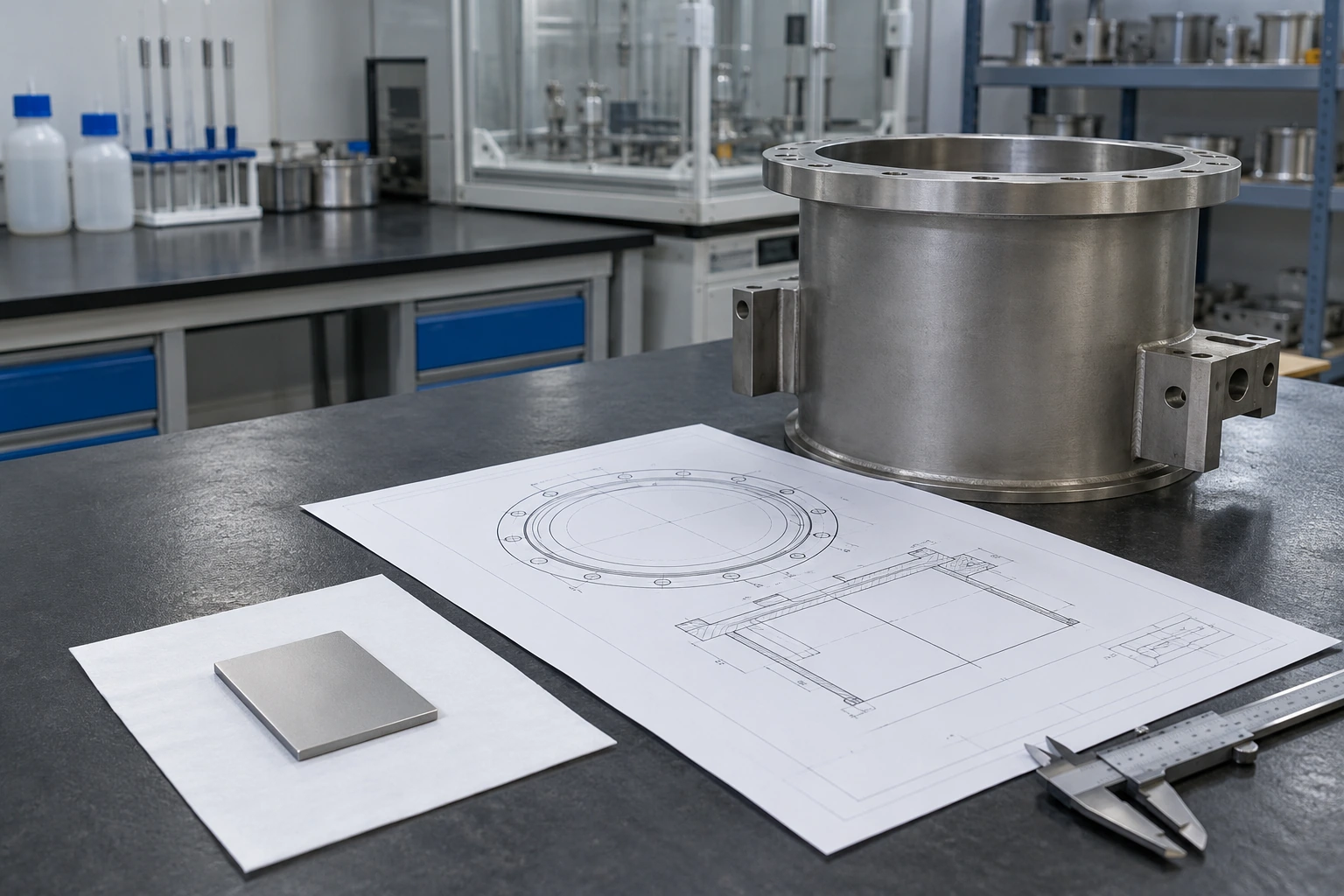
A coupon can compare defined Titanium electrode materials under a controlled test plan, but it cannot establish complete assembly life. Geometry, edges, joints, flow, and electrical duty may differ.
What can a coupon screen answer?
Use coupons for a bounded question. A qualified laboratory can compare specified surfaces and media while documenting controls and post-test examination. Keep interpretation tied to tested samples and conditions.
- Define the comparison before testing.
- Record surface identity, exposure sequence, and observed changes.
| Check | Decision |
|---|---|
| Coupon result | Compares a defined sample |
| Assembly approval | Requires broader application evidence |
A screening result narrows uncertainty without replacing system qualification. Key Takeaway: State exactly which question each coupon test answers.
8. How should a Titanium electrode test reflect actual duty?

A Titanium electrode pilot plan should reproduce relevant service conditions under qualified laboratory controls. Water-treatment context can guide the brief, yet no general application page proves compatibility.
How should test conditions match service?
Set a representative test boundary. For water-treatment applications, evidence must still match actual chemistry, coating, and operation. Qualified test owners should define controls, exposure sequence, measurements, and inspection.
- Separate screening conditions from approved operating limits.
- Document deviations and conditions not represented.
| Check | Decision |
|---|---|
| Application category | Frames intended use |
| Test boundary | Defines measured evidence |
A pilot plan earns value through representative conditions and clear limits. Key Takeaway: Ask qualified reviewers to define what the test can support.
9. What evidence supports a Titanium electrode decision?

A Titanium electrode decision should separate observed damage, measured change, untested assumptions, and approved service limits. No single coupon result should imply universal fluoride resistance.
How should evidence shape a decision?
Keep conclusions narrower than the test. Report sample identity, measured conditions, inspection method, and unresolved variables. A result under one exposure cannot certify different chemistry or an entire assembly.
- List tested and untested conditions separately.
- Assign approval authority for application limits.
| Check | Decision |
|---|---|
| Measured evidence | Supports a bounded comparison |
| Unverified condition | Needs review or further data |
A clear boundary prevents screening data from becoming a service promise. Key Takeaway: Approve only conditions represented by accepted evidence.
10. What should a Titanium electrode fluoride RFQ disclose?

A fluoride-duty RFQ for a Titanium electrode should provide process envelope, coating scope, drawing, and evidence needs before selection. Component review does not approve integrated process operation.
What should a buyer send for review?
Bring the drawing and process record. When you contact us today, include media data, operating states, coating identity, sample plan, and open acceptance questions. ARY Titanium can review drawings and samples while process engineers retain compatibility approval.
- Include process chemistry and credible excursions.
- State required component evidence and approval owner.
| Check | Decision |
|---|---|
| Complete brief | Supports a focused review |
| Missing chemistry | Leaves compatibility unresolved |
A bounded request lets every reviewer see what remains unknown. Key Takeaway: Prepare a documented review before committing a fluoride-duty specification.
Frequently Asked Questions
Can I assume titanium is safe in every fluoride solution? No. Compatibility depends on fluoride form, acidity, temperature, surface state, coating, and exposure history.
What's the best evidence for a fluoride-duty review? A bounded test plan with traceable samples, representative media, documented conditions, and qualified post-test inspection gives useful evidence.
How do I know if a coupon result applies to my assembly? Compare test geometry, edges, coating, flow, and duty with your assembly. Differences need separate review.
Can I use a published corrosion threshold as my acceptance limit? Not without checking its alloy, solution, method, and conditions. Published values do not automatically transfer to industrial equipment.
How do I know if a coating solves substrate exposure? Review edges, joints, masked zones, and coating condition on the actual drawing. A coating name alone cannot settle those interfaces.