
A Titanium electrode combines a corrosion-resistant titanium base with a catalytic working surface chosen for a specific electrochemical reaction. That pairing can carry anodic current while holding a repeatable shape inside your cell.
Your line may lose output, draw more voltage, or consume electrodes sooner than planned when coating chemistry does not match electrolyte duty. A sound choice starts with reaction, electrolyte, current density, temperature, geometry, and validation data before price enters comparison.
1. What Is a Titanium Electrode and Why Is It Coated?
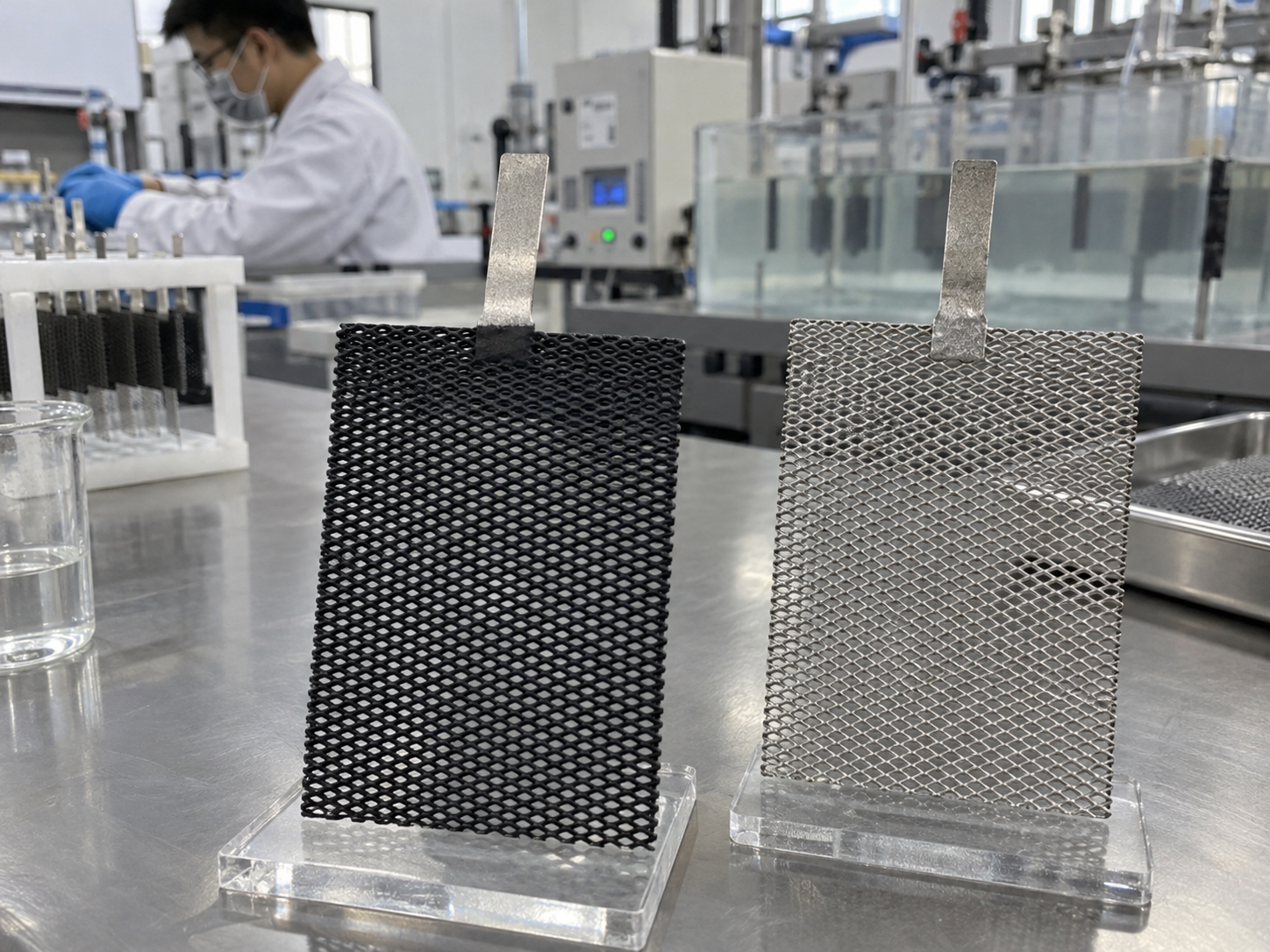
A Titanium electrode uses titanium for structure while its applied surface carries electrochemical work. Bare titanium develops a passive oxide film, so anodic service normally needs an active coating.
How do substrate and coating split the work?
They divide mechanical and electrochemical duties. Start with function. You should treat each layer as a separate specification:
- Titanium provides shape, support, and fabrication flexibility.
- Coating catalyzes a selected anodic reaction.
- Connection design carries current into active area.
What should you compare before accepting an offer?
Compare reaction fit, substrate form, active area, connection detail, and stated operating limits. A low quote means little when suppliers priced different duties.
| Item | Question for supplier | Risk if missing |
|---|---|---|
| Reaction | Which anodic reaction drives selection? | Wrong coating family |
| Structure | Which titanium form and thickness apply? | Poor fit or weak support |
| Active surface | Where does coating start and stop? | Uneven current distribution |
Key Takeaway: Use this comparison before treating two quotations as equivalent. Specify substrate and catalytic surface separately, then check how each supports your cell.
2. How Does a Titanium Electrode Carry Current?

Every Titanium electrode carries current through its metallic base and transfers charge through an active surface into electrolyte. Cell behavior then depends on reaction kinetics, spacing, flow, and electrical contact.
What happens at the working surface?
Ions reach active sites, charge transfer occurs, and reaction products leave that surface. Follow the electrons. Your review should cover:
- Intended anodic product and competing reactions
- Bubble release or liquid flow near active area
- Contact resistance across tabs, welds, and busbars
Which cell variables shape electrical behavior?
Electrode gap, exposed area, solution conductivity, and current loading influence voltage and distribution. Geometry changes may alter results even when coating stays unchanged.
| Variable | What it changes | Buyer check |
|---|---|---|
| Electrode gap | Resistance and field distribution | Confirm installed spacing |
| Active area | Current per unit area | Compare exposed dimensions |
| Connection | Heat and voltage loss | Review weld and busbar design |
Key Takeaway: Read these values together because one isolated number rarely predicts cell behavior. Electrical performance belongs to a complete cell, not a coating name viewed alone.
3. Which Titanium Electrode Coating Fits Your Reaction?
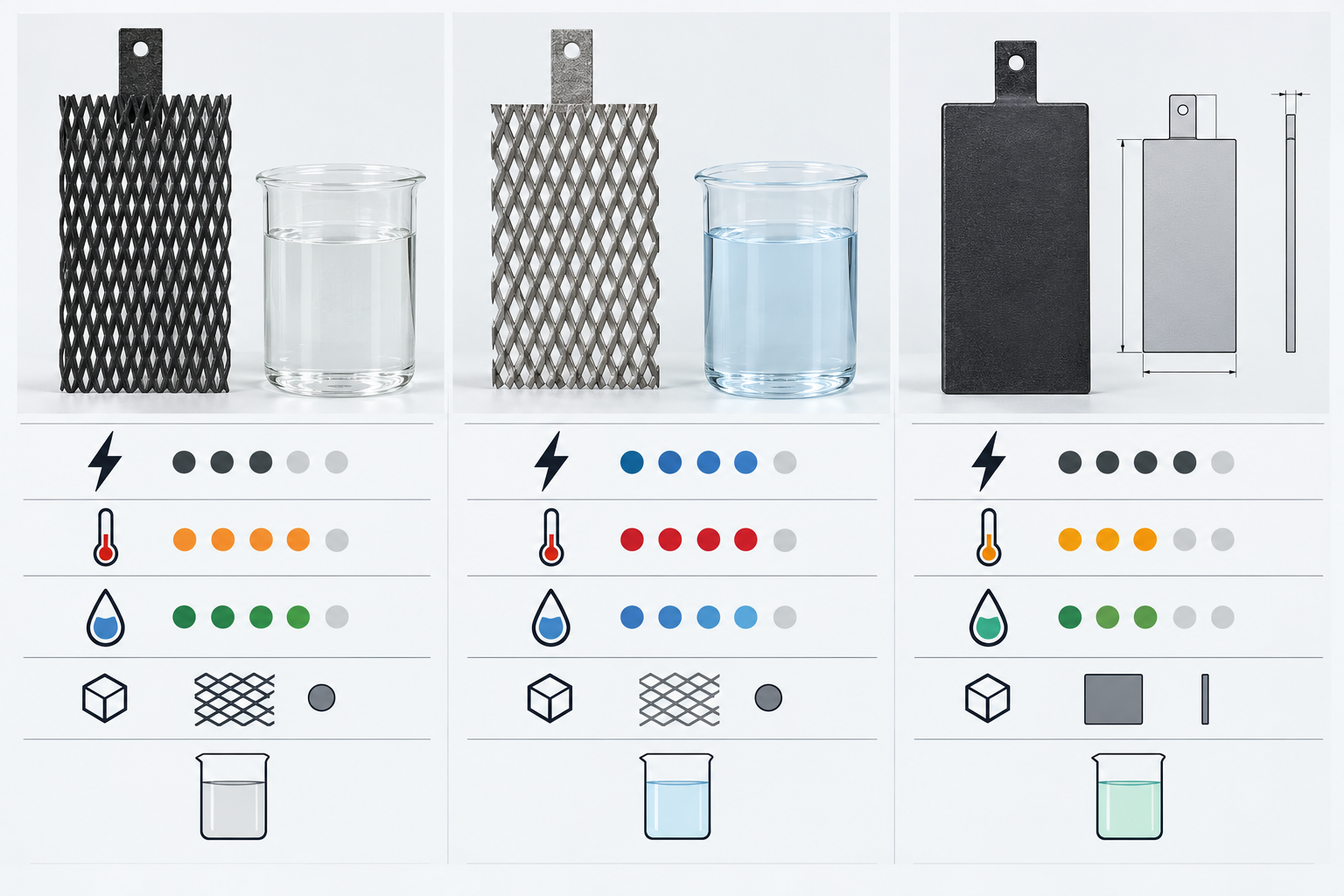
A Titanium electrode coating should match your target reaction and electrolyte rather than a familiar product label. MMO and platinized surfaces can serve different duties, so neither choice wins everywhere.
When does an MMO coating fit?
MMO families suit many chlorine- or oxygen-evolution duties when their oxide blend matches operating chemistry. Keep one rule in view. Tell your supplier:
- Whether chlorine, oxygen, or another reaction matters
- Which salts, acids, alkalis, and impurities are present
- How current density and duty cycle vary
When does platinized titanium make sense?
Platinized titanium can fit processes needing platinum behavior on a formed titanium base. Bath composition, temperature, current loading, and contamination limits still control suitability.
| Surface family | Selection focus | Common buyer mistake |
|---|---|---|
| Ru-containing MMO | Chloride duty and chlorine selectivity | Ordering by color alone |
| Ir-containing MMO | Oxygen-evolution environment | Ignoring acid and impurities |
| Platinized titanium | Bath compatibility and platinum loading | Assuming one thickness fits all |
Key Takeaway: Use coating names as a starting point, then qualify them against your actual duty. Define reaction and chemistry before asking which coating should be quoted.
4. How Do Operating Conditions Change Electrode Choice?

Your Titanium electrode will behave differently as electrolyte, current density, temperature, pH, impurities, and operating time change. A recommendation without these inputs rests on guesswork.
Which operating data affect coating choice?
Each parameter changes reaction demand or material stress. Bring operating data forward. Your inquiry should include:
- Full electrolyte composition and expected concentration range
- Normal and maximum current, temperature, and pH
- Continuous, intermittent, reversing, or startup duty
What happens when inputs remain incomplete?
Suppliers may add wide assumptions, quote a generic coating, or decline a life estimate. You then compare prices built around different technical guesses.
| Missing input | Hidden assumption | Possible result |
|---|---|---|
| Electrolyte range | One fixed composition | Poor reaction match |
| Peak current | Only nominal loading | Local coating stress |
| Temperature cycle | Room-temperature service | Faster wear than expected |
Key Takeaway: This table shows why a complete data sheet shortens technical clarification. Better operating data produces a narrower, more defensible electrode specification.
5. Which Titanium Electrode Shape Fits Your Cell?
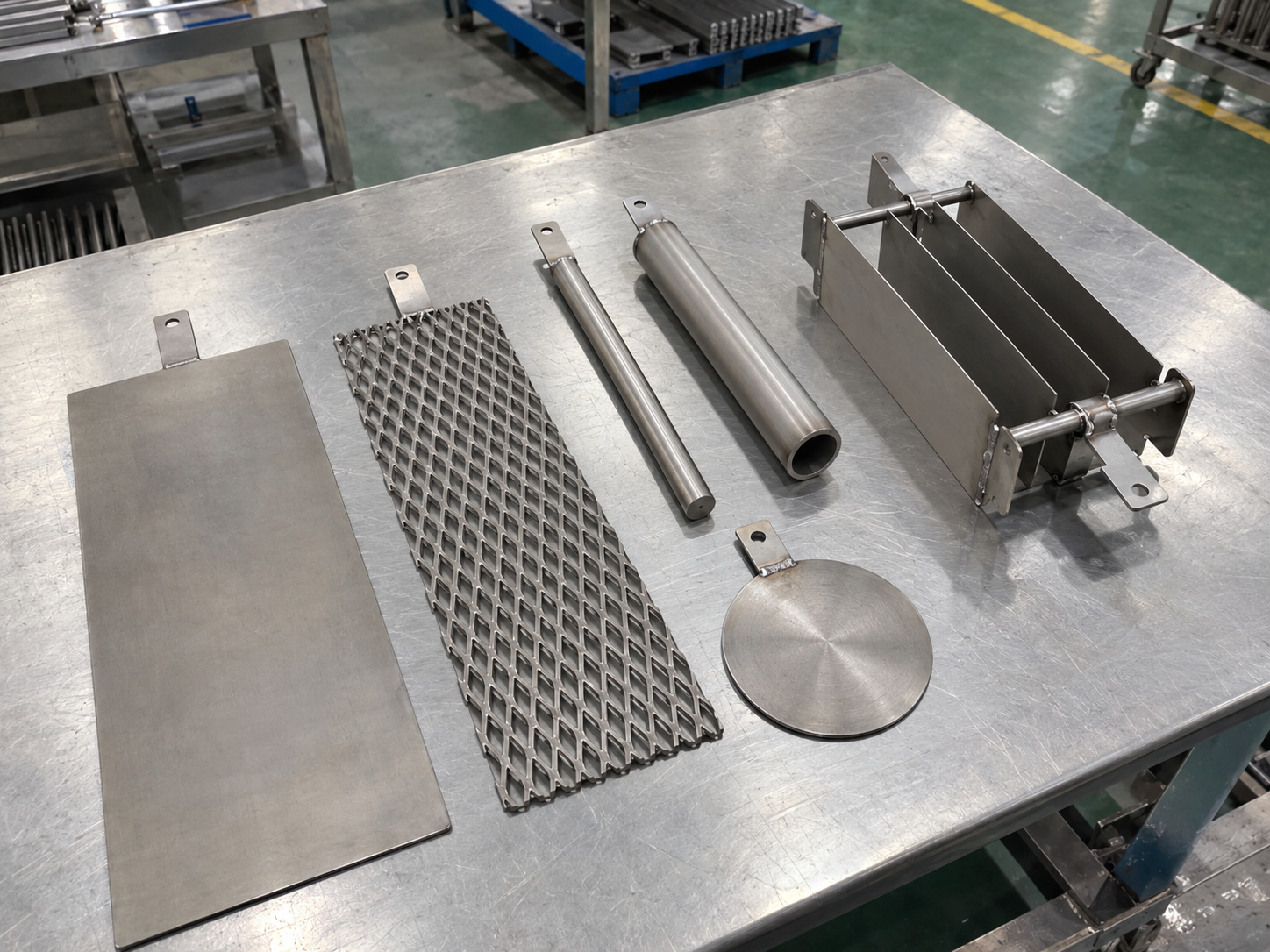
A Titanium electrode shape should fit current distribution, gas release, fluid movement, mounting space, and maintenance access. A coating cannot correct a geometry that blocks flow or misses its mating parts.
What do plate, mesh, tube, and rod forms change?
Each form exposes area and moves fluid differently. Fit comes before coating. Review these practical effects:
- Plate offers a flat working face and simple alignment.
- Mesh opens paths for circulation and bubble release.
- Tube or rod fits cylindrical and confined assemblies.
How should drawings control fit and connections?
Your drawing should mark active area, uncoated contact zones, mounting holes, welds, tolerances, and polarity. Approved dimensions need a revision number shared by buyer and supplier.
| Drawing control | What to define | Shop-floor check |
|---|---|---|
| Active zone | Coated boundaries | Masking and visual inspection |
| Mounting | Holes, tabs, spacing | Gauge or dimensional report |
| Connection | Weld, thread, busbar face | Fit and continuity check |
Key Takeaway: Use a controlled drawing so every repeat order matches one approved baseline. Freeze geometry, coated area, and connection detail before approving a sample.
6. Where Does a Titanium Electrode Work Best?

A Titanium electrode works best where a coated, dimensionally consistent surface can support a defined electrochemical duty. Suitable applications span disinfection, water treatment, plating, metal recovery, and custom electrolysis equipment.
Which industrial applications use coated titanium?
Application names help organize a discussion, but they do not finish selection. Match duty before industry labels. Common project groups include:
- Brine electrolysis and on-site disinfectant generation
- Wastewater oxidation and industrial water treatment
- Electroplating, electrowinning, and metal recovery
Which projects need extra technical review?
Mixed electrolytes, aggressive impurities, polarity changes, high heat, or unusual current cycles need closer review. Pilot testing may be smarter than relying on a catalog match.
| Project signal | Why it matters | Practical response |
|---|---|---|
| Mixed chemistry | Competing reactions may occur | Share full analysis |
| Variable load | Coating stress changes over time | Provide duty profile |
| New cell design | Flow and spacing remain unproven | Run a pilot set |
Key Takeaway: Use these signals to decide when a sample program should precede production. Application names guide discussion, while operating duty decides specification.
7. How Is a Titanium Electrode Manufactured?

A Titanium electrode is manufactured through substrate fabrication, surface preparation, coating application, controlled treatment, and inspection. Each stage affects adhesion, dimensions, and electrical consistency.
How are substrate and coating prepared?
Fabricators cut or form titanium before cleaning and activating its surface. Process control earns repeatability. A typical route covers:
- Cutting, forming, welding, and connection preparation
- Degreasing, cleaning, and controlled surface treatment
- Layered coating application with controlled thermal cycles
What should a buyer inspect before approval?
Inspect drawing conformity, coated boundaries, surface condition, connection quality, and sample identification. Ask which records follow each production batch.
| Production stage | Evidence to request | Defect it helps catch |
|---|---|---|
| Fabrication | Dimensional report | Misfit or warped parts |
| Surface preparation | Process record | Weak coating bond |
| Coating and finish | Batch and visual record | Uneven active surface |
Key Takeaway: This sequence links physical parts with records you can audit later. Repeat supply depends on controlled steps and traceable records, not appearance alone.
8. How Can You Verify Titanium Electrode Quality?

You can verify Titanium electrode quality by comparing drawings, material identity, active surface, electrical connections, and functional evidence. Your acceptance plan should reflect project risk and available test methods.
What should the supplier document?
Documentation should show what was made and which revision governed it. Evidence beats adjectives. Ask for records that fit your project:
- Material and drawing identification
- Dimensional and connection inspection
- Coating-process or functional test evidence
How should samples progress into repeat production?
Approve a physical sample and its records before releasing a pilot batch. The supplier's application-driven engineering capabilities should connect operating data with manufacturing controls.
| Approval stage | Buyer decision | Evidence retained |
|---|---|---|
| Prototype | Does design fit and operate? | Drawing, photos, test notes |
| Pilot batch | Does process repeat? | Inspection and batch records |
| Series order | Does supply stay consistent? | Part number and revision history |
Key Takeaway: Use stage gates so a good prototype does not hide unstable batch production. Approve data and physical parts together, then preserve both as your repeat-order baseline.
9. Why Does a Titanium Electrode Fail Early?
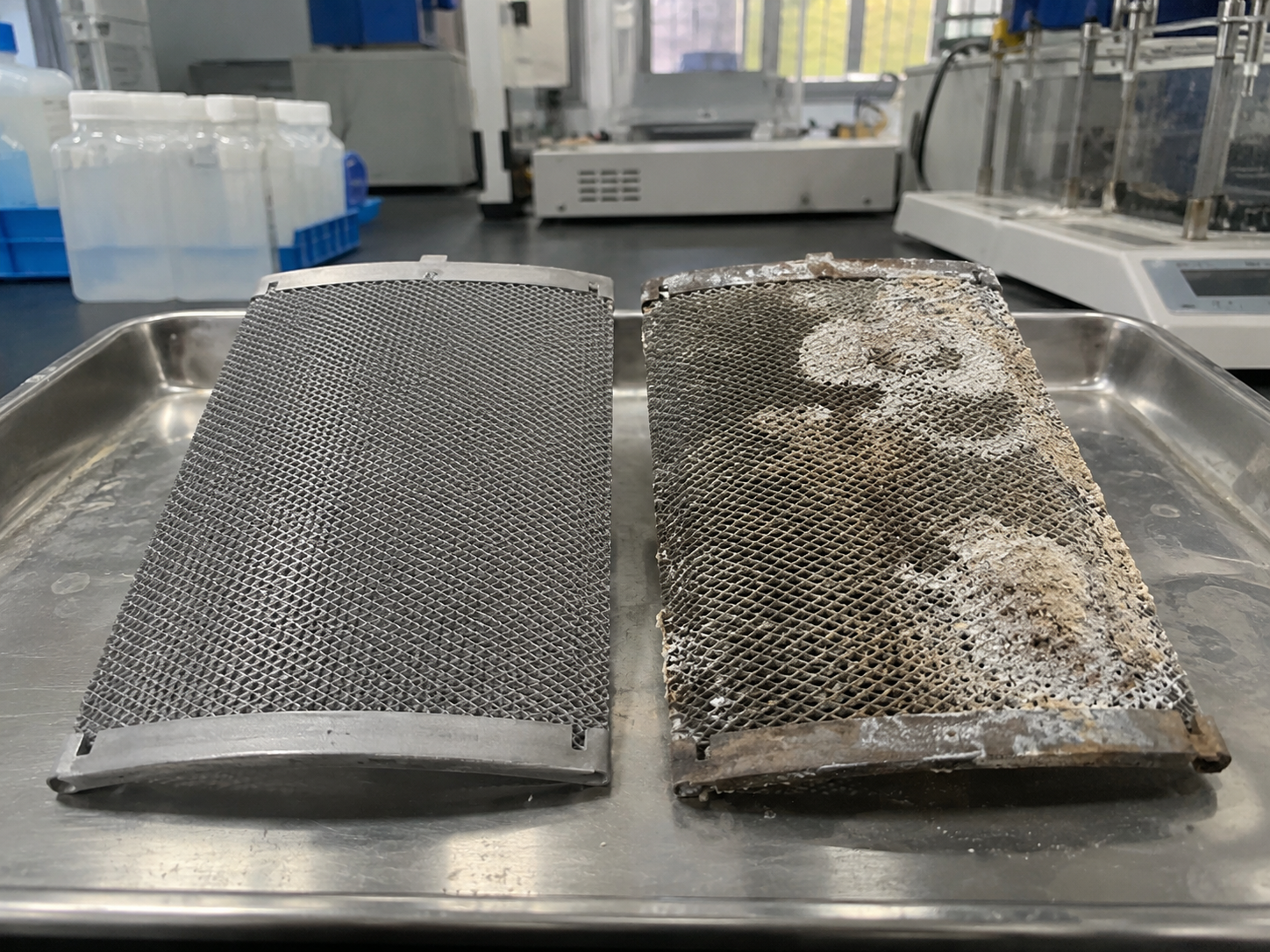
A Titanium electrode can fail early when coating duty, electrolyte, current loading, temperature, polarity, deposits, or handling fall outside its basis. Rising voltage or falling output often deserves investigation before replacement.
Which conditions shorten coating life?
Wear rarely has one cause. Watch trends, not one reading. Check these conditions before blaming a part:
- Current excursions or uneven distribution
- Scale, contamination, blocked flow, or gas trapping
- Reverse polarity, overheating, or mechanical scratches
How can operation and maintenance reduce risk?
Track voltage, current, output, temperature, and cleaning history under comparable conditions. Use cleaning methods approved for that coating and avoid tools that scratch active areas.
| Symptom | Possible cause | Next check |
|---|---|---|
| Voltage rises | Scale, contact loss, coating wear | Inspect surface and connections |
| Output falls | Chemistry drift or active-area loss | Check electrolyte and current |
| Local hot spot | Poor contact or current crowding | Review tab and busbar |
Key Takeaway: Treat this table as a diagnostic start rather than a remote failure verdict. Operating records help separate coating wear from cell, chemistry, and connection problems.
10. How Should You Specify a Titanium Electrode Project?

A Titanium electrode project should begin with operating data, a controlled drawing, a target reaction, and an agreed validation route. That package lets suppliers answer technical questions before quoting production.
What should your RFQ contain?
Your RFQ should describe duty before asking for price. Use our technical inquiry page to send a structured project brief. Make your RFQ do real work. Include:
- Electrolyte composition, pH, temperature, and impurities
- Current, voltage, duty cycle, polarity, and target reaction
- Drawing, active area, connection, quantity, and test plan
How do you move from sample to repeat supply?
Freeze an approved sample, drawing revision, inspection method, and part number before scaling.
| Stage | Release condition | Record to keep |
|---|---|---|
| Technical review | Duty and risks are understood | Agreed input sheet |
| Sample | Fit and operation pass | Approved drawing and results |
| Repeat supply | Pilot consistency passes | Part number and control plan |
Key Takeaway: This route turns a broad inquiry into a controlled sourcing decision. Start with operating evidence, validate a sample, and scale only after your acceptance basis holds. We match coating choices to operating duty and release production against measured evidence. When your inputs are ready, contact us today for a drawing and duty review.
Frequently Asked Questions
Can I use bare titanium as an anode? Usually, no. Bare titanium develops a passive surface that restricts sustained anodic current, so most working anodes need a suitable catalytic coating.
What is the best coating for saltwater electrolysis? Start with a coating designed around chloride duty, then check concentration, temperature, current density, impurities, and target product. A supplier needs those inputs before giving a responsible recommendation.
How do I know if an MMO or platinum surface fits my cell? Define your target reaction, bath chemistry, contamination limits, current loading, and geometry. Compare both options against that same operating sheet.
Can I order a titanium electrode from my own drawing? Yes, when a supplier accepts drawing-based fabrication. Mark active coating zones, contact areas, dimensions, tolerances, mounting features, and revision status.
How do I know if an old electrode needs recoating? Check performance trends, surface condition, deposits, connections, and electrolyte before deciding. A qualified supplier can inspect substrate condition and confirm whether recoating remains practical.