
An MMO titanium anode uses a titanium base and a conductive mixed-metal-oxide surface to support a defined anodic reaction. The base carries mechanical loads while the coating transfers charge into electrolyte.
Your cell can lose output, draw more voltage, or wear unevenly when chemistry, current, and geometry do not match that surface. A workable specification starts with reaction duty and operating data, then moves through coating, shape, inspection, and sample validation.
1. What Makes an MMO Titanium Anode Different?
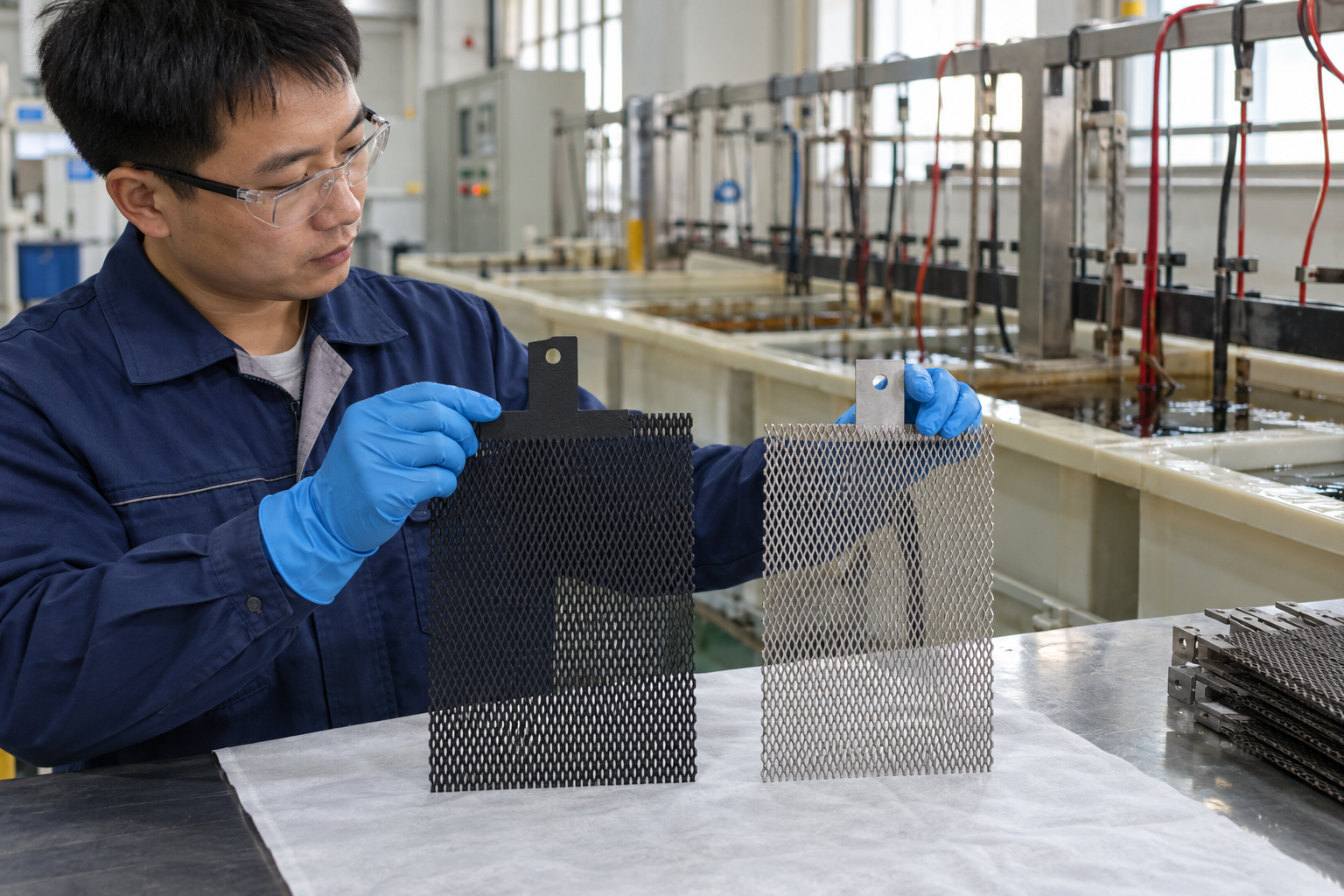
An MMO titanium anode differs from bare titanium because its oxide layer remains conductive and catalytically active during the intended duty. Bare titanium naturally passivates and cannot replace a qualified coating.
How do substrate and coating divide the job?
Titanium supplies shape, strength, and a fabricable current path. Start with the working surface. A buyer should separate three specifications:
- Titanium grade, form, thickness, and welded features
- Coated area, uncoated contact zone, and edge treatment
- Oxide family selected for the target reaction
What should a quotation identify?
A useful quotation identifies more than dimensions and a generic MMO label. It states the design basis and lists missing operating inputs before making performance assumptions.
| Quotation item | Buyer question | Risk if absent |
|---|---|---|
| Reaction basis | Which anodic reaction controls selection? | Wrong catalyst family |
| Active geometry | Which surfaces receive coating? | Unplanned current crowding |
| Connection | How does current enter the part? | Heat or voltage loss |
Key Takeaway: Treat substrate, active coating, and connection as three linked specifications rather than one catalog description.
2. How Does the Coating Transfer Charge?
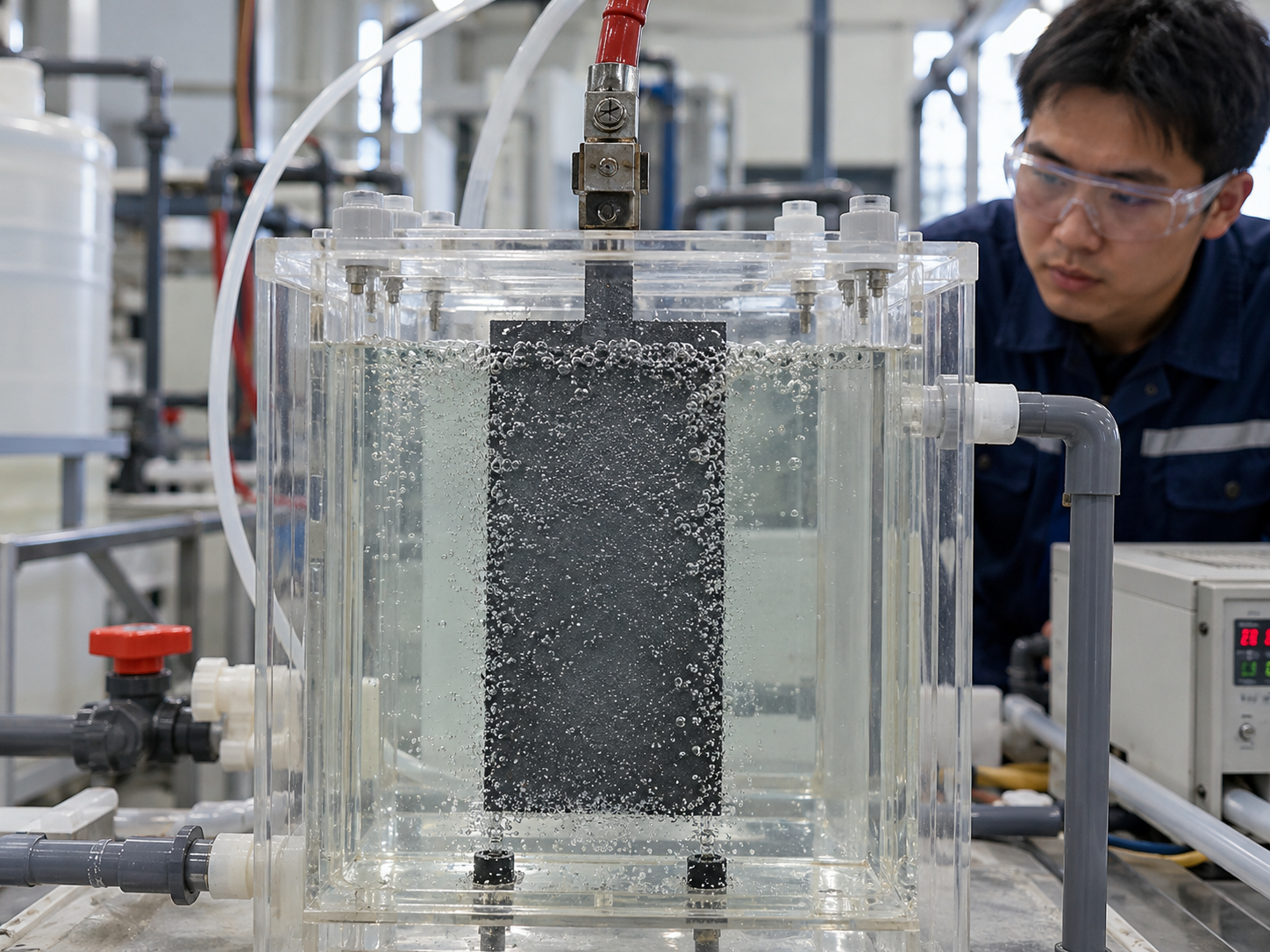
An MMO titanium anode transfers charge through conductive oxides at its wetted surface. Reaction products then leave through liquid flow or gas release around that active area.
What happens at the anode surface?
Ions reach catalytic sites and participate in oxidation reactions. Follow the full path. Your design review should include:
- Electrical contact from rectifier to busbar and anode tab
- Current distribution across the active surface
- Removal of gas, heat, and reaction products
Which cell factors change that behavior?
Conductivity, gap, flow, temperature, and electrode area affect cell voltage and local loading. A coating that works in one cell may behave differently after a geometry change.
| Cell factor | Main effect | Evidence to collect |
|---|---|---|
| Electrode gap | Solution resistance | Installed spacing |
| Active area | Current density | Exposed dimensions |
| Flow path | Bubble and heat removal | Flow direction and rate |
Key Takeaway: Evaluate an MMO surface as part of a complete electrical and hydraulic cell, not as an isolated material.
3. Which Reaction Should the Coating Support?
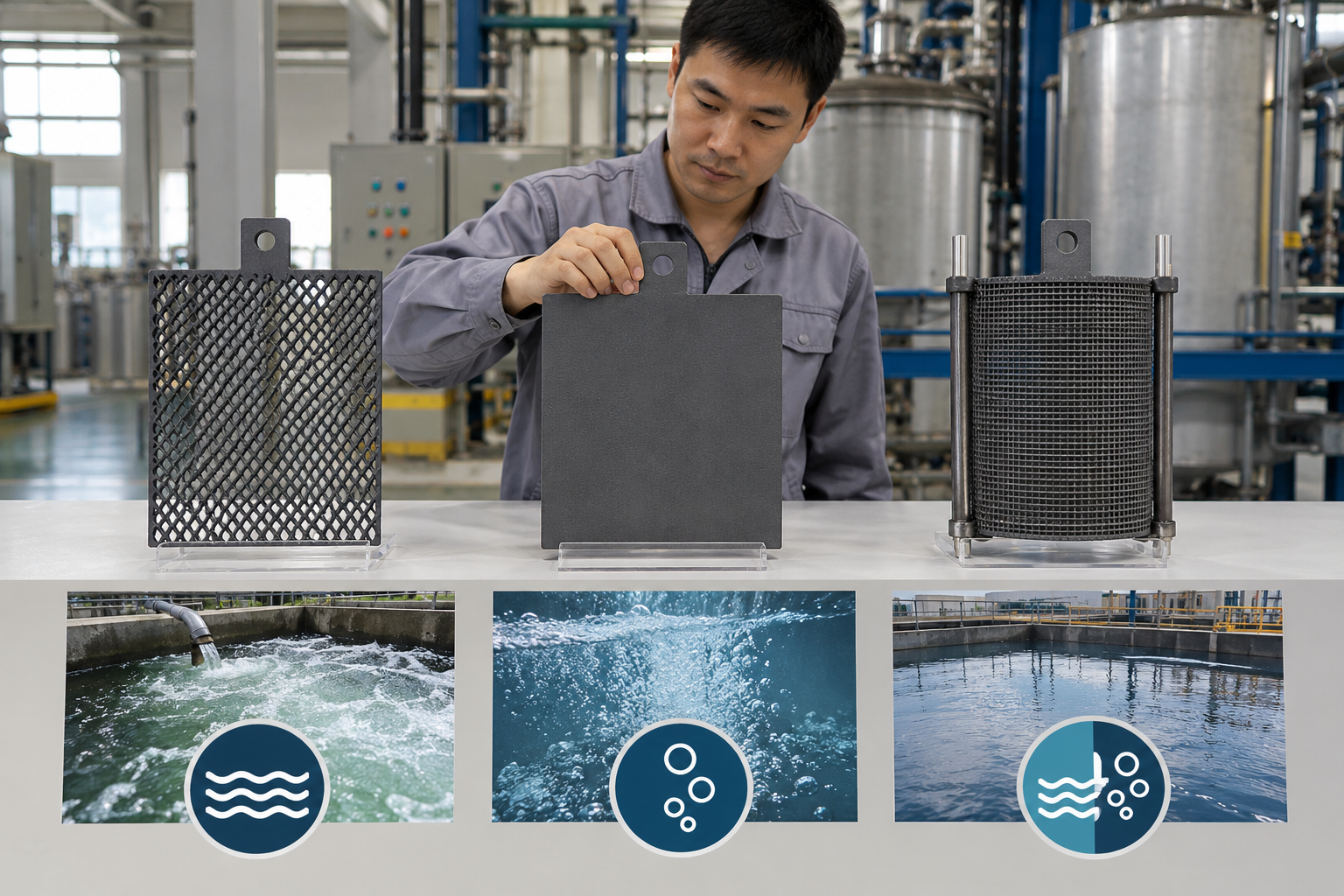
An MMO titanium anode should be matched to the reaction your process needs, such as chlorine evolution or oxygen evolution. Similar-looking coatings can serve different electrochemical duties.
Why does electrolyte chemistry matter?
Chloride, sulfate, acidity, alkalinity, and impurities change available reactions. Name the product reaction first. Send your supplier:
- Full electrolyte composition and concentration range
- Target anodic product or treatment objective
- Expected competing reactions and purity limits
Why is one MMO recipe not universal?
Oxide composition changes catalytic behavior and stability under different reactions. A supplier should explain selection logic without revealing proprietary formulation details.
| Duty | Selection focus | Common mistake |
|---|---|---|
| Chlorine evolution | Selectivity in chloride media | Quoting oxygen-duty coating |
| Oxygen evolution | Stability under oxidative loading | Assuming ruthenium fits every bath |
| Mixed wastewater | Competing reactions and byproducts | Ignoring matrix variation |
Key Takeaway: Define electrolyte and reaction before discussing price, coating loading, or expected service interval.
4. Which Operating Data Control Anode Selection?

An MMO titanium anode selection depends on current density, temperature, pH, electrolyte range, impurities, and duty cycle. Missing limits force a supplier to quote against assumptions rather than your real process.
What belongs in the operating sheet?
Use normal, minimum, and maximum values where conditions vary. Bounds matter more than one nominal point. Include:
- Current, voltage, runtime, shutdowns, and polarity
- Temperature, pH, conductivity, and chemical analysis
- Target output, cell count, flow, and cleaning routine
How should variable duty be described?
Record startup peaks, intermittent operation, seasonal chemistry, and upset conditions separately. Averages can hide the short events that drive local wear.
| Data type | Normal value | Limit to add |
|---|---|---|
| Electrical | Running current | Startup and maximum current |
| Chemical | Typical composition | Impurity and concentration range |
| Thermal | Normal temperature | Maximum and cycling pattern |
Key Takeaway: A bounded operating sheet produces a narrower specification and a more meaningful sample test.
5. How Does Geometry Affect MMO Performance?
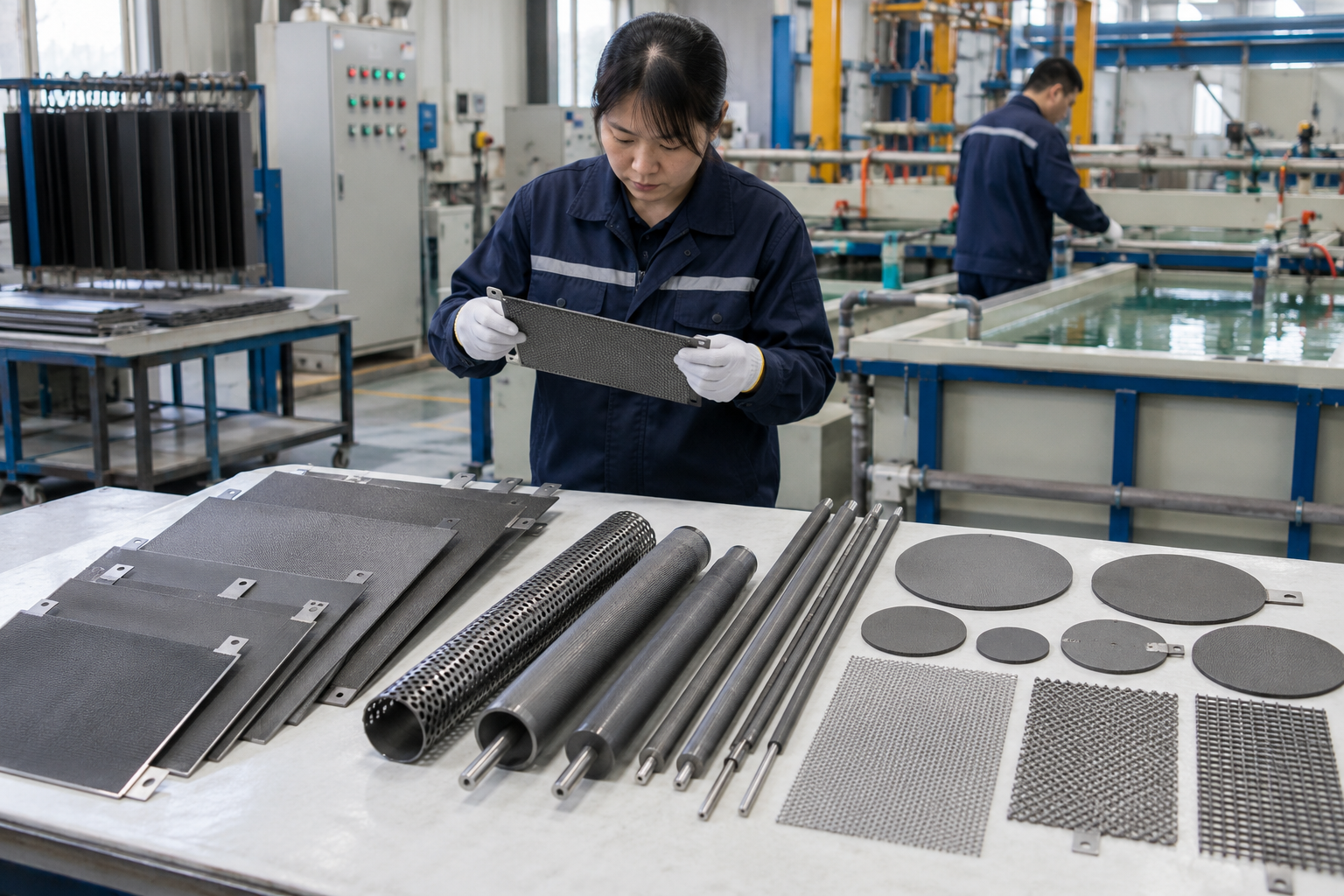
An MMO titanium anode geometry affects current distribution, liquid movement, gas release, installation, and cleaning access. Coating chemistry cannot correct a part that fits poorly inside the cell.
When do plate, mesh, tube, or rod forms help?
Each form changes exposed area and transport around the surface. Geometry earns its place through function. Compare:
- Plate for flat working faces and controlled spacing
- Mesh for open flow and gas-release paths
- Tube or rod for cylindrical or confined assemblies
What must the drawing control?
The drawing should mark coated boundaries, contact faces, holes, welds, tolerances, polarity, and assembly spacing. Revision control keeps approved samples tied to repeat orders.
| Drawing field | Why it matters | Inspection method |
|---|---|---|
| Active boundary | Defines working area | Visual and dimensional check |
| Mounting features | Controls cell fit | Fixture or gauge |
| Electrical tab | Controls connection loss | Fit and continuity test |
Key Takeaway: Freeze geometry and coated area before coating approval, because both control real current density.
6. How Is an MMO Titanium Anode Manufactured?

An MMO titanium anode is manufactured through fabrication, surface preparation, repeated coating application, controlled thermal treatment, and inspection. Each step affects adhesion, uniformity, and repeatability.
Why is surface preparation critical?
Oil, oxide, and inconsistent roughness can weaken the coating interface. Clean metal is only the starting point. Process control covers:
- Degreasing and removal of fabrication residue
- Controlled activation of the titanium surface
- Protection from contamination before coating
How are coating layers built?
Proprietary precursor solutions are applied and thermally converted in controlled cycles. The supplier should keep batch records for materials, cycles, and inspection results.
| Manufacturing stage | Record | Failure it helps prevent |
|---|---|---|
| Fabrication | Drawing inspection | Poor fit or warping |
| Surface preparation | Process log | Weak adhesion |
| Coating cycles | Batch traveler | Uneven active surface |
Key Takeaway: Repeatable anodes come from controlled preparation and coating cycles, supported by records you can audit.
7. How Should You Inspect an MMO Anode?

An MMO titanium anode inspection should cover dimensions, active surface, connection quality, identification, and agreed functional evidence. Color alone cannot prove coating suitability or loading.
Which incoming checks are practical?
Start with criteria that match your drawing and process risk. Evidence beats surface appearance. Useful checks include:
- Dimensions, flatness, holes, tabs, and coated boundaries
- Surface damage, contamination, and packaging condition
- Part number, revision, batch, and inspection record
When is functional testing needed?
Pilot-cell testing helps when chemistry, geometry, or loading differs from past projects. Compare voltage, current, output, temperature, and visible surface change under controlled conditions.
| Check level | Purpose | Release decision |
|---|---|---|
| Dimensional | Confirm fit | Assembly approval |
| Documentation | Confirm identity | Traceability approval |
| Functional | Confirm process behavior | Pilot or production approval |
Key Takeaway: Build acceptance around measurable fit and function, then preserve approved evidence for repeat orders.
8. What Causes Premature MMO Anode Failure?
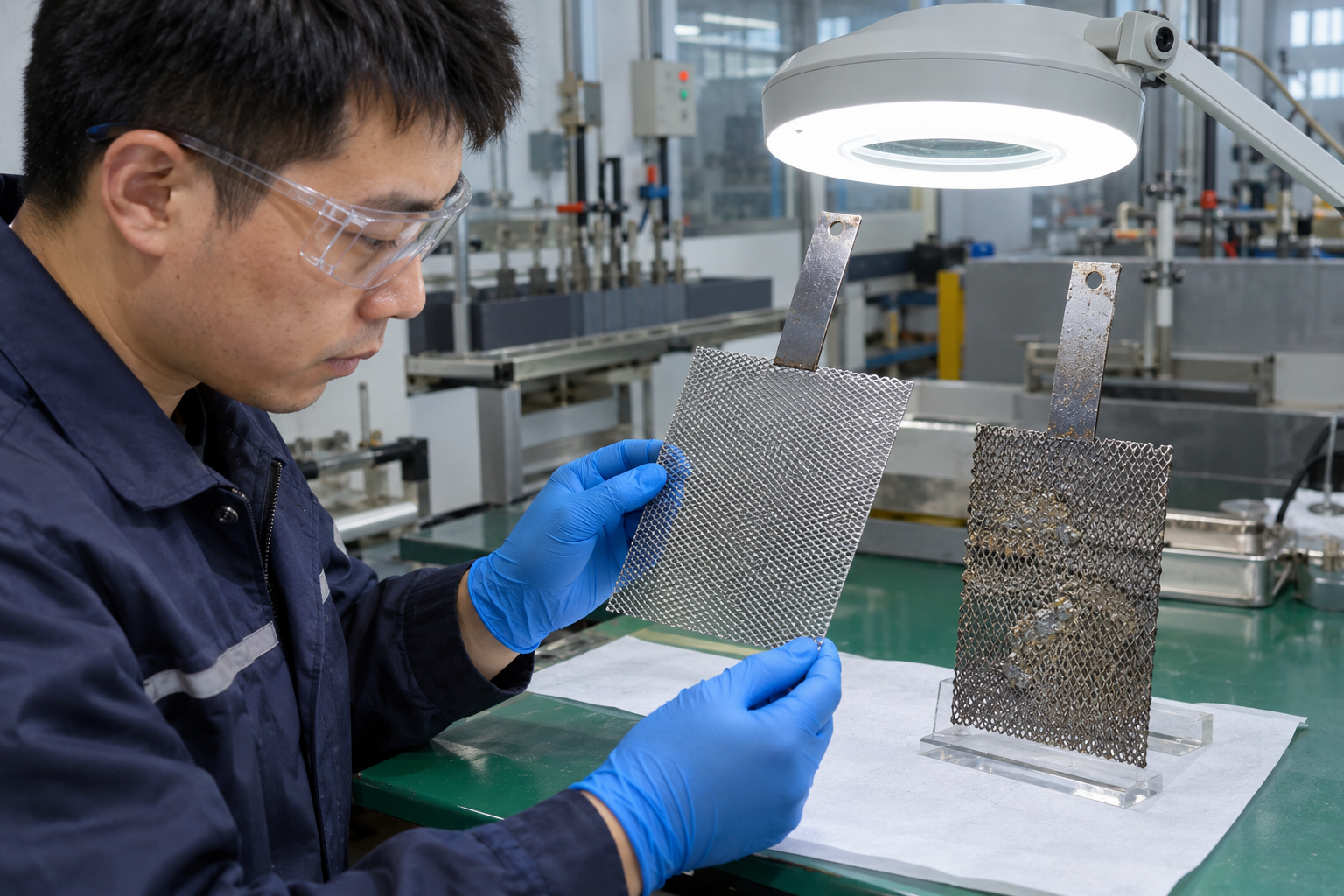
An MMO titanium anode can fail early when chemistry, current, temperature, polarity, scale, flow, or handling falls outside its design basis. A rising cell voltage deserves diagnosis before a replacement order.
Which operating conditions create risk?
Failure often has several contributing causes. Check the system before blaming one part. Review:
- Current excursions and uneven loading
- Chemistry drift, impurities, deposits, and blocked flow
- Reverse polarity, dry operation, impact, or scratching
How does quality control narrow the cause?
The site's quality-control process can provide baseline dimensions and batch evidence. Your operating log supplies the matching field history.
| Symptom | Possible source | First check |
|---|---|---|
| Voltage rise | Scale, contact loss, coating wear | Surface and connection |
| Output loss | Chemistry or active-area change | Electrolyte and current |
| Local hot spot | Poor contact or current crowding | Tab, weld, and busbar |
Key Takeaway: Combine batch evidence with operating trends to separate coating wear from cell and process problems.
9. When Should You Pilot-Test an MMO Anode?
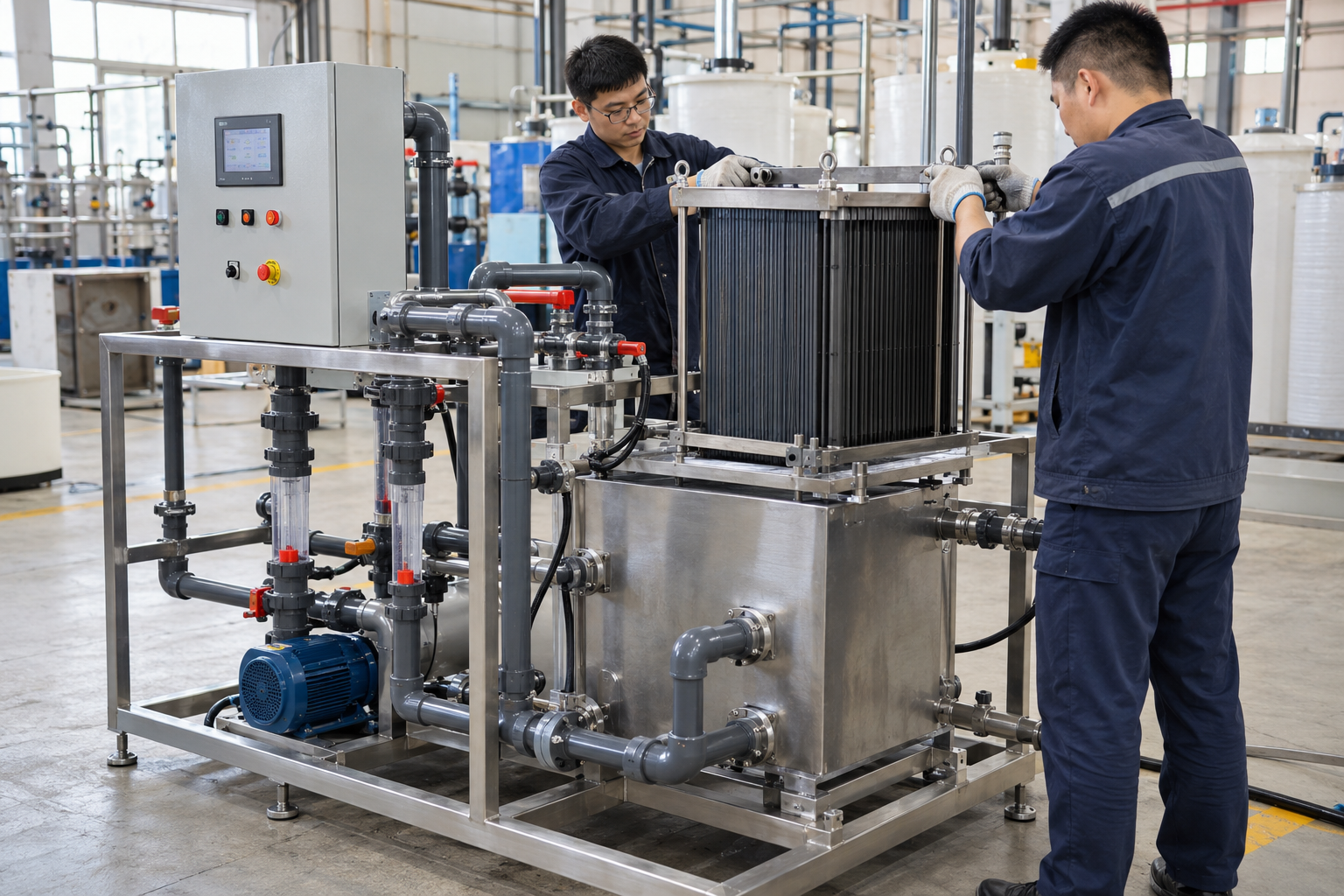
An MMO titanium anode should be pilot-tested when chemistry, geometry, current, or process targets fall outside an approved baseline. A sample reduces risk only when its test matches production duty.
What should a pilot plan measure?
Select measurements tied to your buying decision. A test needs a release rule. Record:
- Voltage and current at defined operating points
- Product output or treatment response
- Temperature, flow, cleaning, and surface condition
How do you move from pilot to repeat supply?
Approve the sample, drawing, operating assumptions, and inspection method together. Then compare the pilot batch with that frozen baseline before scaling.
| Stage | Question | Required record |
|---|---|---|
| Sample | Does design fit and operate? | Drawing and test results |
| Pilot batch | Does production repeat? | Batch inspection |
| Series order | Does field behavior remain stable? | Part and revision history |
Key Takeaway: A pilot is useful when it has defined conditions, measurements, acceptance limits, and retained evidence.
10. What Should an MMO Anode RFQ Include?

An MMO titanium anode RFQ should include reaction duty, complete electrolyte data, electrical limits, geometry, quantities, and a validation plan. That package lets engineering questions happen before price comparison.
Which files and values should you send?
Use a controlled drawing and an operating-data sheet. Make the RFQ answerable. Include:
- Electrolyte, pH, temperature, impurities, and target reaction
- Current, voltage, duty cycle, output, flow, and spacing
- Drawing revision, active area, connection, quantity, and test plan
How should supplier responses be compared?
Use the same input set for every supplier and list any exceptions. The site's custom-service workflow can organize drawing review and sample validation.
| Comparison field | Acceptable response | Warning sign |
|---|---|---|
| Selection basis | Tied to supplied duty | Generic coating claim |
| Drawing control | Confirmed revision | Unmarked assumptions |
| Validation | Defined sample route | No acceptance method |
Key Takeaway: Compare suppliers against one technical baseline. When your data and drawing are ready, contact us today for an application review.
Frequently Asked Questions
Can I use bare titanium instead of an MMO anode? Usually, no. Bare titanium passivates, while an MMO surface supplies the conductivity and catalytic activity needed for the intended anodic duty.
What is the best MMO coating for every electrolyte? No universal coating fits every electrolyte. Selection depends on reaction, chemistry, current, temperature, impurities, and operating cycle.
How do I know if mesh or plate is better? Compare current distribution, flow, gas release, space, mounting, and cleaning access. The answer belongs to your cell design.
Can I order an MMO anode from my own drawing? Yes, when the supplier accepts drawing-based work. Mark coating boundaries, contacts, tolerances, welds, and revision status.
How do I know if an MMO anode is worn? Review output, voltage, surface condition, deposits, contacts, and chemistry together. A single visual change does not prove end of life.