
A bare Titanium electrode passivates because its surface forms a protective oxide film. That behavior helps explain corrosion resistance but can limit charge transfer for an intended anodic process. You may connect an uncoated plate and see current change without obtaining the output expected from a coated anode. Define the electrode's role and working surface before treating bare titanium as a substitute.
1. Why Does a Bare Titanium electrode Form an Oxide Film?
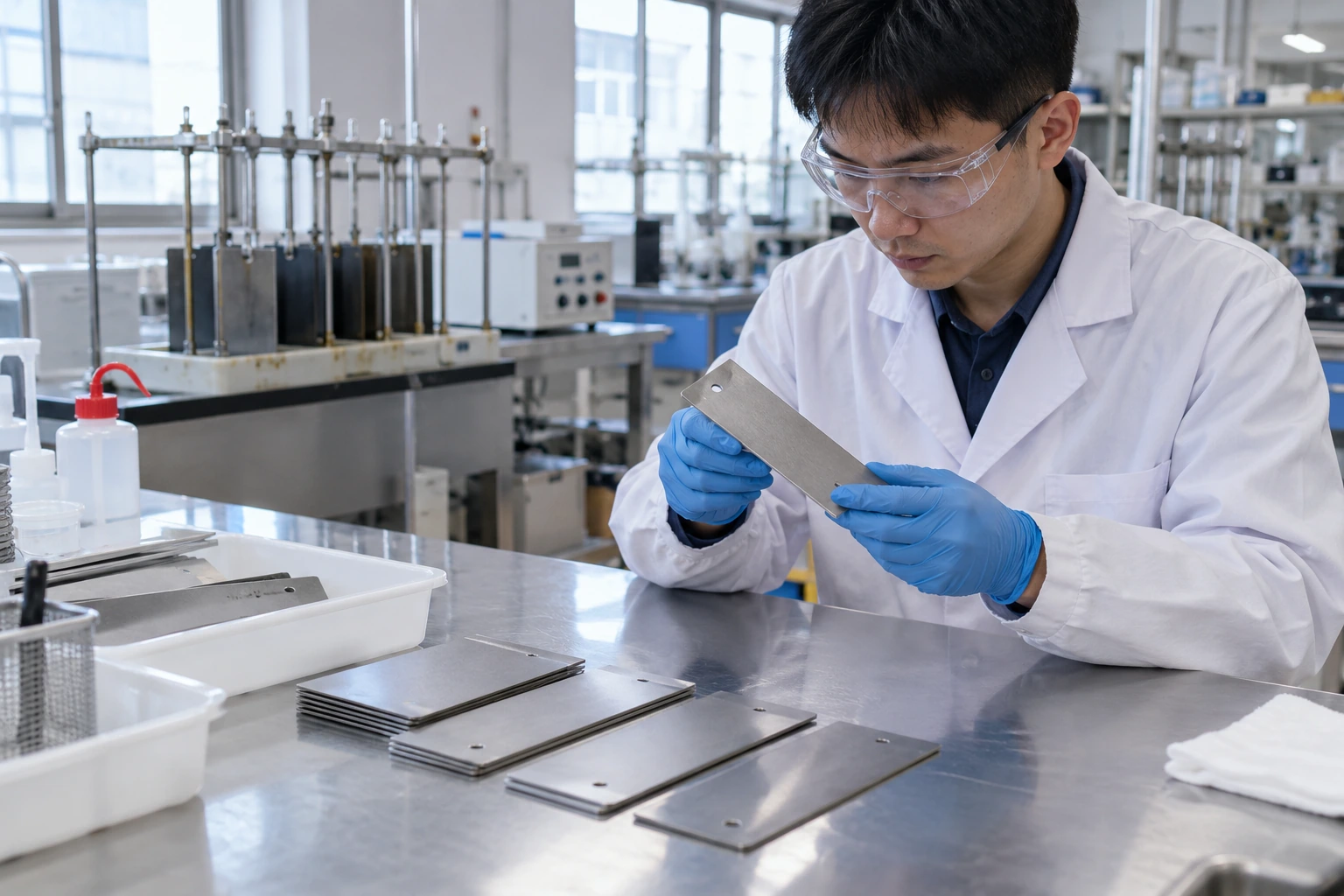
A bare Titanium electrode forms a protective oxide film through interaction with its environment. The film's behavior depends on chemical and electrochemical conditions.
Why does that matter for selection?
Separate corrosion protection from catalytic function. A stable surface can resist attack while failing to support the desired reaction efficiently. Material durability and process suitability need different evidence.
- Identify the intended electrode role.
- Describe the surrounding chemistry.
| Check | Decision |
|---|---|
| Protective film | Helps limit corrosion under suitable conditions |
| Active surface | Must support the specified reaction |
Resistance to corrosion does not establish a useful anodic catalyst. Key Takeaway: Choose the working surface for its reaction duty.
2. How Does Titanium electrode Passivation Affect Current?
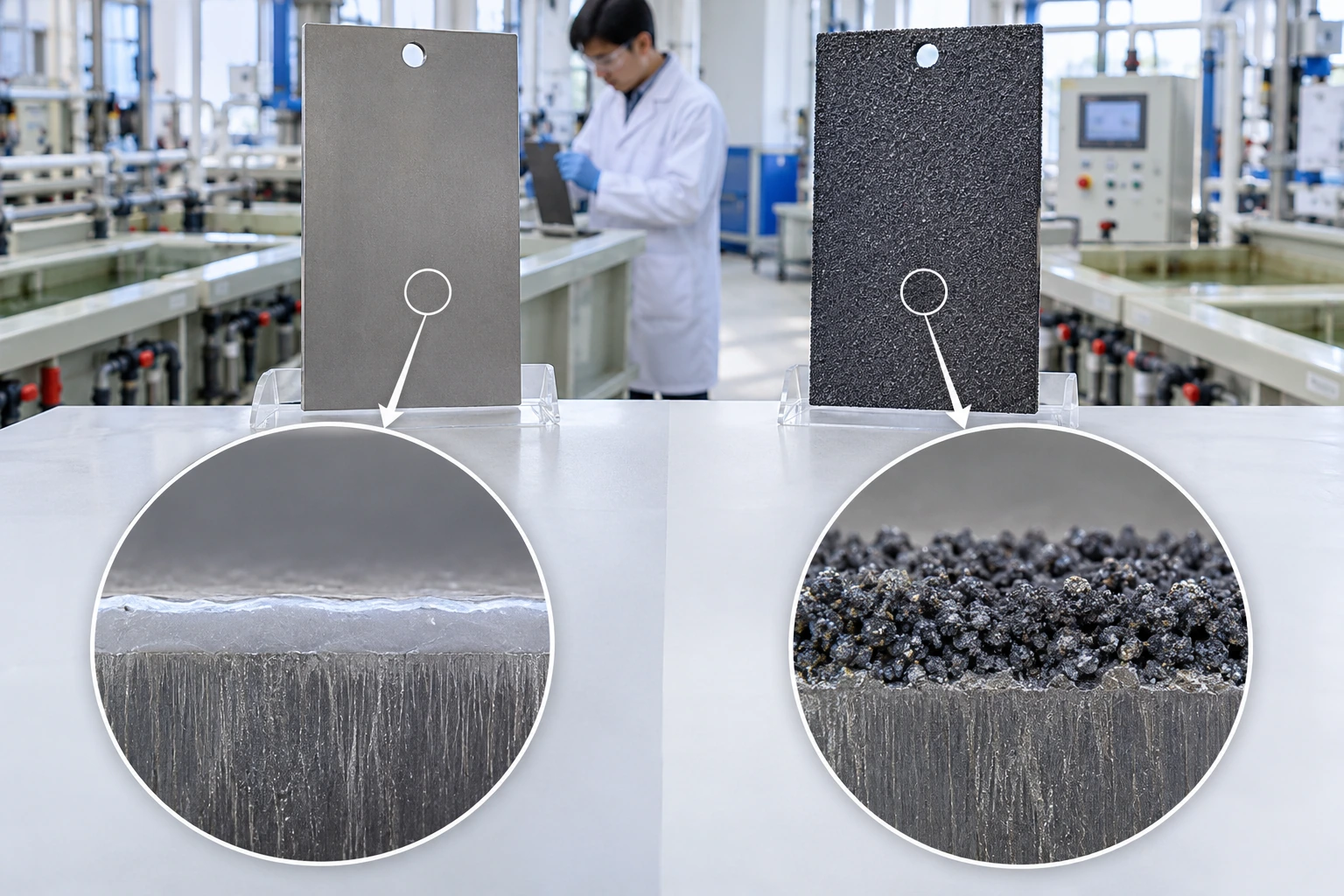
Titanium electrode passivation can change charge transfer at the surface and therefore affect current or voltage behavior. The effect depends on the cell's control mode and chemistry.
How should you interpret an electrical change?
Record how the power supply is controlled. A constant-voltage test and constant-current test can show different responses. Keep area, electrolyte and temperature in the record.
- State control mode and setpoints.
- Measure output as well as electrical values.
| Check | Decision |
|---|---|
| Constant voltage | Allows current response to change |
| Constant current | Can require changing voltage |
Electrical behavior must be interpreted within its control conditions. Key Takeaway: Use a defined test before assigning a surface cause.
3. Is a Bare Titanium electrode the Same as an MMO Anode?
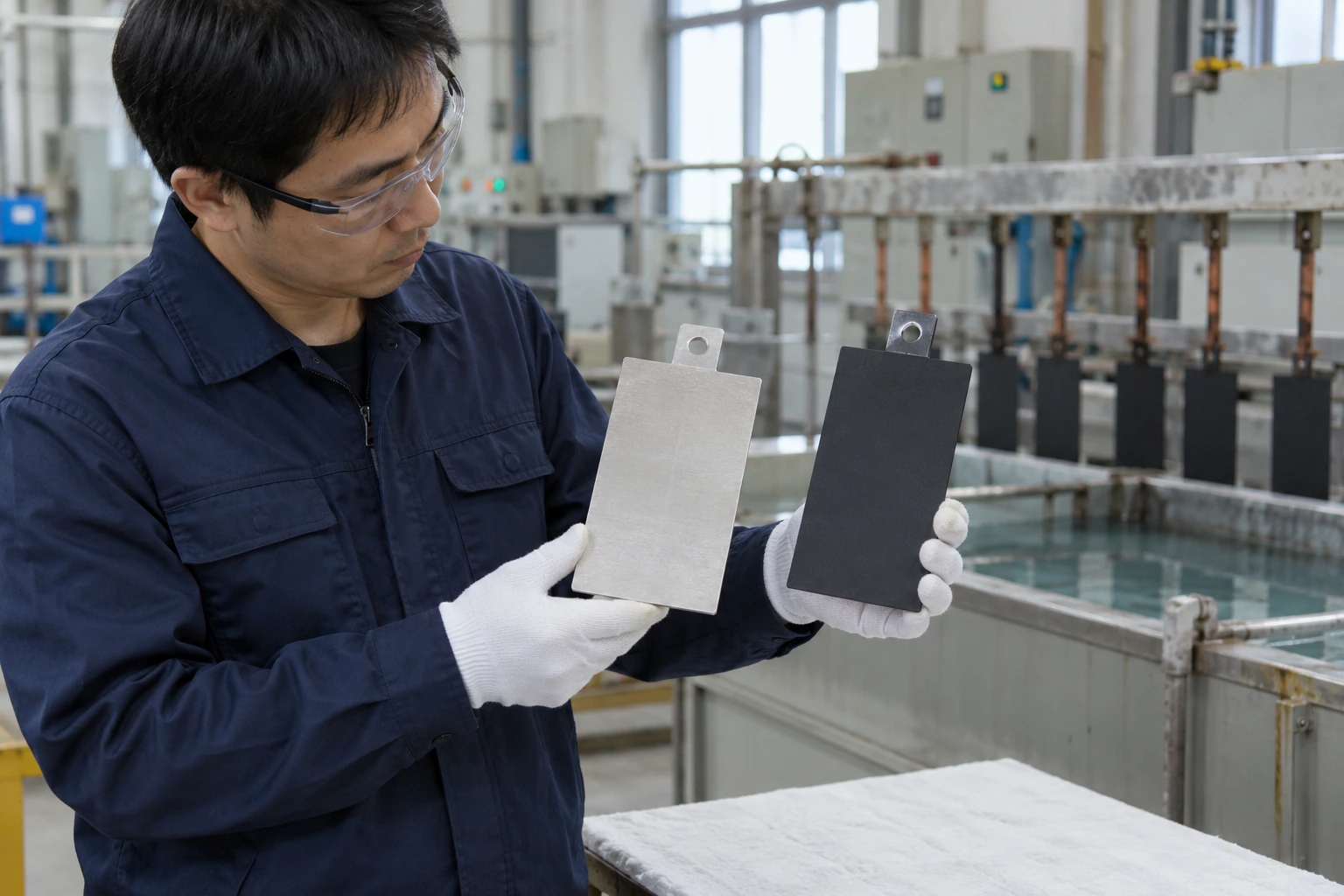
A bare Titanium electrode is not equivalent to an MMO-coated anode because the active working surface differs. Similar shape and substrate do not establish similar catalytic behavior.
What should a replacement comparison include?
Compare the complete surface specification. Identify coating family, active boundaries and reaction duty. A titanium material certificate cannot establish MMO conformity.
- Record substrate and coating separately.
- Check application-specific functional evidence.
| Check | Decision |
|---|---|
| Bare titanium | Has its natural surface behavior |
| Coated titanium | Uses a specified active layer |
Outside dimensions can match while electrochemical behavior differs. Key Takeaway: Do not substitute by substrate name alone.
4. Can a Titanium electrode Work as a Cathode?
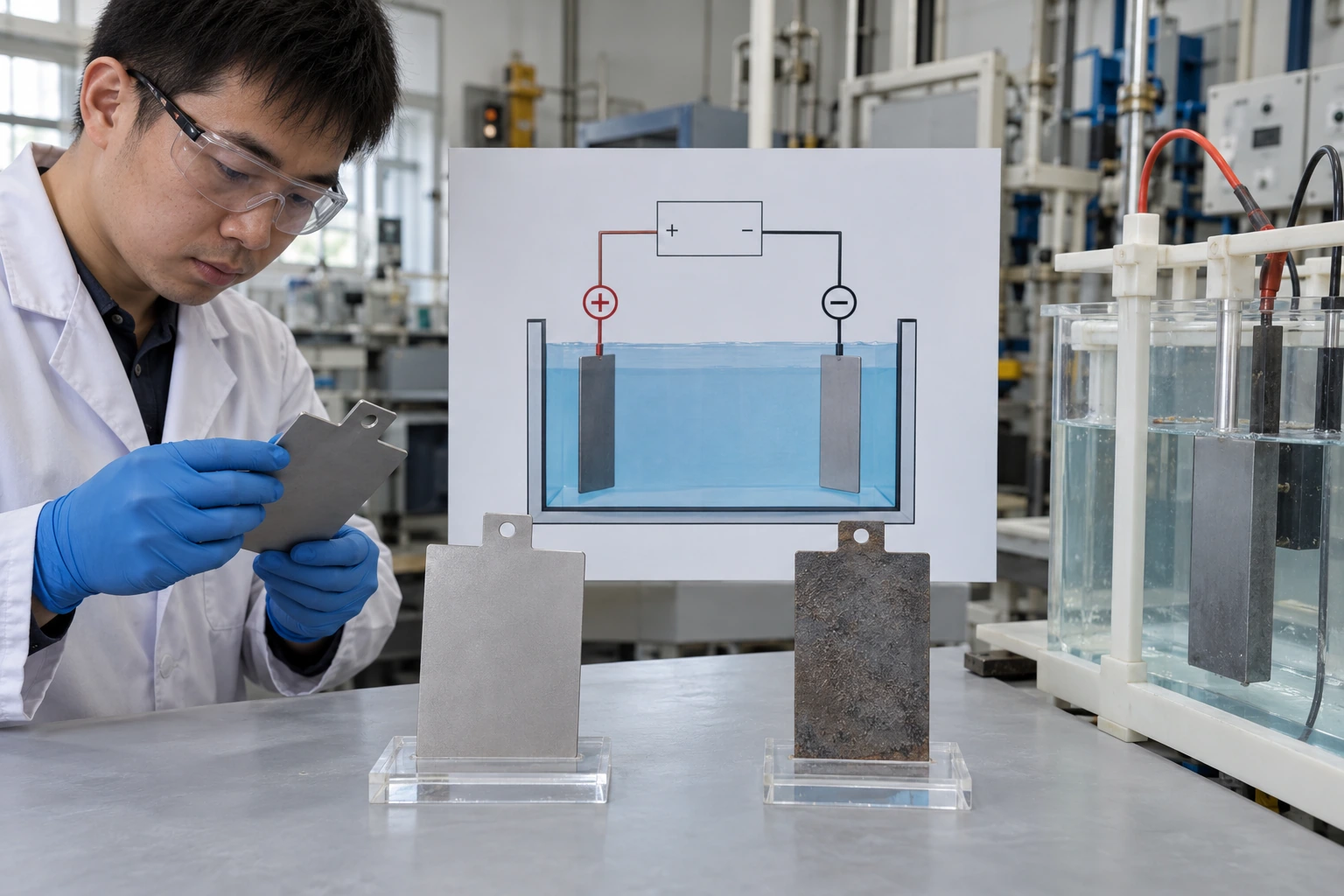
A Titanium electrode may serve as a cathode when the complete material and operating specification supports that role. Cathodic suitability cannot be inferred from anodic performance.
What must a role-specific review include?
State the polarity and reaction explicitly. A custom engineering review needs chemistry, current and operating sequence. Review both directions if reversal is intended.
- Identify the intended cathodic reaction.
- Include cleaning and shutdown exposure.
| Check | Decision |
|---|---|
| Anodic qualification | Addresses oxidation duty |
| Cathodic qualification | Addresses a different operating role |
One electrode role does not automatically qualify the other. Key Takeaway: Assess the actual polarity and duty.
5. Why Can a Coated Titanium electrode Lose Activity?
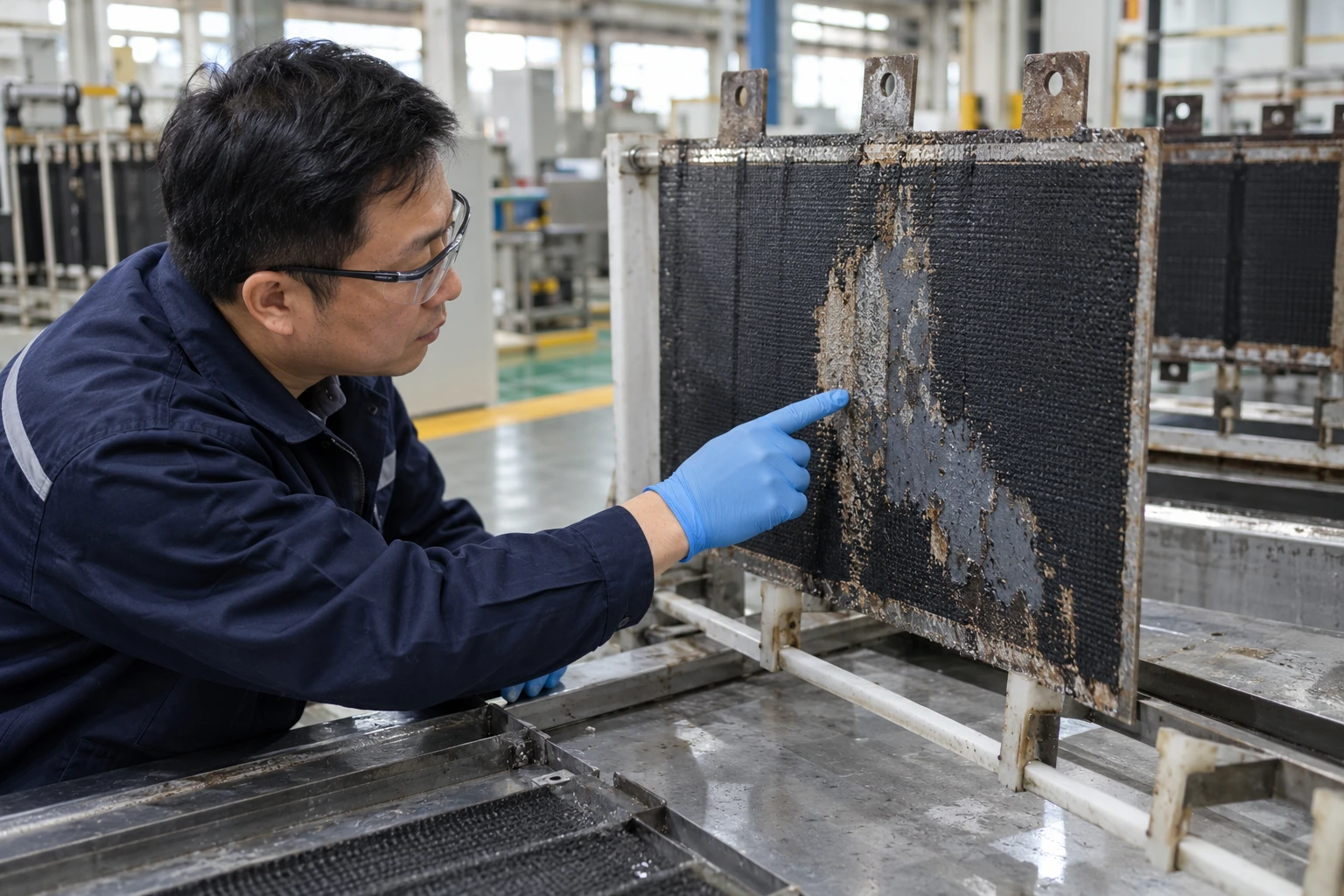
A coated Titanium electrode can lose activity through coating change, deposits, damaged regions or altered operating conditions. Exposed substrate is one possible concern rather than a universal diagnosis.
How should a field-return investigation begin?
Preserve the surface before cleaning. Photograph location and extent of the change. Compare operating records and connection condition with the approved baseline.
- Identify local damage and deposits.
- Retain batch and service history.
| Check | Decision |
|---|---|
| Surface evidence | Locates visible changes |
| Operating evidence | Provides exposure context |
A voltage change alone cannot identify coating depletion or passivation. Key Takeaway: Use several independent observations.
6. Can Scratching Restore a Titanium electrode?
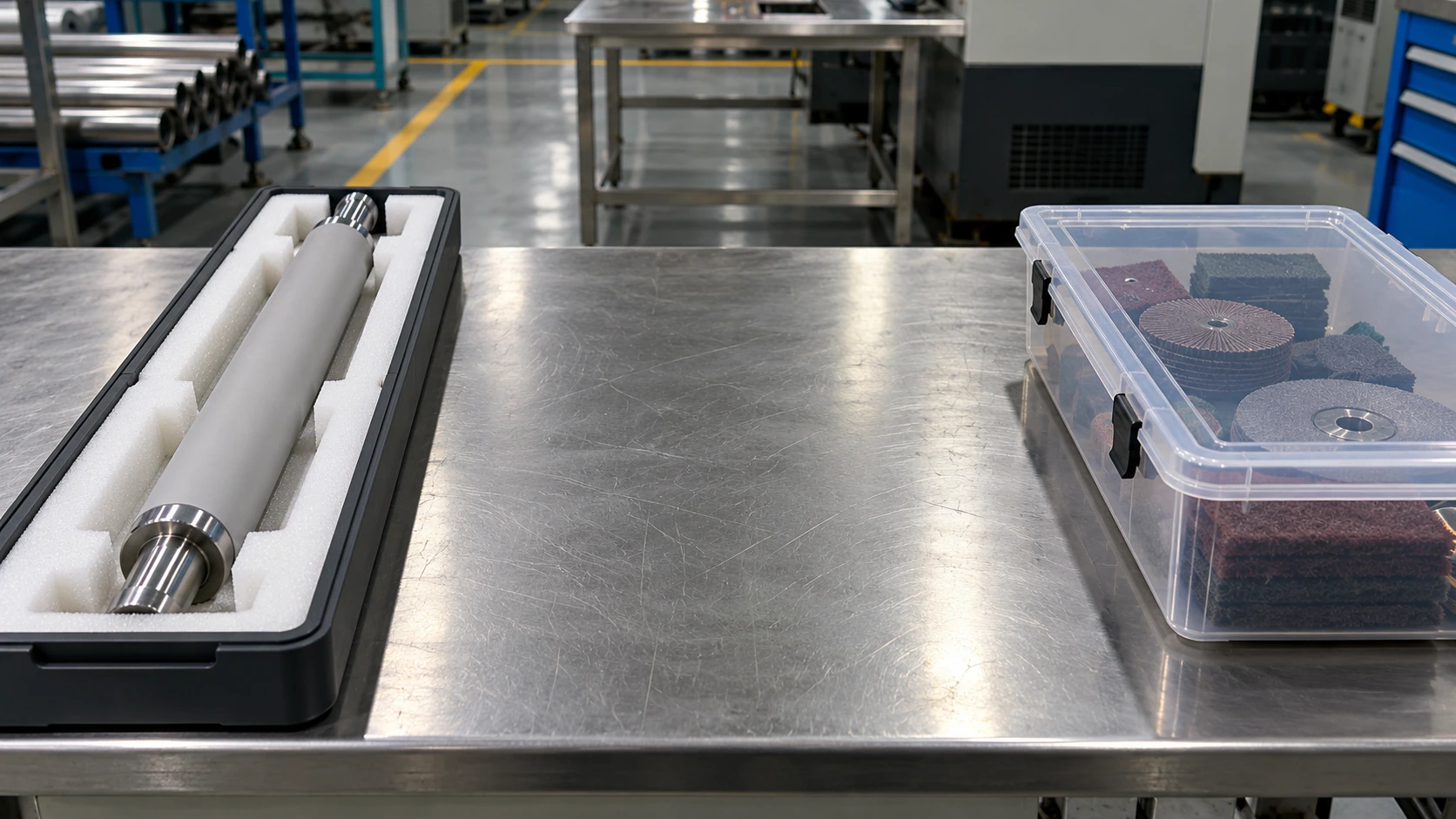
Scratching a Titanium electrode is not an approved general method for restoring activity. It can damage an active coating and does not establish a stable functional surface.
What should you do instead?
Obtain a diagnosis and an approved disposition. Cleaning, testing, refurbishment or replacement may be appropriate depending on condition. Protect the evidence until that decision is made.
- Avoid uncontrolled abrasion.
- Use coating-compatible inspection and handling.
| Check | Decision |
|---|---|
| Uncontrolled scratching | Changes the surface unpredictably |
| Approved disposition | Follows the identified condition |
A brief current response after damage does not prove durable recovery. Key Takeaway: Do not use surface damage as a maintenance test.
7. How Does Platinum Change a Titanium electrode Surface?
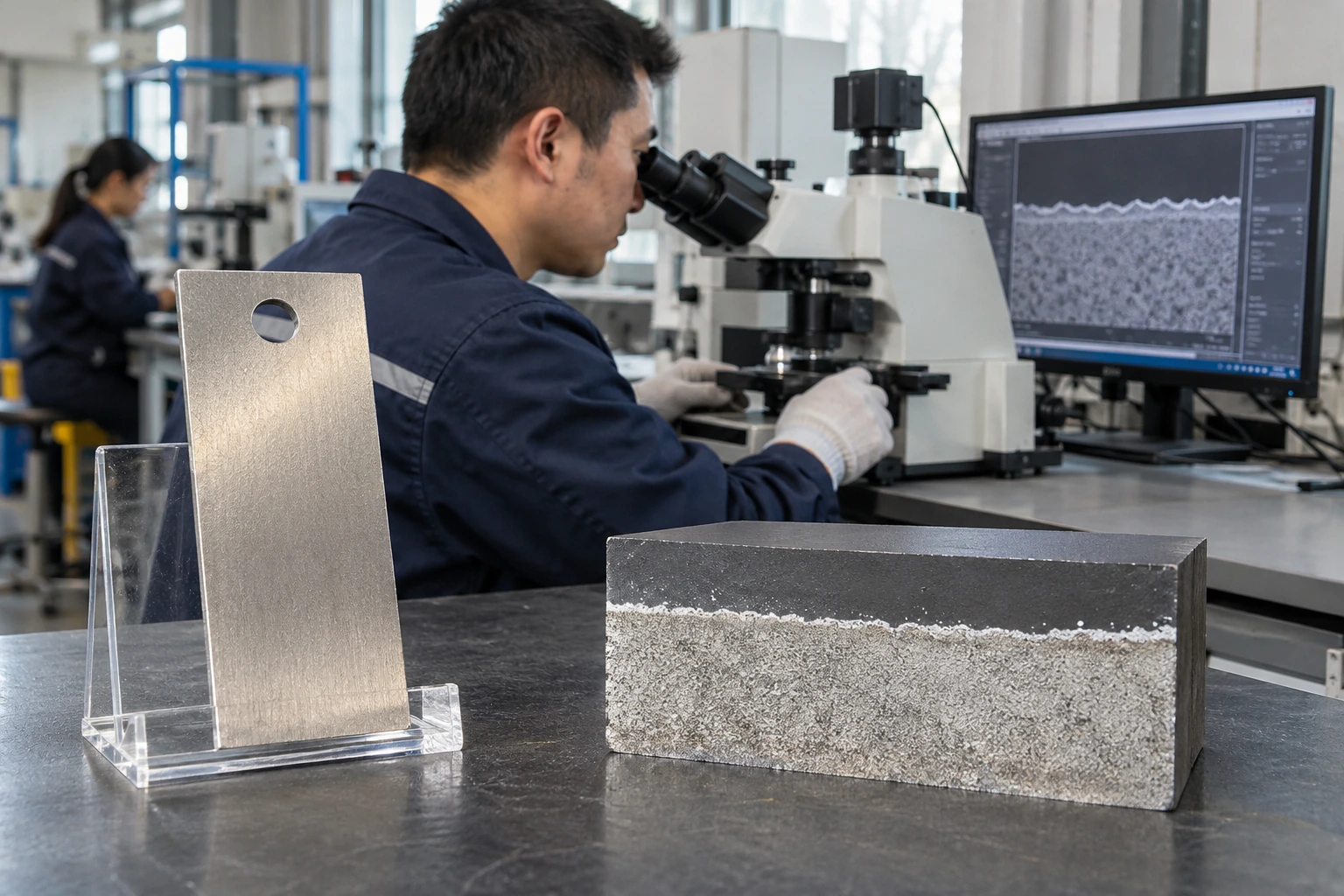
Platinum changes a Titanium electrode working surface by supplying a specified active metal layer over the substrate. Its suitability still depends on coating quality and operating chemistry.
Which specifications should remain visible?
Describe both the layer and the base. Loading or thickness needs a measurement basis. Geometry and active boundaries also affect the finished electrode.
- Identify coating designation and measurement method.
- Mark exposed and contact regions.
| Check | Decision |
|---|---|
| Active layer | Supports defined electrochemical duty |
| Titanium base | Supplies structure and current path |
The presence of platinum does not create an unrestricted application rating. Key Takeaway: Qualify the complete coated component.
8. How Do You Diagnose Titanium electrode Passivation?

Diagnose suspected Titanium electrode passivation by comparing surface evidence, electrical behavior and process conditions. Contacts, conductivity and deposits can produce competing explanations.
Which checks should precede a replacement decision?
Match the operating points before comparing trends. In water-treatment applications, feed and temperature changes can alter cell behavior. Inspect the current path as well as the electrode face.
- Check chemistry, flow and contacts.
- Record surface and output changes.
| Check | Decision |
|---|---|
| Matched operating data | Support comparison |
| Uncontrolled comparison | Can misidentify the cause |
A surface diagnosis should explain the whole evidence set. Key Takeaway: Test plausible alternatives before assigning failure.
9. What Testing Distinguishes Titanium electrode Surface States?

Testing can distinguish Titanium electrode surface behavior only within a defined method and sample condition. Electrochemical measurements and surface analysis answer different questions.
How should you select a method?
Choose the property you need to establish. A functional cell test checks application behavior; an analytical method can examine composition or structure. Neither automatically proves remaining service life.
- Define sample preparation and test conditions.
- State the decision each result supports.
| Check | Decision |
|---|---|
| Functional test | Checks reaction behavior |
| Surface analysis | Examines material evidence |
A precise result can still answer the wrong question. Key Takeaway: Match the method to the investigation.
10. What Titanium electrode Surface Data Should You Send?
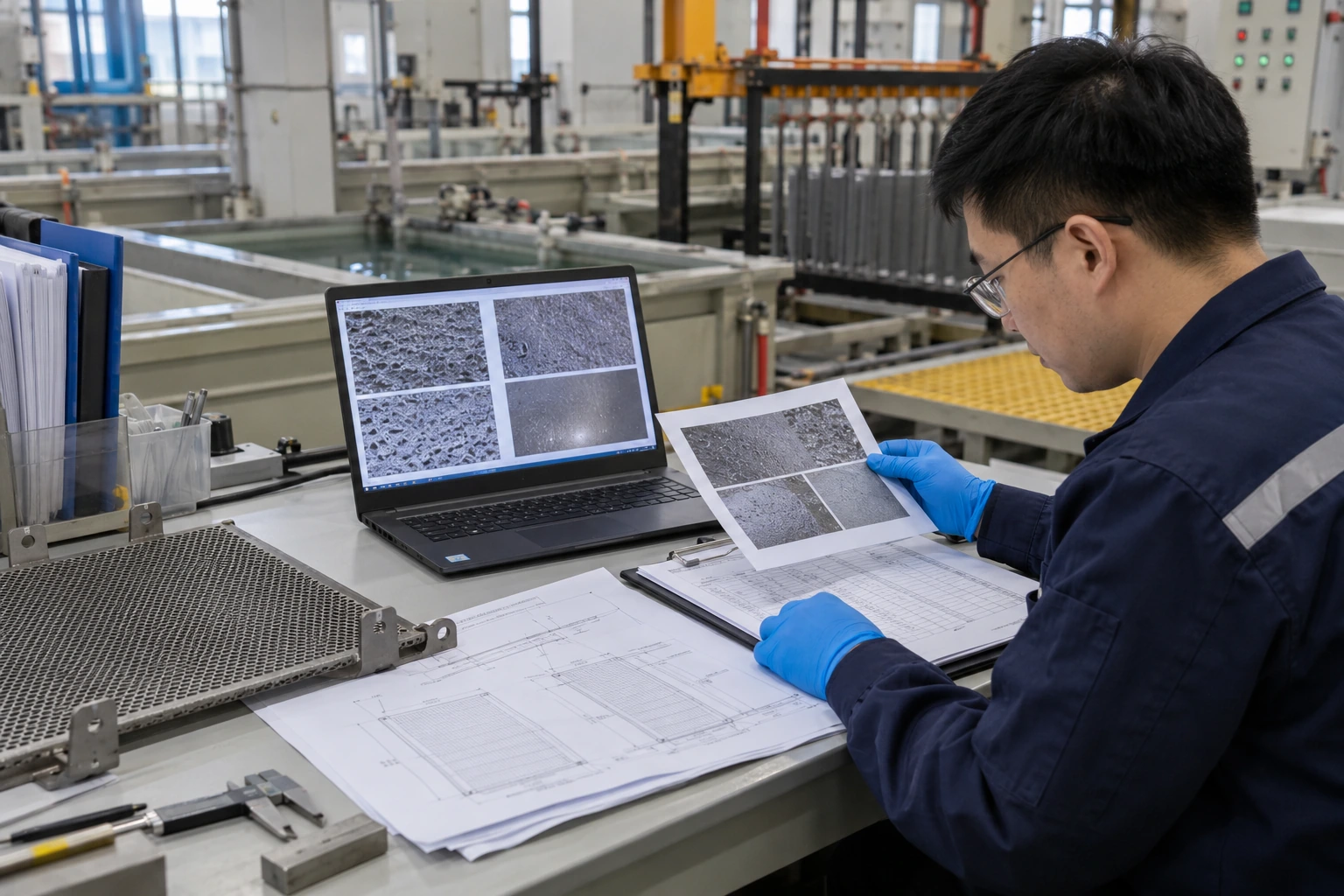
Send Titanium electrode surface photographs, part identity, chemistry, polarity and electrical trends for a meaningful review. State the output problem you need resolved.
How can we support the next step?
Send the evidence before changing the surface. We can review electrode requirements and replacement options; contact us today with the operating history. Our position is that a working electrode needs a qualified surface, not only a metal name.
- Retain baseline and current observations.
- Identify any cleaning or modification performed.
| Check | Decision |
|---|---|
| Condition package | Supports diagnosis |
| Duty package | Supports a suitable proposal |
This information connects surface behavior with a practical engineering decision. Key Takeaway: Preserve evidence and qualify the intended role.
Frequently Asked Questions
Can I use bare titanium instead of an MMO anode? Not as an automatic substitute. The working surface and reaction behavior differ.
What's the best way to remove passivation? Start with a diagnosis and an approved process. Uncontrolled abrasion can damage the electrode without establishing stable performance.
How do I know if passivation caused a voltage rise? Compare matched operating conditions and inspect other causes. One voltage reading is insufficient.
Can I use titanium as a cathode? Potentially, under a suitable material and operating specification. Cathodic duty needs its own review.
Can I identify an active coating from appearance? No. Use traceable specifications and appropriate analytical or functional evidence.