
Scale a Titanium electrode cell by preserving a defined operating basis and validating the changes introduced by larger geometry or more modules. A successful bench test does not establish equal flow, current or temperature in a production assembly. Those differences can erase an apparent performance gain. Use staged tests with measurable acceptance criteria before committing to the larger design.
1. What Must Stay Comparable During Titanium electrode Scale-Up?
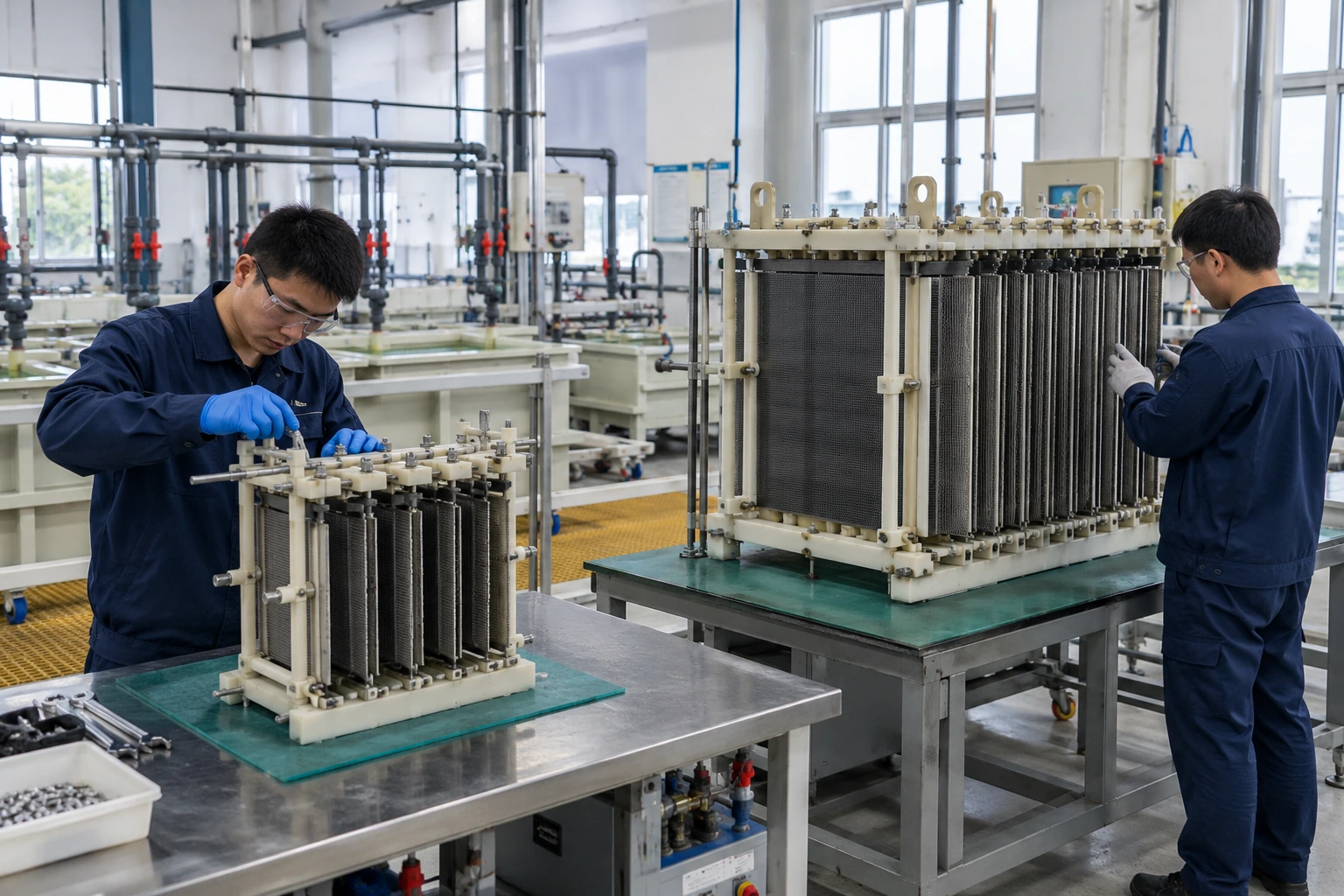
During Titanium electrode scale-up, keep the reaction objective, chemistry, area convention and comparison conditions explicit. Similar appearance does not establish similar duty.
What should the scale-up basis contain?
Freeze the reference condition. Record what the bench cell achieved and how it was measured. Identify every assumption that must transfer to the larger equipment.
- Retain baseline geometry and operating data.
- State the required production output.
| Check | Decision |
|---|---|
| Reference trial | Defines demonstrated behavior |
| Scale-up assumptions | Identify what remains unproven |
A missing baseline makes later differences difficult to interpret. Key Takeaway: Start from a documented reference cell.
2. Can You Scale a Titanium electrode by Area Alone?
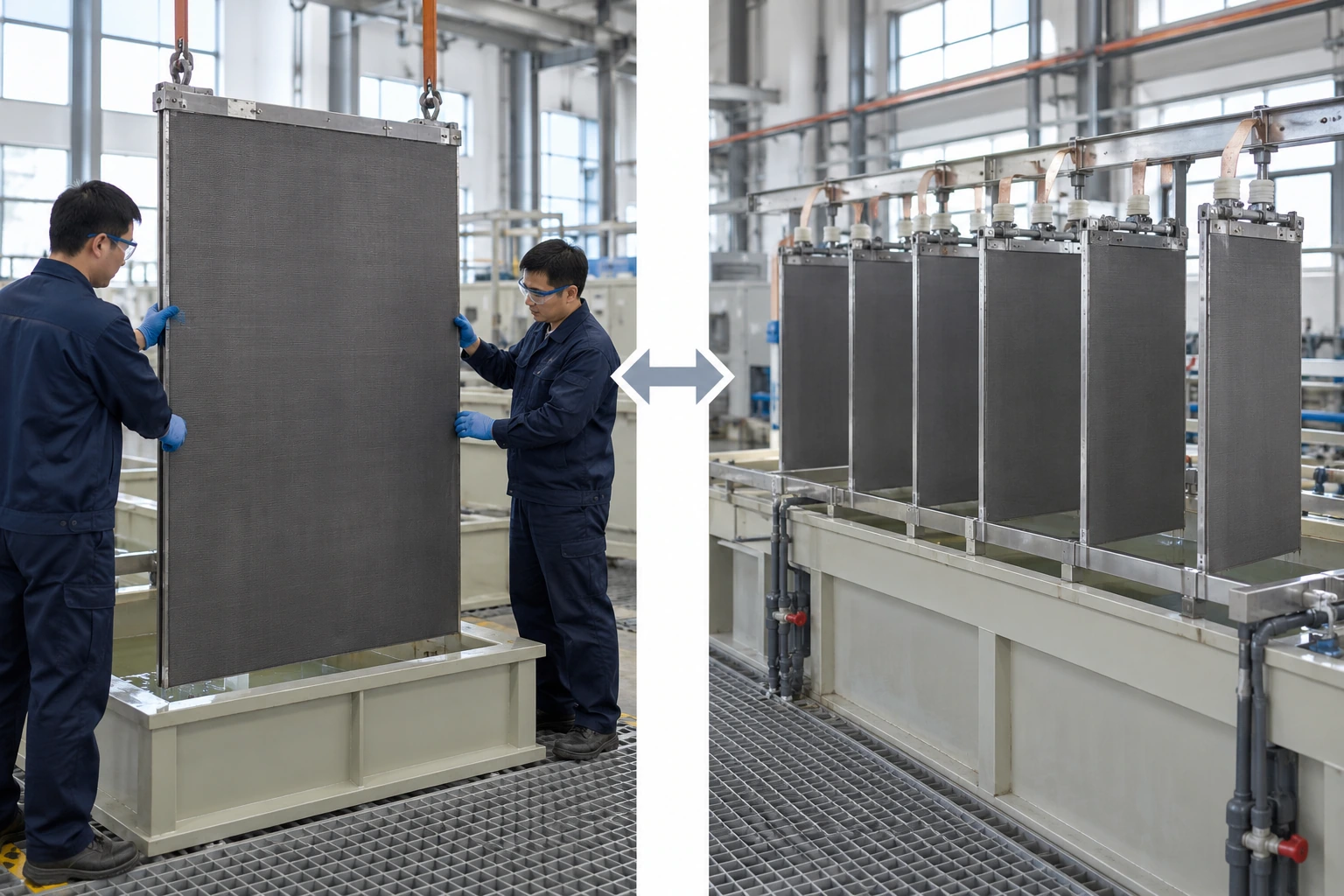
Scaling a Titanium electrode by area alone does not establish equal flow, heat removal or current distribution. Enlarging one plate and adding repeated modules create different design questions.
Which route should you compare?
Compare the complete configurations. A modular approach can preserve some geometry while adding manifolds and connections. An enlarged plate changes spans and local distribution.
- Identify electrical and hydraulic arrangements.
- Review service access and mechanical support.
| Check | Decision |
|---|---|
| Larger plate | Changes physical scale |
| Repeated modules | Adds distribution interfaces |
Both routes require validation beyond a surface-area calculation. Key Takeaway: Choose a scale-up route against system requirements.
3. How Does Titanium electrode Flow Distribution Change?
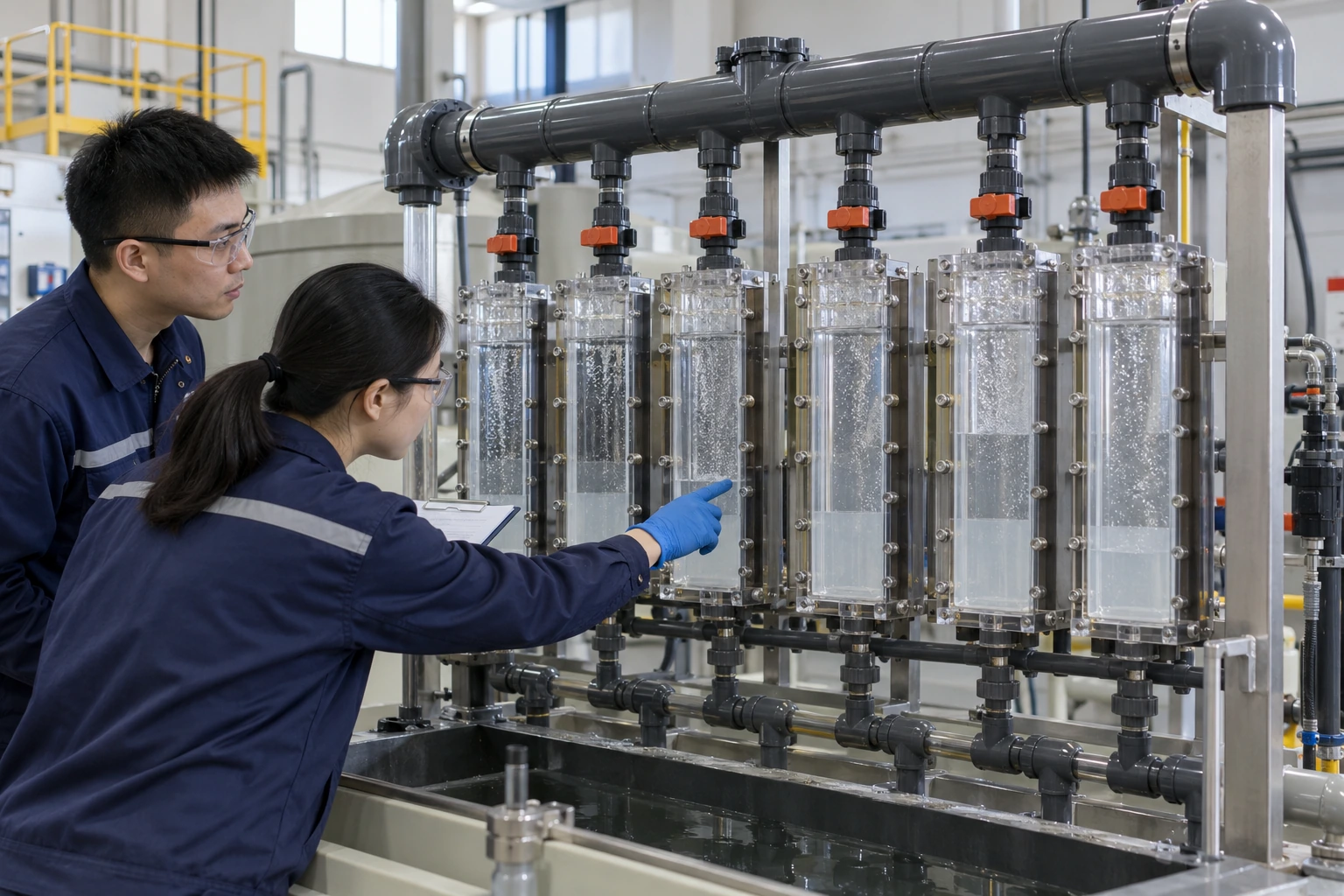
Titanium electrode flow distribution can change when manifolds, channel counts and path lengths increase. Equal total flow does not guarantee equal flow through each working channel.
What should the pilot measure?
Inspect the distribution network. Record pressure and flow behavior at relevant locations. Check whether distant or restricted channels behave differently.
- Review manifold and outlet geometry.
- Compare channel conditions where practical.
| Check | Decision |
|---|---|
| Total supply | Describes total delivery |
| Local distribution | Determines individual surface exposure |
A larger supply can coexist with poorly served channels. Key Takeaway: Validate distribution at the intended scale.
4. How Do Titanium electrode Current Paths Scale?
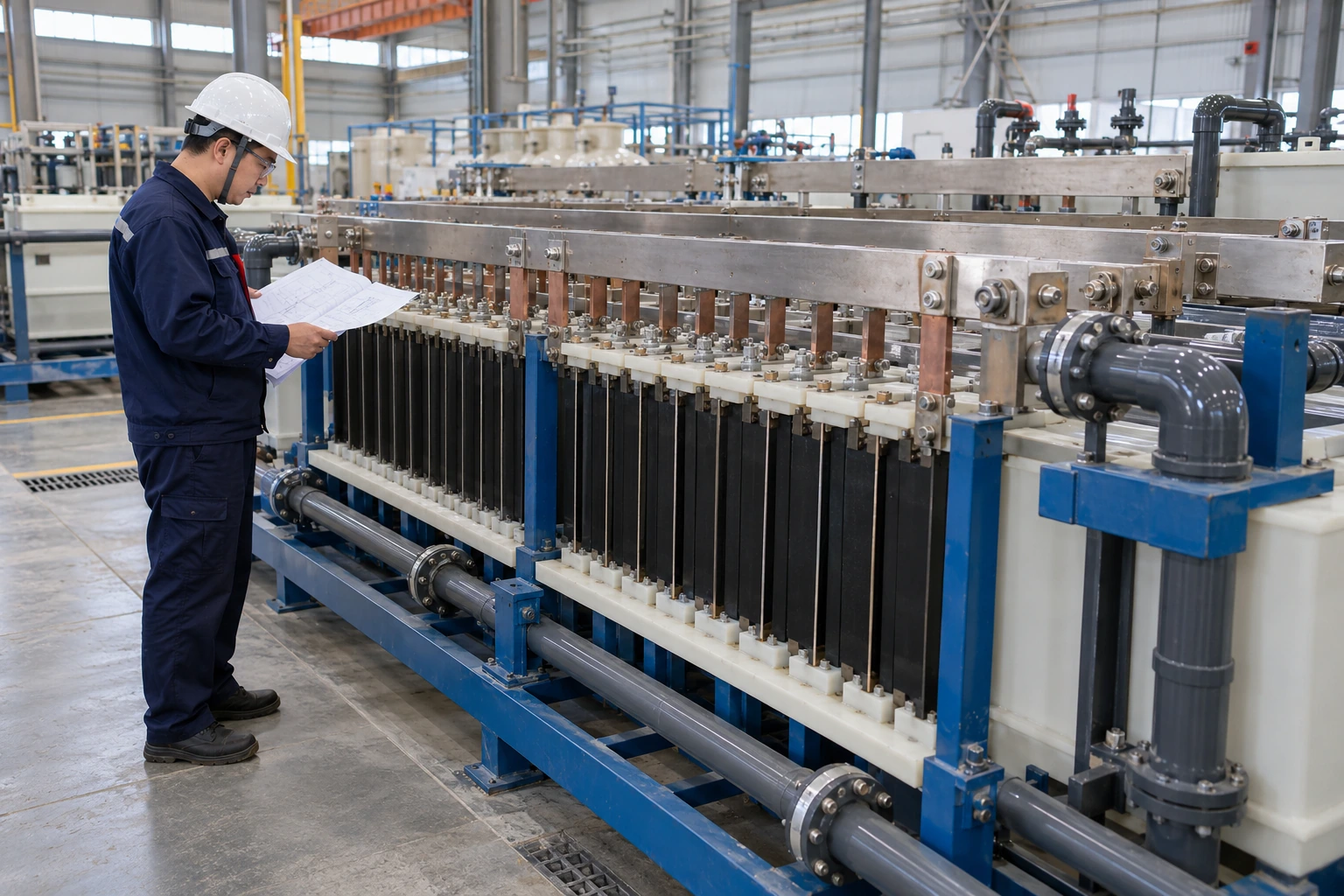
Titanium electrode current paths change with busbar length, branch connections and series or parallel arrangements. Plate count alone cannot describe loading.
Which drawings should the supplier receive?
Send the electrical layout with the mechanical design. A custom engineering review can review electrode interfaces and connection requirements. Include measured branch behavior where available.
- Identify current through each relevant path.
- Mark contacts, tabs and shared conductors.
| Check | Decision |
|---|---|
| Circuit arrangement | Defines current paths |
| Connection geometry | Affects loss and local heating |
A uniform coating cannot correct an unsuitable current-supply layout. Key Takeaway: Review electrical distribution before scaling output.
5. How Should Titanium electrode Coating Qualification Transfer?
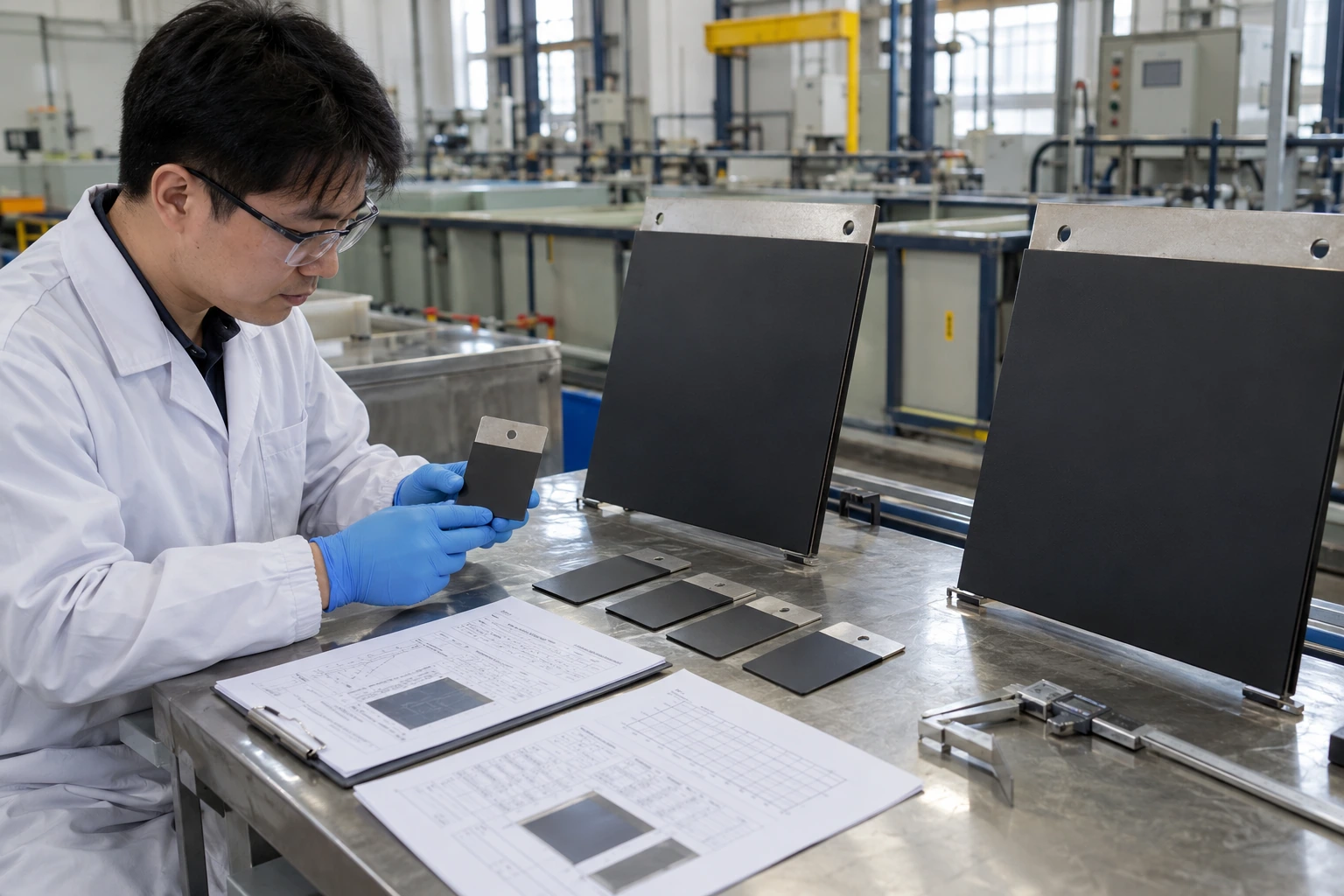
Titanium electrode coating qualification transfers only within a justified operating and manufacturing basis. Larger surfaces and changed geometry may introduce different inspection and loading conditions.
What evidence should connect sample and production parts?
Keep the coating designation and test conditions traceable. Compare preparation, active boundaries and inspection methods. Identify differences that require another trial.
- Record production geometry and coating basis.
- Retain representative functional evidence.
| Check | Decision |
|---|---|
| Matched specification | Supports continuity |
| Changed exposure or process | Needs review |
A small coupon does not represent every feature of a large fabricated part. Key Takeaway: Qualify the finished production geometry.
6. How Do Heat and Gas Affect Titanium electrode Scale-Up?
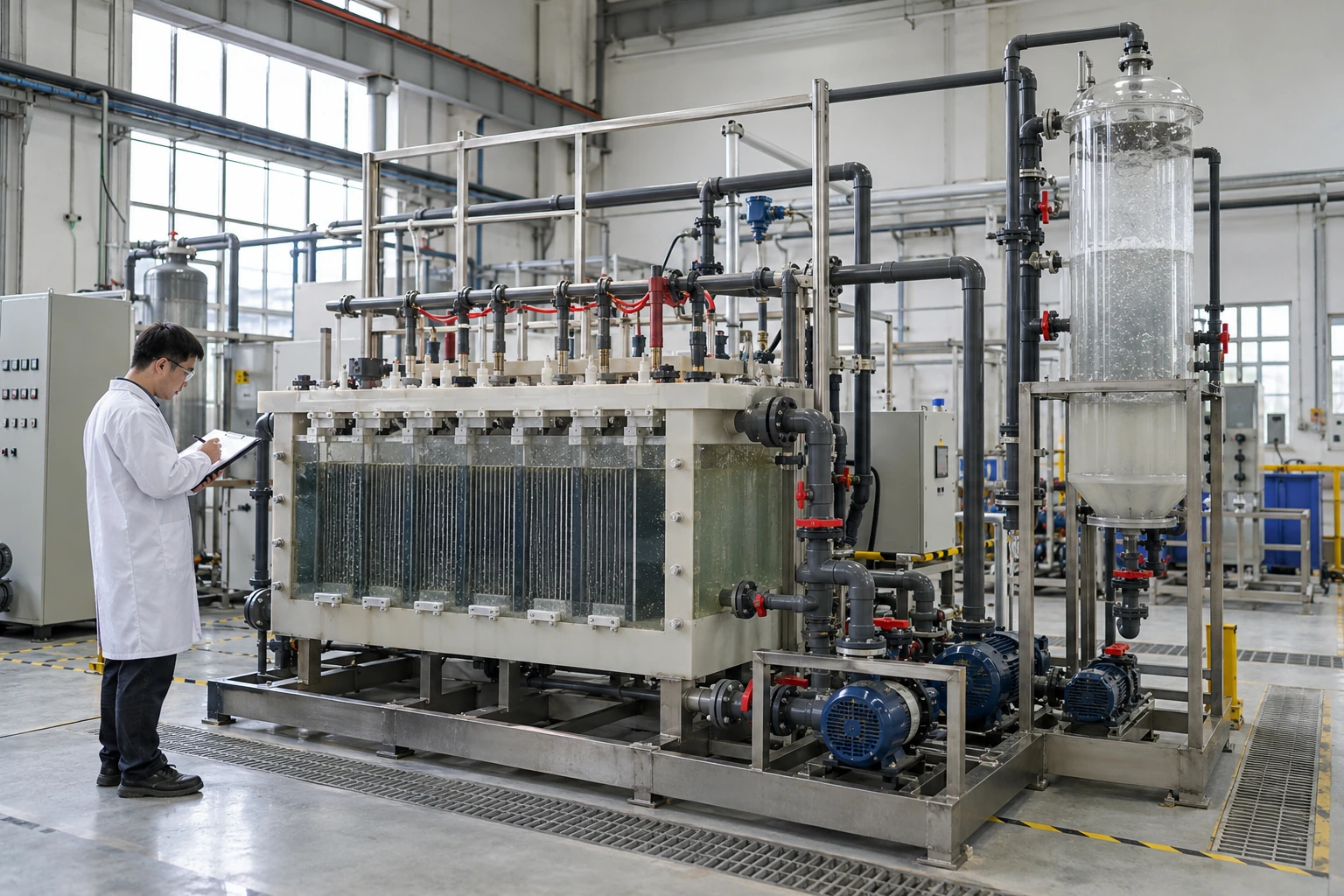
Heat and gas can become scale-up constraints for a Titanium electrode system even when average current density stays constant. Their distribution and removal depend on the larger equipment.
What should engineers review together?
Connect heat and gas handling to the operating sequence. Include startup, normal duty and shutdown. The equipment designer should own the required protective functions.
- Define cooling and gas-handling interfaces.
- Measure relevant temperatures and pressures.
| Check | Decision |
|---|---|
| Average loading | Describes one operating variable |
| Removal capacity | Checks surrounding system support |
Maintaining current density does not prove adequate thermal or gas control. Key Takeaway: Validate the complete process support systems.
7. What Changes When Titanium electrode Geometry Expands?
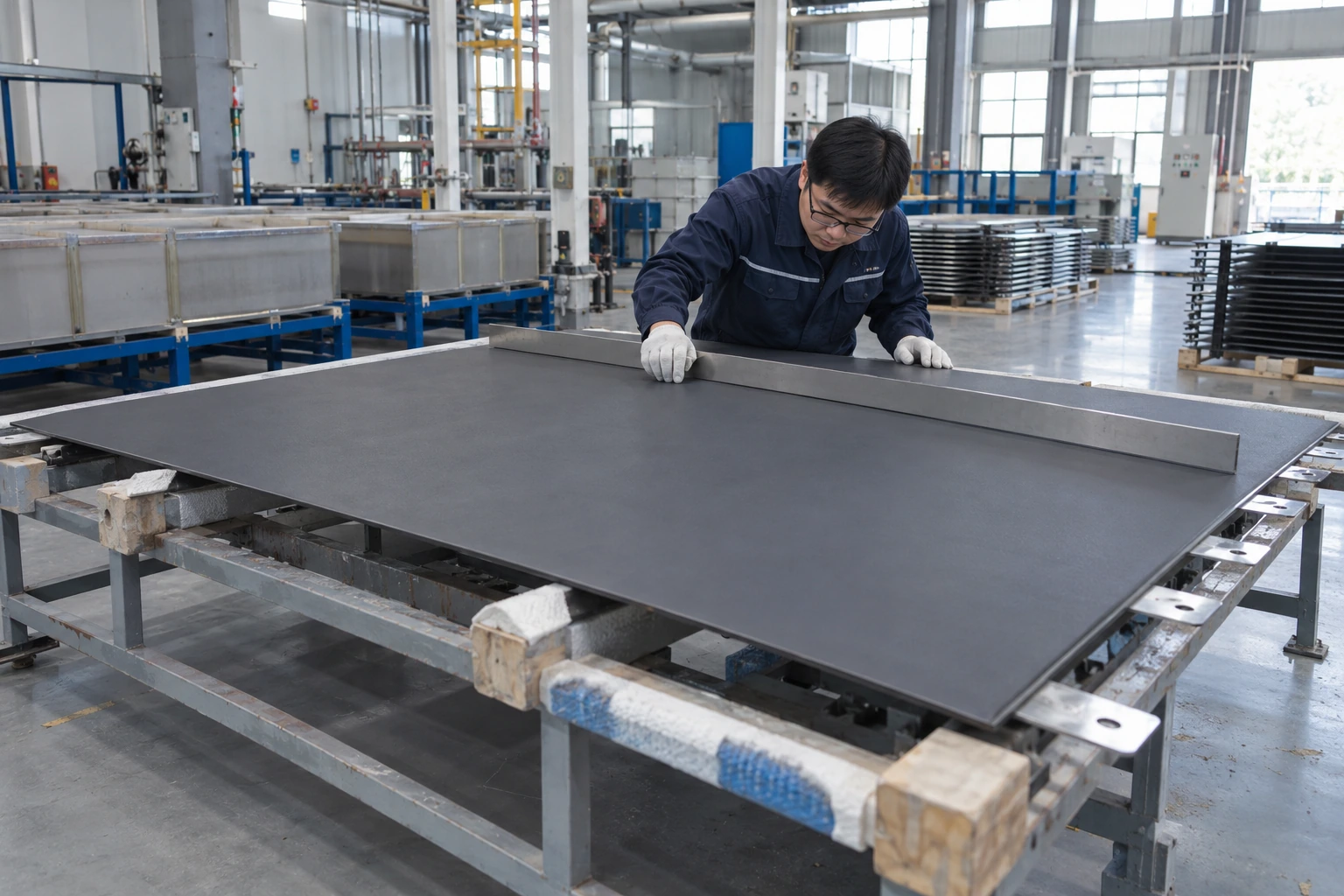
Larger Titanium electrode geometry can change stiffness, flatness, handling and installed spacing. This applies to platinum-coated and other active surfaces.
Which mechanical checks should be repeated?
Inspect the part in its supported condition. A plate may behave differently when lifted, clamped or heated. Keep those conditions consistent during measurement.
- Review unsupported spans and lifting points.
- Check gap after final assembly.
| Check | Decision |
|---|---|
| Loose part | Shows one mechanical condition |
| Installed part | Shows the working configuration |
A passing loose-part inspection cannot establish installed stability. Key Takeaway: Test geometry in the actual support arrangement.
8. How Should You Stage a Titanium electrode Pilot Program?
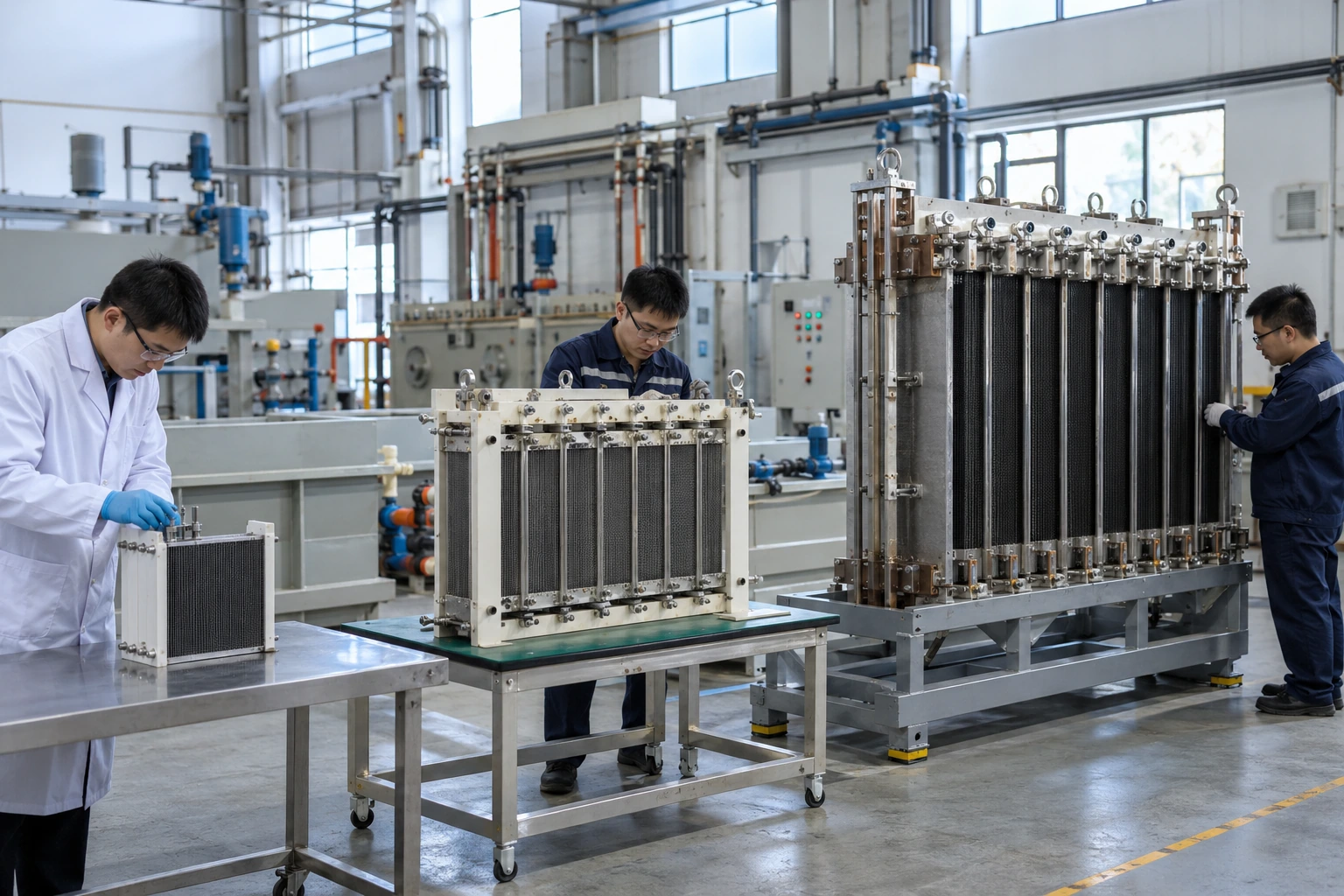
Stage a Titanium electrode pilot program so each step resolves a defined uncertainty before larger commitments. A bench test, pilot skid and production trial serve different purposes.
How do you choose the next stage?
Let the unresolved risk select the test. For water-treatment applications, chemistry variability may matter more than a longer clean-water demonstration. Record what each stage can and cannot establish.
- Define a decision for each stage.
- Retain comparable measurement methods.
| Check | Decision |
|---|---|
| Bench trial | Tests a limited configuration |
| Representative pilot | Tests more system interactions |
Repeated demonstrations add little if they leave the same uncertainty unresolved. Key Takeaway: Use staged testing with explicit release decisions.
9. Which Titanium electrode Scale-Up Results Need Acceptance?
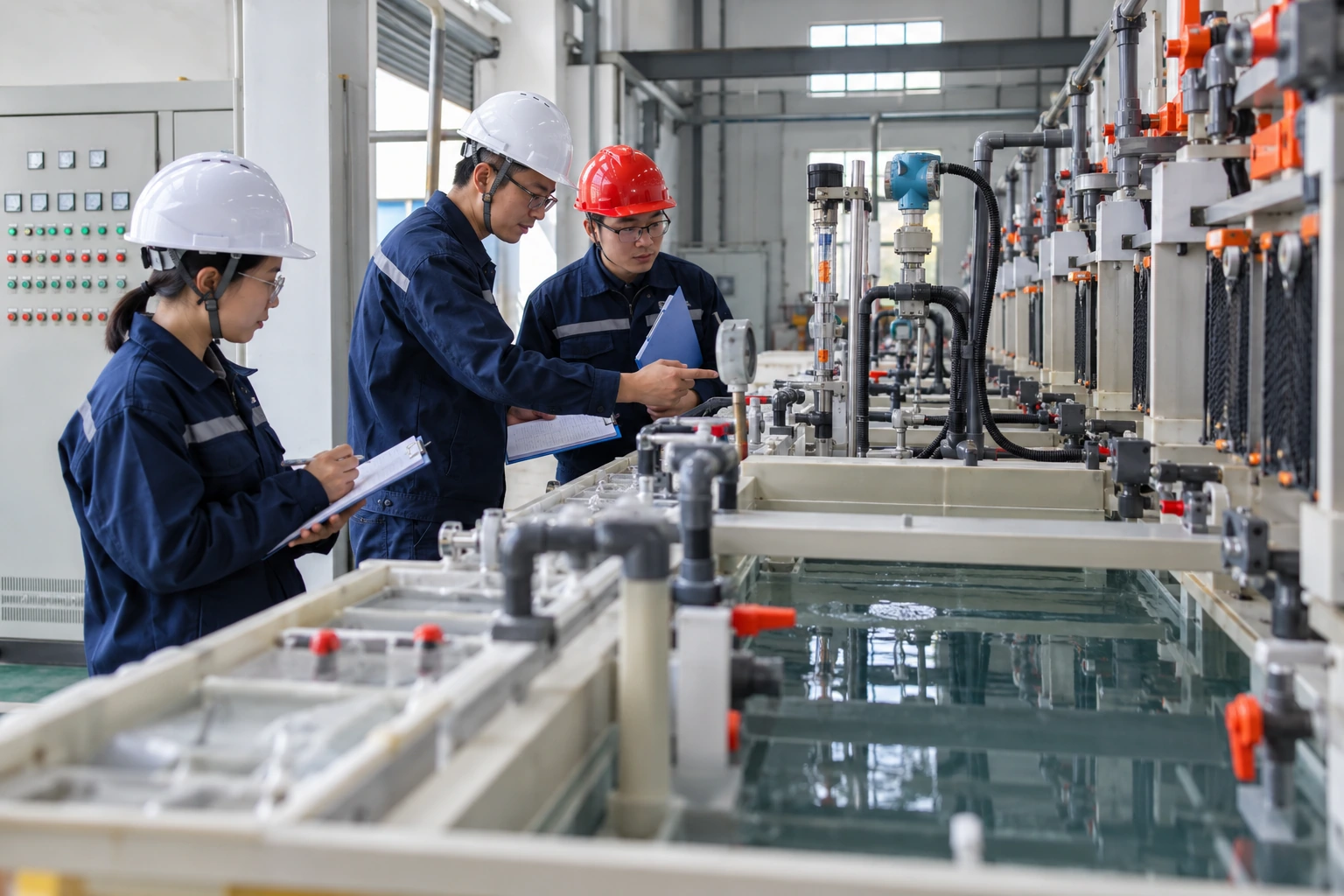
Accept Titanium electrode scale-up results against defined output, energy, distribution, maintenance and condition criteria. Do not judge the larger system by a single electrical value.
What should the release record include?
Keep deviations beside the results. Identify differences between test and intended service. Assign unresolved issues before approving series production.
- Record useful output and quality.
- Inspect mechanical and surface condition.
| Check | Decision |
|---|---|
| Measured results | Support the release decision |
| Open deviations | Define remaining work |
A complete record makes the approval boundary visible. Key Takeaway: Release only the duty the evidence supports.
10. What Titanium electrode Scale-Up Package Should You Prepare?
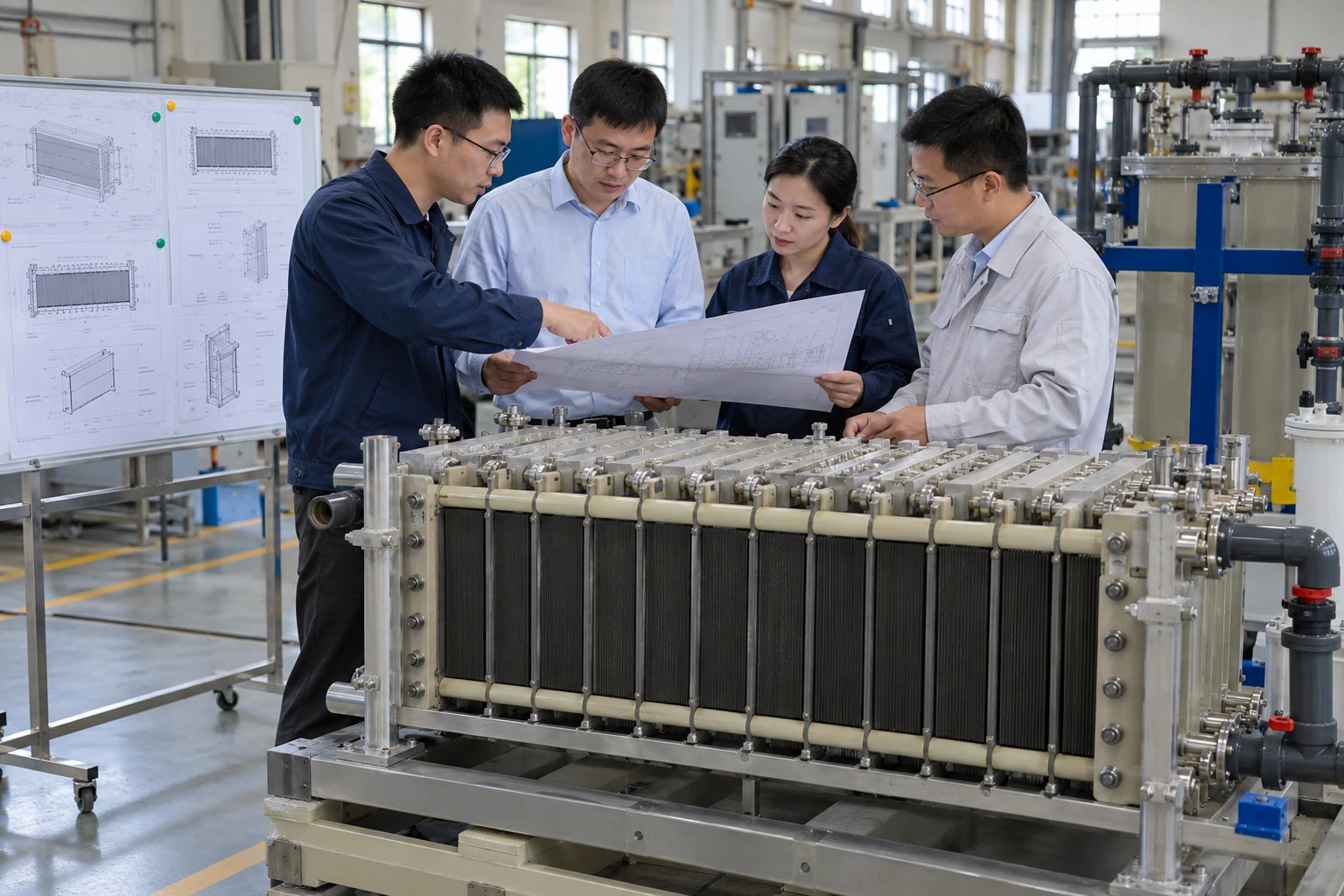
Prepare a Titanium electrode scale-up package with reference data, proposed layouts, operating ranges and acceptance criteria. Include electrical, hydraulic and mechanical interfaces.
How can we support development?
Send both the reference and proposed configurations. We can review electrode geometry and manufacturing requirements; contact us today with the scale-up plan. Our position is that larger output needs demonstrated system behavior.
- List assumptions carried from the bench.
- State the uncertainties the pilot must resolve.
| Check | Decision |
|---|---|
| Reference package | Shows demonstrated performance |
| Development package | Defines the proposed change |
This comparison turns scale-up into a sequence of testable decisions. Key Takeaway: Validate each meaningful change before expansion.
Frequently Asked Questions
Can I double output by doubling electrode area? Not automatically. Current supply, flow, heat and gas handling must support the new configuration.
What's the best scale-up route? It depends on the equipment. Compare larger geometry with repeated modules against the same output and service requirements.
How do I know if a pilot represents production? Compare chemistry, geometry, distribution and operating sequence. Document remaining differences.
Can I keep the same current density during scale-up? It can be a useful basis, but local loading and transport still need validation.
Can I approve production after a successful bench test? Only for what that test demonstrates. System interactions at larger scale may require further evidence.