
A water electrolysis electrode material must match cell architecture, water chemistry, polarity, current, gas separation, contact materials, and cleaning. A product label cannot replace that engineering review.
Poor material or interface choices can raise resistance, shed surface material, create scale, or complicate gas handling. This guide stays with device engineering and makes no medical or health-performance claim.
1. What Does Each Electrode Do in the Cell?
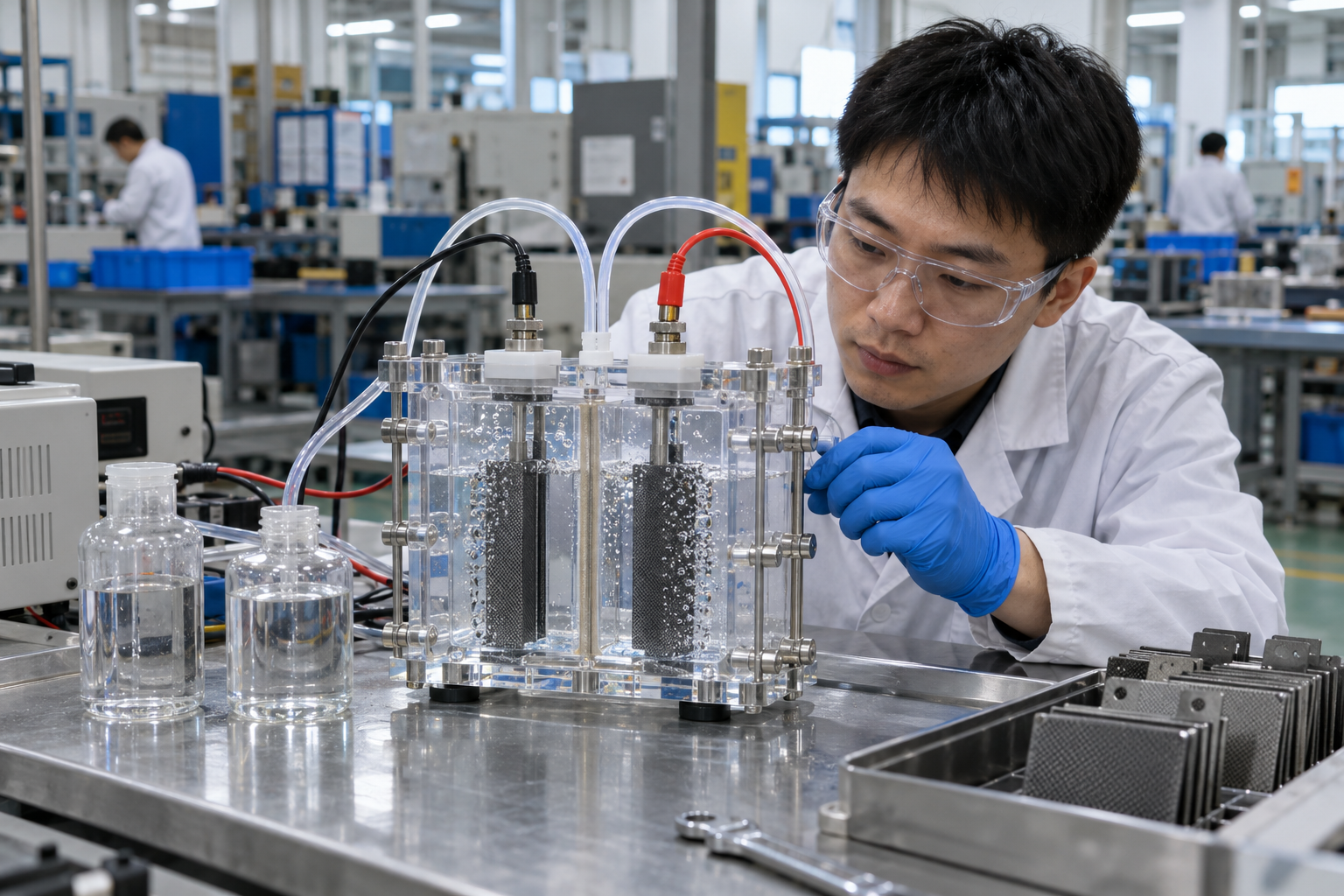
A water electrolysis electrode material serves either anodic oxidation or cathodic hydrogen evolution within a complete electrical circuit. Each side has different reaction and material demands.
Which reaction occurs at each side?
The cathode supports hydrogen generation while the anode supports oxidation. Keep polarity tied to hardware. Define:
- Anode and cathode materials and active surfaces
- Separator or membrane arrangement
- Gas collection, dissolution, and vent paths
Why should buyers avoid calling both parts “titanium electrodes”?
The titanium form, surface, coating, and polarity can differ. Part numbers and drawings should distinguish each side.
| Cell side | Main engineering duty | Buyer check |
|---|---|---|
| Anode | Oxidation and stability | Surface and polarity |
| Cathode | Hydrogen evolution | Catalyst and gas release |
| Interface | Ionic and electrical path | Separator and contact |
Key Takeaway: Specify anode and cathode separately, then verify how they work together inside the cell.
2. Which Water Data Affect Material Choice?
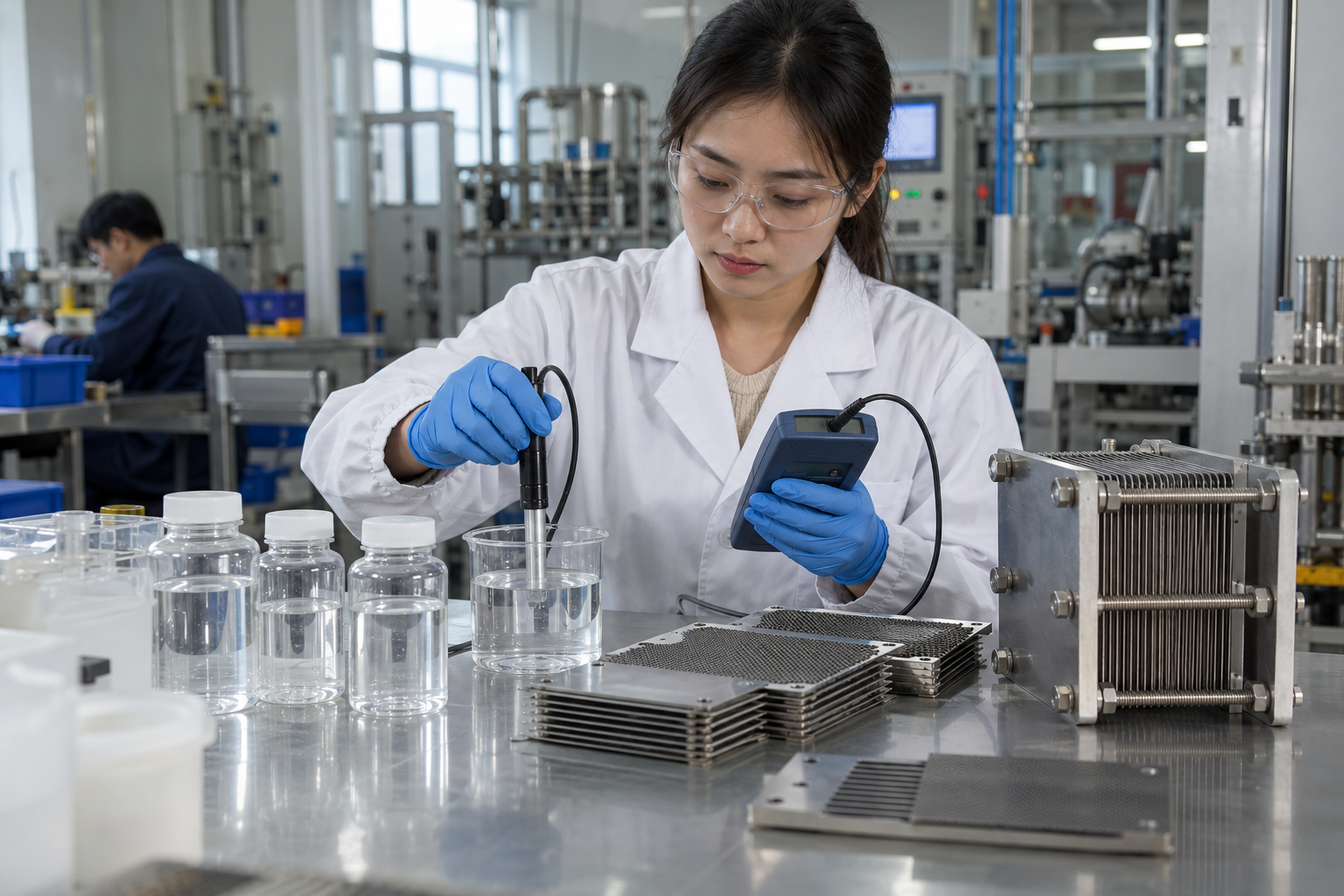
A water electrolysis electrode material decision depends on conductivity, pH, hardness, chloride, dissolved solids, temperature, and any intended electrolyte. Water source and pretreatment matter.
Which water conditions should be shared?
Use representative ranges from actual operation. Water is an electrode environment. Include:
- Source-water analysis and pretreatment
- Conductivity, pH, hardness, chloride, and temperature
- Cleaning solution, rinse water, and storage condition
What if the water changes by market?
Define the supported range and identify conditions needing different pretreatment or testing. Avoid one universal recommendation.
| Water factor | Possible effect | Design response |
|---|---|---|
| Low conductivity | Higher resistance | Cell and electrolyte review |
| Hardness | Scale formation | Pretreatment and cleaning |
| Chloride | Competing anodic chemistry | Compatibility and byproduct review |
Key Takeaway: Define the water-quality envelope before choosing active surfaces and operating limits.
3. When Is Titanium Used in the Assembly?
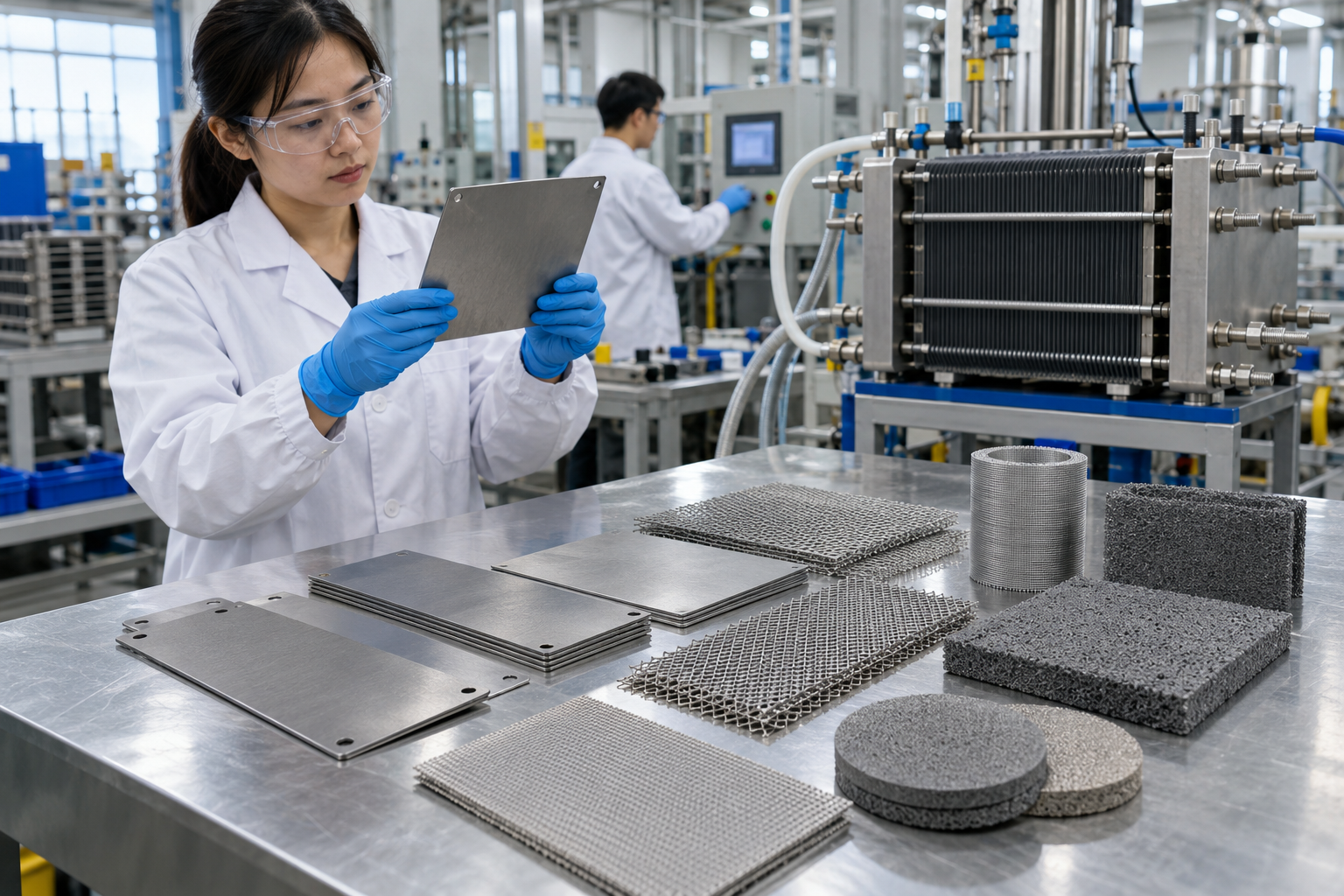
A water electrolysis electrode material may use titanium as a substrate, plate, mesh, porous transport component, bipolar element, or coated support. Function depends on cell type.
Why can bare titanium create resistance?
Titanium forms a passive oxide surface that protects the metal but can restrict current at an anodic interface. Corrosion resistance and conductivity are different questions. Review:
- Polarity and electrochemical potential
- Surface treatment or protective coating
- Contact pressure and interface condition
Which titanium form fits compact devices?
Plate, mesh, felt, porous structures, and custom assemblies change area, flow, gas release, and resistance. Geometry follows architecture.
| Titanium role | Design benefit | Main check |
|---|---|---|
| Plate | Stable flat interface | Contact and passivation |
| Mesh | Open flow and gas path | Strand and coating |
| Porous component | Distributed transport | Compression and surface |
Key Takeaway: Define titanium's mechanical, transport, and electrical role before specifying its surface.
4. Which Active Surface Fits Each Polarity?
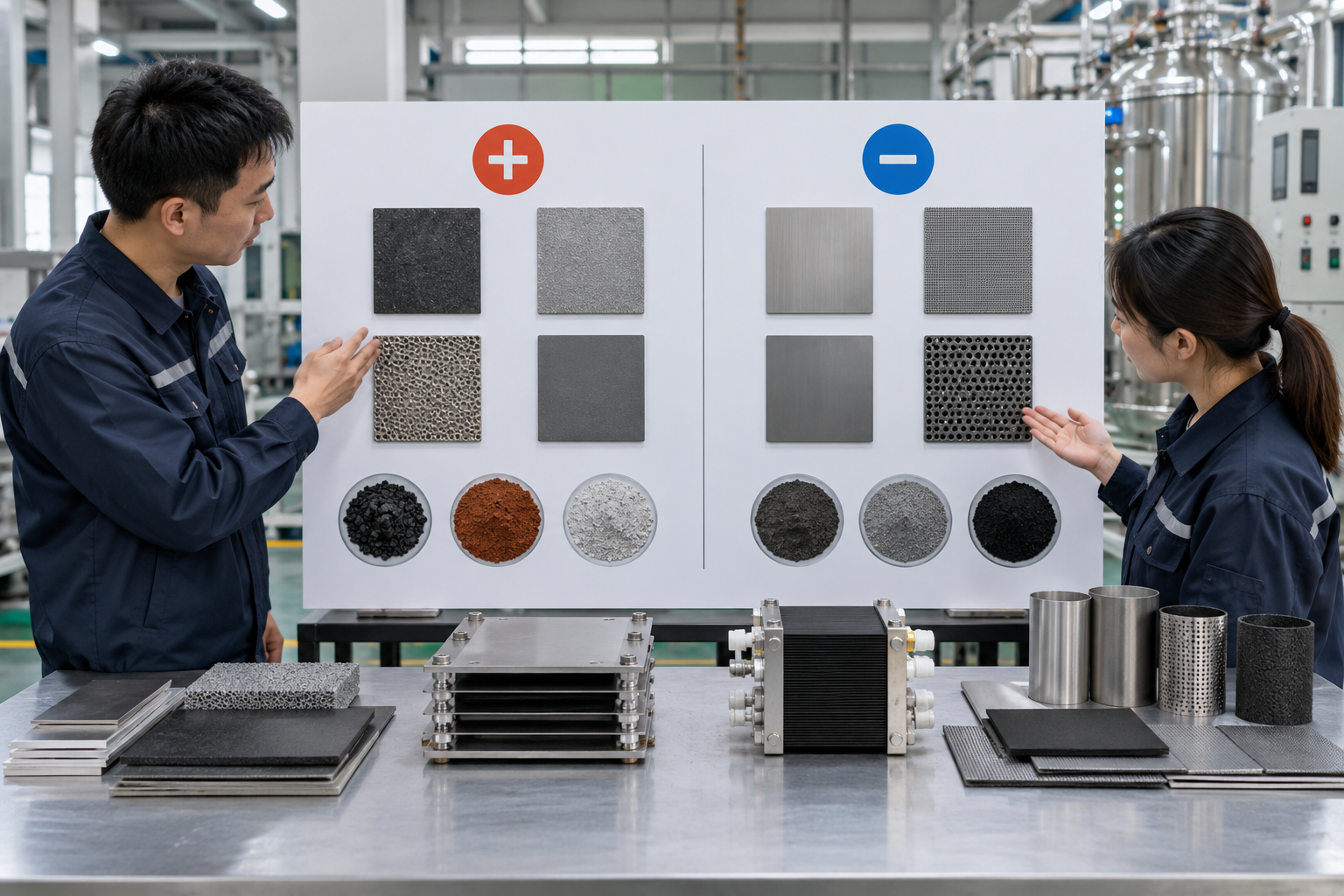
A water electrolysis electrode material surface should match its reaction, water chemistry, cell type, and acceptable contamination. Anodic and cathodic catalysts are not interchangeable by default.
What belongs in a surface-selection review?
Ask for reaction and stability logic. Catalyst choice begins with polarity. Include:
- Anodic and cathodic reaction conditions
- Expected potential, current density, and temperature
- Water purity, ions, additives, and contamination limits
Why should coating and carrier be reviewed together?
A catalytic surface can fail if its carrier passivates, corrodes, deforms, or loses contact. Interfaces need their own acceptance criteria.
| Selection layer | Question | Evidence |
|---|---|---|
| Catalyst | Does it support the reaction? | Test basis |
| Carrier | Is it stable in that zone? | Compatibility data |
| Interface | Does resistance remain controlled? | Electrical trend |
Key Takeaway: Match catalyst, carrier, and interface to polarity and water chemistry as one system.
5. How Do Current and Area Affect Performance?
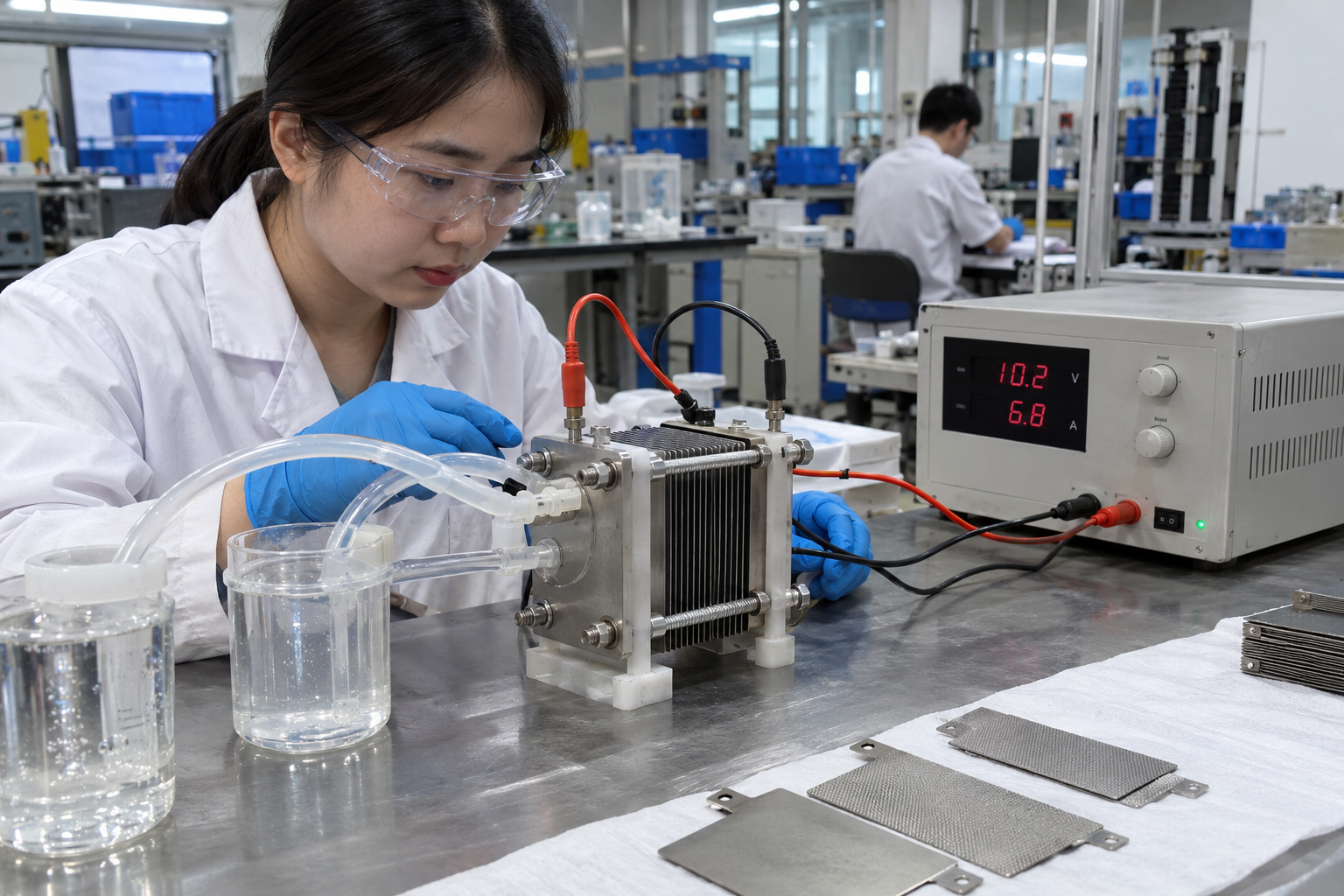
A water electrolysis electrode material operates under a current density set by current and active area. Local distribution, contact resistance, and bubbles can change that load.
Which electrical inputs should be defined?
State normal and boundary conditions. Current without area hides surface duty. Include:
- Current, voltage, active area, and current density
- Startup, runtime, pulsing, reversal, and shutdown
- Contact method, busbar, wiring, and power control
What should be monitored during tests?
Record voltage, current, temperature, gas response, and contact condition at defined operating points. Compare trends rather than one reading.
| Electrical input | Possible risk | Test |
|---|---|---|
| High local current | Heat or surface stress | Area and distribution check |
| Contact resistance | Voltage loss | Interface measurement |
| Bubble coverage | Lost active area | Visual and flow observation |
Key Takeaway: Tie electrical loading to active area, contacts, transport, and temperature throughout validation.
6. How Should Gas Be Separated and Managed?
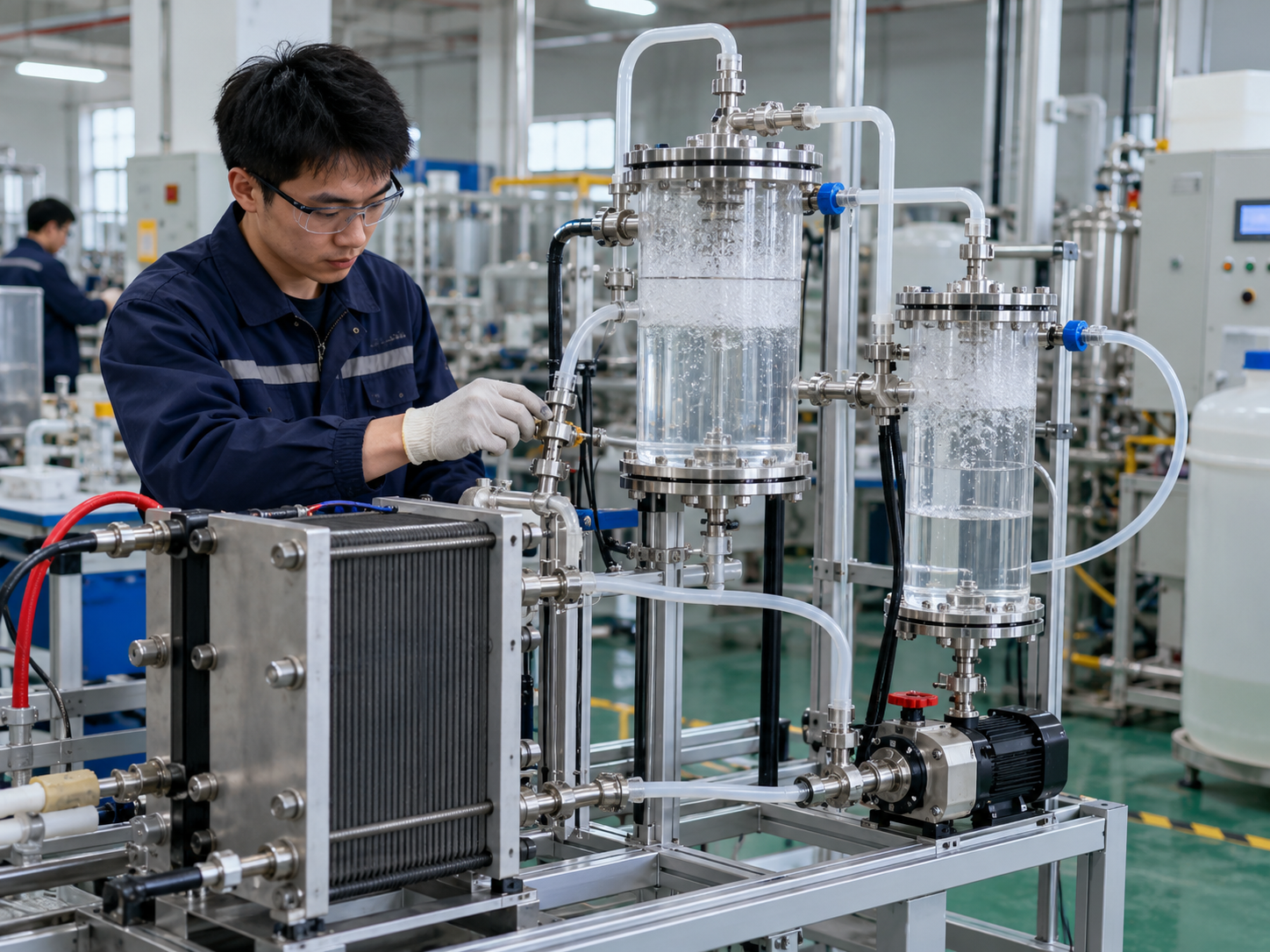
A water electrolysis electrode material system generates gases that must leave electrode surfaces and follow controlled paths. Cell design should prevent unwanted mixing, blockage, pressure, and trapped gas.
Which gas-path details belong in the design?
Trace each gas from surface to outlet. Gas management starts inside the gap. Review:
- Electrode orientation and bubble-release path
- Separator, membrane, headspace, outlet, and vent
- Pressure, flow, liquid level, and shutdown controls
How should compact devices be tested?
Test normal, tilted, low-level, blocked-outlet, and startup conditions where relevant to intended use. Define safe responses.
| Gas issue | Possible result | Design control |
|---|---|---|
| Bubble hold-up | Higher resistance | Orientation and flow |
| Gas mixing | Product and safety concern | Separation integrity |
| Blocked outlet | Pressure rise | Vent and interlock |
Key Takeaway: Design gas release, separation, and protective controls together with electrode geometry.
7. What Causes Scale or Surface Change?
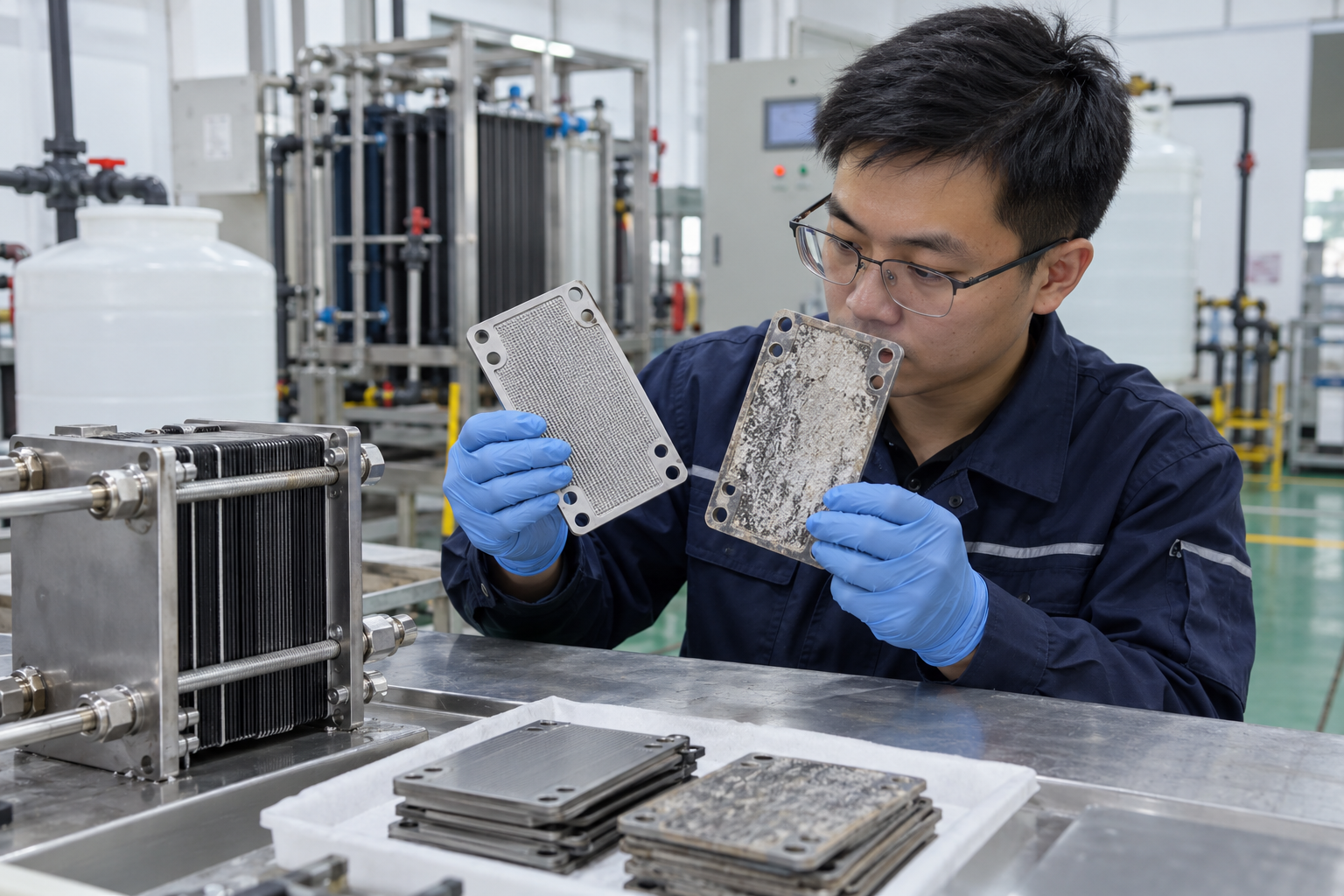
A water electrolysis electrode material can accumulate mineral deposits or change surface condition as water quality, local pH, temperature, and runtime vary. Deposits alter active area and flow.
How should the cause be diagnosed?
Use water, electrical, and maintenance records together. Do not clean away the evidence first. Check:
- Hardness, ions, pretreatment, and water-source changes
- Deposit location, color, texture, and coverage
- Voltage, current, temperature, flow, and polarity
Which cleaning method is acceptable?
Approve chemistry, concentration, time, temperature, tool, rinse, and inspection for the exact surface and cell materials.
| Deposit issue | Diagnostic clue | Response |
|---|---|---|
| Mineral scale | Hard-water pattern | Pretreatment and cleaning |
| Surface damage | Scratch or discoloration | Handling and coating review |
| Contact film | Local resistance | Interface service |
Key Takeaway: Diagnose water and operating causes before applying a surface-compatible cleaning procedure.
8. How Should Device Quality Be Verified?
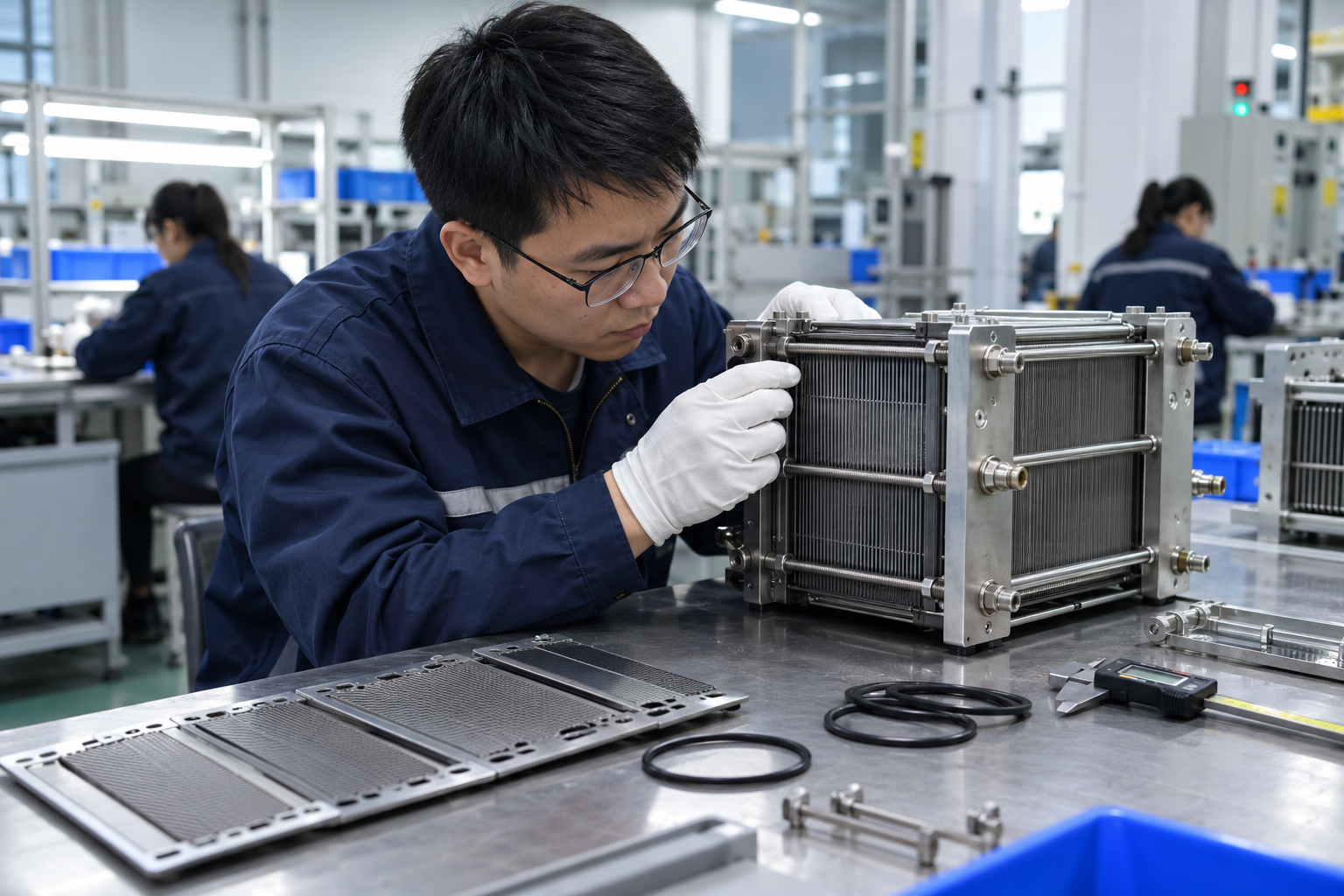
A water electrolysis electrode material quality plan should cover identity, geometry, active surface, contact, separation, seals, and agreed function. Compact assembly does not reduce verification needs.
Which records should follow the cell?
Connect components and test results to a controlled revision. Small parts still need traceability. Retain:
- Electrode part numbers, materials, and drawing revision
- Spacing, seals, contacts, polarity, and assembly inspection
- Electrical, leakage, gas-path, and functional test results
How can site quality controls support sourcing?
The quality-control page can frame supplier review, while your product specification defines exact acceptance.
| Verification | Purpose | Release gate |
|---|---|---|
| Dimensional | Fit and spacing | Assembly approval |
| Electrical | Contact and polarity | Power approval |
| Functional | Gas and cell response | Technical approval |
Key Takeaway: Release a cell only when traceable components and assembled-system tests meet the approved baseline.
9. What Should a Pilot Test Measure?
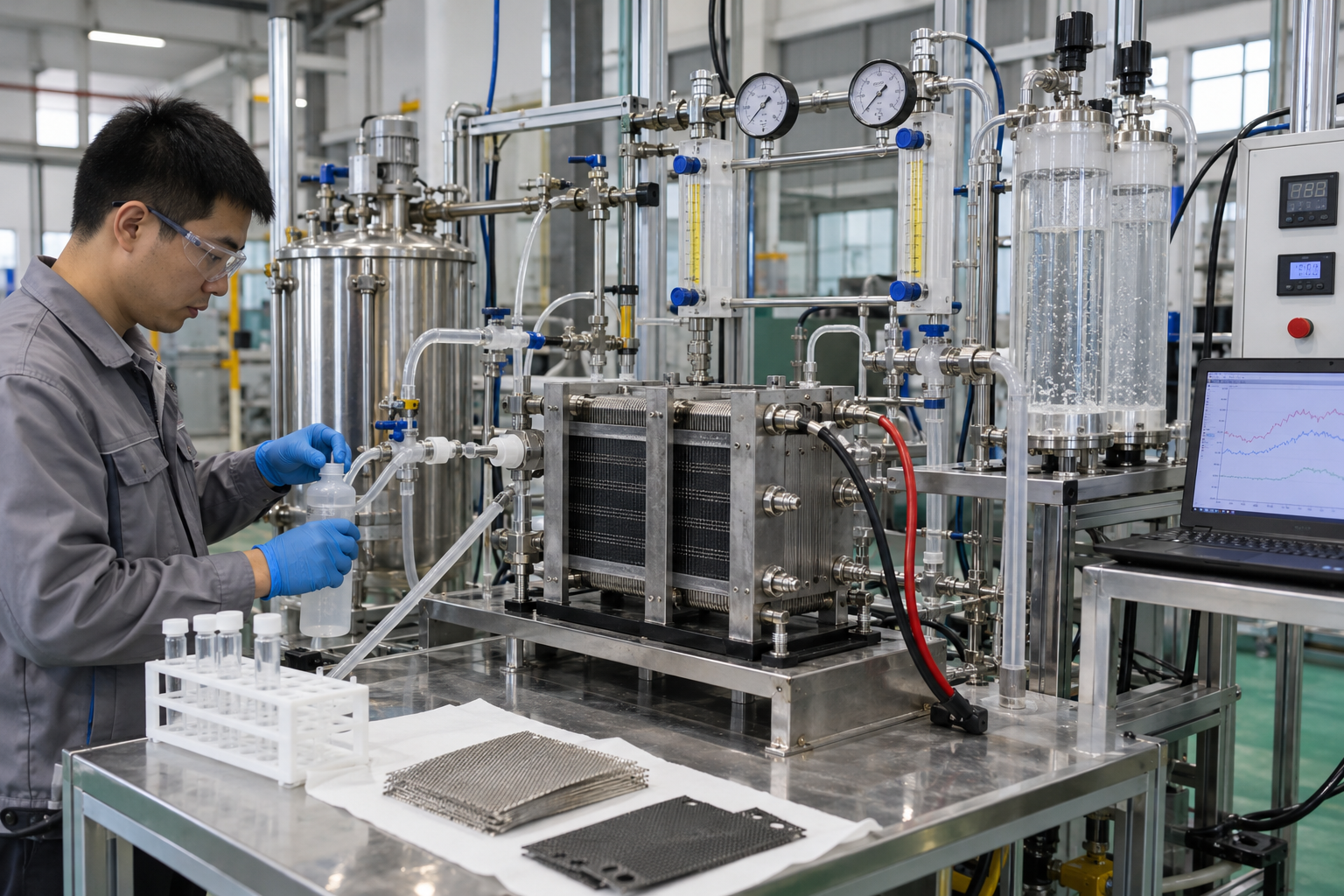
A water electrolysis electrode material pilot should measure electrical behavior, gas handling, water effects, heat, deposits, leakage, and repeatability. It should not make unsupported health claims.
Which engineering outputs are useful?
Choose values connected to product design and safety. Measure the device, not a marketing promise. Record:
- Current, voltage, temperature, runtime, and water data
- Gas production, separation, pressure, and vent response
- Surface condition, deposits, leakage, and control events
How should results support production?
Freeze water basis, hardware revision, settings, test method, and acceptance criteria. Repeat across a pilot batch.
| Pilot result | Question answered | Release use |
|---|---|---|
| Electrical trend | Are interfaces stable? | Design approval |
| Gas-path result | Is separation controlled? | Safety approval |
| Batch repeat | Does assembly repeat? | Production approval |
Key Takeaway: Use engineering measurements and batch repeatability to approve the product, while excluding medical claims.
10. What Should the Electrolyzer RFQ Include?

A water electrolysis electrode material RFQ should define cell architecture, polarity, water, electrical duty, gas path, geometry, controls, cleaning, and validation. It should separate device engineering from health marketing.
Which files should you send?
Use controlled drawings and operating sheets. Make interfaces and claims visible. Include:
- Water range, cell type, reaction, current, and temperature
- Electrode materials, spacing, contacts, separator, and gas path
- Quantity, controls, cleaning, sample plan, and acceptance
How should the project start?
Use the request-a-quote page with drawings and water data. Ask suppliers to state assumptions and exclusions.
| RFQ section | Buyer supplies | Supplier returns |
|---|---|---|
| Cell basis | Architecture and water | Material and surface proposal |
| Interfaces | Drawings and connections | Confirmed assembly concept |
| Validation | Engineering acceptance | Pilot method |
Key Takeaway: Approve materials through bounded water and device tests. When your package is ready, contact us today for review.
Frequently Asked Questions
Can I use bare titanium for every electrolysis electrode? No. Polarity, passivation, water chemistry, current, and interface requirements may require an active or protective surface.
What's the best water quality to specify? State source, pretreatment, conductivity, pH, hardness, chloride, temperature, and expected range.
How do I know if scale control works? Review water treatment, local chemistry, flow, polarity, temperature, cleaning, and operating trends.
Can I use one material for both electrodes? Not automatically. Anode and cathode reactions can require different surfaces and carriers.
Can I use this article to support health claims? No. It addresses electrochemical device engineering and does not establish medical or wellness effects.