
Mixed metal oxide anodes cathodic protection systems use an external DC source to discharge protective current from coated titanium anodes into an electrolyte such as soil or water. The protected structure acts as the cathode.
An anode selected without environment, current, cable, backfill, geometry, and monitoring data can underperform or fail at its connection. A sound design treats anode material as one part of the impressed-current system.
1. What Does an MMO Anode Do in ICCP?
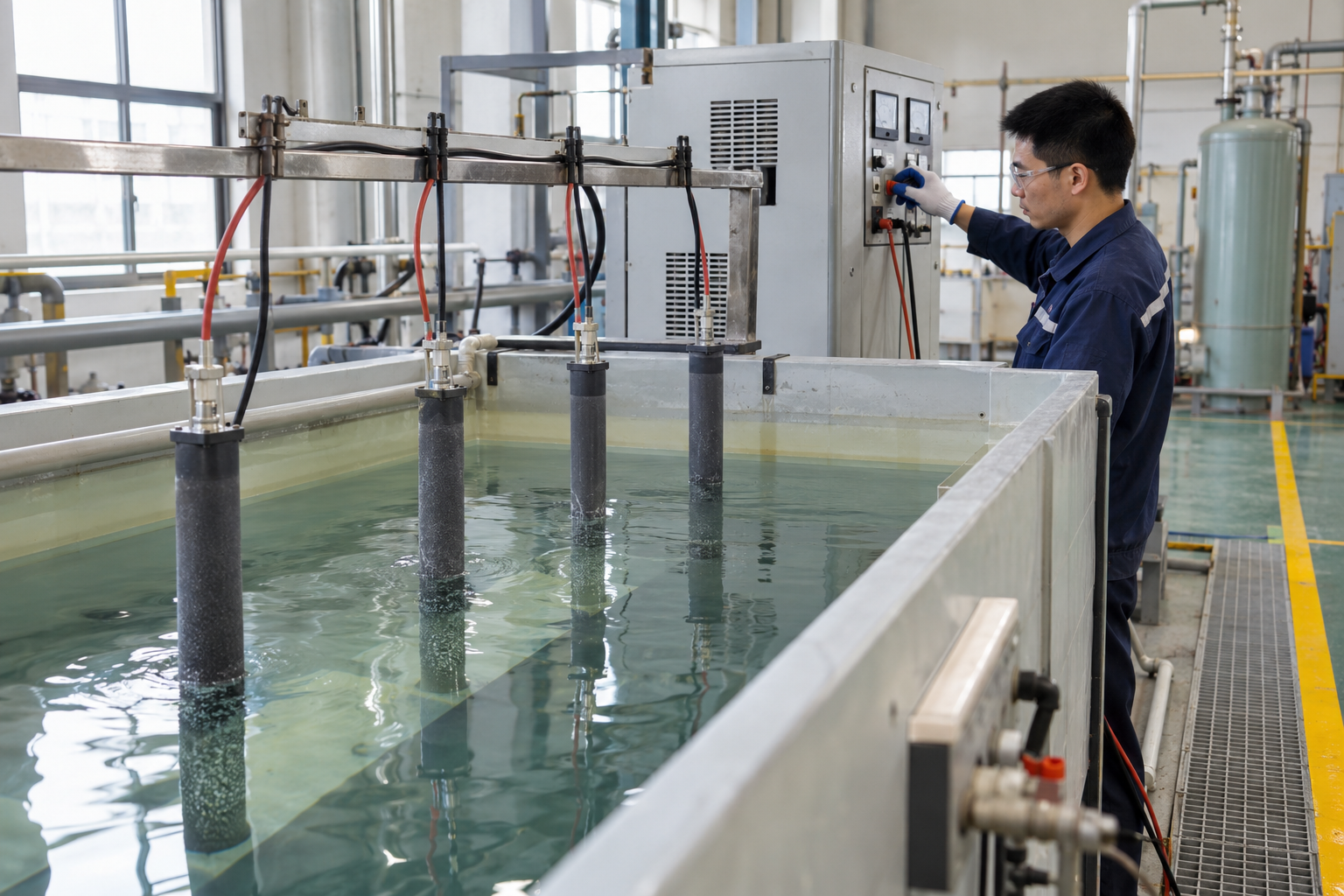
Mixed metal oxide anodes cathodic protection designs deliver current from a dimensionally stable coated titanium surface through the environment to the protected metal. The rectifier drives that circuit.
Which components complete the circuit?
The anode does not work alone. Trace current from source to structure. Review:
- Rectifier, positive cable, splice, and anode
- Soil, water, backfill, or other electrolyte
- Protected structure, negative return, and test stations
What is the design objective?
The system aims to maintain protective conditions across the structure without overdriving coatings, cables, or nearby assets. Qualified CP design remains site-specific.
| Component | Function | Failure risk |
|---|---|---|
| Rectifier | Supplies controlled DC | Wrong output or polarity |
| MMO anode | Discharges current | Coating or connection loss |
| Environment | Carries ionic current | High or changing resistance |
Key Takeaway: Evaluate the MMO anode inside the complete ICCP circuit and site environment.
2. Which Environments Affect Anode Choice?
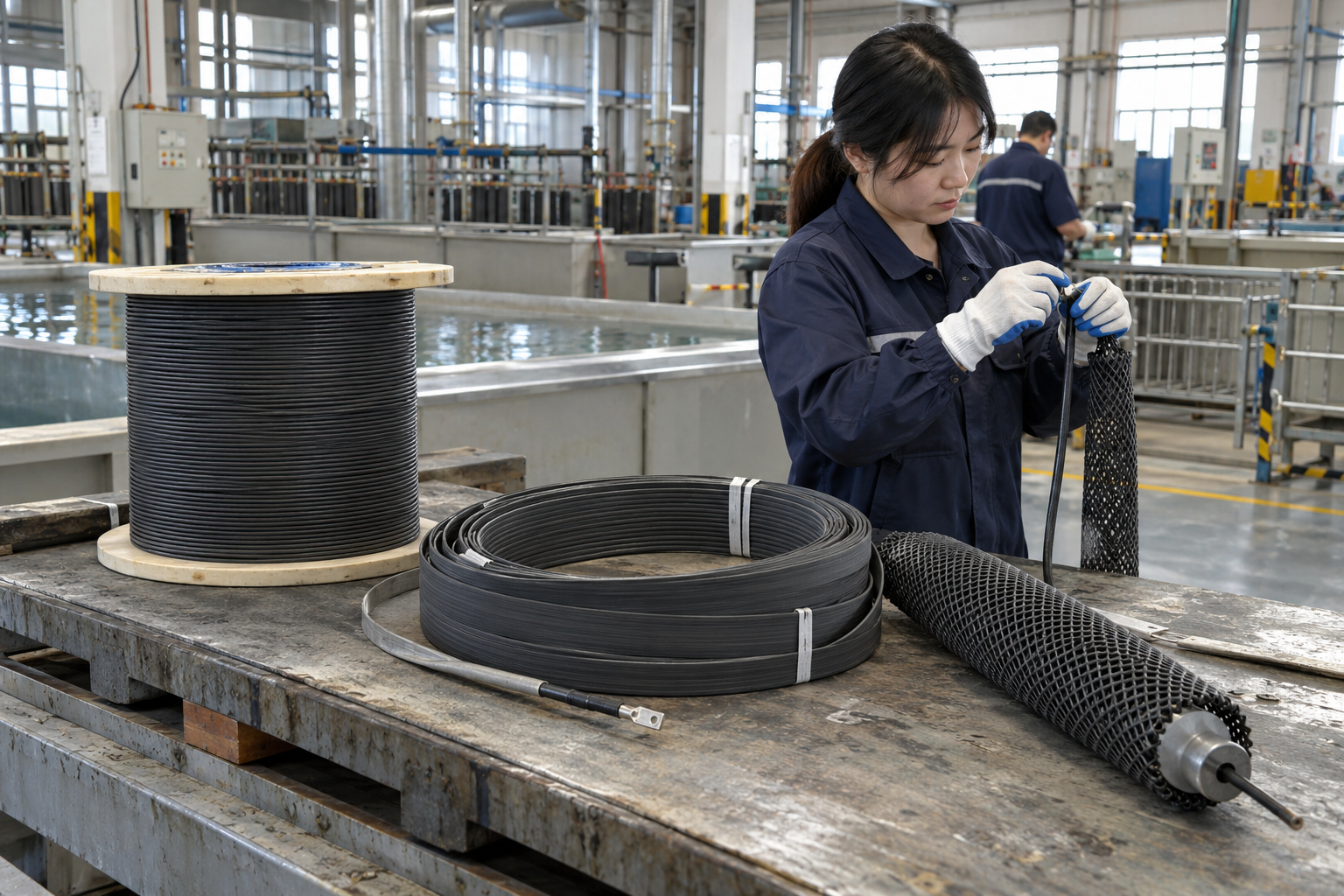
Mixed metal oxide anodes cathodic protection selection depends on soil, seawater, freshwater, mud, concrete, or tank-water conditions. Resistivity, chemistry, temperature, flow, and physical exposure all matter.
What site data should be collected?
Use measurements across expected variation. The environment is part of the electrical design. Include:
- Resistivity, salinity, pH, temperature, and moisture
- Flow, tidal change, burial depth, and sediment
- Contaminants, ice, mechanical loads, and access
Why do seasonal conditions matter?
Moisture, temperature, water level, and ice can change resistance or damage suspended equipment. Design for credible extremes.
| Environment | Key concern | Design input |
|---|---|---|
| Soil | Resistivity and drying | Survey and backfill |
| Water | Salinity, flow, and level | Immersion range |
| Tank | Access, coating, and ice | Support arrangement |
Key Takeaway: Select form, cable, support, and output against the site's full environmental range.
3. Which MMO Forms Are Used?
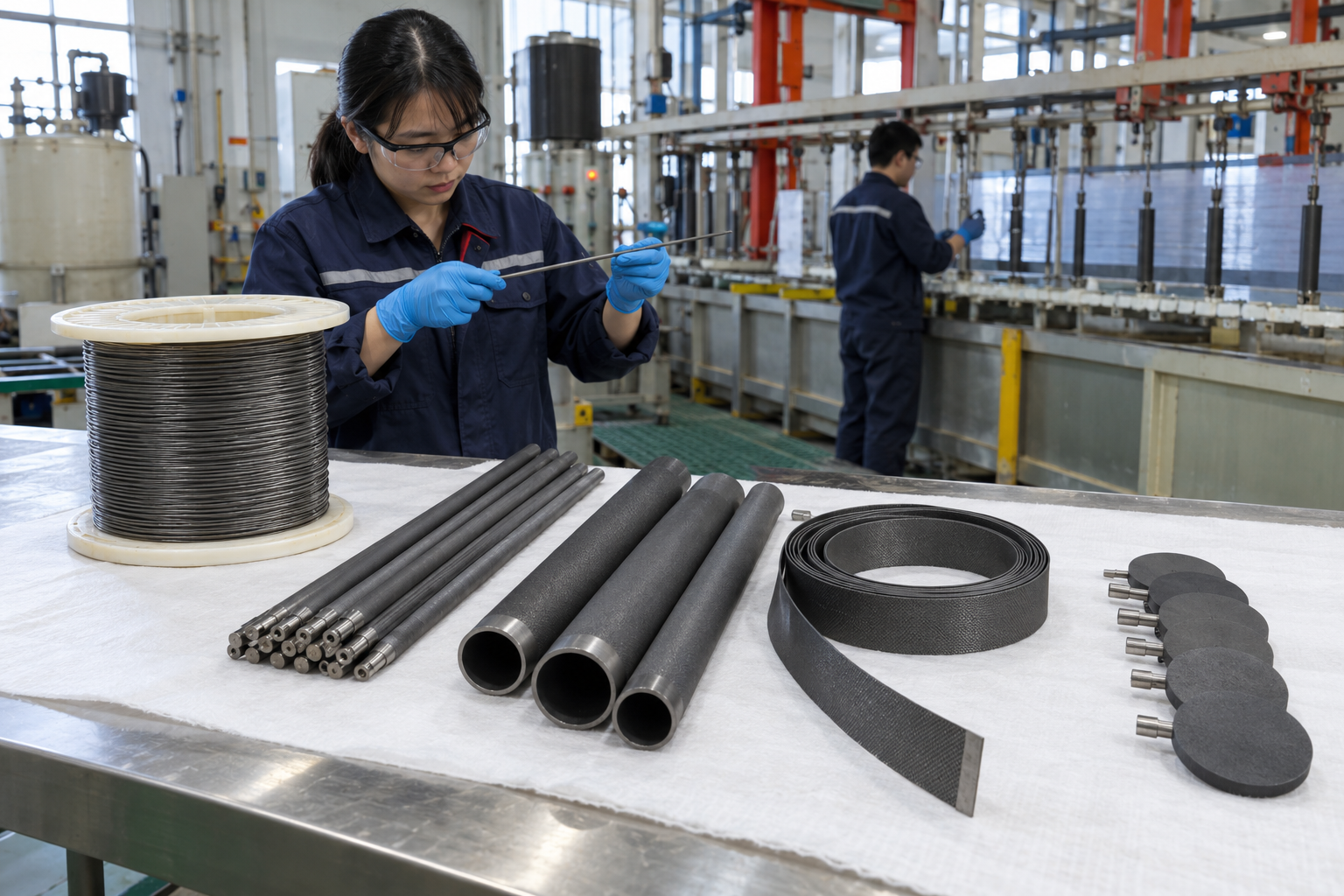
Mixed metal oxide anodes cathodic protection projects may use wire, rod, tube, ribbon, strip, mesh, or disc forms. Geometry follows current distribution, installation, and environment.
How does form affect installation?
Long wire can distribute current, while tubular units may suit anode beds or localized layouts. Shape follows the protection zone. Compare:
- Available installation length and depth
- Desired current distribution and spacing
- Handling, support, replacement, and cable routing
What should the drawing define?
Mark active length, diameter or width, cable exit, seal, splice, support, canister, and backfill. Include transport protection.
| Form | Typical design question | Drawing focus |
|---|---|---|
| Wire or ribbon | How is current spread? | Length and spacing |
| Tube or rod | How is unit installed? | Canister and cable exit |
| Disc or mesh | How is local area covered? | Mounting and exposure |
Key Takeaway: Use geometry to shape current distribution and installation reliability, not merely to maximize surface area.
4. How Is Anode Current Rating Determined?

Mixed metal oxide anodes cathodic protection rating depends on active surface, coating, environment, current density, design period, and system demand. A catalog maximum is not a project operating point.
Which calculations belong in design?
Qualified designers estimate structure demand and distribution. Current has a path and a duration. Inputs include:
- Protected area, coating condition, and current demand
- Environment resistivity and anode resistance
- Rectifier capacity, circuit losses, and design margin
Why should operating current stay below a simple maximum?
Distribution, coating consumption, environment, cable, and connection limits may govern before one published value. Use project calculations and accepted criteria.
| Rating input | Question | Evidence |
|---|---|---|
| Current demand | How much protection is needed? | CP calculation |
| Anode resistance | Can current reach environment? | Design model |
| Surface loading | Is coating duty controlled? | Active-area basis |
Key Takeaway: Set operating current from CP design, environment, active area, and lifetime assumptions together.
5. Why Are Cable Connections a Critical Risk?
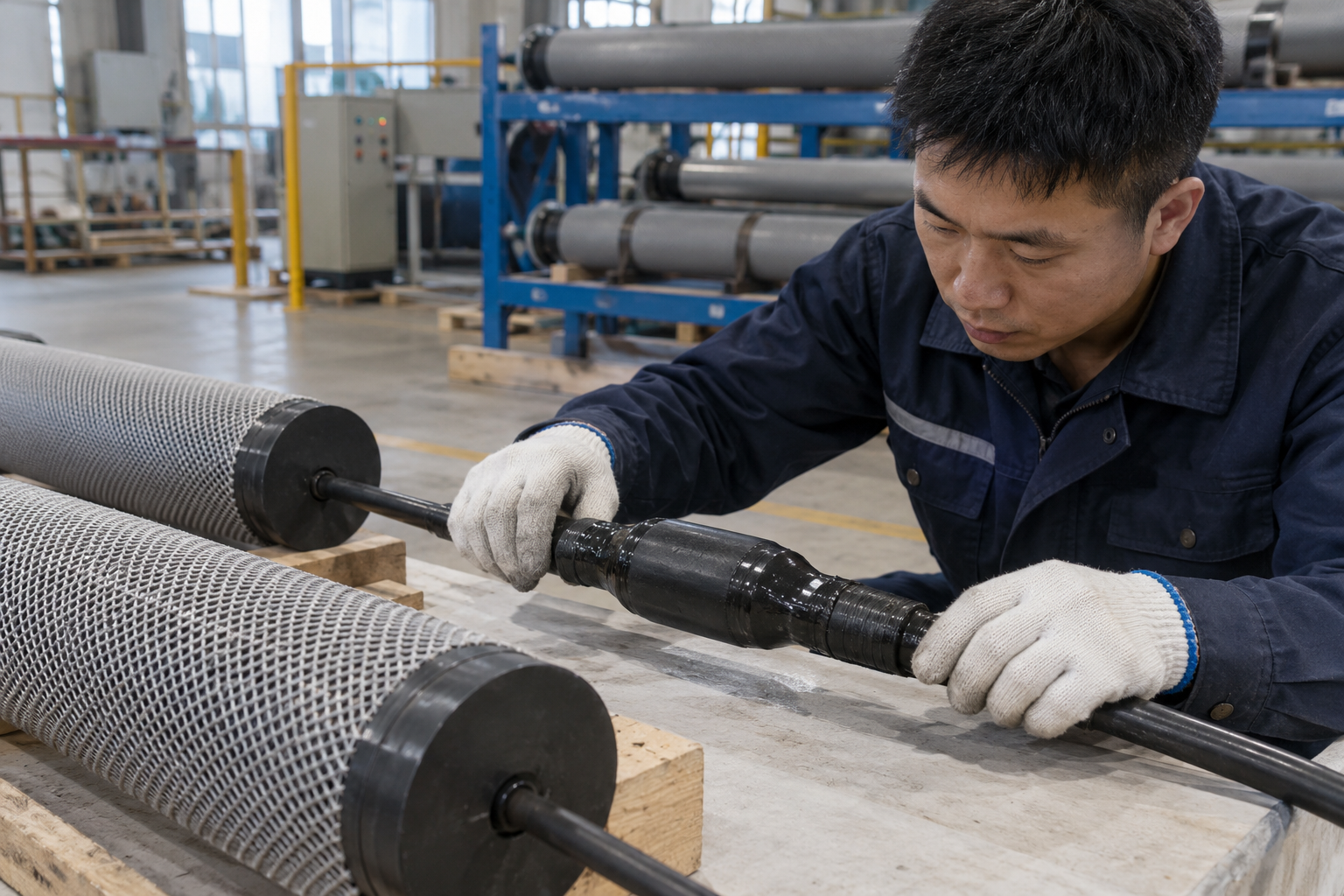
Mixed metal oxide anodes cathodic protection systems can fail when cable-to-anode connections admit moisture, loosen, overheat, or suffer installation damage. The coating may remain sound while the circuit opens.
What should the connection design cover?
Define conductor, joint, seal, strain relief, and environment. Connections live at the weakest interface. Review:
- Cable material, size, insulation, and length
- Factory joint, encapsulation, and water barrier
- Pull load, bend radius, support, and installation method
How should connections be tested?
Use visual, dimensional, continuity, resistance, insulation, and sealing checks appropriate to the design. Preserve results by serial or batch identity.
| Connection risk | Check | Acceptance purpose |
|---|---|---|
| Moisture ingress | Seal and insulation | Prevent corrosion and leakage |
| High resistance | Electrical measurement | Prevent heat and voltage loss |
| Mechanical damage | Visual and pull control | Preserve cable integrity |
Key Takeaway: Specify and inspect cable connections with the same discipline as the MMO surface.
6. When Is Backfill or a Canister Needed?
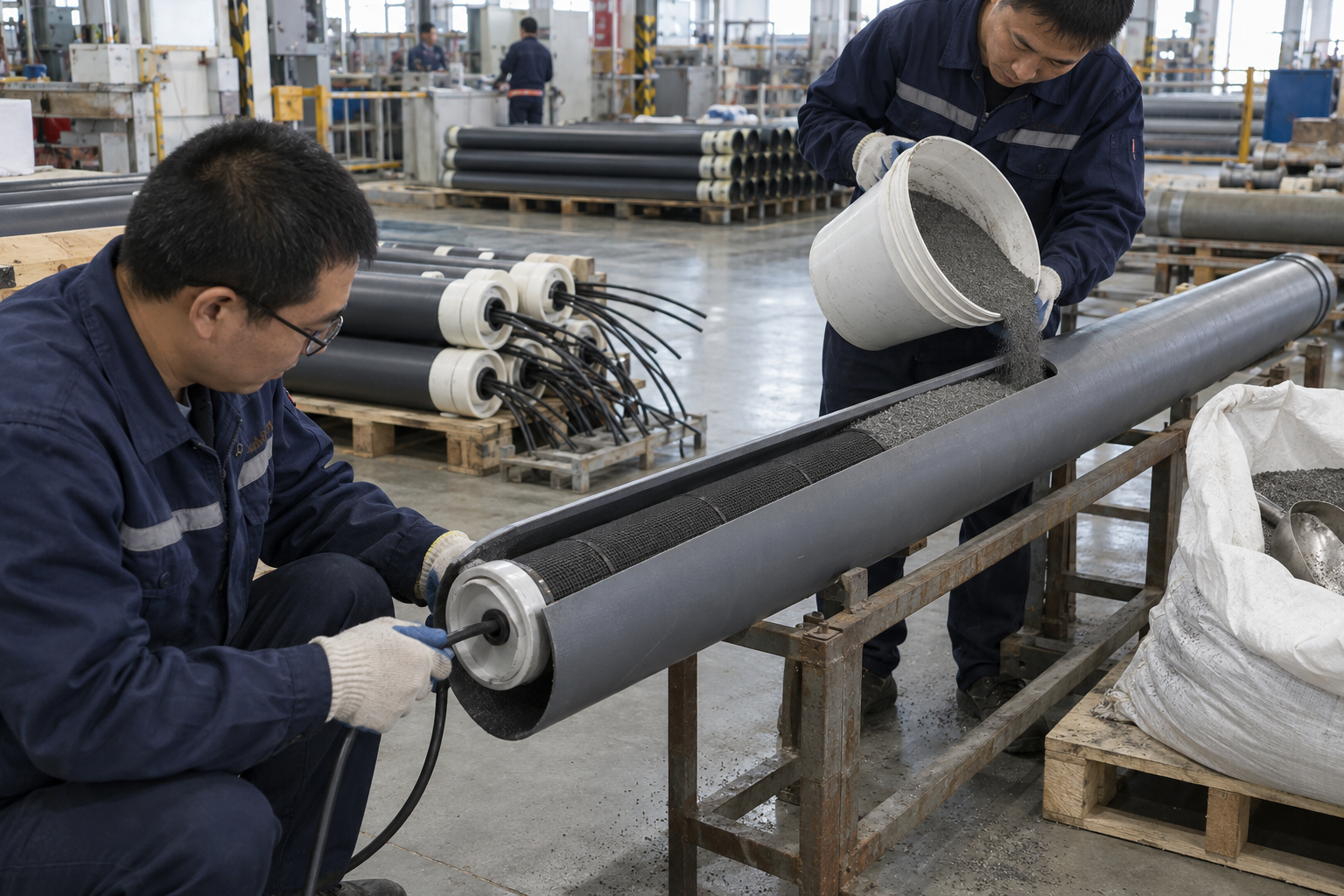
Mixed metal oxide anodes cathodic protection installations may use conductive backfill or canisters to control contact, resistance, gas movement, and installation. Suitability depends on the site and anode-bed design.
What should be defined for underground service?
Coordinate anode, backfill, bore, vent, cable, and header. Anode bed details control field performance. Include:
- Backfill material and placement method
- Canister dimensions and anode position
- Venting, moisture, cable routing, and commissioning
What can poor installation cause?
Voids, damaged cable, wrong backfill, blocked venting, or poor spacing can raise resistance and reduce output.
| Installation item | Failure mode | Verification |
|---|---|---|
| Backfill contact | High resistance | Placement record |
| Cable | Damage during lowering | Continuity check |
| Vent | Gas accumulation | Flow and layout check |
Key Takeaway: Treat backfill and installation as designed electrical components, not loose construction details.
7. How Should Anodes Be Positioned?
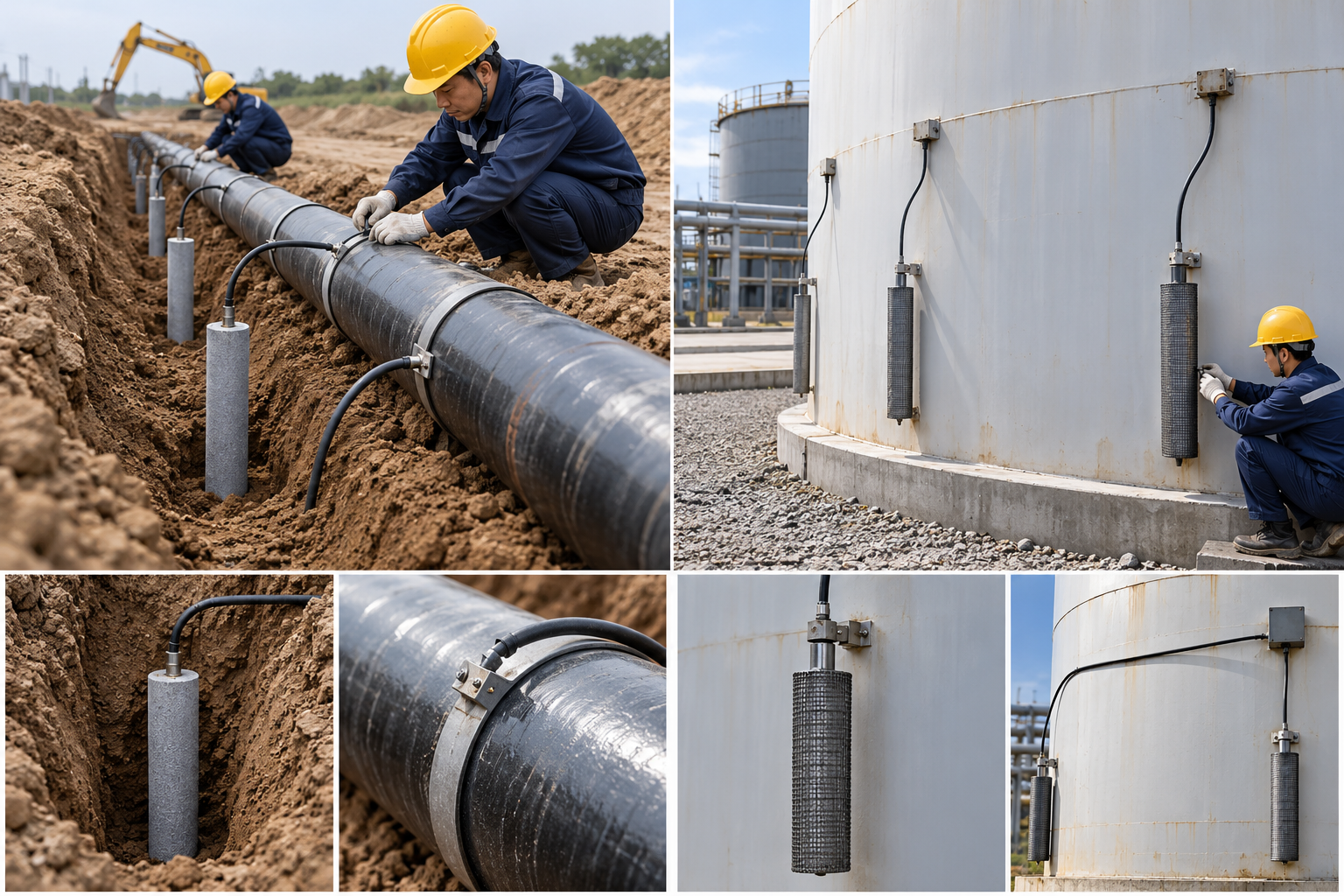
Mixed metal oxide anodes cathodic protection placement should distribute protective current without excessive local potential or shielding. Structure geometry and electrolyte paths guide spacing.
Which layout questions matter?
Model the whole protected asset. One strong anode cannot fix a blind zone. Review:
- Structure size, coating, electrical continuity, and shielding
- Anode distance, depth, spacing, and orientation
- Nearby structures and interference risk
How is the layout verified after installation?
Use commissioning measurements at defined test locations. Compare results with design assumptions and adjust rectifier output as required.
| Layout issue | Field symptom | Response |
|---|---|---|
| Poor distribution | Underprotected zone | Add or reposition capacity |
| Excess local current | High local potential | Adjust layout or output |
| Interference | Effect on nearby asset | Coordinate mitigation |
Key Takeaway: Position anodes from current-distribution analysis and confirm the result through field measurements.
8. What Quality Evidence Should Be Requested?
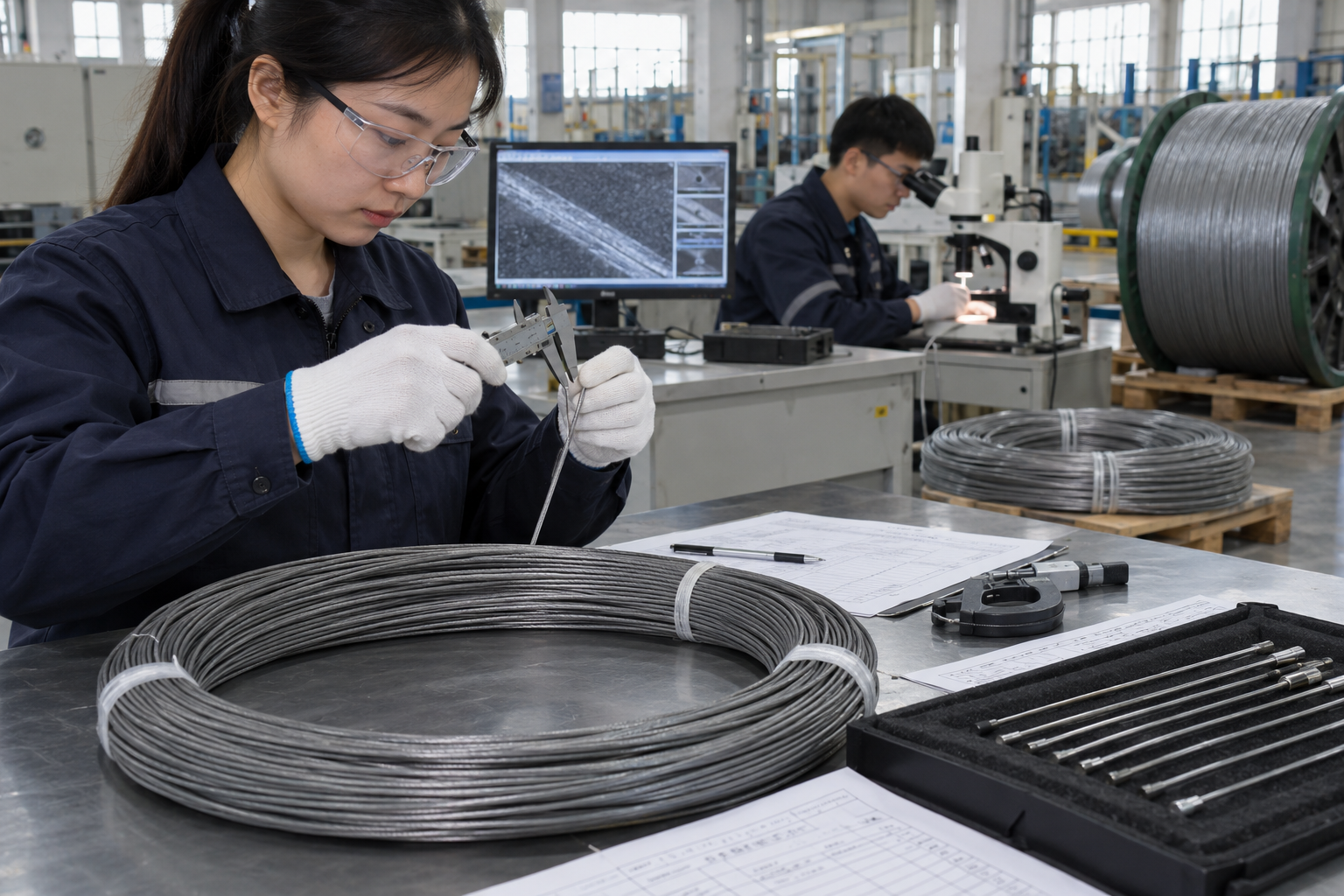
Mixed metal oxide anodes cathodic protection procurement should verify anode identity, dimensions, active coating, cable, connection, seals, and project-specific test evidence. Traceability supports later field diagnosis.
Which records follow the hardware?
Agree on the package before manufacture. Records connect factory and field. Request:
- Part number, drawing revision, and batch identity
- Dimensions, active area, cable, and connection checks
- Agreed coating, electrical, sealing, or life-test evidence
How can the site support the discussion?
The quality-control page can frame the supplier review, while project specifications define exact acceptance.
| Record | Purpose | Field use |
|---|---|---|
| Drawing report | Confirm installation fit | Replacement baseline |
| Cable record | Confirm circuit assembly | Fault diagnosis |
| Batch evidence | Confirm supplied lot | Traceability |
Key Takeaway: Preserve factory identity and connection evidence so field results can be traced to the correct hardware.
9. What Should Commissioning and Monitoring Cover?
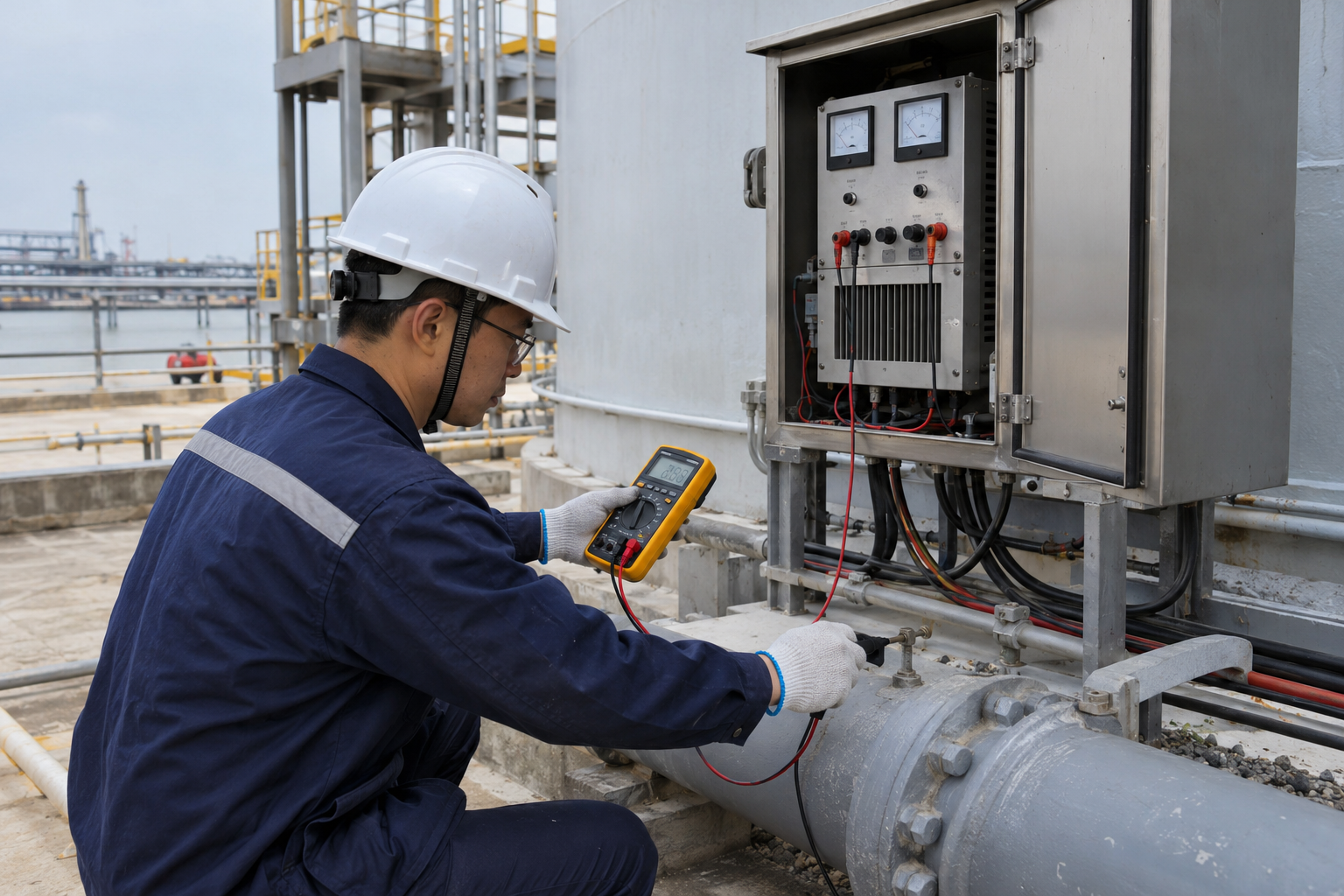
Mixed metal oxide anodes cathodic protection systems need commissioning and routine monitoring of rectifier, circuit, structure response, test stations, and environment. Anode condition is inferred through system evidence.
Which baseline values should be saved?
Use measurements defined by qualified CP design. A baseline turns readings into trends. Preserve:
- Rectifier voltage and current
- Structure-to-electrolyte measurements and test locations
- Circuit resistance, environmental notes, and adjustments
How should a change be investigated?
Check power, cable, splice, anode, structure continuity, reference electrode, environment, and interference. Do not assume coating loss first.
| Change | Possible source | First check |
|---|---|---|
| Output falls | Power or circuit fault | Rectifier and cable |
| Resistance rises | Connection or environment | Splice and anode bed |
| Structure response changes | Coating, continuity, or interference | Field survey |
Key Takeaway: Monitor the entire ICCP circuit and compare results with a preserved commissioning baseline.
10. What Should an MMO CP Anode RFQ Include?
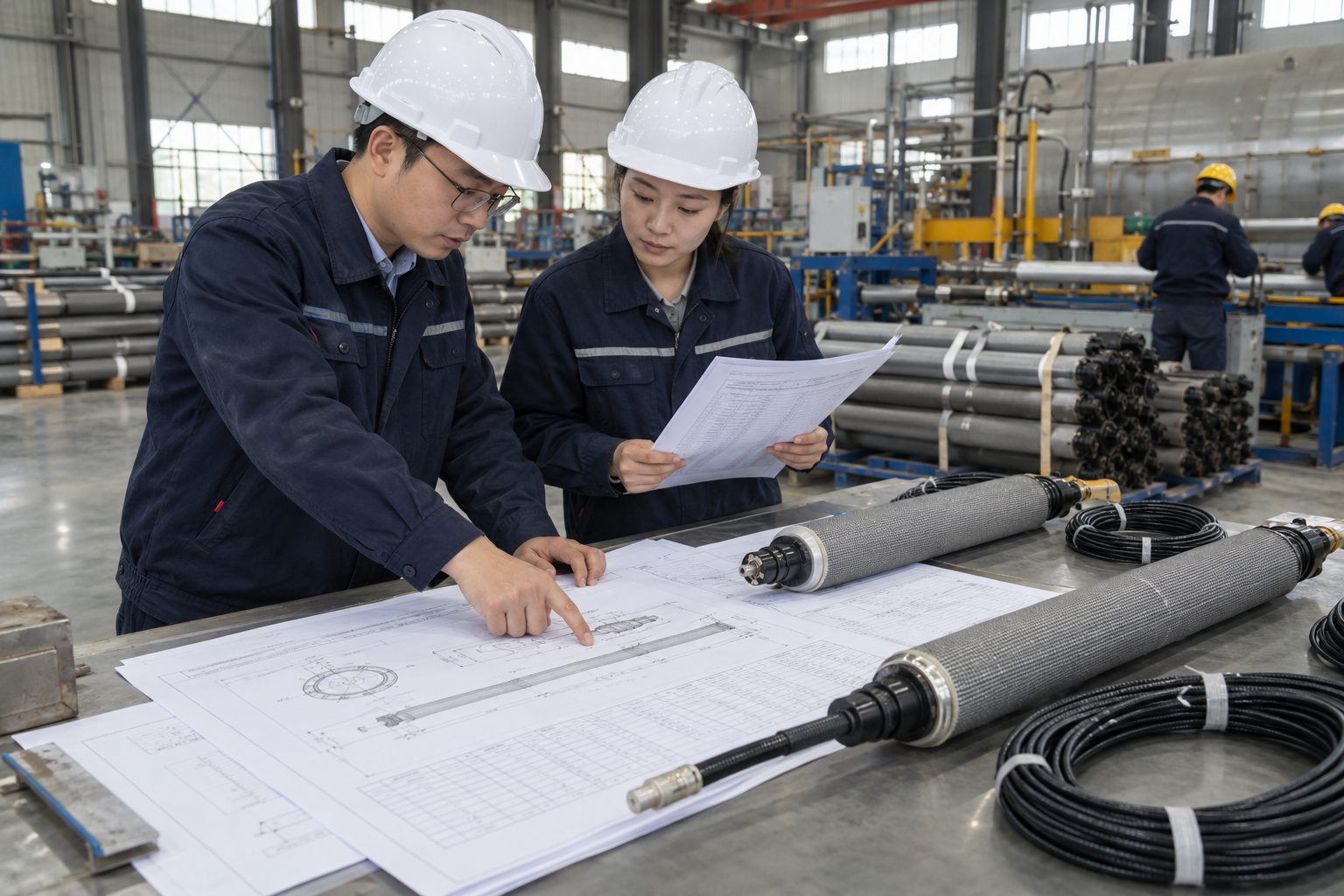
Mixed metal oxide anodes cathodic protection RFQs should define environment, current demand, design period, anode form, active area, cable, connection, installation, testing, and records. Project-specific CP design remains the governing basis.
Which documents should you send?
Use controlled site and system documents. Make installation conditions visible. Include:
- CP calculations, environment data, and structure drawings
- Anode layout, current, form, cable, splice, and backfill
- Quantity, installation, commissioning, tests, and records
How should suppliers answer?
Use the request-a-quote page and require design assumptions, exclusions, anode details, connection method, and documentation.
| Response field | Strong answer | Warning sign |
|---|---|---|
| Environment | Site data addressed | Generic seawater or soil label |
| Current basis | Active area and rating stated | Catalog maximum only |
| Connection | Sealing and cable defined | Anode body only |
Key Takeaway: Procure the complete anode assembly against qualified CP design. When your site package is ready, contact us today for review.
Frequently Asked Questions
Can I use an MMO anode without a rectifier? Not in an impressed-current system. The external DC source drives protective current.
What's the best MMO anode shape? Shape depends on environment, current distribution, installation, support, and replacement strategy.
How do I know if an anode cable connection is failing? Check moisture ingress, sealing, resistance, mechanical damage, output, and installation history.
How do I know if an MMO anode is consumed? System trends, circuit tests, field measurements, and inspection guide diagnosis; output loss can have other causes.
Can I ask the supplier to design the entire CP system? Only a qualified party with the required site data and applicable design responsibility should complete CP design.