
A ruthenium iridium titanium anode commonly supports chlorine-evolution duty, while iridium-tantalum systems are often considered for demanding oxygen-evolution conditions. Final selection still depends on your electrolyte, loading, temperature, impurities, and expected reaction.
A coating chosen by industry label alone can increase voltage, lose selectivity, or wear before your validation target. The safer route compares reaction chemistry first, then confirms geometry, operating limits, inspection, and pilot evidence.
1. What Separates Ru-Ir and Ir-Ta Coatings?
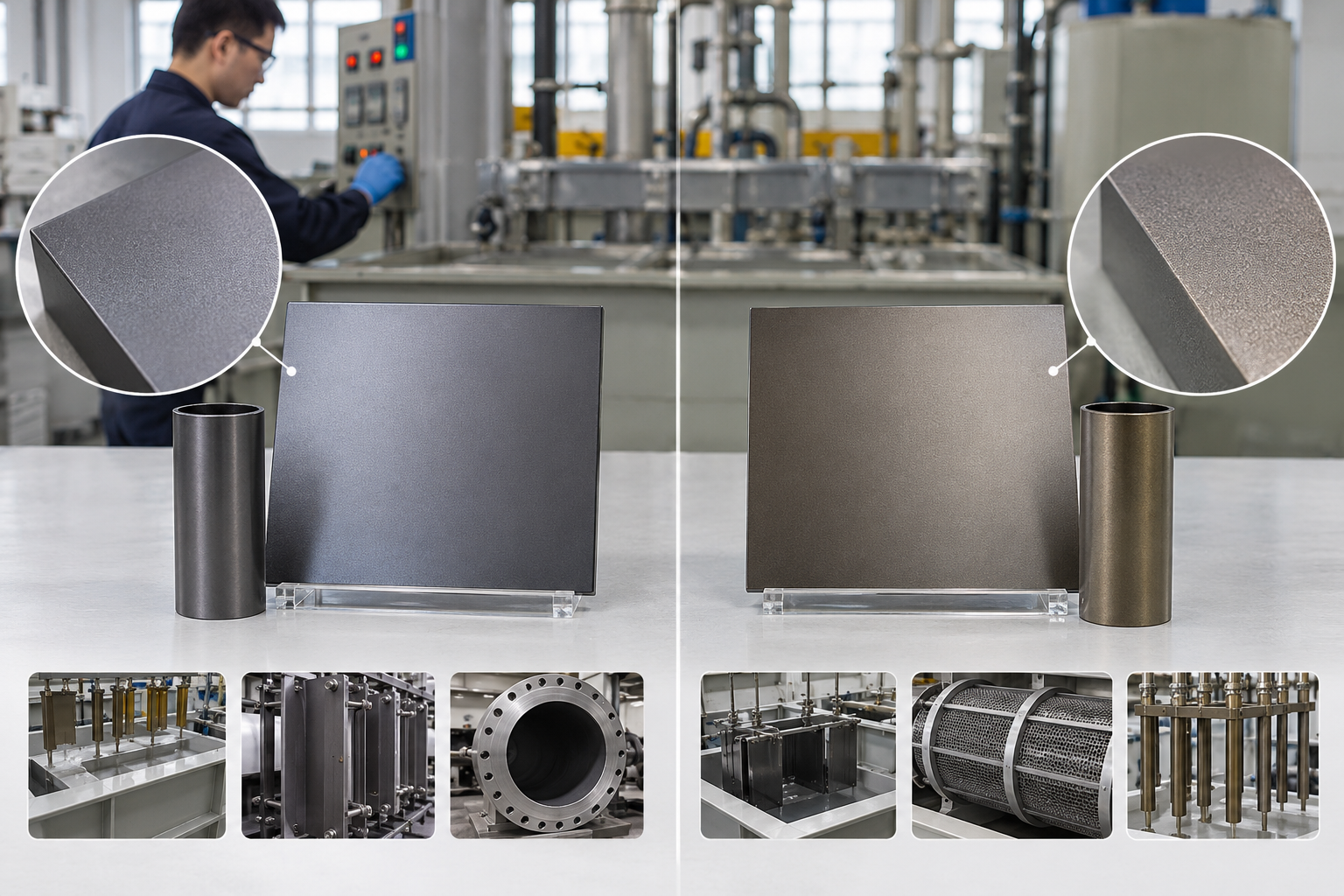
A ruthenium iridium titanium anode uses ruthenium- and iridium-based oxides on titanium, while an Ir-Ta coating uses iridium and tantalum oxide components. Their catalytic behavior and stability priorities differ by reaction environment.
What does each component contribute?
The active oxides carry anodic charge transfer, while stabilizing components influence structure and durability. Chemistry has a job to do. Ask suppliers to explain:
- Target reaction and electrolyte basis
- Why the proposed oxide family fits that duty
- Which conditions remain outside the recommendation
Why should buyers avoid color-based selection?
Surface color can vary with formulation, loading, treatment, and lighting. It cannot prove composition, reaction fit, or expected performance.
| Comparison | Ru-Ir family | Ir-Ta family |
|---|---|---|
| Common selection question | Chlorine selectivity | Oxygen-duty stability |
| Buyer input | Chloride and target output | Acid, sulfate, or oxidative duty |
| Weak evidence | Surface color | Surface color |
Key Takeaway: Compare reaction basis and operating limits, not visual similarity between two dark coated surfaces.
2. Which Reaction Does Your Cell Need?

A ruthenium iridium titanium anode decision begins with the product or treatment reaction required at the anode. Chlorine evolution and oxygen evolution place different demands on catalytic selectivity and stability.
How do you define reaction duty?
State what the cell must produce or remove under normal conditions. Name the reaction before the coating. Include:
- Target anodic product or treatment mechanism
- Electrolyte species that may compete at the surface
- Purity, byproduct, and gas-handling limits
What if several reactions can occur?
Mixed chemistry needs a risk review rather than a shortcut. Pilot testing can measure output, voltage, byproducts, and surface change under realistic conditions.
| Duty description | Missing detail | Decision risk |
|---|---|---|
| “Salt water” | Chloride range and target product | Unclear selectivity |
| “Acid bath” | Acid type and concentration | Wrong stability basis |
| “Wastewater” | Full matrix and variability | Unplanned side reactions |
Key Takeaway: Write the intended reaction and credible competing reactions into the selection brief.
3. When Does Ru-Ir Fit Chloride Duty?
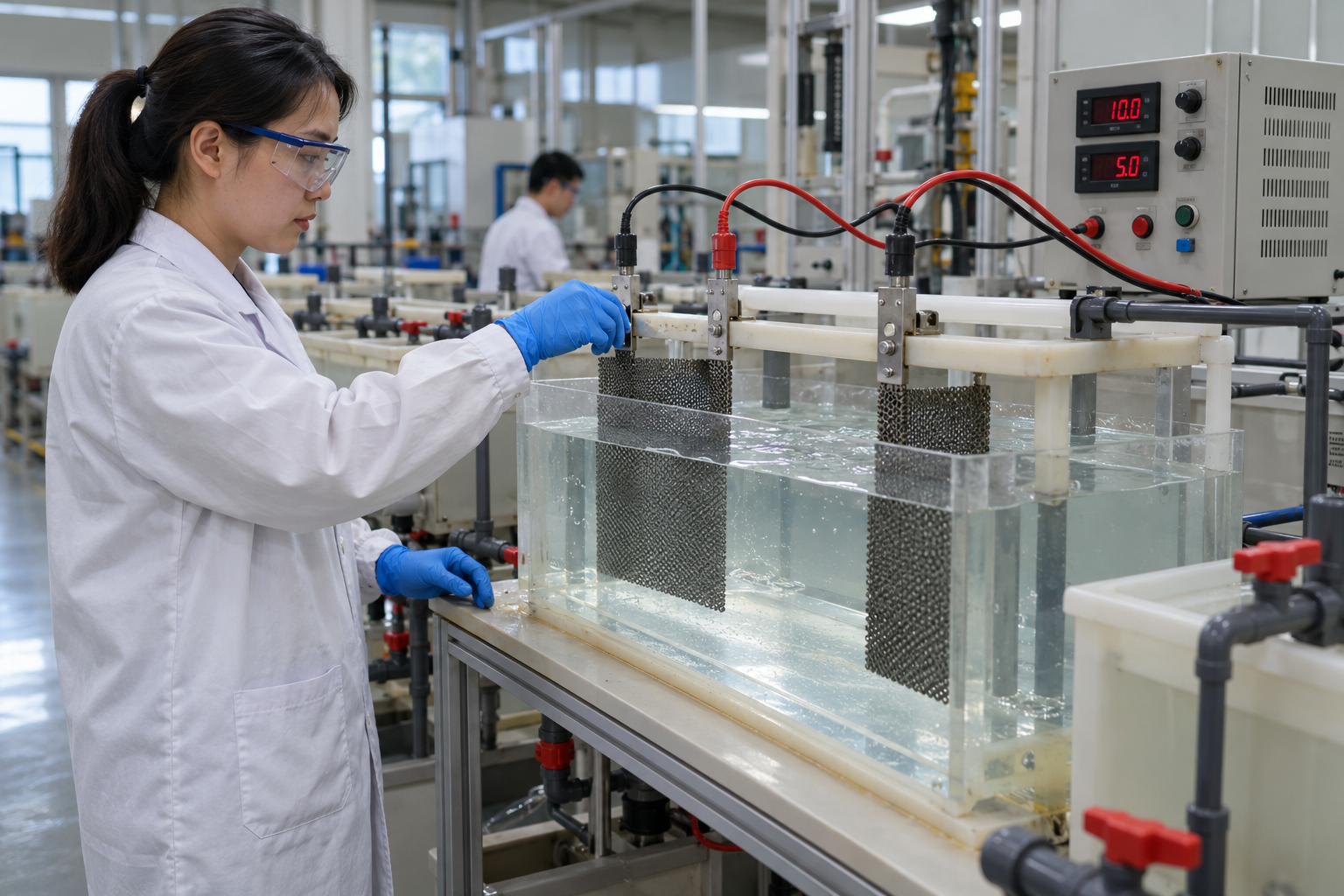
A ruthenium iridium titanium anode may fit chloride-rich systems where chlorine evolution or hypochlorite production drives the design. The recommendation must still account for concentration, pH, current, temperature, and gas release.
Which chloride data should you provide?
Give a full analysis rather than a salt name. Chloride alone is not a specification. Record:
- Normal and maximum chloride concentration
- pH, temperature, conductivity, and impurities
- Target output, current density, flow, and runtime
How should output be validated?
Compare electrical input with measured product output under controlled flow and temperature. Track voltage and surface condition during the same test.
| Validation item | Measurement | Buyer use |
|---|---|---|
| Product output | Defined analytical method | Confirm reaction performance |
| Cell voltage | Constant-current trend | Detect rising resistance |
| Temperature | Inlet and cell value | Check thermal control |
Key Takeaway: Validate Ru-Ir under your chloride duty, not against a generic coating description.
4. When Does Ir-Ta Fit Oxygen-Evolution Duty?
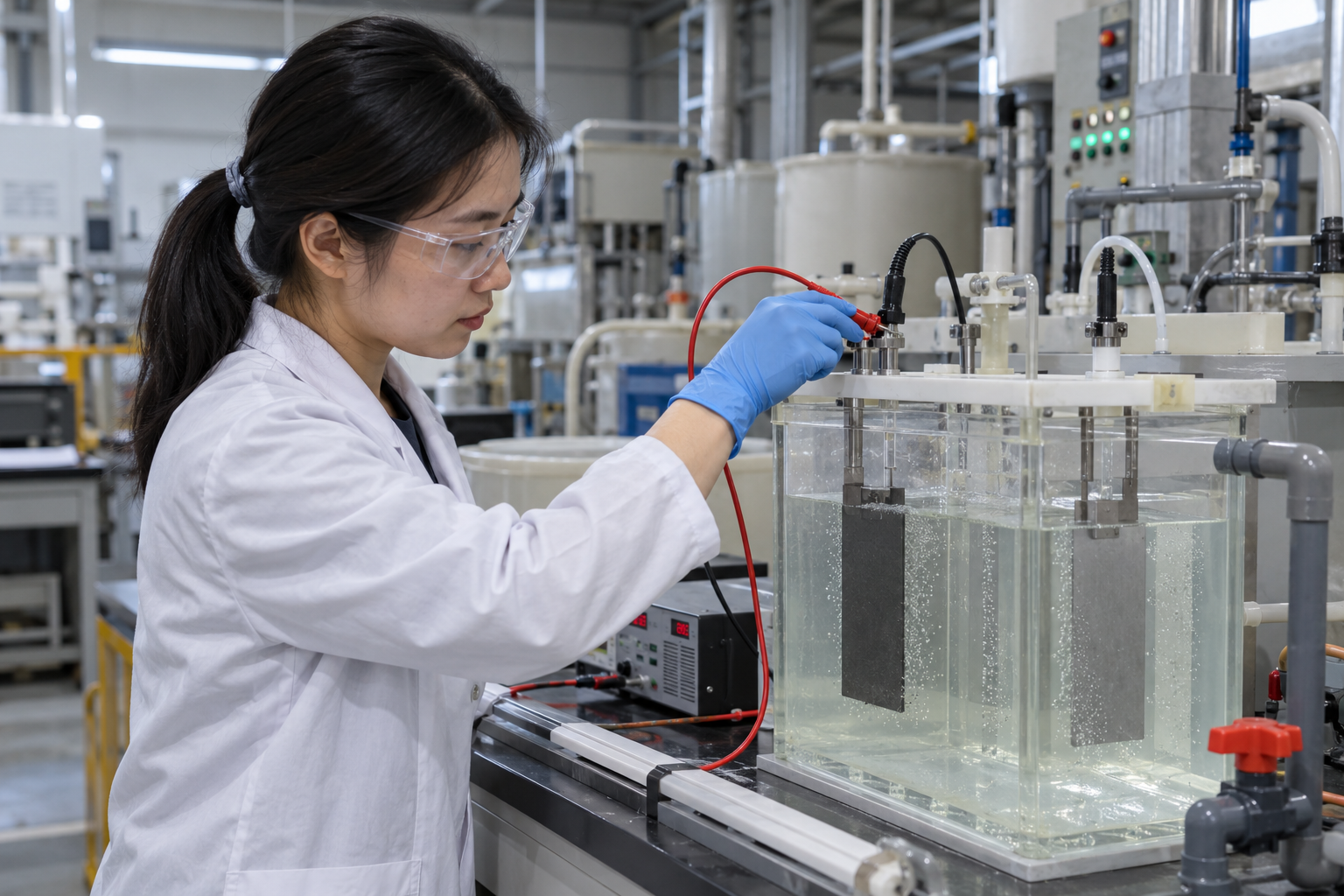
A ruthenium iridium titanium anode comparison points toward Ir-Ta when oxygen evolution under acidic or strongly oxidative conditions controls design. Exact suitability depends on the full electrolyte and loading profile.
Which conditions stress an oxygen-duty coating?
High anodic potential, acidity, heat, and sustained current affect catalyst stability. Use limits, not adjectives. Provide:
- Acid or salt composition and concentration
- Normal and peak current density
- Temperature, duty cycle, and impurities
What evidence should support the recommendation?
Request a stated design basis, relevant batch controls, and a pilot route. Avoid universal claims that ignore chemistry and current.
| Evidence | What it proves | What it cannot prove alone |
|---|---|---|
| Coating description | Proposed family | Field life in your cell |
| Batch record | Production identity | Reaction fit |
| Pilot result | Behavior under test | Every future upset condition |
Key Takeaway: Ir-Ta selection needs an oxygen-duty operating envelope and a test linked to that envelope.
5. How Do Current and Temperature Change the Choice?
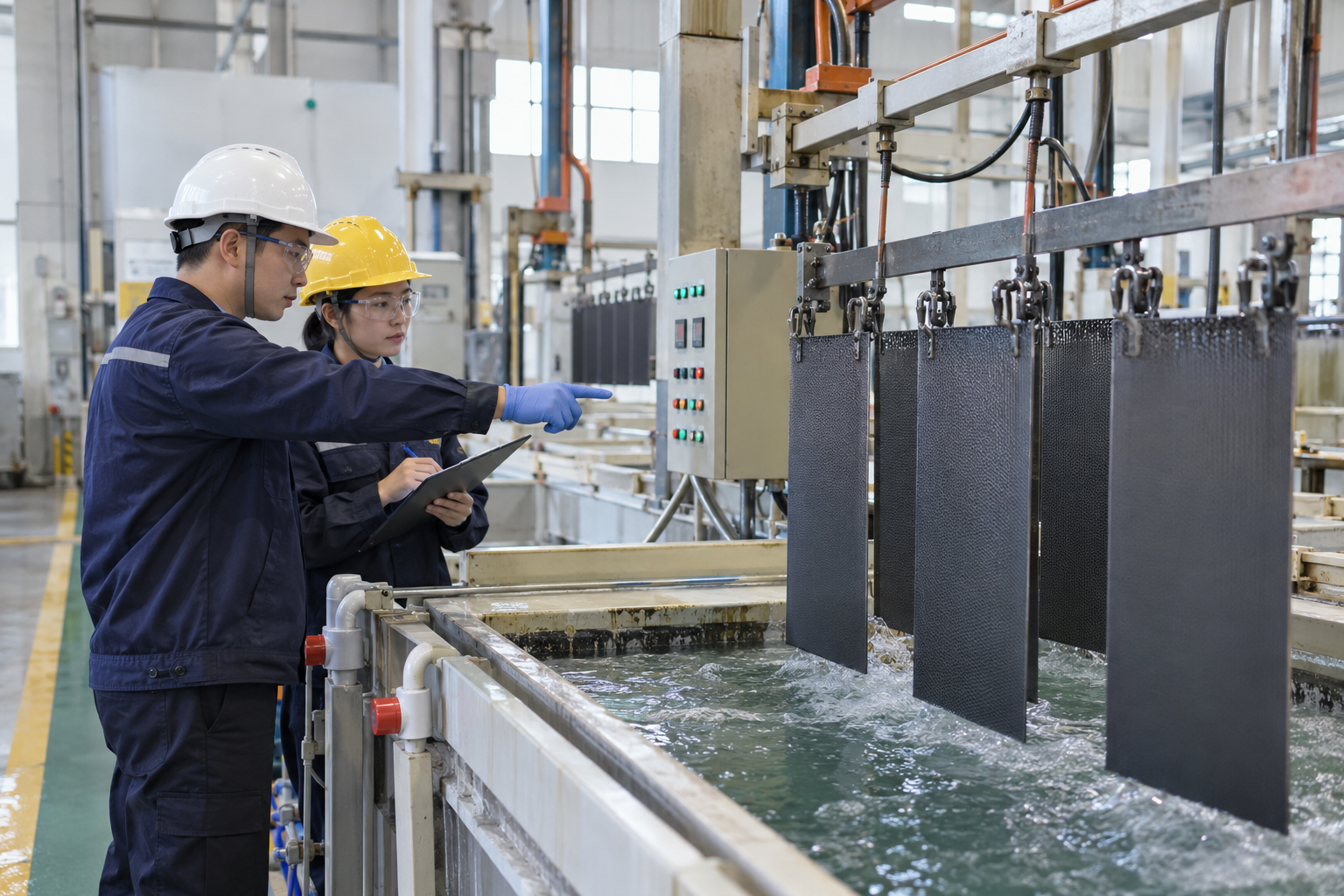
A ruthenium iridium titanium anode and an Ir-Ta anode can respond differently as current and temperature rise. Nominal values are not enough when startup or upset peaks drive surface stress.
Which electrical values belong in the RFQ?
Separate cell current from current density and active area. Peak loading deserves its own line. Include:
- Normal, startup, and maximum current
- Active coated area and current distribution assumptions
- Voltage range, rectifier control, and polarity
How should thermal duty be described?
Record inlet, outlet, cell, and maximum allowable temperatures where available. Include cycling, cooling loss, and seasonal effects.
| Parameter | Nominal data | Boundary data |
|---|---|---|
| Current | Normal running value | Peak and startup value |
| Temperature | Typical cell value | Maximum and cycle |
| Runtime | Hours per cycle | Continuous or intermittent duty |
Key Takeaway: Compare coatings against peak electrical and thermal duty, not only average operation.
6. How Do Impurities Affect MMO Selection?
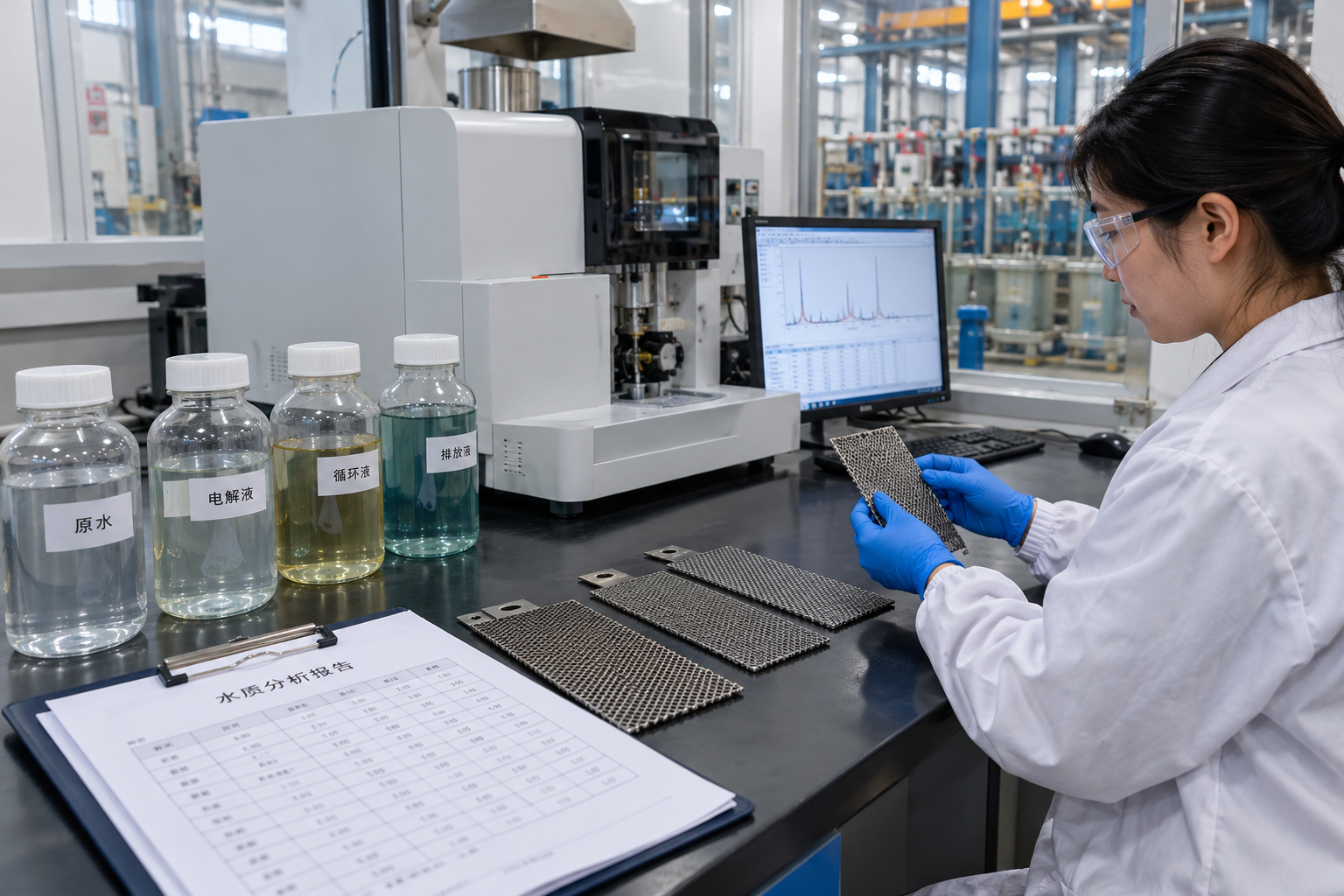
A ruthenium iridium titanium anode can face deposits, poisoning, side reactions, or substrate attack when impurities enter the electrolyte. Their effect depends on concentration and operating conditions.
Which impurities should be reported?
Share the actual analysis and expected variation. Small concentrations can change a large decision. Review:
- Halides, metals, hardness, organics, and suspended solids
- Makeup water, raw material, and process carryover
- Cleaning chemicals and accidental contamination
What should a supplier do with that data?
The supplier should flag known incompatibilities, request missing tests, and qualify any recommendation. Unknowns belong in a pilot plan.
| Impurity issue | Possible effect | Response |
|---|---|---|
| Deposits | Blocked active area | Cleaning and flow review |
| Competing ions | Side reactions | Selectivity test |
| Aggressive species | Substrate or coating attack | Compatibility review |
Key Takeaway: Impurity data helps define whether coating choice, pretreatment, cleaning, or a different material needs attention.
7. How Does Geometry Interact with Coating Choice?
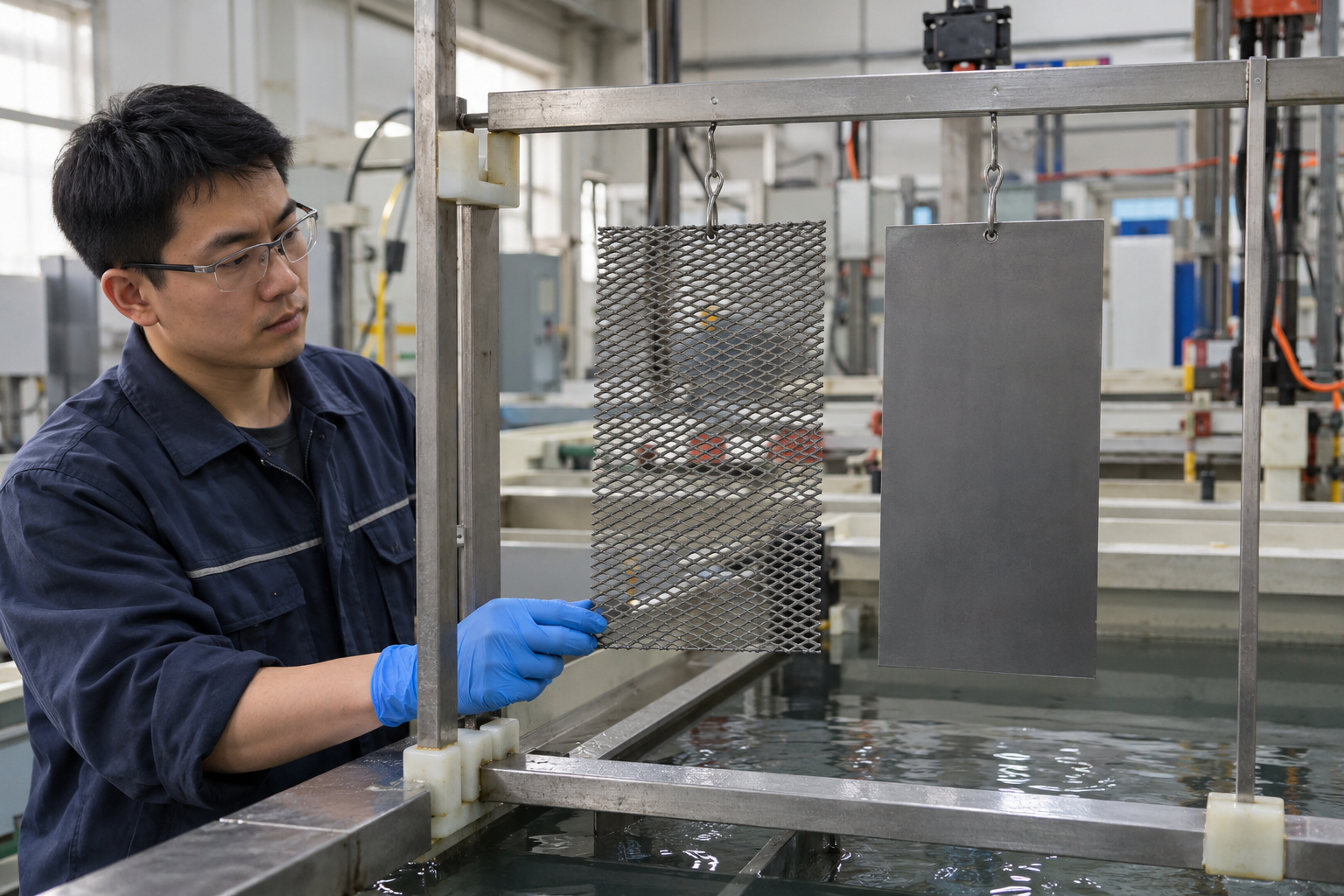
A ruthenium iridium titanium anode needs geometry that supports flow, gas release, current distribution, and mounting. An Ir-Ta surface follows the same cell-design discipline.
Which forms are commonly considered?
Plate, mesh, tube, rod, ribbon, and custom assemblies serve different spaces. Shape follows transport and current. Compare:
- Flatness and gap control for plate designs
- Open area and bubble release for mesh
- Radial fields for tube or rod arrangements
What must stay uncoated?
Contact faces, selected weld zones, threads, or masked edges may need defined treatment. Mark every boundary on the drawing.
| Geometry field | Design question | Inspection evidence |
|---|---|---|
| Active area | Which face works? | Coating boundary check |
| Connection | Where does current enter? | Contact fit and continuity |
| Spacing | How is gap controlled? | Assembly fixture result |
Key Takeaway: Match geometry and coating together because both shape real current density and mass transfer.
8. How Should Ru-Ir and Ir-Ta Be Inspected?
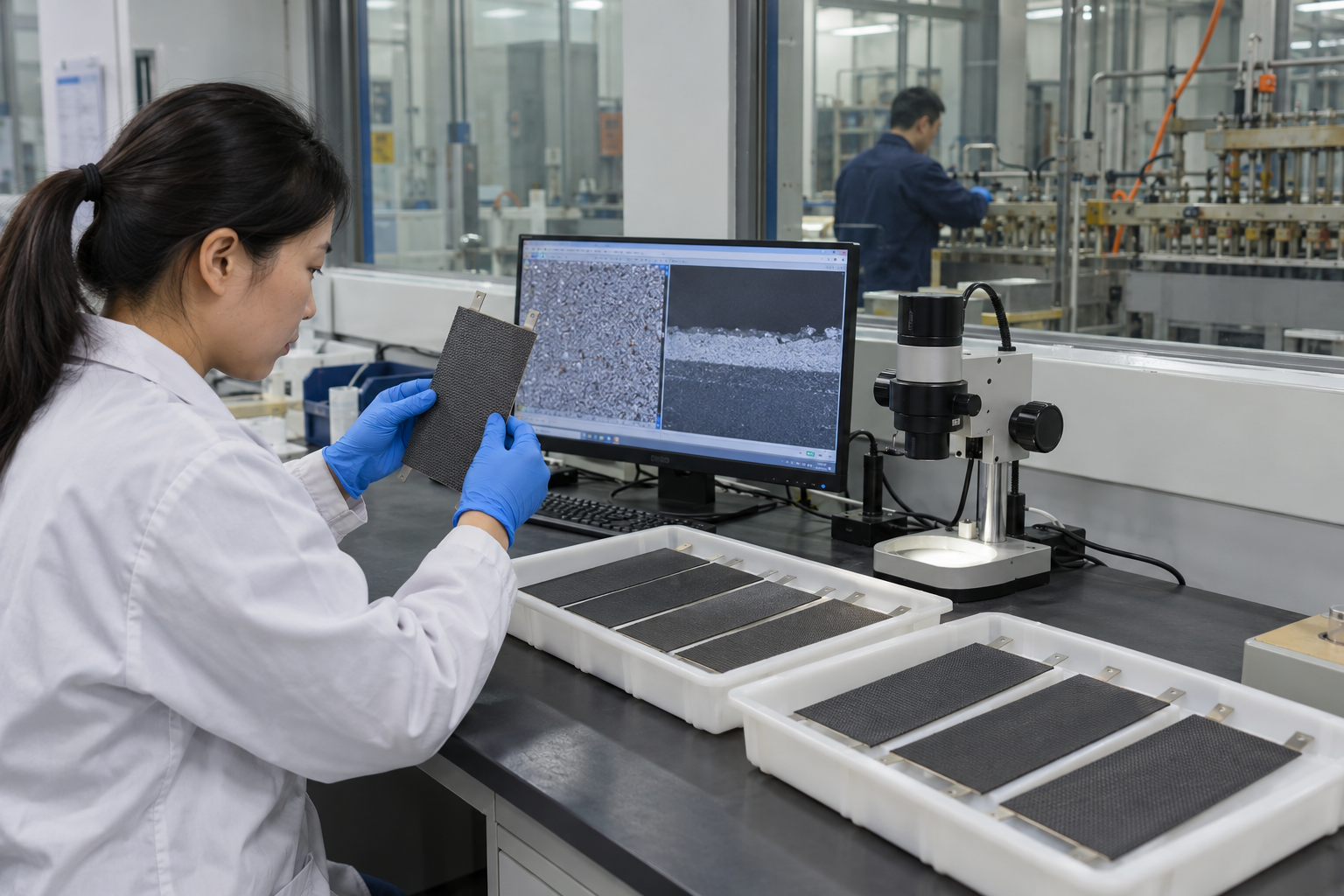
A ruthenium iridium titanium anode and an Ir-Ta anode need identity, dimensional, surface, connection, and functional checks tied to approved drawings. Visual darkness cannot distinguish their intended duty.
Which records should follow each batch?
Use records that connect material, process, and final part. Traceability closes the loop. Ask for:
- Part number, drawing revision, and batch identification
- Dimensional and coated-area inspection
- Agreed process or functional evidence
How can site quality controls support approval?
The published quality-control overview can anchor supplier discussions, but your purchase specification must define acceptance evidence.
| Record | Buyer purpose | Release gate |
|---|---|---|
| Drawing report | Confirm fit | Dimensional approval |
| Batch identity | Preserve traceability | Documentation approval |
| Pilot data | Confirm duty | Technical approval |
Key Takeaway: Approve the physical anode and its traceable data as one controlled item.
9. When Is a Side-by-Side Pilot Test Needed?
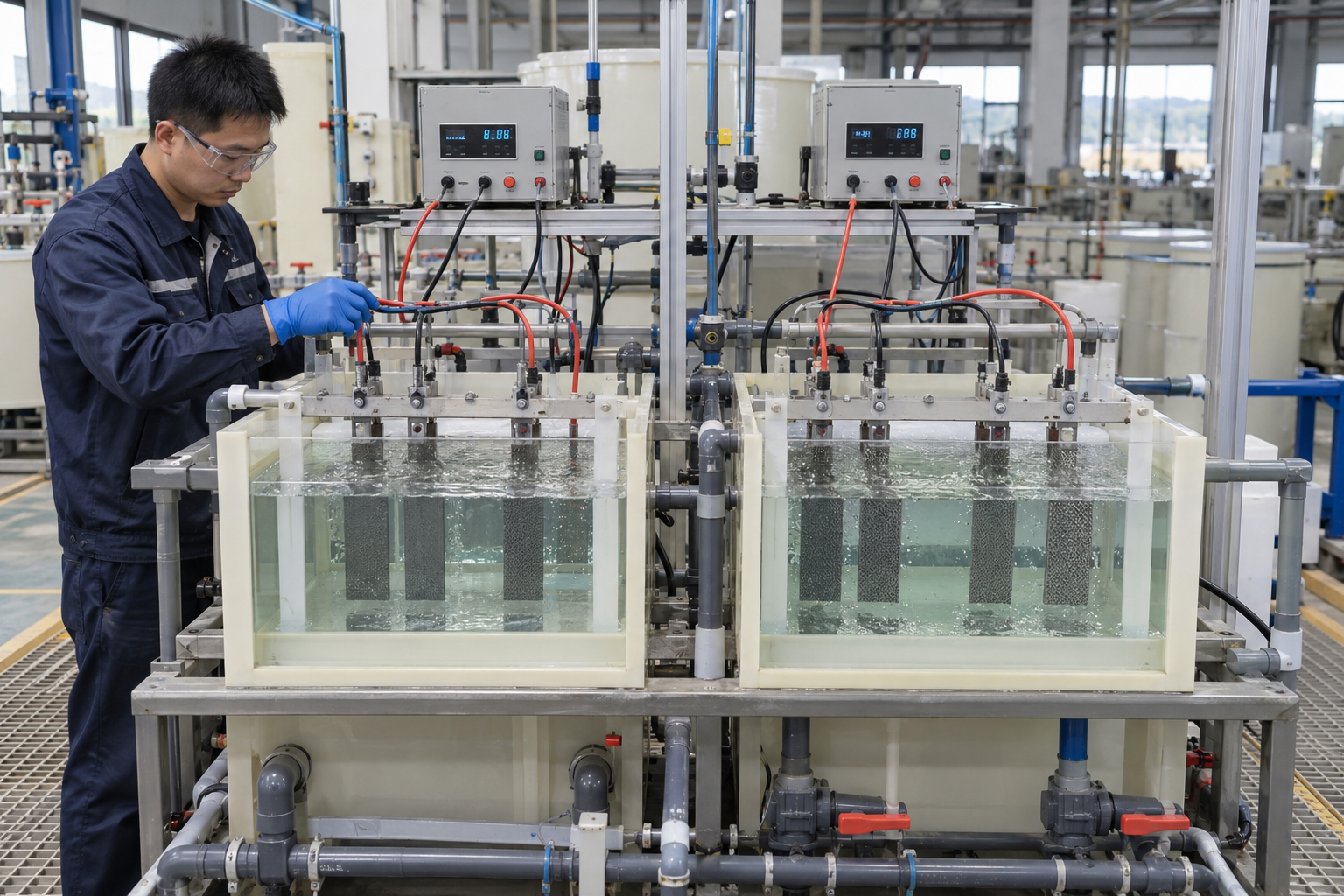
A ruthenium iridium titanium anode should be tested beside an Ir-Ta option when reaction selectivity, chemistry variability, or operating cost cannot be resolved from prior evidence. Use identical cells and measurement methods.
Which variables must be held constant?
Control everything except the intended comparison. A fair test needs one moving part. Hold constant:
- Electrode area, spacing, connection, and flow
- Electrolyte batch, temperature, current, and runtime
- Sampling method and analytical timing
Which results should drive the decision?
Use output, voltage, byproduct, temperature, and surface trends linked to acceptance criteria. Record cleaning and interruptions.
| Result | Question answered | Decision use |
|---|---|---|
| Output selectivity | Does reaction match? | Coating choice |
| Voltage trend | Does resistance change? | Energy and wear review |
| Surface condition | Are deposits or damage forming? | Maintenance plan |
Key Takeaway: Side-by-side testing works when cells, conditions, measurements, and release rules are controlled.
10. What Should a Coating-Selection RFQ Include?

A ruthenium iridium titanium anode RFQ should define target reaction, electrolyte, current, temperature, impurities, geometry, and validation. It should also ask how an Ir-Ta alternative would change the design basis.
How should you structure the request?
Send one operating sheet and one controlled drawing. Make suppliers answer the same question. Include:
- Reaction, chemistry, loading, thermal, and runtime limits
- Active area, form, connection, spacing, and quantity
- Sample test, acceptance criteria, and required records
How should responses be compared?
Compare assumptions, exclusions, coating family, geometry, and validation route. Use the custom-service process when drawings need engineering review.
| Response field | Strong answer | Warning sign |
|---|---|---|
| Reaction basis | Tied to supplied chemistry | Industry label only |
| Operating limits | Clear ranges and exclusions | Universal promise |
| Validation | Defined sample and evidence | No test route |
Key Takeaway: Choose between Ru-Ir and Ir-Ta with one shared operating basis. When your comparison package is ready, contact us today for a technical review.
Frequently Asked Questions
Can I identify Ru-Ir and Ir-Ta by color? No. Color does not prove composition, loading, reaction fit, or batch identity.
What's the best coating for chlorine evolution? Ruthenium-containing MMO systems are commonly considered for chlorine duty, but full chemistry and operating limits still control selection.
How do I know if a coating fits oxygen evolution? Provide acid or salt chemistry, current density, temperature, impurities, and duty cycle so an oxygen-duty coating can be assessed.
Can I use the same cell to test both coatings? Yes, when geometry and conditions are controlled. Use one measurement plan and clear acceptance criteria.
How do I know if supplier quotations are comparable? Compare design assumptions, coating family, operating limits, drawing revision, sample route, and inspection evidence on the same sheet.