
Replace a legacy Titanium electrode by matching its mechanical interfaces, electrical duty, active surface and operating conditions. A copied outline can fit the housing yet behave differently inside the process. Missing records make that risk harder to see. Build a replacement specification from available evidence and validate the proposed part before treating it as interchangeable.
1. What Defines an Equivalent Titanium electrode Replacement?
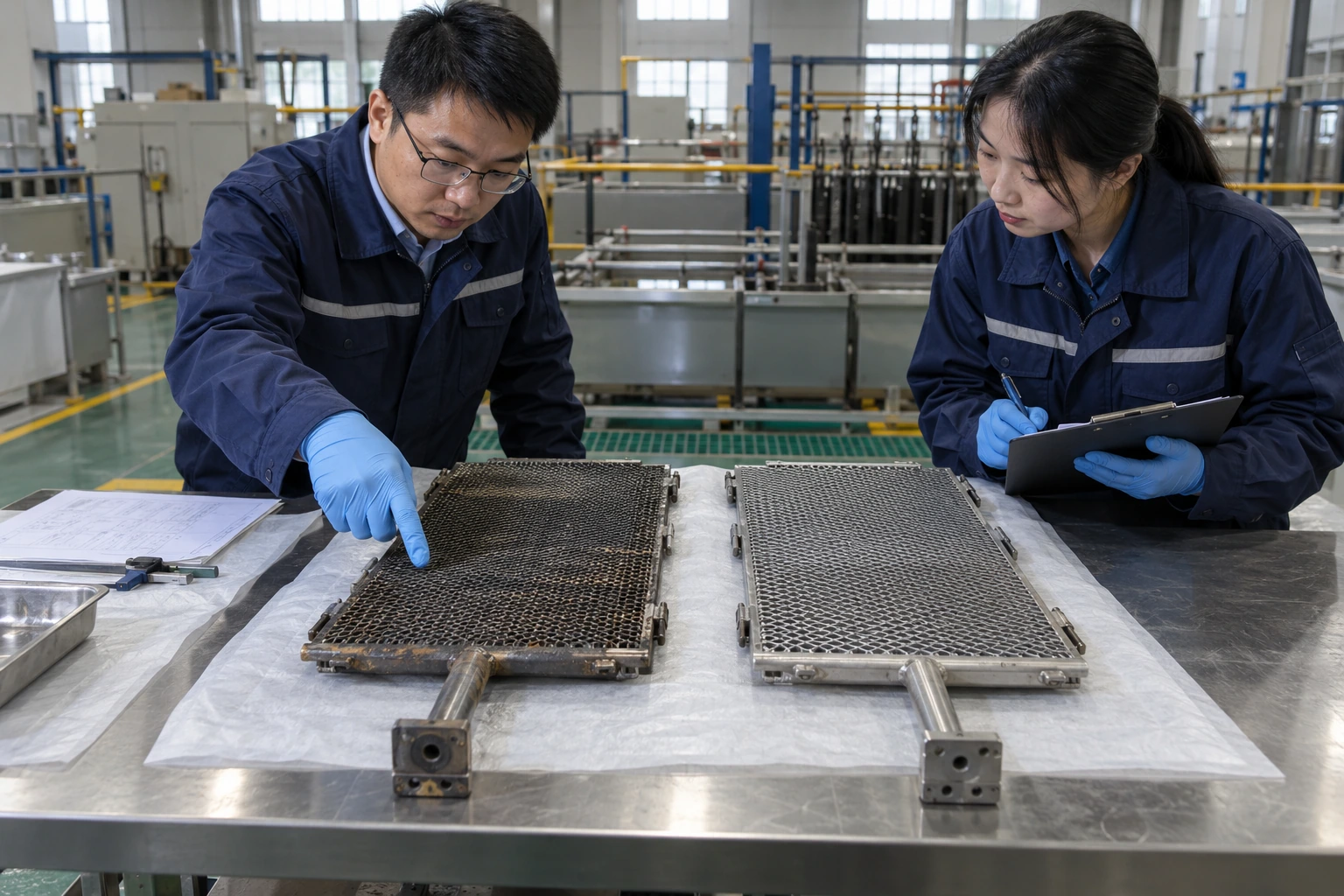
An equivalent Titanium electrode replacement must meet defined fit and functional requirements, not merely resemble the old component. The acceptable scope of equivalence should be explicit.
Which functions must remain compatible?
List the interfaces and operating duties. Include coating, active area, current connection and service access. Record any intentional change rather than calling it identical.
- Identify mandatory fit and performance criteria.
- Separate replacement from redesign.
| Check | Decision |
|---|---|
| Mechanical equivalence | Supports installation |
| Functional equivalence | Requires operating evidence |
A successful fit check does not establish electrochemical equivalence. Key Takeaway: Define what interchangeable means for the equipment.
2. Can You Copy a Titanium electrode from Dimensions Alone?
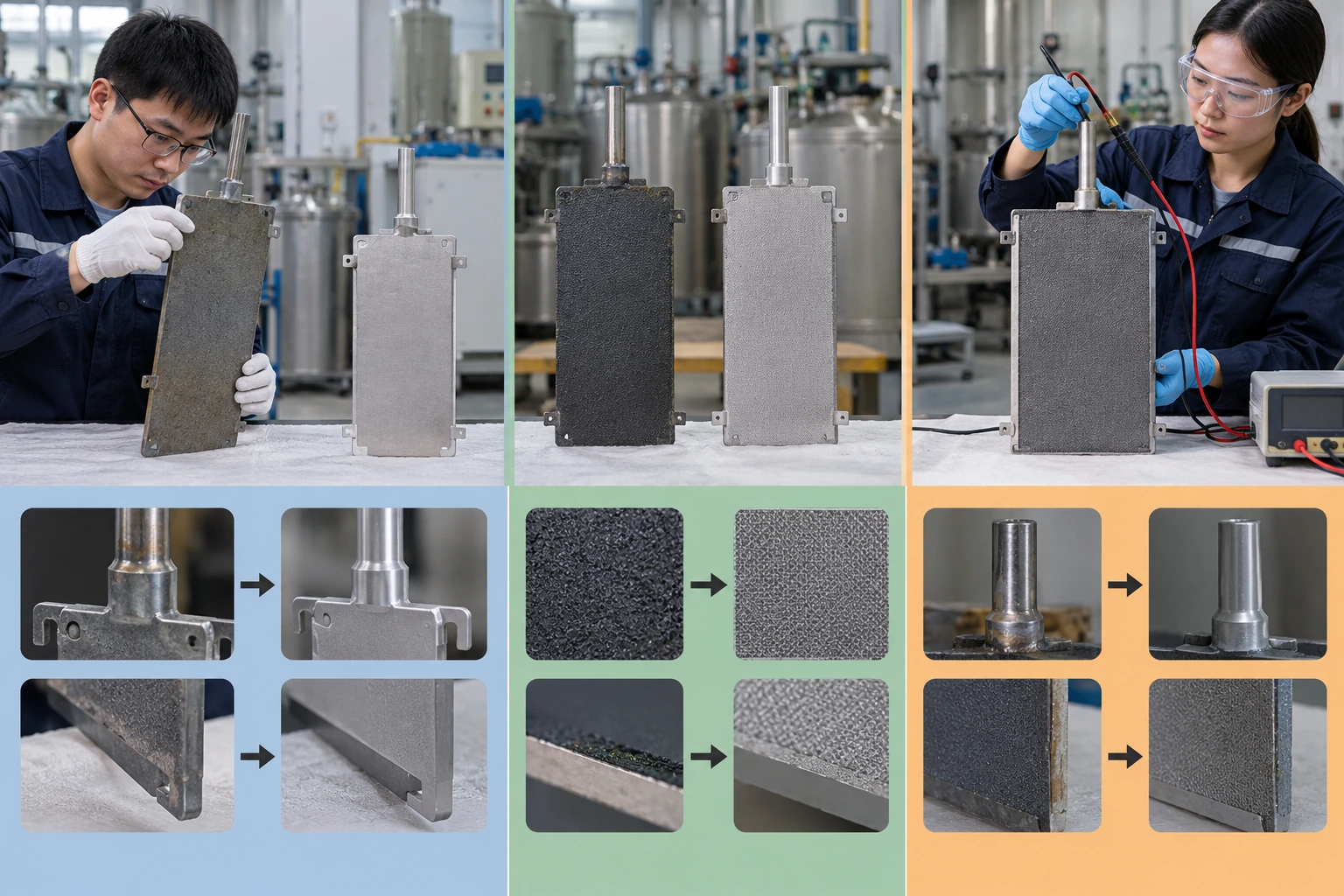
You cannot specify a Titanium electrode replacement from dimensions alone because coating and operating history may remain unknown. Appearance does not identify an active-layer specification.
What evidence should supplement measurements?
Collect the old part's technical context. Retain supplier records, drawings and equipment settings where available. Mark missing information instead of guessing a coating from color.
- Gather part and batch identifiers.
- Record chemistry and electrical duty.
| Check | Decision |
|---|---|
| Measured shape | Defines visible geometry |
| Technical records | Help identify hidden requirements |
A reverse-engineered outline can be accurate while the replacement basis remains incomplete. Key Takeaway: Resolve consequential unknowns before manufacture.
3. How Do You Measure a Used Titanium electrode?
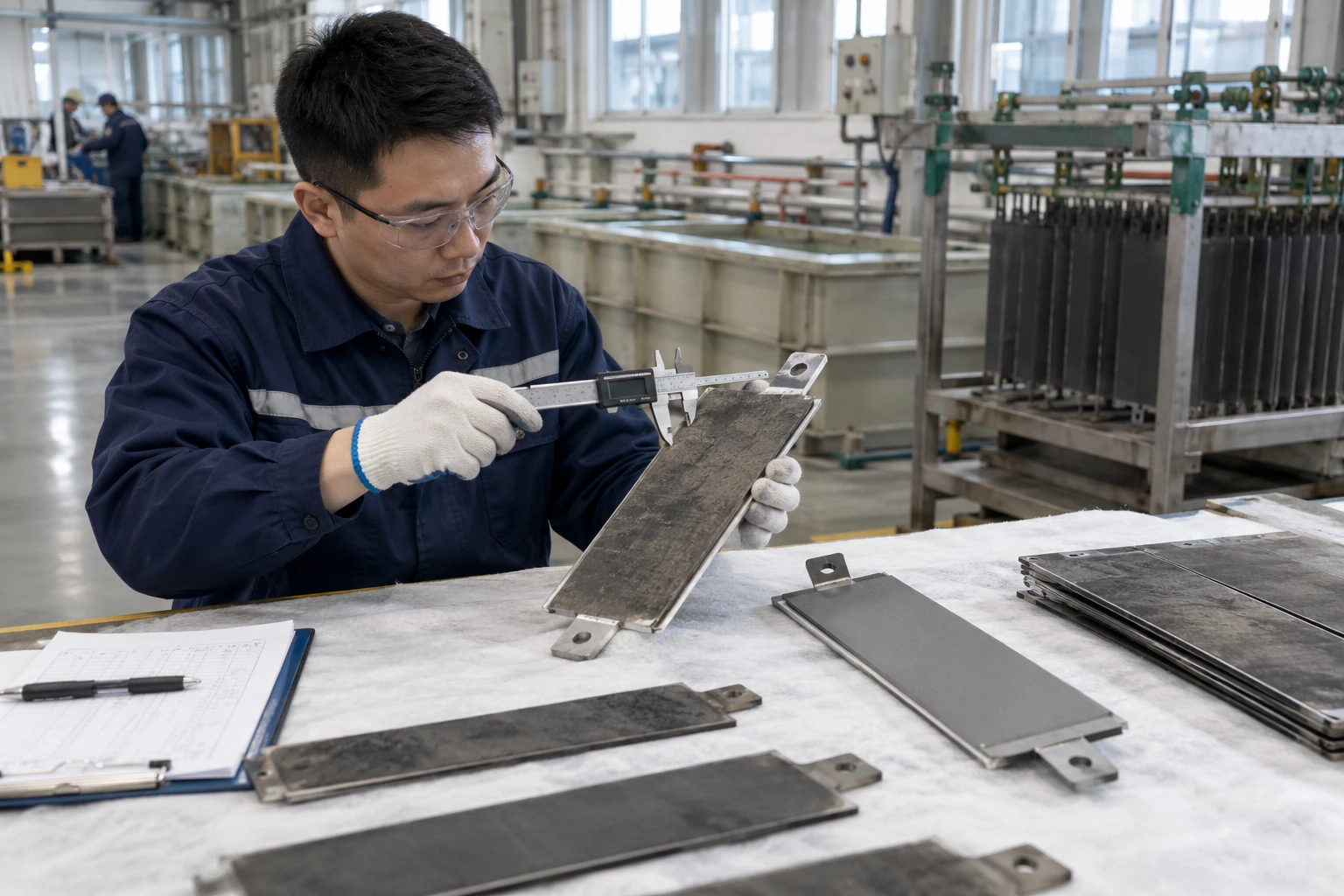
Measure a used Titanium electrode against undamaged reference features and the mating assembly where practical. Wear, scale and distortion can make old dimensions misleading.
How do you distinguish original shape from damage?
Compare several independent references. Use retained drawings, spare parts or housing dimensions. Document uncertainty when the original nominal value cannot be recovered.
- Inspect symmetry and damaged locations.
- Identify reliable datums.
| Check | Decision |
|---|---|
| Undamaged reference | Supports reconstruction |
| Worn feature | Needs interpretation |
Copying damage into a new drawing can preserve the original installation problem. Key Takeaway: Separate measured condition from intended geometry.
4. Which Titanium electrode Interfaces Need Reverse Engineering?
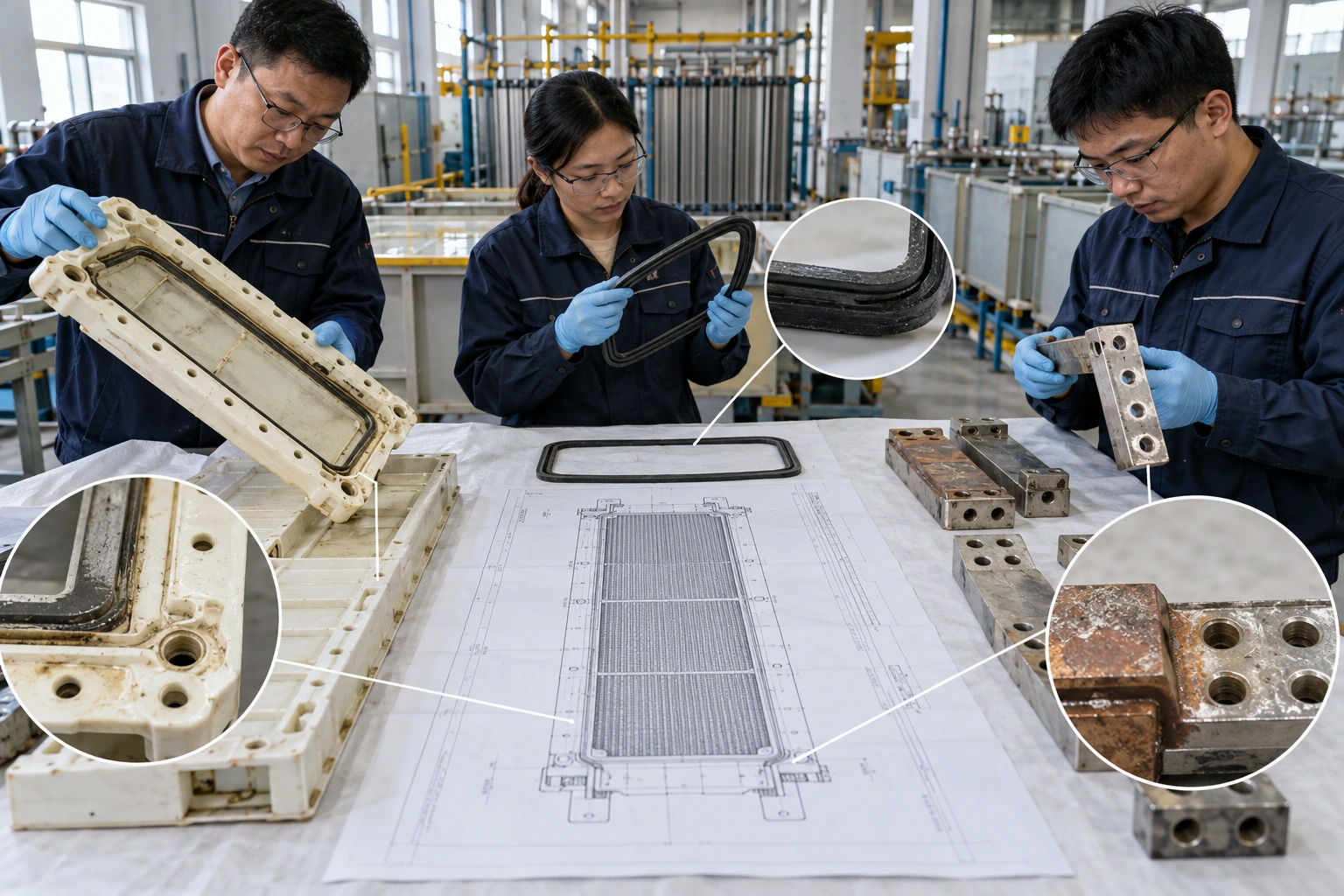
Titanium electrode reverse engineering should cover tabs, holes, gaskets, supports, active boundaries and the surrounding cell. The mating parts often define the real constraints.
What should the supplier review?
Send the assembly context with the sample. A custom engineering review can identify missing interface dimensions. Share only technical data you are authorized to provide.
- Include housing and busbar interfaces.
- Mark polarity and installation orientation.
| Check | Decision |
|---|---|
| Electrode drawing | Defines the proposed part |
| Assembly drawing | Checks compatibility |
A complete interface review reduces late changes after coating. Key Takeaway: Verify every consequential mating feature.
5. How Do You Identify a Legacy Titanium electrode Coating?
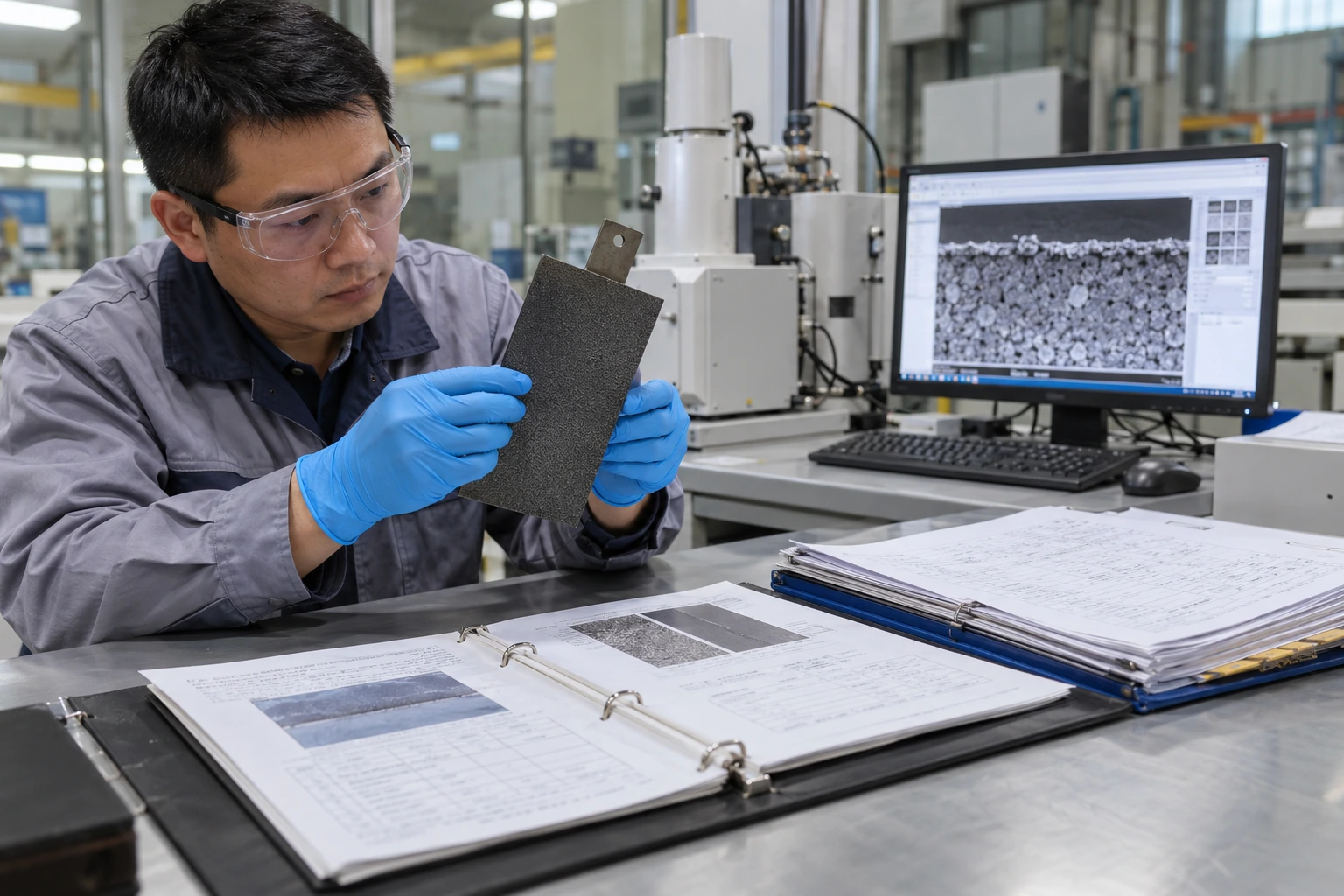
Identify a legacy Titanium electrode coating through traceable records and suitable analysis where needed. Surface appearance cannot establish composition, loading or application suitability.
How should uncertainty be handled?
State what is known and what is proposed. If the original coating cannot be identified, a new qualified specification may be necessary. Treat that as a technical change.
- Review original documentation.
- Agree analytical and functional evidence.
| Check | Decision |
|---|---|
| Known original specification | Supports closer matching |
| Unresolved coating identity | Requires a qualified proposal |
An unknown coating should not become a confident equivalence claim. Key Takeaway: Validate the replacement surface against actual duty.
6. What If Titanium electrode Operating Records Are Missing?

When Titanium electrode operating records are missing, collect available controller data, process analysis and equipment requirements before final selection. Consequential gaps should remain explicit.
Which minimum information can narrow the proposal?
Reconstruct the operating window systematically. Consult engineering and maintenance records. Avoid using one operator's remembered setting as the entire design basis.
- Identify current, polarity and runtime.
- Obtain representative chemistry and temperature.
| Check | Decision |
|---|---|
| Recovered evidence | Narrows the specification |
| Remaining assumption | Needs confirmation or testing |
A bounded assumption is more useful than an undocumented guess. Key Takeaway: Close the highest-consequence data gaps.
7. Can You Change Titanium electrode Geometry During Replacement?
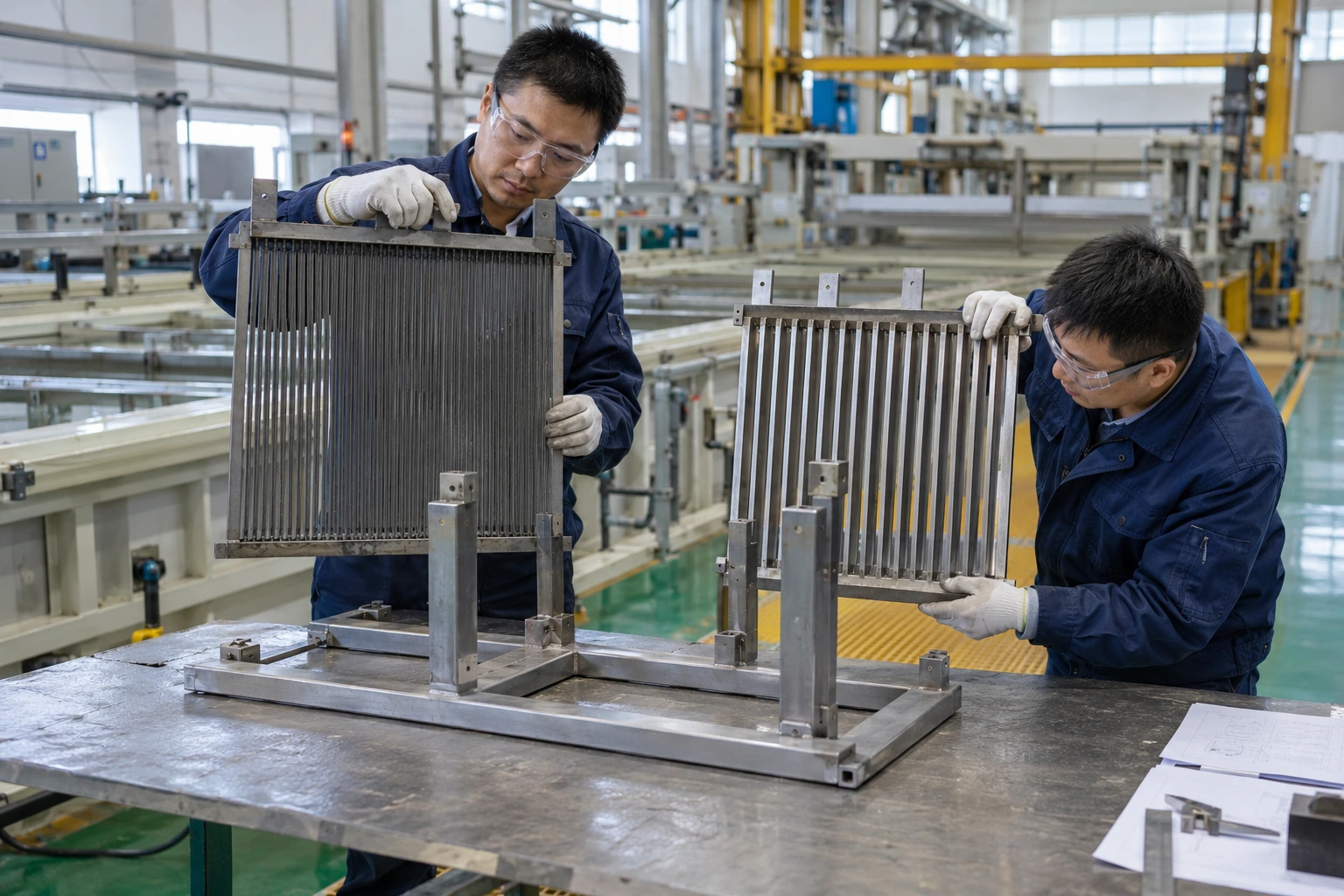
Changing Titanium electrode geometry during replacement creates a redesign that may affect current distribution, flow and service access. Even a platinum-coated part needs renewed integration review.
Which changes deserve a trial?
Compare the old and proposed configurations explicitly. Larger active area or a different tab can alter more than fit. Define the benefit and the acceptance evidence.
- Mark every changed feature.
- Review electrical and hydraulic consequences.
| Check | Decision |
|---|---|
| Like-for-like intent | Still needs verification |
| Geometry redesign | Requires a broader validation basis |
A small drawing change can alter the operating condition. Key Takeaway: Qualify intentional changes before deployment.
8. How Do You Test a Titanium electrode Retrofit?
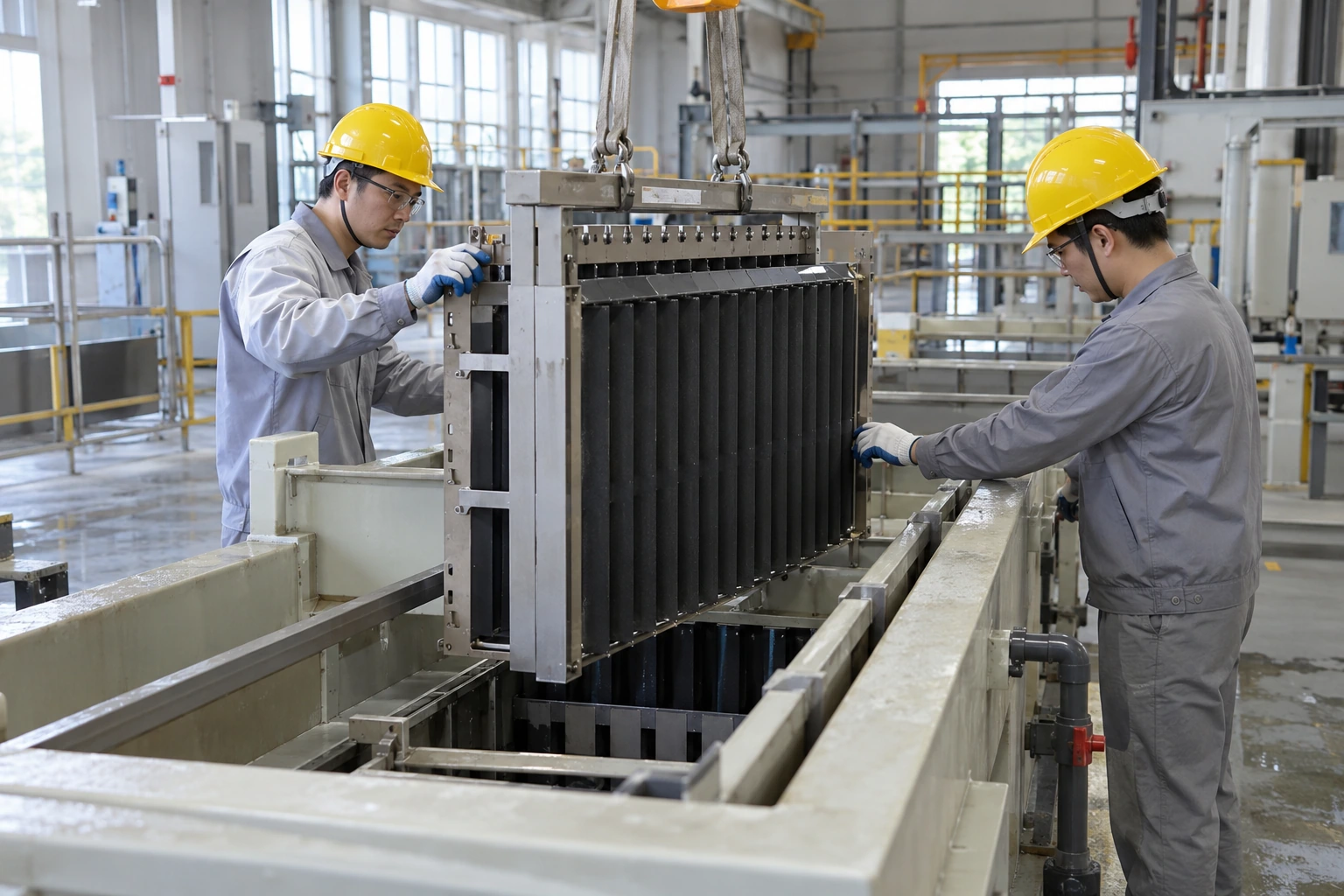
Test a Titanium electrode retrofit through mechanical fit, interface checks and representative operation. Use a controlled installation rather than assuming interchangeability across all units.
What should the trial compare?
Use the equipment's actual acceptance criteria. For water-treatment applications, record useful treatment output alongside electrical behavior. Inspect leaks, spacing and condition after testing.
- Confirm fit before energizing.
- Match operating and sampling conditions.
| Check | Decision |
|---|---|
| Dry fit | Checks assembly compatibility |
| Operating trial | Checks application behavior |
Neither stage can replace the other. Key Takeaway: Approve the retrofit from combined evidence.
9. What Records Should Follow a Titanium electrode Replacement?

A Titanium electrode replacement should carry updated part identity, revision, inspection and installation records. Future maintenance must distinguish the replacement from the retired design.
Which documents should change?
Update the equipment record at release. Include approved deviations and any changed maintenance requirements. Keep the original evidence available for later investigation.
- Link replacement batches to installed units.
- Retain the approved drawing and test report.
| Check | Decision |
|---|---|
| Part record | Identifies the delivered component |
| Equipment record | Shows where it is used |
Traceability prevents a later spare order from reviving an obsolete specification. Key Takeaway: Control the replacement as a new approved baseline.
10. What Titanium electrode Retrofit Data Should You Send?

Send legacy Titanium electrode photographs, reliable dimensions, interface drawings, chemistry and operating data for review. Identify whether the project seeks equivalence or improvement.
How can we help define the replacement?
Send the evidence before asking for an identical copy. We can review custom electrode requirements and sample validation; contact us today with the available package. Our position is that a replacement should be qualified for the equipment it serves.
- List known requirements and unresolved assumptions.
- Define fit and operating acceptance.
| Check | Decision |
|---|---|
| Legacy evidence | Describes the starting point |
| Validation plan | Supports the replacement decision |
This package makes the limits of equivalence visible. Key Takeaway: Approve the replacement through documented fit and function.
Frequently Asked Questions
Can I send only an old electrode for copying? It is a useful starting point, but worn geometry and unknown coating details may require additional records.
What's the best way to recover missing dimensions? Compare undamaged features with mating parts and retained drawings. Record uncertainty rather than copying wear.
How do I know if a replacement is interchangeable? Verify defined mechanical and functional criteria under representative conditions.
Can I improve the design during replacement? Yes, with a documented redesign and validation plan. Improvement should not be presented as an identical copy.
Can I identify the coating by its color? No. Use records and suitable analytical or functional evidence.