Specify Titanium electrode welds by their mechanical and electrical function, joint geometry, fabrication route and inspection requirements. A joint can look acceptable yet distort the frame or leave a narrow current path. Once coating is applied, correcting that problem becomes more difficult. Review weld details before fabrication and qualify the finished assembly rather than relying on appearance.
1. What Must a Titanium electrode Weld Achieve?
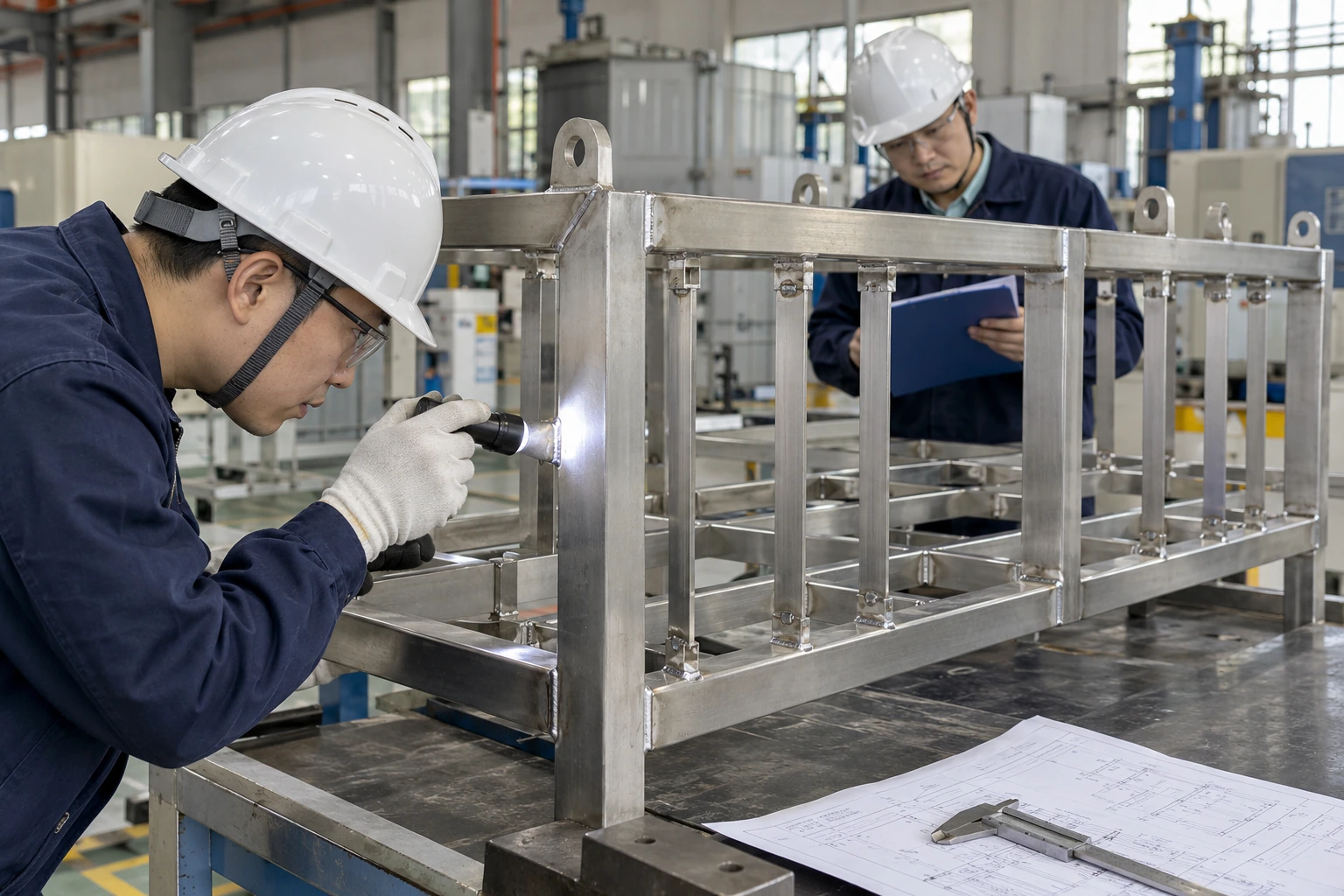
A Titanium electrode weld must meet its defined structural, electrical and environmental requirements. Not every joint carries the same load or current.
Which functions should the drawing identify?
State what the joint must do. A support weld and a current-carrying tab can need different checks. Identify wet exposure and service movement.
- Mark mechanical and electrical duties.
- Describe the relevant operating environment.
| Check | Decision |
|---|---|
| Structural joint | Transfers defined loads |
| Current-carrying joint | Also needs an electrical review |
A generic weld symbol may leave the joint's function unclear. Key Takeaway: Specify acceptance around the actual duty.
2. Which Titanium electrode Joints Need Defined Weld Details?

Define Titanium electrode weld details for tabs, frames, supports and other consequential interfaces. The selected geometry must permit fabrication and inspection.
What should a joint drawing show?
Include access and mating features. Specify location, extent and relevant dimensions through the responsible fabrication procedure. Avoid leaving critical fit decisions to workshop interpretation.
- Identify joint locations and datums.
- Provide inspection access where needed.
| Check | Decision |
|---|---|
| Joint definition | Controls fabrication intent |
| Interface definition | Controls assembled fit |
A complete drawing reduces changes after coating. Key Takeaway: Resolve consequential joint details before production.
3. Why Does Titanium electrode Weld Shielding Matter?
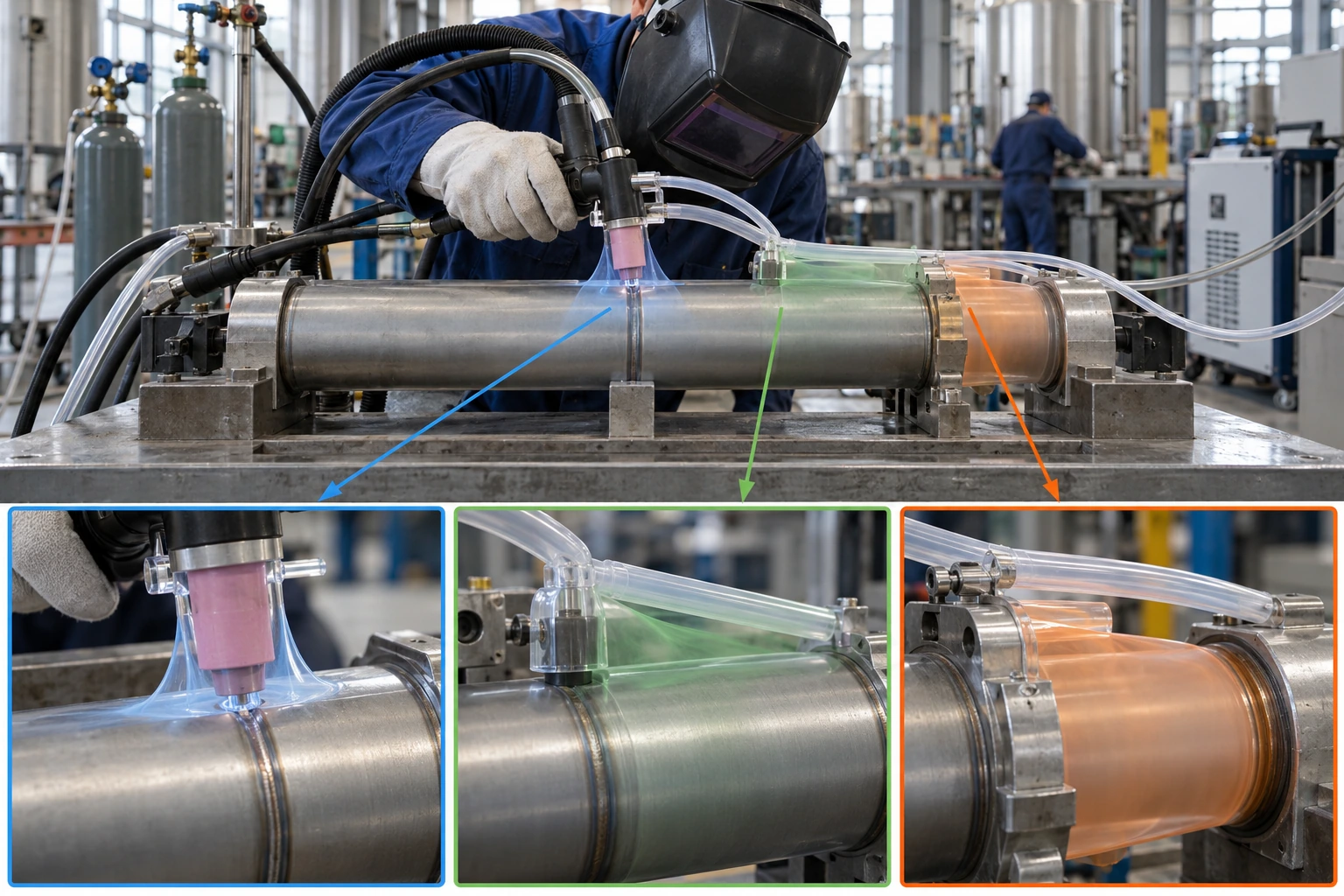
Titanium electrode weld shielding protects hot titanium from atmospheric contamination where required by the selected process. Shielding arrangements need a qualified fabrication procedure.
Which regions should the process review cover?
Review the whole heated joint. For relevant arc-welding methods, the face, cooling region and root can need protection. Do not transfer settings from an unrelated joint.
- Specify the qualified welding method.
- Check required shielding and inspection access.
| Check | Decision |
|---|---|
| Process procedure | Defines suitable controls |
| Joint geometry | Determines practical access |
A shielding concept must work on the actual component. Key Takeaway: Qualify the process for its joint and material.
4. How Should Titanium electrode Weld Surfaces Be Prepared?
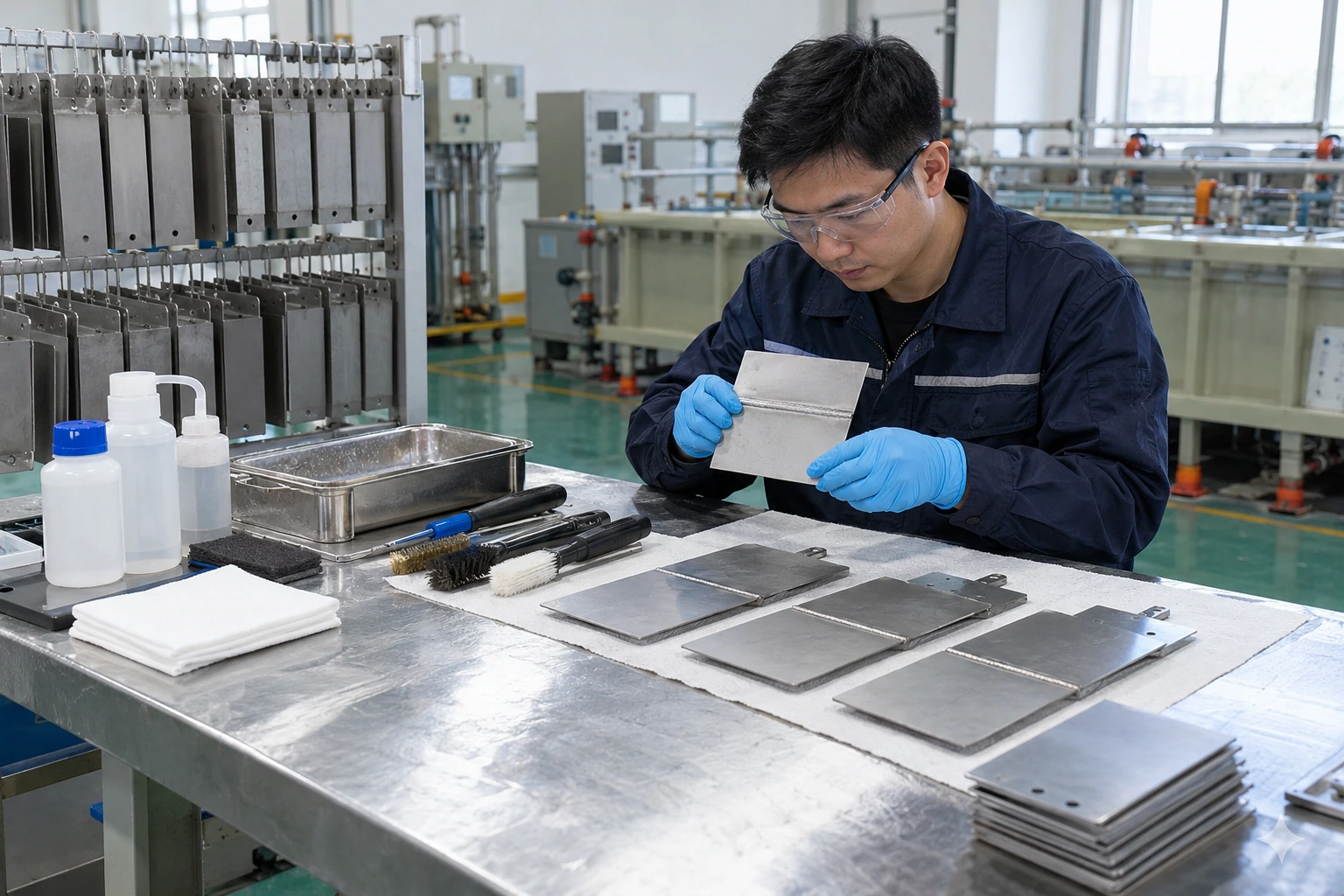
Prepare Titanium electrode weld surfaces through a controlled method that removes relevant contamination without introducing new residue or damage. Preparation should suit the selected process.
What should the fabricator control?
Keep preparation and handling linked. A custom engineering review can identify dedicated tools and storage needs. Clean surfaces can be recontaminated before joining.
- Define preparation and handling steps.
- Protect prepared regions until welding.
| Check | Decision |
|---|---|
| Surface preparation | Creates the required starting condition |
| Handling control | Preserves that condition |
Preparation records are useful only when later handling remains controlled. Key Takeaway: Maintain the approved surface condition through joining.
5. Should Titanium electrode Welding Precede Coating?
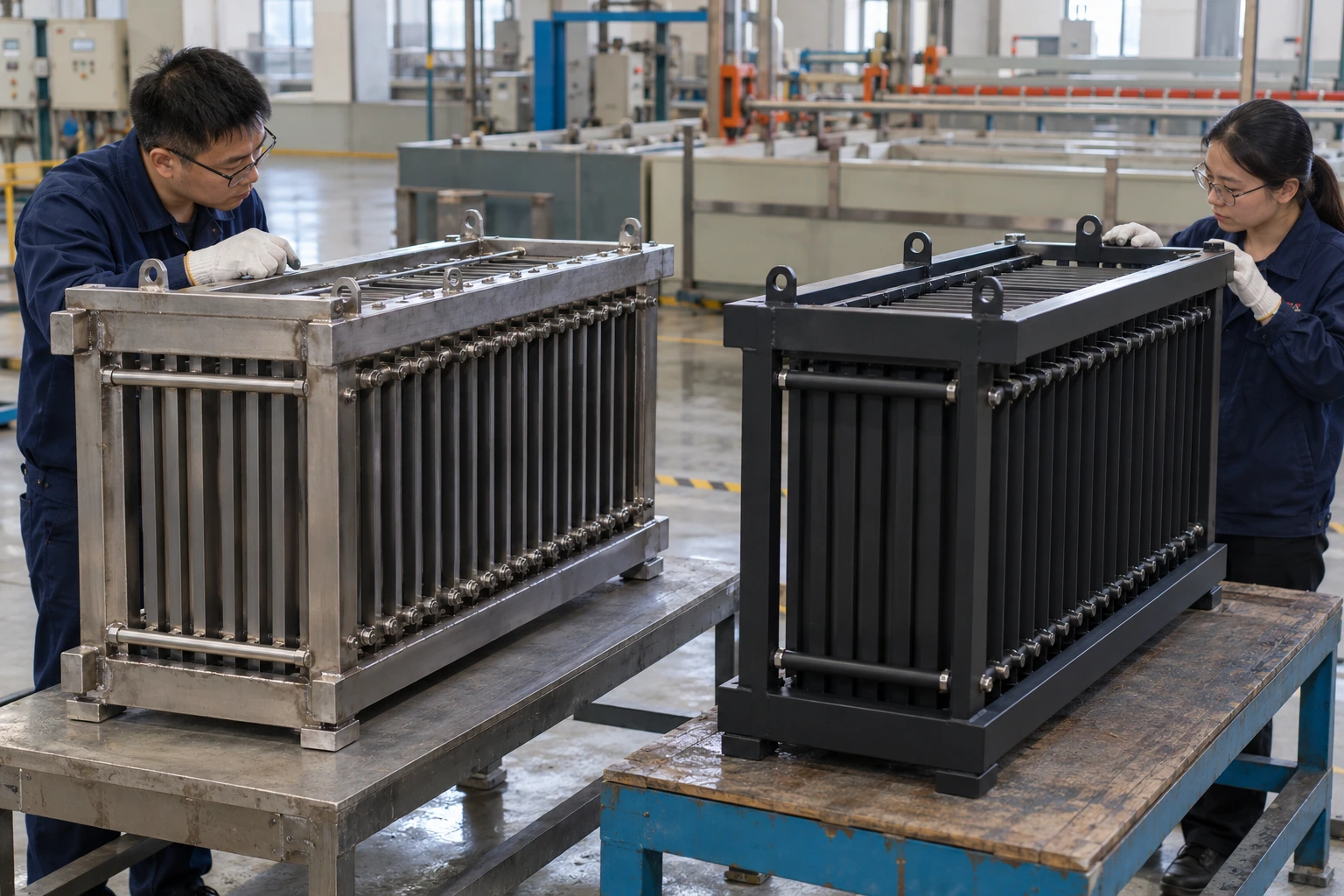
Titanium electrode welding is commonly completed before coating, along with fabrication and dimensional checks. Any other sequence needs specific review.
Why does sequence matter?
Resolve fabrication changes before coating approval. Heat, contact and rework can affect nearby surfaces or geometry. Mark areas that must remain uncoated for connection or inspection.
- Define fabrication and coating stages.
- Identify weld and masking boundaries.
| Check | Decision |
|---|---|
| Pre-coating fabrication | Allows planned inspection |
| Finished-part modification | Needs an approved disposition |
The manufacturing sequence affects what can be inspected or repaired. Key Takeaway: Agree the sequence before releasing the drawing.
6. How Can Welding Distort a Titanium electrode?
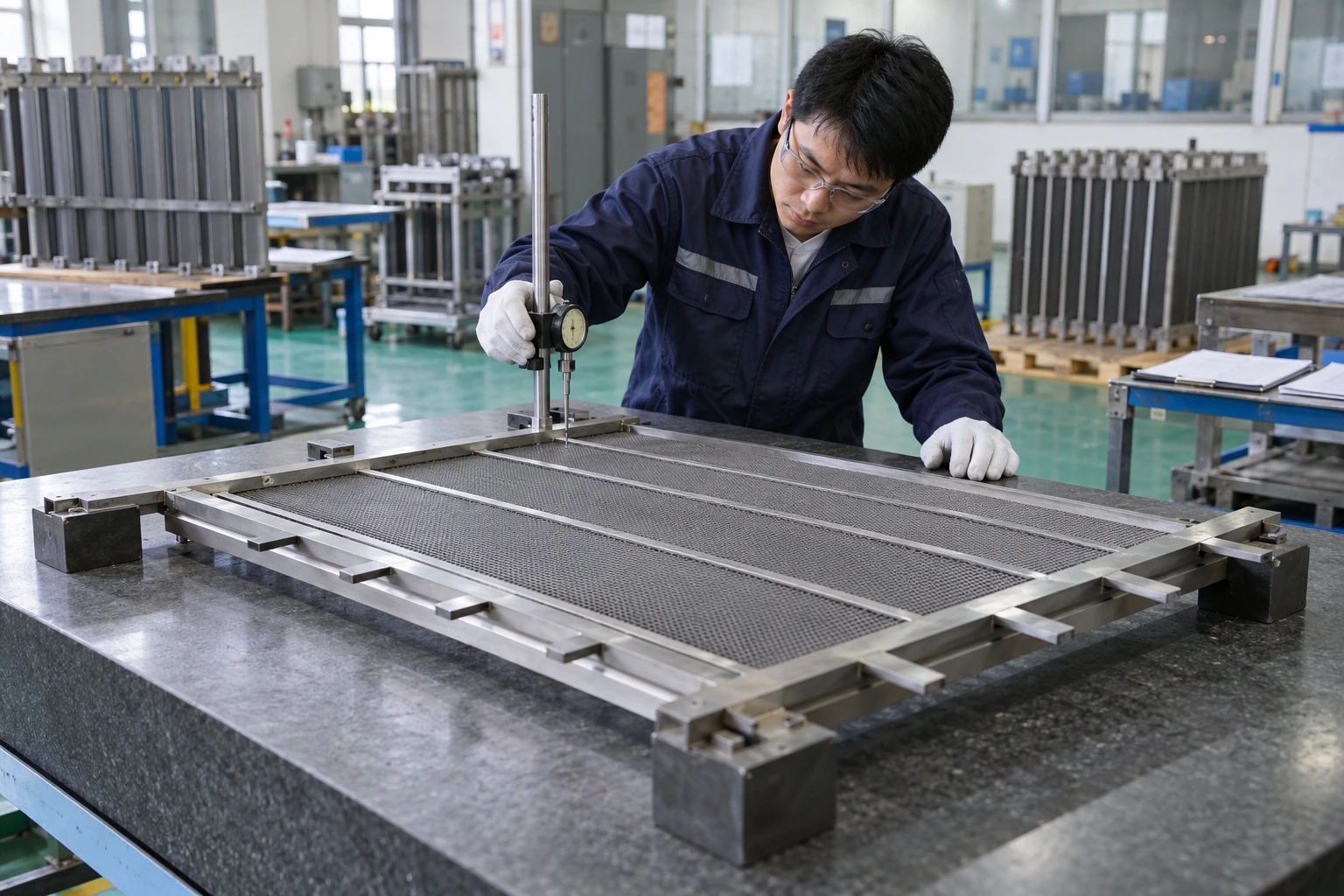
Welding can distort a Titanium electrode through localized heating and restraint effects. Fixture design and process sequence help control the finished geometry.
Which dimensions should be checked afterwards?
Measure the assembly in a defined condition. Include flatness, tab position and mounting features. A loose-part check may differ from installed behavior.
- Record fixture and support conditions.
- Check critical dimensions after joining.
| Check | Decision |
|---|---|
| Fabrication fixture | Controls position during work |
| Final inspection | Checks the delivered geometry |
A visually sound weld cannot clear an out-of-tolerance assembly. Key Takeaway: Inspect the finished part against its mating requirements.
7. Can You Repair a Weld on a Coated Titanium electrode?
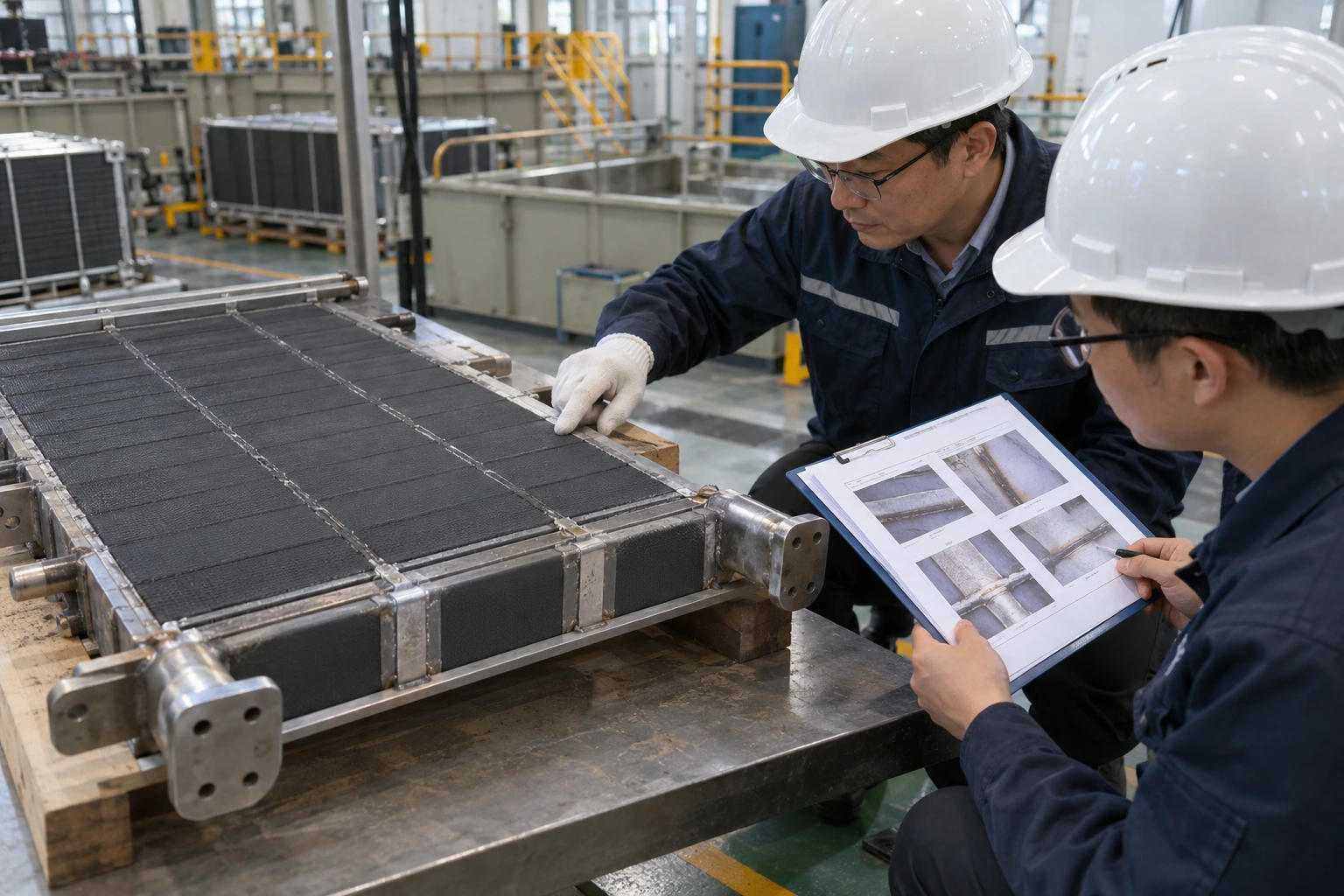
Repairing a weld on a coated Titanium electrode requires a documented plan addressing coating, substrate, geometry and post-repair evidence. A platinum-coated part also needs this review.
What should the repair assessment decide?
Define the affected area before work begins. Identify whether coating restoration or replacement is needed. Agree inspection and functional checks for the repaired assembly.
- Record the original defect and part identity.
- Obtain the approved repair and release criteria.
| Check | Decision |
|---|---|
| Repair plan | Defines controlled work |
| Release evidence | Checks the resulting component |
A repaired metal joint does not automatically restore the coating specification. Key Takeaway: Qualify the complete repaired part.
8. Which Inspections Fit Titanium electrode Welds?
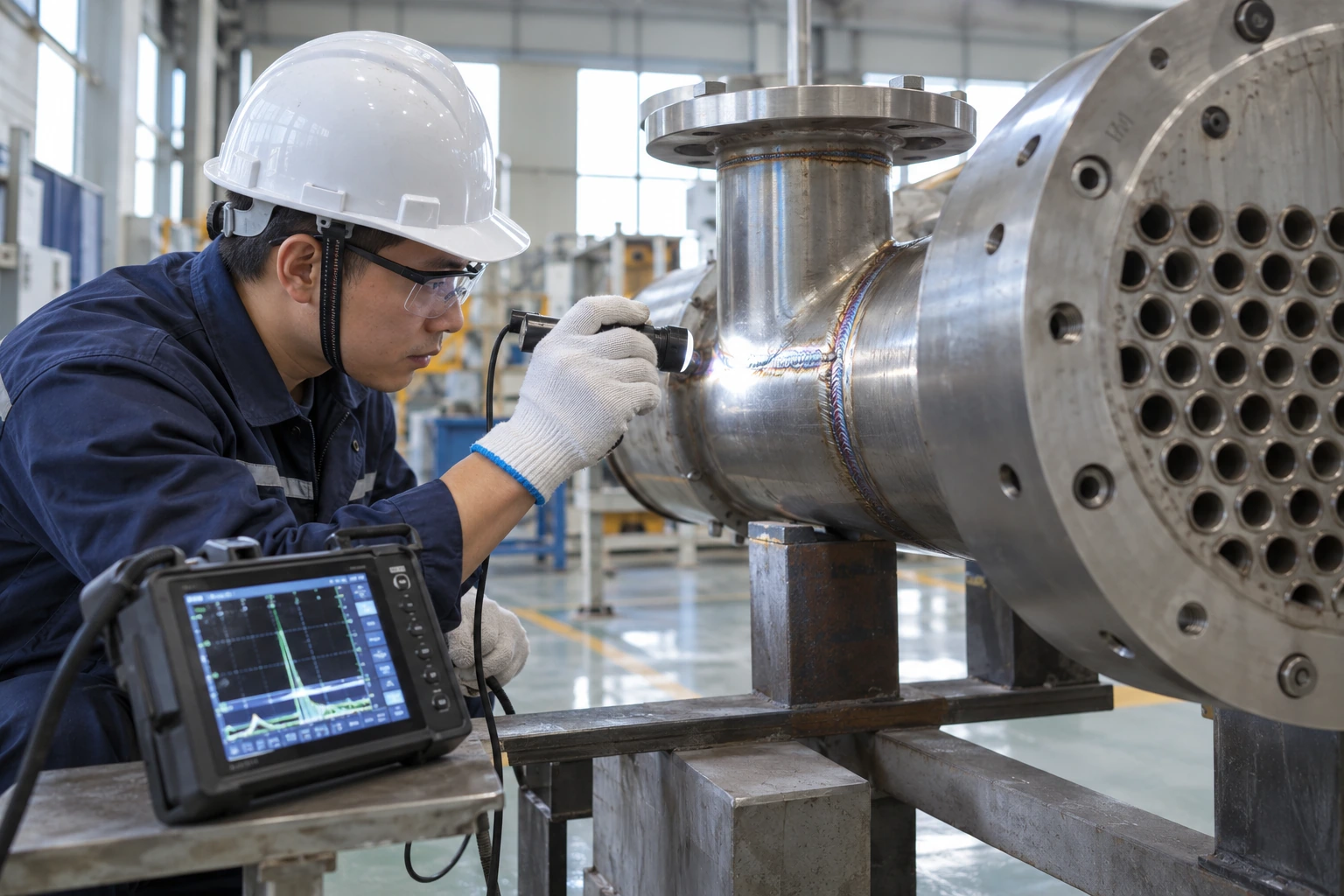
Titanium electrode weld inspections should match joint function, material and failure consequences. Visual examination is useful but may not address every requirement.
How should you choose the inspection scope?
Ask which defect the method can detect. For water-treatment applications, wet exposure and electrical duty may influence the evidence needed. Use appropriately qualified inspection procedures.
- Define methods and acceptance criteria.
- Record inspection locations and results.
| Check | Decision |
|---|---|
| Visual examination | Assesses visible condition |
| Additional testing | Addresses specified hidden or functional concerns |
A test name alone does not define adequate inspection. Key Takeaway: Match the method to the joint risk.
9. How Do You Control Titanium electrode Weld Repeatability?

Control Titanium electrode weld repeatability through released drawings, qualified procedures, suitable fixtures and traceable records. A successful prototype does not eliminate production variation.
What should a change process cover?
Make consequential process changes visible. Tooling, joint geometry or fabrication sequence can affect the result. Define when new inspection or qualification is required.
- Retain process and batch identity.
- Review changes before series production.
| Check | Decision |
|---|---|
| Controlled baseline | Defines the approved method |
| Change review | Protects continuity |
Repeatability depends on preserving the conditions that produced an acceptable part. Key Takeaway: Keep process control tied to finished-part checks.
10. What Titanium electrode Welding Information Should You Provide?

Provide Titanium electrode joint drawings, material, current paths, loads, exposure and acceptance requirements before requesting fabrication. Include coating sequence and repair restrictions.
How can we support the specification?
Send the joint's purpose with its dimensions. We can review custom electrode fabrication requirements; contact us today with the assembly package. Our position is that weld quality should be defined by function and evidence.
- Identify critical joints and interfaces.
- State inspection and sample requirements.
| Check | Decision |
|---|---|
| Fabrication package | Defines the work |
| Acceptance package | Defines release |
This information connects workshop decisions with the equipment's requirements. Key Takeaway: Approve the joint and the finished assembly together.
Frequently Asked Questions
Can I accept a titanium weld because it looks silver? Appearance is only part of inspection. Use the acceptance criteria and methods specified for the joint.
What's the best welding method for an electrode frame? It depends on material, geometry and duty. Use a qualified fabrication procedure.
How do I know if welding changed the electrode gap? Measure the finished assembly at defined locations and support conditions.
Can I repair a coated electrode in the field? Only under an approved repair plan. Coating effects and post-repair checks must be addressed.
Can I change a weld location without retesting? Review its consequences before changing the joint. Fit, current paths and mechanical behavior may change.