
A Titanium electrode can serve as a qualified insoluble anode opposite the rotating cathode drum in a copper-foil cell. Your replacement may fit mechanically while changing the gap or widthwise current distribution. That can leave foil profile problems unresolved. Review anode shape, flow, copper replenishment and foil acceptance as one process package.
1. Where can a Titanium electrode fit a copper-foil cell?

A Titanium electrode may form part of an anode assembly facing a rotating cathode drum in electrolytic copper-foil production. Copper deposits on the drum surface.
Locate the anode within the foil cell
Trace copper through its path in the machine. The drum dips partly into electrolyte, collects a growing copper layer, and carries it toward a peel point. An opposed anode supports current across the active arc; downstream surface treatment belongs to a separate stage.
- Show drum immersion and foil peel location.
- Mark the active arc and electrolyte return path.
| Check | Decision |
|---|---|
| Drum surface | Cathodic copper deposition |
| Opposed anode | Completes cell current path |
An anode drawing without a rotating drum omits cell-defining geometry. Key Takeaway: Review electrode fit against a cross-section of your drum cell.
2. How do a rotating drum and Titanium electrode divide roles?
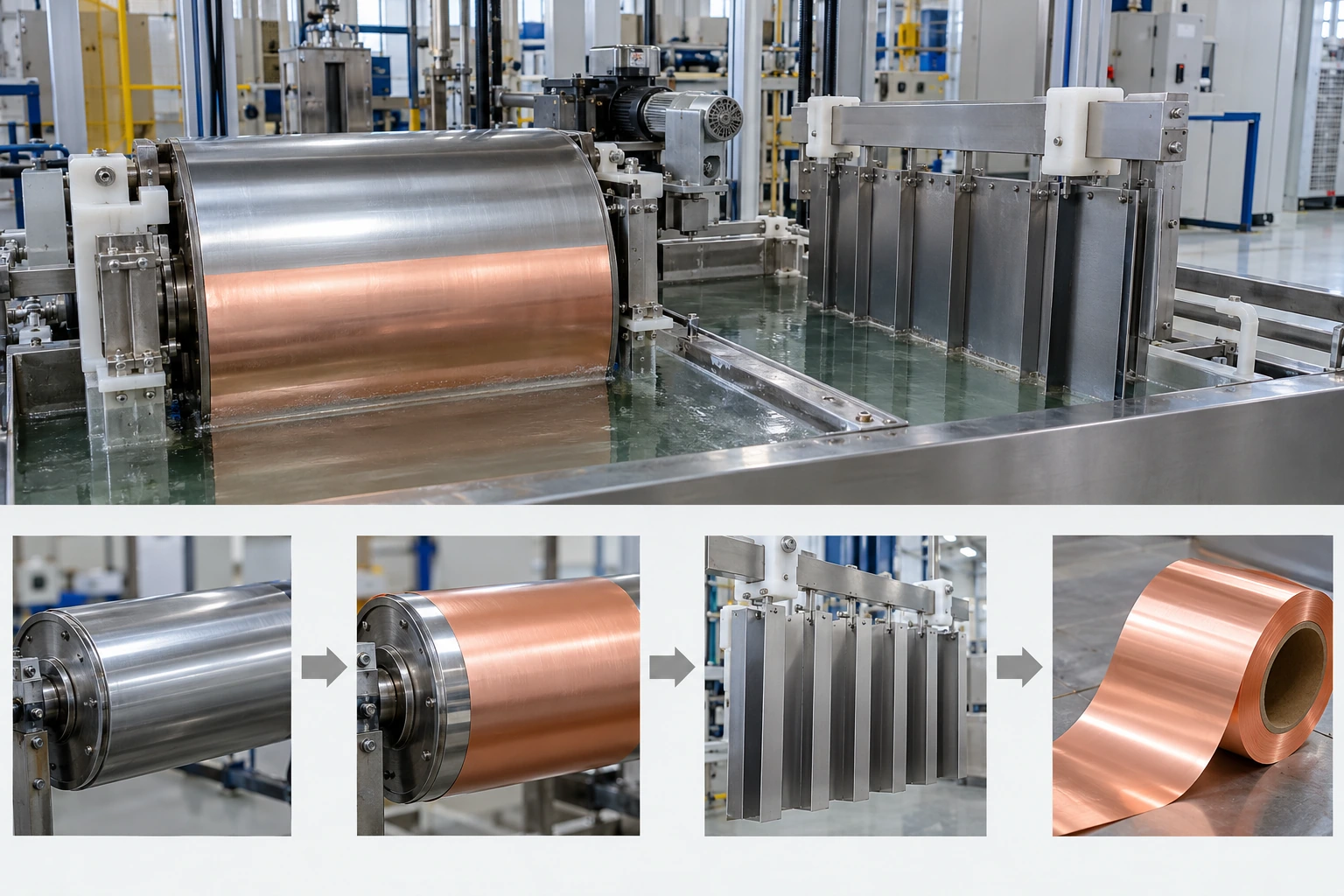
A Titanium electrode can serve as an anode while the rotating drum carries cathodic deposition. An insoluble-anode design may separate copper supply from cell oxidation.
How do the drum and anode divide duties?
Keep deposition and replenishment on separate diagrams. Copper ions reduce onto the drum, where foil accumulates before peeling. Some systems use an insoluble anode and a separate copper-dissolution unit; other cell arrangements require their own process review.
- Identify the drum as cathode in electrical drawings.
- Show where bath copper ions enter or return to the system.
| Check | Decision |
|---|---|
| Drum | Forms the continuous copper foil |
| Insoluble anode | Carries its assigned anodic reaction |
A foil line's copper source cannot be inferred from the anode substrate alone. Key Takeaway: Name both cell anode type and copper-ion supply route in the RFQ.
3. Why does spacing matter for a Titanium electrode and drum?

A Titanium electrode gap beside the drum influences current paths and electrolyte flow through its active arc. Gap changes can affect local foil growth.
Why does spacing matter for a drum cell?
Check clearance around a full revolution. Drum runout, support alignment, anode wear, and thermal movement can change local spacing. Anode wear or drum eccentricity can alter local gap and foil thickness; effects depend on machine design.
- Dimension clearance at several drum positions.
- Record runout, support references, and inspection access.
| Check | Decision |
|---|---|
| Stable gap | Supports a repeatable field |
| Gap variation | Can change local deposition |
A nominal drawing gap does not describe operating clearance after wear and rotation. Key Takeaway: Specify how the loaded and rotating drum gap will be checked.
4. How does foil thickness vary near a Titanium electrode drum?
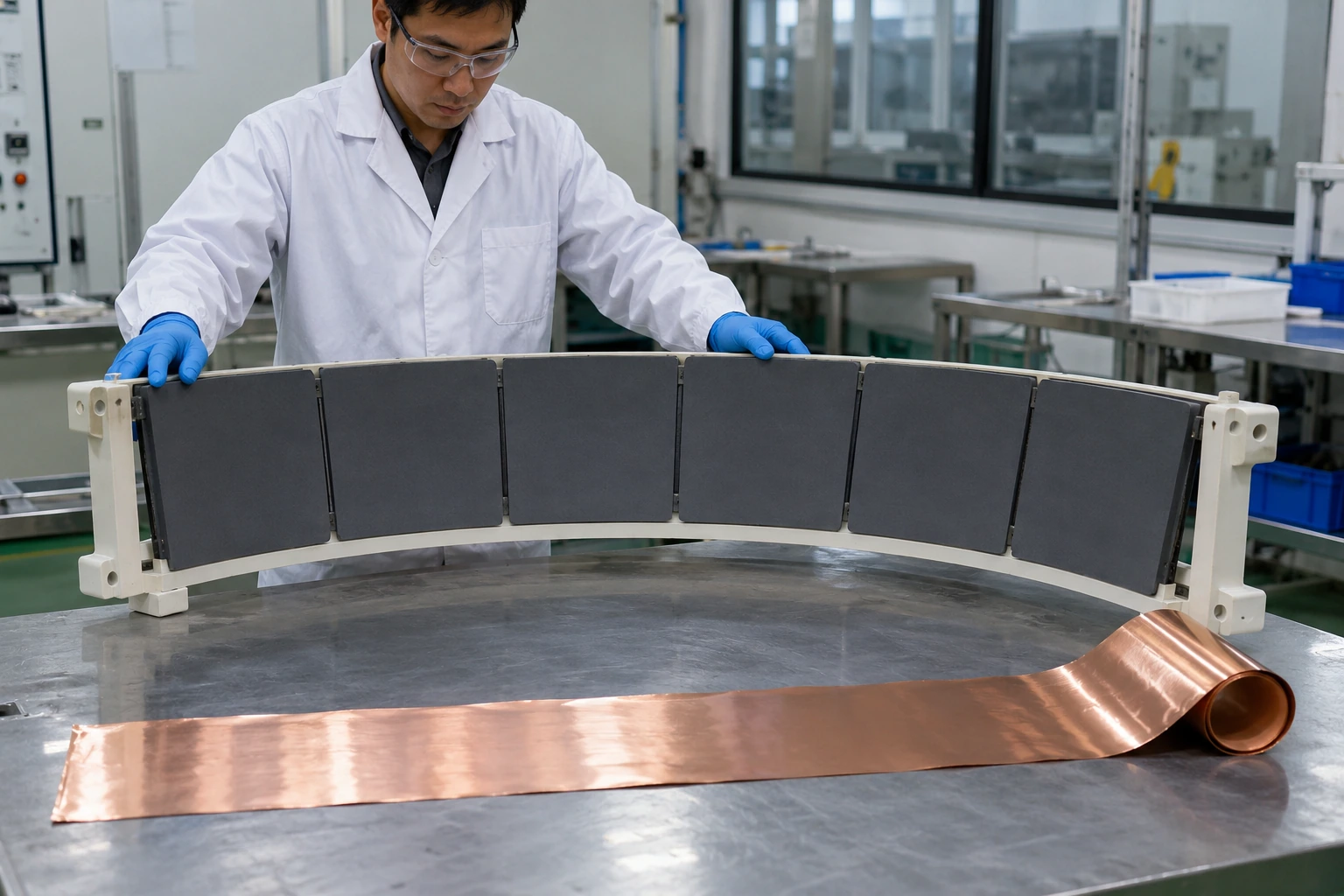
A Titanium electrode layout can influence foil thickness across the drum width through current distribution. Segmentation offers one possible control method.
How can anode zones shape foil width?
Map thickness across the product width. Some copper-foil designs divide edge zones into separately controlled segments; a custom application review should relate extra feeds and maintenance to measured widthwise profiles.
- Mark widthwise zones and current feeds.
- Measure foil at repeatable locations across its web.
| Check | Decision |
|---|---|
| Continuous anode face | Uses a shared current field |
| Segmented edge zone | Allows local current adjustment |
A width-control feature should respond to a measured profile, not an assumed defect. Key Takeaway: Compare anode zoning with thickness maps from the existing cell.
5. How do flow and drum speed affect a Titanium electrode cell?
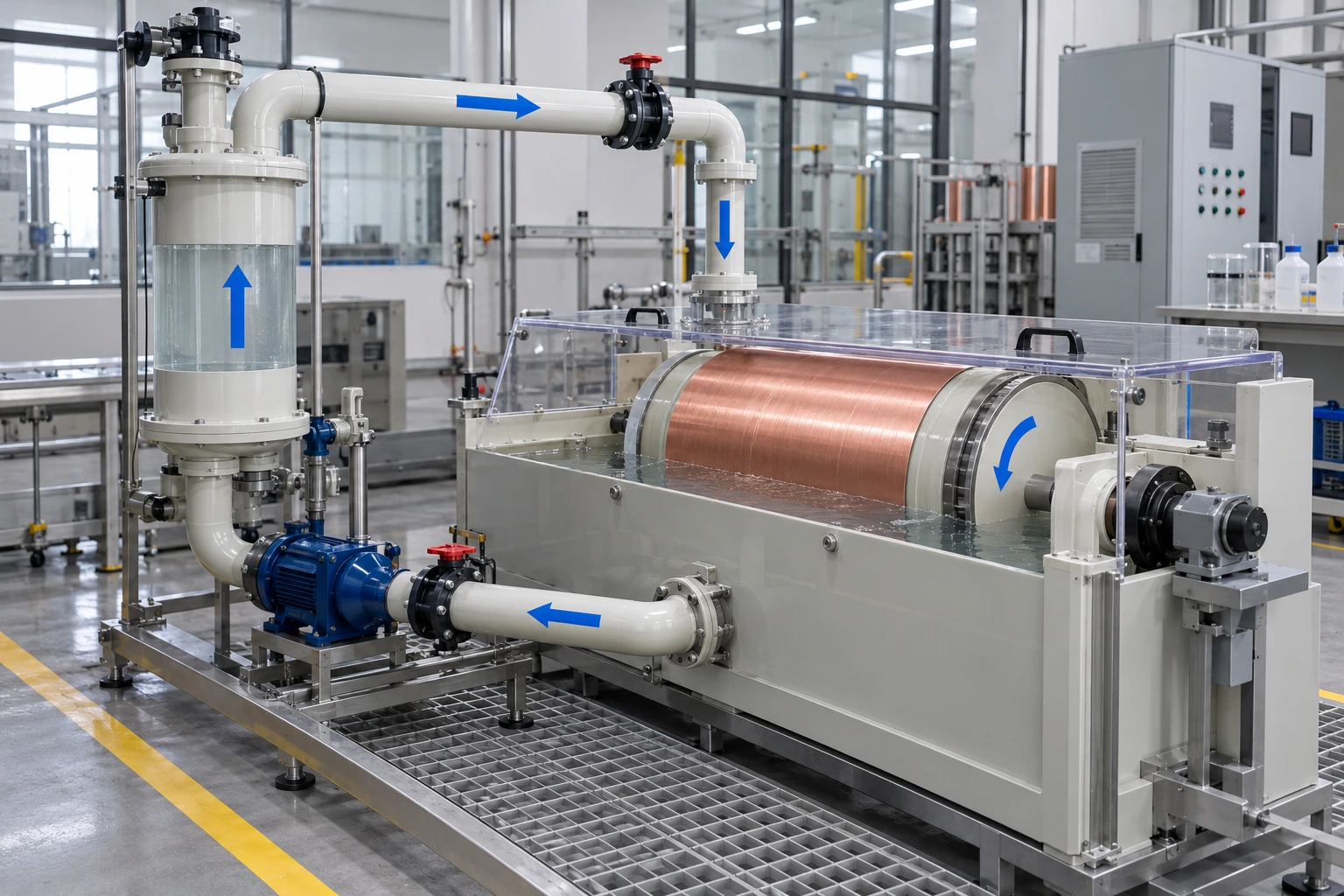
A Titanium electrode cell depends on electrolyte flow and drum travel through the deposition arc. Both affect how ions reach the growing foil surface.
How do flow and rotation affect the active arc?
Read flow and residence as one operating pair. Electrolyte moves through a drum-anode gap while rotation carries each surface point across its active zone. Changes in flow distribution or drum speed can alter local transport and available deposition time.
- Show inlet, return, and flow path across the arc.
- Record rotation direction and active exposure zone.
| Check | Decision |
|---|---|
| Balanced flow | Supports similar exposure across width |
| Uneven circulation | May create local process differences |
A correct electrode contour can still see uneven transport in a poorly described circulation path. Key Takeaway: Submit a circulation sketch alongside drum and anode dimensions.
6. What does an anode coating face in a Titanium electrode foil cell?

A Titanium electrode coating must suit its anodic reaction, copper electrolyte, additives, and operating potential. Compatibility depends on a specific process window.
What should the anode surface face in service?
Specify chemistry at the wetted surface. Copper foil processes may include organic additives and distinct replenishment chemistries. Review coating composition, expected anodic reaction, bath contaminants, temperature, and cleaning conditions with the process owner.
- List electrolyte family and additive control approach.
- State temperature range and any shutdown or cleaning exposure.
| Check | Decision |
|---|---|
| Defined anode reaction | Frames coating review |
| Unknown bath history | Leaves compatibility unresolved |
A titanium substrate does not establish the behavior of its coating in a foil bath. Key Takeaway: Confirm coating and electrolyte compatibility against the actual operating record.
7. How do edge zones affect a Titanium electrode layout?
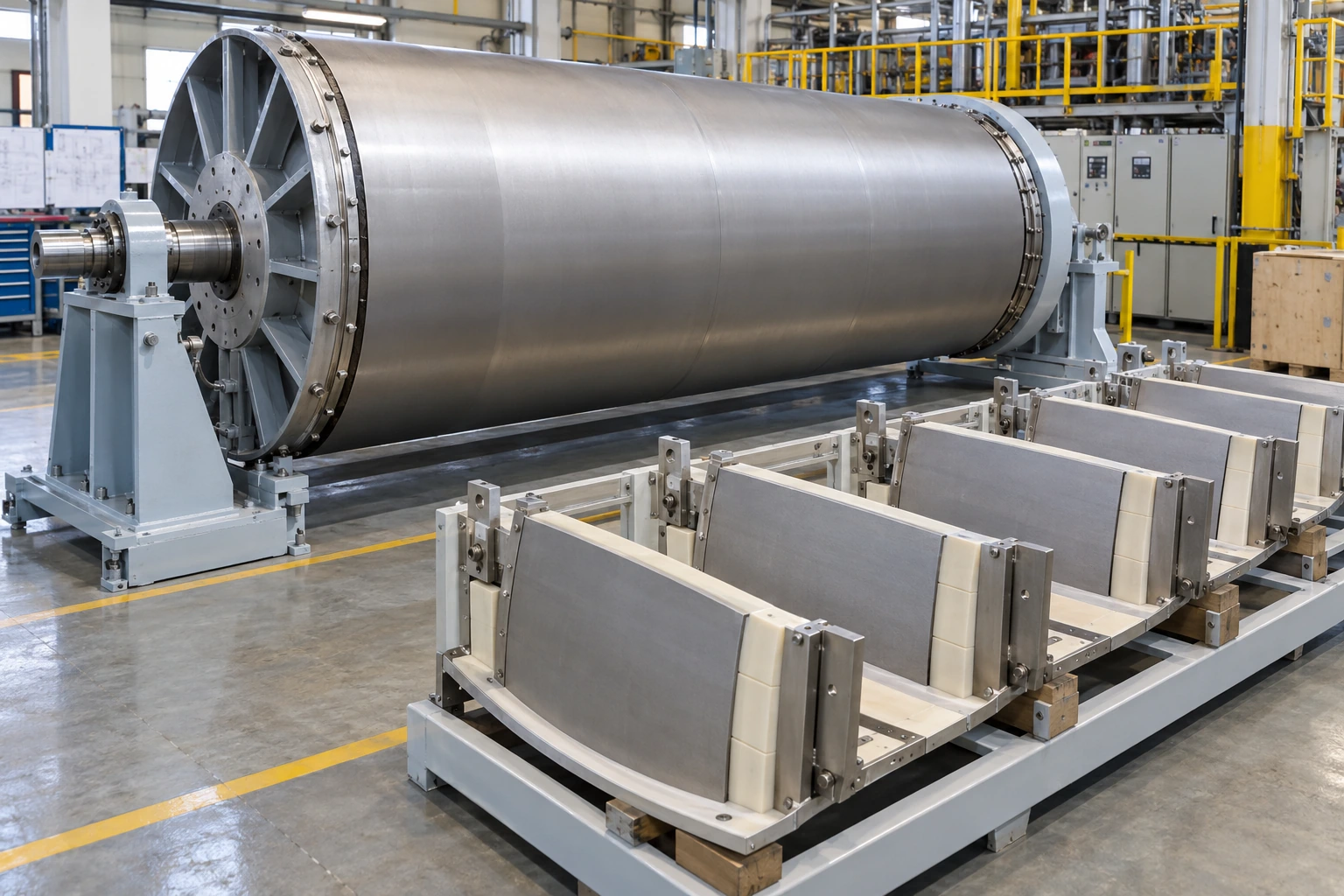
A Titanium electrode width and edge arrangement should follow the required foil profile and drum width. Edge zones may need separate analysis from central width.
How do edge zones affect current distribution?
Compare both edges with the centerline. Foil width, anode segmentation, local gap, and drum edge geometry shape the current field. Edge corrections should be based on product maps and cell measurements, since line designs vary.
- Define usable foil width and edge trim allowance.
- Record thickness profile from both edges to center.
| Check | Decision |
|---|---|
| Center zone | Sets much of the base deposition |
| Edge zone | May need separate field control |
Edge thickness can drift even when centerline readings remain steady. Key Takeaway: Use widthwise foil data when fixing anode segment boundaries.
8. How should a Titanium electrode assembly mount beside the drum?
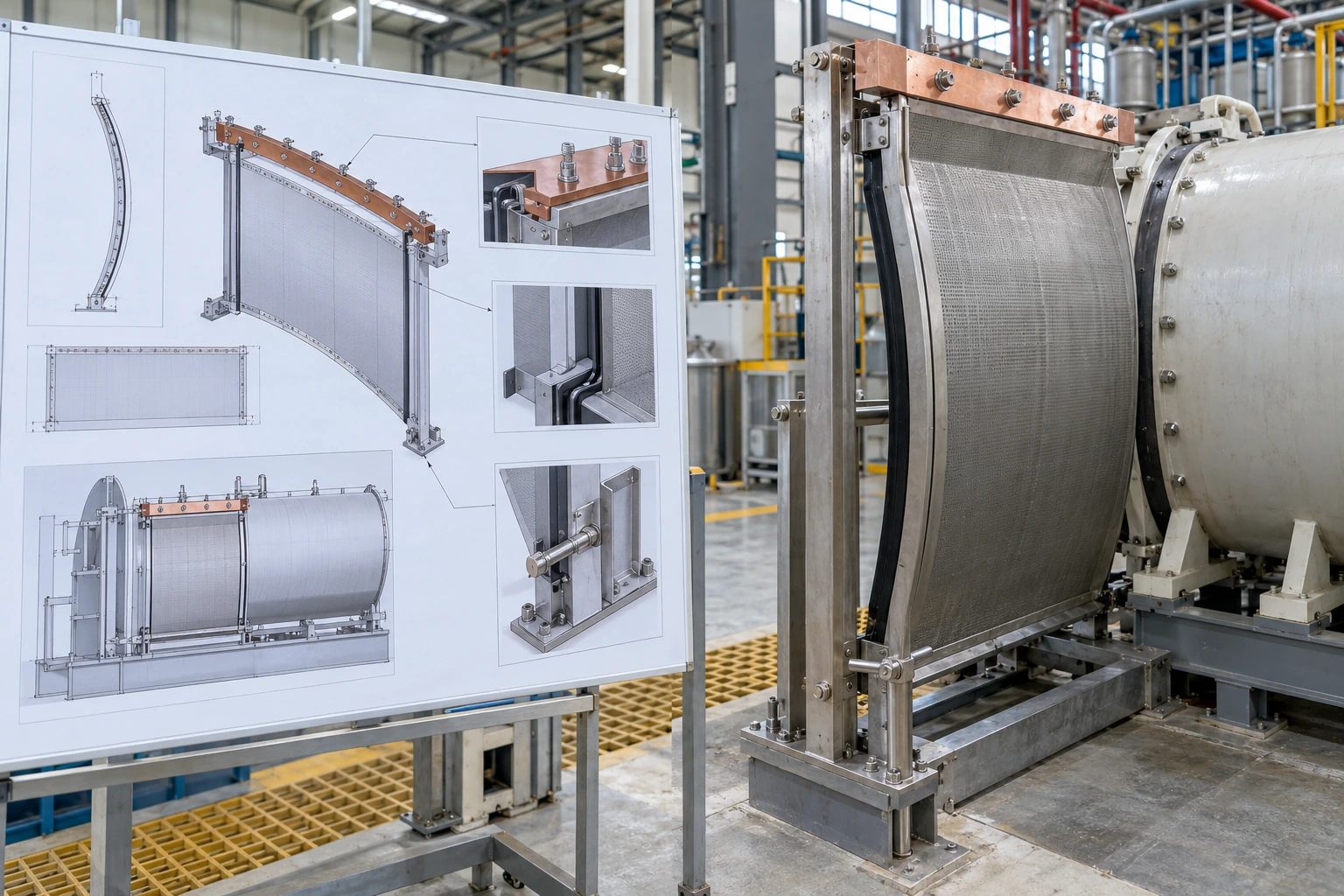
A Titanium electrode assembly should mount from cell datums while preserving drum clearance, seals, busbar access, and service removal. Those interfaces define installation fit.
Which mounting and electrical details belong on the drawing?
Dimension from fixed machine references. Curved anode segments need supports that hold their position relative to drum runout and operating access. drawing-based electrode options can be checked against current-feed location, insulation boundaries, seals, and maintenance sequence.
- Show frame, seals, busbar, and lifting points.
- Mark service clearance and permitted movement.
| Check | Decision |
|---|---|
| Cell datum | Controls installed alignment |
| Service envelope | Allows inspection and removal |
A shop-fit assembly may still clash with the drum or peel mechanism once installed. Key Takeaway: Dimension anode supports from equipment datums used at commissioning.
9. What should a Titanium electrode copper-foil trial measure?

A Titanium electrode trial should compare foil thickness, profile, surface, and bath records in the production cell. Trial measures need repeatable web locations.
What should a copper-foil trial measure?
Tie each foil sample to its drum position. Record widthwise thickness, surface condition, peel behavior, drum position, and bath analysis. If the anode has zones, keep segment currents traceable with each sample set.
- Mark sample position and direction on every foil strip.
- Log anode zone current and bath data for each run.
| Check | Decision |
|---|---|
| One strip | Checks one production interval |
| Mapped web samples | Shows width and time variation |
An average thickness can hide edge or rotation-linked deviations. Key Takeaway: Agree on a web sampling map before comparing anode layouts.
10. What drawing details support a Titanium electrode review?

For a Titanium electrode review, send the drum drawing, active arc, target foil profile, bath flow, anode type, and copper supply route. Those details bound the request.
What information supports a foil-cell review?
Include the machine interfaces and process duty. We review custom titanium plate, mesh, rod, tube, and assembly requests from drawings or samples. contact us today with drum geometry, segment layout, connection points, electrolyte context, and trial criteria for a scoped discussion.
- Attach drum cross-sections and widthwise foil maps.
- List flow path, anode-to-drum clearance, busbar details, and replenishment method.
| Check | Decision |
|---|---|
| Equipment drawing | Defines cell fit and clearance |
| Process evidence | Frames distribution and material review |
A counter-electrode proposal cannot resolve a foil-line issue without drum and bath context. Key Takeaway: Send process records with drawings before settling the anode assembly.
Frequently Asked Questions
Can I use a titanium electrode with a copper-foil drum cell? Possibly as an anode component in a compatible architecture. Review coating, bath, gap, current, and copper replenishment together.
What's the best anode layout for copper foil production? There is no universal layout. Drum width, active arc, foil profile, flow, and current-control strategy drive the geometry.
How do I know if drum spacing affects foil thickness? Compare gap and runout records with thickness maps tied to drum position. Check both web width and changes over time.
Can I use one anode layout for every drum width? No, because drum width changes active spacing and foil profile requirements.
Can I judge a foil cell from average thickness alone? An average can hide edge or rotation-linked differences. Map repeatable locations across width and drum position.