
A Titanium electrode needs an anode bag only when a defined containment or process function justifies one and the complete arrangement is qualified. Adding a bag because another plating line uses one can restrict flow or place fabric against an active surface. That may create a new maintenance problem without solving the original concern. Define the bag's job before specifying its material and fit.
1. When does a Titanium electrode need an anode bag?
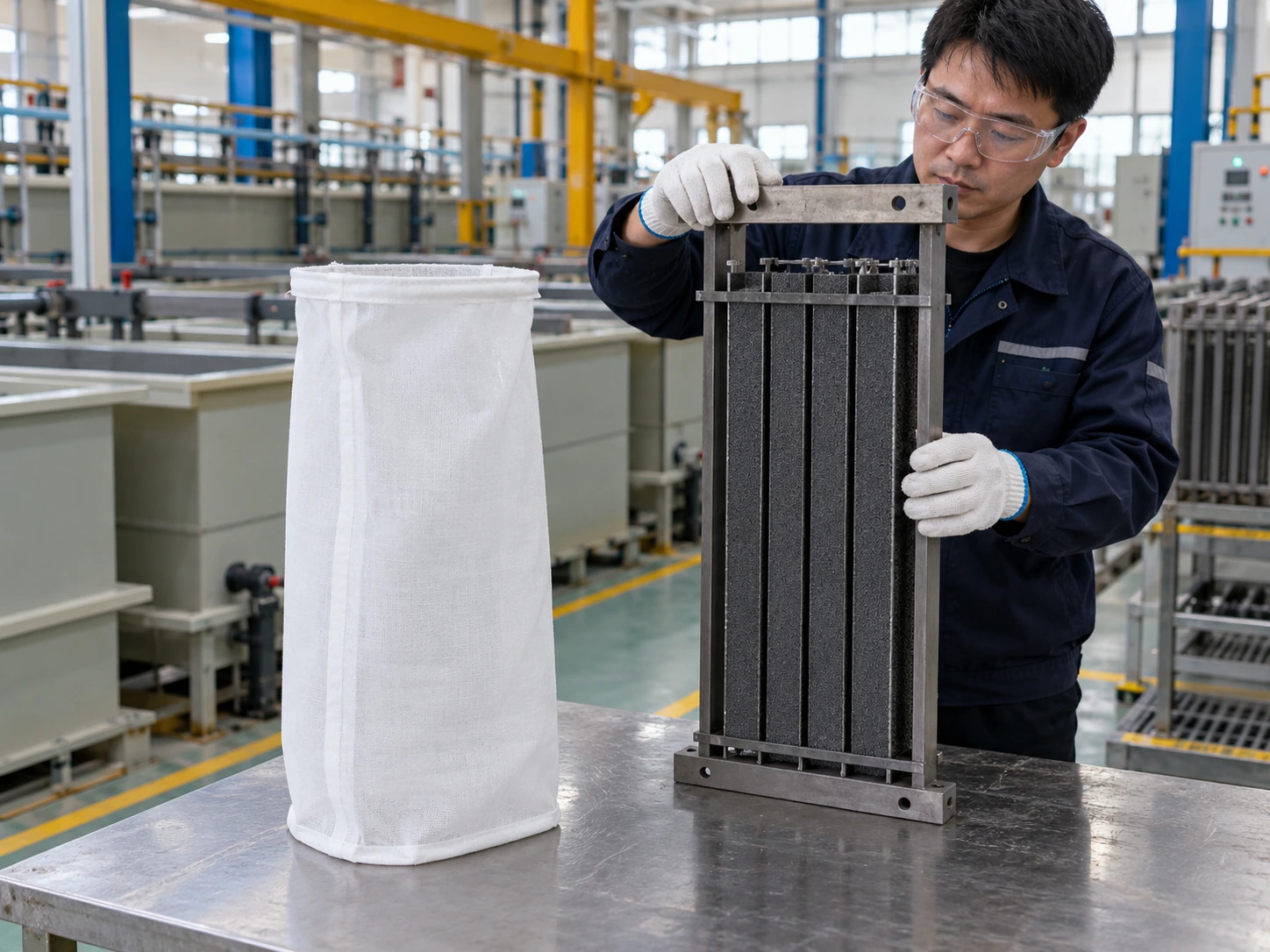
A Titanium electrode may need an anode bag where a reviewed process requires particulate containment or another defined porous-barrier function. It is not a universal accessory for every coated anode.
What should the bag retain?
Name the process objective. Identify the material or condition being controlled. A bag cannot be selected meaningfully when the requirement is only to make the installation look like another cell.
- Define the containment purpose.
- Identify relevant particle or product criteria.
| Check | Decision |
|---|---|
| Defined barrier function | Supports design review |
| No identified purpose | Does not justify added hardware |
Choose the accessory around a measurable requirement. Key Takeaway: Start with the problem the bag must solve.
2. How does a bag differ from a Titanium electrode membrane?
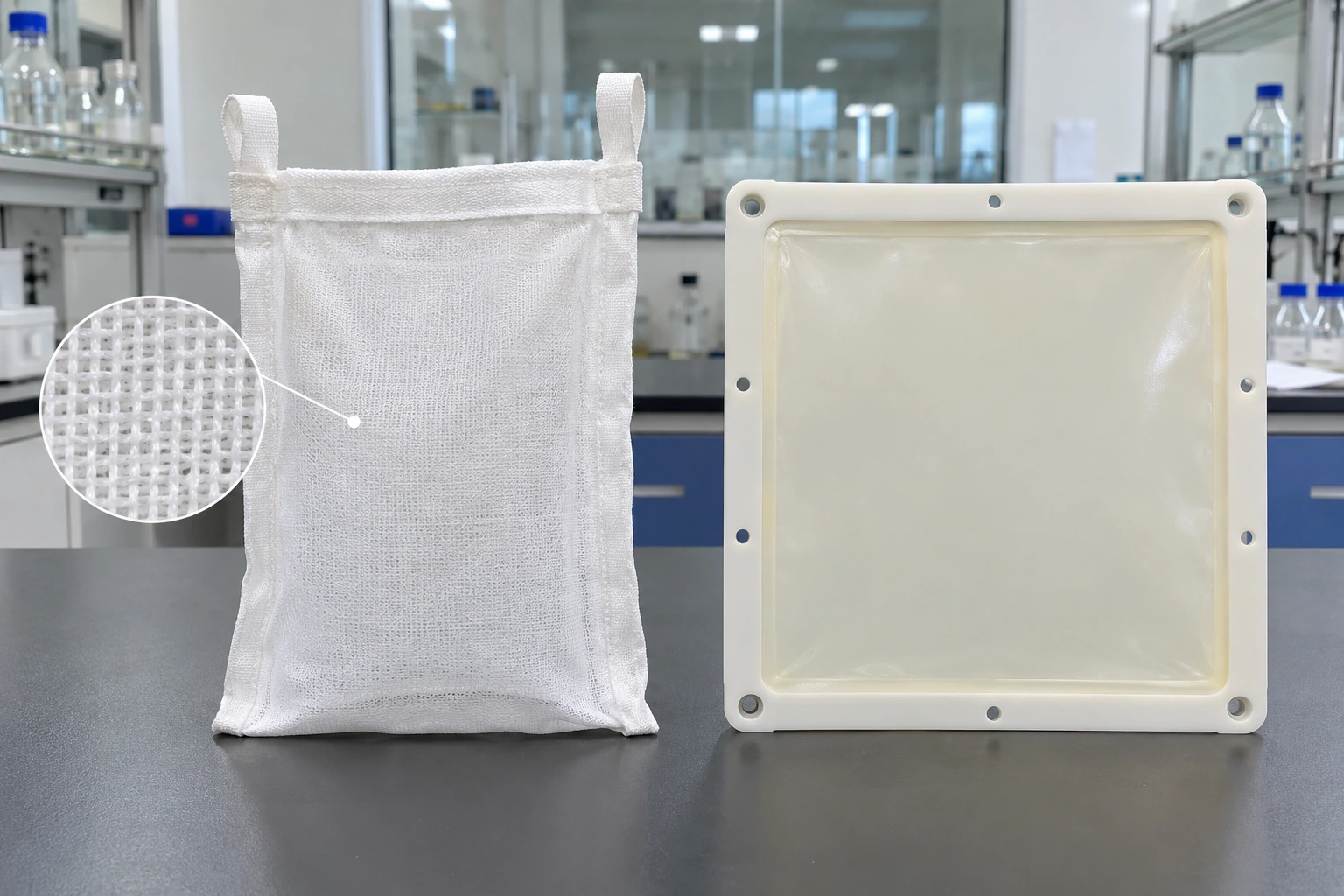
An anode bag differs from a Titanium electrode membrane because a porous fabric barrier does not automatically provide selective ion transport or chemical isolation. Its actual function depends on material and construction.
Which separation function do you need?
Keep the terms distinct. If products must remain chemically separated, review the full compartment design. Do not assume a textile sleeve performs like a qualified ion-selective membrane.
- State required separation behavior.
- Distinguish particles from dissolved species.
| Check | Decision |
|---|---|
| Porous bag | A defined physical barrier |
| Selective membrane | A different transport function |
Match the barrier type to the process requirement. Key Takeaway: A bag is not a substitute for a validated membrane function.
3. Can a bag restrict Titanium electrode flow?
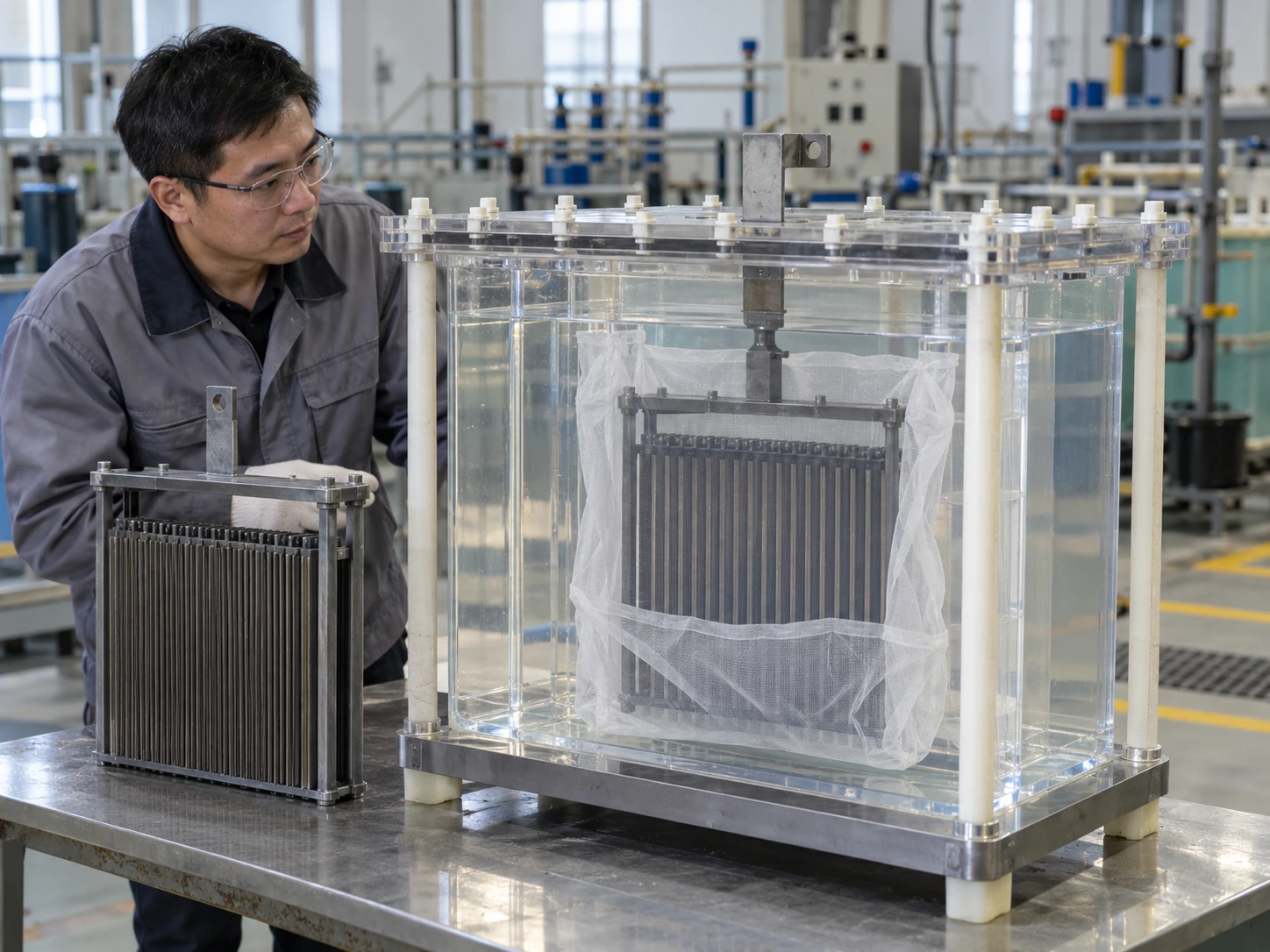
A bag can restrict Titanium electrode flow through its material, fit or accumulated deposits. The significance depends on the complete cell geometry and operating conditions.
Can liquid reach the reaction surface adequately?
Review the hydraulic path. Compare pressure and relevant channel behavior with the intended bag installed. A bulk flow meter may miss local restrictions near the electrode.
- Record bag clearance and support.
- Include fouled-state maintenance criteria.
| Check | Decision |
|---|---|
| New clean bag | One operating condition |
| Loaded or distorted bag | May change local flow |
Include service condition in the review. Key Takeaway: Qualification should cover more than the appearance of an unused bag.
4. How does bag fit affect Titanium electrode gas removal?
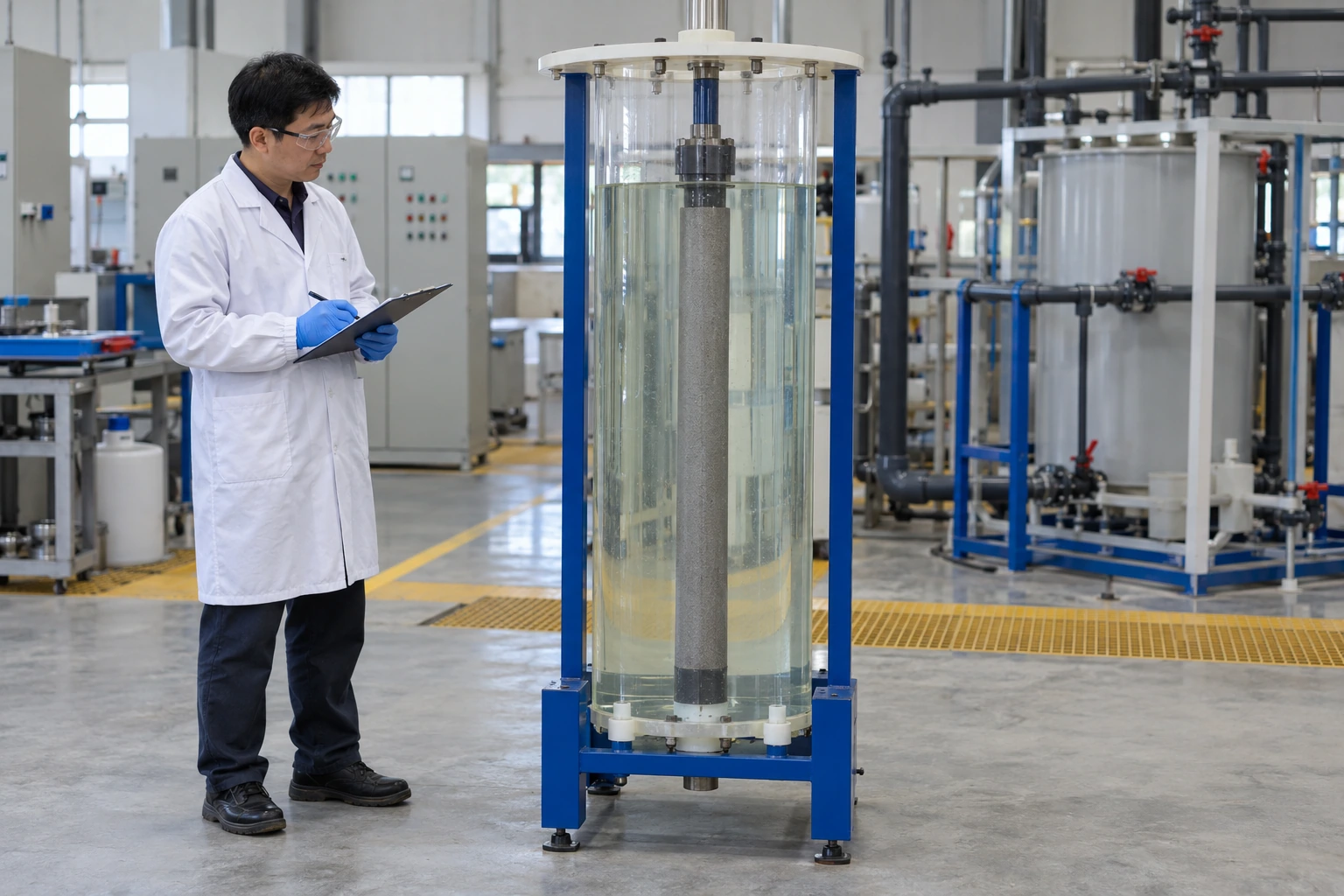
Bag fit can affect Titanium electrode gas removal if folds, closures or contact regions obstruct intended escape paths. The equipment designer must review the complete liquid and gas arrangement.
Where do generated gases leave?
Keep the outlet path defined. Include bag orientation and upper clearances in a custom application review. Do not improvise closures around a gas-generating electrode without a qualified design review.
- Show closures and support points.
- Preserve approved gas-management arrangements.
| Check | Decision |
|---|---|
| Clear designed exit | Supports intended product removal |
| Unreviewed obstruction | Creates an unresolved interface |
Review gas and liquid paths together. Key Takeaway: Bag geometry must support the cell's approved gas-removal design.
5. Which bag materials suit a Titanium electrode bath?

Bag materials for a Titanium electrode bath must suit the actual chemical, thermal and mechanical exposure. Generic fabric names do not establish compatibility with every oxidizing or plating environment.
Which service conditions reach the textile?
Specify the complete exposure. Include process liquid, approved cleaning and standby conditions. Ask for material-specific evidence rather than relying on another application's recommendation.
- Identify fabric and construction details.
- Record operating and cleaning chemistry.
| Check | Decision |
|---|---|
| Material family | Broad classification |
| Qualified construction | Application-specific evidence |
Review seams and supports and fabric. Key Takeaway: Bag compatibility belongs to the complete accessory, not a material label alone.
6. Can a bag damage Titanium electrode coating?
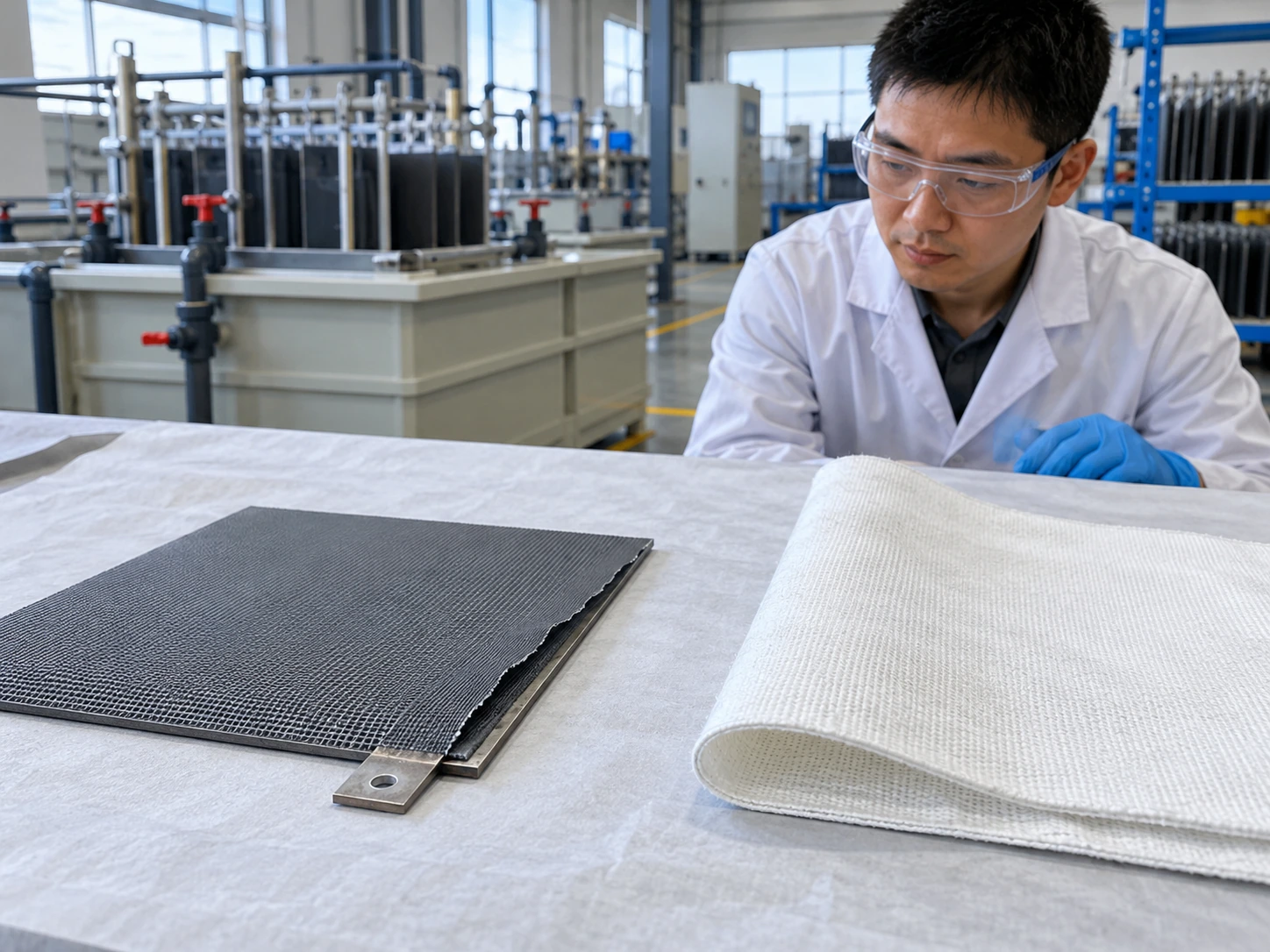
A bag can damage Titanium electrode coating if its movement or support creates unapproved rubbing or mechanical contact. Clearance and restraint must be addressed by the assembly design.
What touches the active surface during service?
Inspect contact paths. Consider movement during circulation, handling and removal. A loose bag that looks clear at rest may behave differently during operation.
- Define permitted contact regions.
- Review assembly and removal procedures.
| Check | Decision |
|---|---|
| Static clearance | One geometric observation |
| Service clearance | Includes expected movement |
Assess the installed and handled condition. Key Takeaway: Protect the coating through a defined bag-support arrangement.
7. How should Titanium electrode bag contamination be checked?

Titanium electrode bag contamination should be checked when fibers, residues or extractables could affect product acceptance. A chemically durable textile can still introduce unwanted material.
Could the accessory change the product?
Use an appropriate sampling plan. Include unused-material controls and relevant process samples. Select analytical methods around the actual product requirements rather than a generic cleanliness statement.
- Identify relevant contaminants.
- Record handling and preparation.
| Check | Decision |
|---|---|
| Material integrity | Durability evidence |
| Product analysis | Contamination evidence |
Keep compatibility and purity questions separate. Key Takeaway: A sound-looking bag is not proof of acceptable product contact.
8. What maintenance does a Titanium electrode bag require?
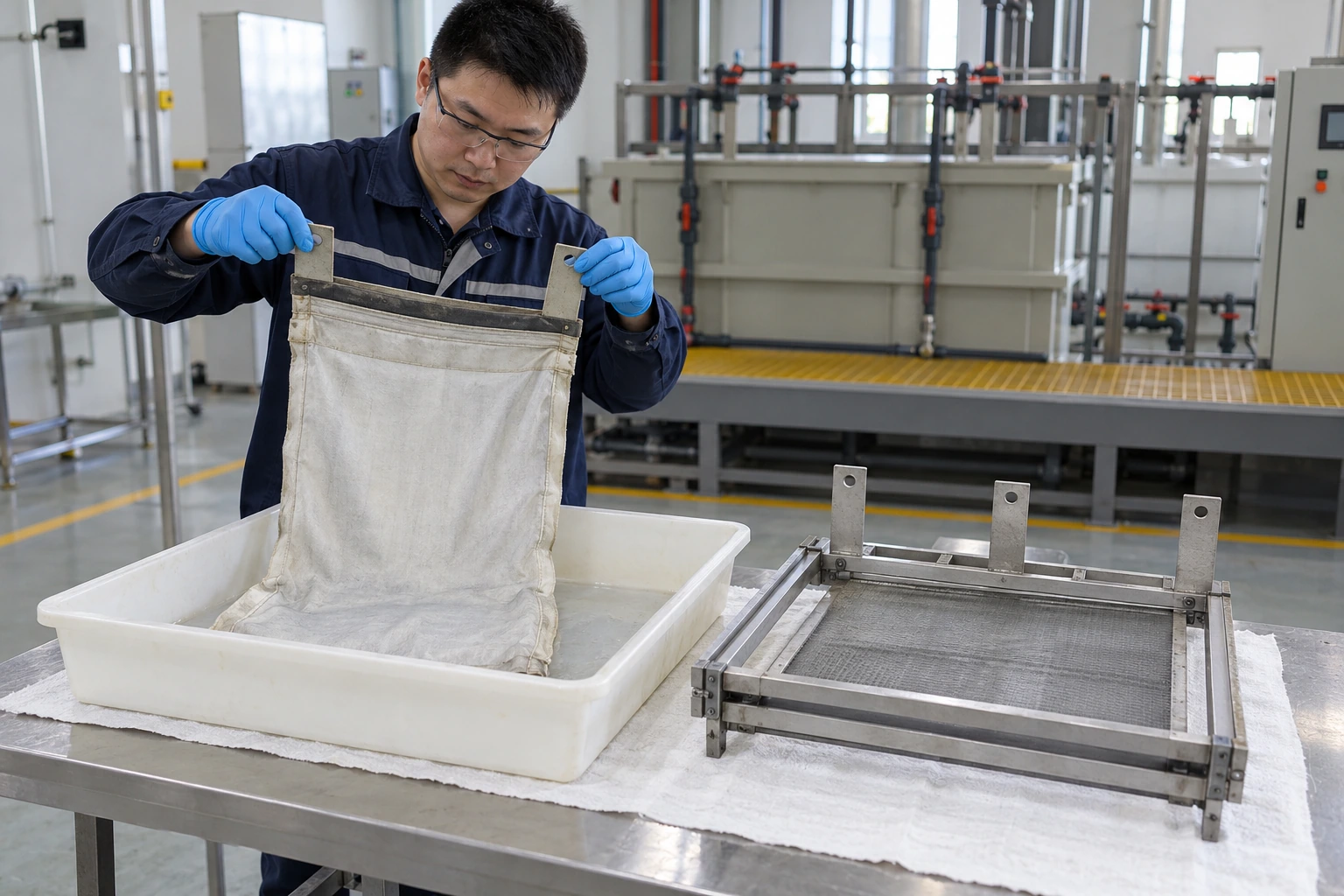
Titanium electrode bag maintenance should follow a defined condition and replacement plan appropriate to the process. Inspection needs to address damage, blockage and any loss of the intended barrier function.
What makes the bag unserviceable?
Write observable criteria. For drawing-based electrode options, align maintenance access with the electrode drawing. Avoid opening or removing a bag from operating equipment outside approved procedures.
- Define inspection and replacement triggers.
- Record removed-bag condition.
| Check | Decision |
|---|---|
| Calendar interval | A planning input |
| Condition criteria | Support a service decision |
Use records to refine the approved maintenance plan. Key Takeaway: Maintain the bag according to its function and observed condition.
9. How do you trial a Titanium electrode bag design?
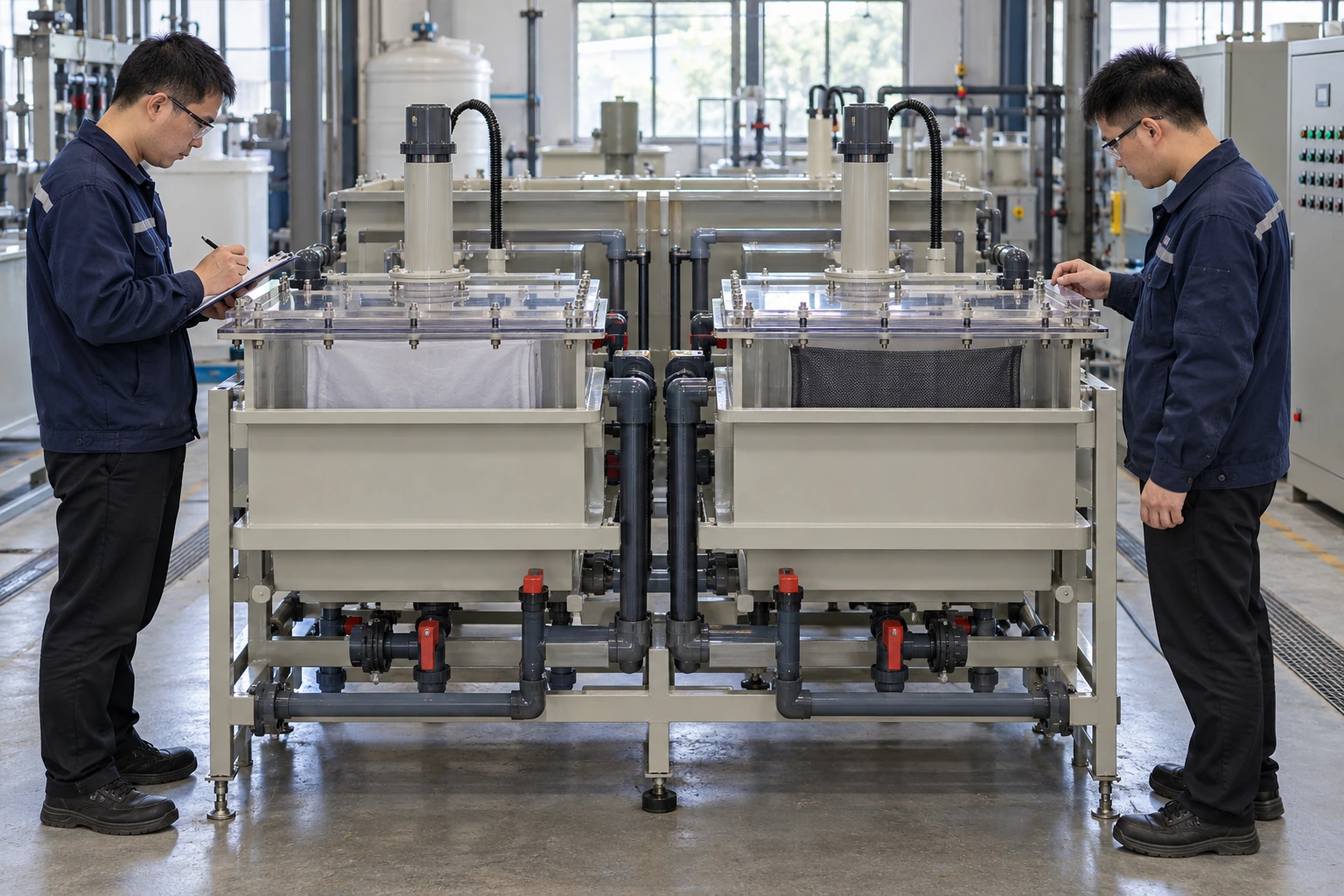
A Titanium electrode bag trial should isolate the accessory's effect while holding electrode, chemistry and measurement conditions consistent. Its acceptance must cover the intended benefit and possible adverse effects.
What would prove the bag helps?
Compare a defined variable. Evaluate containment, flow and product criteria relevant to the application. Record whether any other assembly changes limit attribution to the bag.
- Use matched test configurations.
- Retain relevant operating records.
| Check | Decision |
|---|---|
| Containment improved | One acceptance result |
| Complete requirements met | Supports application approval |
Check the tradeoffs and the desired effect. Key Takeaway: Approve a bag through a balanced application trial.
10. What Titanium electrode bag-interface details should you send?

A Titanium electrode bag-interface brief should include barrier purpose, material, clearance, support and maintenance requirements. Confirm accessory supply scope separately from electrode manufacture.
Send the interface drawing
Bring the function and the fit. When you contact us today, we can review electrode geometry against your proposed accessory arrangement. We favor defined interface requirements over automatic accessory recommendations.
- State who supplies and qualifies the bag.
- Include operating and handling conditions.
| Check | Decision |
|---|---|
| Electrode interface | Defines component compatibility |
| Accessory qualification | Defines barrier suitability |
Assign responsibilities before assembly release. Key Takeaway: Choose a bag only when its purpose and complete operating arrangement are qualified.
Frequently Asked Questions
Can I use an anode bag instead of a membrane? Not automatically. Porous containment and selective ion transport are different functions.
What's the best bag material? Use construction-specific evidence for the actual bath, temperature and cleaning conditions.
How do I know if a bag restricts flow? Use relevant pressure, distribution and inspection evidence with the bag installed.
Can I let the bag rest against the coating? Only where the approved design explicitly permits that contact and movement.
Can I assume an insoluble anode always needs a bag? No. The accessory needs a defined process purpose and qualification.