
Parallel Titanium electrode cells share current according to their actual electrical and electrochemical behavior, not simply their matching nameplates. One branch can draw more current while the supply's total display remains on target. That can hide unequal loading and output. Measure branches separately and review wiring, chemistry and control before assuming equal duty.
1. Why can parallel Titanium electrode currents differ?

Parallel Titanium electrode currents can differ because branch resistance and electrode behavior are not perfectly identical. Wiring, chemistry, temperature and condition can all contribute.
Which branch is carrying the duty?
Measure rather than divide. Total current divided by branch count is only an assumption of equal sharing. Use appropriate branch measurements before assigning each electrode its operating current density.
- Record actual branch currents.
- Compare relevant branch conditions.
| Check | Decision |
|---|---|
| Total current | Combined electrical quantity |
| Branch current | Individual-cell loading evidence |
Check the distribution behind the total. Key Takeaway: Equal-looking cells do not prove equal operating current.
2. Does one supply fix every Titanium electrode branch current?
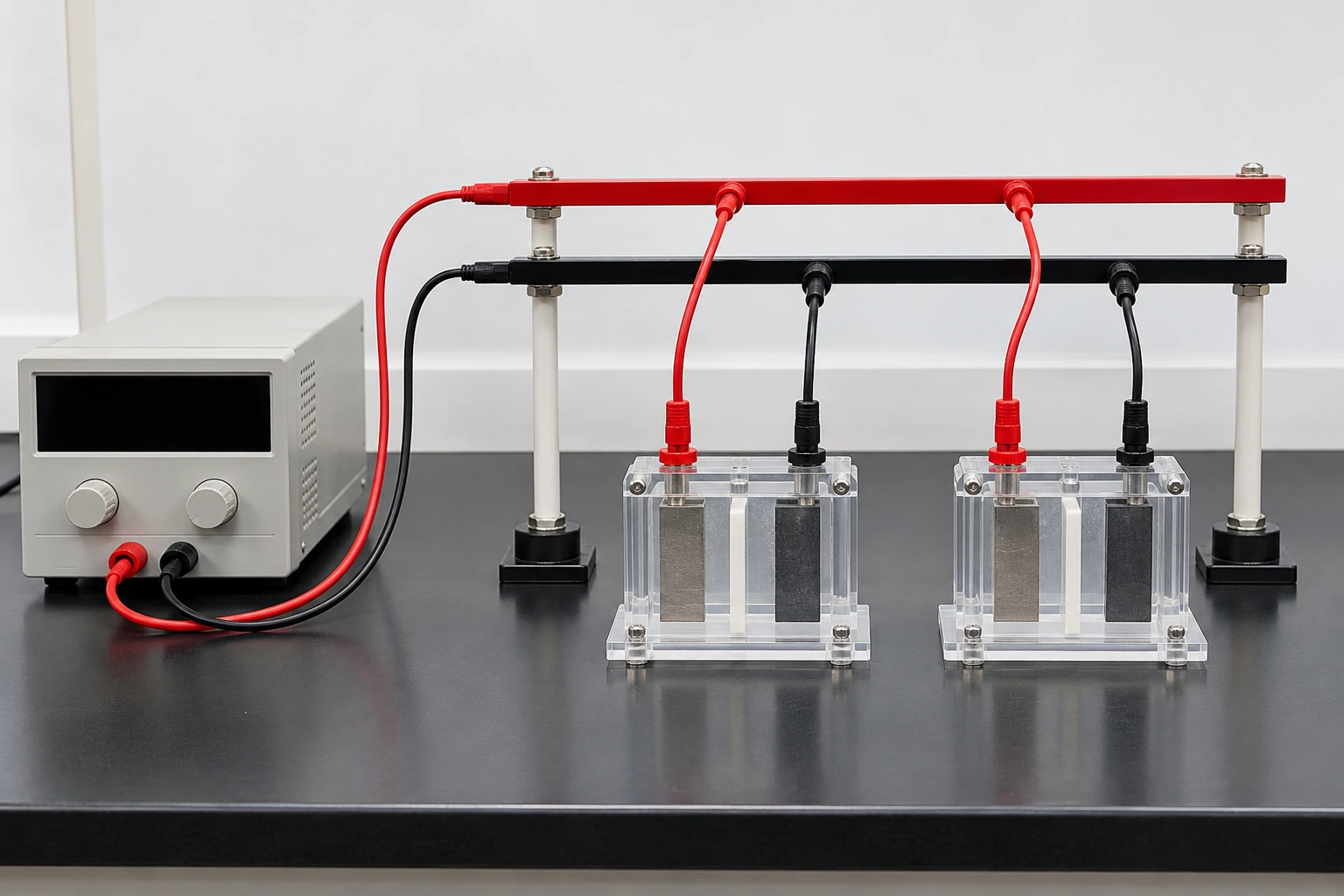
One shared supply does not automatically regulate every Titanium electrode branch to an individual current target. Its control mode and branch architecture determine what is actually controlled.
What does the control loop see?
Identify the feedback boundary. State whether sensing covers total current or individual branches. A stable combined value can coexist with changing distribution between cells.
- Show sensing points on the circuit.
- Define each controlled variable.
| Check | Decision |
|---|---|
| Total-current control | Regulates the combined value |
| Branch control | Needs a defined individual arrangement |
Review the actual control architecture. Key Takeaway: A shared rectifier display cannot substitute for branch-current evidence.
3. How do leads affect Titanium electrode current sharing?
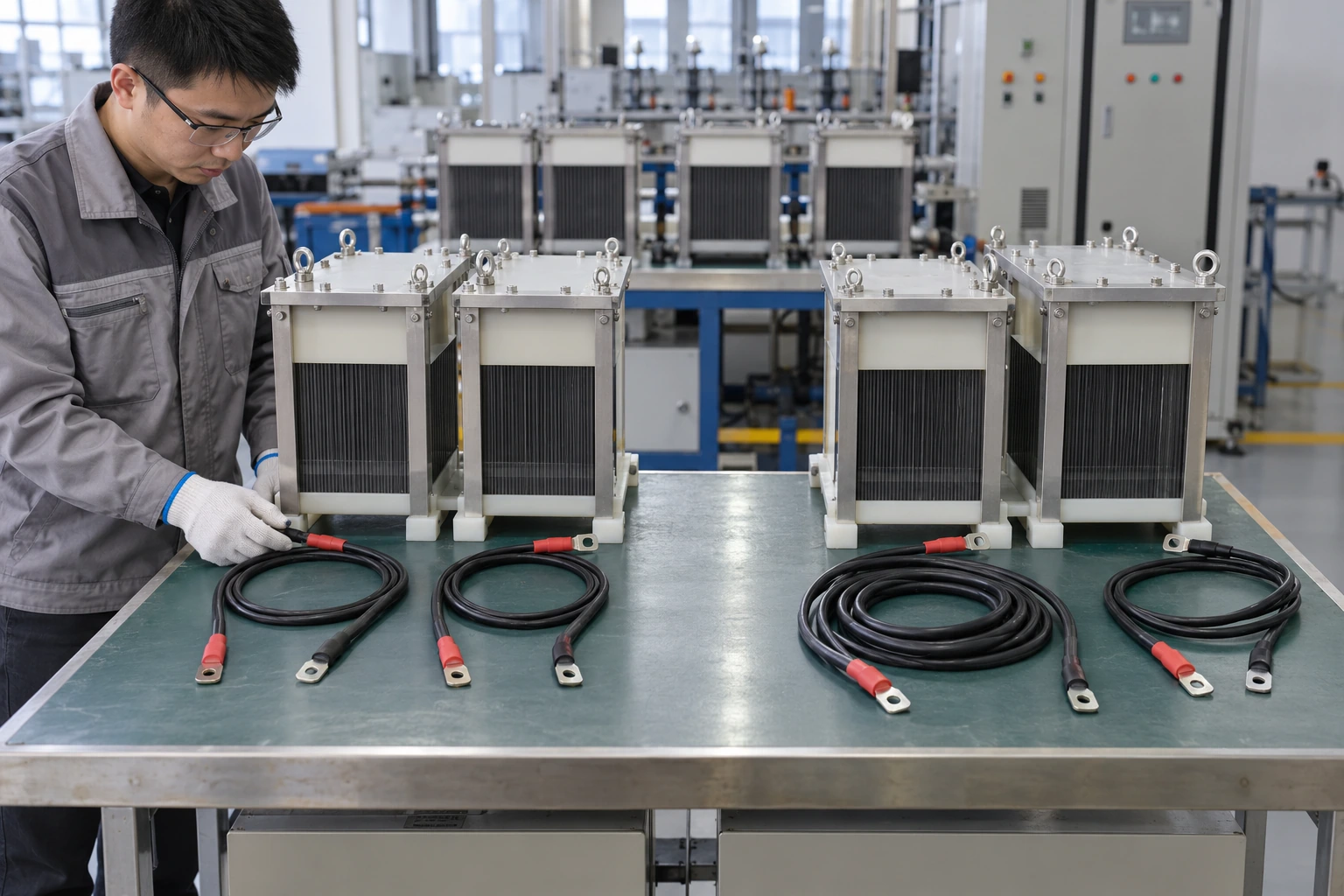
Lead resistance can influence Titanium electrode current sharing when branch conductor lengths, cross sections or connections differ. Connection condition may change that influence over time.
Are the branch paths comparable?
Review the dry electrical layout. Qualified personnel should check conductor and interface requirements. Do not change cable arrangements or connection hardware on energized equipment.
- Record cable and terminal specifications.
- Retain approved assembly requirements.
| Check | Decision |
|---|---|
| Nominally similar leads | May still differ at connections |
| Verified branch paths | Support a clearer comparison |
Include connections in the branch review. Key Takeaway: Current sharing depends on the complete path to each cell.
4. Can chemistry unbalance parallel Titanium electrode cells?

Chemistry can unbalance parallel Titanium electrode cells when conductivity, temperature or reaction conditions differ between branches. Matching hardware alone does not eliminate those process differences.
Does each cell receive the same feed?
Compare actual branch conditions. Include inlet distribution and measured chemistry in a custom engineering review. A common feed tank does not prove identical temperature or flow at every active surface.
- Record branch flow and temperature.
- Check relevant feed composition.
| Check | Decision |
|---|---|
| Shared feed source | One common input |
| Matched cell conditions | Requires operating evidence |
Align hydraulic and electrical observations. Key Takeaway: A current imbalance may begin with process conditions rather than wiring.
5. How should Titanium electrode branch currents be measured?
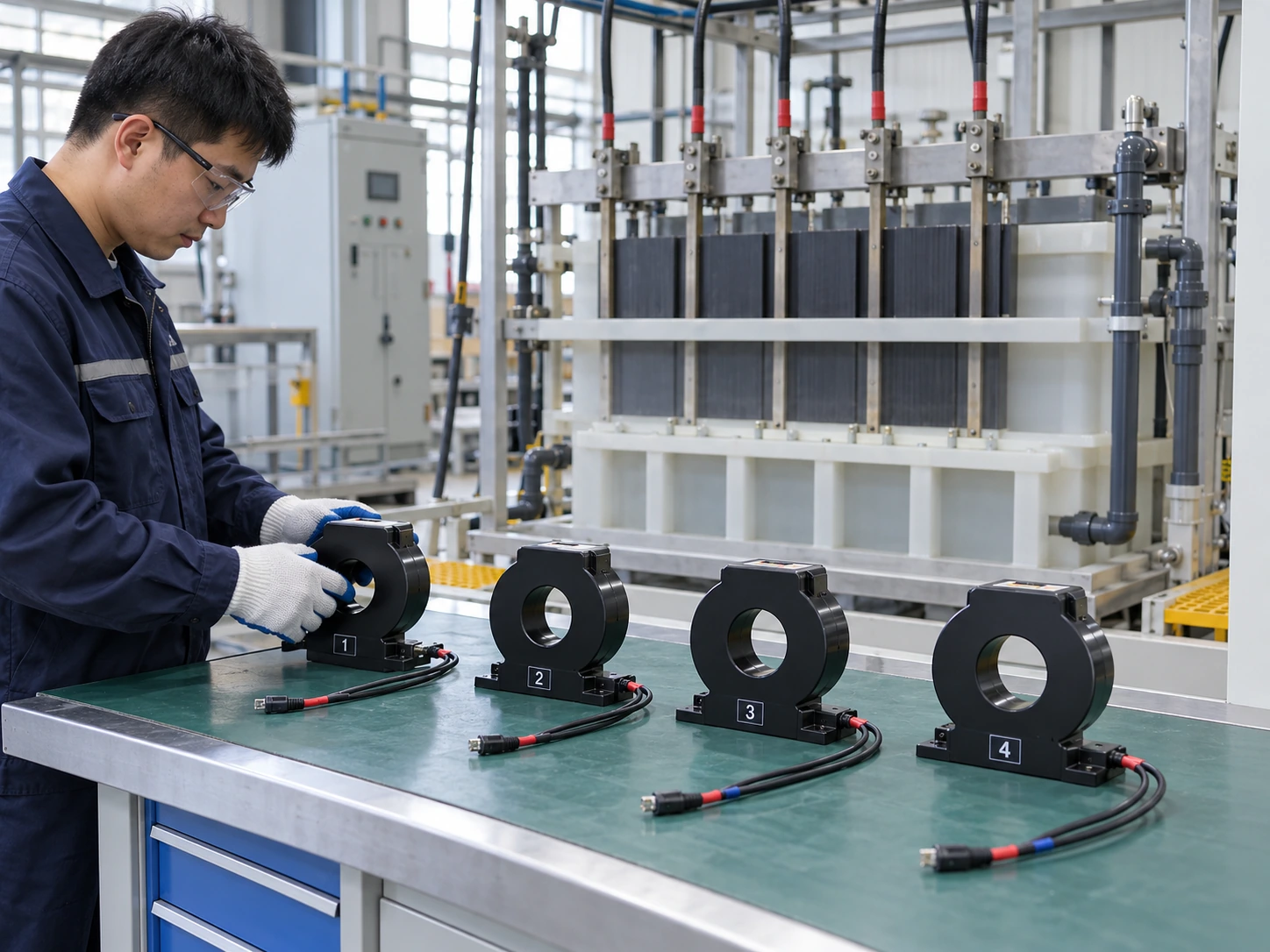
Titanium electrode branch current should be measured with suitable instrumentation and a qualified electrical arrangement. Sensor range, calibration and installation must match the intended duty.
Can each channel be trusted?
Verify the measurement chain. Record sensor identity and measurement location. Apparent imbalance may come from mismatched ranges or calibration rather than actual cell behavior.
- Check channel calibration and range.
- Synchronize relevant recordings.
| Check | Decision |
|---|---|
| Unverified sensor difference | Alternative explanation remains |
| Validated branch data | Supports fault interpretation |
Establish measurement quality before modifying hardware. Key Takeaway: Reliable branch comparisons need comparable sensing methods.
6. What happens when a Titanium electrode branch stops?
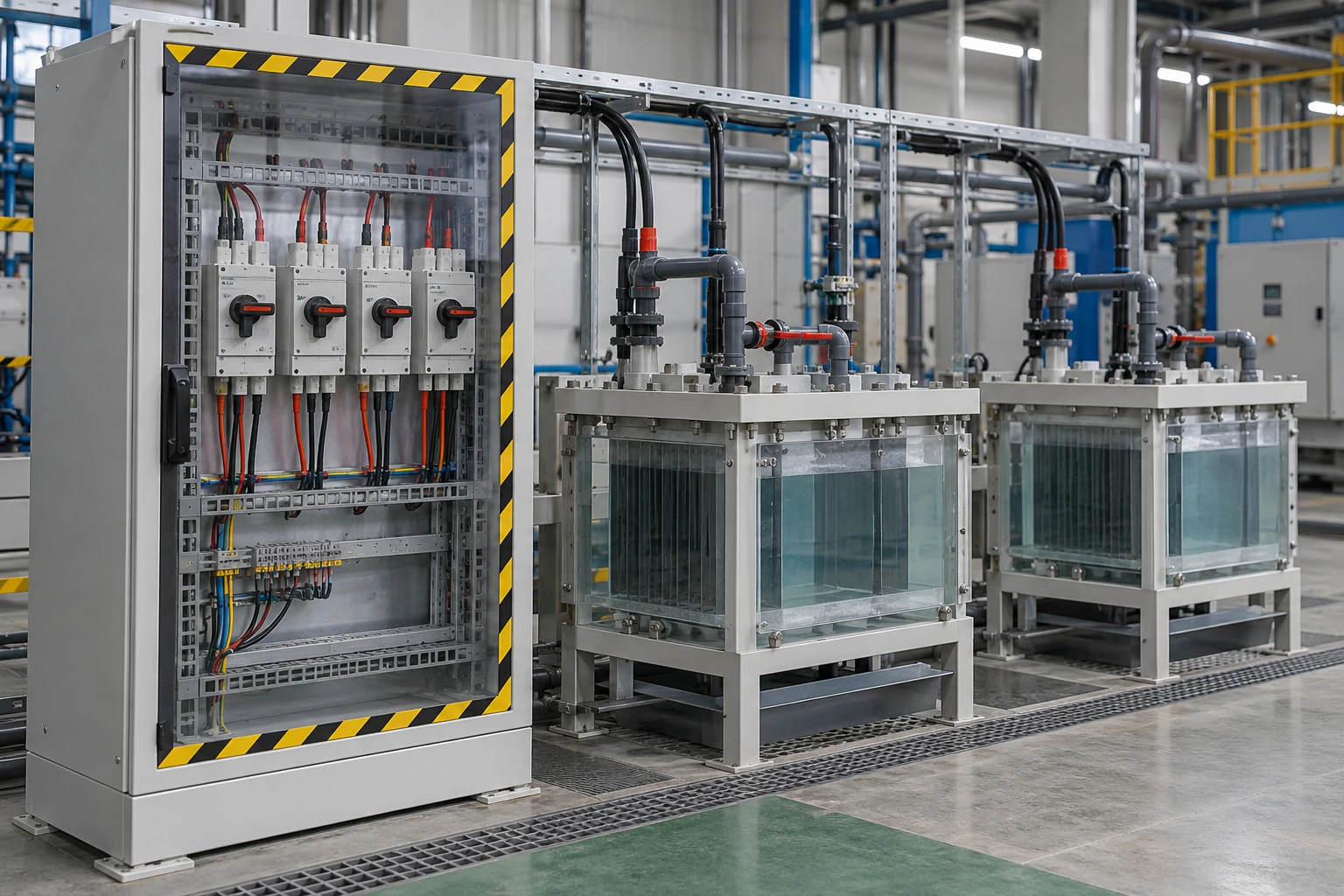
When a Titanium electrode branch stops, remaining branch currents depend on the supply and protection architecture. The system must be designed for that fault rather than assuming total-current control remains suitable.
Where can current go after a branch changes?
Review the fault state. Responsible engineers should define power response and branch protection. Do not defeat a trip to keep nominal total output during an unresolved branch fault.
- Identify branch-loss detection.
- Define approved restart conditions.
| Check | Decision |
|---|---|
| Normal sharing | One operating state |
| Branch fault | Needs a separate protection review |
Evaluate behavior beyond normal operation. Key Takeaway: Parallel-cell acceptance should include the approved response to branch faults.
7. Can balancing hardware solve Titanium electrode mismatch?

Balancing hardware may address specific Titanium electrode sharing requirements, but its suitability depends on the full electrical design. It cannot replace diagnosis of faulty connections or process differences.
What mismatch is the hardware meant to control?
Define the design problem. Have qualified electrical specialists review available architectures and their losses or limitations. Avoid prescribing a universal ballast or control setting from a generic example.
- State the sharing requirement.
- Identify expected branch variability.
| Check | Decision |
|---|---|
| Defined balancing function | Can be engineered and tested |
| Unexplained imbalance | Needs diagnosis before modification |
Choose hardware around a known requirement. Key Takeaway: Balancing is a design decision, not a shortcut around an unresolved fault.
8. How do you compare parallel Titanium electrode output?

Parallel Titanium electrode output should be compared at defined branch boundaries alongside measured current and relevant chemistry. Equal current does not guarantee equal useful yield.
Are the branches delivering comparable product?
Sample outputs separately where appropriate. For water-treatment applications, align concentration, flow and timing with electrical records. A mixed outlet can conceal one underperforming branch.
- Define branch sampling points.
- Use consistent analytical methods.
| Check | Decision |
|---|---|
| Combined outlet | System result |
| Branch output | Can locate uneven performance |
Connect product differences with branch conditions. Key Takeaway: Electrical sharing and useful-output sharing are separate measurements.
9. What trial verifies Titanium electrode load sharing?
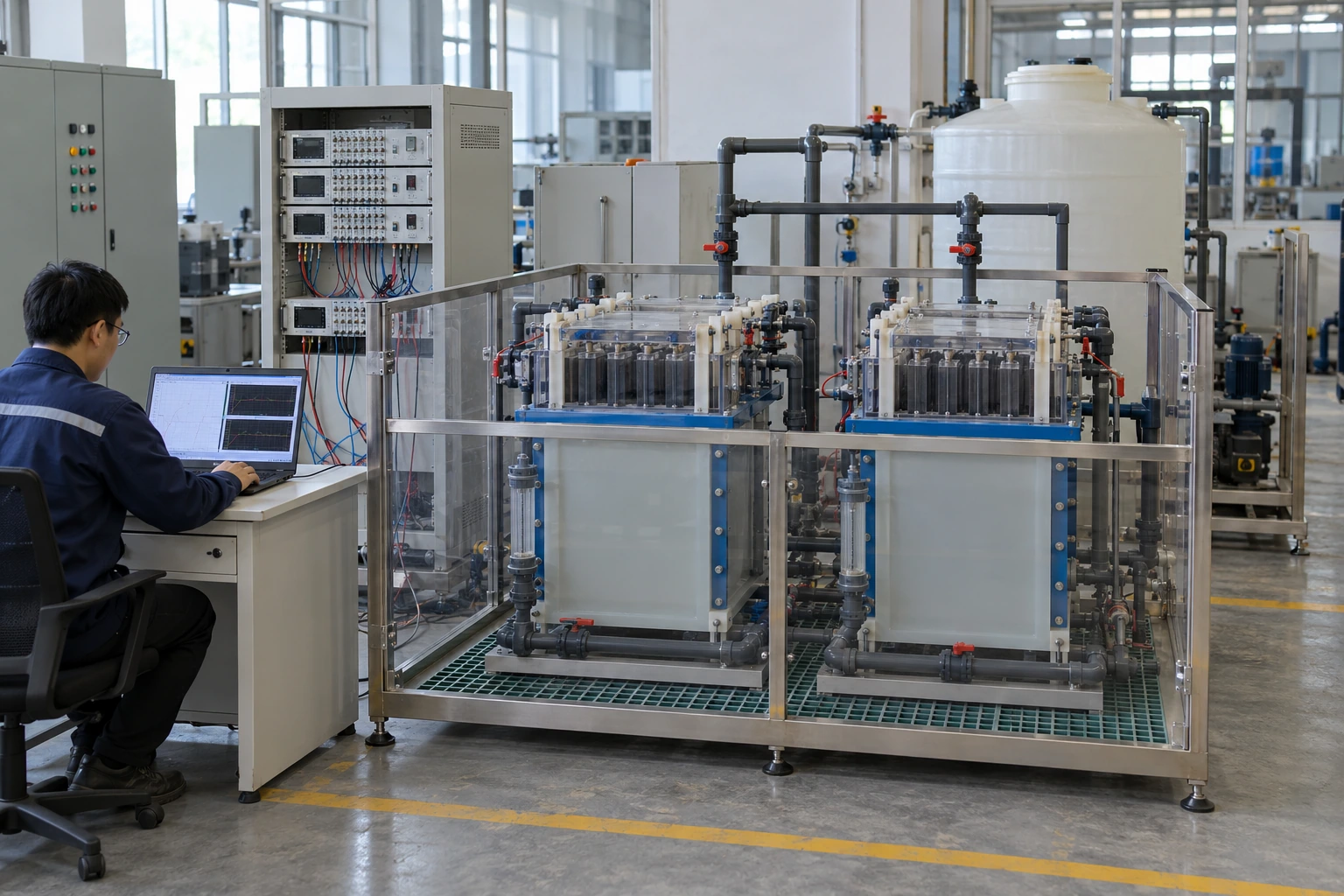
A Titanium electrode sharing trial should cover representative normal duty and approved fault-response checks. Acceptance criteria must specify what distribution and product behavior are acceptable.
What does balanced mean for this system?
Write a measurable requirement. Use qualified test procedures and record actual branch behavior across relevant conditions. Do not replace an acceptance limit with a visual impression of similar readings.
- Define normal operating points.
- Record instrument uncertainty and test limits.
| Check | Decision |
|---|---|
| Vague balance claim | Difficult to verify |
| Defined acceptance rule | Supports repeatable testing |
Test against the agreed system requirement. Key Takeaway: A parallel-cell design needs a measurable sharing specification.
10. What Titanium electrode parallel-system data should you provide?

A Titanium electrode parallel-system brief should include branch circuits, sensing, chemistry and fault behavior. These records connect component duty with the system that distributes current.
Send the branch-level operating picture
Bring individual records, not only totals. When you contact us today, we can review electrode loading and drawing requirements. We favor traceable branch duty over assumed equal sharing.
- Include branch current and output data.
- Identify system-design responsibility.
| Check | Decision |
|---|---|
| Component loading | Requires branch evidence |
| System control | Defines distribution and protection |
Resolve branch assumptions before approving electrode duty. Key Takeaway: Qualify each electrode against the current it actually receives.
Frequently Asked Questions
Can I divide total current by the number of cells? Only as an explicit equal-sharing assumption, not as proof of individual loading.
How do I know if the imbalance is real? Verify branch instrumentation and compare synchronized measurements.
Can I fix sharing by changing cables myself? Use a qualified electrical review and approved isolated maintenance procedures.
What's the best balancing arrangement? It depends on control architecture, branch variability and protection requirements.
Can I judge each branch from a mixed outlet sample? Not reliably. A combined sample can conceal unequal branch performance.