A Titanium electrode can replace a lead-alloy anode only when a suitable coating and complete retrofit design are qualified for the process. Removing lead from one component does not automatically qualify product purity or reproduce the old current distribution. An unreviewed swap can move the problem elsewhere. Start with chemistry, legacy geometry and measurable acceptance before ordering replacement parts.
1. When can a Titanium electrode replace a lead-alloy anode?
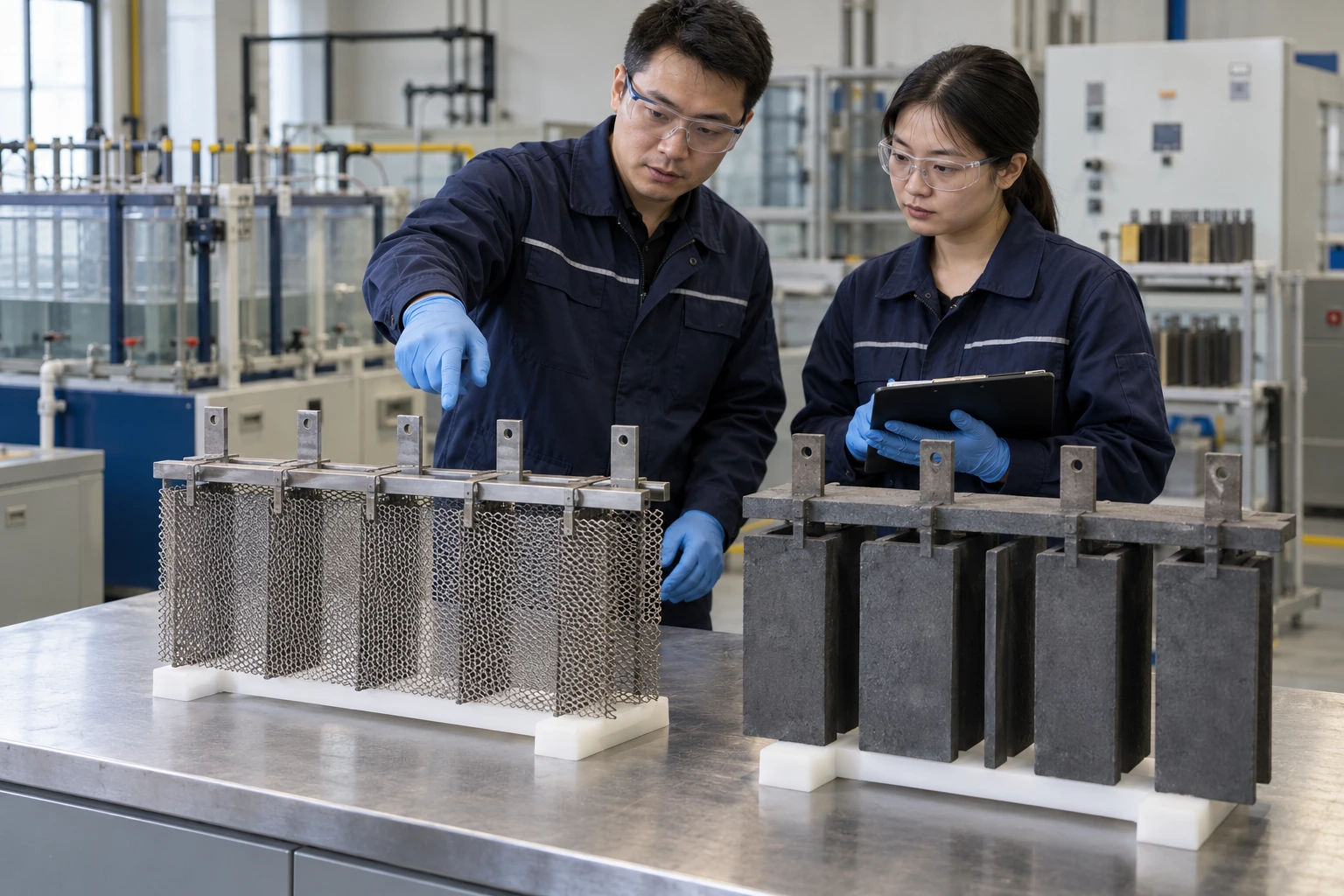
A Titanium electrode replacement is feasible only where its active surface, substrate and interfaces suit the intended duty. Existing lead-alloy service does not by itself identify the correct coating.
What must the replacement preserve?
Define the process requirements. Record accepted output, electrical behavior and maintenance needs before proposing hardware. Keep the reason for substitution separate from assumptions about the new material.
- State the required reaction.
- Retain the legacy operating baseline.
| Check | Decision |
|---|---|
| Replacement objective | Explains why change is considered |
| Qualified specification | Defines whether change is suitable |
Build the decision around explicit requirements. Key Takeaway: A lead-free component description is not a complete process qualification.
2. Why is a Titanium electrode substitution chemistry-specific?
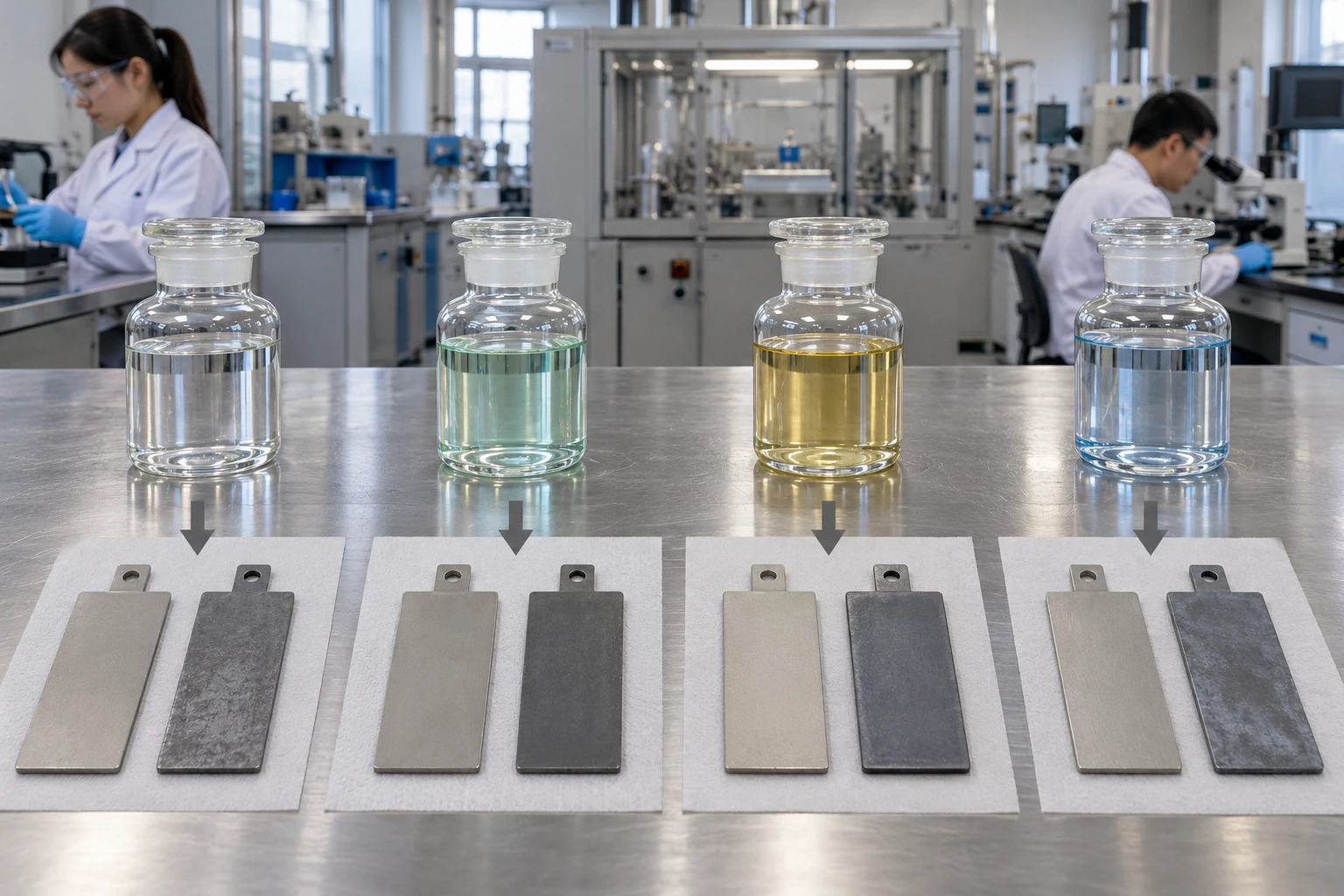
Titanium electrode substitution is chemistry-specific because electrolyte composition, impurities and reaction conditions determine surface suitability. A coating used successfully elsewhere may not fit this bath.
Which exposure must the coating tolerate?
Use actual process data. Include operating variation and approved maintenance chemicals. Avoid choosing by a broad industry label while leaving relevant feed constituents undefined.
- Provide electrolyte and impurity data.
- State temperature and polarity conditions.
| Check | Decision |
|---|---|
| Industry name | General application context |
| Measured chemistry | Material-review evidence |
Review the actual exposure before coating selection. Key Takeaway: Qualify the coating for the bath rather than for a generic replacement category.
3. How do dimensions affect Titanium electrode replacement?

Dimensions affect Titanium electrode replacement because a different thickness or support arrangement can change spacing, stiffness and electrical interfaces. Mechanical fit needs an independent review.
Does the new part preserve the intended spacing?
Check assembled geometry. Compare the proposed electrode with the legacy fixture and current drawing. Include tolerances and support conditions instead of reviewing only the outer silhouette.
- Record gap and mounting interfaces.
- Identify required fixture changes.
| Check | Decision |
|---|---|
| Similar outline | Limited fit evidence |
| Reviewed assembly dimensions | Supports integration |
Resolve geometry before committing to a trial. Key Takeaway: A material substitution can change the operating cell geometry.
4. Can a Titanium electrode reduce product contamination?

A Titanium electrode may change contamination pathways, but reduced product contamination requires analytical evidence. Feed, other hardware and handling can remain relevant sources after anode replacement.
Which analytes and limits matter?
Define the sampling plan. Include blanks and inlet comparisons in a custom application review. Do not infer application compliance merely because one lead-containing component has been removed.
- Use validated analyte-specific methods.
- Record reporting limits and sample fractions.
| Check | Decision |
|---|---|
| Component material changed | One source has changed |
| Product acceptance demonstrated | Requires suitable analysis |
Keep material selection and product approval distinct. Key Takeaway: Test the resulting product against its actual requirements.
5. Does a Titanium electrode change cell voltage?

A Titanium electrode can change cell voltage through a different reaction surface and geometry, but the direction and magnitude require testing. Voltage alone does not establish complete energy performance.
What should the electrical comparison include?
Use matched operating conditions. Record current, temperature and useful output with voltage. Include measurement boundaries so conductor losses are not confused with cell-interface changes.
- Define sensing points.
- Compare accepted product output.
| Check | Decision |
|---|---|
| Voltage difference | Measured electrical observation |
| Energy benefit | Needs output-based evaluation |
Interpret the complete operating result. Key Takeaway: A retrofit's electrical claim should come from controlled measurements.
6. How should Titanium electrode current distribution be reviewed?
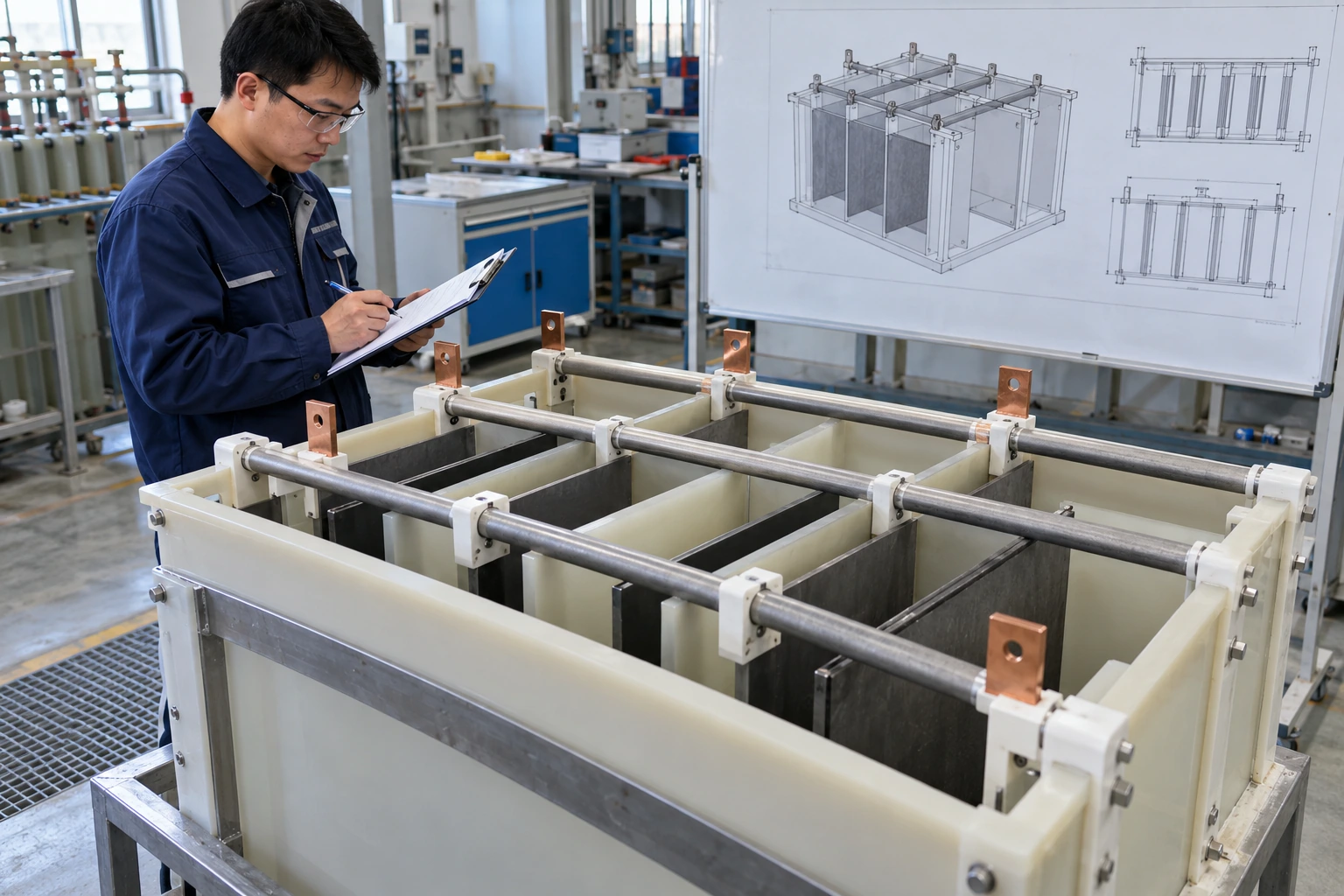
Titanium electrode current distribution needs review when geometry, spacing or connection layout changes. Equal total current can still produce different local conditions in the cell.
Could the workpiece see a different field?
Compare the current paths. Include cathode or workpiece position and relevant shields or supports. Use qualified analysis or representative testing where local uniformity controls product acceptance.
- State the active-area basis.
- Record legacy and proposed positions.
| Check | Decision |
|---|---|
| Total current matched | Only one comparison condition |
| Distribution assessed | Addresses local loading |
Include geometry in the material trial. Key Takeaway: Do not assign distribution changes solely to coating chemistry.
7. What happens to deposits after Titanium electrode substitution?

Deposits after Titanium electrode substitution may change because electrode material and operating conditions differ. Their absence, presence or composition should be investigated rather than predicted universally.
What has changed in the residue pathway?
Collect comparable evidence. Record deposit location and relevant feed conditions before and after the retrofit. Avoid claiming that a new anode eliminates every cleaning requirement.
- Retain representative deposit samples where justified.
- Document cleaning and operating history.
| Check | Decision |
|---|---|
| Observed deposit change | A finding to investigate |
| Universal maintenance claim | Needs broader evidence |
Connect residue behavior with actual operating conditions. Key Takeaway: A retrofit should include a reviewed maintenance plan.
8. How do you handle removed anodes during Titanium electrode work?

Removed anodes during Titanium electrode work require handling and disposition appropriate to their material and contamination status. Responsible site specialists must apply applicable requirements for the location.
Who controls the removed material?
Plan handling before dismantling. For drawing-based electrode options, define containment, documentation and approved recipients through qualified personnel. Do not treat lead-containing or contaminated hardware as ordinary clean scrap.
- Identify material and residue hazards.
- Use approved handling arrangements.
| Check | Decision |
|---|---|
| Material status established | Supports proper disposition |
| Hazards uncertain | Requires assessment before transfer |
Keep handling separate from the new-electrode quotation. Key Takeaway: A retrofit plan must address what happens to the removed components.
9. What trial qualifies a Titanium electrode retrofit?
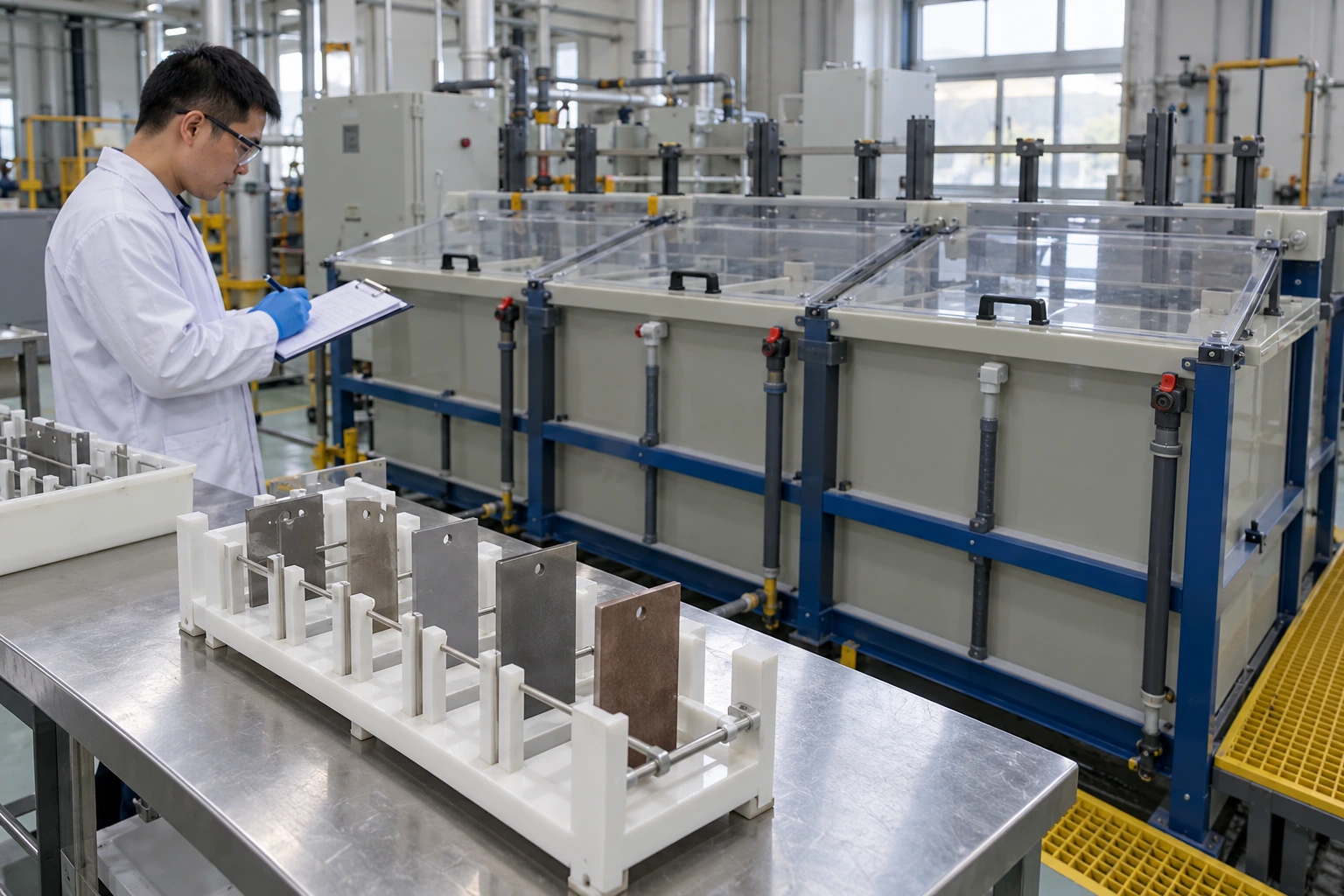
A Titanium electrode retrofit trial should test product quality, electrical duty, fit and relevant maintenance behavior. Acceptance criteria must reflect the intended application and changed interfaces.
What defines successful replacement?
Agree on the trial scope. Record the limits of a short demonstration and any remaining durability work. Keep stop criteria and restart responsibilities with the equipment owner.
- Use traceable specimens and methods.
- Document configuration changes.
| Check | Decision |
|---|---|
| Limited trial | Supports defined endpoints |
| Broader service claim | Requires additional evidence |
Match approval with what was actually demonstrated. Key Takeaway: A qualified retrofit needs more than a working electrical connection.
10. What Titanium electrode retrofit requirements should you provide?

A Titanium electrode retrofit request should include legacy drawings, electrolyte data and product acceptance requirements. These details help distinguish a feasible component change from a broader system redesign.
Send the full replacement brief
Bring the current operating record. When you contact us today, we can review electrode specifications and drawing-based alternatives. We favor measured compatibility over automatic replacement claims.
- State the substitution objective.
- Assign system and handling responsibilities.
| Check | Decision |
|---|---|
| Complete legacy data | Supports interface review |
| Defined acceptance plan | Supports a defensible release |
Resolve the application scope before ordering. Key Takeaway: Approve replacement through a controlled chemistry and integration review.
Frequently Asked Questions
Can I replace every lead-alloy anode with titanium? No. The coating, electrolyte and complete cell interfaces require qualification.
Can I claim compliance because the new anode contains no lead? No. Product and application requirements need their own evidence.
What's the best coating for this retrofit? Select against the actual bath, reaction and operating envelope.
How do I know if the retrofit changed current distribution? Use geometry review and suitable representative measurements or qualified analysis.
Can I dispose of removed anodes as clean scrap? Do not assume that status. Qualified site personnel must assess material, residues and applicable handling requirements.