
A Titanium electrode can run in batch or continuous operation, but each mode creates different feed, inventory, and sampling boundaries. Scale-up needs evidence from the intended flow pattern, not a copied treatment time or current setting from a vessel test.
1. How does a Titanium electrode fit batch operation?
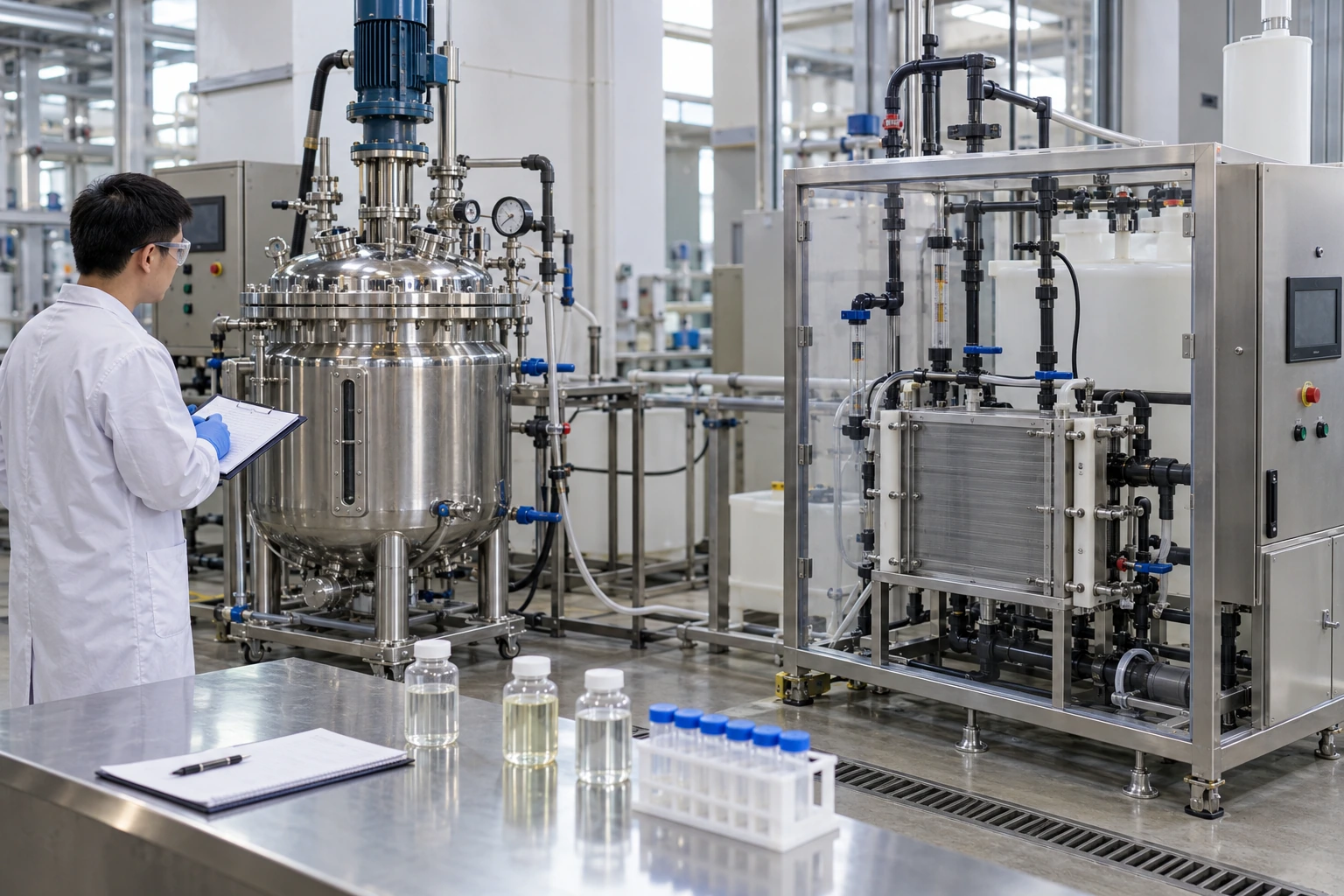
A Titanium electrode can operate in either mode, but batch and continuous cells expose water to different feed and inventory conditions. The operating boundary determines what a test result means.
Define what enters and leaves
A batch test treats a known vessel inventory; a continuous cell receives flow while treated water leaves. Draw the feed boundary clearly. Recirculation, bleed, and side-stream return create different operating modes.
- State whether fresh feed enters and treated liquid exits during electrolysis.
- Draw every recycle, hold tank, and bleed stream around the electrode cell.
| Check | Decision |
|---|---|
| Batch | Fixed inventory during treatment |
| Continuous | Ongoing feed and discharge |
Continuous operation needs net feed and discharge, not just a running pump. Key Takeaway: Classify the mode before comparing operating data.
2. What does batch testing prove for a Titanium electrode?
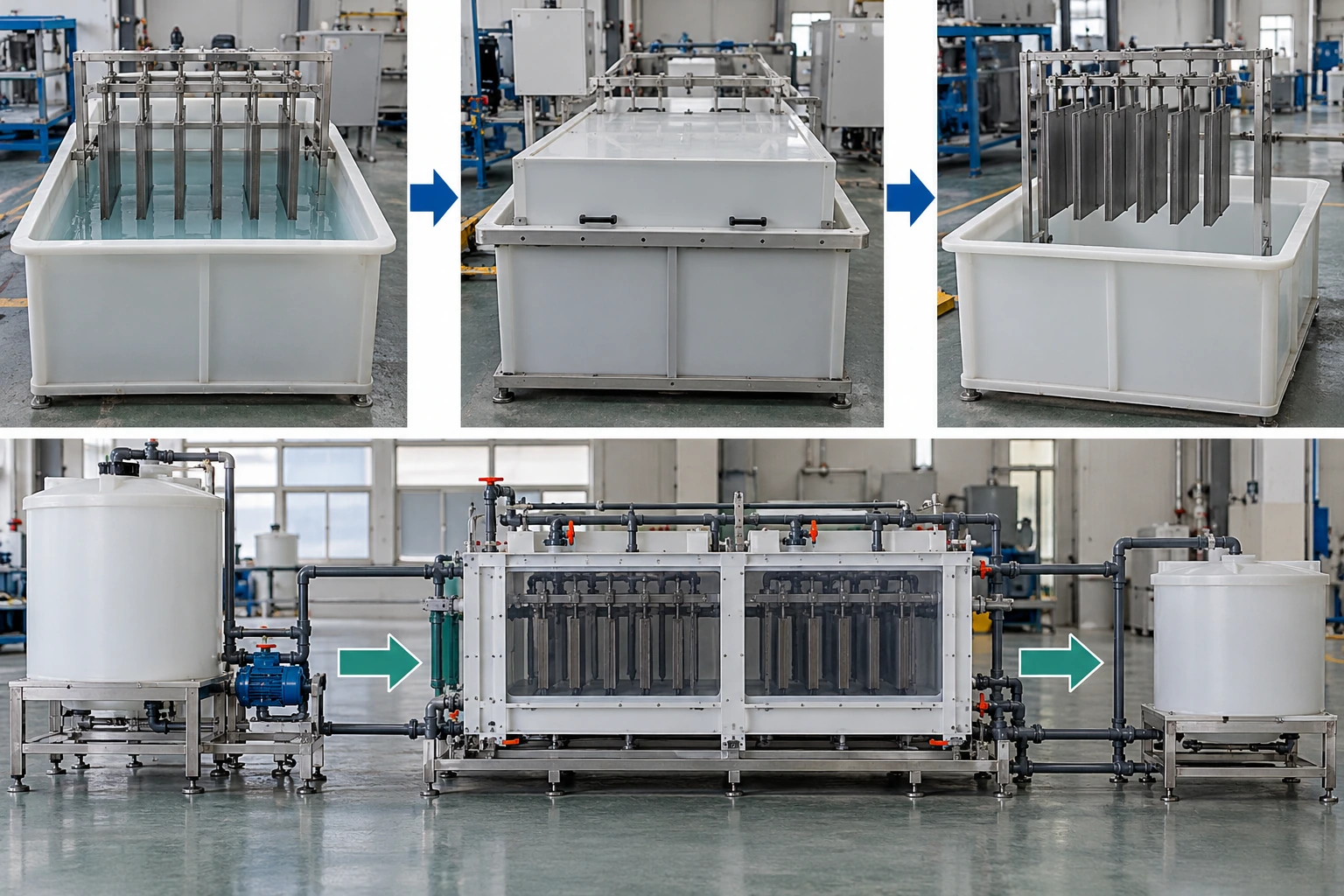
A Titanium electrode batch test treats a bounded charge of water before discharge or transfer. It provides direct control over vessel inventory, mixing, and electrolysis duration.
Use a batch test for bounded feed questions
A batch vessel holds one inventory while current, mixing, and chemistry evolve; feed can shift as targets react or solids form. Follow the batch inventory carefully. Record charge, volume, samples, and downstream separation.
- Record starting volume, feed composition, and timing for each sample.
- State whether the batch was stirred, recirculated, settled, or filtered after treatment.
| Check | Decision |
|---|---|
| Batch evidence | Change within one inventory |
| Main caution | Does not define flow distribution |
A batch endpoint can reflect accumulated treatment that one pass would not receive. Key Takeaway: Use batch tests for chemistry screening, then confirm flow behavior separately.
3. What does continuous operation add for a Titanium electrode?
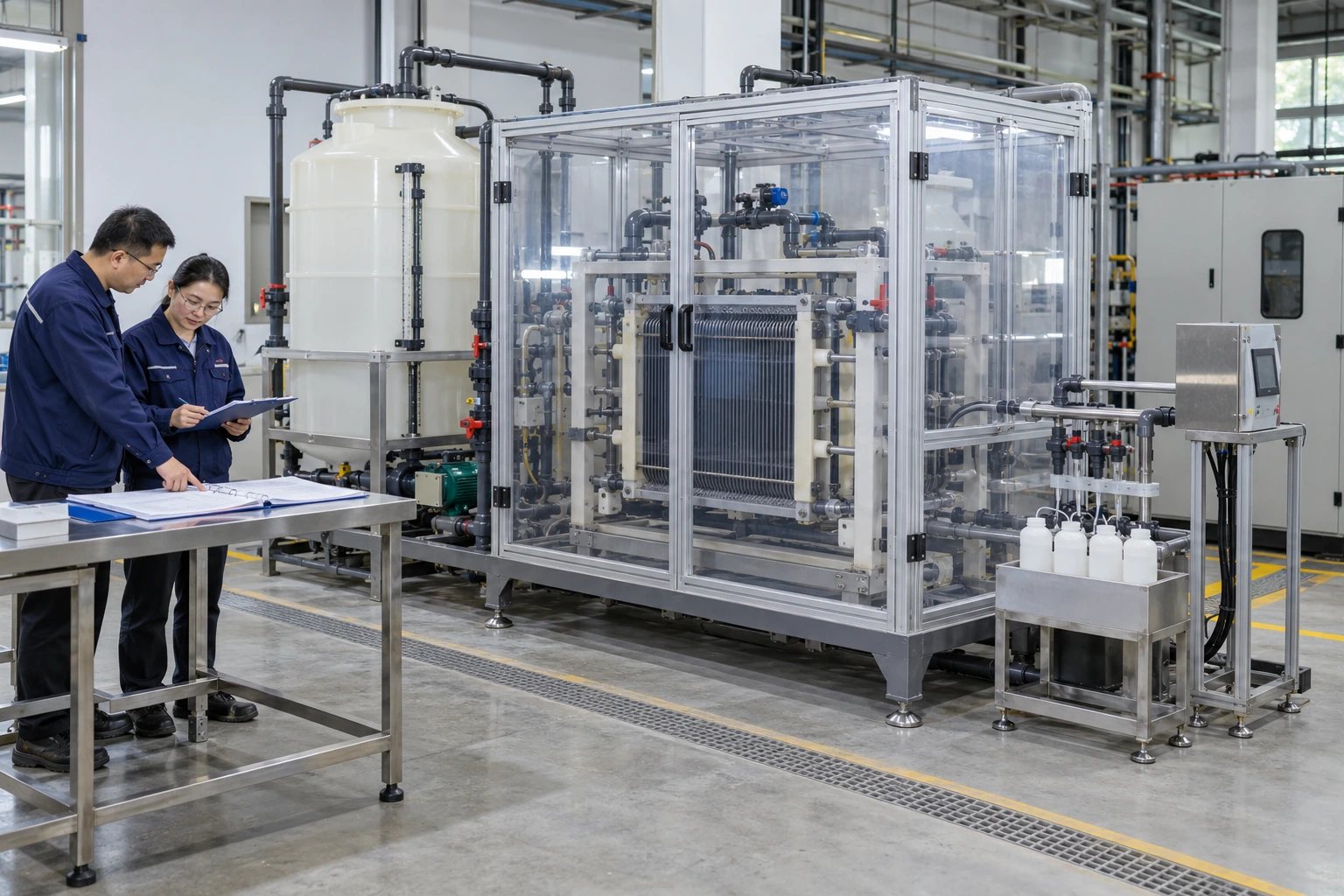
A Titanium electrode in continuous service sees a moving stream with an inlet condition, flow path, and outlet response. Stable operation requires feed and electrical conditions that remain interpretable over time.
Define continuous mode by its inlet and outlet
Single-pass flow sends each parcel once, while recirculation returns liquid; feed-and-bleed adds net inlet and outlet with retained inventory. Name the operating mode precisely. Mark startup and shutdown separately from stable operation.
- Separate single pass, batch recirculation, and feed-and-bleed in reports.
- Define when stable operation begins and how startup samples are treated.
| Check | Decision |
|---|---|
| Single pass | One planned passage |
| Recirculation | Repeated cell passage |
A recirculation loop can run continuously without creating continuous net treatment throughput. Key Takeaway: Describe liquid inventory and net flow in plain process terms.
4. How does flow change a Titanium electrode's duty?
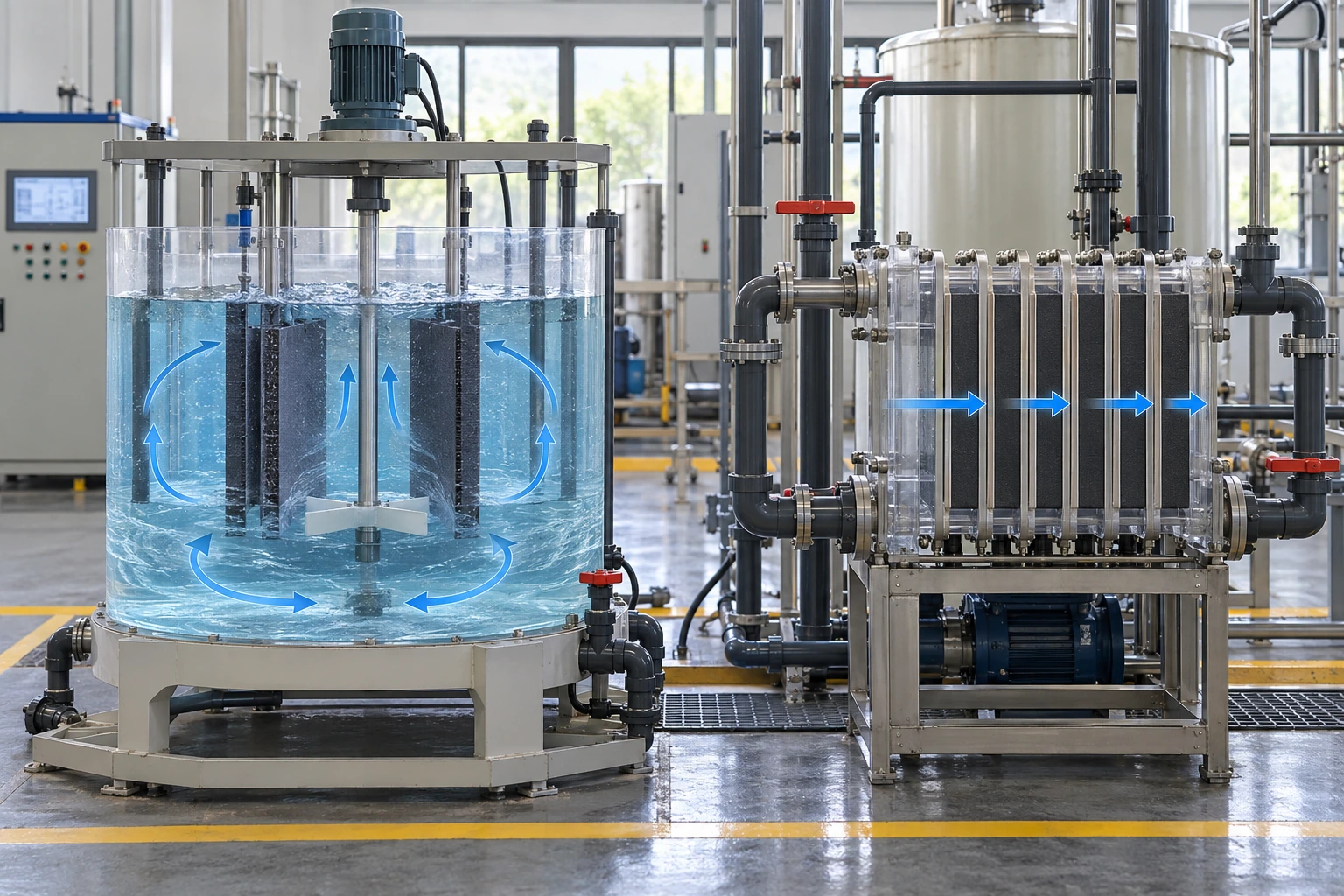
A Titanium electrode sees flow alter exposure, mixing, and species supply at each electrode face. Equal elapsed clock time does not mean equal electrochemical contact across batch and flow cells.
Translate exposure instead of copying minutes
A batch interval measures treatment of one inventory; a flow cell gives each parcel its own path and contact history. Track each parcel through the cell. A custom engineering review can compare geometry and charge per treated volume with outlet response.
- Report volume treated per charge or current relative to flow where useful.
- Record cell volume, flow path, and sampling position with each outlet result.
| Check | Decision |
|---|---|
| Batch interval | Elapsed vessel treatment |
| Flow exposure | Path and residence distribution |
Similar total charge does not guarantee equivalent exposure or outlet chemistry. Key Takeaway: Compare modes with matched feed and measured hydraulic evidence.
5. Which controls fit a batch or continuous Titanium electrode cell?
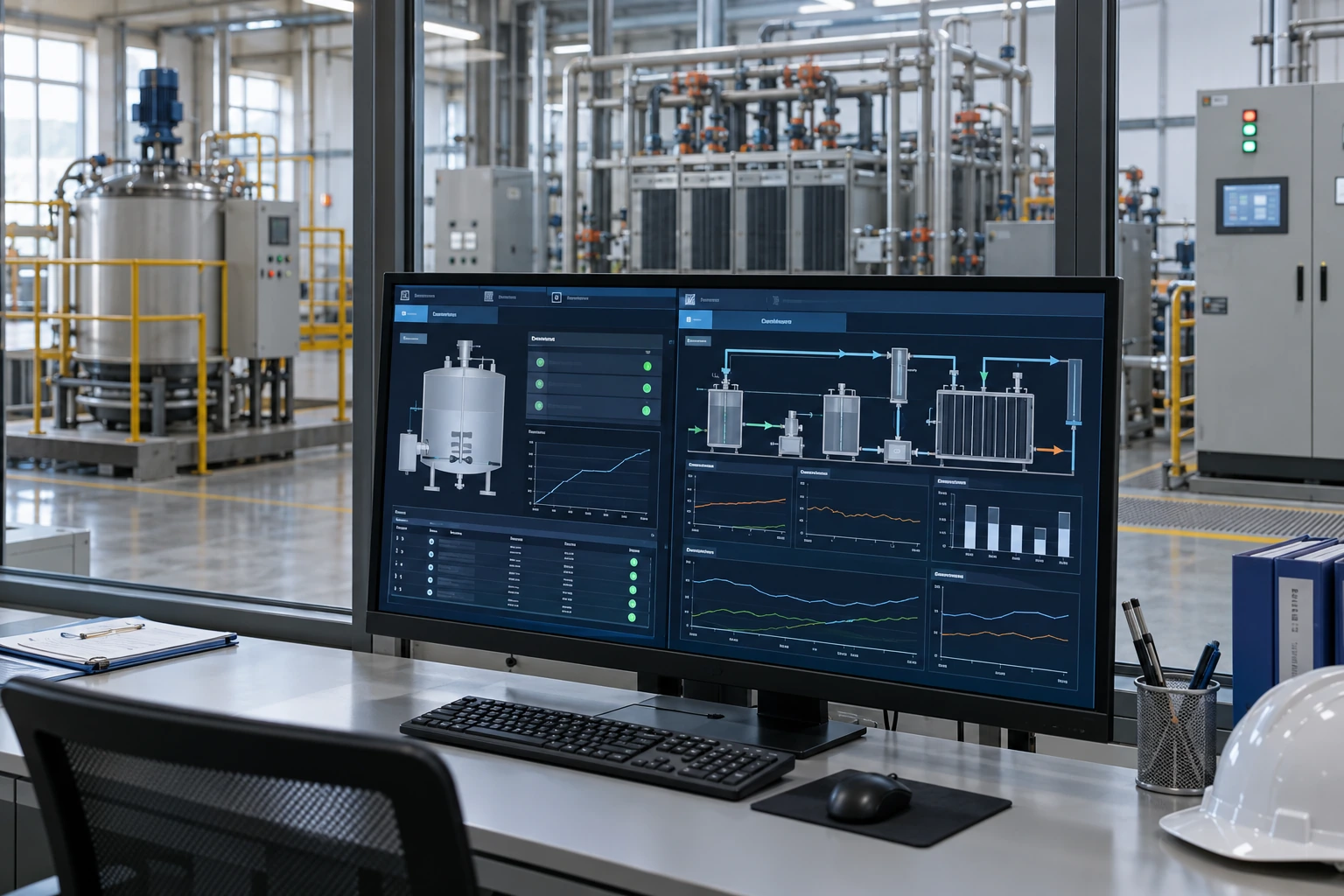
A Titanium electrode control plan changes with operating mode because batch endpoints and continuous outlet trends arrive differently. Sampling delay and stored water can hide process transitions.
Match control signals with operating mode
Batch control follows elapsed charge and periodic samples; continuous control trends flow, feed, current, and outlet signals. Separate startup from steady operation. A setpoint reached during startup does not prove stable treatment.
- List batch endpoint checks and decision timing before starting a run.
- For continuous operation, synchronize outlet samples with feed and flow records.
| Check | Decision |
|---|---|
| Batch control | Run-level endpoint |
| Continuous control | Time-aligned outlet trend |
Control logic only works when its measurements match the process state. Key Takeaway: Mark startup, steady operation, and shutdown in the test record.
6. How do feed swings affect Titanium electrode operation?
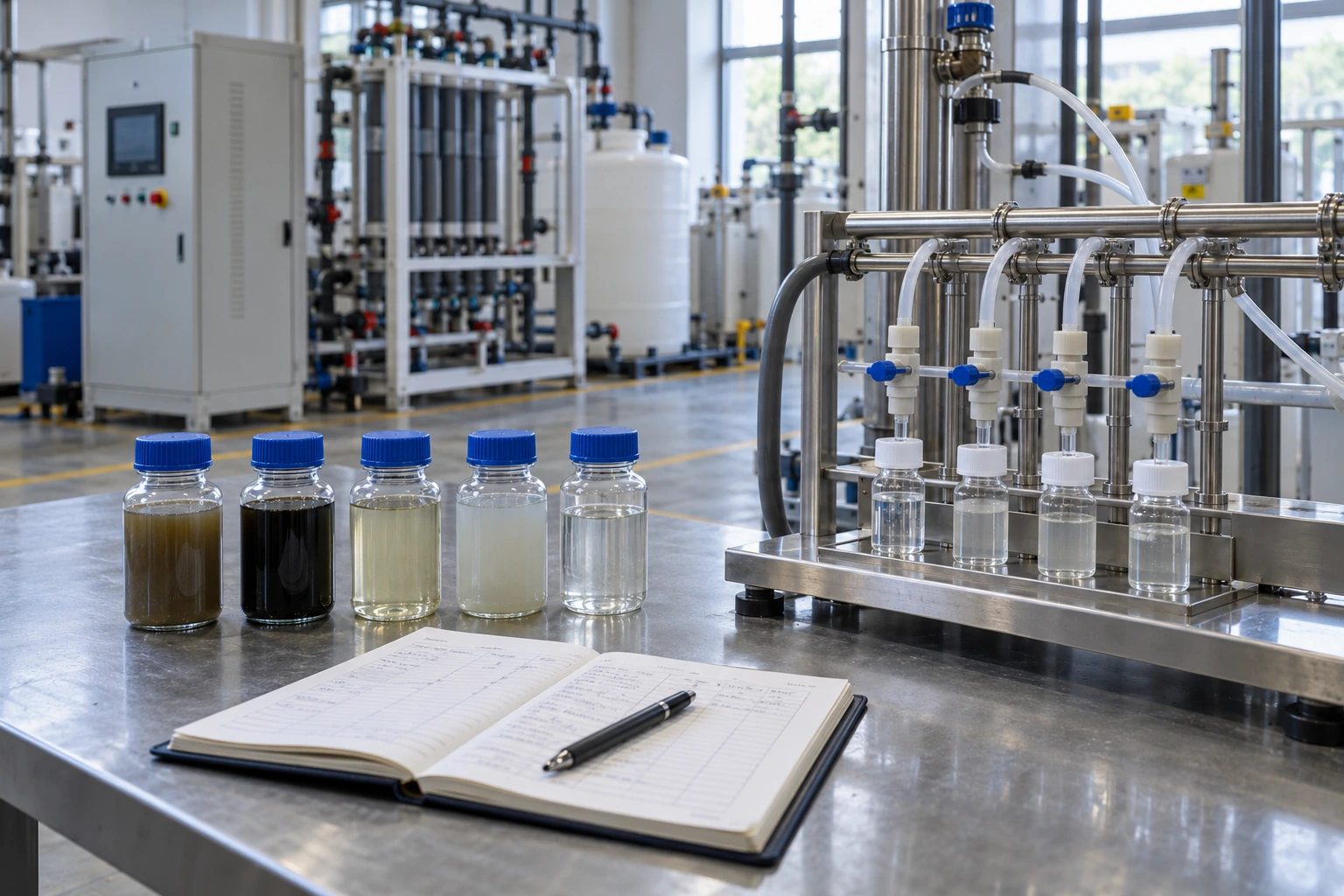
A Titanium electrode result can shift when feed strength or conductivity varies during a continuous run. A single batch sample may hide those shifts by averaging them within one vessel.
Stress-test the expected feed range
Production wastewater can change by shift, cleaning event, or recipe; continuous flow exposes that sequence, while batch testing can isolate one snapshot. Keep routine feed changes visible. Record variation rather than hiding it in a blend.
- Collect feed samples that reflect routine changes and known disturbances.
- Record dilution, holding time, and preservation before testing.
| Check | Decision |
|---|---|
| Batch sample | One selected feed snapshot |
| Continuous feed | Sequence of changing conditions |
A mode comparison is weak when one side uses a different feed matrix. Key Takeaway: Test the expected operating feed range.
7. What belongs in a Titanium electrode batch-to-flow pilot?
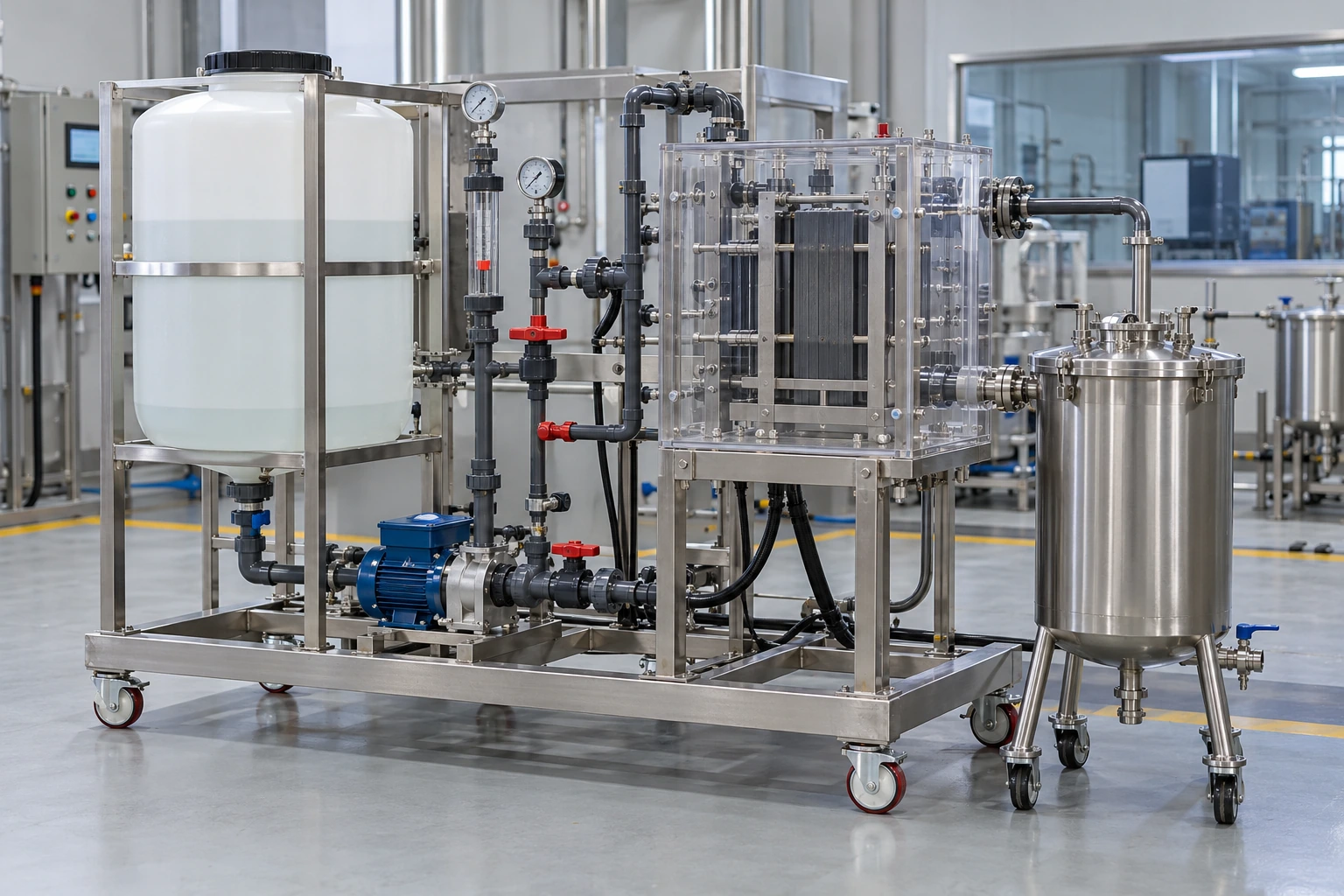
A Titanium electrode batch-to-flow pilot should preserve the intended feed, electrical load, and downstream separation boundary. A small flow loop can reveal startup and distribution issues that a vessel test cannot.
Design a pilot around the commercial boundary
A batch-to-flow pilot needs feed, flow adjustment, a guarded cell, sample points, and collection matching proposed boundaries. Keep the treatment train complete. Reproduce any settling, recycle, or solids-removal stage in the test plan.
- Draw feed, cell, recycle, separation, and outlet paths before equipment setup.
- Select sample points that distinguish cell response from downstream treatment.
| Check | Decision |
|---|---|
| Flow loop and collection | Hydraulic and outlet response |
| Sample points | Separate cell and process effects |
A cell-only pilot cannot validate process equipment placed outside its boundary. Key Takeaway: Use a pilot layout that matches the question you need answered.
8. How can operators compare Titanium electrode endpoints?
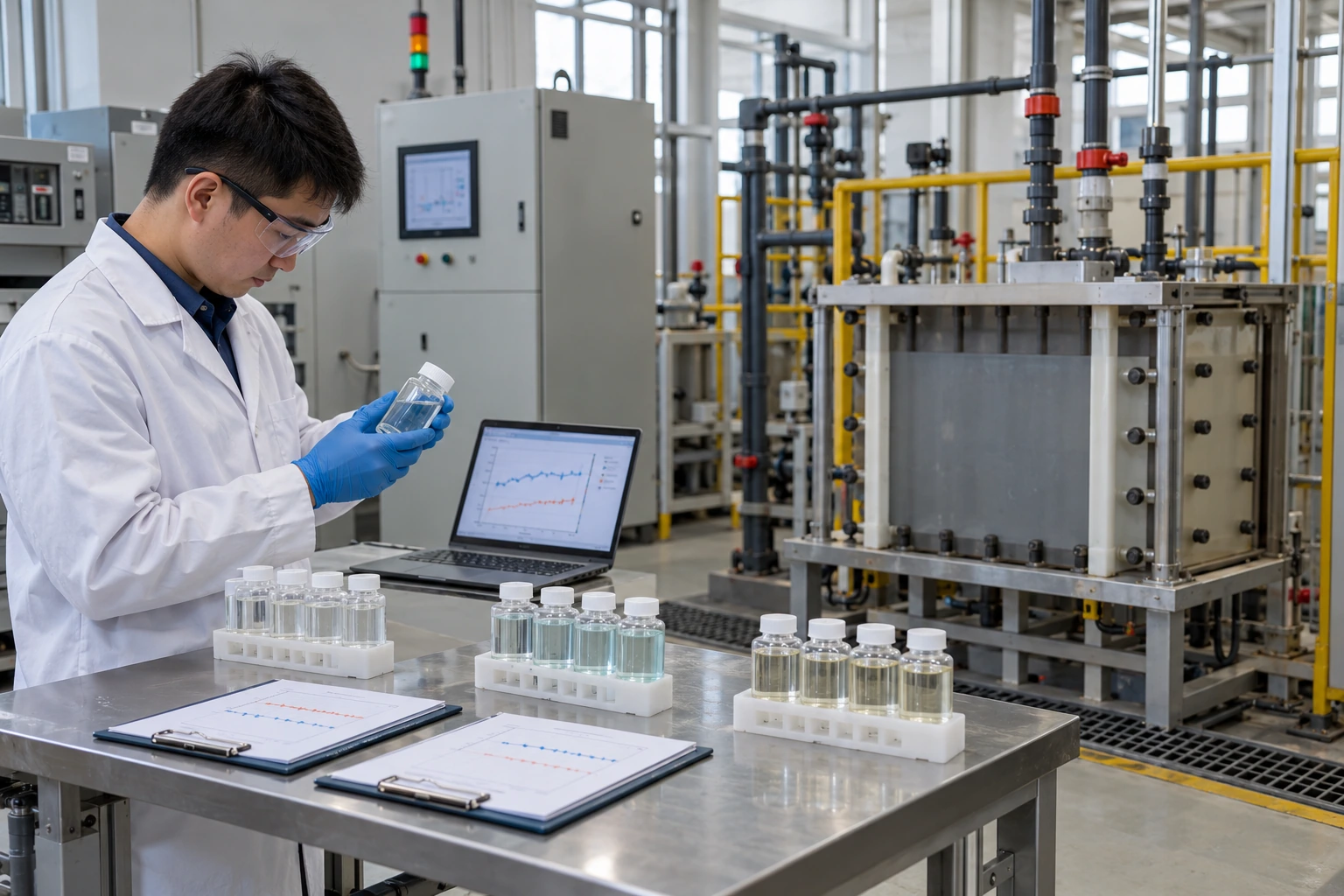
A Titanium electrode endpoint differs by mode: batch treatment uses a run sample, while flow treatment uses an outlet trend.
Choose endpoints before comparing modes
In water-treatment applications, a target may enter solids, oxidize into intermediates, or drop in concentration without reaching a final objective. Name the intended endpoint clearly. Pair results with method, sampling interval, and residual checks.
- Separate concentration change from mineralization or detoxification claims.
- Define whether acceptance applies to one sample, a time series, or a defined operating range.
| Check | Decision |
|---|---|
| Batch endpoint | Run sample or time profile |
| Flow endpoint | Outlet performance over time |
A shared endpoint definition prevents mode labels from deciding success by themselves. Key Takeaway: Compare results against one written and measurable endpoint.
9. Which records clarify Titanium electrode scale-up?

A Titanium electrode scale-up record should show how geometry, flow, charge, and feed changed from bench vessel to pilot. Matching one variable cannot preserve all operating conditions.
Keep the path from bench evidence visible
Record area, spacing, cell volume, flow pattern, mixing, current, voltage, target concentration, and maintenance; identify assumptions about full-scale distribution. Keep key scale-up assumptions visible. Show measured similarities and unresolved differences.
- Keep batch and continuous data sets labeled by mode and cell geometry.
- Record where scale-up assumptions differ from measured pilot conditions.
| Check | Decision |
|---|---|
| Bench record | Mechanism and trend |
| Pilot record | Flow and operating boundary |
Scale-up uncertainty often sits in hydrodynamics and feed variation, not electrode area alone. Key Takeaway: Report measured similarities and unresolved differences side by side.
10. What should buyers send for a Titanium electrode review?

A Titanium electrode product review needs the intended operating mode, feed range, and electrode interface. ARY Titanium can review titanium electrode forms against a drawing and stated application scope.
Send mode data with drawings
Include batch volume or flow range, recycle path, connection, spacing, endpoint, feed analysis, and pilot evidence; state whether sample or assembly review is requested. Set the operating boundary clearly. To request a product review, contact us today with a drawing and operating brief.
- Attach flow diagram, electrode drawing, and mode-specific test records.
- Name which process outcomes remain with the system designer or operator.
| Check | Decision |
|---|---|
| Buyer data | Mode, feed, endpoint |
| Review scope | Electrode fit or pilot plan |
A clear boundary keeps component selection separate from scale-up certification. Key Takeaway: Request a drawing review after defining the operating mode.
Frequently Asked Questions
Can I convert batch time directly into a continuous flow rate? No; flow distribution, geometry, feed variation, and outlet sampling need checks in the intended mode.
What's the best way to compare batch and single-pass results? Use matched feed chemistry and compare charge per treated volume alongside measured outlet response and cell geometry.
How do I know if a recirculation loop counts as continuous treatment? Check net feed and discharge. A closed recirculation loop can keep liquid moving while retaining batch inventory.
Can I use a batch pilot to size a flow cell? A batch pilot can screen chemistry, but a flow pilot should confirm hydraulic distribution and outlet behavior.
How do I know if continuous operation has reached steady state? Define stable feed and operating signals, then collect time-aligned outlet samples across the agreed observation period.