
A Titanium electrode may support active-chlorine generation in a suitable cell, but downstream residual shows what remains after water demand and contact. Operators should track generator output, water chemistry, and residual at defined sample points before judging a disinfection duty.
1. How does a Titanium electrode generate an oxidant?
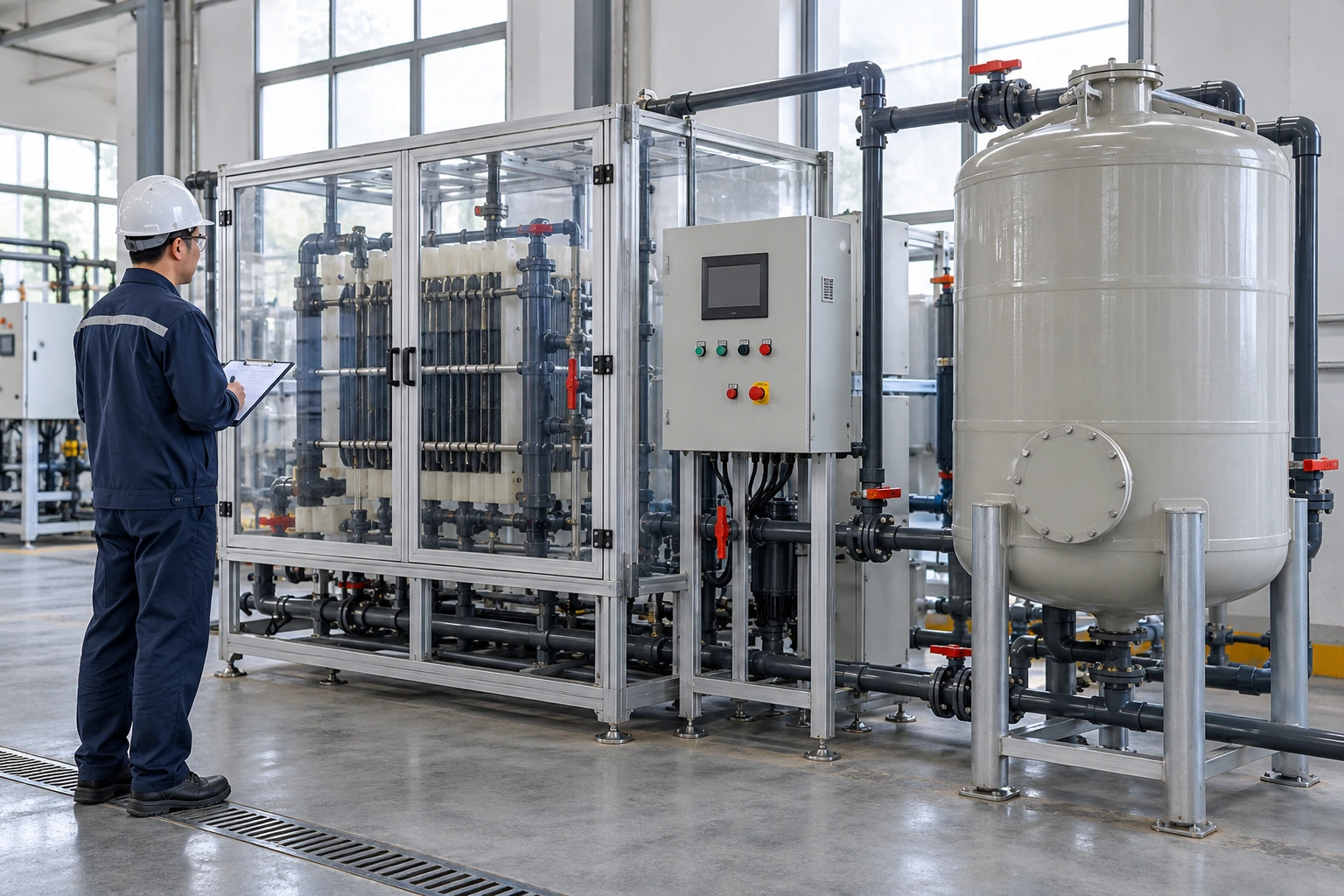
A Titanium electrode may support active-chlorine production in a suitable cell, while a downstream residual reflects later reactions in the water. These measurements answer different questions.
Separate cell output from water response
A compatible cell can generate chlorine species from chloride; outlet concentration describes generation, while post-contact sampling describes residual. Keep separate generation and residual records. A strong cell result cannot establish downstream residual on its own.
- Record generator outlet assay and operating conditions separately from downstream residual.
- Define where each sample sits relative to mixing, contact, and any side-stream return.
| Check | Decision |
|---|---|
| Generator output | Cell production measure |
| Residual | Available oxidant after contact |
A process can produce oxidant while downstream demand consumes much of it. Key Takeaway: Set separate acceptance questions for cell output and treated-water residual.
2. What does demand consume after a Titanium electrode cell?
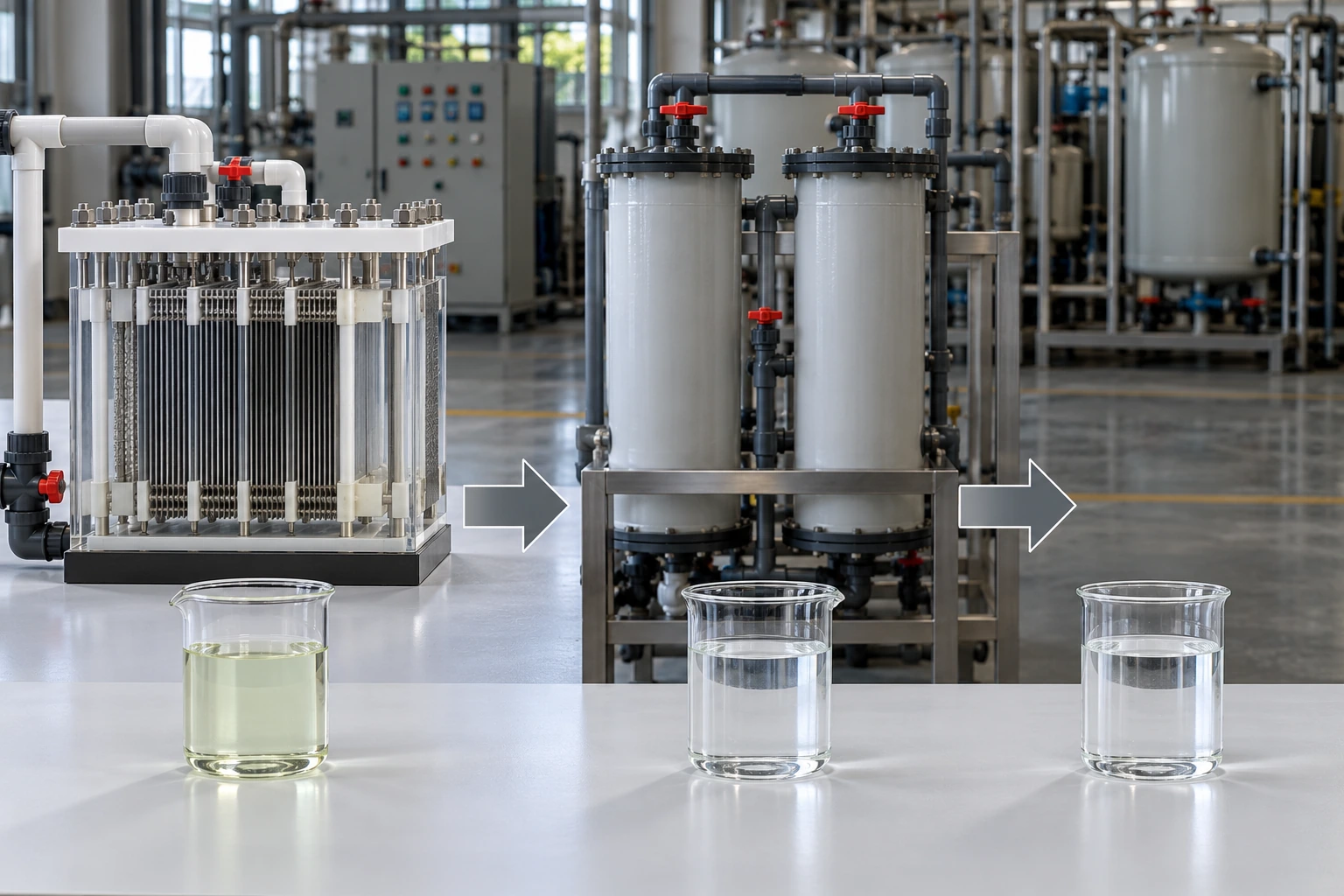
A Titanium electrode system does not eliminate oxidant demand after production; reactive compounds can consume active chlorine before residual measurement. The demand depends on water composition and contact conditions.
Define demand at a stated contact point
Demand consumes part of applied chlorine, leaving available residual after defined contact; free, combined, and total residual answer different questions. Name the chlorine species clearly. A total-chlorine value may not establish free chlorine availability.
- State whether the requirement concerns free, combined, or total residual.
- Compare dose and residual only when sample timing and conditions match.
| Check | Decision |
|---|---|
| Demand | Oxidant consumed by reactions |
| Residual | Available chlorine remaining |
Demand is a process response, not a fixed property of an electrode coating. Key Takeaway: Document species and contact conditions beside every residual result.
3. Why can a Titanium electrode output miss residual goals?
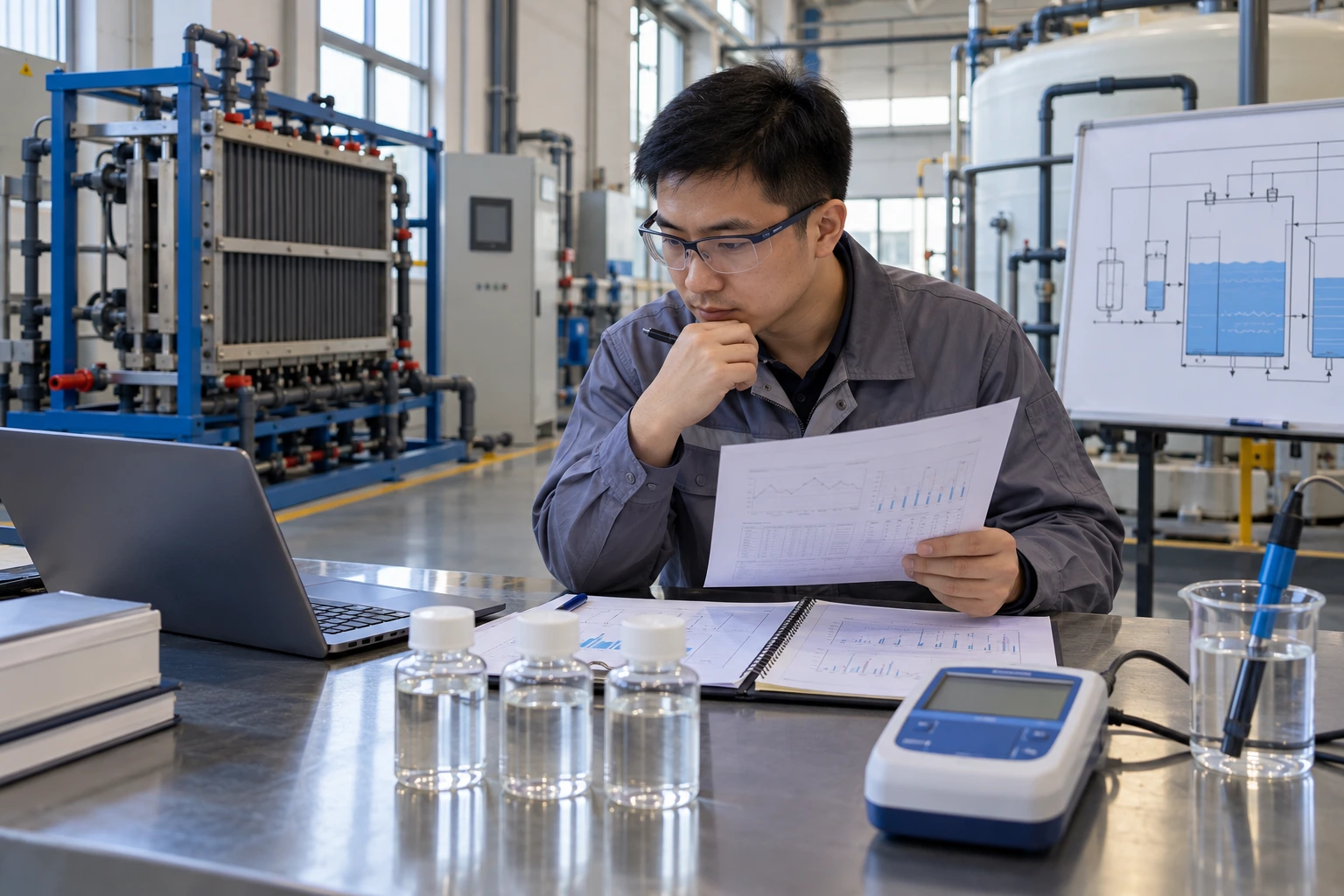
A Titanium electrode cell can generate chlorine steadily while downstream residual changes after water contact. Current alone cannot show how much active chlorine reaches an outlet sample.
Follow generated oxidant into the process stream
Chloride, current, electrode area, flow, pH, and competing reactions affect generation; organics, ammonia, reduced metals, and other species consume chlorine. Follow the oxidant handoff carefully. Compare cell-outlet and downstream samples under matched operating conditions.
- Record chloride and water chemistry that may affect generation or consumption.
- Use a direct assay rather than treating current as an oxidant analyzer.
| Check | Decision |
|---|---|
| At cell outlet | Checks generated product |
| At process endpoint | Checks remaining residual |
The same current can produce different residual readings across changing feed water. Key Takeaway: Interpret electrode settings beside measured oxidant and feed chemistry.
4. How do water constituents alter Titanium electrode results?

A Titanium electrode can see a changing residual as ammonia, organic matter, reducing compounds, pH, or temperature varies.
Treat feed variation as a chemistry variable
Ammonia can convert free chlorine into combined species, while organics or reduced compounds consume oxidant. Use representative feed from the process. A custom cell review can clarify cell scope, but clean water cannot represent treatment demand.
- Collect feed samples across normal production changes and process upsets.
- Report ammonia, organics, reducing species, pH, and temperature when available.
| Check | Decision |
|---|---|
| Stable feed | Repeatable demand check |
| Variable feed | Range-based sampling |
Residual swings can originate upstream even when generator settings remain fixed. Key Takeaway: Match testing water with the stream operators intend to disinfect.
5. What does residual measurement say about a Titanium electrode?
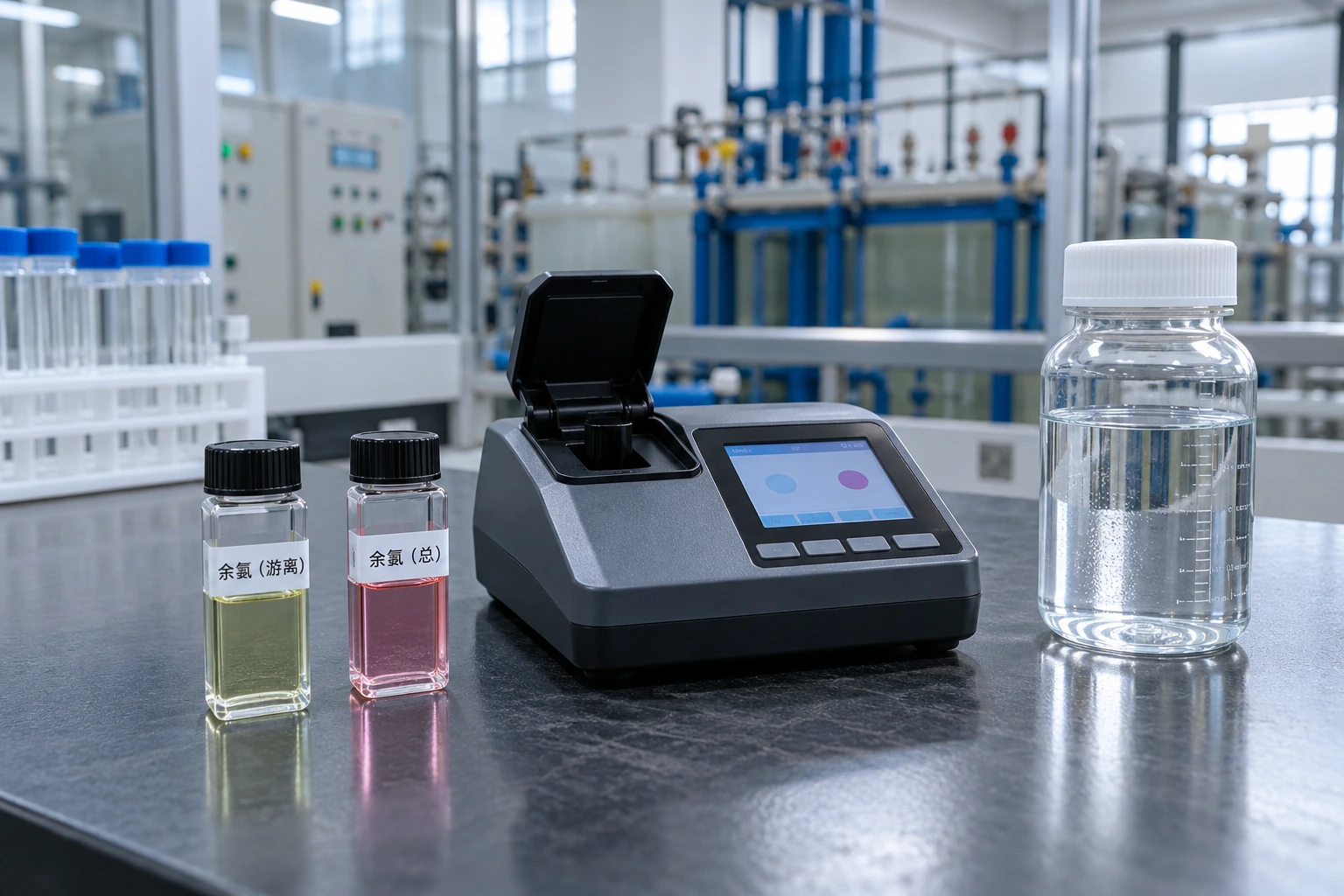
A Titanium electrode evaluation should distinguish free residual from combined or total residual using a named analytical method. Sampling time matters because free chlorine can decay after collection.
Make measurement answer the intended question
An analyzer or colorimetric method has a defined scope and sample-handling requirement. Use one analytical method consistently. Record time, pH, temperature, location, and operating state before comparing stored and immediate samples.
- Confirm method scope for free or total available chlorine.
- Record sample time and conditions before comparing residual data.
| Check | Decision |
|---|---|
| Free residual | Uncombined available chlorine |
| Total residual | Free plus combined chlorine |
A number without method and timing can be difficult to interpret. Key Takeaway: Keep measurement method and sample handling in the test record.
6. How does contact time shape Titanium electrode treatment?
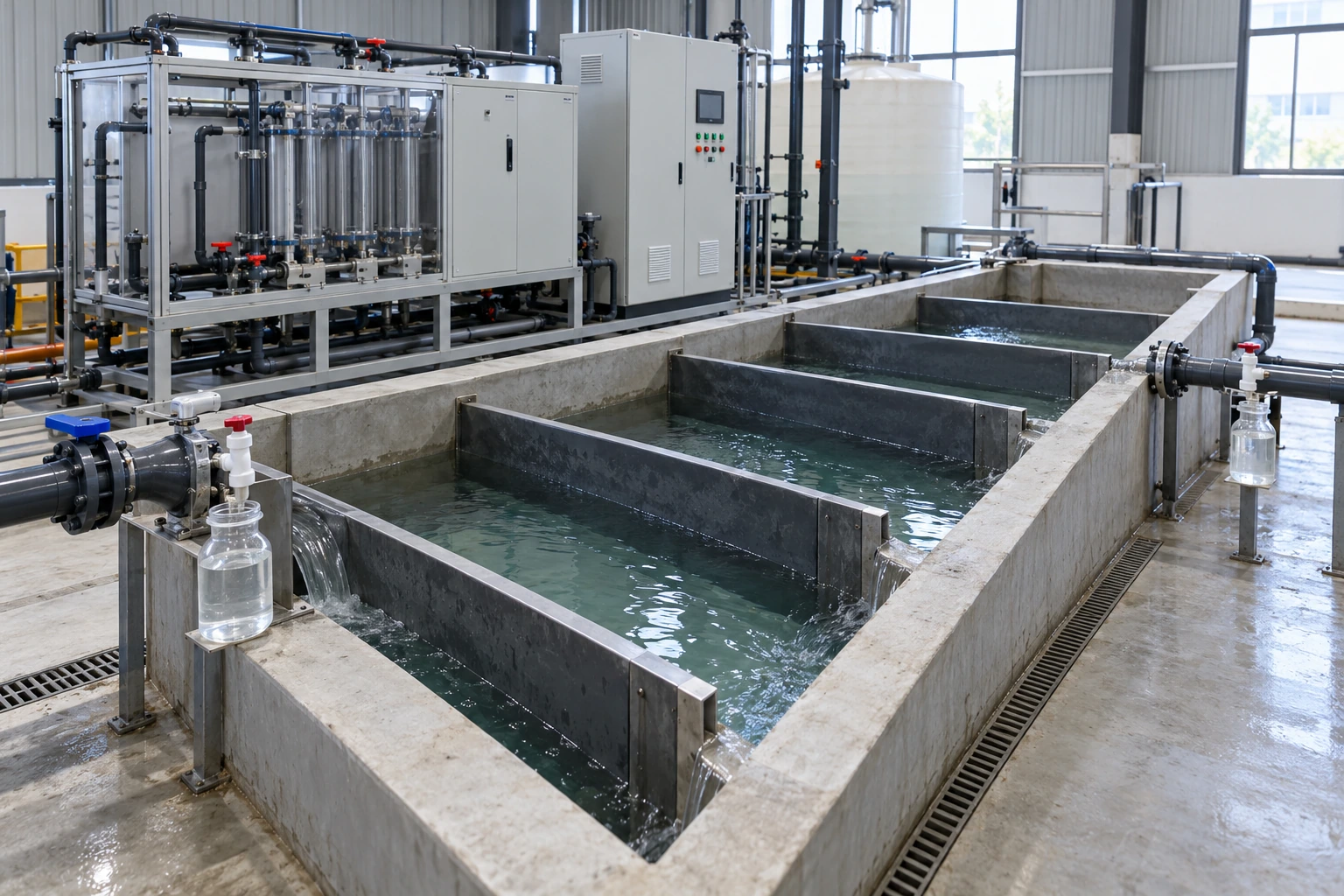
A Titanium electrode cannot provide contact time by itself; downstream mixing and hydraulic distribution shape oxidant exposure. A nominal tank volume divided by flow does not prove every parcel receives that duration.
Connect residual with hydraulic exposure
Contact basins, pipes, and inline mixers create different flow paths; short routes may leave early while slow regions retain water. Check actual hydraulic flow patterns. Pair residual data with hydraulic evidence when exposure time matters.
- Identify mixing, bypass, storage, and contact-volume boundaries.
- Use tracer or other hydraulic evidence where nominal contact time seems doubtful.
| Check | Decision |
|---|---|
| Nominal time | Volume divided by flow |
| Exposure | Flow distribution plus reactions |
Residual concentration and contact history jointly shape a disinfection assessment. Key Takeaway: Report contact geometry and residual sample location together.
7. How can a Titanium electrode connect generation and residual?
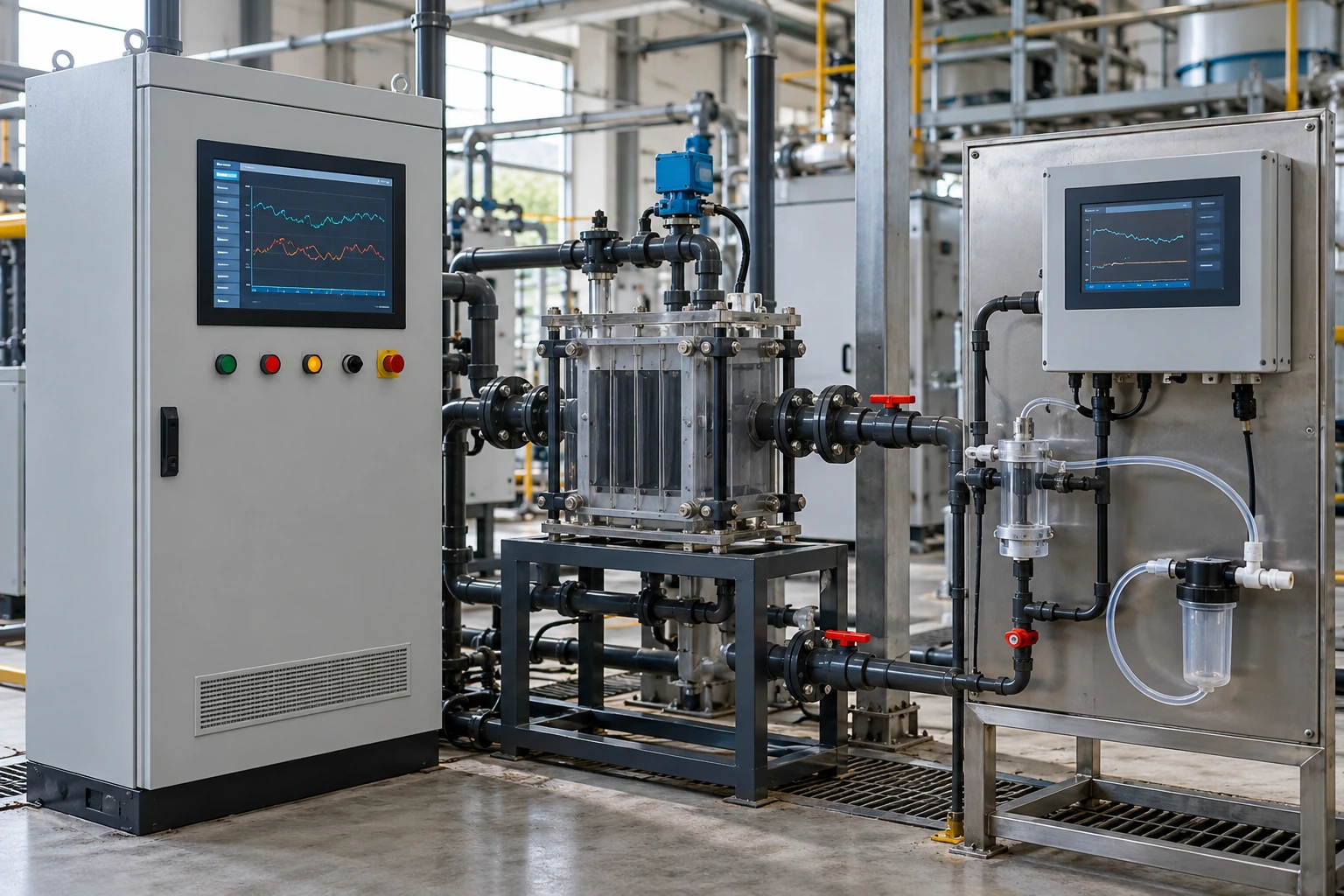
A Titanium electrode control loop works best when cell production and downstream residual signals are not mistaken for one another. Each instrument needs a clear location and response time.
Place feedback where it can see process demand
Generator current shows electrical operation, while a residual analyzer measures available chlorine; a delayed sample loop may differ from main flow. Map the signal path carefully. Compare online readings with a suitable reference method.
- Draw generator, mixing, contact, sample, and analyzer positions on one process sketch.
- Check sample-line delay and compare analyzer data with a reference measurement.
| Check | Decision |
|---|---|
| Current signal | Electrical operating state |
| Residual signal | Sampled water response |
Feedback becomes misleading when a sensor samples the wrong process boundary. Key Takeaway: Review instrument location before adjusting a residual control strategy.
8. Which by-product questions belong in a Titanium electrode review?

A Titanium electrode review should ask which products may form when active chlorine meets feed organics. Pair residual readings with by-product checks because each water matrix needs separate evidence.
Screen chemistry beyond the residual number
Chlorine residual cannot identify every reaction product; feed organics and halides should guide by-product analyses. Keep the chemistry scope specific. Tie analytes, sample points, and lab methods to the water-treatment duty; one matrix does not clear another.
- List organic and halide constituents that may shape by-product formation.
- Agree on target analytes, sample points, and laboratory responsibility before a trial.
| Check | Decision |
|---|---|
| Residual check | Measures available chlorine |
| By-product check | Measures selected products |
A useful chemistry review considers oxidant products and residual together. Key Takeaway: Include a matrix-specific by-product plan when process conditions warrant it.
9. How can a Titanium electrode test separate cell output and demand?
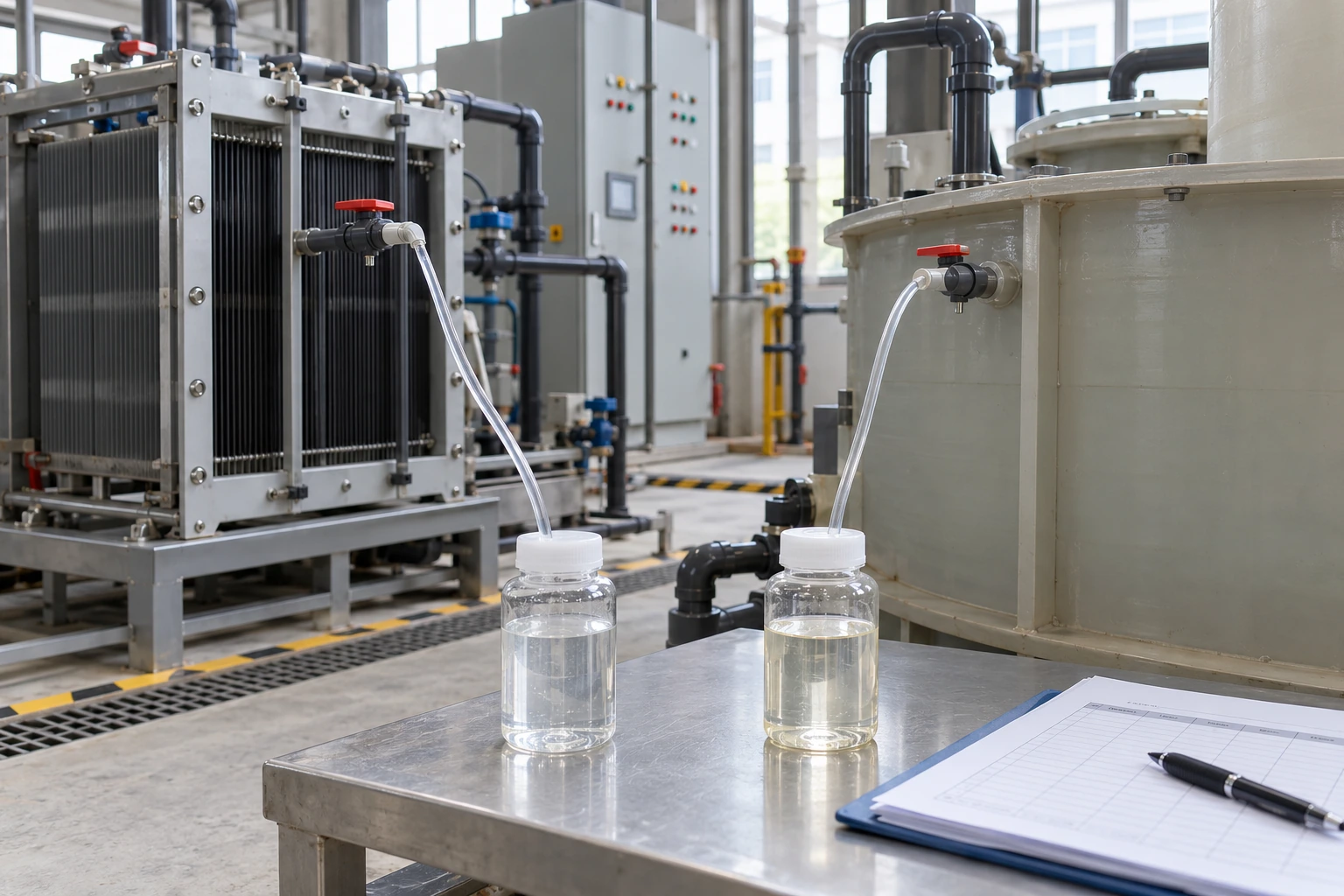
A Titanium electrode pilot should measure cell production and water residual at separate locations with synchronized timing. That boundary makes demand visible rather than hiding it in a single endpoint.
Design samples around the production-to-contact path
Collect feed, generator outlet, and post-contact samples with current, flow, pH, temperature, and contact records; repeat across representative feed variability. Keep the process sample sequence intact. Follow method requirements and avoid thresholds from unrelated matrices.
- Plan paired generator and process-endpoint samples under stable and changing feed conditions.
- Record free and total chlorine separately when both answer a stated question.
| Check | Decision |
|---|---|
| Generator sample | Production evidence |
| Post-contact sample | Demand and residual evidence |
Separated samples show whether a low residual began at generation or downstream. Key Takeaway: Agree on sample timing and species before evaluating pilot performance.
10. What should operators share for Titanium electrode review?

A Titanium electrode inquiry needs water chemistry, generator duty, residual definition, and sampling boundary before component selection. ARY Titanium supplies electrode forms and drawing-based product review, not a guaranteed treatment outcome.
Share the generator and endpoint conditions
Provide cell geometry, coating, chloride range, flow pattern, residual species, contact layout, analyzer location, and by-product concerns; separate data from assumptions. Make the process boundary clear. To request a product review, contact us today with a drawing and process details.
- Attach feed analysis, generator drawing, contact layout, and sampling method.
- Name the system engineer who owns disinfection validation and acceptance criteria.
| Check | Decision |
|---|---|
| Electrode review | Geometry and coating scope |
| Process review | Generation, demand, residual |
A precise inquiry prevents production output from being presented as a downstream guarantee. Key Takeaway: Request electrode review with the intended duty and measurement plan.
Frequently Asked Questions
Can I infer downstream residual from generator current? No; current describes electrical operation, while water demand and contact determine remaining residual.
What's the best way to measure chlorine demand? Compare dose and residual after a defined contact period using consistent sample conditions and a named analytical method.
How do I know if a low residual comes from the cell or water demand? Measure both generator outlet and post-contact water under synchronized conditions, then review feed chemistry.
Can I use total chlorine when my target specifies free chlorine? No; total chlorine includes combined residual and may not answer a free-chlorine requirement.
How do I know if by-product screening belongs in a pilot? Review organic and halide constituents with a qualified process or laboratory team, then select analytes for that matrix.