
Brine quality affects a Titanium electrode through conductivity, available chloride, deposits and competing reactions. A generator can lose output after a salt or water-source change even when its electrodes remain unchanged. Replacing the anode may leave the underlying feed problem unresolved. Compare feed analysis, preparation and operating trends before choosing a corrective action.
1. Why Does Brine Quality Matter for a Titanium electrode?
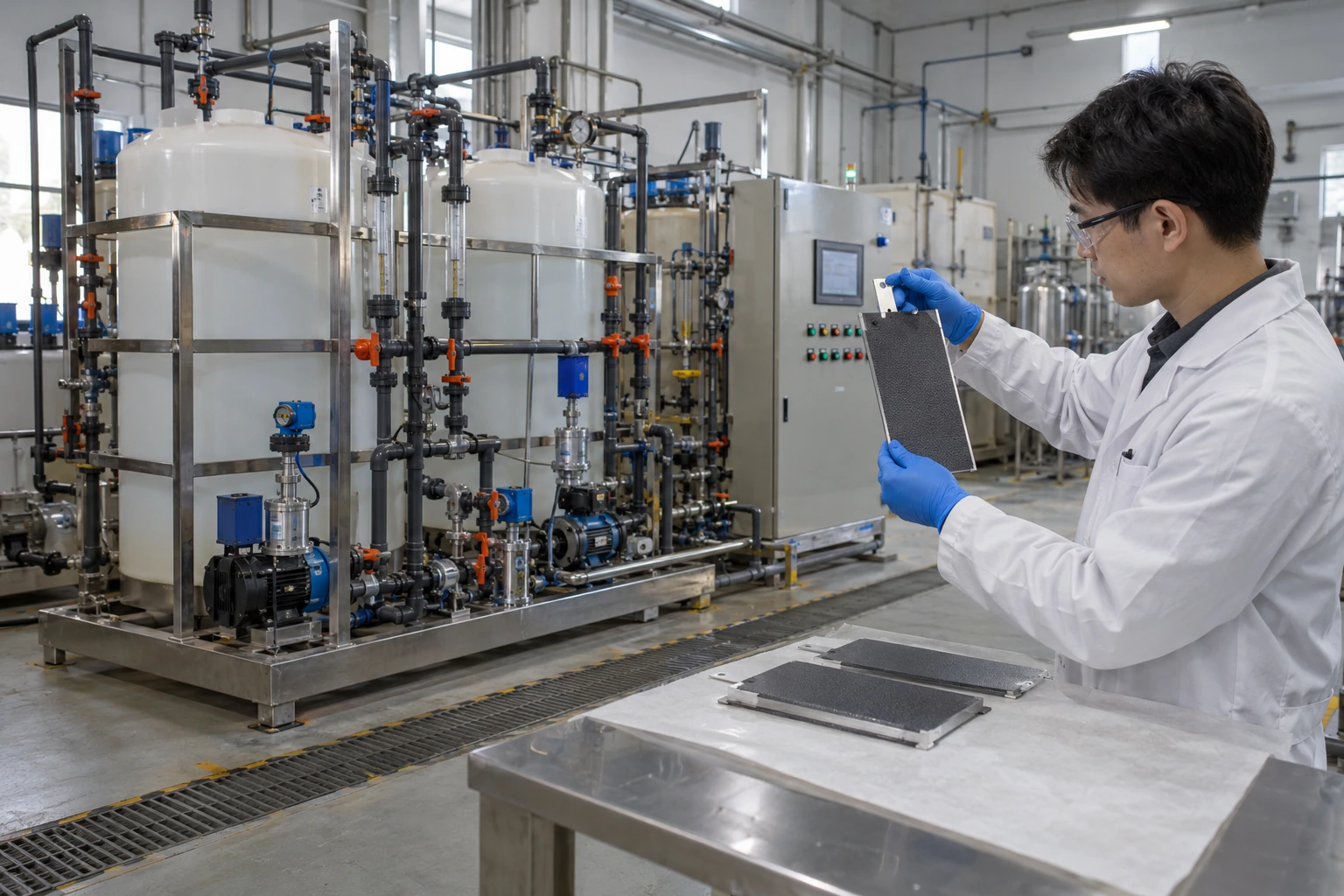
Brine quality changes the chemical and electrical conditions around a Titanium electrode. Salt concentration alone cannot describe hardness, contaminants or mixing quality.
Which feed boundary should you define?
Follow the feed from water source to cell inlet. Salt, makeup water and preparation equipment can each introduce variation. Sample the actual inlet rather than relying only on a supplier certificate.
- Identify water and salt sources.
- Record preparation and storage conditions.
| Check | Decision |
|---|---|
| Raw materials | Describe starting inputs |
| Cell inlet | Shows the delivered feed |
A sound raw-material specification does not prove consistent mixed brine. Key Takeaway: Control the complete feed-preparation path.
2. Which Salt Data Does a Titanium electrode Supplier Need?
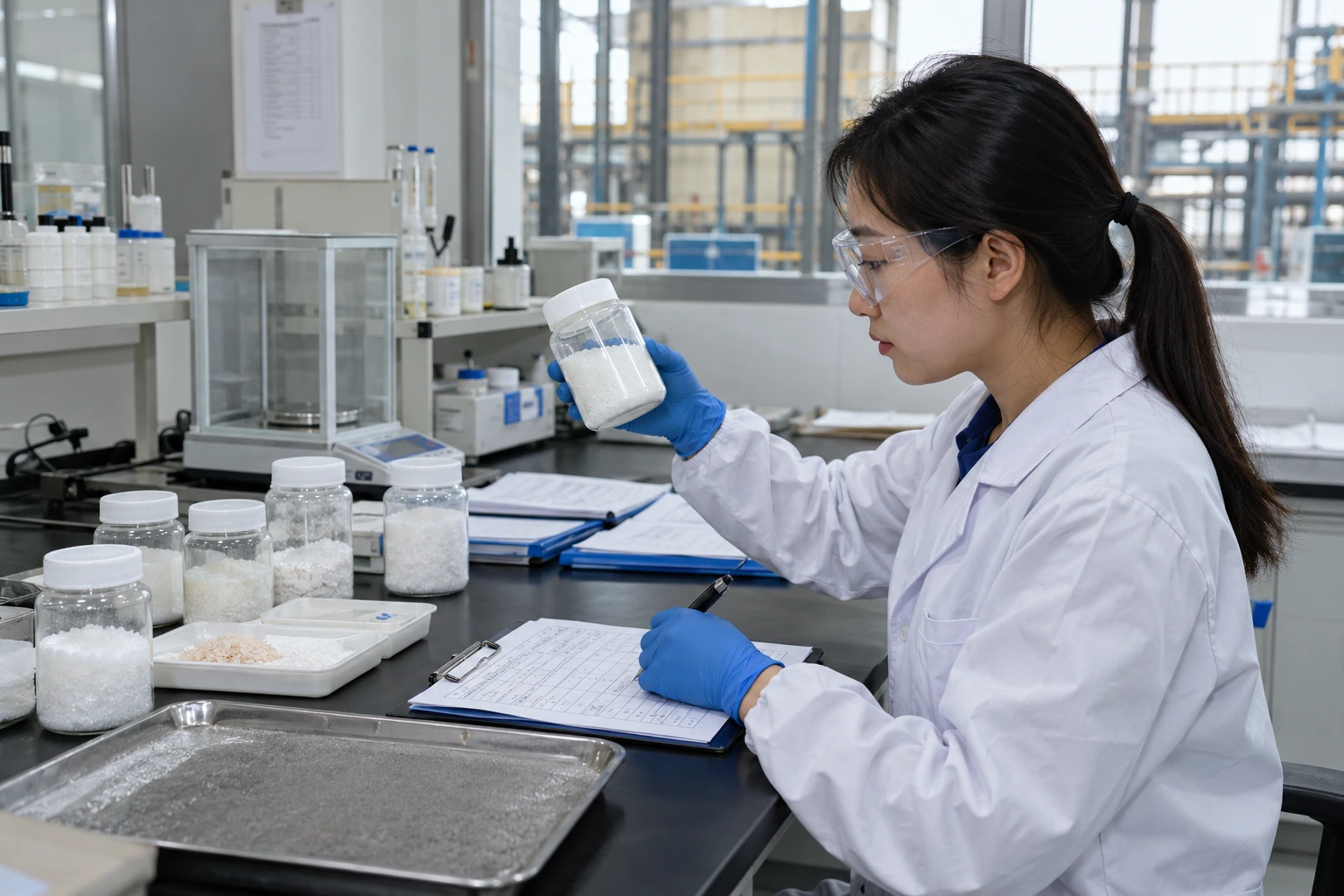
A Titanium electrode supplier needs salt identity, relevant impurity data and the intended preparation method. Product labels alone may not cover the limits required by your generator.
How should purchasing compare salt options?
Use the equipment's feed specification. Ask which impurities and insoluble residues need limits. Keep the salt requirement separate from an unsupported promise of electrode life.
- Retain batch and supplier records.
- Check relevant impurity and residue limits.
| Check | Decision |
|---|---|
| Salt certificate | Supports material identity |
| Prepared-brine analysis | Checks the resulting liquid |
Changing salt grade can change more than purchase cost. Key Takeaway: Review substitutions against the cell's feed requirements.
3. How Does Hardness Affect a Titanium electrode Cell?
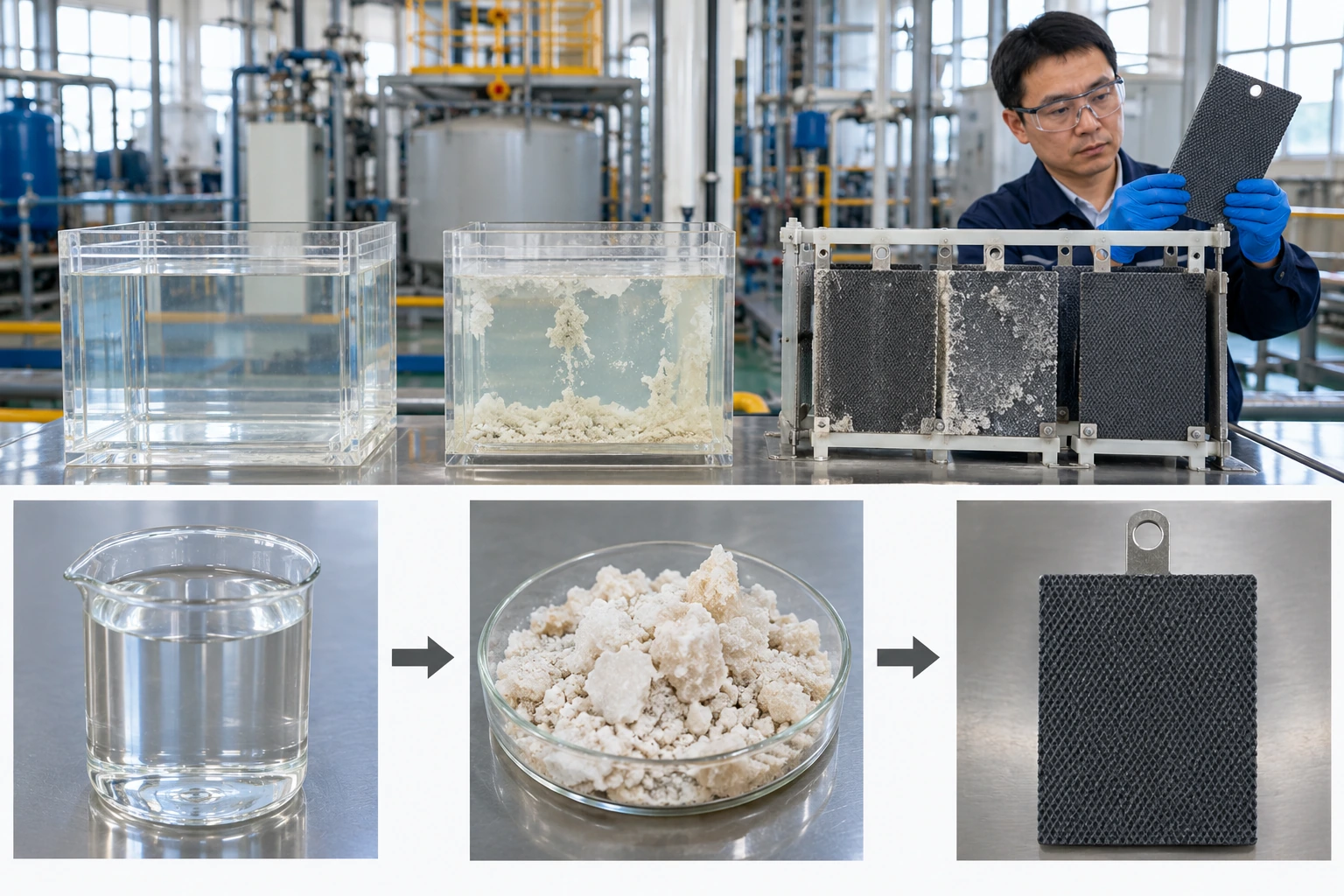
Hardness can contribute to deposits within a Titanium electrode cell, particularly where local chemistry favors precipitation. Deposit location depends on electrode roles and flow.
What should the inspection show?
Locate the scale before assigning its cause. Deposits on a cathode and damage on an anode require different interpretations. Compare photographs with water analysis and service history.
- Record calcium, magnesium and alkalinity where relevant.
- Identify the affected surface and passage.
| Check | Decision |
|---|---|
| Water analysis | Describes precipitation inputs |
| Deposit inspection | Shows where the problem develops |
A white deposit does not establish the condition of the underlying coating. Key Takeaway: Connect chemistry with the observed deposit location.
4. How Should You Measure Titanium electrode Feed Conductivity?
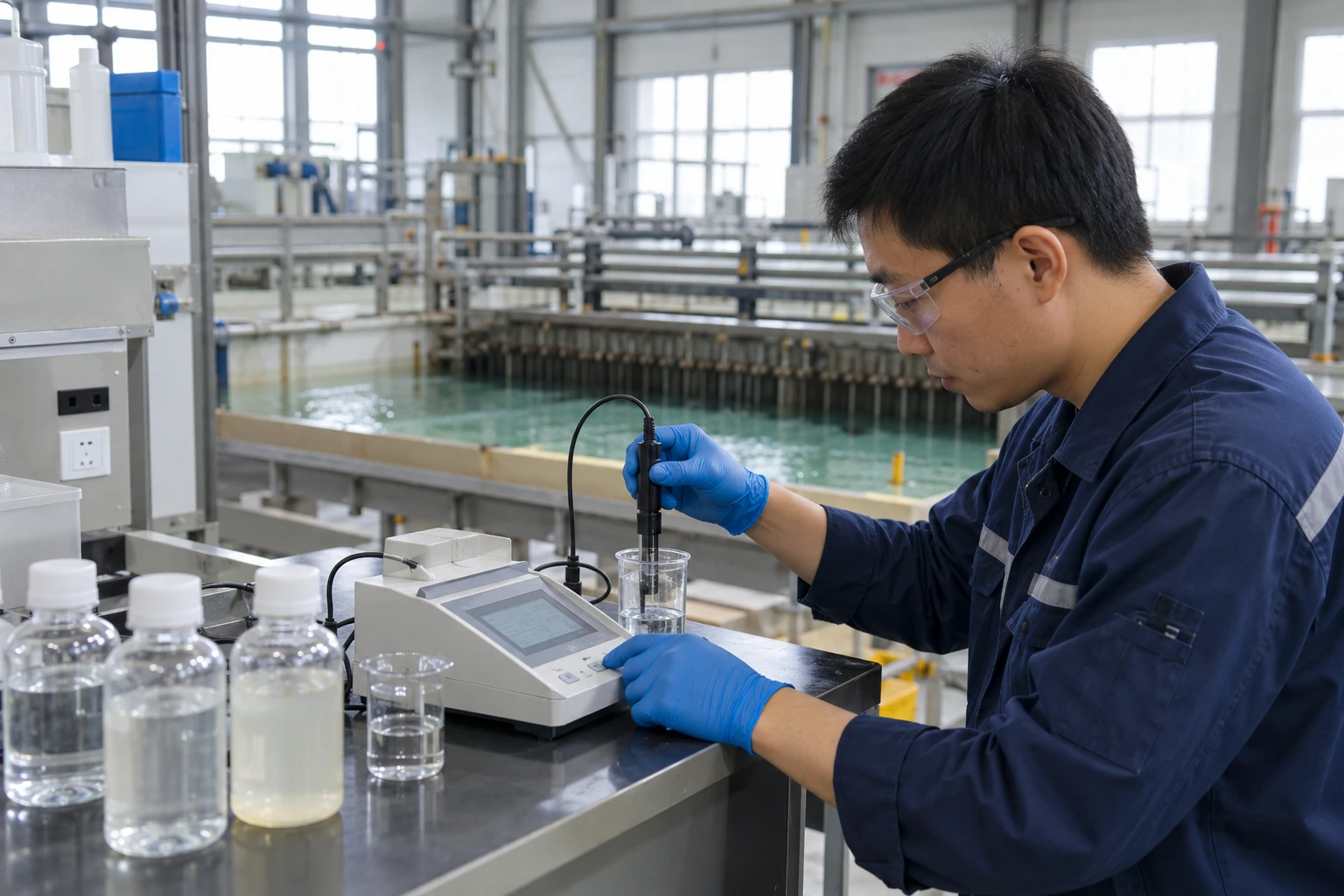
Measure Titanium electrode feed conductivity with a suitable calibrated method and a stated temperature basis. Conductivity can indicate variation but cannot identify every dissolved species.
What should a useful record include?
Keep the sampling point consistent. A custom cell review needs readings that represent the same process location. Report compensation settings and relevant temperature changes.
- Document probe checks and sampling location.
- Compare conductivity with composition data.
| Check | Decision |
|---|---|
| Conductivity trend | Flags changes in ionic conditions |
| Chemical analysis | Identifies relevant constituents |
Equal conductivity does not prove equal brine chemistry. Key Takeaway: Use conductivity as one control variable.
5. Can Impurities Change Titanium electrode Reactions?

Impurities can alter reactions, deposits or material compatibility around a Titanium electrode. Their effects depend on identity, concentration and operating conditions.
Which impurities deserve review?
Start with a complete feed description. Include contaminants expected from water, salt and upstream equipment. Ask engineering which analytical limits matter for the proposed coating and process.
- List known metals and organic contamination.
- Include additives and recycled streams.
| Check | Decision |
|---|---|
| Known impurity | Can be assessed against duty |
| Uncharacterized feed | Leaves selection assumptions unresolved |
A coating recommendation becomes narrower when the impurity range is known. Key Takeaway: Resolve consequential unknowns before a production trial.
6. How Does Brine Mixing Affect Titanium electrode Loading?
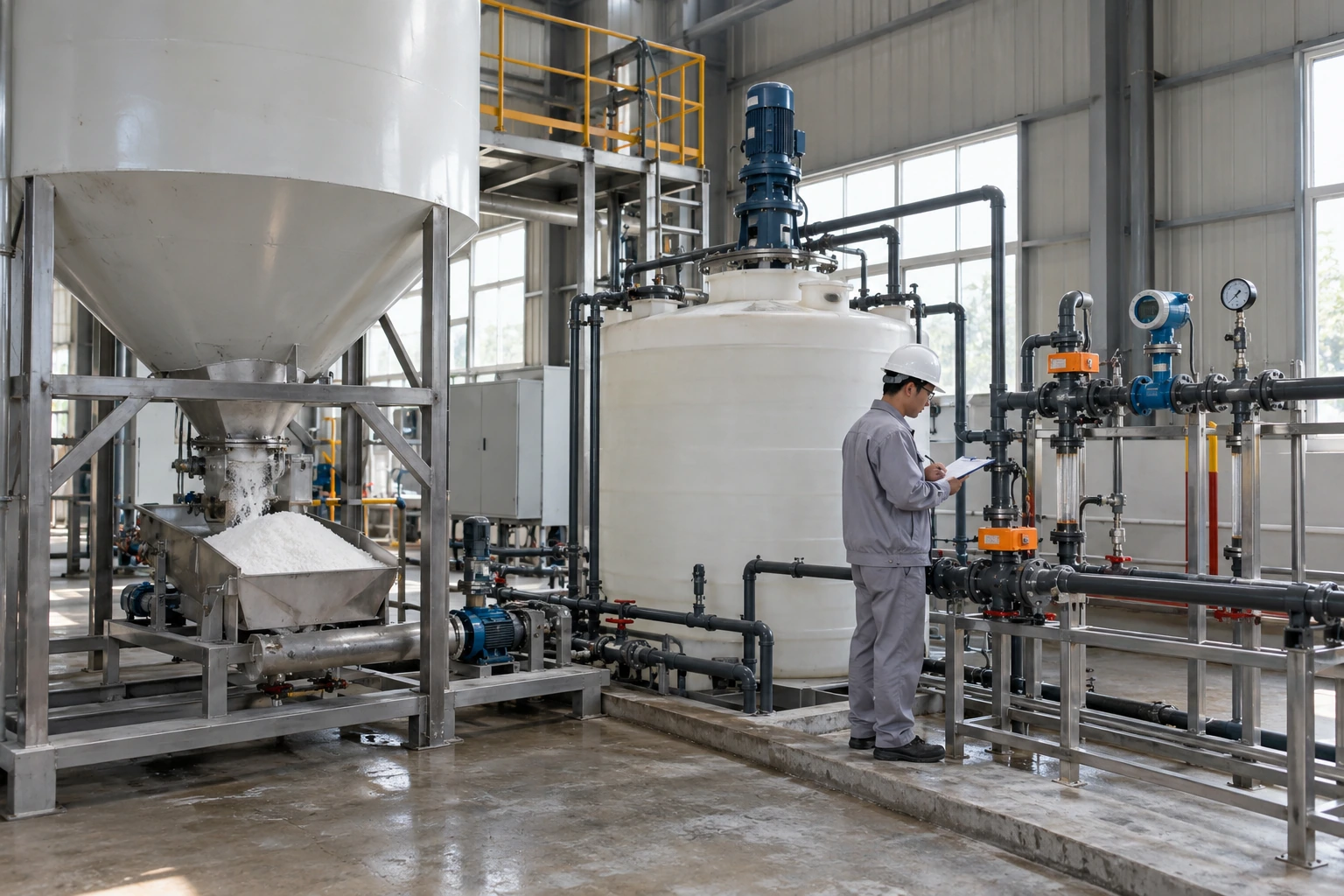
Brine mixing affects how consistently a Titanium electrode receives electrolyte. Concentration gradients or intermittent delivery can make a nominal tank value unrepresentative.
Where should mixing be checked?
Measure at the point of use. Compare startup, steady operation and refill periods. Inspect the preparation system for undissolved solids and inconsistent feed delivery.
- Check dissolving and transfer conditions.
- Record changes during replenishment.
| Check | Decision |
|---|---|
| Tank average | May conceal short-term variation |
| Inlet trend | Shows exposure during operation |
A correct batch recipe cannot compensate for uneven delivery. Key Takeaway: Validate feed consistency across the operating cycle.
7. What Happens When Titanium electrode Feed Quality Drifts?
Feed-quality drift can change Titanium electrode voltage, output and deposit formation without a hardware change. Seasonal water variation and supplier substitutions should remain visible in records.
How do you investigate a changed trend?
Align the dates of process and supply changes. Compare salt batches, water treatment and operating conditions. A matched timeline helps identify useful tests.
- Track feed-source and pretreatment changes.
- Match electrical and output records.
| Check | Decision |
|---|---|
| Supply history | Identifies changed inputs |
| Operating history | Shows the resulting response |
A time correlation suggests a test, not a proven cause. Key Takeaway: Investigate feed changes alongside electrode condition.
8. How Should Pretreatment Protect a Titanium electrode Cell?
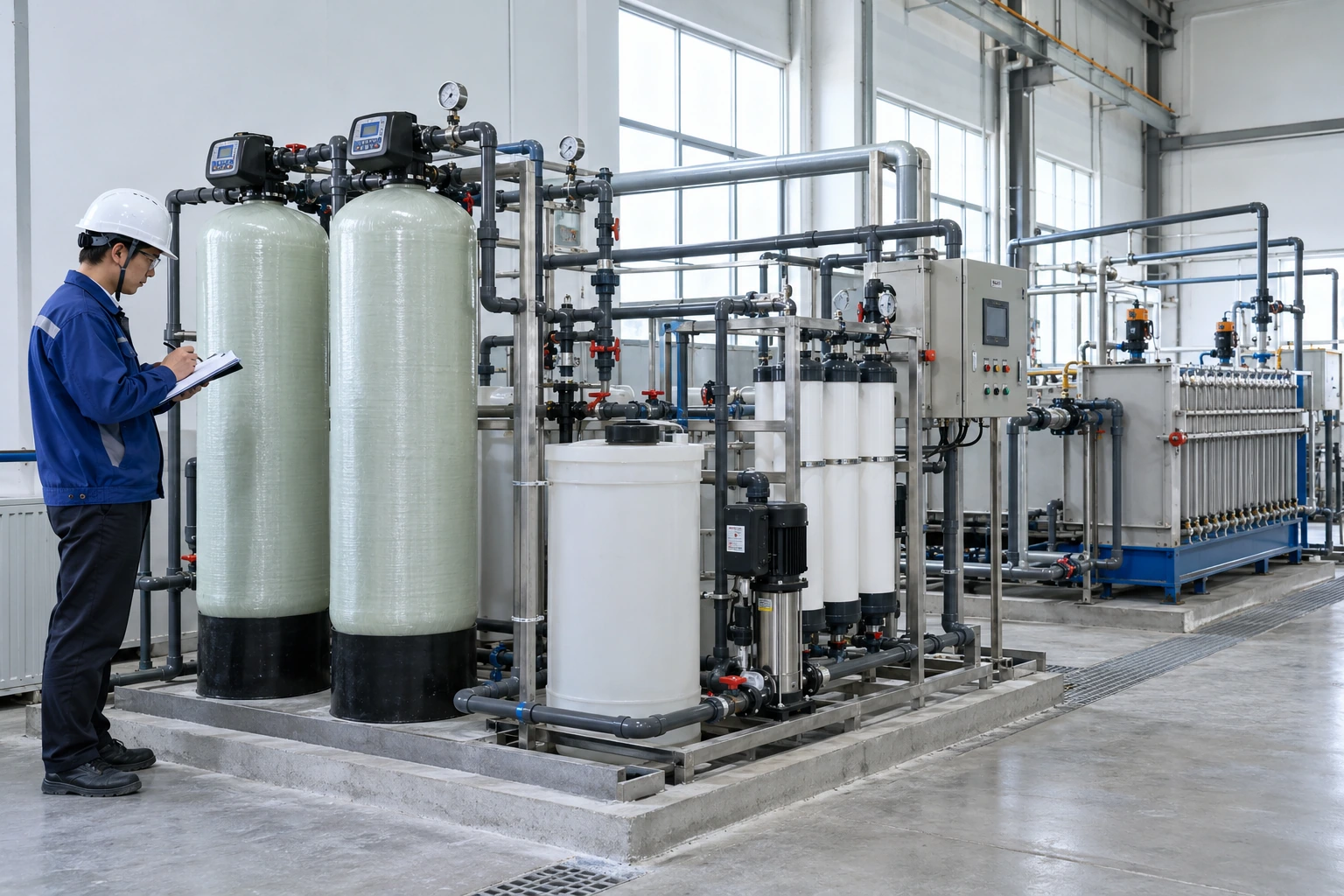
Pretreatment can protect a Titanium electrode cell by controlling identified feed problems, but its design must follow the process requirement. No single filter removes every dissolved contaminant.
What should a pretreatment review cover?
Match each treatment step to a measured problem. In water-treatment duty, hardness control, solids removal and contamination control serve different purposes. Check breakthrough and maintenance conditions.
- Define the required inlet quality.
- Monitor the relevant treatment endpoint.
| Check | Decision |
|---|---|
| Particle filtration | Addresses selected suspended material |
| Dissolved-species treatment | Needs a suitable separate process |
Pretreatment performance must be verified at the cell inlet. Key Takeaway: Choose controls around actual feed risks.
9. What Should a Titanium electrode Brine Trial Record?
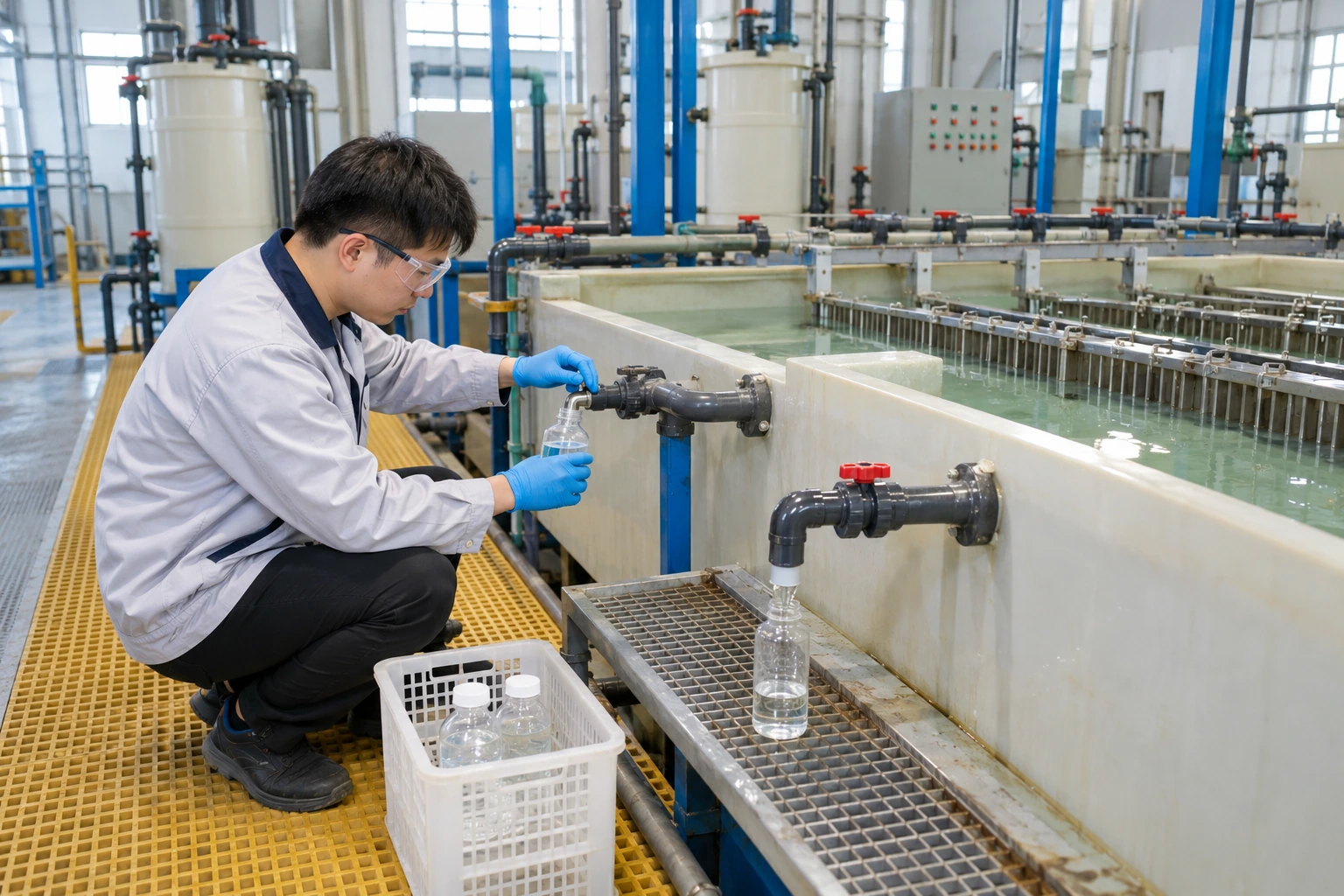
A Titanium electrode brine trial should record composition, electrical input, useful output, temperature, flow and surface condition. Compare candidate feeds under matched duty.
What makes the trial interpretable?
Change one defined factor where practical. Keep sampling and measurement methods consistent. Record both short-term response and maintenance observations.
- Retain inlet and outlet analyses.
- Inspect deposits after the trial.
| Check | Decision |
|---|---|
| Matched conditions | Support useful comparison |
| Recorded deviations | Explain limits on interpretation |
An uncontrolled feed comparison cannot isolate electrode suitability. Key Takeaway: Define the comparison before testing.
10. What Titanium electrode Brine Data Should You Send?
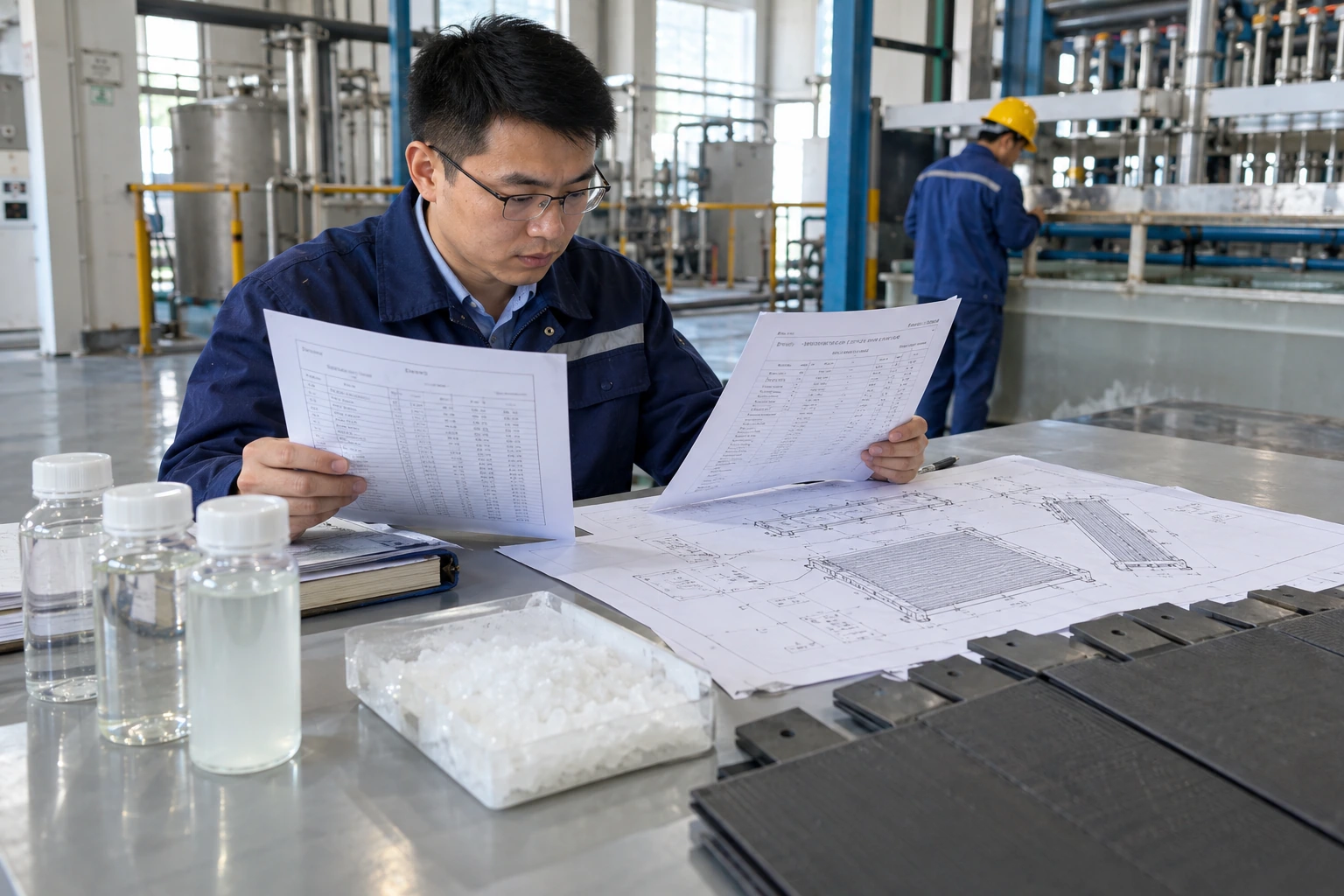
Send Titanium electrode salt records, water analysis, prepared-brine data and operating trends when requesting support. Include the output target and maintenance history.
How can we help with selection?
Send the liquid data with the cell drawing. We can review coating and geometry requirements; contact us today with your feed range. Our position is that electrode selection should use the brine actually delivered.
- Identify current feed uncertainties.
- Define trial and acceptance requirements.
| Check | Decision |
|---|---|
| Feed package | Describes chemical exposure |
| Cell package | Describes electrical and hydraulic duty |
This information connects feed quality with a practical component proposal. Key Takeaway: Resolve the feed basis before comparing electrodes.
Frequently Asked Questions
Can I use conductivity alone to approve brine? No. Different dissolved mixtures can have similar conductivity, so relevant chemical data are still needed.
What's the best salt grade for my generator? Use the equipment's specified feed requirements. Review impurities and residue rather than relying only on a label.
How do I know if hardness is causing a problem? Combine water analysis with deposit location and operating trends. Visual appearance alone is insufficient.
Can I change salt suppliers without testing? Review the specification and variability before changing suppliers. A controlled comparison may be needed for a meaningful change.
Can I blame the electrode when output falls? Only after diagnosis. Feed chemistry, flow, temperature, controls and measurement can also affect output.