
Temperature affects a Titanium electrode through reaction behavior, electrolyte properties, material compatibility and thermal movement. A cell may show acceptable outlet temperature while a connection or poorly supplied region runs hotter. That difference can confuse both maintenance and supplier selection. Define where temperature is measured and validate the complete operating range.
1. Why Does Titanium electrode Temperature Matter?

Titanium electrode temperature matters because chemistry, electrical behavior and mechanical conditions can change with heat. A temperature value needs a location and operating context.
Which conditions should the specification include?
Describe the full temperature range. Include startup, normal duty, shutdown and plausible excursions. One nominal value cannot describe every exposure.
- Identify measurement locations.
- Record normal and limiting conditions.
| Check | Decision |
|---|---|
| Nominal temperature | Describes typical operation |
| Operating range | Defines the review boundary |
A rating without measurement location can be misunderstood. Key Takeaway: Attach temperature conditions to the electrode specification.
2. Where Should Titanium electrode Temperature Be Measured?

Measure Titanium electrode temperature at locations that reveal relevant bulk and local conditions. Inlet, outlet, cell body and electrical contacts may answer different questions.
How should the sensor map be chosen?
Place sensors around the suspected heat path. Consider flow direction and connection losses. Use measurement methods suitable for the material and environment.
- Document sensor positions and calibration.
- State what each measurement represents.
| Check | Decision |
|---|---|
| Liquid measurement | Tracks bulk process conditions |
| Contact measurement | Investigates a local electrical interface |
One sensor cannot describe every part of an assembly. Key Takeaway: Use a sensor map tied to the design risks.
3. Can a Titanium electrode Have Local Hot Spots?
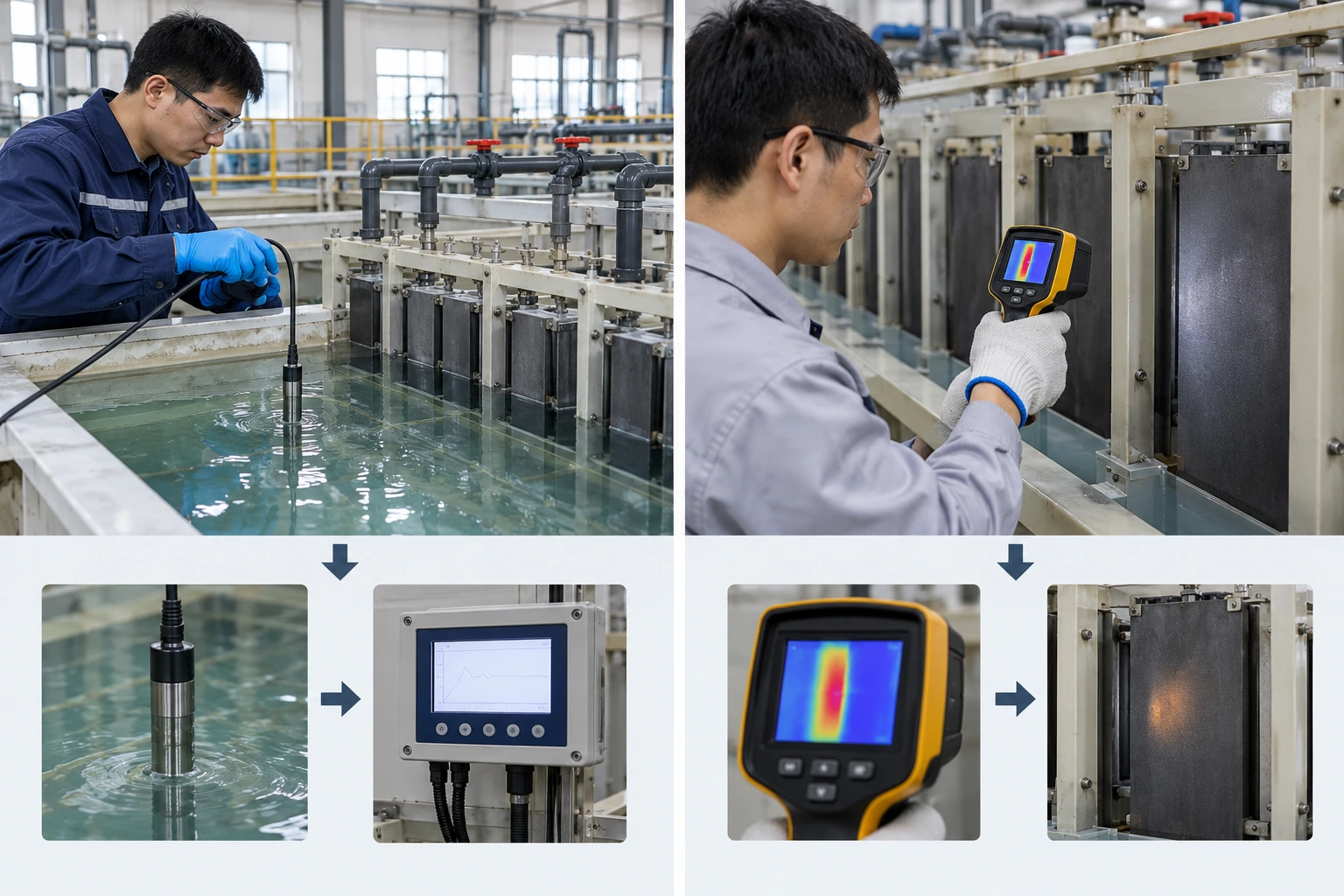
A Titanium electrode can have local hot spots even when bulk liquid remains within its intended range. Uneven flow, current crowding and resistive contacts deserve separate checks.
How do you interpret a thermal image?
Confirm what the measurement sees. Surface condition and measurement setup affect readings. Use thermal observations with electrical and hydraulic evidence.
- Compare equivalent operating points.
- Check nearby joints and restricted passages.
| Check | Decision |
|---|---|
| Bulk temperature | Describes the mixed liquid |
| Local temperature | Can reveal concentrated heating |
A hot region identifies a concern without proving its cause. Key Takeaway: Investigate the local current and flow path.
4. How Does Temperature Affect Titanium electrode Chemistry?

Temperature can change Titanium electrode chemistry through reaction rates, solubility and product stability. The effect depends on the particular electrolyte and process.
What should the application review address?
Review heat and chemistry together. A custom engineering review needs the actual concentration range and temperature limits. Avoid borrowing a rating from a different bath.
- Provide full electrolyte composition.
- Include cleaning and upset exposure.
| Check | Decision |
|---|---|
| Matched chemistry | Supports comparison |
| Changed temperature | May require renewed compatibility review |
A coating that tolerates one bath temperature may face a different duty elsewhere. Key Takeaway: Keep chemical and thermal limits linked.
5. Does Every Titanium electrode Coating Share a Heat Limit?

Different Titanium electrode coatings can have different qualified temperature windows. Substrate heat resistance alone cannot establish an active coating's operating limit.
Which rating should you request?
Ask for the finished-electrode duty basis. Include current, chemistry and cycle conditions. A base-metal property sheet does not qualify the catalytic surface.
- Identify the coating designation.
- State the expected current profile.
| Check | Decision |
|---|---|
| Titanium property | Describes the structural material |
| Electrode rating | Includes the active surface and duty |
The weakest qualified component can limit the assembly. Key Takeaway: Use a coating-specific operating window.
6. How Do You Review Titanium electrode Cooling Capacity?
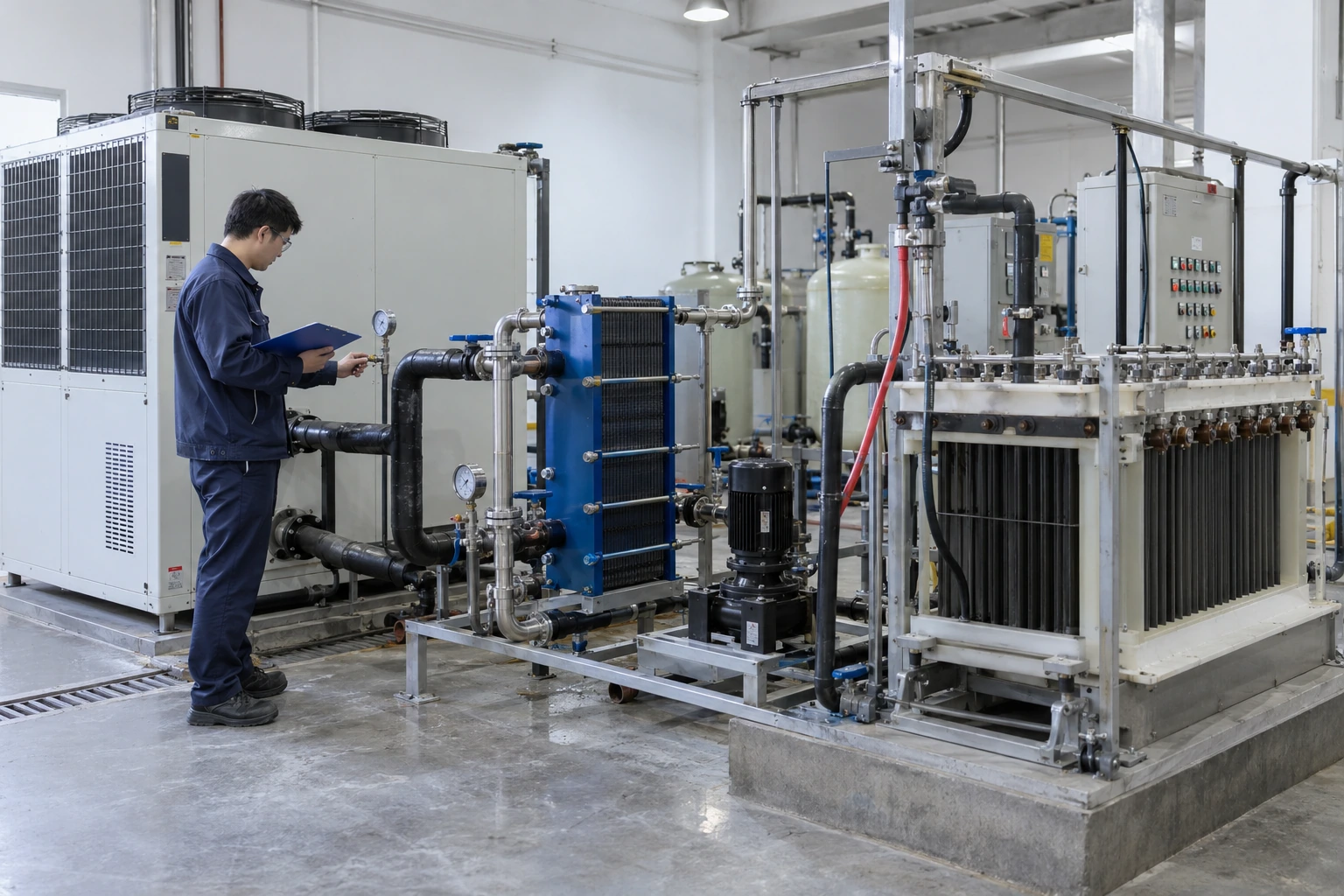
Review Titanium electrode cooling capacity against actual heat input, flow and operating conditions. A larger pump does not automatically resolve poor local distribution.
What should the cooling review measure?
Close the heat balance with real measurements. Compare inlet and outlet conditions with electrical input. Check whether controls maintain the required range during changing demand.
- Record cooling flow and temperatures.
- Inspect fouling and distribution.
| Check | Decision |
|---|---|
| Cooling capacity | Addresses total heat removal |
| Local distribution | Controls exposure within the cell |
Adequate total cooling can coexist with a poorly cooled region. Key Takeaway: Validate the complete cooling path.
7. How Can Thermal Cycling Affect a Titanium electrode?

Thermal cycling can move Titanium electrode frames, seals and interfaces as temperatures change. A platinum-coated surface still depends on sound mechanical integration.
Which details should a cycle test inspect?
Check the assembly after repeated movement. Review clamping, alignment and seal condition. Separate reversible expansion from permanent distortion.
- Record hot and cold fit where relevant.
- Inspect mounts and contact interfaces.
| Check | Decision |
|---|---|
| Reversible movement | May be part of the design |
| Permanent change | Needs engineering assessment |
A stable room-temperature fit cannot establish behavior throughout a cycle. Key Takeaway: Qualify the assembled temperature cycle.
8. What Does a Titanium electrode Temperature Alarm Mean?

A Titanium electrode temperature alarm indicates a changed or limiting condition, not automatically a coating failure. Flow, cooling, electrical contacts and sensors may need investigation.
How should maintenance respond?
Use the equipment's defined fault procedure. For water-treatment applications, compare current, feed and flow records before assigning a cause. Keep the event history for review.
- Confirm the sensor and alarm location.
- Inspect relevant flow and contact conditions.
| Check | Decision |
|---|---|
| Alarm signal | Identifies a condition needing action |
| Diagnosis | Determines the responsible cause |
Resetting an alarm does not resolve the cause. Key Takeaway: Close the event with verified corrective action.
9. How Do You Qualify a Titanium electrode Temperature Range?

Qualify a Titanium electrode temperature range through representative tests with defined performance and condition criteria. Include the assembly's mechanical and chemical limits.
What should acceptance cover?
Decide the endpoint before testing. Record output, voltage behavior, dimensions and observed condition. Note any test limits that differ from intended service.
- Use matched current and chemistry.
- Retain before-and-after inspection evidence.
| Check | Decision |
|---|---|
| Performance evidence | Checks operation at stated conditions |
| Condition evidence | Checks accumulated physical change |
A brief successful operating point does not establish an unrestricted range. Key Takeaway: Approve a bounded thermal duty.
10. What Titanium electrode Thermal Data Belong in an Inquiry?

Provide Titanium electrode temperature ranges, measurement locations, heat-removal details and operating cycles for a useful review. Include connections and other temperature-sensitive components.
How can we support the specification?
Send the thermal context with the drawing. We can review electrode requirements for your stated duty; contact us today with the operating data. Our position is that temperature limits should be measurable in the actual cell.
- Describe steady and transient conditions.
- Identify trial and inspection criteria.
| Check | Decision |
|---|---|
| Thermal records | Define exposure |
| Assembly details | Explain heat paths and interfaces |
This package makes a temperature discussion specific enough for design review. Key Takeaway: Specify where and how the limit applies.
Frequently Asked Questions
Can I use the titanium metal temperature limit for an electrode? No. Coating, seals, joints and chemistry can impose different limits.
What's the best place to measure temperature? Use locations matched to the concern. Bulk liquid and local electrical connections need different measurements.
How do I know if a hot spot comes from the coating? Combine thermal, electrical and flow evidence. A hot region alone does not identify the cause.
Can I increase temperature to lower cell voltage? Only within a qualified operating window. Product stability and material limits must also be considered.
Can I approve a wide range from one short test? No. Define representative conditions, duration and acceptance criteria for the intended duty.