
Prepared brine and seawater impose different Titanium electrode duties because their composition, variability and preparation differ. A coating approved for a controlled salt solution does not automatically qualify an intake-water system. Seasonal temperature, suspended material and additional dissolved species can change the result. Define the actual feed and validate the cell across its expected range.
1. How Do Brine and Seawater Titanium electrode Duties Differ?
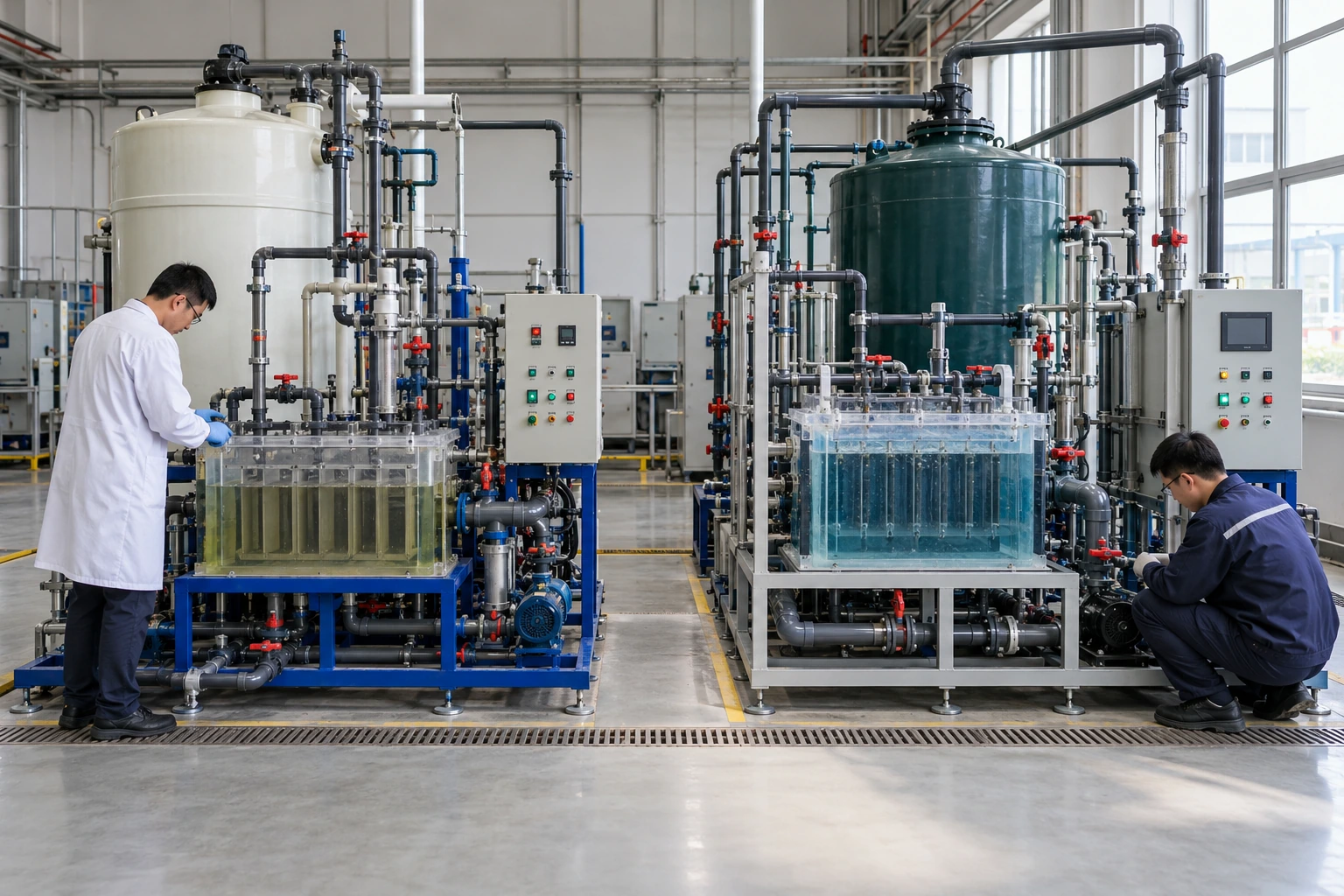
Brine and seawater Titanium electrode duties differ through feed composition, variability and surrounding treatment equipment. Both can support electrochlorination in appropriately designed systems.
Which comparison should you make?
Compare the complete feed and cell specification. Prepared brine can have controlled inputs while seawater reflects an intake environment. Neither description establishes a universal operating range.
- Identify feed source and preparation.
- Record the required product and application.
| Check | Decision |
|---|---|
| Prepared brine | Defined by water, salt and preparation |
| Seawater | Defined by intake and seasonal conditions |
A shared chloride source does not make the duties identical. Key Takeaway: Specify each feed as a distinct operating case.
2. What Feed Differences Affect a Titanium electrode?
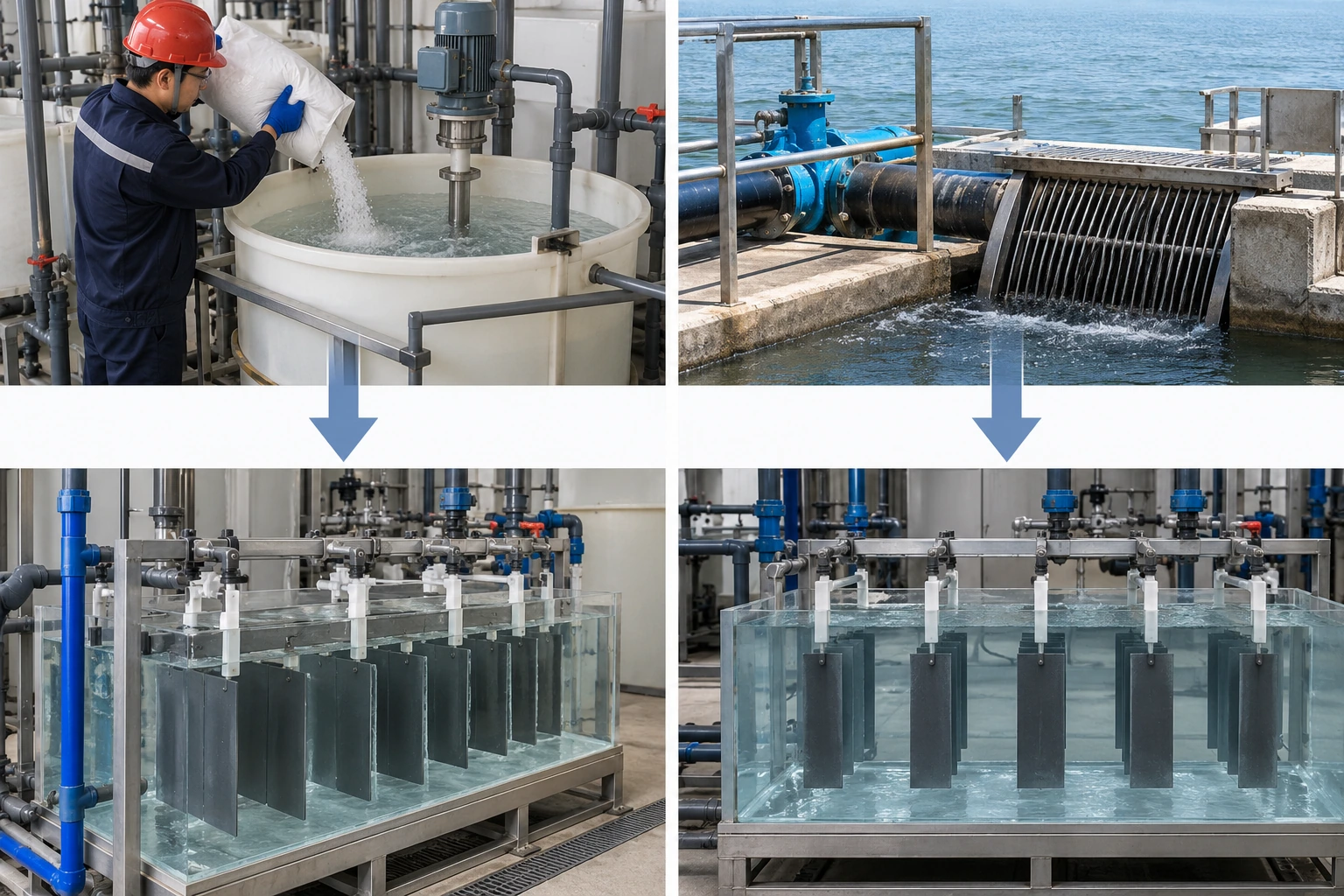
A Titanium electrode can encounter different hardness, dissolved species and suspended material in seawater than in prepared brine. Salinity alone does not describe those differences.
What should feed analysis include?
Use representative samples from the actual source. Include relevant impurities and expected variation. Natural seawater should not be modeled as pure sodium chloride solution without justification.
- Record major ions and relevant contaminants.
- Include suspended material and variability.
| Check | Decision |
|---|---|
| Salinity | Describes one broad property |
| Full feed analysis | Supports reaction and material review |
A simplified feed description can miss consequential constituents. Key Takeaway: Base selection on the measured feed.
3. How Does Salinity Change Titanium electrode Operation?
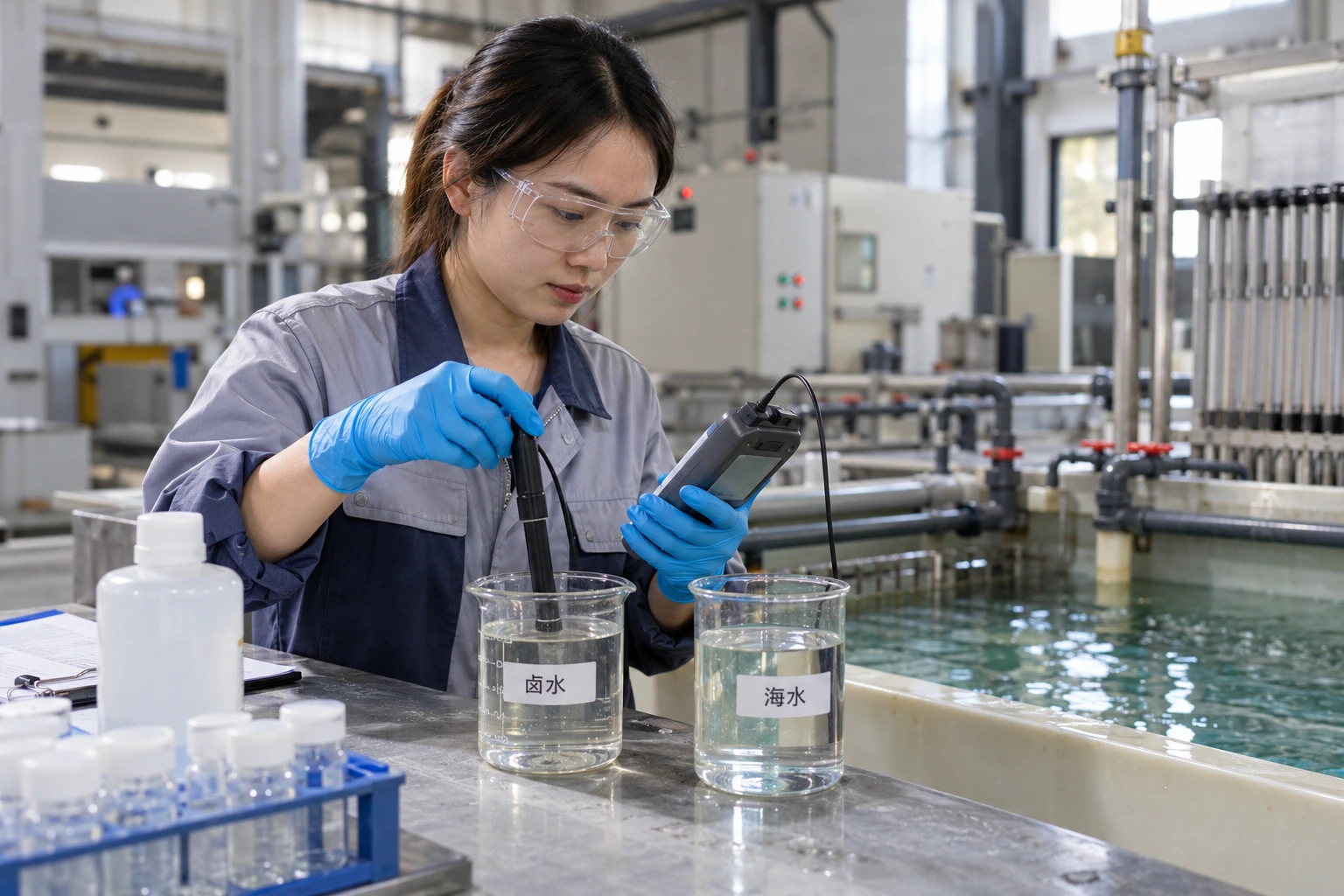
Salinity changes can affect Titanium electrode conductivity and reaction conditions. The resulting current or voltage response also depends on the control system.
Which operating records should be paired?
Record chemistry and control mode together. A constant-current system may respond differently from a constant-voltage system. Compare output at matched conditions where practical.
- Track salinity or chloride with conductivity.
- Record current, voltage and temperature.
| Check | Decision |
|---|---|
| Feed change | Alters chemical and electrical conditions |
| Control response | Determines the operating reaction |
An electrical change cannot be interpreted from salinity alone. Key Takeaway: Review the measured system response.
4. How Do Solids Affect a Seawater Titanium electrode Cell?
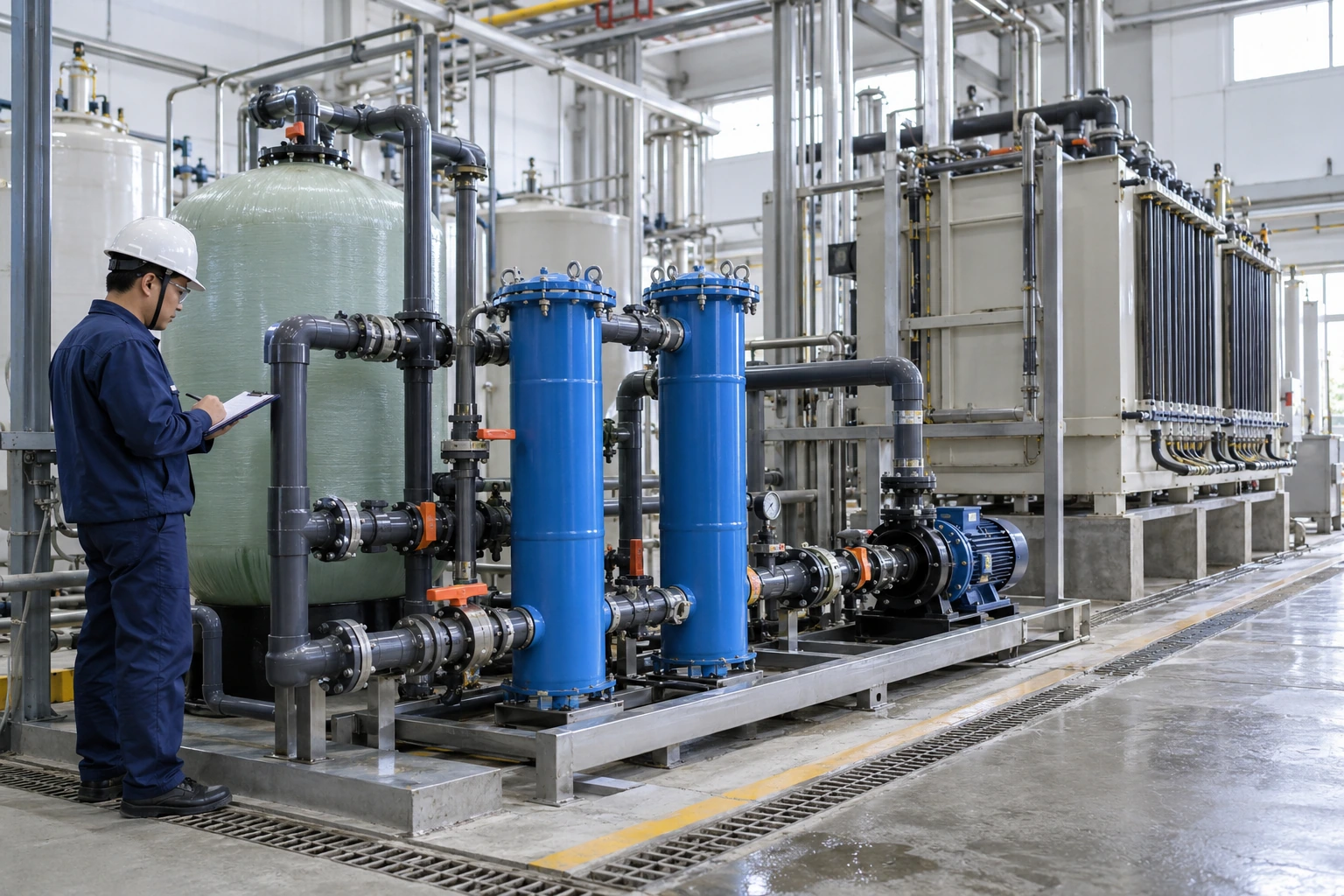
Solids can obstruct a seawater Titanium electrode cell or change local flow and maintenance demands. Screening and filtration should match the intake and equipment requirements.
How should the pretreatment review begin?
Identify what can reach the cell. A custom cell review needs particle and fouling information. Define maintenance and monitoring for the selected pretreatment.
- Describe solids and biological loading where relevant.
- Record intake and pretreatment conditions.
| Check | Decision |
|---|---|
| Intake assessment | Identifies incoming material |
| Pretreatment specification | Defines controlled feed quality |
A clean laboratory feed cannot represent an uncharacterized seawater intake. Key Takeaway: Validate the inlet quality required by the cell.
5. Which Coating Fits a Seawater Titanium electrode?

A seawater Titanium electrode coating must fit the intended anodic reaction and actual feed range. Additional dissolved species can affect products and compatibility.
What should coating selection address?
Name the desired and unwanted outcomes. Include temperature, current and chemistry limits. Supplier ratings for another system should remain reference information until matched.
- Identify coating and operating basis.
- Define relevant product-quality monitoring.
| Check | Decision |
|---|---|
| Reaction duty | Guides active-surface choice |
| Feed range | Defines qualification conditions |
A generic seawater label leaves substantial design information unresolved. Key Takeaway: Qualify the coating for the stated intake conditions.
6. How Should Titanium electrode Systems Manage Scale?
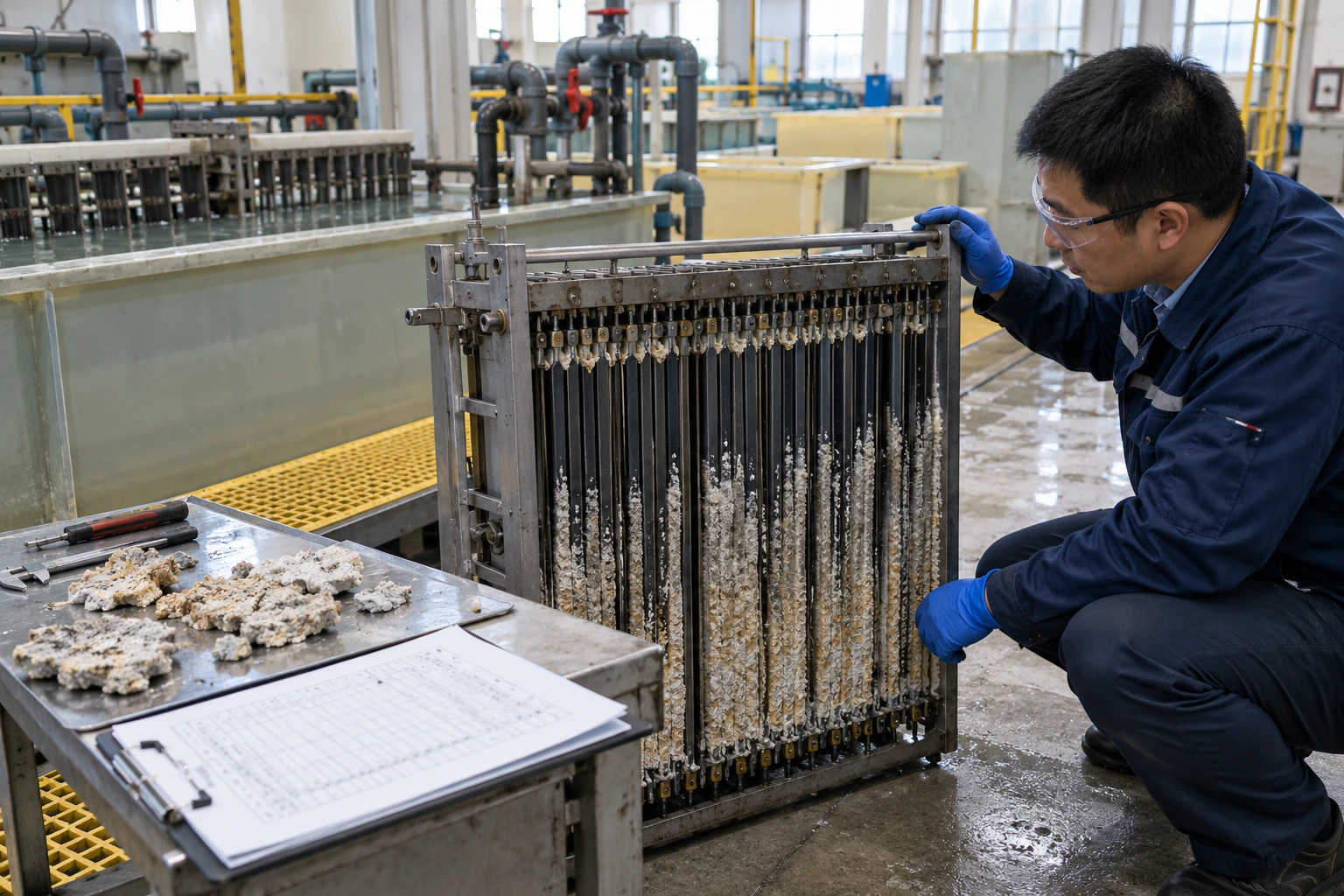
Scale management around a Titanium electrode depends on water chemistry, electrode roles and the system's maintenance design. A self-cleaning claim needs evidence for the actual cycle.
Which details should the maintenance plan distinguish?
Identify the deposit-collection surfaces. A cleaning method or reversal cycle approved for one assembly may not suit another. Review coating compatibility and solids handling.
- Record deposit location and composition.
- Use approved cleaning or reversal conditions.
| Check | Decision |
|---|---|
| Deposit mechanism | Guides maintenance choice |
| Qualified procedure | Defines acceptable treatment |
Reduced visible scale does not independently prove electrode durability. Key Takeaway: Test cleaning benefit and electrode condition together.
7. How Do Temperature Changes Affect Titanium electrode Duty?
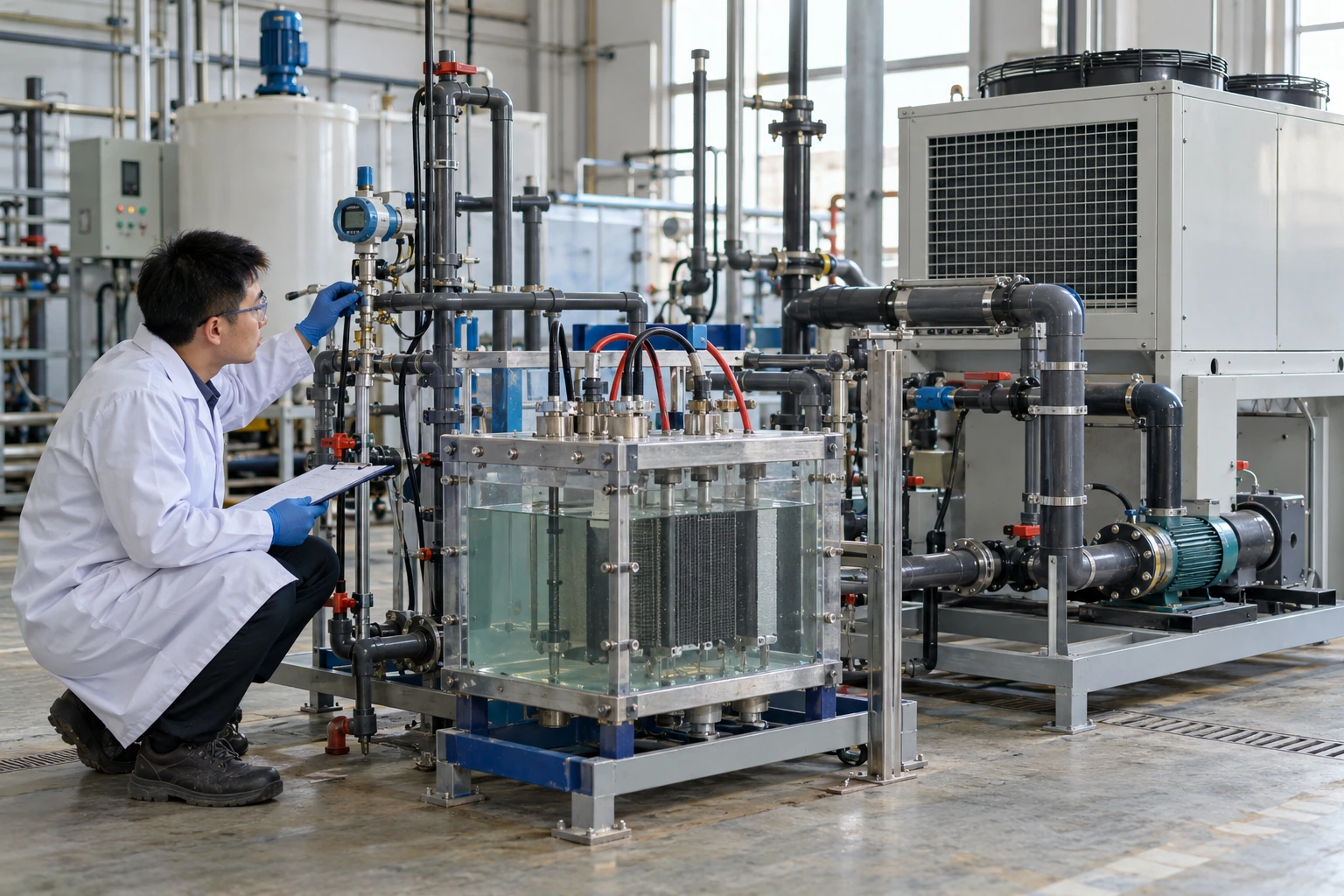
Temperature variation can change Titanium electrode operation through chemistry, conductivity and transport. Intake-water systems may experience a wider seasonal range than controlled laboratory tests.
What should seasonal qualification include?
Test representative limiting conditions. Keep current and chemistry records with each result. Review cooling, controls and mechanical interfaces.
- State expected temperature ranges.
- Identify startup and upset conditions.
| Check | Decision |
|---|---|
| Nominal trial | Describes one operating point |
| Range validation | Tests feed flexibility |
One mild-temperature test cannot establish all-season suitability. Key Takeaway: Qualify the expected temperature window.
8. What Gas-Handling Review Does a Titanium electrode Need?
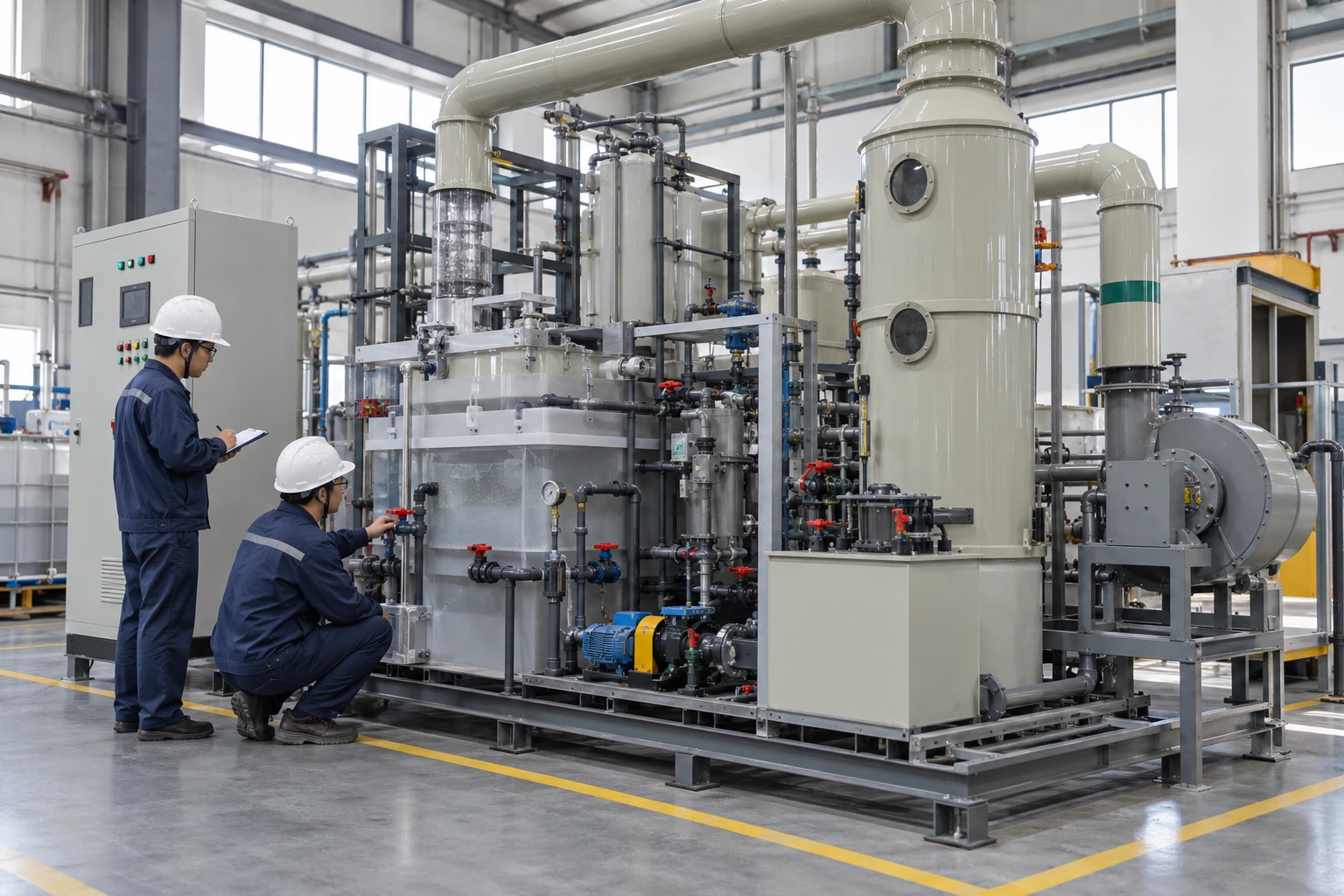
A Titanium electrode system requires engineered gas handling matched to its reactions and operating conditions. Feed choice does not remove that requirement.
Which interfaces should be reviewed?
Assign gas-system design responsibility explicitly. In water-treatment duty, separation, routing and monitoring belong to the complete equipment specification. Use approved commissioning and fault procedures.
- Identify gas products and operating sequences.
- Document handling and monitoring requirements.
| Check | Decision |
|---|---|
| Electrode duty | Defines gas-generating conditions |
| Equipment design | Controls collection and handling |
A coating quotation cannot establish complete gas-system suitability. Key Takeaway: Include gas interfaces before equipment release.
9. How Do You Validate Titanium electrode Feed Flexibility?
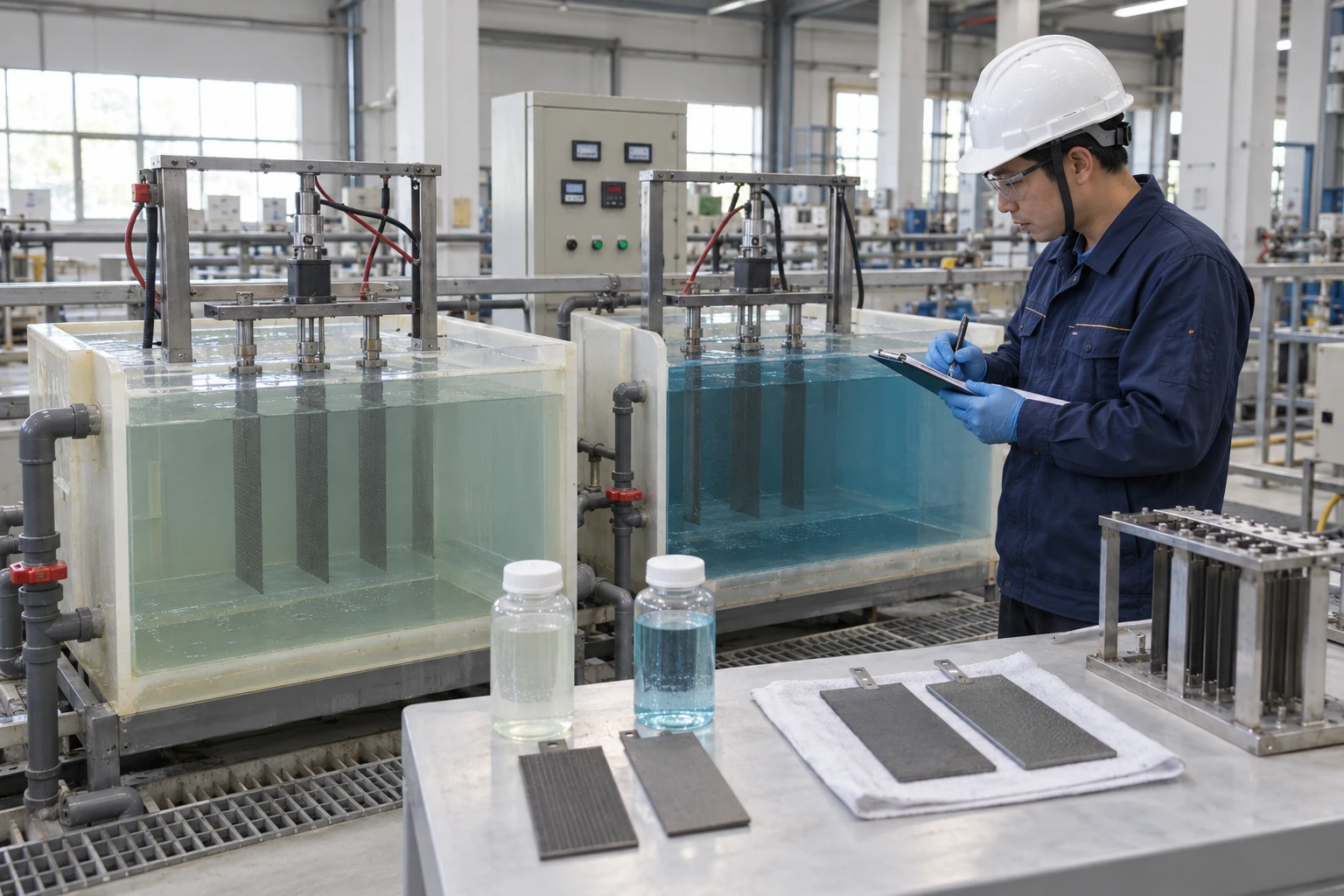
Validate Titanium electrode feed flexibility through representative chemistry, temperature and operating tests with defined criteria. A successful trial on one feed is limited to that evidence.
What should the comparison measure?
Match useful output and measurement methods. Record energy, maintenance observations and relevant product quality. Keep feed-specific limitations visible.
- Retain analysis for every test feed.
- Inspect electrode and cell condition.
| Check | Decision |
|---|---|
| Matched trials | Support comparison |
| Uncovered conditions | Remain qualification gaps |
Feed flexibility should be a tested range rather than a broad marketing phrase. Key Takeaway: Approve the range demonstrated by the trials.
10. What Titanium electrode Feed Data Belong in an Inquiry?

Send Titanium electrode intake or brine-preparation data, chemistry ranges, cell geometry and output requirements for review. State whether both feeds must be supported.
How can we help specify the component?
Provide separate operating cases for separate feeds. We can review electrode options against those cases; contact us today with the process package. Our position is that feed flexibility must be supported by application evidence.
- Identify seasonal and supply variation.
- Define pilot and acceptance requirements.
| Check | Decision |
|---|---|
| Feed cases | Define expected exposure |
| Validation plan | Defines how suitability is checked |
This package prevents a shared process name from hiding different duties. Key Takeaway: Qualify each required feed case.
Frequently Asked Questions
Can I use a brine electrode directly in seawater? Only after application review. Chemistry, temperature, solids and maintenance can differ.
What's the best coating for all seawater conditions? There is no universal choice. Define the reaction and representative intake range.
How do I know if feed variability is acceptable? Compare measured conditions with the qualified operating window and trial evidence.
Can I assume seawater is only sodium chloride in water? No. Other dissolved species and suspended material may affect the process.
Can I claim feed flexibility after one trial? Only for the conditions demonstrated. Broader ranges need corresponding evidence.