
Measure Titanium electrode chlorine output by combining a validated product-concentration result with representative liquid flow over the same period. A concentration reading alone does not establish production rate. Dilution, storage, sample handling and cell configuration can all change the interpretation. Define the product basis and measurement boundary before comparing electrodes or supplier claims.
1. What Does Titanium electrode Chlorine Output Mean?
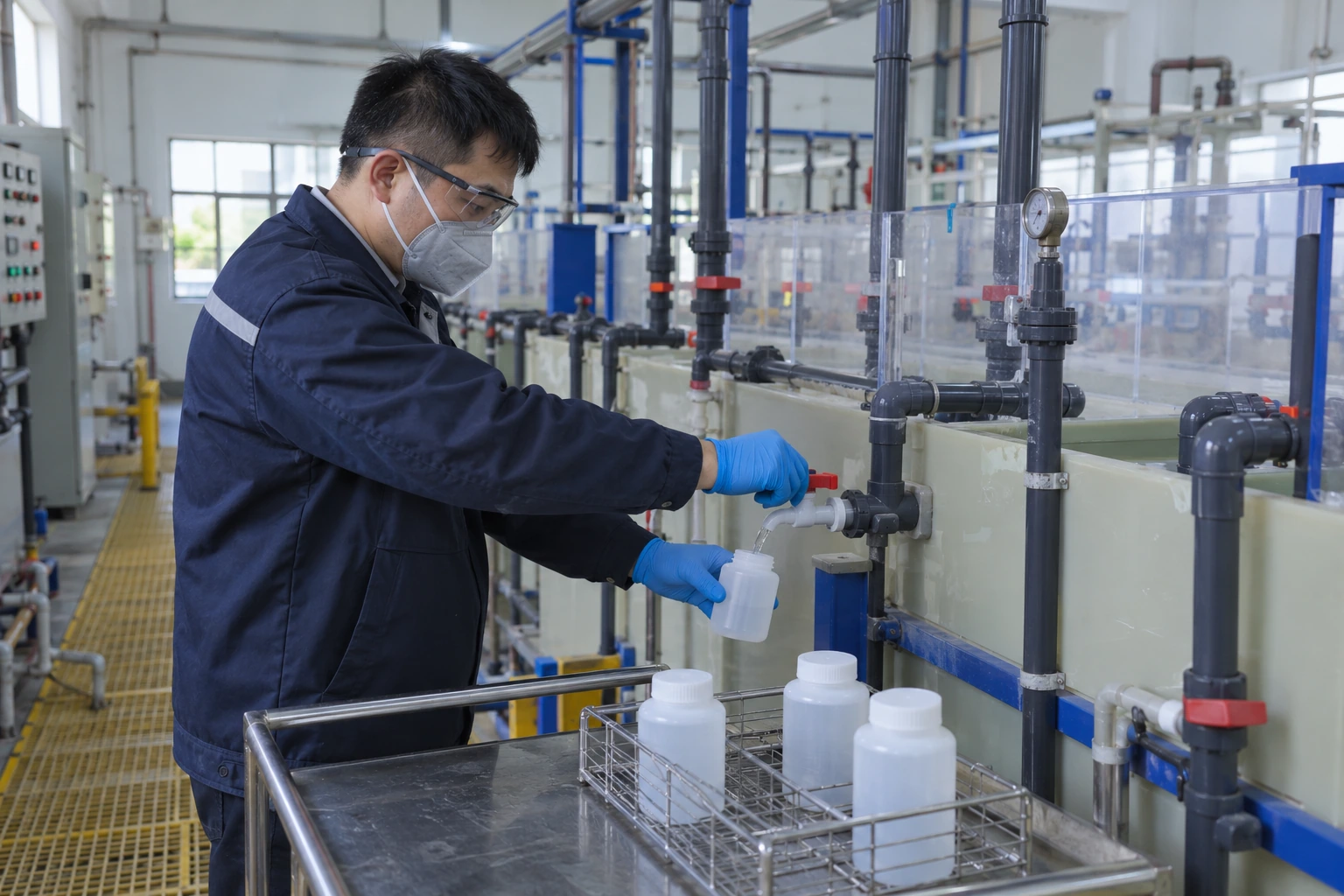
Titanium electrode chlorine output must state whether it refers to concentration, production rate or another defined product quantity. The chemical reporting basis also needs to be explicit.
Which definition belongs in a specification?
Name the product basis and units. Available-chlorine equivalent and sodium-hypochlorite concentration are not labels you should interchange casually. Use the specified analytical method.
- State concentration and production-rate units.
- Identify the reporting basis.
| Check | Decision |
|---|---|
| Concentration | Describes product strength |
| Production rate | Combines concentration with flow or volume |
A strong solution can still represent a low production rate. Key Takeaway: Define the output quantity before testing.
2. Which Titanium electrode Product Concentration Should You Measure?
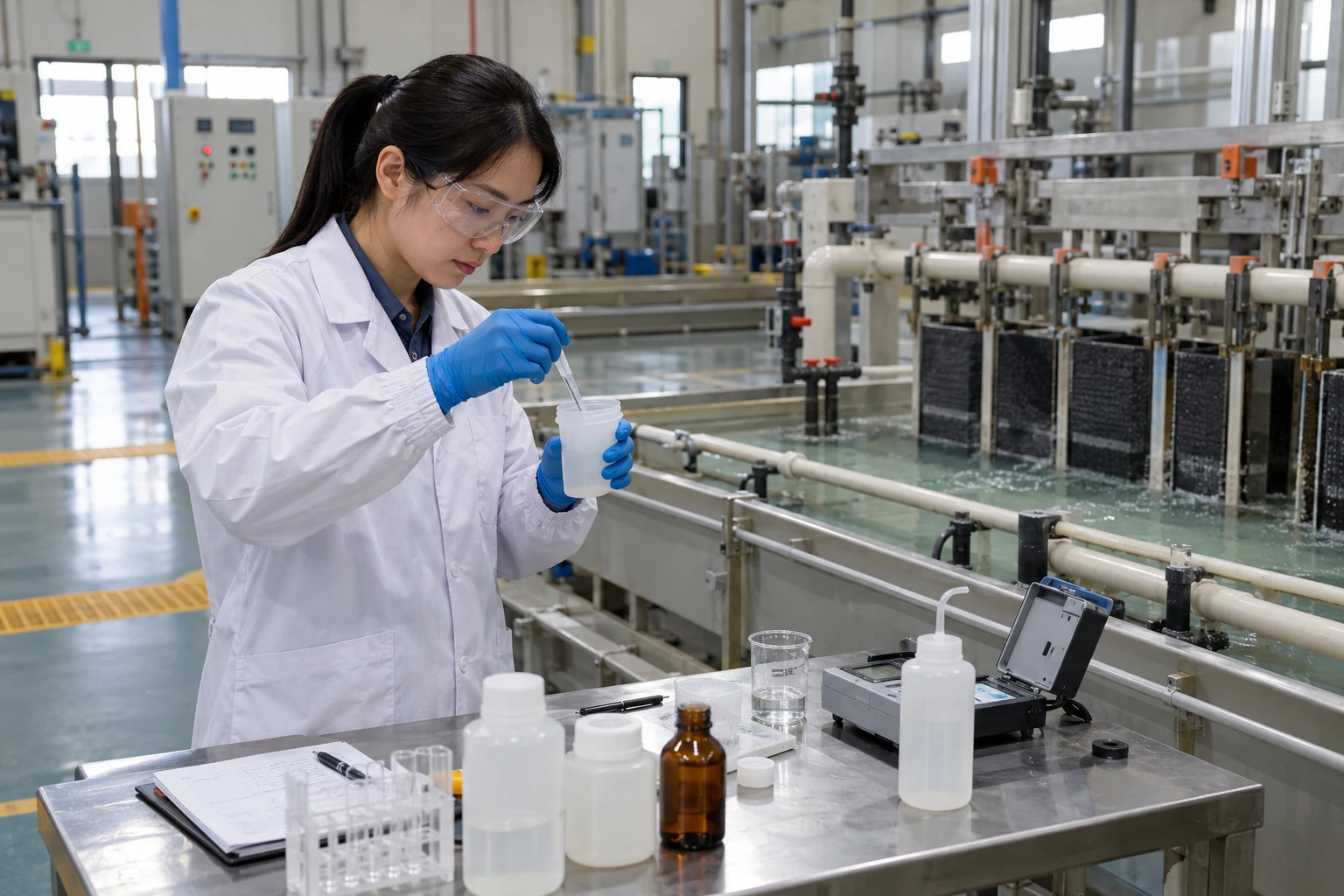
Measure the Titanium electrode product concentration required by the process specification using a suitable validated method. Instrument range and sample preparation affect reliability.
How should the laboratory choose a method?
Match the method to the sample. Concentrated products may require controlled preparation by qualified personnel. Record dilution and calculation steps when used.
- Document analysis method and range.
- Retain sample preparation records.
| Check | Decision |
|---|---|
| Suitable method | Supports the required reporting basis |
| Out-of-range reading | Needs proper analytical handling |
A displayed number is useful only within the method's valid range. Key Takeaway: Use an appropriate analytical procedure.
3. How Do You Calculate Titanium electrode Production Rate?
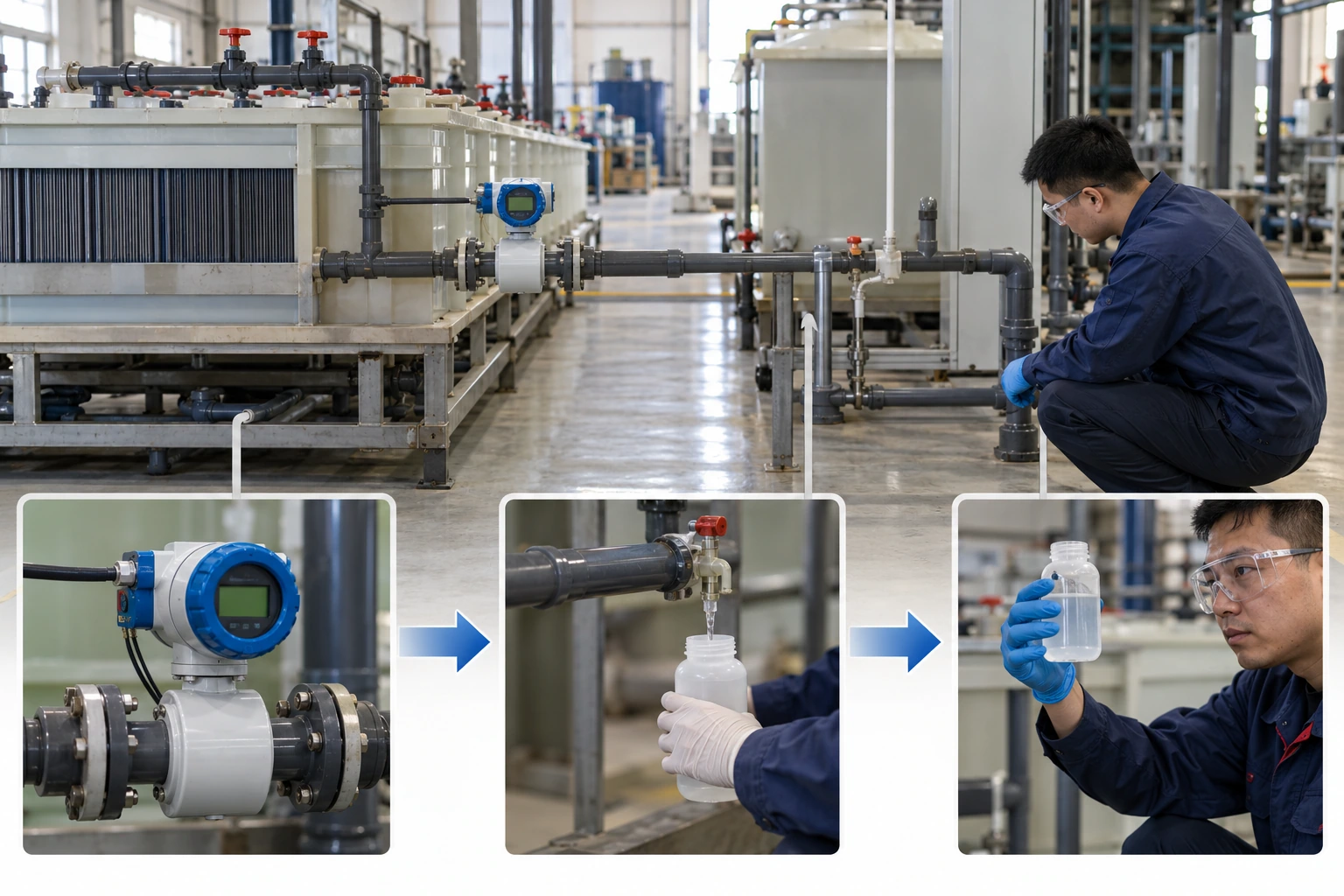
For a defined Titanium electrode liquid stream, production rate can be calculated from concentration multiplied by flow using compatible units. Batch operation requires a matching volume and time basis.
What does a simple example show?
Keep the arithmetic separate from a product rating. A hypothetical 2 g/L stream at 50 L/h represents 100 g/h on that stated basis. This example is not a recommended operating point.
- Use compatible mass and volume units.
- Match concentration and flow in time.
| Check | Decision |
|---|---|
| Concentration × flow | Calculates stream production rate |
| Batch mass / elapsed time | Calculates average batch rate |
The calculation is only as representative as its measurements. Key Takeaway: Define the stream and sampling period.
4. How Should You Sample a Titanium electrode Outlet?
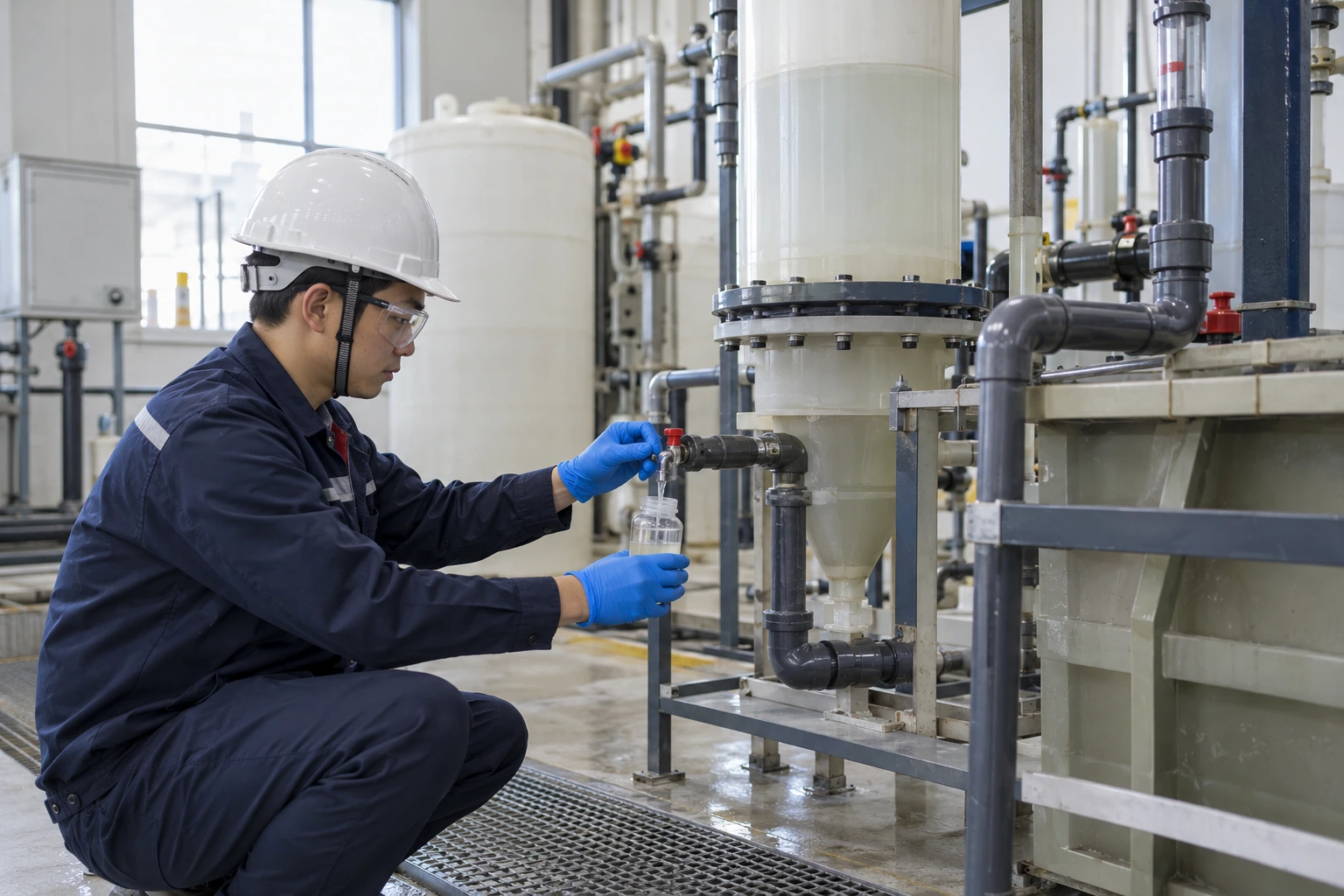
Sample a Titanium electrode outlet at a defined location and condition that represents the measured product stream. Gas, mixing and storage can affect the sample.
What should the procedure specify?
Use the same sample boundary in every comparison. A custom cell review should identify relevant gas-separation and flow interfaces. Qualified analysts should control collection and handling.
- Record sampling location and timing.
- Document separation and handling conditions.
| Check | Decision |
|---|---|
| Defined sample | Supports comparison |
| Changed sample boundary | Can change the result |
An outlet sample and a stored-product sample may answer different questions. Key Takeaway: Keep sampling conditions attached to the result.
5. How Does Current Relate to Titanium electrode Output?
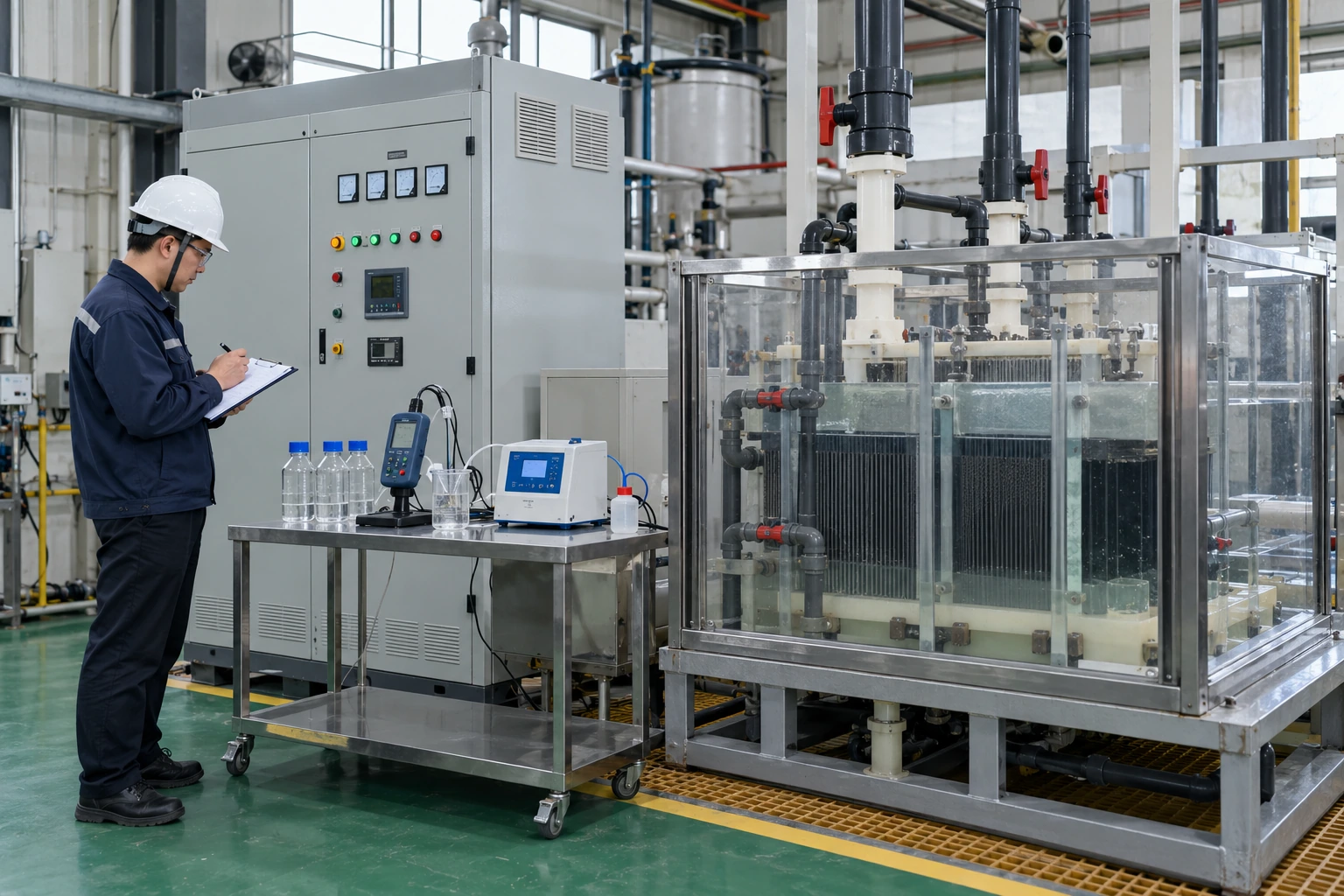
Current supplies charge for a Titanium electrode process, but useful chlorine output depends on reaction efficiency and the chosen system boundary. Not all charge necessarily produces the desired recovered product.
Which electrical details must be recorded?
Trace charge through the relevant cells. Series cells, parallel branches and product collection arrangements need careful accounting. Avoid using rectifier current without understanding the configuration.
- Record current over the measurement period.
- Identify the cells and streams included.
| Check | Decision |
|---|---|
| Charge input | Defines electrical exposure |
| Recovered product | Measures the useful result |
The same supply reading can describe different production boundaries. Key Takeaway: Match electrical and product accounting.
6. What Can Distort Titanium electrode Output Results?

Titanium electrode output results can be distorted by inconsistent flow, dilution, storage, sample delay or unsuitable analysis. A changed result may reflect measurement rather than electrode behavior.
How should you investigate a discrepancy?
Audit the measurement chain before ranking the samples. Check instruments, calculations and sample handling. Repeat a controlled comparison when the evidence is inconsistent.
- Confirm flow and analytical calibration.
- Check units and preparation records.
| Check | Decision |
|---|---|
| Measurement control | Supports trustworthy results |
| Unrecorded handling | Limits interpretation |
A precise-looking calculation can still contain an incorrect input. Key Takeaway: Verify the full measurement chain.
7. How Do You Compare Titanium electrode Current Efficiency?

Compare Titanium electrode current efficiency by relating measured product on a defined basis to the theoretical charge requirement for that reaction. Cell count and collection boundaries must match.
What should a reported efficiency include?
Request the equation and boundary assumptions. State the reaction basis, integrated charge and measured product. Keep startup and nonproductive periods visible.
- Identify the relevant electrochemical cells.
- Document analysis and charge integration.
| Check | Decision |
|---|---|
| Theoretical basis | Defines the reference calculation |
| Measured product | Defines the actual outcome |
An efficiency percentage without its basis cannot support a fair comparison. Key Takeaway: Review the calculation with process engineering.
8. Can ORP Measure Titanium electrode Chlorine Production?
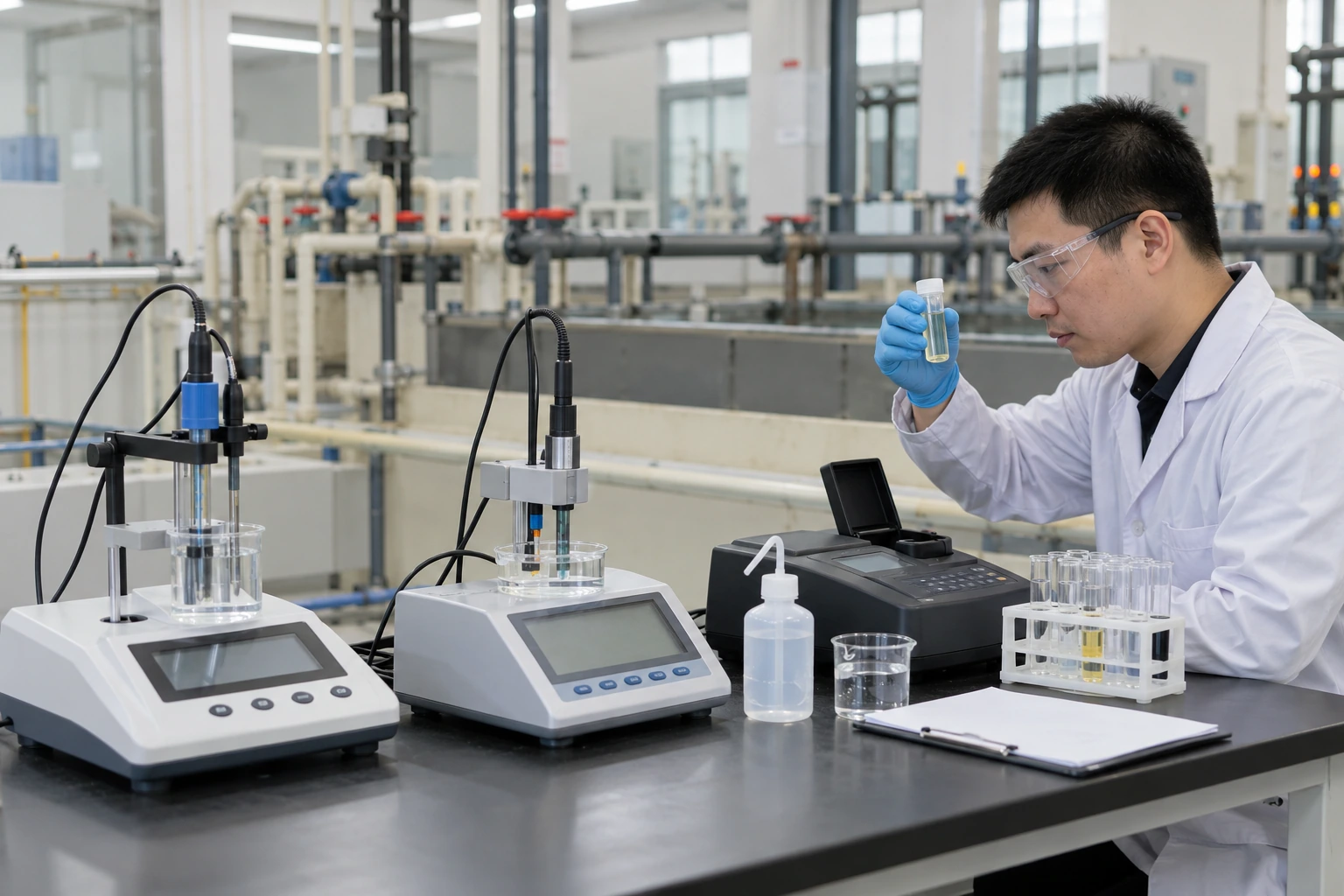
ORP alone cannot quantify Titanium electrode chlorine production because it responds to the solution's redox conditions and other variables. It is not a substitute for the required concentration analysis.
How should ORP be used alongside other data?
Keep each instrument in its proper role. For water-treatment duty, pH and composition affect interpretation. Use the validated analytical method for product quantification.
- Record pH with relevant redox measurements.
- Use chemical analysis for the specified product basis.
| Check | Decision |
|---|---|
| ORP | Describes a redox response |
| Concentration analysis | Quantifies the specified analyte |
Similar ORP readings do not establish equal production rates. Key Takeaway: Do not convert ORP into output without a validated relationship.
9. Which Checks Validate Titanium electrode Output Claims?
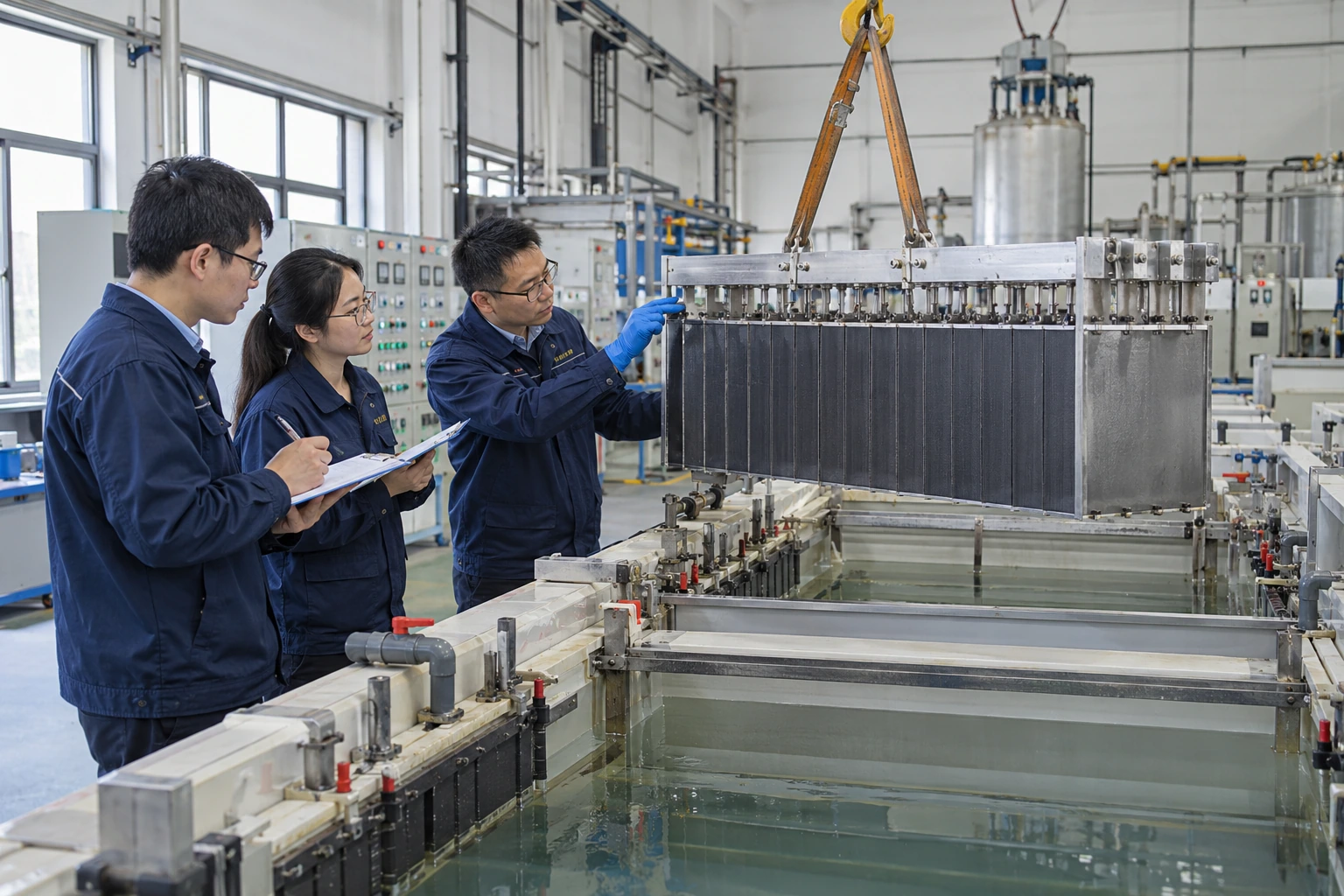
Validate Titanium electrode output claims through matched operating conditions, representative sampling and traceable calculations. Include relevant product quality and repeatability.
What should the trial report contain?
Keep the raw inputs with the final result. Record current, flow, chemistry, temperature and analysis. Identify uncertainty and differences from intended service.
- Repeat measurements where the decision requires it.
- Inspect cell and electrode condition.
| Check | Decision |
|---|---|
| Traceable calculation | Can be checked independently |
| Matched duty | Allows useful comparison |
A headline production value without conditions is incomplete evidence. Key Takeaway: Approve the claim only within its demonstrated basis.
10. What Titanium electrode Output Data Should You Request?

Request Titanium electrode concentration basis, flow records, analytical method, electrical configuration and operating conditions when comparing output. State the acceptance requirement for your equipment.
How can we support the electrode review?
Send the measurement plan with the cell drawing. We can review component requirements for your stated duty; contact us today with the test package. Our position is that an output claim should be reproducible from recorded inputs.
- Define product quality and production-rate criteria.
- Identify unresolved measurement assumptions.
| Check | Decision |
|---|---|
| Process requirement | Defines the target |
| Measurement record | Supports the claimed result |
This package turns output language into a testable specification. Key Takeaway: Compare electrodes using the same measured basis.
Frequently Asked Questions
Can I use concentration alone as production output? No. Production rate also needs representative flow or batch volume and time.
What's the best chlorine measurement method? Use a validated method suited to the product, concentration range and reporting basis.
How do I know if two output claims are comparable? Check chemistry, current, flow, temperature, sampling and product basis.
Can I use ORP instead of concentration analysis? Not as a general substitute. ORP responds to several solution conditions.
Can I calculate current efficiency from rectifier current alone? No. You also need time, product measurements and a consistent cell and stream boundary.