
Bromide affects a Titanium electrode review when feed composition can influence halogen-related reaction products or product acceptance. A chloride specification alone may miss that question, especially with changing salt or source water. Approving a generator from nominal salinity can leave relevant by-products unexamined. Characterize the feed and define suitable product testing before making a purity claim.
1. Why does bromide matter to a Titanium electrode process?
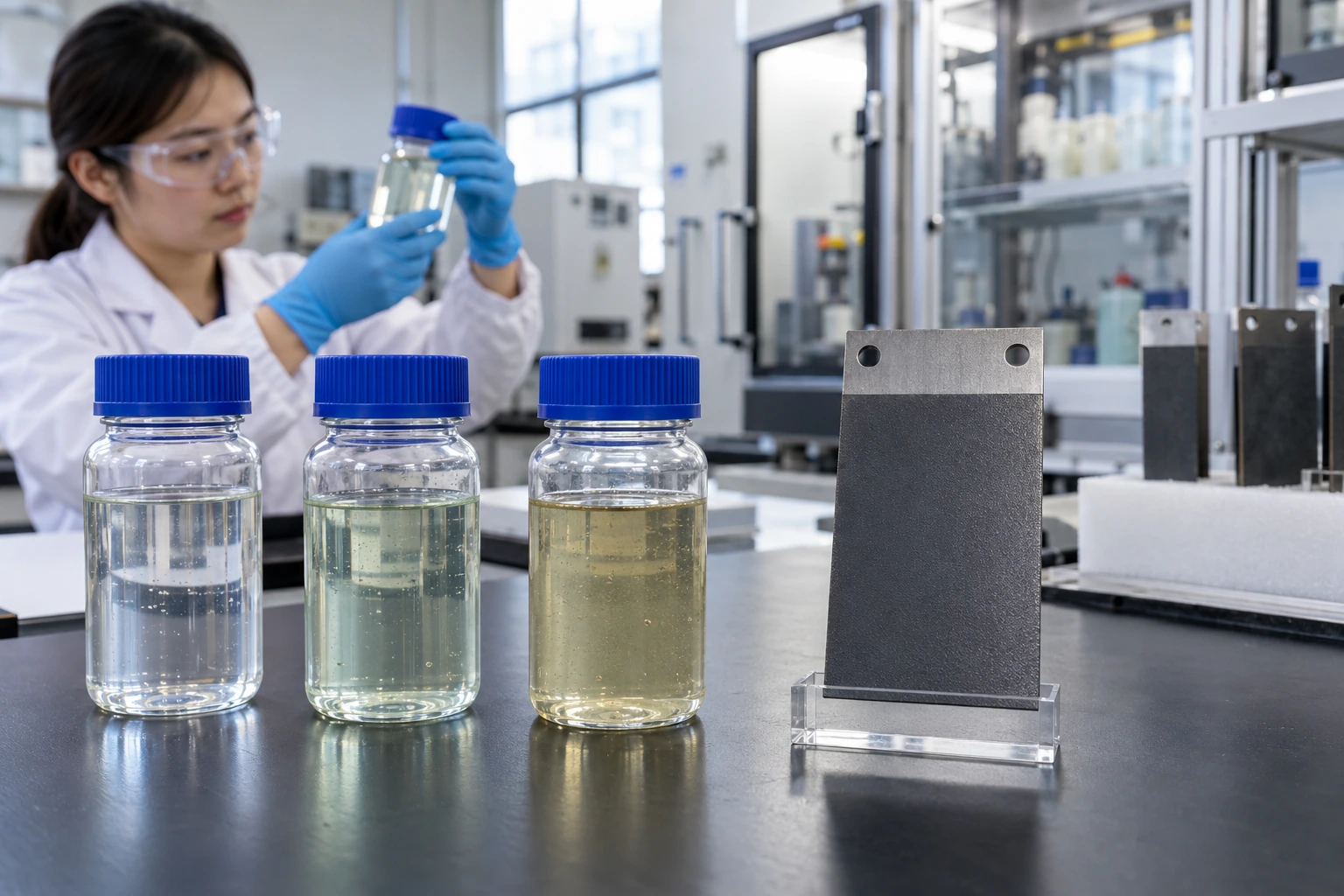
Bromide matters to a Titanium electrode process because it can participate in halogen chemistry under relevant electrochemical conditions. Its significance depends on feed, operating duty and intended product use.
What does your feed analysis include?
Look beyond bulk salinity. Identify bromide as a separate constituent where relevant. Do not infer its concentration from the total dissolved-solids or chloride value alone.
- Review source water and salt data.
- Identify application-specific analytical needs.
| Check | Decision |
|---|---|
| Bulk salinity | General composition indicator |
| Bromide analysis | Specific constituent evidence |
Build the review around measured feed composition. Key Takeaway: A salt concentration does not answer every halogen-chemistry question.
2. Are bromide and bromate the same Titanium electrode concern?
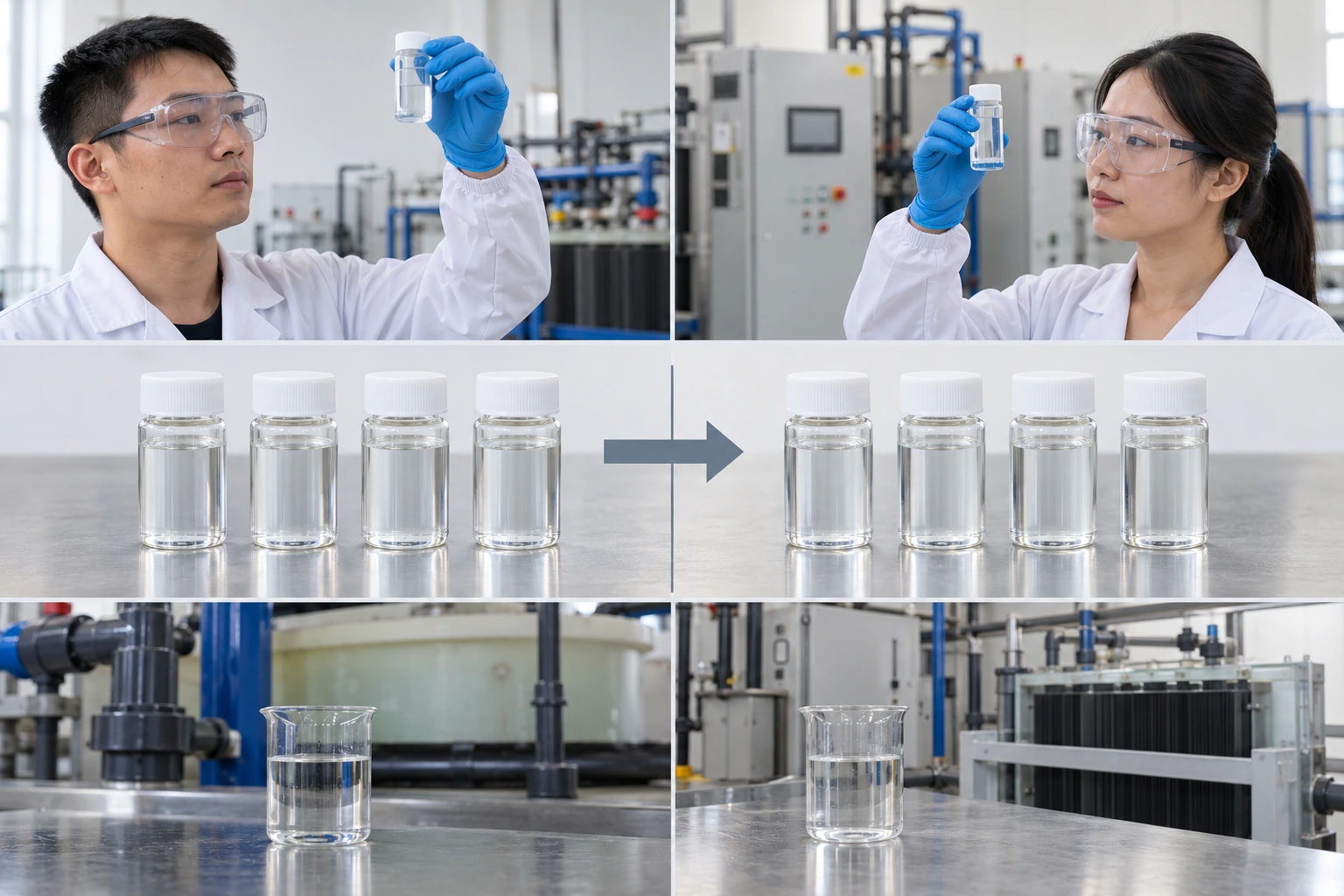
Bromide and bromate are different Titanium electrode review concerns: one may be a feed constituent, while the other is a distinct analyte relevant to product assessment. Their measurements are not interchangeable.
Are you measuring feed or product chemistry?
Name the analyte explicitly. Keep units, methods and sampling locations attached to each result. Avoid describing a bromide test as proof that bromate is absent.
- Separate feed and product analytes.
- Use validated methods for each.
| Check | Decision |
|---|---|
| Bromide result | Feed or stream constituent data |
| Bromate result | Different chemical-analyte data |
Read the laboratory scope before interpreting the number. Key Takeaway: An analyte-specific question needs an analyte-specific measurement.
3. Where can bromide enter a Titanium electrode feed?

Bromide can enter a Titanium electrode feed through source water, salt or other relevant inputs. Actual contributions require sampling and supplier information appropriate to the process.
Which input could vary?
Trace the preparation chain. Review raw water, salt batches and blending practices. A stable preparation recipe does not prove that every incoming constituent remains constant.
- Keep input-batch identities.
- Retain representative samples where useful.
| Check | Decision |
|---|---|
| Recipe unchanged | Preparation intent is stable |
| Inputs characterized | Actual composition is better defined |
Check inputs before assigning an electrode effect. Key Takeaway: Feed traceability helps explain changes that a salinity reading can miss.
4. Can a Titanium electrode system guarantee no bromate?

A Titanium electrode system cannot make a defensible no-bromate claim without suitable evidence and a defined measurement limit. A nondetect result is bounded by method capability and tested conditions.
What does absent mean in the report?
Ask for reporting limits. Include the operating envelope and sample matrix in a custom cell review. Do not extend one clean sample into a claim covering every source-water condition.
- Retain detection and reporting qualifiers.
- State tested feed conditions.
| Check | Decision |
|---|---|
| Nondetected | Below a stated method threshold |
| Unrestricted absence claim | Exceeds a limited test result |
Keep the claim proportional to evidence. Key Takeaway: Purity statements need analytical limits and an operating basis.
5. How should Titanium electrode feed variability be sampled?

Titanium electrode feed variability should be sampled according to the decision risk and expected changes in source or preparation. One convenient sample may not represent seasonal or batch variation.
Which operating periods should be represented?
Use the feed history. Identify relevant source changes and supplier batches before designing the plan. A qualified sampling program should state what variation it covers and what remains unknown.
- Record sample timing and source.
- Track relevant input changes.
| Check | Decision |
|---|---|
| Single sample | Limited snapshot |
| Defined variability plan | Broader but bounded feed evidence |
Match sampling coverage with the intended claim. Key Takeaway: Use representative feed evidence rather than assuming constant composition.
6. Which products should a Titanium electrode review measure?

A Titanium electrode product review should measure the analytes required by the intended chemistry and application. Bromide presence alone does not define the complete product-testing panel.
What else must the product specification address?
Use a qualified analytical plan. Have process and laboratory specialists select relevant species and methods. Keep the electrode review within that plan rather than inventing universal purity criteria.
- Define analytes and sample fractions.
- State matrix and reporting requirements.
| Check | Decision |
|---|---|
| Selected analyte test | Answers a specific question |
| Application test plan | Addresses the defined product requirements |
Coordinate process and laboratory responsibilities. Key Takeaway: Product approval needs a plan suited to its actual use.
7. Can chloride data replace Titanium electrode bromide data?

Chloride data cannot replace Titanium electrode bromide data because the constituents are chemically distinct and their proportions can vary. Similar conductivity does not establish similar trace composition.
Can one routine reading stand in for another?
Check the correlation claim. Any proposed surrogate needs application-specific validation. Without that evidence, retain separate analyses for constituents that affect the acceptance question.
- Identify the proposed surrogate relationship.
- Keep unvalidated assumptions explicit.
| Check | Decision |
|---|---|
| Similar conductivity | Does not establish identical composition |
| Specific constituent analysis | Directly addresses the analyte question |
Use surrogates only where their validity is demonstrated. Key Takeaway: Routine process readings cannot automatically replace trace-constituent testing.
8. How should Titanium electrode chemistry changes be validated?
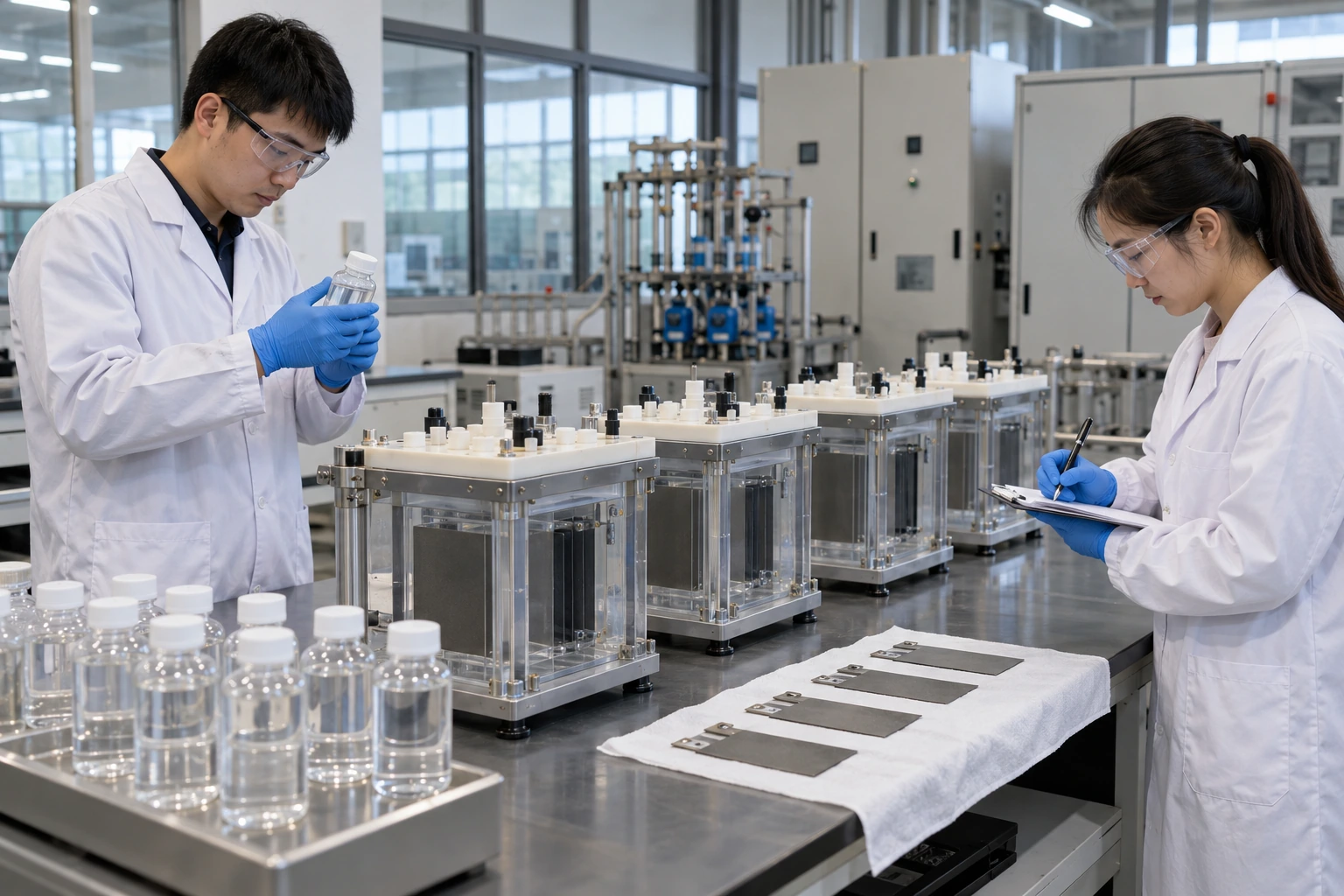
Titanium electrode chemistry changes should be validated under a controlled plan that measures relevant feed and product conditions. A changed salt source may require review even if nominal concentration stays constant.
What changed beneath the same recipe?
Treat inputs as controlled variables. For water-treatment duty, compare matched operating and sampling conditions. Record product acceptance separately from electrical performance.
- Identify changed input specifications.
- Retain before-and-after analytical data.
| Check | Decision |
|---|---|
| Electrical operation acceptable | One performance result |
| Product criteria satisfied | A separate acceptance result |
Check both sides of the change. Key Takeaway: A chemistry substitution needs more than a stable rectifier display.
9. Who approves Titanium electrode by-product limits?

Titanium electrode by-product limits must be approved against current requirements for the actual application and location. Component suppliers should not invent a universal safe concentration.
Who owns the acceptance decision?
Name the responsible specialists. Keep the applicable requirement and laboratory decision rule in the project record. A historical technical source can explain chemistry without determining today's legal acceptance.
- Confirm current application requirements.
- Record approval responsibility.
| Check | Decision |
|---|---|
| Analytical evidence | Describes the sampled product |
| Acceptance decision | Applies current relevant criteria |
Separate measurement from compliance interpretation. Key Takeaway: Use a current application-specific basis for product release.
10. What Titanium electrode bromide brief should you provide?

A Titanium electrode bromide brief should include feed sources, constituent analyses, operating duty and required product criteria. This makes the review specific enough to guide further testing.
Send the feed and product questions together
Bring the analytical record. When you contact us today, we can review electrode requirements within your process specification. We favor measured feed characterization over broad purity assurances.
- Include input variability and sampling methods.
- Identify unresolved analytes or limits.
| Check | Decision |
|---|---|
| Feed data | Defines incoming chemistry |
| Product requirements | Defines the acceptance question |
Agree on the remaining validation work. Key Takeaway: Qualify the process against actual feed variability and measured product chemistry.
Frequently Asked Questions
Can I infer bromide from chloride concentration? Not without a validated application-specific relationship; they are distinct constituents.
How do I know if a nondetect supports my requirement? Compare the method's reporting limit with the applicable acceptance criterion.
Can I qualify every seawater source with one sample? No. Sampling must address relevant source variability and intended operating conditions.
What's the best analytical method? Choose a validated method for each analyte, matrix and required reporting range.
Can I claim complete product compliance from feed analysis? No. Feed characterization and product acceptance answer different questions.