
A Titanium electrode can handle intermittent power only when the coating and complete equipment are qualified for the actual load and idle cycle. Equal daily running hours can hide very different numbers of starts, outages and wet standby periods. Treating those schedules as identical can leave restart or product-quality problems untested. Describe the duty as a sequence of states before requesting approval.
1. What is intermittent Titanium electrode duty?

Intermittent Titanium electrode duty includes distinct powered, reduced-load or unpowered periods rather than one continuous operating state. Duration and sequence matter alongside cumulative running time.
What does one operating cycle contain?
Describe every state. Record whether liquid circulation, ventilation and residual chemistry continue during idle periods. A total-hour figure cannot show these differences.
- List powered and idle states.
- Record state duration and sequence.
| Check | Decision |
|---|---|
| Total running hours | One exposure quantity |
| Complete duty profile | Describes how exposure occurs |
Use the profile as the review basis. Key Takeaway: Intermittent duty needs more detail than a daily runtime total.
2. How does intermittent Titanium electrode duty differ from pulses?
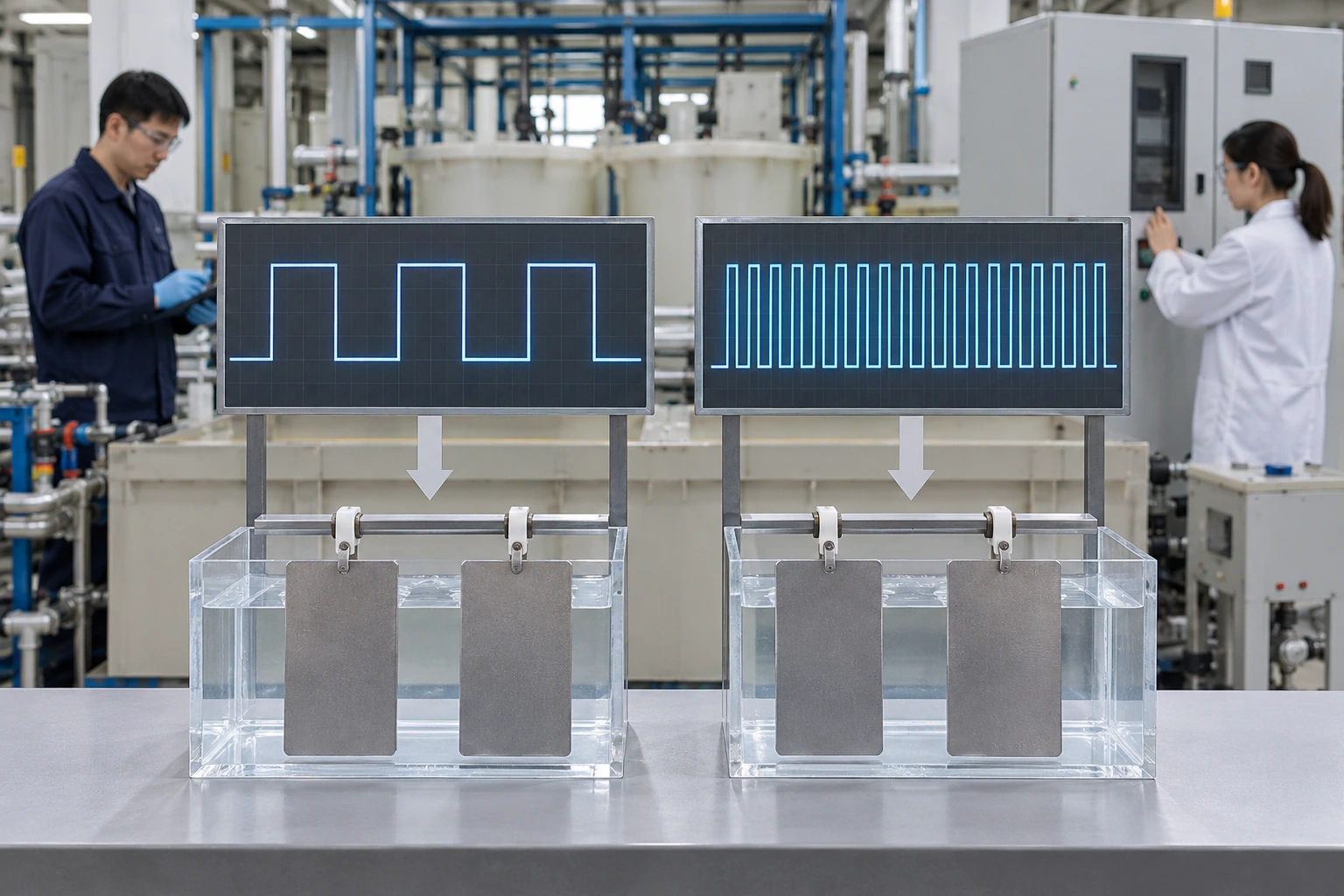
Intermittent Titanium electrode operation differs from rapid electrical pulsing because time scales and equipment states may be different. The actual waveform and process sequence should define the terminology.
Are you changing current or shutting down the process?
Separate electrical and process cycles. A rapid pulse may occur within steady circulation, while a long outage can change temperature or liquid condition. Do not transfer approval between these regimes automatically.
- State the relevant time scales.
- Identify which auxiliary services change.
| Check | Decision |
|---|---|
| Electrical pulse | Defined waveform variation |
| Process stop-start cycle | May change additional system conditions |
Qualify the duty actually intended. Key Takeaway: A pulse-capable supply does not establish complete stop-start compatibility.
3. Why record Titanium electrode starts and stops?

Titanium electrode starts and stops should be recorded because cycle frequency and interruption history may affect qualification and fault interpretation. Identical powered hours can represent different exposure patterns.
How often does the operating state change?
Keep an event history. Record planned and unplanned stops separately. Include relevant alarms and restart conditions so reviewers can distinguish normal cycling from repeated faults.
- Log start and stop timestamps.
- Identify outage causes where known.
| Check | Decision |
|---|---|
| Planned cycle | Part of intended duty |
| Unplanned interruption | May introduce different conditions |
Compare like events during performance review. Key Takeaway: Cycle history helps interpret changes that runtime totals conceal.
4. Can idle chemistry affect a Titanium electrode?

Idle chemistry can affect a Titanium electrode because material exposure may continue after electrical power stops. The suitable standby state depends on coating, liquid and attached components.
What remains in contact during the pause?
Define the idle environment. Include retained liquid, temperature and planned standby duration in a custom engineering review. Follow equipment-specific instructions instead of assuming wet or dry storage suits every assembly.
- Record residual chemistry.
- Identify continuing auxiliary services.
| Check | Decision |
|---|---|
| Power off | Electrical state |
| Standby condition | Includes continuing chemical exposure |
Review the complete unpowered state. Key Takeaway: An electrode remains part of a chemical system when its current reaches zero.
5. What happens during a Titanium electrode power outage?
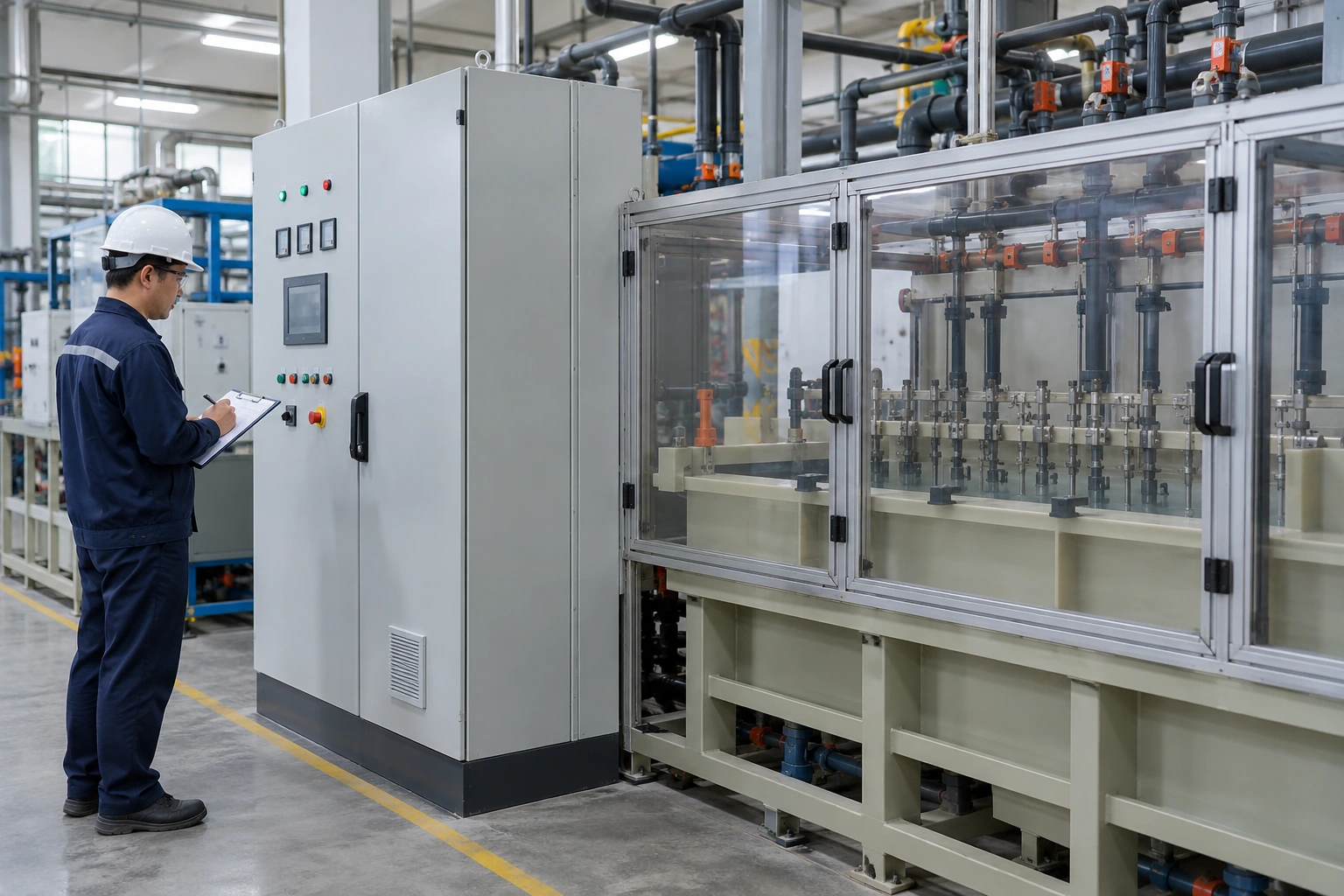
A Titanium electrode power outage can leave residual gas, liquid and stored energy requiring a designed response. Loss of electrical supply does not automatically establish safe access or safe restart.
What must the system do without normal power?
Use the approved fault philosophy. Responsible engineers should define the required state of auxiliaries and protective functions. Avoid improvised restart sequences after an unexplained interruption.
- Retain outage and alarm records.
- Follow verified isolation procedures.
| Check | Decision |
|---|---|
| Supply interruption | Initiating event |
| Approved safe response | Engineered system behavior |
Assess the full equipment response. Key Takeaway: Outage compatibility is a system-level requirement.
6. How should Titanium electrode restart permissives work?

Titanium electrode restart permissives should verify required process conditions before power returns. A restored electrical supply does not prove adequate liquid coverage, flow or gas management.
Which conditions must be re-established?
Verify before re-enabling. Use the equipment's approved sequence and reset rules. Distinguish alarm acknowledgment from technical clearance after a fault.
- Confirm required process services.
- Record restart authorization where required.
| Check | Decision |
|---|---|
| Power available | One prerequisite |
| Process conditions verified | Supports controlled restart |
Keep sequence and protection requirements explicit. Key Takeaway: A restart should follow verified readiness rather than an automatic assumption.
7. Can variable power alter Titanium electrode product quality?

Variable power can change Titanium electrode product delivery through altered charge input, flow interaction or startup conditions. Product quality must be measured across relevant operating states.
Which output is accepted after restart?
Define the product boundary. In water-treatment applications, separate accepted output from any unqualified startup stream. Do not count every delivered litre as equivalent production without the required analytical evidence.
- Record electrical duty and product timing.
- Define startup acceptance criteria.
| Check | Decision |
|---|---|
| Electrical operation resumed | Does not prove product acceptance |
| Output criteria met | Supports qualified production |
Evaluate delivery and power behavior. Key Takeaway: Intermittent operation needs a product-quality plan across operating states.
8. What trial qualifies intermittent Titanium electrode operation?
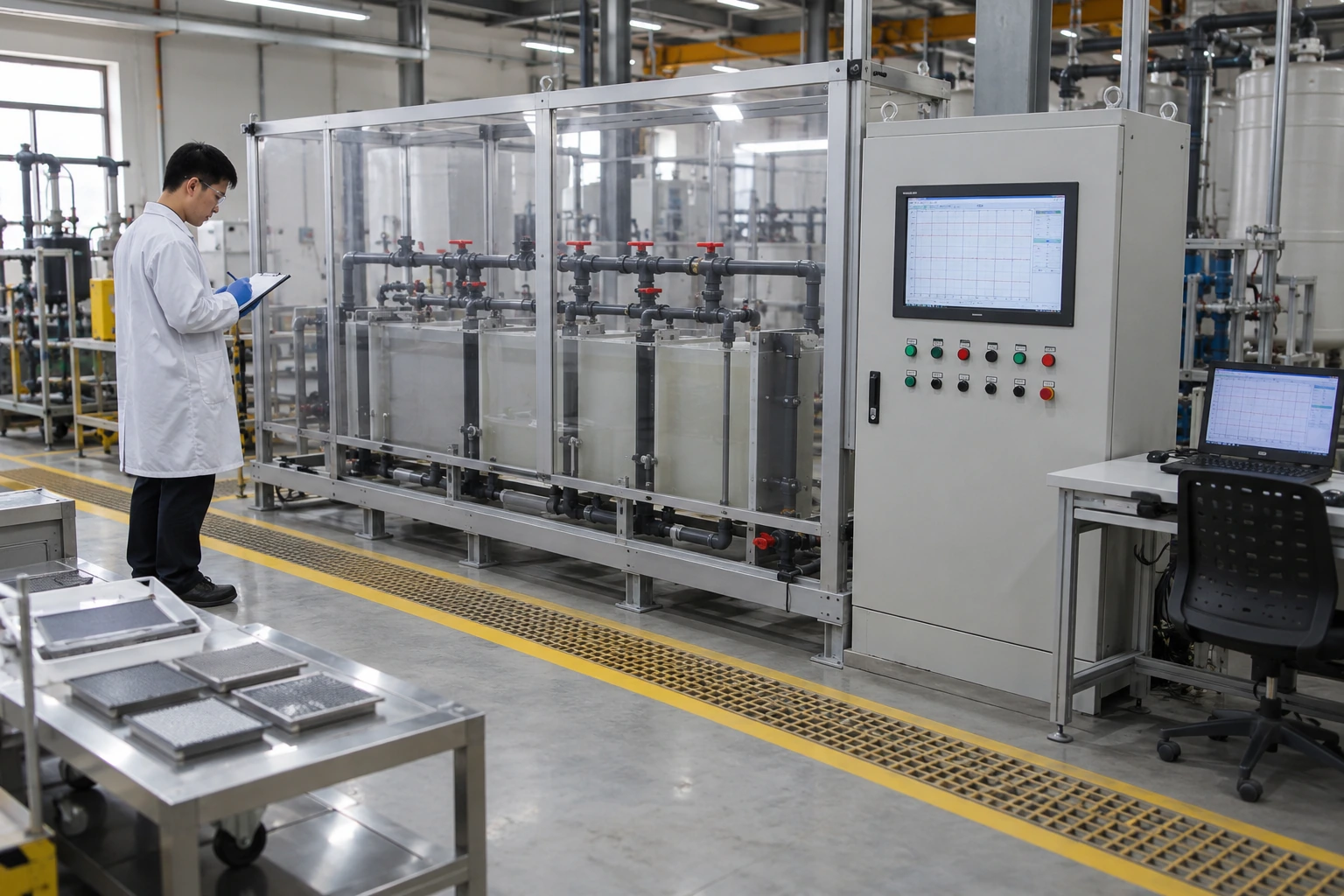
Intermittent Titanium electrode qualification should use a representative controlled cycling profile with defined endpoints. Continuous testing alone cannot answer every stop-start question.
Does the trial reproduce the intended sequence?
Test the relevant states. Keep chemistry, geometry and observation methods documented. State what the selected cycle count and duration do not establish about longer service.
- Define cycle and stop criteria.
- Inspect material and product performance.
| Check | Decision |
|---|---|
| Continuous test | One duty regime |
| Representative cycling test | Addresses the defined intermittent profile |
Keep claims within the tested sequence. Key Takeaway: A cycling approval needs a traceable duty profile and acceptance basis.
9. What Titanium electrode duty belongs in a warranty brief?

A Titanium electrode warranty brief should describe the actual intended load, idle states and permitted operating envelope. Commercial terms must be agreed separately rather than inferred from a short test.
What duty is the supplier being asked to cover?
Put the profile in writing. Identify normal variability and excluded fault conditions. Avoid substituting total ampere-hours for a complete description of the application.
- Attach load and restart records.
- Separate test evidence from contractual terms.
| Check | Decision |
|---|---|
| Duty specification | Describes intended exposure |
| Warranty agreement | Defines separately agreed obligations |
Resolve scope before order confirmation. Key Takeaway: Clear operating duty reduces ambiguity in later service discussions.
10. What Titanium electrode duty profile should you send?

A Titanium electrode intermittent-duty request should include electrical profiles, chemistry, auxiliary states and restart rules. These inputs make component suitability review possible without guessing at the pauses.
Send the complete operating sequence
Bring more than running hours. When you contact us today, we can review electrode requirements against your intended duty profile. We favor qualified operating envelopes over blanket cycling claims.
- Include planned and fault states.
- Identify the responsible system designer.
| Check | Decision |
|---|---|
| Component duty | Supports material review |
| System sequence | Defines integrated operation |
Agree on the validation scope before production use. Key Takeaway: Qualify intermittent operation as a complete process sequence.
Frequently Asked Questions
Can I treat equal running hours as equal duty? No. Starts, idle chemistry and interruption patterns can differ.
What's the best restart sequence? Use the equipment-specific approved procedure and verified process permissives.
Can I leave circulation off during every pause? Only if the approved standby design permits that condition.
How do I know if variable power affects product quality? Measure accepted output across representative operating states using a defined method.
Can I infer a cycling warranty from a sample test? No. Test evidence and agreed commercial warranty scope are separate matters.