
A titanium electrode cell's pressure limit comes from its assembled boundary, including frames, membranes, seals, spacers, ports, and operating conditions. A plate-strength figure alone cannot describe loads across thin channels or sealed compartments. This guide separates pressure references, hydraulic losses, and stack limits. Start with a Titanium electrode drawing and pressure documents approved by its stack supplier.
1. What Pressure Does a Titanium electrode Cell Actually Face?
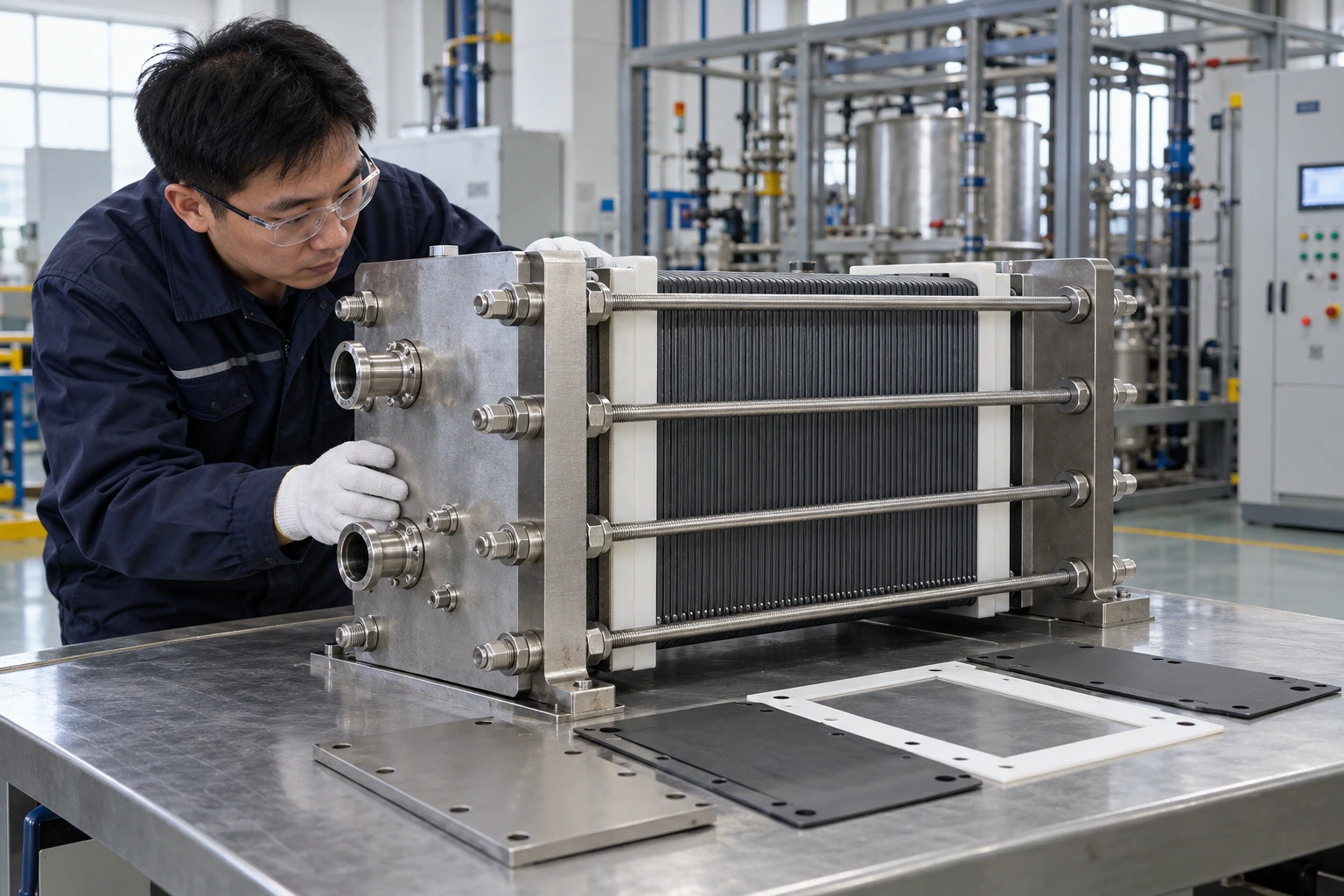
A Titanium electrode cell faces fluid pressure inside channels and possible pressure differences between compartments; its allowable limit belongs to the assembled stack.
Name the pressure being discussed
Separate process pressure from plate stress. Electrodialysis uses an electric field for ion transport, yet pumps still move liquid through channels and manifolds. Flow pressure, pressure drop, and cross-compartment differential pressure describe different loads on the assembly.
- Identify each pressure tap, reference, flow state, and compartment on the drawing.
- Use the complete stack supplier's limit rather than a titanium material property as a system rating.
| Check | Decision |
|---|---|
| Channel pressure | Local liquid pressure during flow |
| Stack limit | Approved boundary for the assembled cell and interfaces |
Pressure is a system condition even when it does not drive ion separation. Key Takeaway: Ask which pressure value and reference a datasheet is describing.
2. What Does Differential Pressure Mean for a Titanium electrode?
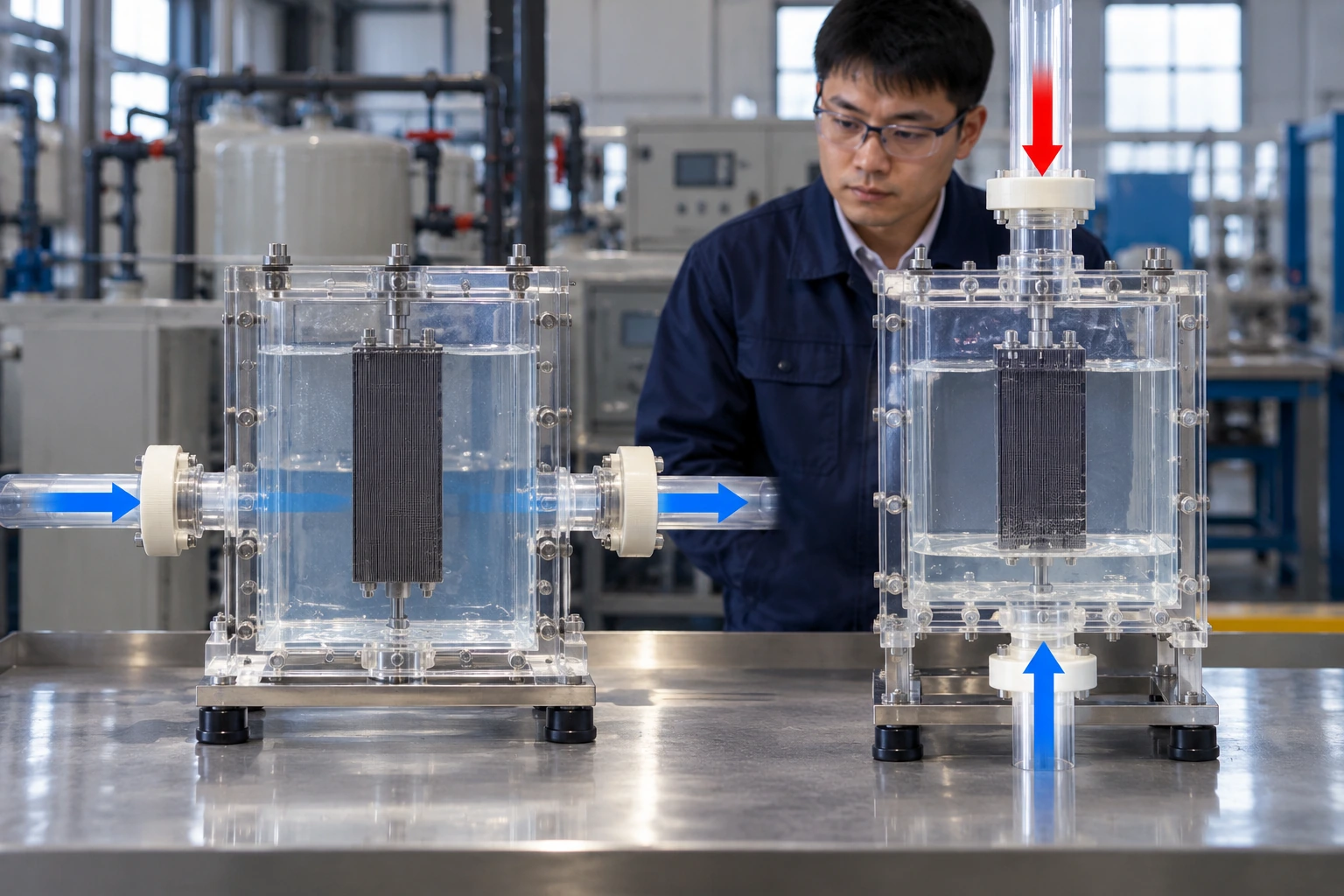
A Titanium electrode should be reviewed against both absolute pressure and differential pressure across channels or membranes.
Keep pressure references distinct
State the reference point. Absolute pressure is measured relative to vacuum, while differential pressure compares two locations. A stack may have modest absolute pressure yet face a meaningful imbalance across a membrane or seal, so one reading cannot stand in for both.
- Record whether instrument readings are absolute, gauge, or differential.
- Identify the two compartments used for any cross-membrane pressure comparison.
| Check | Decision |
|---|---|
| Absolute pressure | Reference to vacuum |
| Differential pressure | Difference between two specified locations |
A pressure number is incomplete without its reference and measurement points. Key Takeaway: Label every pressure value with the instrument location and reference basis.
3. What Holds a Titanium electrode Stack Pressure Boundary?
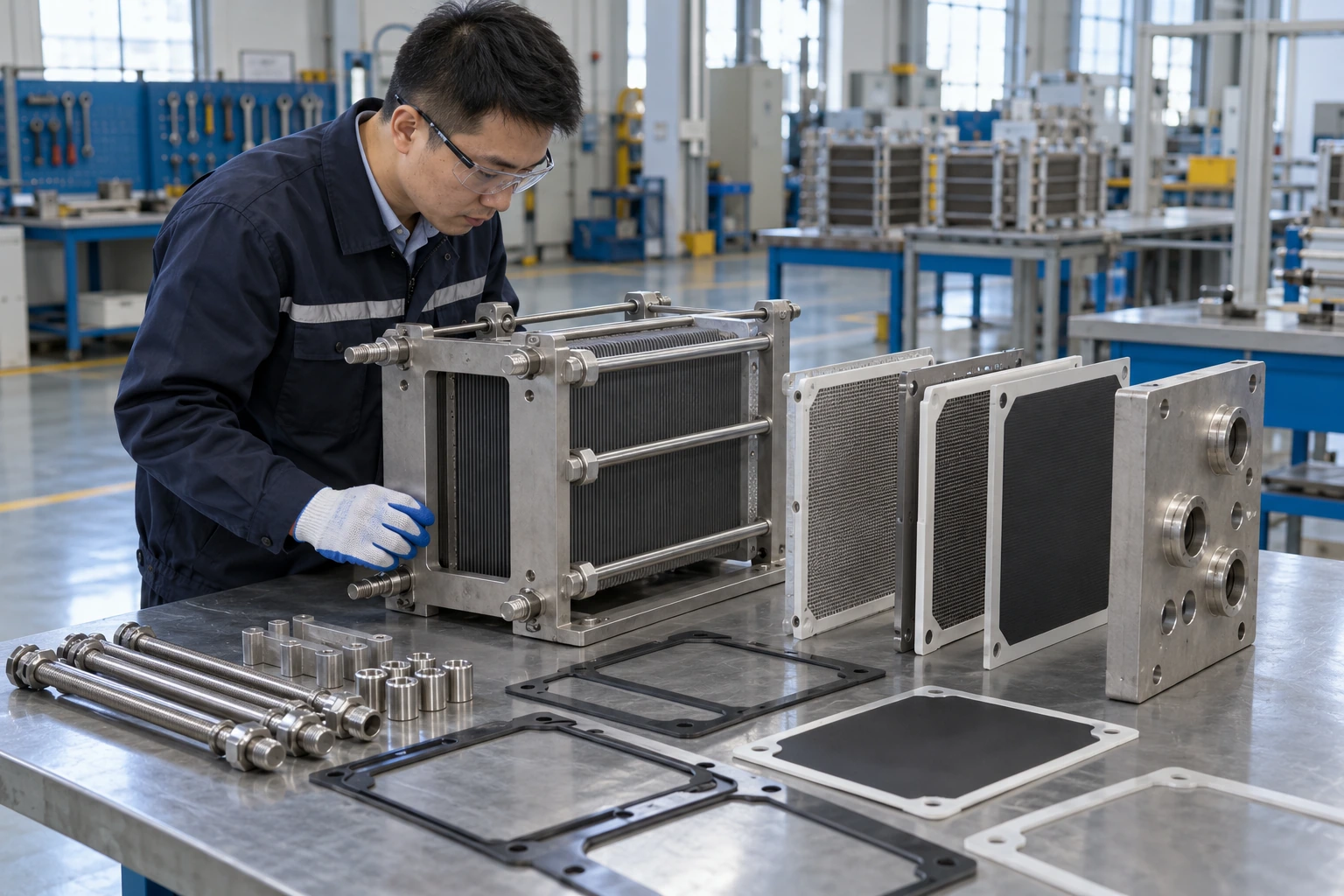
A Titanium electrode stack boundary includes frames, tie hardware, membranes, spacers, gaskets, ports, end plates, and manifold connections.
Inspect the assembled boundary
Loads pass through joined parts. Clamping, support, port geometry, sealing faces, and channel construction all influence how pressure acts on a stack. A metal plate may remain intact while a gasket, membrane, spacer, or connection sets the practical limit.
- Review the exploded assembly drawing and locate every fluid boundary.
- Check which parts are supplied or specified by the stack integrator.
| Check | Decision |
|---|---|
| Structural parts | Frames, end plates, tie hardware, and supports |
| Wetted boundaries | Membranes, gaskets, ports, and channel interfaces |
A weak interface may govern before a titanium plate reaches its material limit. Key Takeaway: Use an assembly review to identify the actual pressure boundary owner.
4. Why Does a Titanium electrode Need Stack Support?
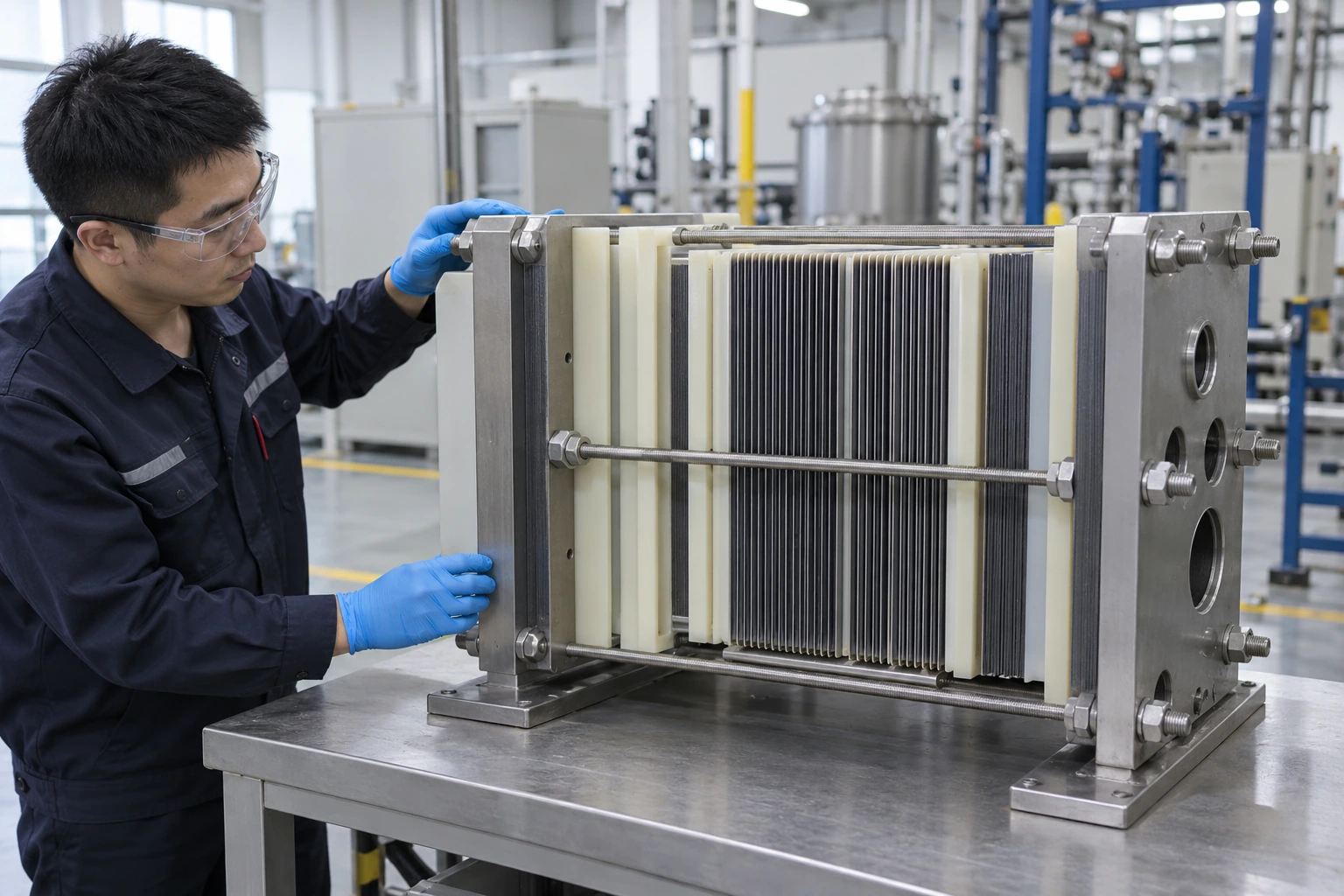
A Titanium electrode needs stack support because thin membranes and spacers rely on even clamping and channel geometry.
Support the membrane channels
Compression changes the passage. A frame and spacer assembly holds membranes in position and preserves liquid paths; reviewers can use the custom stack-interface review to check support and electrode position together. Uneven clamping or damaged support can alter flow distribution, sealing, or pressure drop without changing electrode alloy.
- Check spacer condition, frame flatness, gasket seating, and assembly alignment during an isolated inspection.
- Use the stack designer's assembly and maintenance criteria for any re-clamping work.
| Check | Decision |
|---|---|
| Support role | Maintain membrane position and channel shape |
| Electrode role | Provide a terminal conductive surface within the end assembly |
Stack mechanics and electrode material answer different engineering questions. Key Takeaway: Keep support and clamping decisions with the complete stack design owner.
5. How Does Flow Create Pressure Across a Titanium electrode Stack?
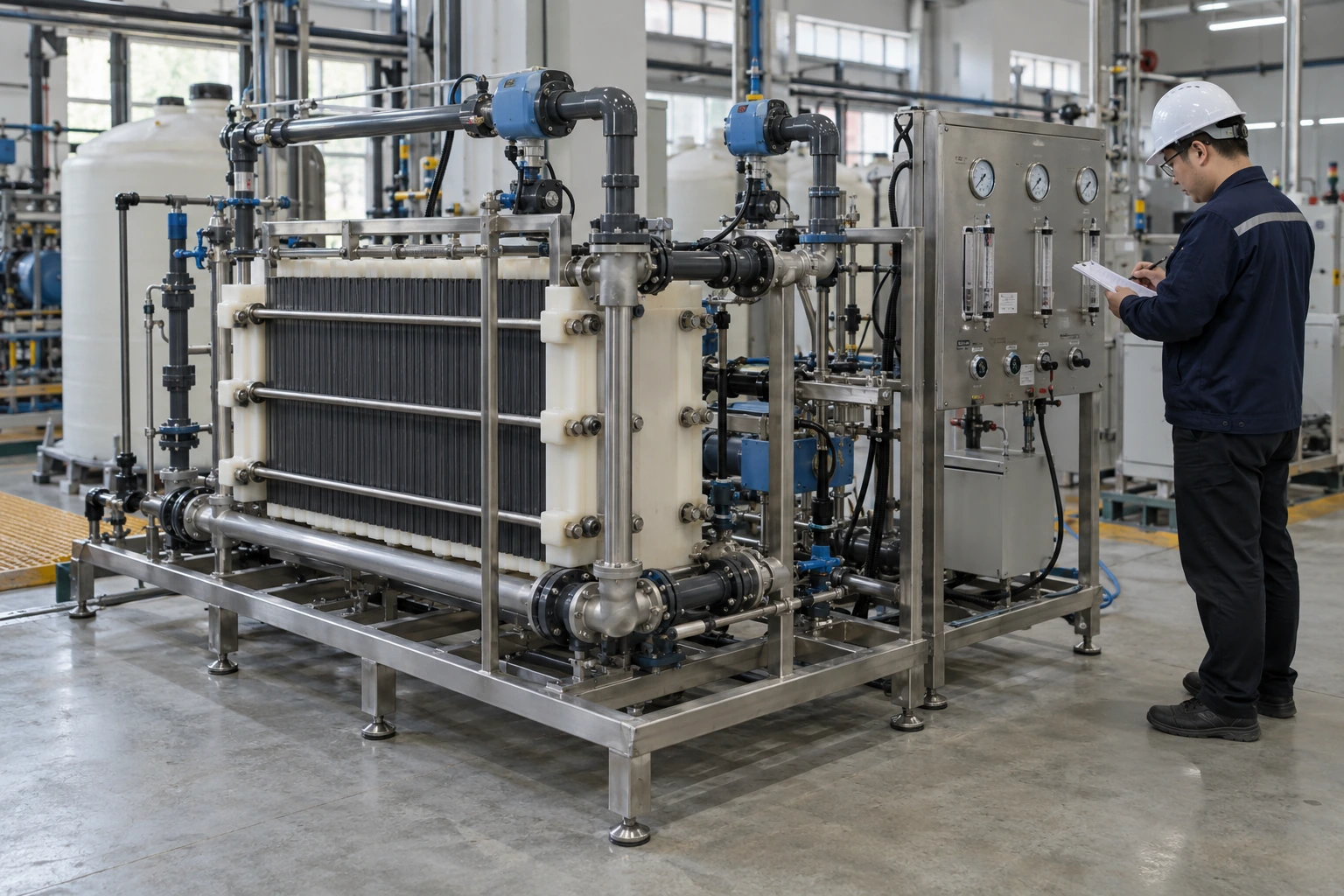
A Titanium electrode stack develops flow-related pressure drop through channels, spacers, manifolds, and piping that depends on the operating layout.
Read pressure drop as a flow result
Follow the liquid path. Narrow channels and spacer geometry add hydraulic resistance, while flow and manifold design shape inlet-to-outlet pressure change. That pressure drop does not equal a plate's tensile strength or establish the permitted pressure across a membrane.
- Compare inlet and outlet readings for each circuit under documented flow conditions.
- Include spacer arrangement, channel dimensions, and pump operating state in the review.
| Check | Decision |
|---|---|
| Pressure drop | Change along a flowing channel or circuit |
| Differential pressure | Imbalance between two compartments or sides |
Both pressure quantities can affect a stack through different mechanisms. Key Takeaway: Ask the process engineer for a pressure-tap map covering each hydraulic circuit.
6. What Can a Titanium electrode Plate Prove?

A Titanium electrode plate's strength describes one component, not the assembled cell's allowable operating pressure.
Use material data within its limit
Material strength is one input. Plate grade, thickness, openings, supports, connections, and clamping all affect component behavior. Membranes and seals often have different limits, so no bare-metal property can certify the full operating boundary.
- Identify material grade and geometry from the controlled drawing.
- Request an assembly-level pressure limit from the system or stack supplier.
| Check | Decision |
|---|---|
| Plate evidence | Material, thickness, form, and connection details |
| System evidence | Approved pressure conditions for the assembled stack |
A material certificate does not substitute for a cell pressure rating. Key Takeaway: Do not infer an operating limit from alloy strength alone.
7. Which Seals Protect a Titanium electrode Cell?
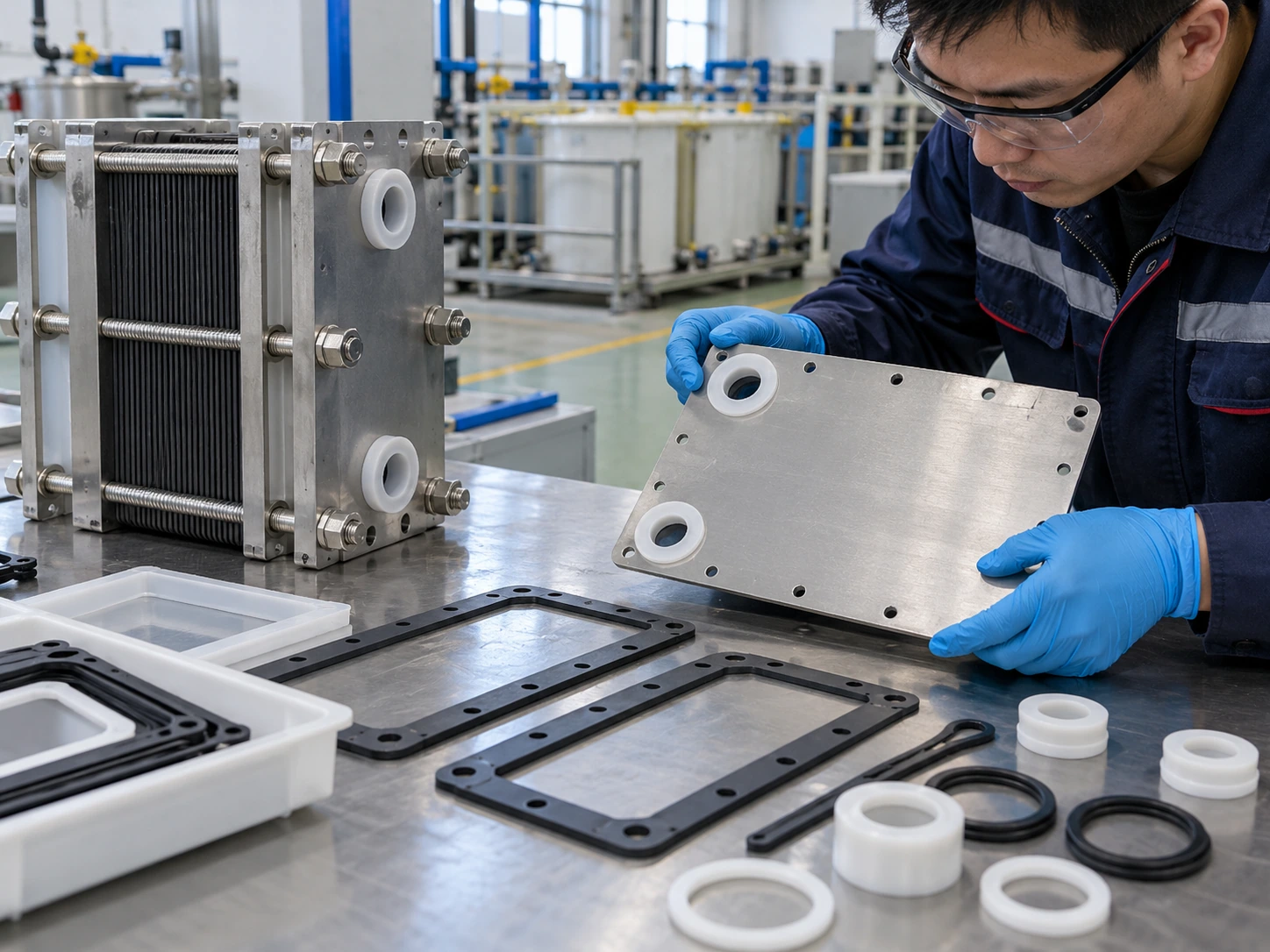
A Titanium electrode cell relies on seals and ports as part of its pressure boundary, so fluid compatibility and compression details matter.
Treat seals as pressure components
A small interface can govern leakage. Gasket material, groove geometry, port finish, compression, temperature, and fluid chemistry affect sealing behavior. A visually intact electrode plate cannot confirm that every manifold or membrane edge remains leak-tight.
- List gasket and seal materials alongside each wetted fluid and temperature range.
- Inspect ports and seal faces only under the approved isolation and maintenance procedure.
| Check | Decision |
|---|---|
| Seal review | Material, groove, port face, and assembly condition |
| Fluid review | Chemistry, temperature, and circuit pressure state |
A leak path can sit beyond an electrode surface and still affect cell integrity. Key Takeaway: Ask a stack supplier which seal evidence applies to an actual assembly.
8. How Can Pressure Affect Water Treatment with a Titanium electrode?

A Titanium electrode in water treatment sees hydraulic pressures needed for circulation, even when electrical potential drives ion separation.
Separate desalination drivers from hydraulics
A pump still meets the stack. Electrodialysis transfers charged species under an electric field, while pumps overcome channel and piping losses. Review water-treatment applications for process context, then distinguish feed pressure from pressure across the assembled membrane stack.
- Map feed, diluate, concentrate, and rinse loops with their pressure measurements.
- Include startup, shutdown, and switching states when the system design identifies pressure changes.
| Check | Decision |
|---|---|
| Separation driver | Electrical potential and membrane transport |
| Hydraulic driver | Pumps, channel losses, and flow distribution |
Pressure boundaries still matter in an electrically driven separation process. Key Takeaway: Review each loop against its own approved operating conditions.
9. What Should Buyers Ask About a Titanium electrode Pressure Limit?

A Titanium electrode buyer should request the full assembly limit, pressure reference, permitted differential, and applicable flow conditions.
Ask the right supplier questions
Request the governing document. Ask which party owns the frame, membrane, gasket, port, and electrode interfaces. Confirm whether stated limits cover steady operation, transients, temperature, and actual fluids; do not infer a test procedure or rating from a general drawing.
- List normal and abnormal cases that the project designer has approved for review.
- Ask how membrane, gasket, spacer, and end-frame limits were combined into the assembly boundary.
| Check | Decision |
|---|---|
| Requested value | Pressure definition, reference, and measurement location |
| Supporting record | Supplier-approved limit for the complete stack |
A single number without scope can be misapplied to a different stack arrangement. Key Takeaway: Keep pressure approval with whoever owns assembled equipment.
10. How Should a Titanium electrode Cell Pressure Review Proceed?

A Titanium electrode review should align its drawing with pressure approval from a stack supplier and flow conditions from the process team.
Close the pressure boundary review
Keep component and system evidence together. A drawing review can check plate geometry, mounting, ports, and interface notes against the stated assembly boundary. For a project discussion, contact us today with the complete stack drawing, pressure references, flow diagram, and supplier limits.
- Send revisions for the electrode, frame, seal, and manifold interfaces.
- Flag any missing pressure approval instead of assigning a value from metal strength.
| Check | Decision |
|---|---|
| Electrode package | Drawing, material, dimensions, and connections |
| Stack package | Pressure limits, references, seals, and flow cases |
Review is complete only when component scope matches its approved pressure boundary. Key Takeaway: Record who owns each unresolved pressure question before release.
Frequently Asked Questions
Can I calculate a cell pressure rating from titanium strength? No. The assembled limit also depends on membranes, seals, spacers, ports, frames, compression, and operating conditions.
What's the best pressure value to put on an electrode drawing? Use a pressure definition and limit approved for a complete stack; label each reading as absolute, gauge, or differential.
How do I know if a pressure reading is differential? Check the instrument connections and documentation. Differential pressure compares two specified points; absolute pressure uses a vacuum reference.
Can I see pressure drop in ED when electricity drives separation? Yes. Pumps move fluids through channels and piping, which creates hydraulic pressure losses even though the electric field drives ion transport.
How do I know if a pressure test is permitted on the cell? Follow the stack supplier's approved procedure and limits. This article does not prescribe a test pressure or method.