
Yes, titanium-electrode rinse can cross an ion-exchange membrane by ion or water transport; seal leaks bypass its edge. A changing sample concentration alone cannot identify which mechanism occurred. This guide separates membrane transport from hydraulic crossover and seal leakage. Begin with a Titanium electrode drawing, circuit map, and paired sample records.
1. Can a Titanium electrode Rinse Cross a Membrane?
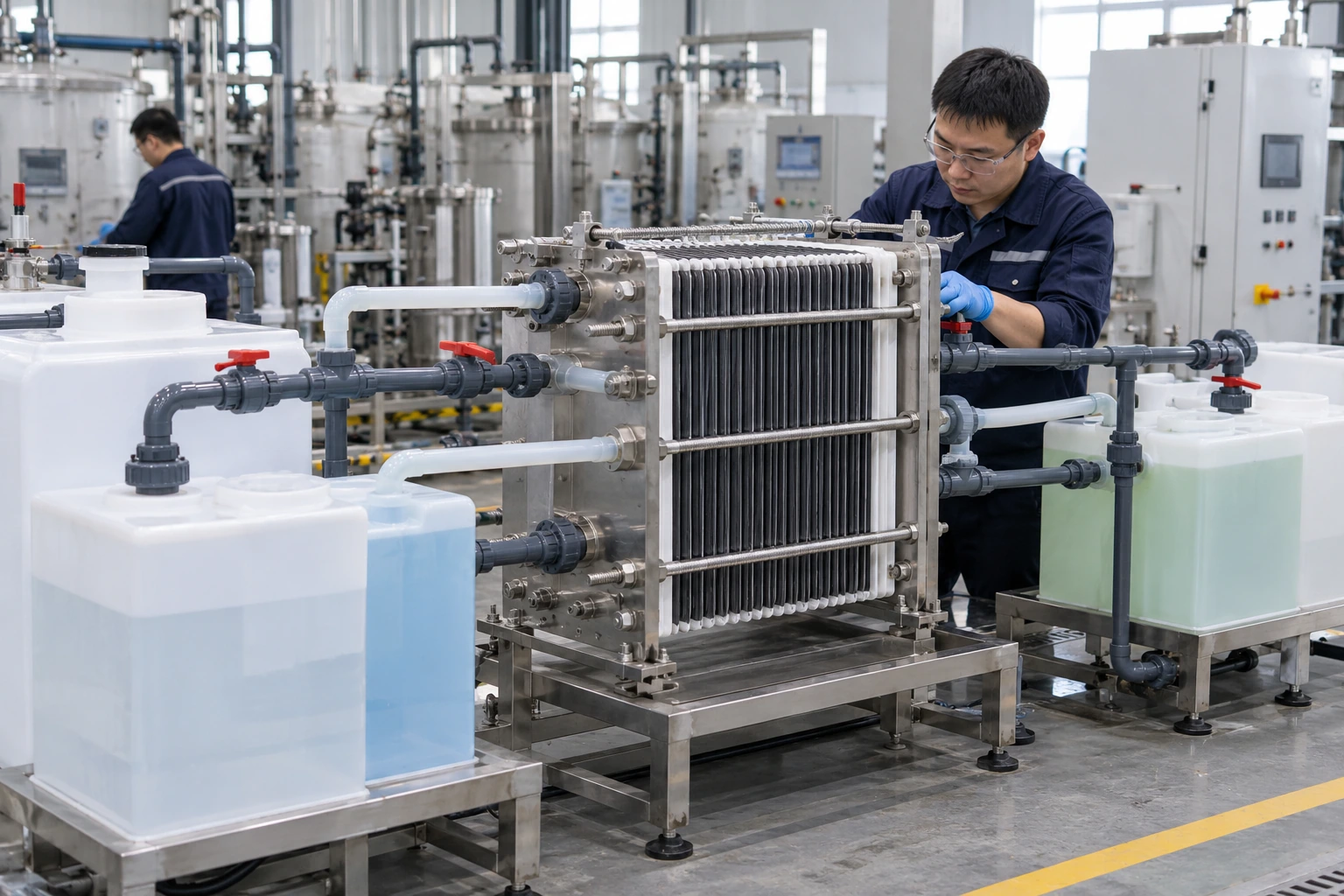
Yes, a Titanium electrode rinse can exchange ions or water with an adjacent channel through membrane transport, pressure-driven flow, or a mechanical leak path.
Define crossover before troubleshooting
Name the path you suspect. Ion movement through a membrane differs from liquid bypass around a gasket or port. Rinse crossover describes a measured transfer between circuits; it does not by itself prove membrane failure or damage to the titanium electrode.
- Map which compartment contains rinse and which adjacent channels carry process liquid.
- Record whether the observed change involves ions, water volume, or visible external leakage.
| Check | Decision |
|---|---|
| Membrane transport | Selective ion or water movement through a membrane |
| Mechanical leak | Liquid bypass around a seal, port, or assembly edge |
One concentration change can have more than one physical explanation. Key Takeaway: Describe the observation before assigning a failure mode.
2. How Do Ions Move Beyond a Titanium electrode Compartment?
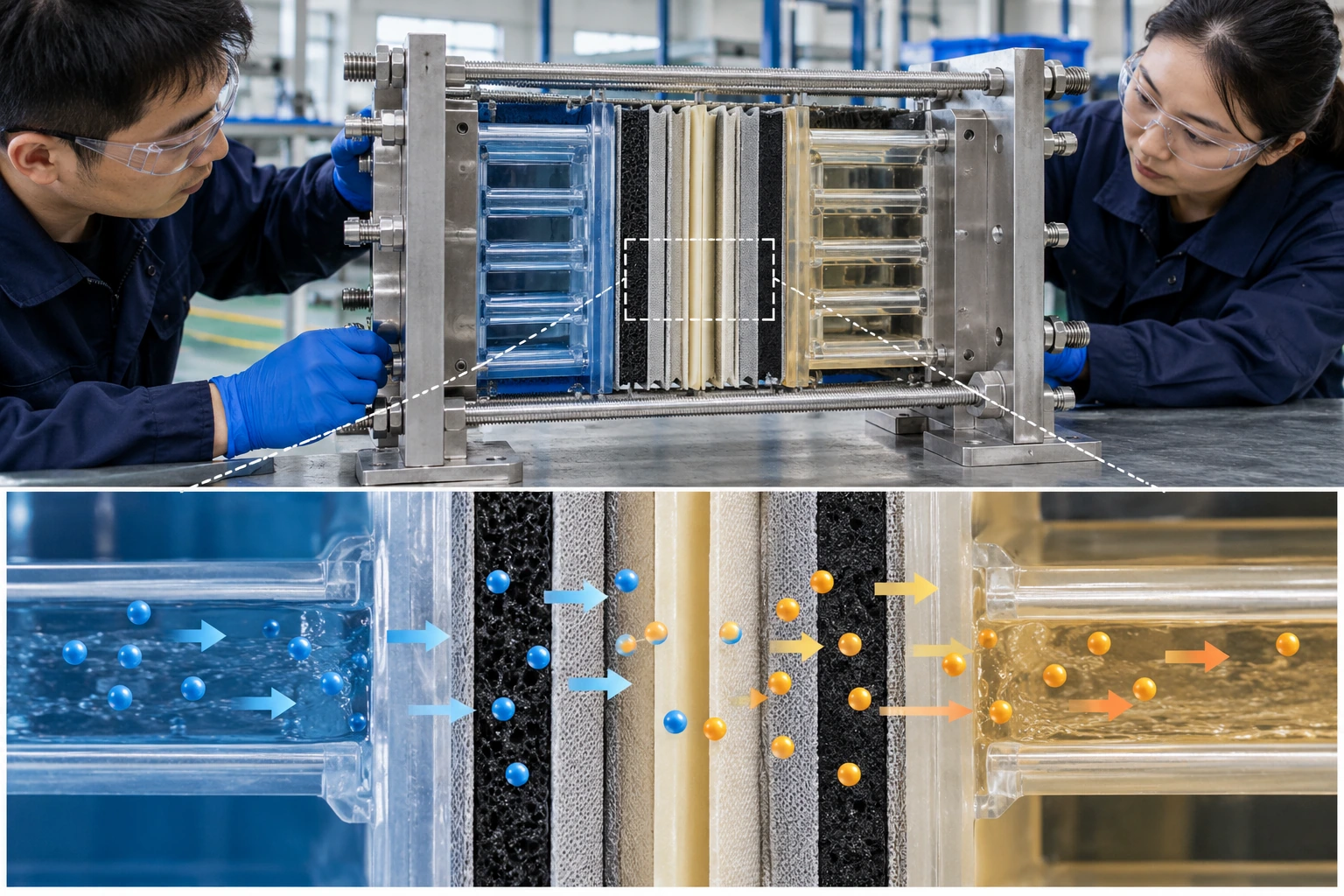
A Titanium electrode rinse may exchange ions with adjacent channels because membranes favor certain ions without blocking every species.
Trace ions through membrane layers
Check the membrane boundary. Counter-ion transport, co-ion leakage, and concentration-driven diffusion can all shift circuit composition. The direction and amount depend on membrane properties, rinse chemistry, process streams, and electrical conditions.
- Identify membrane types between the rinse compartment and each process channel.
- Compare rinse and process ion composition rather than relying on one bulk conductivity value.
| Check | Decision |
|---|---|
| Membrane route | Selective transport with condition-dependent co-ion passage |
| Seal route | Bypass around the membrane edge or port interface |
A membrane is selective, not a perfect barrier to every ion and solvent molecule. Key Takeaway: Compare adjacent stream chemistry against a membrane model during review.
3. How Can Water Transport Shift a Titanium electrode Rinse?

A Titanium electrode rinse can change volume as water moves through membranes under osmotic, electro-osmotic, or hydraulic influences.
Separate water movement from ion passage
Watch volume and composition together. Water transport can dilute one circuit or concentrate another even when no bulk liquid leak is visible. A differential pressure between channels can also add hydraulic flow, so sample concentration alone may hide the direction of transfer.
- Record circuit volumes or flow rates with sample concentrations and timing.
- Log pressure on both sides of a membrane when the system design provides those measurements.
| Check | Decision |
|---|---|
| Water transfer | Osmotic and electro-osmotic transport through membrane |
| Hydraulic transfer | Flow driven by pressure difference across compartments |
Volume change can alter concentration without a new source of dissolved ions. Key Takeaway: Pair concentration data with flow or volume records.
4. How Can a Titanium electrode Stack Leak Across Seals?
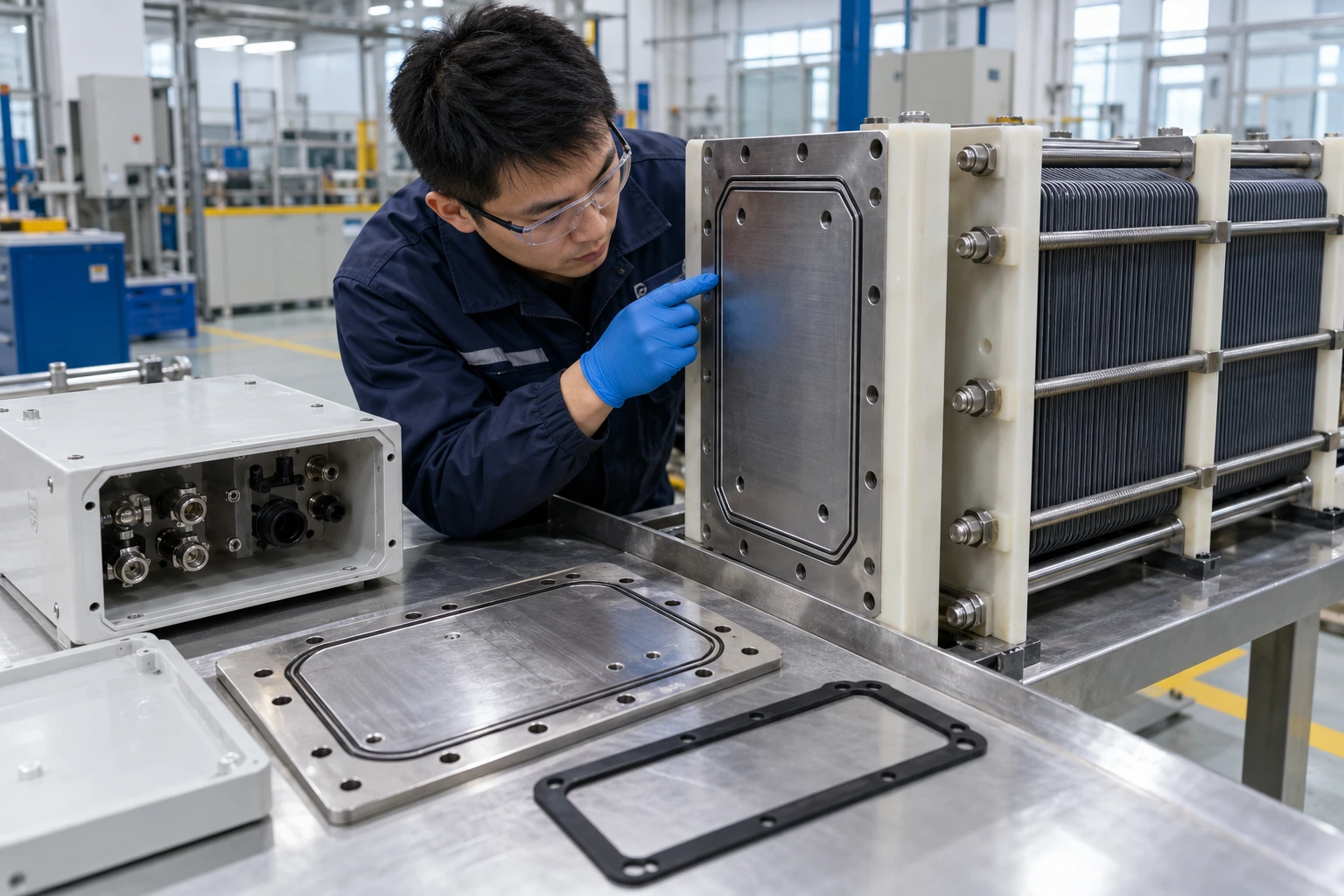
A Titanium electrode stack can leak around seals or ports even when membrane transport remains within expected behavior.
Inspect the mechanical path separately
Follow the edge and manifold. Liquid can bypass the active membrane area through a damaged gasket, poor seating, port connection, or frame interface. The drawing supplied for a custom stack-interface review should show seal boundaries and connections as clearly as electrode geometry.
- Compare external leakage observations with compartment chemistry and volume changes.
- Inspect seals only under the stack supplier's isolation and maintenance procedure.
| Check | Decision |
|---|---|
| Membrane pathway | Transport through the active selective area |
| Bypass pathway | Leak around gasket, port, frame, or membrane edge |
A seal bypass can move several dissolved species together, unlike selective membrane transport. Key Takeaway: Keep mechanical inspection and chemistry analysis as separate evidence streams.
5. Which Measurements Trace Rinse Near a Titanium electrode?

A Titanium electrode crossover investigation needs stream-specific chemistry, flow, pressure, and sample timing rather than conductivity alone.
Choose measurements that identify a path
Measure more than the signal. Conductivity can show a change but cannot name each transferred species. pH, species-specific analysis, flow records, pressure data, and paired inlet/outlet samples help distinguish ion leakage, water transfer, and a mechanical bypass.
- Sample rinse and adjacent channels at defined ports and matching times.
- Record pH, conductivity, relevant ions, flow or volume, temperature, and operating state.
| Check | Decision |
|---|---|
| Screening signal | Conductivity and pH trends |
| Path evidence | Ion analysis, paired flow, pressure, and sample location |
A measurement plan should connect each result to a compartment and a time. Key Takeaway: Agree on analytical methods and sample locations before comparing runs.
6. How Do Pressure Differences Affect Titanium electrode Crossover?
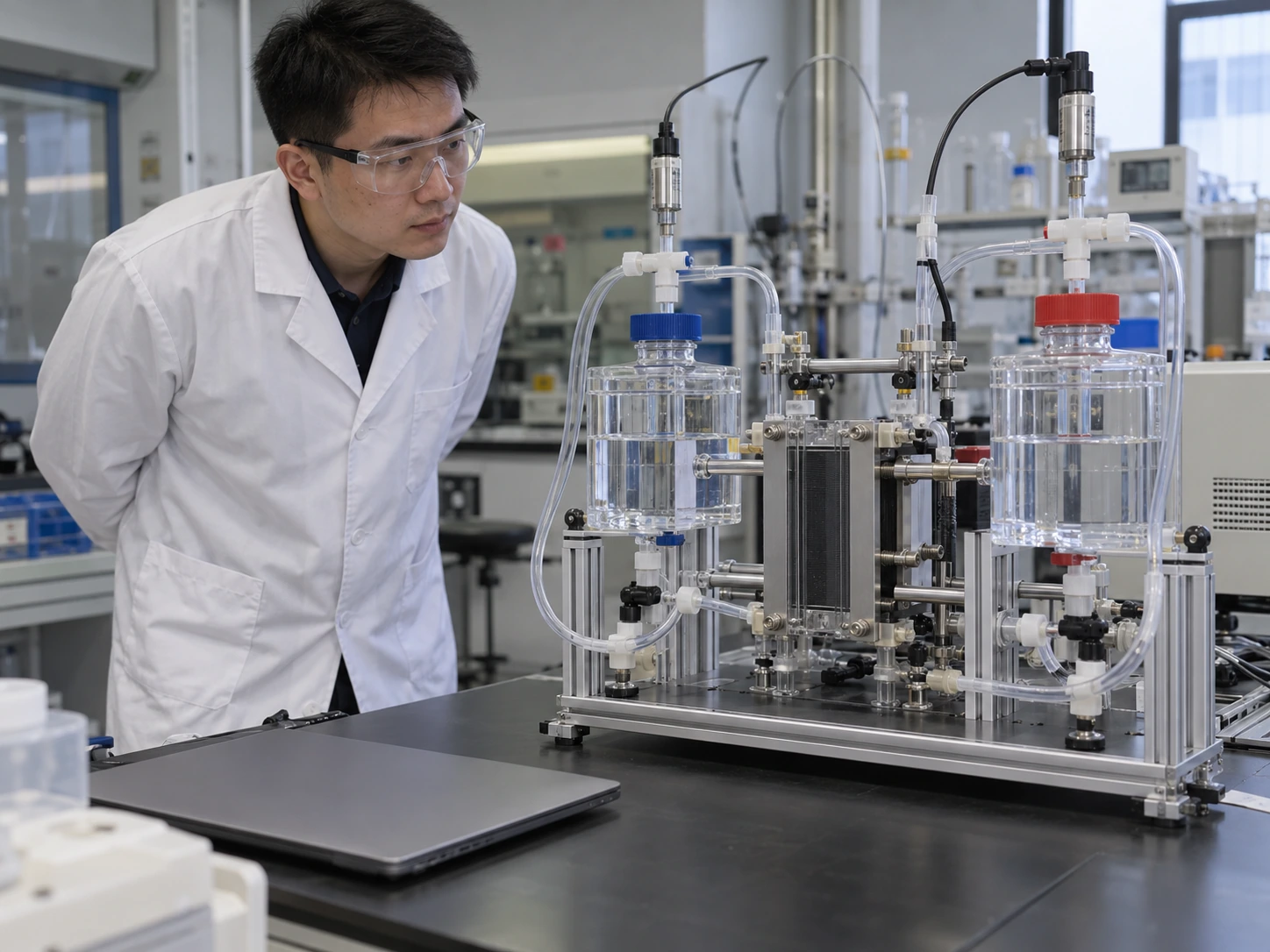
A Titanium electrode crossover rate can respond to differential pressure between compartments, even when absolute pressure at one port appears stable.
Compare pressure on both sides
Measure pressure difference across each membrane. Unequal pressure can move liquid between channels through a permeable membrane or leak path. A single pressure gauge cannot show that imbalance; membrane, frame, seal, and flow limits still govern acceptable conditions.
- Use paired pressure points only where the system design provides approved measurement locations.
- Relate pressure differences to flow, membrane orientation, and observed circuit-volume changes.
| Check | Decision |
|---|---|
| Absolute reading | Pressure at one location against its reference |
| Differential reading | Pressure difference between specified compartments |
Stable absolute pressure does not prove equal pressure across a membrane. Key Takeaway: Ask a stack designer for approved differential limits.
7. How Do Sample Points Map a Titanium electrode Stack?
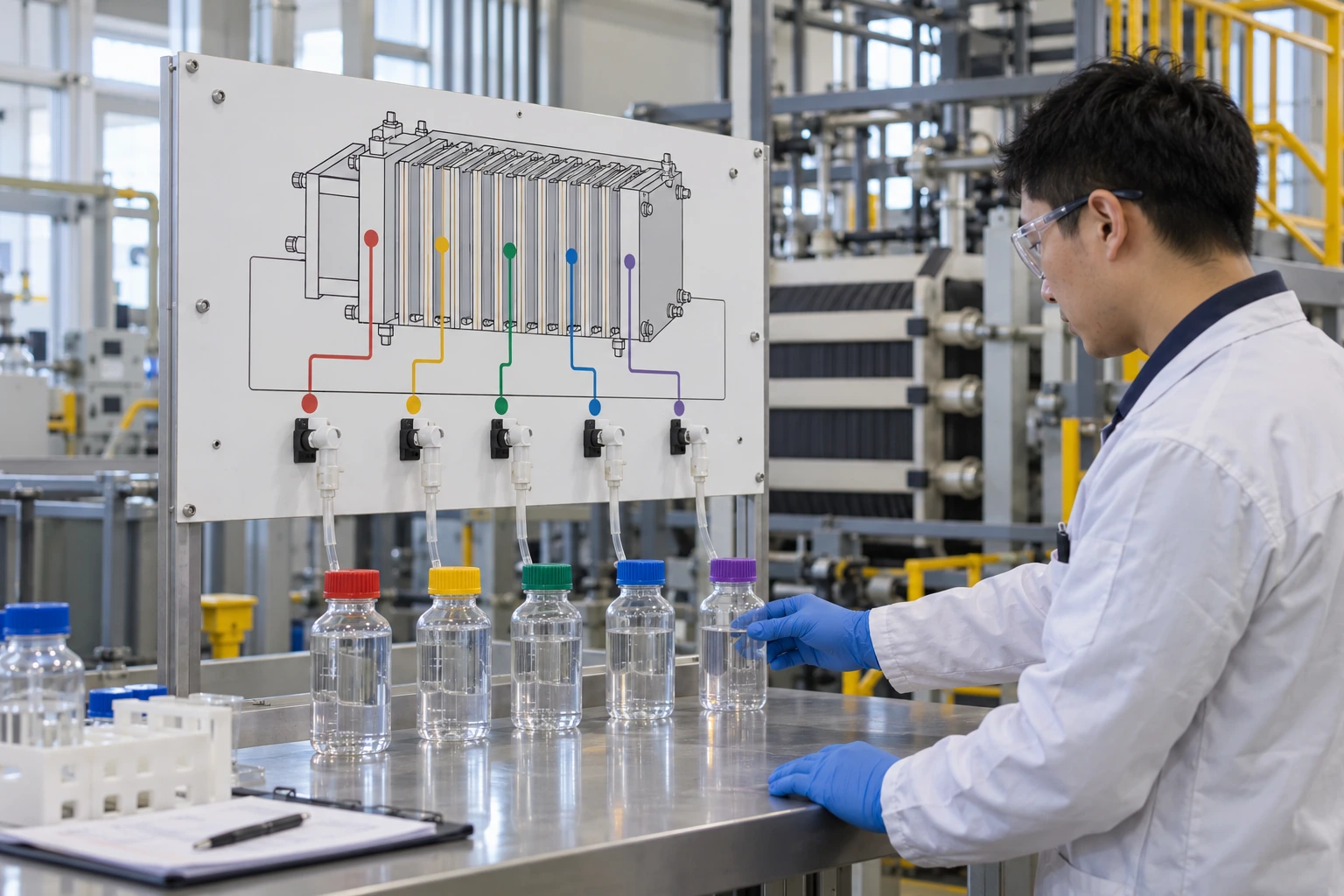
A Titanium electrode crossover sample map should label each circuit, port, stream role, and time relative to changes in operation.
Build a sample map
Keep locations consistent. Pair inlet and outlet samples from the rinse loop with samples from adjacent process channels. Mark normal operation, startup, reversal, or shutdown when relevant so a transient does not get compared with a stable-state sample.
- Use the same port names on piping drawings, labels, and sample records.
- Record flow state and any system changes beside each sample time.
| Check | Decision |
|---|---|
| Rinse samples | Loop inlet, outlet, and tank identity |
| Neighbor samples | Adjacent channel, port, and operating state |
Consistent sample mapping prevents a location mix-up from looking like crossover. Key Takeaway: Review port labels with operations before collecting comparative data.
8. Which Water-Treatment Applications Could Use a Titanium electrode?
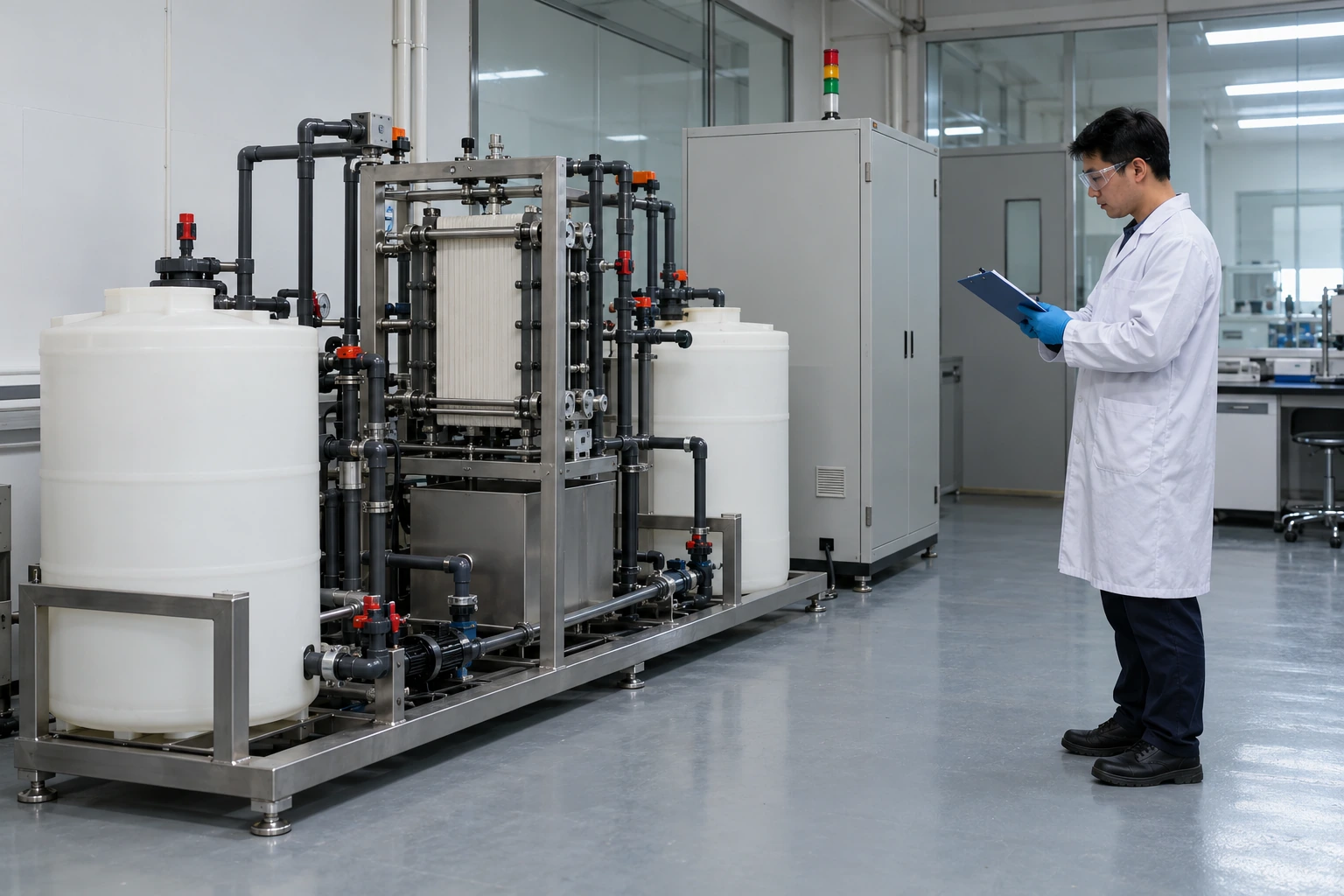
A Titanium electrode may be one component in water-treatment ED, where rinse and process circuits need separate chemistry and flow monitoring.
Place crossover in the process context
Map all four sides. Feed, diluate, concentrate, and electrode-rinse loops may sit beside one another in a membrane stack. Review water-treatment applications, then confirm which streams must remain separate and where each returns.
- Describe product, concentrate, and rinse destinations within the plant flow diagram.
- Identify the membrane boundaries that separate electrode rinse from each process stream.
| Check | Decision |
|---|---|
| Treatment loops | Feed, diluate, and concentrate paths |
| Electrode loop | Rinse supply, return, sampling, and containment |
A treatment diagram shows where a crossover observation could affect downstream quality. Key Takeaway: Keep stream segregation requirements visible in the stack interface package.
9. How Does Mass Balance Diagnose Titanium electrode Crossover?

A Titanium electrode mass balance can reveal an unexplained transfer, but it cannot identify the mechanism without pressure, chemistry, and seal evidence.
Use balance as a diagnostic, not a verdict
Close the measured streams. Compare inlet and outlet flows with species concentrations for rinse and neighboring circuits. An imbalance can flag missing transfer or sampling error; follow-up evidence is needed to separate selective membrane transport from water movement or a bypass leak.
- Check units, sample timing, and tank-volume records before interpreting a balance gap.
- Compare ion-specific results with conductivity and pressure trends from the same operating state.
| Check | Decision |
|---|---|
| Balance result | Shows whether measured inputs and outputs reconcile |
| Mechanism evidence | Membrane data, pressure, species, and seal condition |
Mass balance can narrow the question but does not prove a failed membrane. Key Takeaway: Document uncertainty and gather mechanism-specific evidence before corrective work.
10. What Should Buyers Share for Titanium electrode Rinse Review?

A Titanium electrode rinse review should connect the fluid path, membrane boundaries, pressure conditions, and measurement plan before a supplier discussion.
Prepare a useful crossover review
Keep the evidence in one package. For a project discussion, contact us today with the stack drawing, circuit map, rinse chemistry, pressure references, and paired sample records. Separate confirmed observations from suspected causes so a review can focus on the actual interface.
- Include the current membrane arrangement, end-compartment connections, and seal details.
- List which observations are measured and which remain hypotheses.
| Check | Decision |
|---|---|
| Measured | Samples, flow, pressure, timing, and external leak observations |
| Open question | Transport path or assembly interface requiring confirmation |
A supplier can review a defined interface without being asked to diagnose an undocumented plant condition. Key Takeaway: Agree on data owners before changing a membrane, seal, or electrode specification.
Frequently Asked Questions
Can I see rinse conductivity rise without a seal leak? Yes. Ion transport, co-ion leakage, diffusion, or water movement can change rinse measurements without an external mechanical leak.
What's the best way to find rinse crossover? Use a membrane model with adjacent stream chemistry plus matched samples, flow, pressure, pH, and species-specific data tied to one operating state.
How do I know if a membrane or gasket is leaking? Compare selective ion patterns, circuit volumes, external leak observations, and pressure data; one concentration change cannot identify a path.
Can I identify pressure-driven rinse crossover? Differential pressure can drive hydraulic flow through a membrane or a bypass path, subject to assembly and membrane conditions.
How do I know if crossover means the titanium electrode failed? Crossover describes transfer between circuits; investigate membrane transport, water movement, pressure imbalance, and seals separately.