
Gas bubbles affect a Titanium electrode cell by changing liquid contact, transport and electrical resistance. More visible bubbling does not necessarily mean more useful product. A cell can also look quiet while gas accumulates in an unsuitable location. Review gas generation, removal and measurement as part of the complete process rather than judging an electrode by appearance.
1. How Do Bubbles Affect a Titanium electrode Surface?
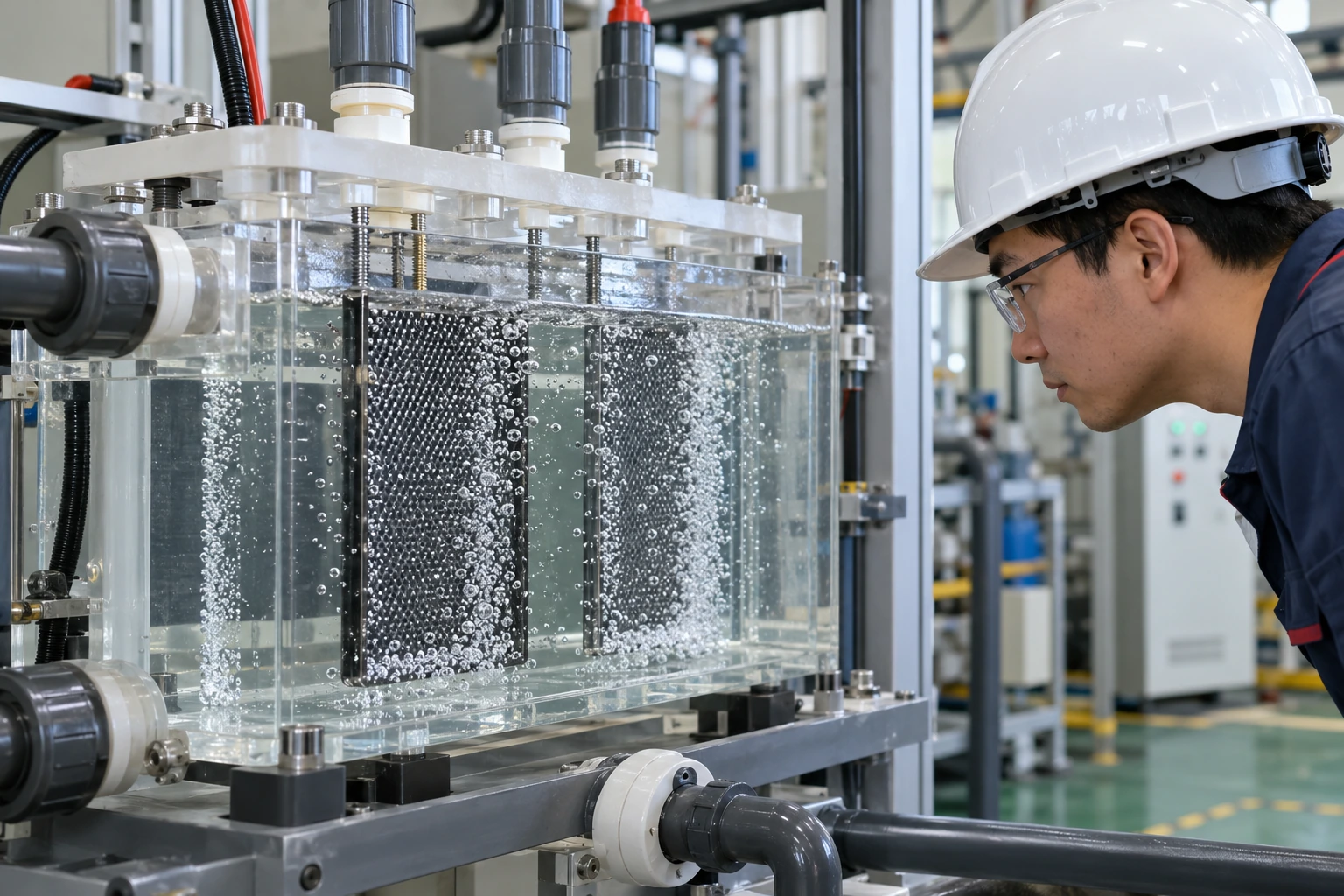
Bubbles affect a Titanium electrode surface by occupying space near active regions and changing local transport. Their effect depends on formation, growth, movement and release.
What should you observe during a trial?
Watch where bubbles collect and leave. Record the cell's orientation and operating conditions. Visual observations support diagnosis but do not quantify useful output by themselves.
- Identify persistent gas pockets.
- Compare observations at matched current and flow.
| Check | Decision |
|---|---|
| Bubble observation | Shows local behavior |
| Product measurement | Quantifies the intended result |
A dramatic bubble pattern is not a performance certificate. Key Takeaway: Pair visual inspection with process measurements.
2. Why Does Titanium electrode Bubble Coverage Matter?
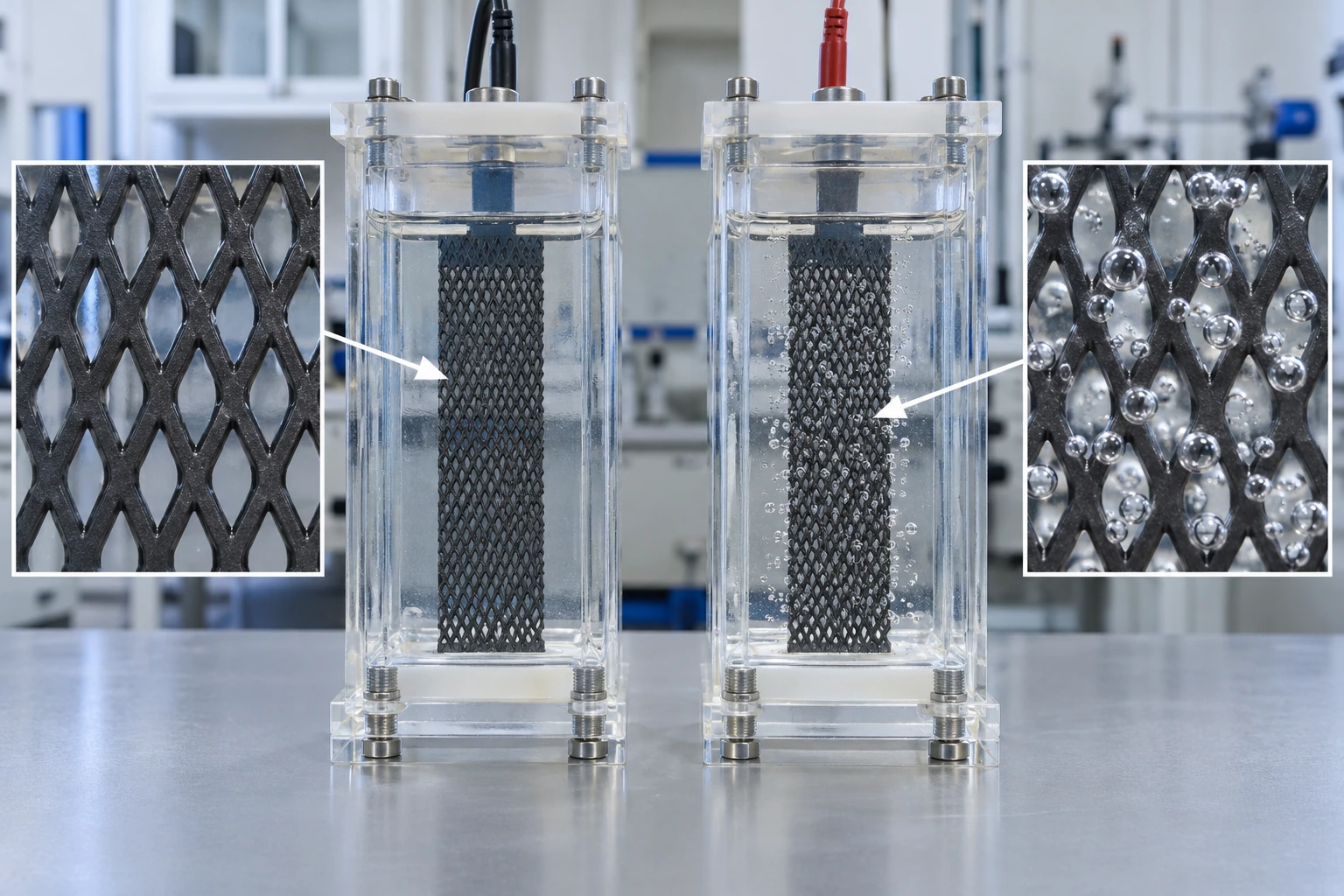
Titanium electrode bubble coverage matters because gas can reduce liquid contact and affect the current path. Bubble movement can also promote mixing, so the result is not a simple good-or-bad rule.
How should coverage be interpreted?
Review coverage and transport together. A persistent gas layer differs from bubbles that detach readily. Keep electrode area and viewing conditions consistent.
- Compare repeated operating points.
- Record gas accumulation near edges and outlets.
| Check | Decision |
|---|---|
| Persistent coverage | May restrict liquid access |
| Bubble movement | Can affect local mixing |
The net effect depends on the complete operating condition. Key Takeaway: Avoid ranking electrodes from bubble appearance alone.
3. How Does Titanium electrode Orientation Affect Gas Release?
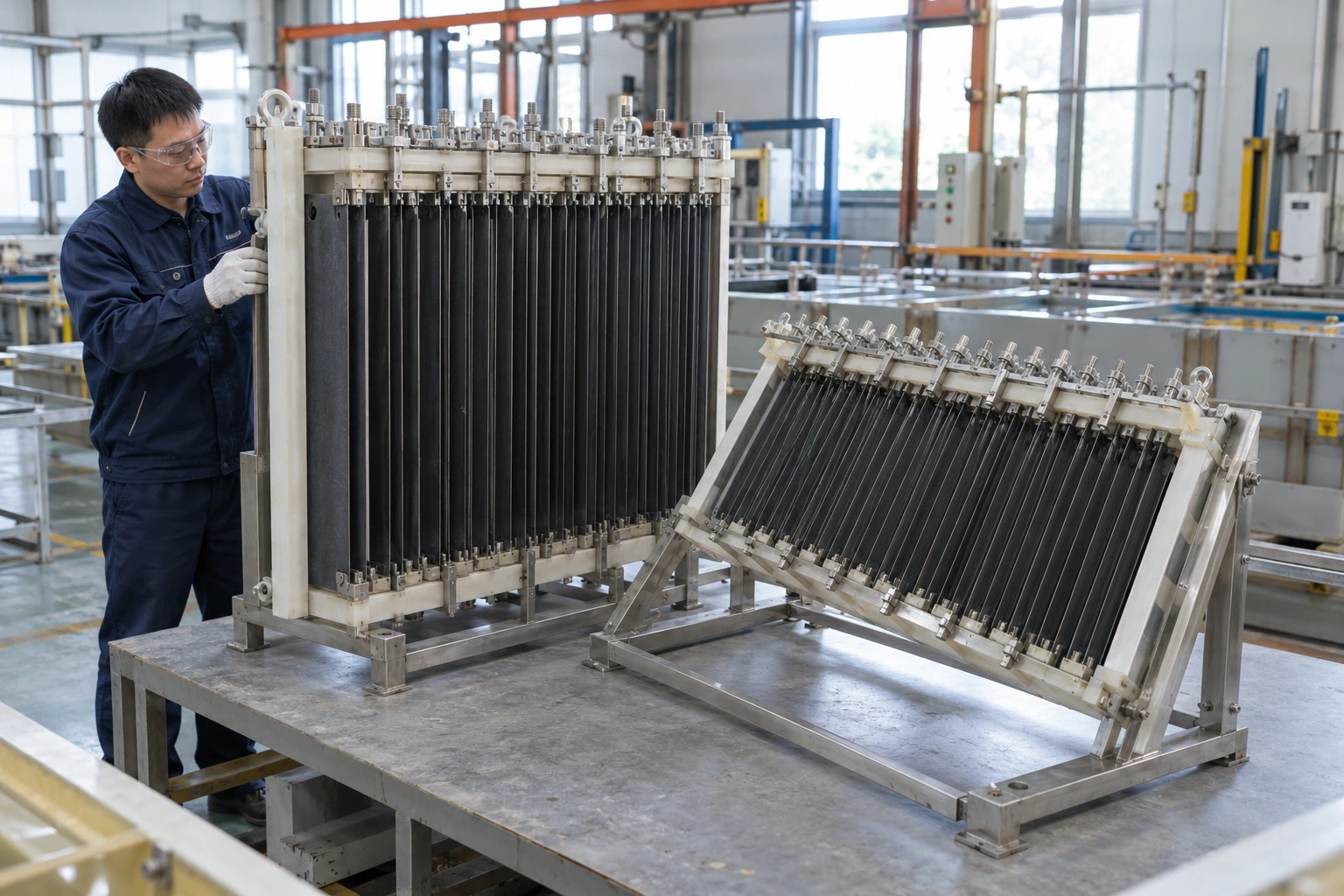
Titanium electrode orientation can affect bubble travel and collection within a cell. Its influence depends on geometry, flow and the available gas-release path.
What should the drawing review show?
Follow the route from surface to outlet. Identify pockets above frames or spacers. A vertical sample does not prove that a differently installed assembly will behave the same.
- Mark installation orientation.
- Show obstructions and gas exits.
| Check | Decision |
|---|---|
| Electrode orientation | Influences local travel |
| Cell geometry | Determines possible collection points |
Gas release needs a continuous route through the assembly. Key Takeaway: Review orientation with the housing and outlet layout.
4. How Does Flow Change Titanium electrode Bubble Removal?
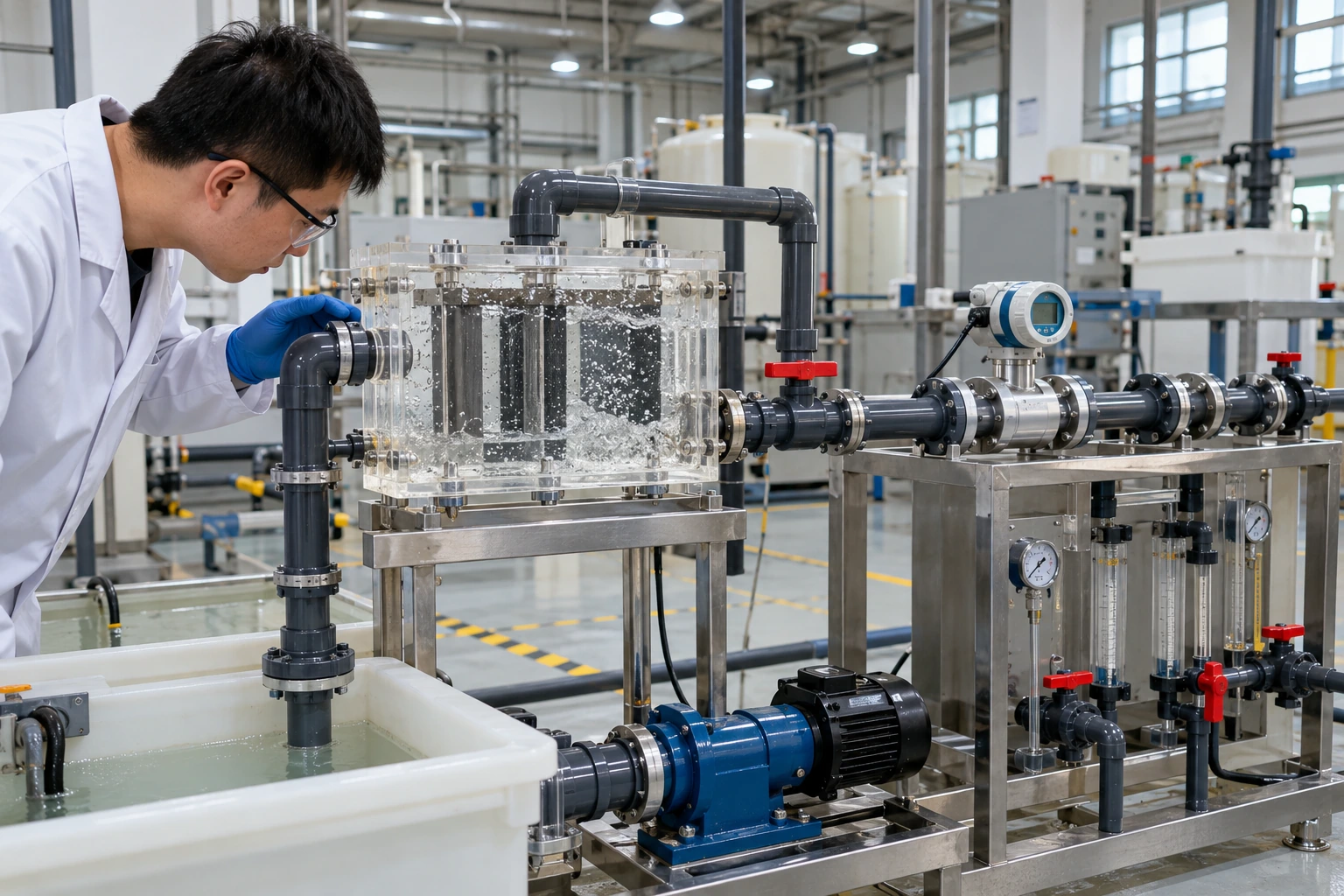
Flow changes bubble removal around a Titanium electrode, but higher total flow does not guarantee uniform local delivery. Bypass and unequal channels can leave stagnant regions.
Which checks should a flow trial include?
Measure distribution as well as supply. A custom cell review should consider channel geometry and pressure loss. Compare output, voltage and gas behavior under the same duty.
- Inspect inlet distribution.
- Record flow and pressure conditions.
| Check | Decision |
|---|---|
| Total flow | Describes the supplied liquid |
| Local flow | Controls surface conditions |
A larger pump cannot correct every internal distribution problem. Key Takeaway: Validate the actual channel arrangement.
5. Can Titanium electrode Texture Alone Solve Gas Problems?
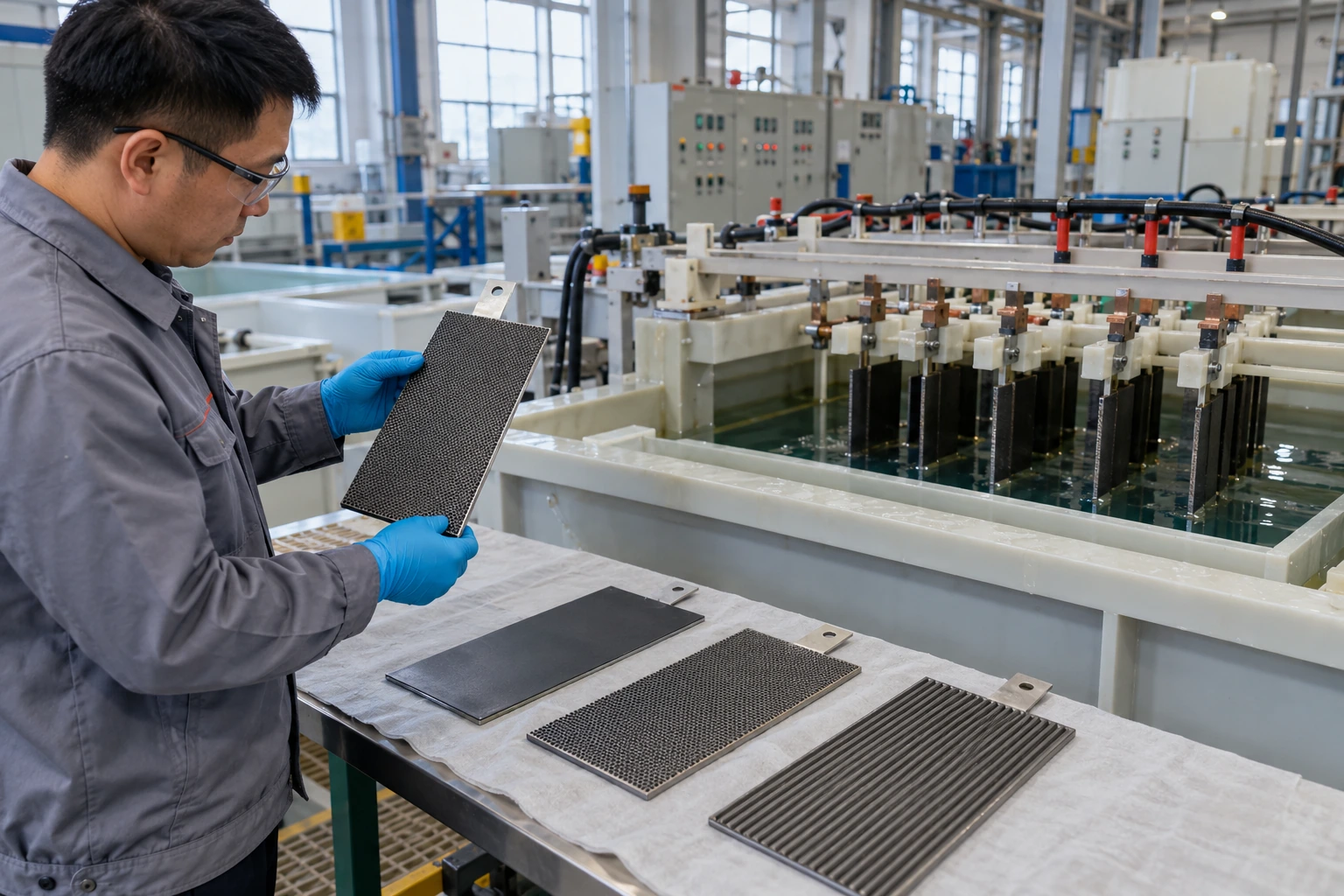
Titanium electrode texture alone cannot resolve every gas-management problem because coating, geometry, flow and operating duty interact. A surface comparison needs a controlled test.
What should remain fixed between samples?
Keep the surrounding cell unchanged where practical. Otherwise a better bubble pattern may come from altered spacing or flow. Record the complete configuration.
- Match active-area convention.
- Match current, temperature and electrolyte.
| Check | Decision |
|---|---|
| Surface change | Tests one material variable |
| Cell change | Introduces additional causes |
A controlled comparison limits unsupported claims about texture. Key Takeaway: Test the finished surface in representative equipment.
6. How Should a Titanium electrode Cell Route Gas?
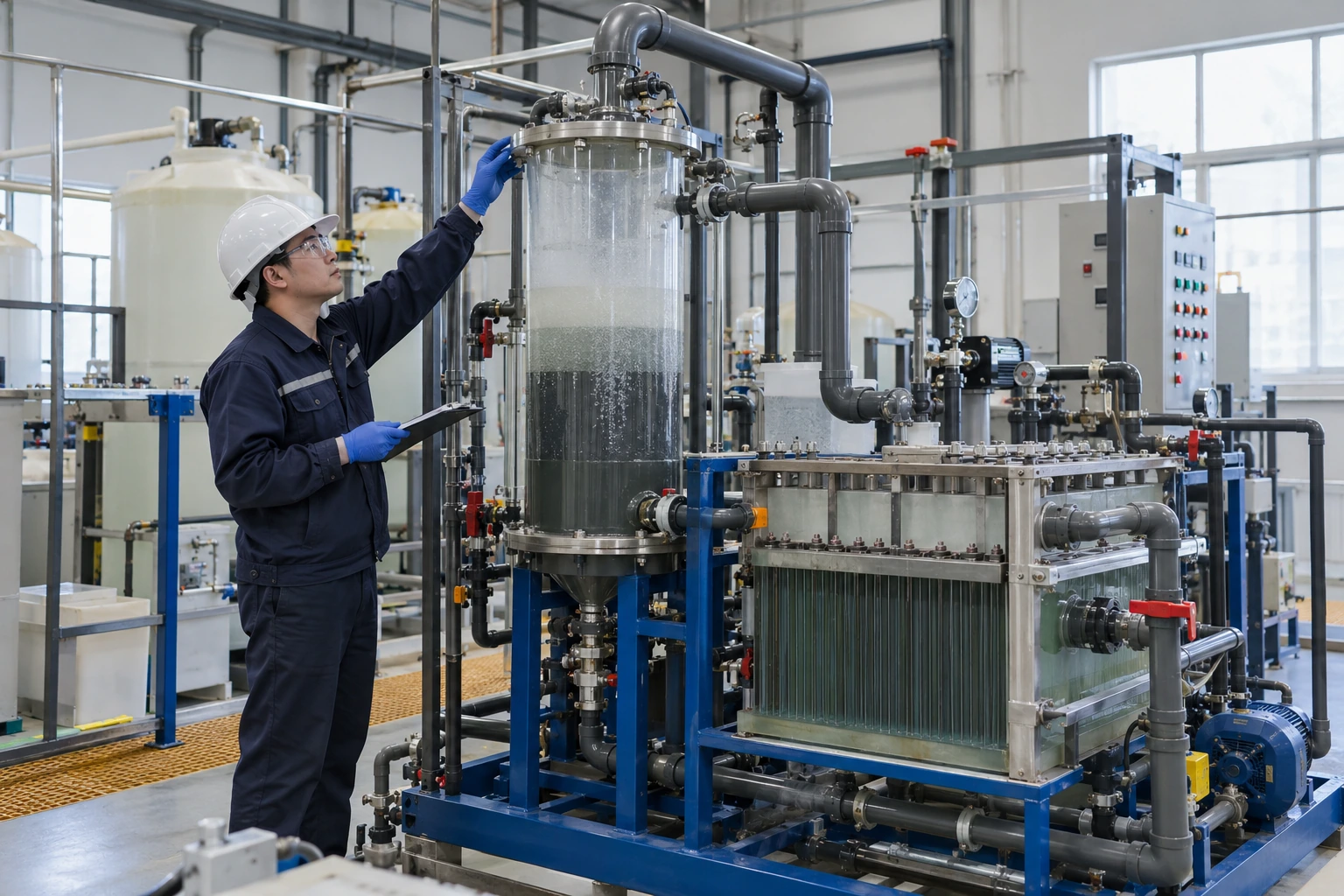
A Titanium electrode cell should route gas through an engineered handling system suitable for the products and operating conditions. Electrode supply alone does not define safe separation or ventilation.
Which interfaces need design review?
Give gas handling a named engineering owner. Review separation, routing, monitoring and fault behavior with the equipment designer. Use approved operating and maintenance procedures.
- Identify expected gas products.
- Document handling and monitoring interfaces.
| Check | Decision |
|---|---|
| Electrode duty | Defines gas-generating reactions |
| System design | Controls collection and handling |
A coating selection does not qualify the surrounding gas system. Key Takeaway: Review gas management before commissioning.
7. What Can Pressure Tell You About a Titanium electrode Cell?
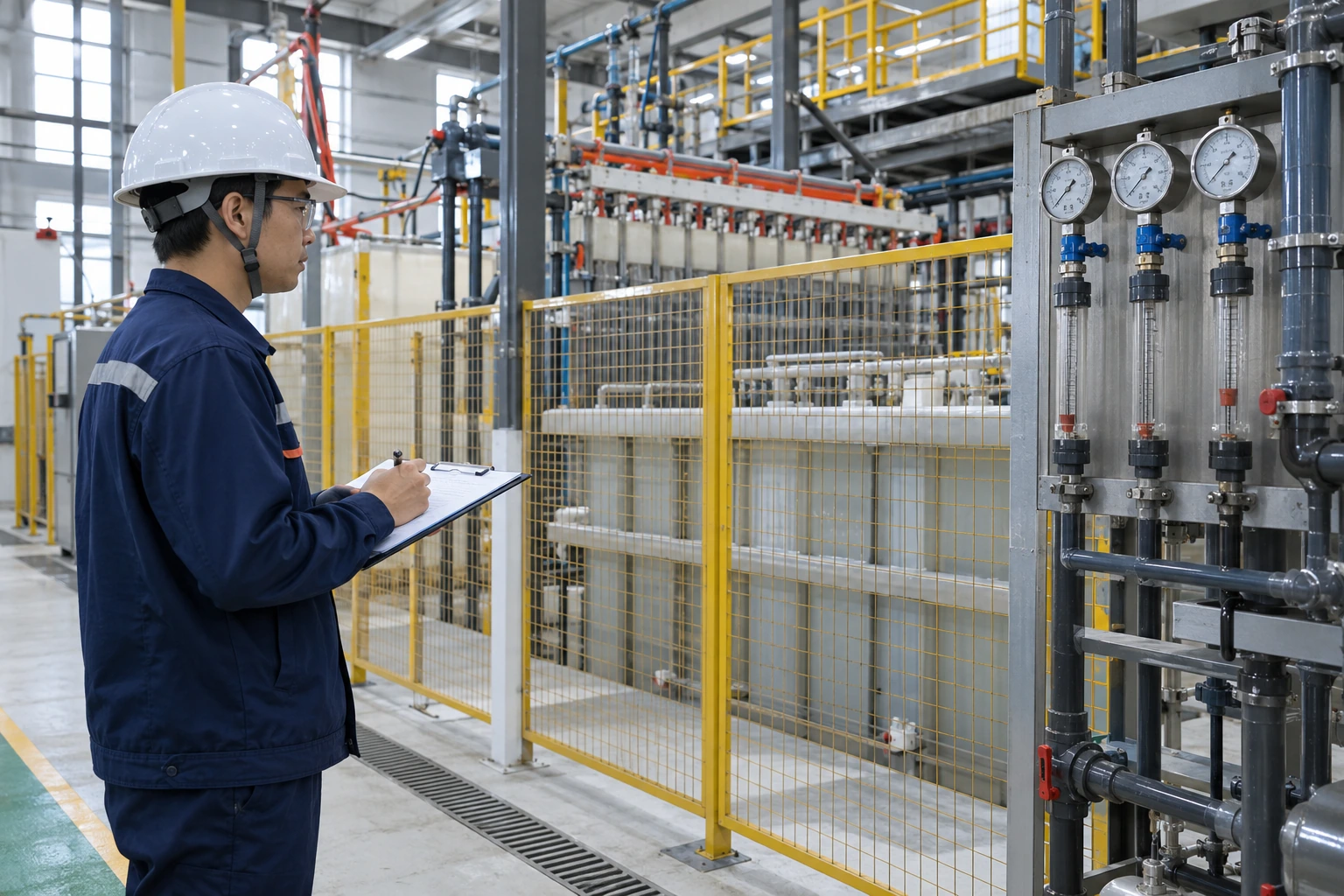
Pressure changes around a Titanium electrode cell can help identify restrictions or altered flow, but pressure readings require context. They do not directly measure bubble coverage or product output.
How should an unusual trend be investigated?
Locate the measurement relative to the restriction. Compare inlet, outlet and relevant flow records. Follow the equipment's fault procedure rather than changing pressure limits experimentally.
- Record instrument locations.
- Check approved operating limits and alarms.
| Check | Decision |
|---|---|
| Pressure trend | Signals hydraulic change |
| Diagnosis | Identifies the responsible condition |
A pressure alarm needs a system-level investigation. Key Takeaway: Use approved limits and a documented response.
8. How Do Bubbles Affect Titanium electrode Output Measurements?
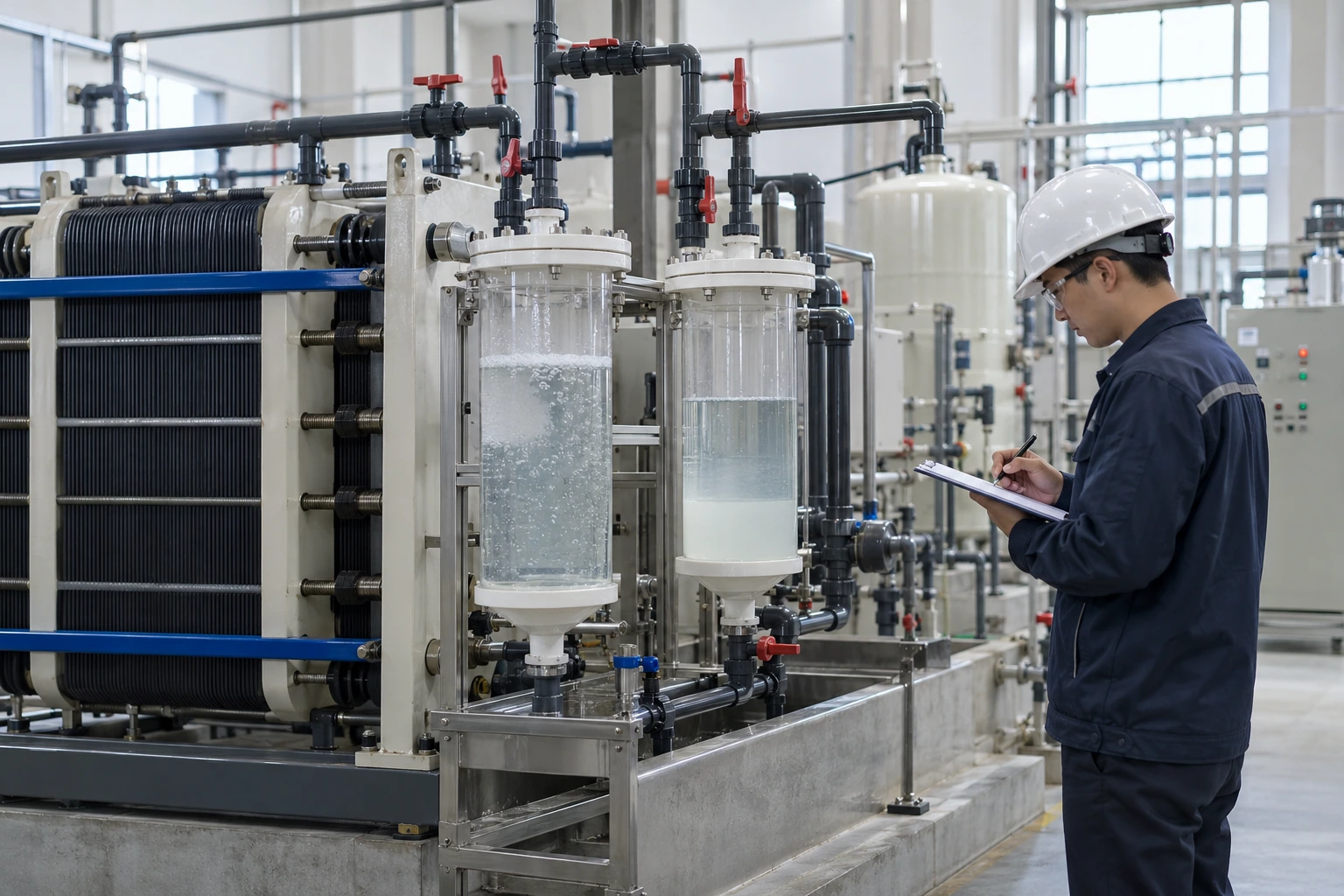
Bubbles can affect Titanium electrode outlet sampling and flow measurements if the method assumes a single liquid phase. Sampling location and gas separation need explicit definition.
What makes output data comparable?
Define the sample condition before collecting data. In water-treatment duty, use the specified separation and analysis method. Keep collection timing and temperature consistent.
- Document gas-separation conditions.
- Use a representative sampling point.
| Check | Decision |
|---|---|
| Uncontrolled two-phase sample | May complicate measurement |
| Defined sample condition | Supports comparison |
A concentration result needs the sampling conditions that produced it. Key Takeaway: Standardize sampling before comparing electrodes.
9. Which Tests Validate Titanium electrode Gas Management?
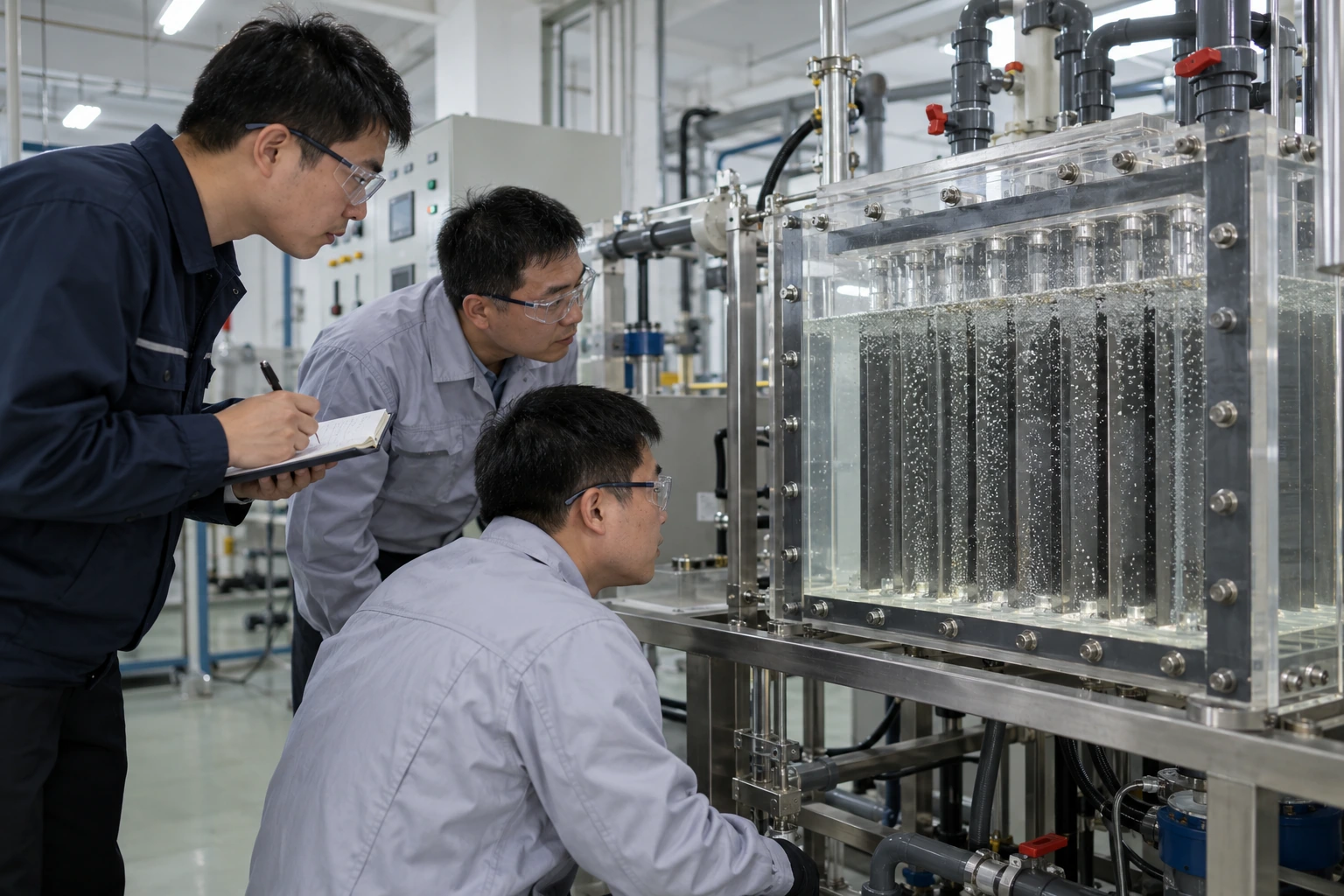
Validate Titanium electrode gas management with representative operating tests and the equipment's agreed acceptance criteria. Include normal operation and defined fault responses.
What should the trial observe?
Check the full operating sequence. Startup and shutdown may differ from steady operation. Record pressure, flow, temperature and product measurements together.
- Inspect gas accumulation locations.
- Verify relevant monitoring and interlocks.
| Check | Decision |
|---|---|
| Steady trial | Checks routine behavior |
| Sequence checks | Address changing operating states |
A stable steady run does not describe every operating event. Key Takeaway: Qualify the complete intended duty.
10. What Titanium electrode Gas-Handling Data Should You Send?

Send Titanium electrode reaction duty, current, flow, cell geometry, orientation and gas-system interfaces for review. Identify the responsible equipment designer.
How can we support the electrode work?
Send the process diagram with the electrode drawing. We can review component geometry and operating requirements; contact us today with those inputs. Our position is that useful electrode performance depends on a workable complete cell.
- Define output and gas-handling requirements.
- List the measurements needed for validation.
| Check | Decision |
|---|---|
| Component data | Support electrode selection |
| System data | Define surrounding operating conditions |
The package connects surface behavior with the equipment that manages it. Key Takeaway: Validate the electrode within its complete process.
Frequently Asked Questions
Can I judge electrode quality by how many bubbles I see? No. Bubble appearance does not establish useful output, efficiency or durability.
What's the best orientation for bubble removal? It depends on geometry and flow. Review the full route from active surface to outlet.
How do I know if gas is affecting a sample? Check the sampling and separation method. Two-phase flow can complicate readings.
Can I raise pressure to change bubble behavior? Only within an engineered and approved operating specification. Do not infer suitable limits from a visual trial.
Can I select the electrode before reviewing gas handling? You can develop a preliminary specification, but the complete system still needs compatible gas management and validation.