
Clean a coated Titanium electrode with a method approved for its coating, deposit, and assembly materials. Your cell voltage rises and production slows, so an operator reaches for a scraper. That quick action can damage an active surface while leaving the original process problem unresolved. Identify what changed, obtain a compatible procedure, and compare performance before and after cleaning.
1. When Does a Titanium electrode Need Cleaning?
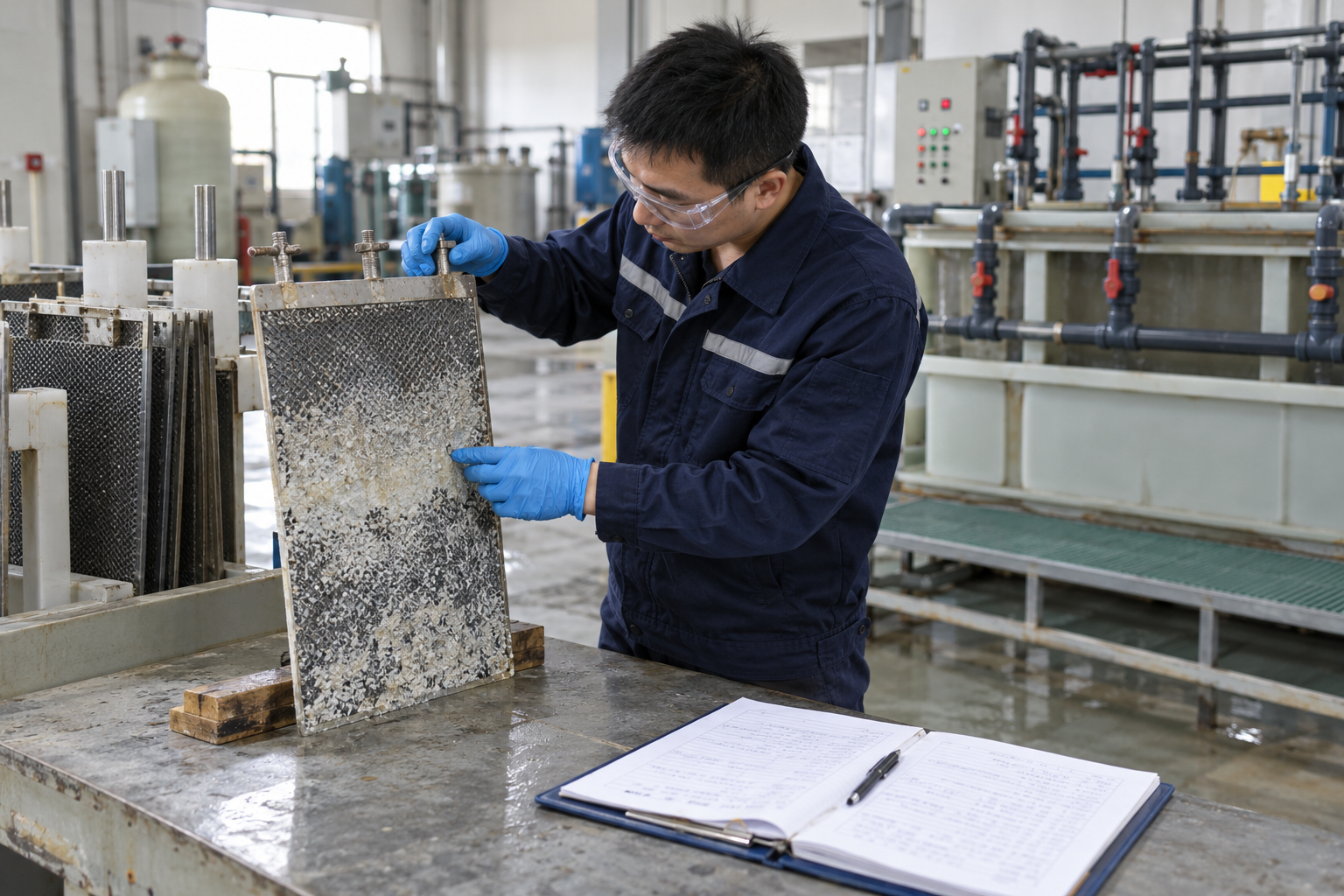
A Titanium electrode needs cleaning when inspection and operating trends identify removable deposits that affect performance. A voltage rise alone cannot establish that cleaning will solve the problem.
Which changes should you compare?
Match the operating conditions before intervening. Compare current, conductivity, temperature, flow, and output with a clean baseline. A cold or dilute electrolyte can change voltage without a deposit problem.
- Record the symptom and when it began.
- Photograph surfaces before disturbing deposits.
- Inspect contacts and flow restrictions separately.
| Check | Decision |
|---|---|
| Visible deposit plus changed behavior | Review a compatible cleaning method |
| Clean surface with voltage rise | Investigate chemistry, contacts, and coating |
A documented baseline prevents unnecessary cleaning from becoming routine wear. Key Takeaway: Clean for an identified condition rather than an unexplained alarm.
2. What Is Deposited on Your Titanium electrode?
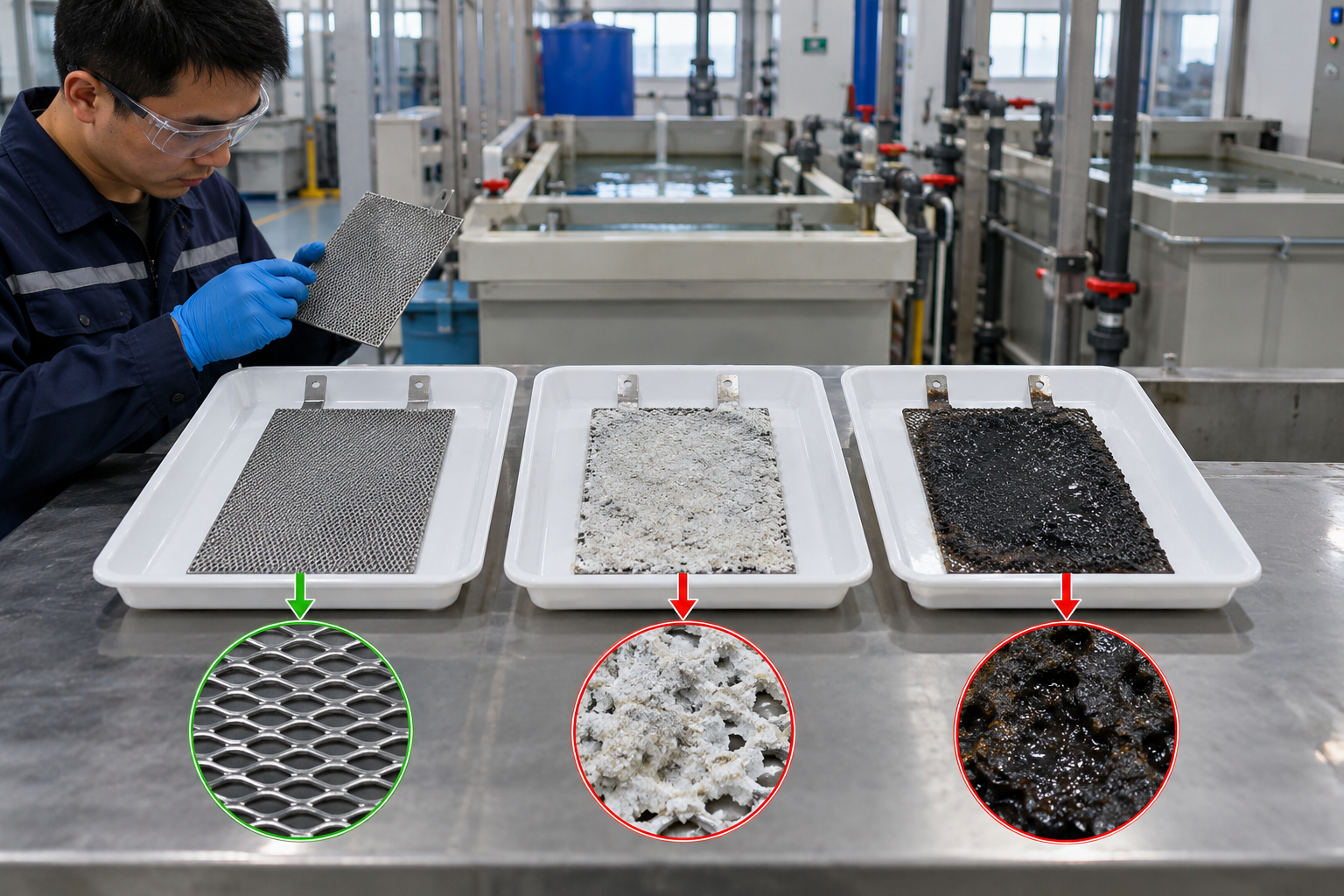
A Titanium electrode deposit may contain mineral scale, process solids, oils, or reaction products. Appearance gives clues, but it does not establish composition or cleaning compatibility.
How should you classify an unknown deposit?
Keep a representative sample when diagnosis matters. Mineral scale and organic fouling can respond differently. Ask your process team whether analysis is needed before choosing chemicals.
- Compare deposits with feed-water and bath records.
- Record which electrode side carries the deposit.
- Separate loose residue from strongly attached material.
| Check | Decision |
|---|---|
| Known process deposit | Use its approved removal procedure |
| Unknown or mixed deposit | Investigate before choosing chemistry |
Cleaning becomes more predictable when deposit identity and electrode role are documented. Key Takeaway: Preserve evidence before changing the surface.
3. Can You Scrape a Coated Titanium electrode?
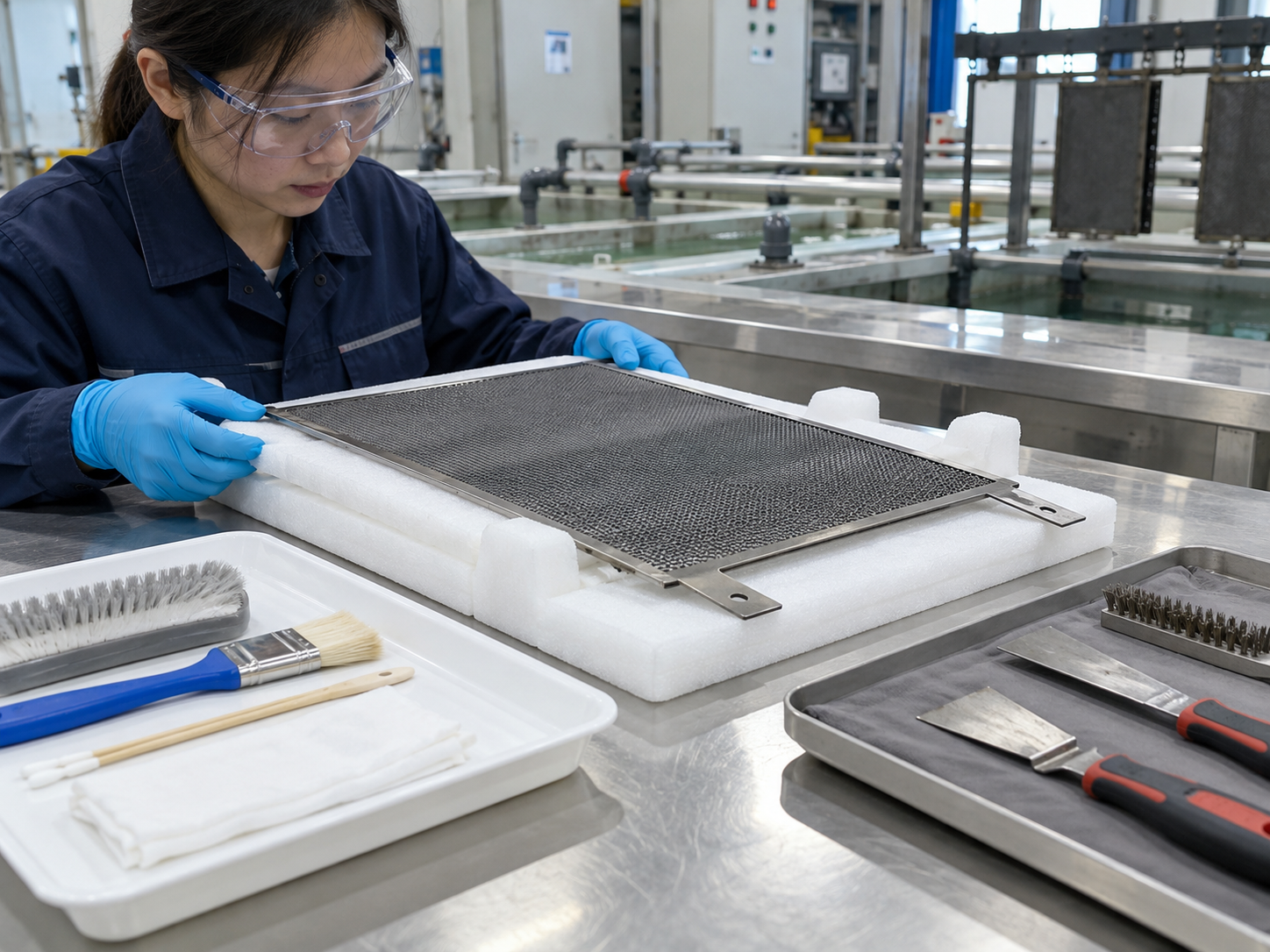
Do not scrape a coated Titanium electrode unless its manufacturer has approved a specific mechanical method. Abrasion can remove or damage active material even when titanium underneath looks sound.
Which tools should stay off the active surface?
Treat the coating as a functional surface. A wire brush or grinding pad may remove deposits together with catalytic material. Handling tools should grip approved structural areas.
- Avoid uncontrolled scraping and abrasive blasting.
- Keep metal tools away from active faces.
- Ask whether gentle rinsing or a defined soft tool is permitted.
| Check | Decision |
|---|---|
| Uncontrolled abrasion | Can change the working surface |
| Approved handling contact | Uses designated structural zones |
A clean-looking surface is not proof that catalytic function survived. Key Takeaway: Use the approved method and inspect before returning the part to service.
4. How Do You Isolate a Titanium electrode Before Cleaning?
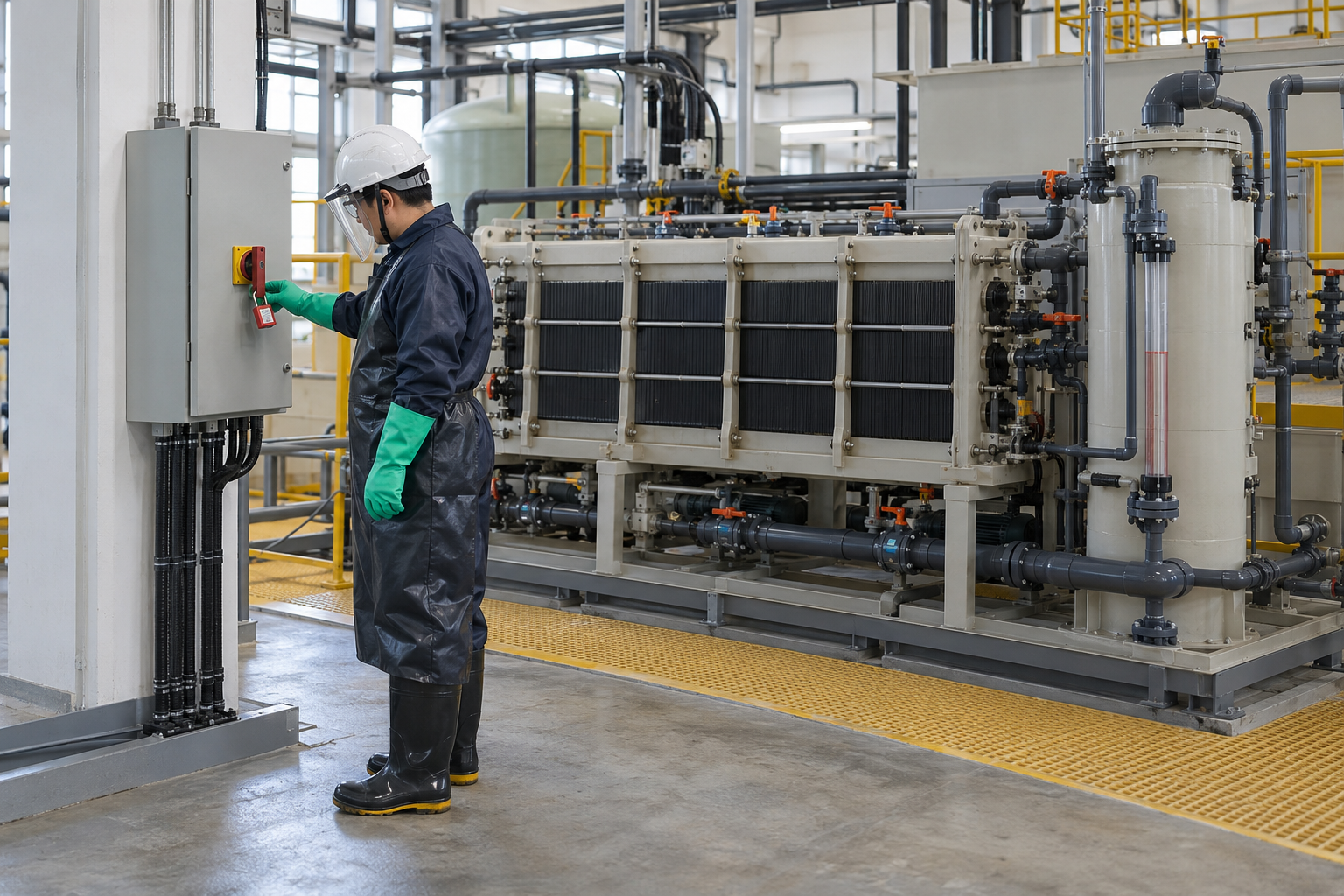
Isolate a Titanium electrode assembly by following the equipment's electrical, hydraulic, chemical, and gas-control procedure before maintenance. Switch position alone does not prove the cell is safe to handle.
What must the maintenance plan cover?
Follow the equipment-specific isolation sequence. In hypochlorite-generation equipment, residual oxidant and gas management deserve explicit attention. Trained staff should confirm isolation and drainage under the site's established procedure.
- Identify all power and fluid connections.
- Check required cooling, venting, and drainage steps.
- Use chemical-compatible PPE and controlled waste collection.
| Check | Decision |
|---|---|
| Electrical isolation | Confirm absence of hazardous energy |
| Process isolation | Control retained liquid and gas |
A removed electrode can still carry chemical residue even after electrical isolation. Key Takeaway: Use a documented maintenance procedure for the complete cell.
5. Which Cleaner Fits a Titanium electrode Coating?

A cleaner fits a Titanium electrode coating only when compatibility covers active material, substrate, welds, seals, and deposits. A generic recommendation for titanium metal is insufficient.
What should the supplier approve in writing?
Ask for the complete cleaning window. Chemical identity, concentration, temperature, contact time, and rinse requirements belong together. Changing one condition can invalidate a previously approved procedure.
- Identify coating family and part revision.
- Include seals, adhesives, and connected materials.
- Request disposal and residue-control requirements from site specialists.
| Check | Decision |
|---|---|
| Material compatibility | Covers every wetted component |
| Process window | Defines concentration, time, and temperature |
A chemically resistant substrate does not guarantee that its coating or gasket tolerates the same treatment. Key Takeaway: Obtain a bounded procedure instead of a universal acid recipe.
6. How Should You Test Titanium electrode Cleaning?
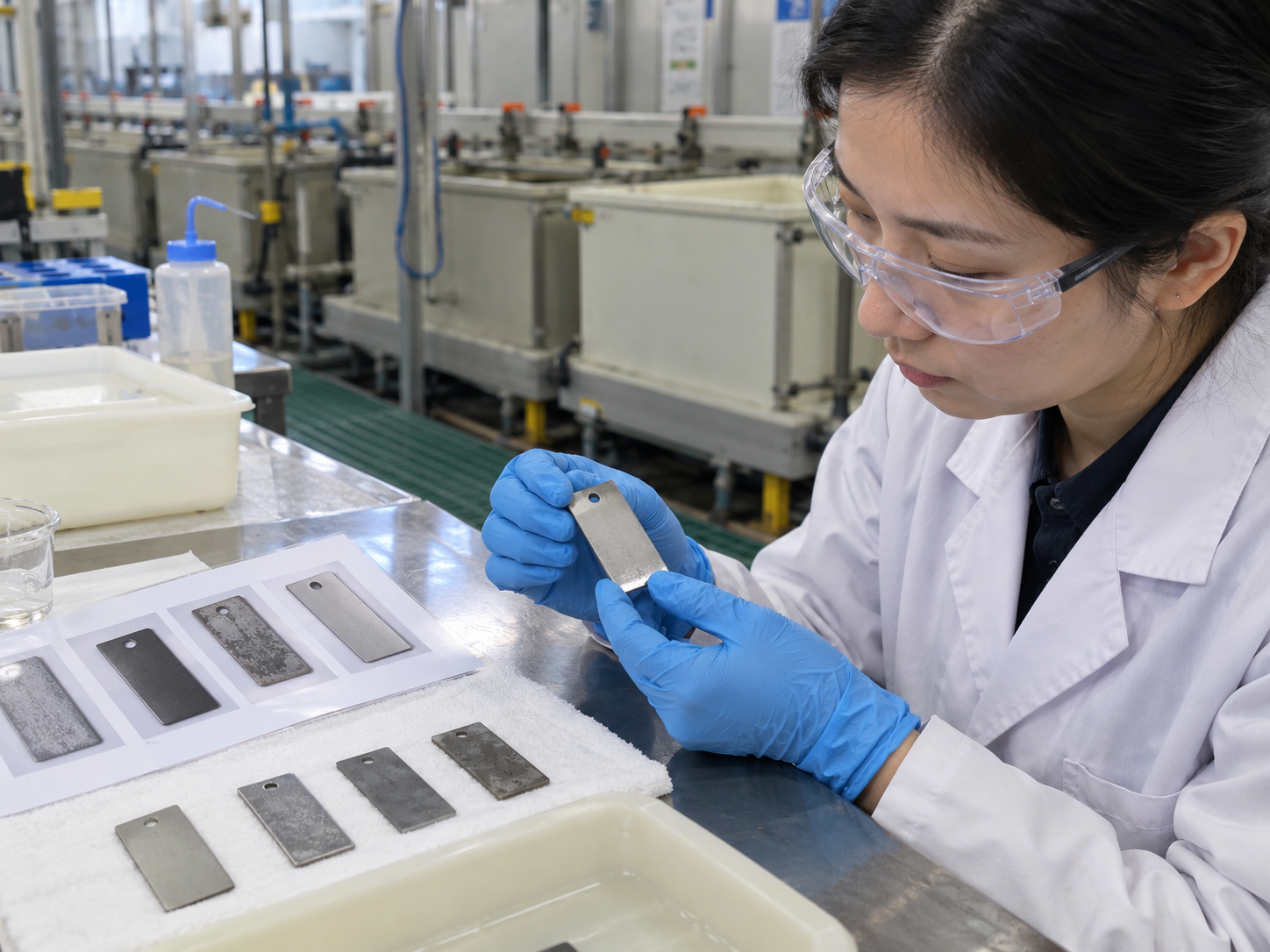
Test Titanium electrode cleaning on an approved sample or controlled pilot before applying an unfamiliar method across production inventory. Inspect both deposit removal and surface condition.
What should a cleaning trial record?
Measure what the method changes. A deposit may disappear while coating damage remains difficult to see. Compare photographs and appropriate functional checks under matched conditions.
- Record solution preparation and exposure conditions.
- Inspect before, during, and after treatment as specified.
- Document rinsing, drying, and any residue.
| Check | Decision |
|---|---|
| Deposit removal | Confirms the cleaning objective |
| Surface and function | Checks unintended changes |
Successful appearance alone cannot qualify a new cleaning procedure. Key Takeaway: Release the method only against agreed inspection and functional criteria.
7. How Do You Rinse and Reassemble a Titanium electrode?
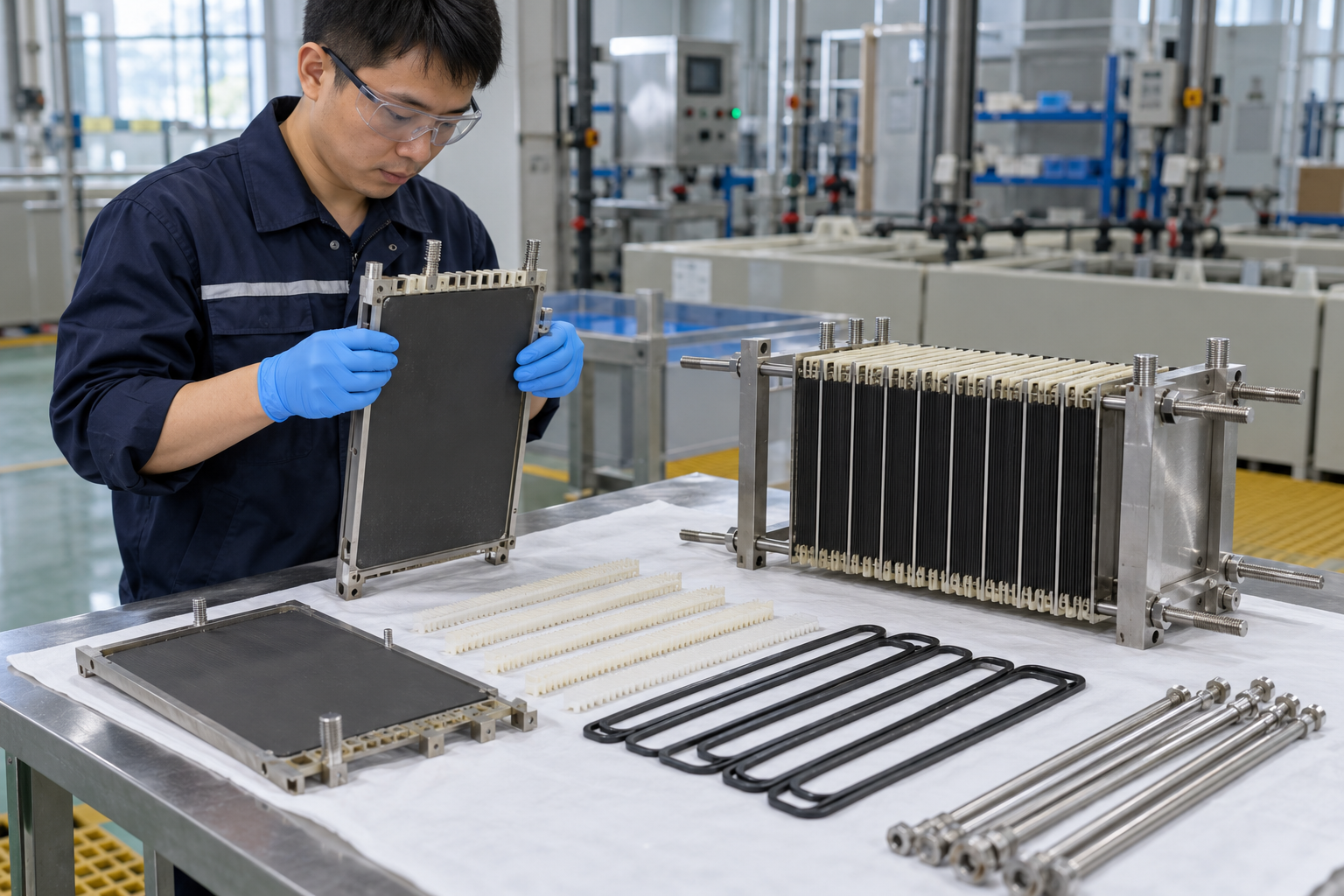
Rinse and reassemble a Titanium electrode according to the approved procedure so residues, trapped liquid, and handling damage do not affect restart. Seals and contacts need separate checks.
What should technicians inspect before closing the cell?
Check the assembly while it remains accessible. Confirm gasket position, spacing, polarity identification, and contact condition. Use specified tightening and alignment methods.
- Verify rinse endpoint using the approved criterion.
- Inspect seal grooves and inaccessible pockets.
- Keep cleaned active surfaces protected during assembly.
| Check | Decision |
|---|---|
| Rinse completion | Limits carryover into the process |
| Assembly inspection | Restores intended geometry and connections |
A cleaning job can create a new fault through incorrect reassembly. Key Takeaway: Treat cleaning and reassembly as one controlled maintenance task.
8. How Do You Restart a Cleaned Titanium electrode?
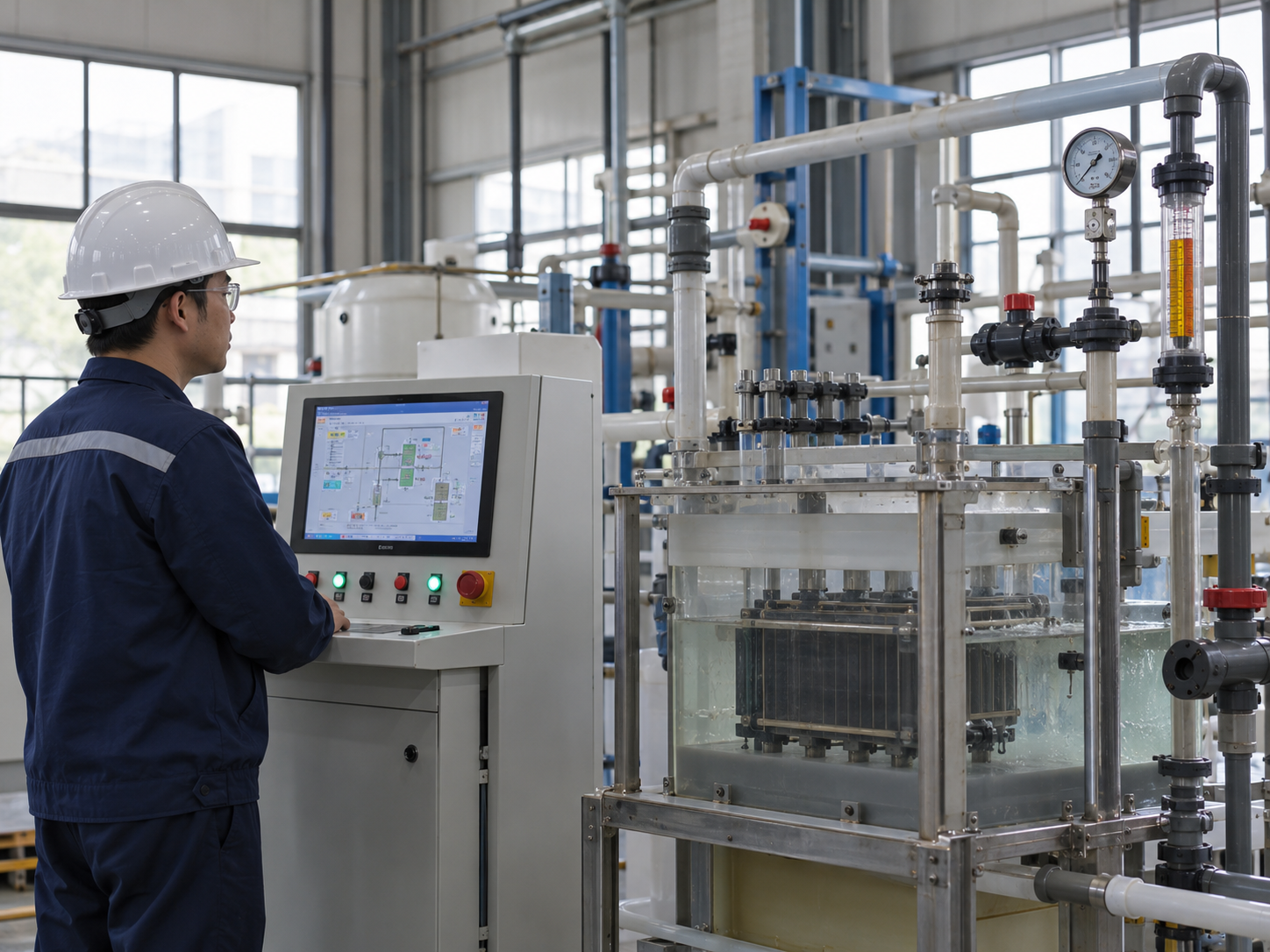
Restart a cleaned Titanium electrode using the equipment's approved startup sequence and compare it with a matched baseline. A recovered voltage reading is useful only alongside output and process conditions.
Which evidence closes the maintenance record?
Watch the cell under a controlled return to duty. Your custom electrode review can use post-cleaning photos and operating data to investigate persistent problems. Stop escalation of current when unexplained heating or leakage appears.
- Confirm filling, flow, and gas handling before normal duty.
- Record voltage, current, temperature, and output.
- Check leaks, contact heating, and abnormal surface behavior.
| Check | Decision |
|---|---|
| Recovered behavior | Supports a removable-deposit diagnosis |
| Persistent deviation | Requires further investigation |
A failed recovery should trigger diagnosis rather than repeated aggressive cleaning. Key Takeaway: Close the job with operating evidence, not only a completion signature.
9. How Often Should a Titanium electrode Be Cleaned?
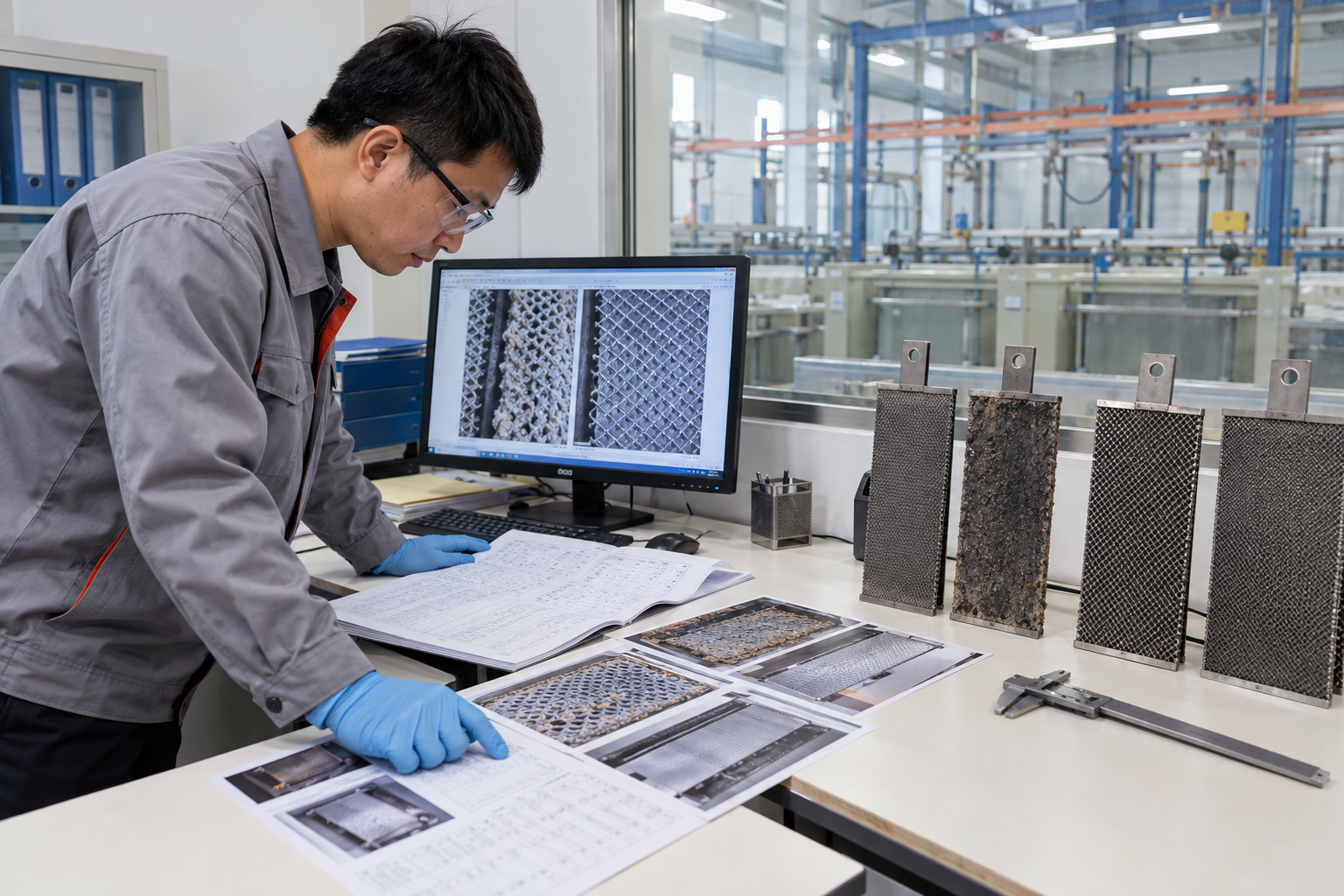
A Titanium electrode cleaning interval should follow observed fouling and the validated maintenance plan. Feed-water variability and process duty can make a calendar-only schedule inaccurate.
Which trends can improve the interval?
Use several service cycles before changing the schedule. Record operating hours, throughput, feed chemistry, and deposit condition. Compare those records with recovery after cleaning.
- Track changes in hardness or suspended solids.
- Record current and output between maintenance events.
- Review whether pretreatment or flow changes reduce fouling.
| Check | Decision |
|---|---|
| Stable duty | May support a repeatable interval |
| Variable chemistry | Requires condition-based review |
Repeated cleaning cannot compensate for an unresolved feed or flow problem. Key Takeaway: Adjust the interval from field evidence and coating compatibility.
10. What Titanium electrode Maintenance Data Should You Share?
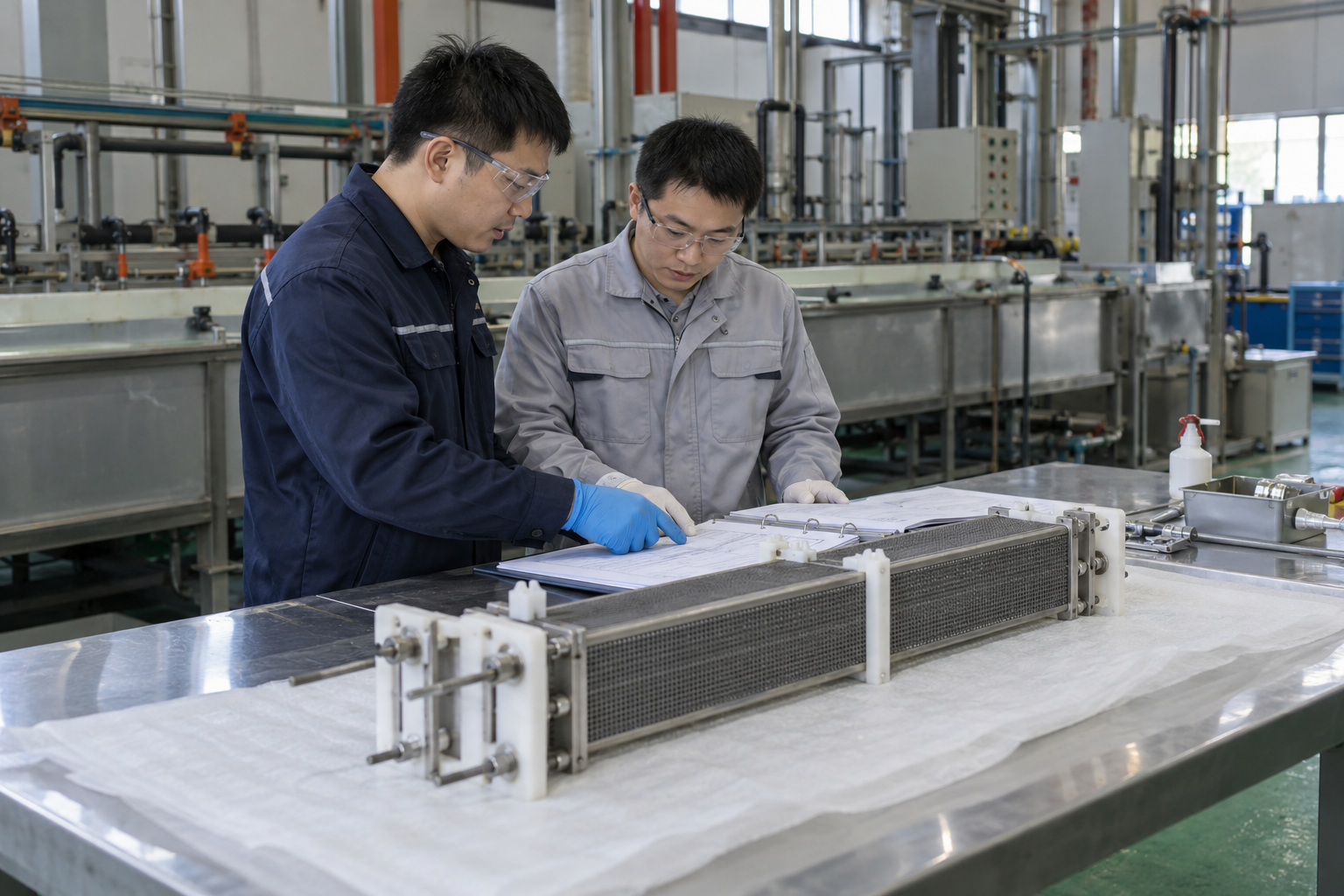
Share Titanium electrode identity, chemistry, symptoms, photographs, cleaning history, and matched operating readings when asking for support. This helps distinguish fouling from damage or cell faults.
How can we help with the next decision?
Send the condition history with the part drawing. We can review electrode options and the information needed for a maintenance discussion; contact us today with your records. Our position is that cleaning should preserve a qualified working surface.
- Attach before-and-after photographs.
- State every chemical and exposure condition used.
- List remaining symptoms and replacement urgency.
| Check | Decision |
|---|---|
| Condition evidence | Supports diagnosis |
| Part and duty records | Supports a compatible replacement review |
The package connects maintenance choices with coating and assembly requirements. Key Takeaway: Keep the cleaning method tied to a specific part revision and duty.
Frequently Asked Questions
Can I use any acid cleaner on titanium electrodes? No. Compatibility must cover the coating, seals, substrate, deposit, and exposure conditions.
What's the best way to remove scale? Use the equipment and electrode supplier's approved method. Deposit identity determines which approach is suitable.
How do I know if cleaning damaged the coating? Appearance alone may not tell you. Compare inspection evidence and matched functional results with the approved baseline.
Can I clean an electrode every week to prevent problems? Only if that interval is justified and approved. Unnecessary chemical or mechanical exposure can add wear.
Can I restart immediately after rinsing? Follow the specified restart procedure. Rinse completion, assembly checks, filling, flow, and gas controls must be satisfied.