Judge Titanium electrode service life against defined operating conditions and a measurable replacement criterion. A quotation promises years of use, but your equipment runs hotter and longer than the reference installation. That mismatch can leave maintenance holding a calendar promise with no engineering basis. Build a life assessment from duty records, surface condition, output, and the cause of performance change.
1. What Does Titanium electrode Service Life Mean?
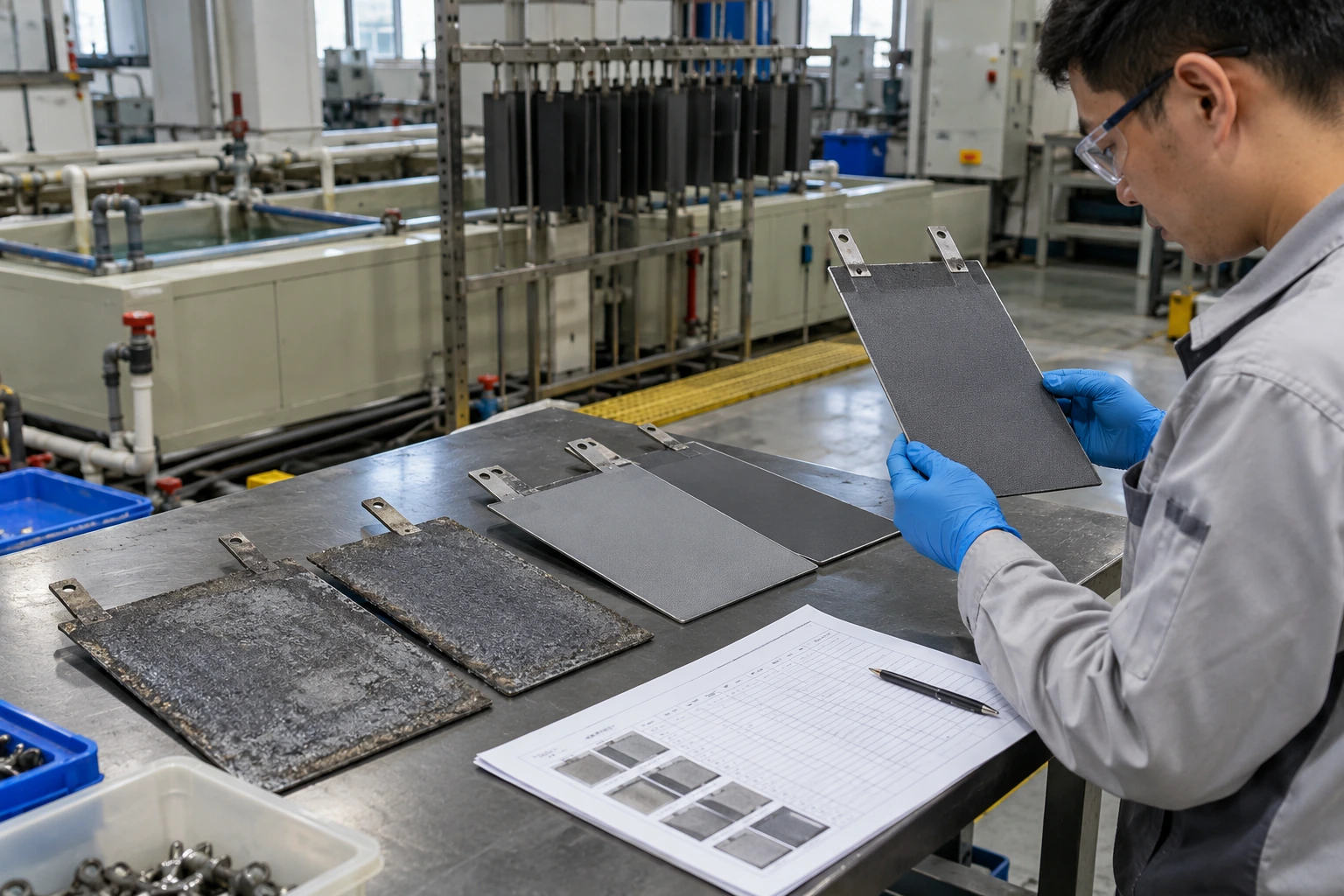
Titanium electrode service life means time in a stated duty before an agreed end-of-life criterion is reached. Calendar age alone cannot describe output loss, coating depletion, or an assembly fault.
Which endpoint should your contract define?
Name the replacement trigger. Your process might require a minimum output at fixed conditions or a maximum acceptable voltage. Mechanical damage needs its own disposition even when electrical output remains acceptable.
- Define the operating window.
- State what counts as failure or unacceptable degradation.
- Separate electrode and balance-of-system faults.
| Check | Decision |
|---|---|
| Calendar age | Records elapsed time |
| Qualified service life | Includes duty and failure criterion |
Different endpoints can produce different life claims for the same part. Key Takeaway: Compare life statements only after matching their definitions.
2. Which Conditions Shorten Titanium electrode Life?

Titanium electrode life can shorten when chemistry, current distribution, temperature, polarity, or maintenance differs from its qualified duty. Several causes may interact within one cell.
What should a duty history include?
Record excursions as well as averages. A nominal operating sheet can miss a startup overload, blocked flow, or unapproved cleaning event. Preserve alarm records alongside routine measurements.
- Track current, temperature, and chemistry ranges.
- Document shutdowns and polarity changes.
- Retain cleaning and handling history.
| Check | Decision |
|---|---|
| Normal operating record | Describes recurring exposure |
| Excursion record | Identifies unusual stress |
A short severe event may explain damage that monthly averages conceal. Key Takeaway: Use a complete duty history when investigating early replacement.
3. Can Ampere-Hours Predict Titanium electrode Life?
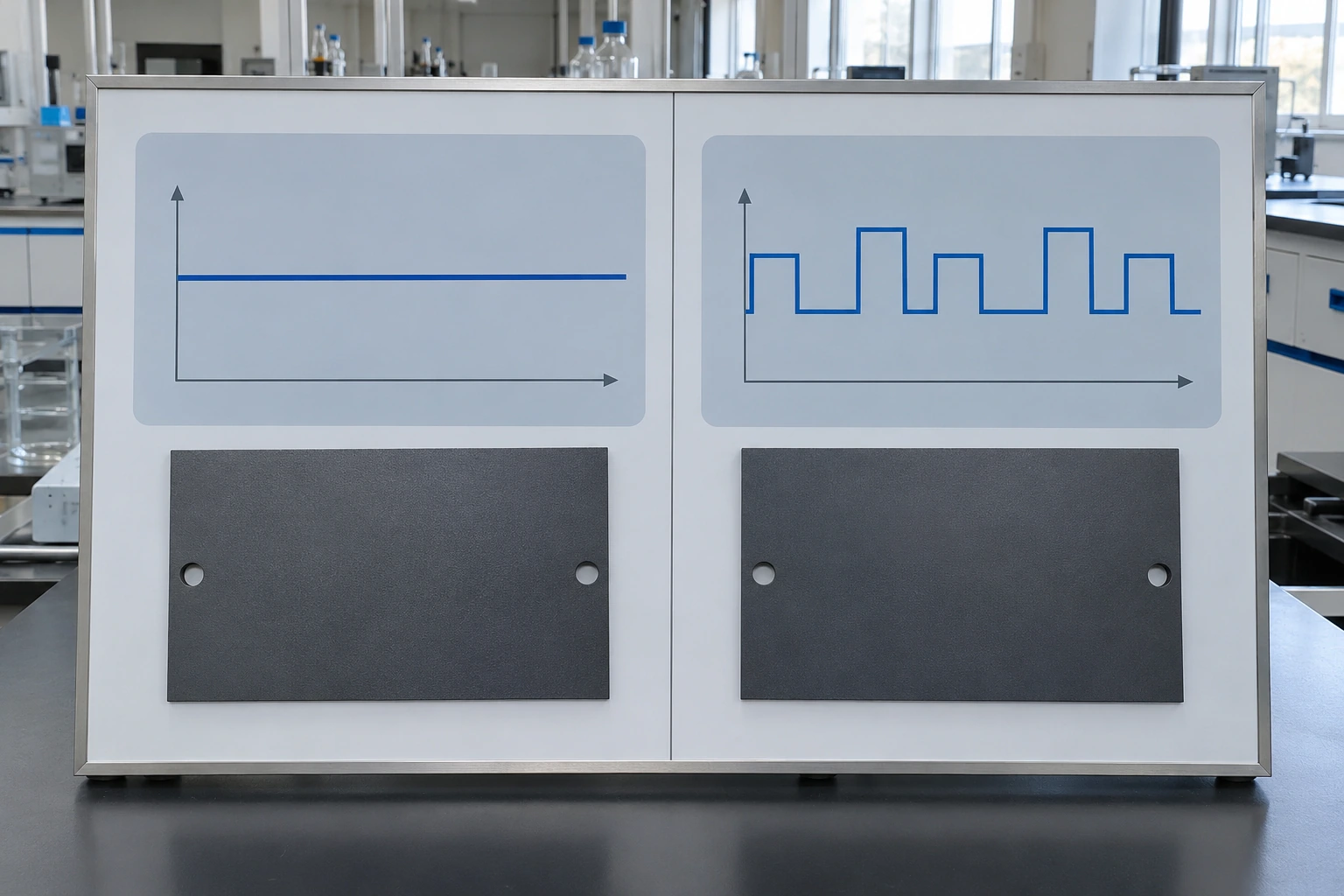
Ampere-hours describe cumulative charge through a Titanium electrode, but they do not independently predict remaining life. Chemistry, loading distribution, and degradation mechanisms still matter.
What does charge accounting tell you?
Separate exposure from prediction. At constant current, charge in Ah equals amperes multiplied by operating hours. Variable current needs time integration, and neither method establishes a universal coating-consumption rate.
- Record current with its time interval.
- Separate forward and reverse duty where relevant.
- Compare only similar chemistry and geometry.
| Check | Decision |
|---|---|
| 100 A for 10 h | 1,000 Ah of charge |
| Life prediction | Requires validated application-specific evidence |
The example quantifies exposure without promising a replacement date. Key Takeaway: Use charge as one tracking variable within a broader condition record.
4. Does a Voltage Rise Prove Titanium electrode Failure?

A voltage rise does not prove Titanium electrode failure because contacts, conductivity, gap, deposits, and gas coverage can also change cell resistance. Compare measurements at matched operating points.
How do you narrow the cause?
Check reversible causes before condemning the coating. Combine your operating history with quality-control evidence. A controlled inspection or approved cleaning may reveal whether the change comes from deposits or permanent damage.
- Match current and temperature for comparisons.
- Inspect contacts and fluid paths.
- Record output alongside voltage.
| Check | Decision |
|---|---|
| Voltage recovers after approved correction | Supports a system or deposit cause |
| Persistent output loss | Needs electrode and cell investigation |
A single electrical symptom rarely identifies one component. Key Takeaway: Use a diagnostic sequence before authorizing a full replacement set.
5. How Should You Inspect a Used Titanium electrode?
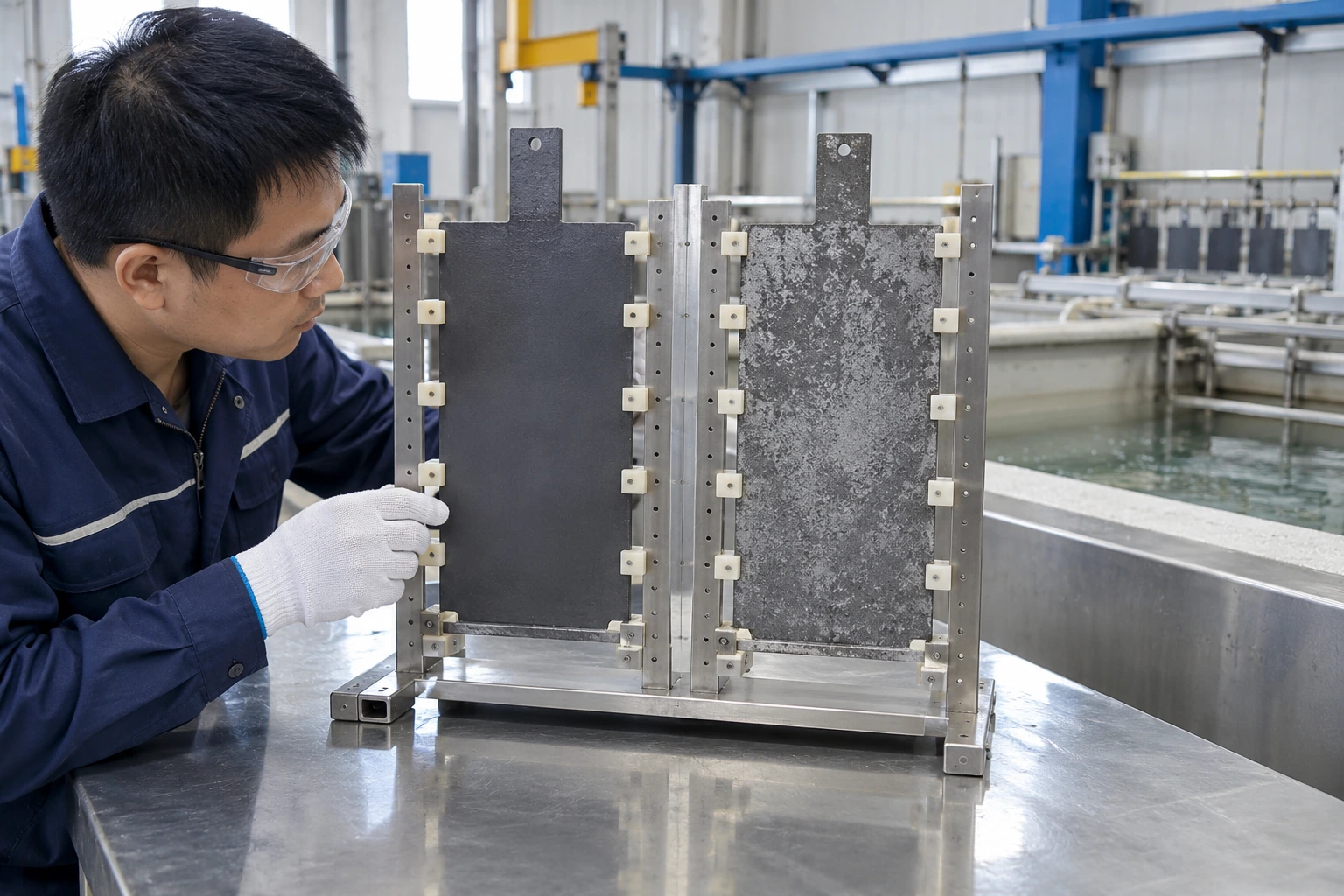
Inspect a used Titanium electrode for deposits, exposed substrate, local damage, distortion, and connection condition. Photograph it before cleaning so evidence remains available.
Which observations are useful to a supplier?
Show location, not only appearance. A close-up of damage gains meaning when paired with a whole-part image. Mark flow direction, polarity, and neighboring electrode positions.
- Photograph both faces and edges.
- Record damage near tabs, welds, or gaskets.
- Retain part number, batch, and installation position.
| Check | Decision |
|---|---|
| Whole-part photograph | Locates the symptom |
| Close-up image | Shows surface detail |
A worn patch near a contact may require a different investigation from uniform surface change. Key Takeaway: Preserve location and history with every returned part.
6. Can Accelerated Tests Predict Titanium electrode Lifetime?
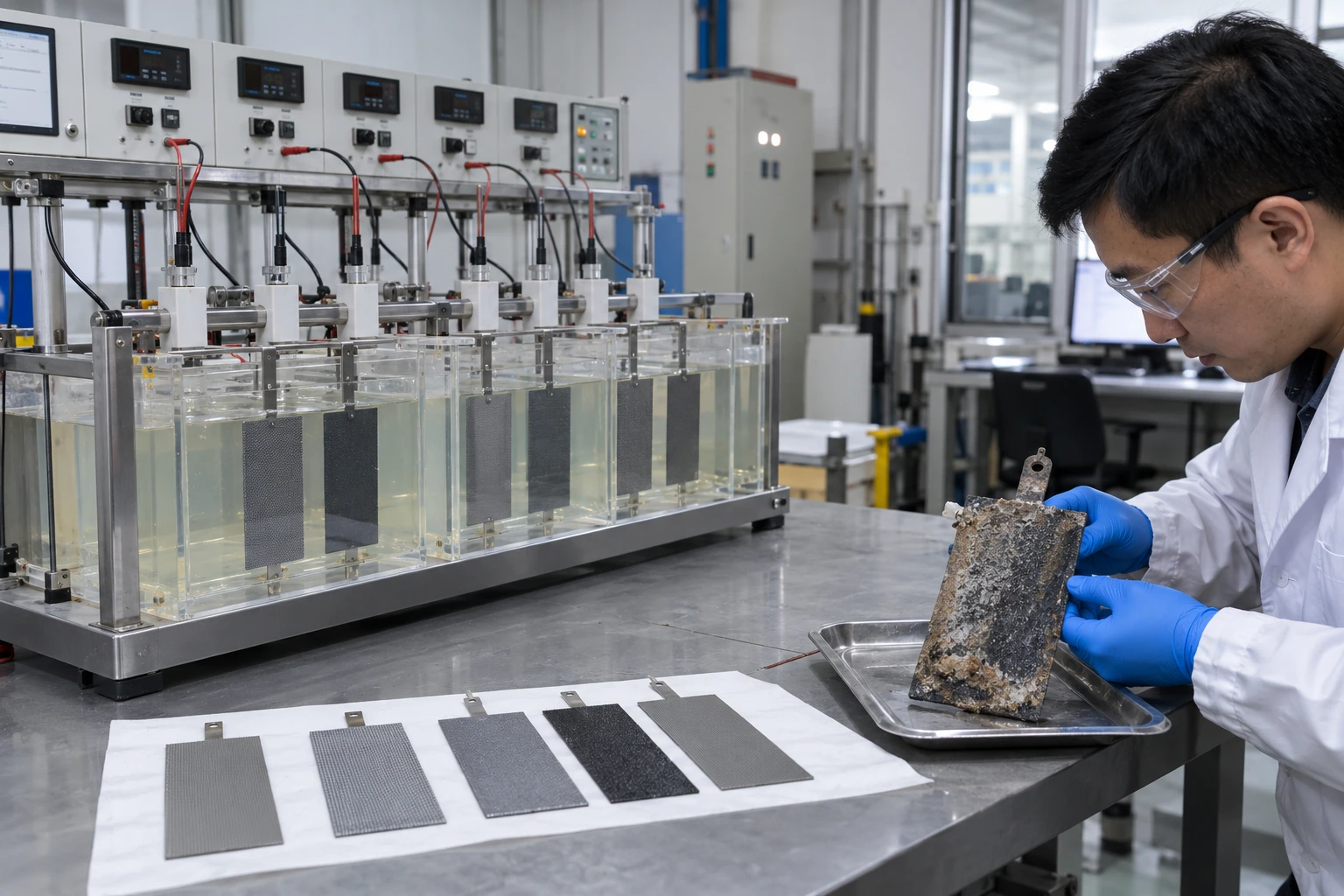
Accelerated tests can compare Titanium electrode durability under defined stress, but converting test hours into field years requires validation. A different stress may create a different failure mechanism.
Which test details must be disclosed?
Ask how the accelerated result relates to service. Obtain chemistry, temperature, current density, area basis, sample count, and endpoint. A conversion factor without supporting evidence should remain an estimate.
- Compare test and field degradation modes.
- Request repeatability and sample variability.
- Separate screening results from warranty claims.
| Check | Decision |
|---|---|
| Screening test | Ranks samples under stated stress |
| Validated correlation | Supports a bounded field estimate |
A longer laboratory result does not automatically establish longer service in your cell. Key Takeaway: Accept lifetime conversions only with a defensible correlation.
7. Does More Coating Extend Titanium electrode Life?

More active coating may affect Titanium electrode durability, but loading alone cannot guarantee longer life. Composition, adhesion, manufacturing quality, and operating duty also affect performance.
What should you compare besides coating quantity?
Keep the complete coating specification in view. A thicker or heavier layer can differ in microstructure and behavior. Compare matched samples under relevant duty instead of treating one number as a lifetime certificate.
- Identify whether loading refers to metal or oxide mass.
- Confirm the area basis and measurement method.
- Review adhesion, coverage, and functional evidence.
| Check | Decision |
|---|---|
| Coating quantity | Describes one specification |
| Validated durability | Depends on coating and operating system |
A quantity comparison becomes meaningful only when its definitions and conditions match. Key Takeaway: Request loading evidence alongside application performance evidence.
8. Can You Recoat a Worn Titanium electrode?
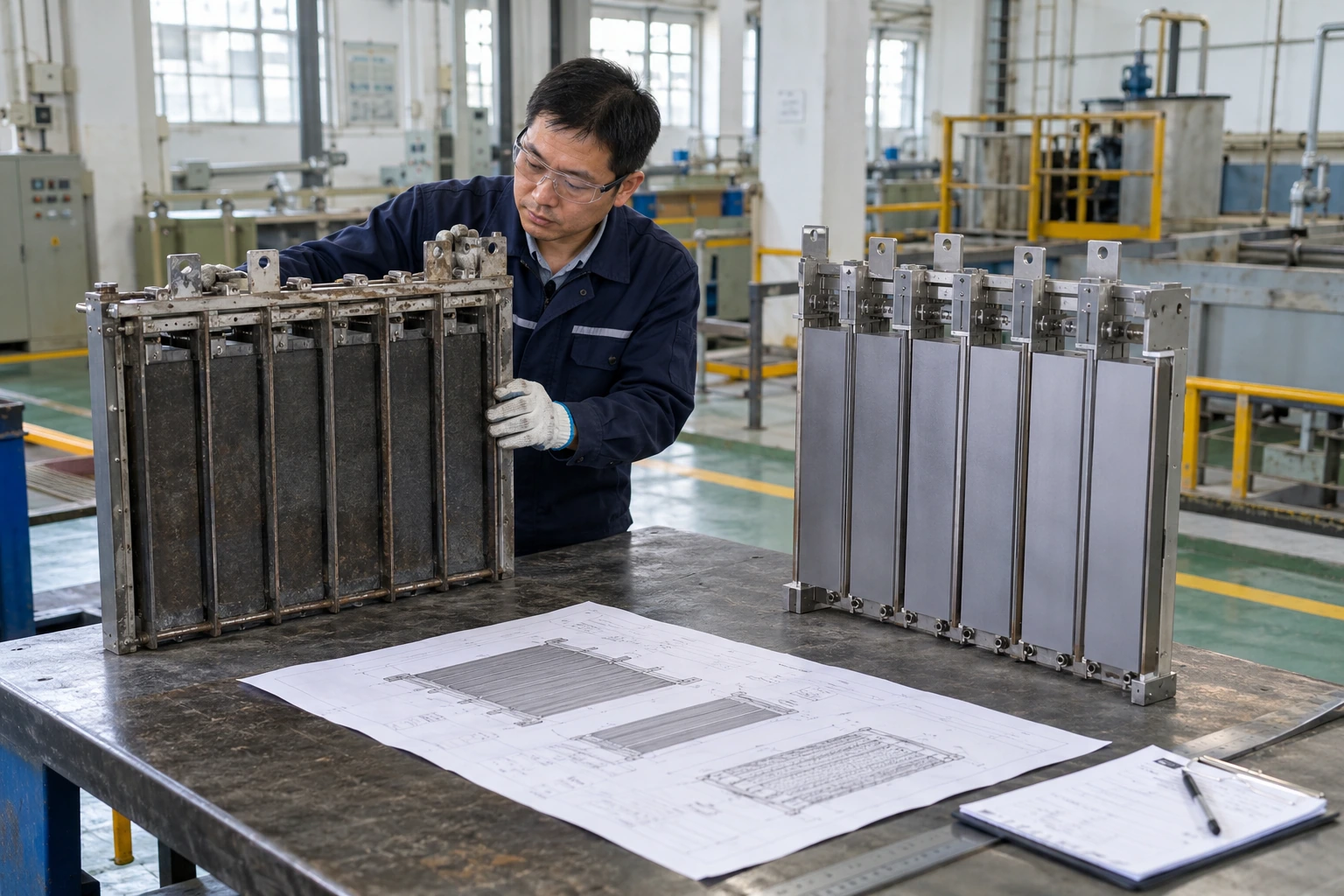
A worn Titanium electrode may be a candidate for recoating when substrate, geometry, and connection integrity remain suitable. Feasibility depends on inspection and the proposed restoration process.
What should a refurbishment assessment cover?
Inspect the structure before discussing a new coating. A custom-service review can begin with photographs, drawings, and service history. Recoating cannot automatically repair distortion, cracked welds, or a changed installation requirement.
- Check substrate loss and mechanical damage.
- Confirm the desired coating and operating duty.
- Compare turnaround, validation, and replacement options.
| Check | Decision |
|---|---|
| Sound reusable structure | May justify refurbishment assessment |
| Damaged or obsolete geometry | May favor replacement |
Refurbishment is a technical disposition, not an automatic extension of the original guarantee. Key Takeaway: Request an inspection-based proposal before returning parts.
9. When Should You Replace a Titanium electrode?

Replace a Titanium electrode when it fails an agreed operating or mechanical criterion and approved corrective actions cannot restore acceptable condition. Planning should account for production and spare-part requirements.
What makes replacement planning practical?
Tie the decision to a recorded threshold. Track the direction and rate of change while allowing for measurement variation. Stock planning should use supplier commitments and your equipment criticality, not an invented universal lifespan.
- Define inspection and performance triggers.
- Confirm replacement fit and revision.
- Coordinate installation and restart validation.
| Check | Decision |
|---|---|
| Condition threshold reached | Initiates a planned disposition |
| Unexplained rapid change | Requires prompt diagnosis |
A planned replacement reduces disruption only when the spare matches the actual cell. Key Takeaway: Keep replacement criteria and spare specifications together.
10. How Do You Request a Titanium electrode Life Assessment?

Request a Titanium electrode life assessment with part identity, operating history, test evidence, and a defined decision. State whether you need diagnosis, spare planning, redesign, or a sample comparison.
What can we review with you?
Send the evidence that explains the duty. We can review electrode design and coating options against your recorded conditions; contact us today with drawings and performance trends. Our position is that useful life claims must remain tied to evidence and operating limits.
- Provide baseline and current performance.
- List chemistry, current, cleaning, and excursions.
- State the failure criterion and required next action.
| Check | Decision |
|---|---|
| Diagnosis package | Helps identify the cause |
| Design package | Supports a revised electrode proposal |
The same records support both fault investigation and a better replacement specification. Key Takeaway: Build a life assessment around your cell's evidence.
Frequently Asked Questions
Can I compare two suppliers by years of claimed life? Only when duty and failure criteria match. Otherwise the claims may describe very different service conditions.
What's the best indicator of remaining coating life? Use a combination of condition and performance evidence. No single voltage or calendar reading proves remaining coating inventory.
How do I know if cleaning will restore performance? Inspect and diagnose before deciding. A qualified cleaning trial may distinguish removable deposits from persistent degradation.
Can I convert accelerated test hours into years? Only with a validated correlation. Stress conditions and failure mechanisms must relate to your actual process.
Can I reuse the titanium after coating wear? Possibly, after inspection. Substrate condition, geometry, welds, and restoration feasibility determine whether recoating makes sense.