
Define Titanium electrode coating areas by reaction function, wetted geometry and connection requirements on a controlled drawing. Two suppliers can quote the same plate size yet coat different edges, faces or terminal regions. That difference changes your active-area calculation and can interfere with sealing or assembly. Mark every treated and untreated surface before approving a sample or production quotation.
1. What is a Titanium electrode coating boundary?

A Titanium electrode coating boundary marks where a specified surface treatment starts or ends on the substrate. It must relate to reaction duty, assembly interfaces and manufacturing tolerances.
Which boundary does your drawing actually define?
Separate outline from treatment. A plate's external dimensions do not establish its coated window. Show boundary dimensions from stable datums that an inspector can reproduce.
- Identify coating type by surface region.
- Specify boundary location and agreed tolerance.
| Check | Decision |
|---|---|
| Plate outline | Defines substrate geometry |
| Coating boundary | Defines specified surface treatment |
Keep both geometries visible in the drawing package. Key Takeaway: A dimensioned plate is not yet a complete coating specification.
2. Which Titanium electrode surfaces are active?
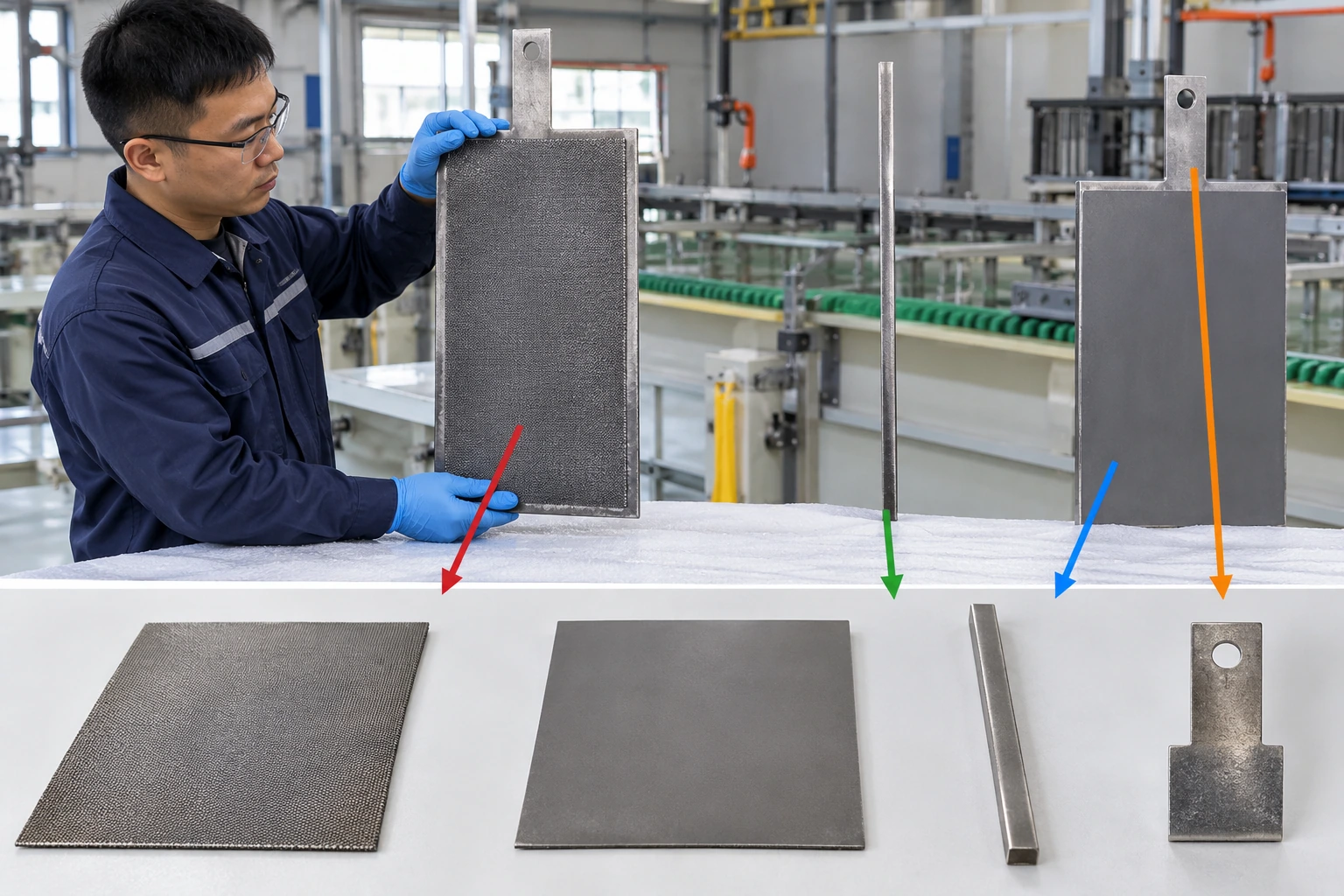
Active Titanium electrode surfaces are those intended to carry the specified electrochemical reaction under the approved immersed condition. Front, back and edges may contribute differently depending on construction and current paths.
Are all visible surfaces equally active?
State the area convention. Identify which faces and edges are included in your loading calculation. Avoid switching between projected area and developed mesh area without documenting the basis.
- Mark each active face explicitly.
- Exclude dry or intentionally inactive regions.
| Check | Decision |
|---|---|
| Visible metal area | May exceed qualified active area |
| Declared active area | Supports consistent current-density reporting |
Make area calculations traceable to the drawing. Key Takeaway: Use one agreed area basis across design, quotation and testing.
3. Can uncoated Titanium electrode zones carry reaction current?
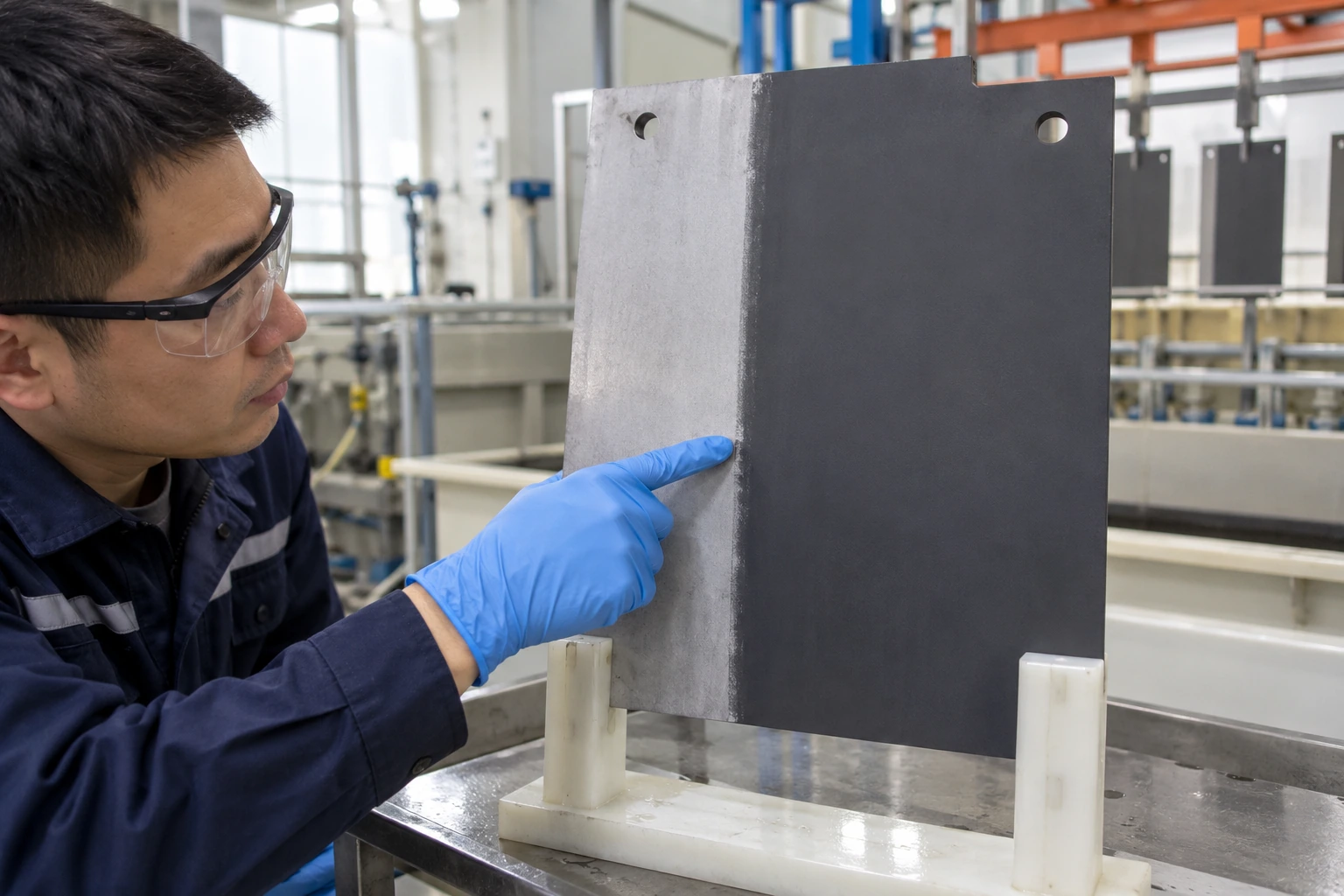
Uncoated Titanium electrode zones should not be assumed to perform like qualified catalytic coating. Bare titanium can develop a passive surface whose behavior differs from the intended coated reaction area.
What job does an uncoated region perform?
Specify its purpose. Dry terminals, assembly lands and other untreated regions need defined exposure conditions. Do not extend a coated-area performance claim across every bare surface on the part.
- Mark expected wet and dry boundaries.
- Review any unintended electrolyte exposure.
| Check | Decision |
|---|---|
| Uncoated connection region | Requires its own interface specification |
| Coated active region | Carries the qualified reaction duty |
Keep surface function separate from substrate identity. Key Takeaway: Titanium substrate alone does not establish equal electrochemical performance everywhere.
4. How do masks affect Titanium electrode current density?

Masking changes Titanium electrode active area when it excludes surfaces from the intended reaction. At unchanged total current, a smaller declared active area changes the calculated average current density.
Did masking change your loading basis?
Recalculate from the released drawing. Include coating windows and immersed boundaries in a custom engineering review. Ask for clarification whenever quotation and test reports use different area definitions.
- Retain the active-area calculation revision.
- Record current used during sample qualification.
| Check | Decision |
|---|---|
| Mask window revised | Review active-area calculation |
| Current unchanged | Reassess loading on qualified area |
Evaluate geometry and electrical duty together. Key Takeaway: A small boundary change can invalidate an old current-density comparison.
5. Where should Titanium electrode gasket lands sit?
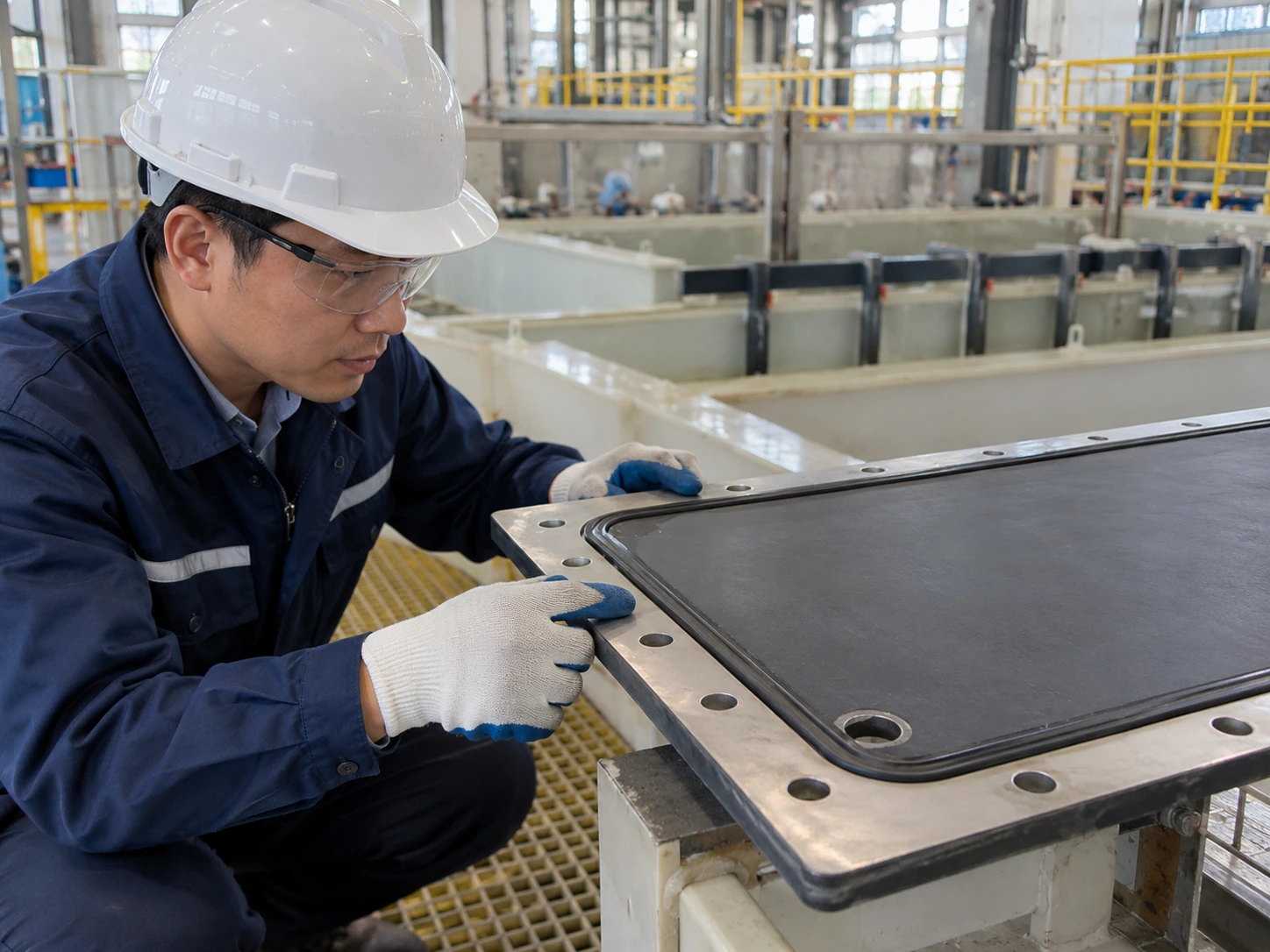
Titanium electrode gasket lands should follow an approved interface design that accounts for surface condition, compression and material compatibility. Whether coating belongs under a seal must be specified rather than assumed.
What should the seal contact?
Resolve the interface detail. Show gasket footprint, coating edge and assembly datums together. Coordinate electrode and seal suppliers where their requirements overlap.
- Identify protected active surfaces during assembly.
- Define permitted contact and compression regions.
| Check | Decision |
|---|---|
| Seal footprint unspecified | Creates assembly ambiguity |
| Interface drawing approved | Supports repeatable fit and sealing |
Approve the contact geometry before production. Key Takeaway: Coating and sealing requirements need one coordinated boundary drawing.
6. How are Titanium electrode coating edges inspected?

Titanium electrode coating edges can be inspected through agreed visual and dimensional methods, with additional surface analysis where required. Inspection should avoid scratching or abrading the active coating.
What makes an edge acceptable?
Write observable criteria. Define permitted boundary variation and relevant visible defects with the supplier. A vague requirement for a perfect edge invites disagreement after delivery.
- Use agreed lighting and magnification where needed.
- Record representative approved sample photographs.
| Check | Decision |
|---|---|
| Appearance statement only | Open to interpretation |
| Defined acceptance method | Supports consistent inspection |
Match inspection detail to the functional risk. Key Takeaway: An acceptance criterion should be reproducible by both parties.
7. What Titanium electrode drawing symbols are needed?

A Titanium electrode drawing should distinguish coated, uncoated, masked and protected regions using an agreed legend and dimensions. Symbols alone are insufficient if reviewers interpret them differently.
Could another shop read this drawing correctly?
Test the drawing without explanation. Ask manufacturing and inspection personnel to identify every surface from the released package. Resolve ambiguous face views or hidden edges before approval.
- Include front, back and relevant section views.
- Define treatment notes in plain language.
| Check | Decision |
|---|---|
| Local verbal understanding | Does not travel with the order |
| Controlled drawing legend | Supports repeatable interpretation |
Use the drawing as the shared technical reference. Key Takeaway: Coating intent should survive a change of reviewer or production batch.
8. Can finishing damage Titanium electrode coating boundaries?
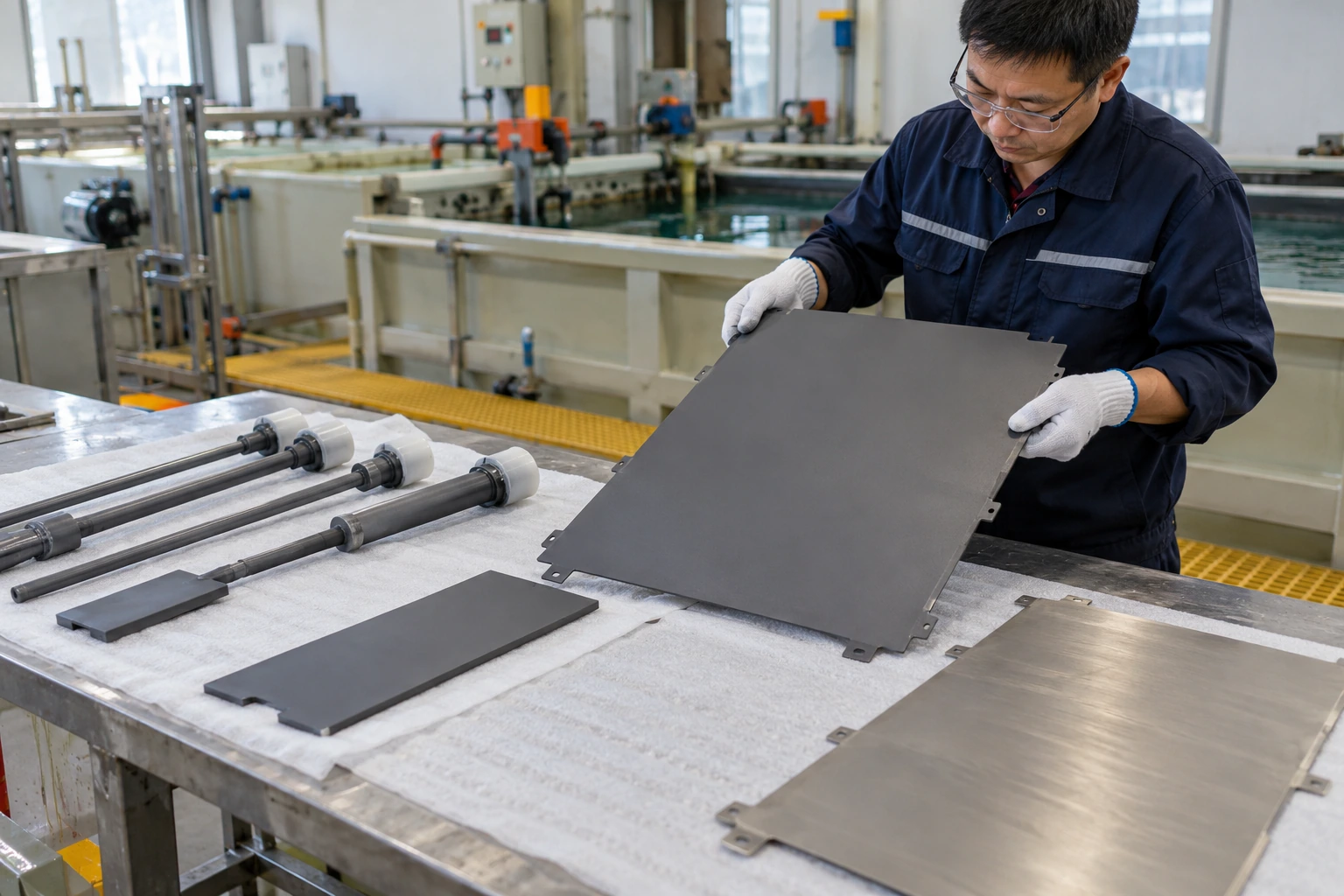
Post-coating finishing can damage Titanium electrode boundaries if tools contact active surfaces or alter qualified geometry. Manufacturing sequence and permitted rework should be agreed before production.
Which operations occur after coating?
Review the sequence explicitly. For water-treatment applications, consider whether downstream assembly introduces contact near active regions. Keep machining and corrective work within a supplier-approved process.
- Identify post-coating operations and protections.
- Require review of unplanned rework.
| Check | Decision |
|---|---|
| Qualified sequence | Preserves defined interfaces |
| Unplanned finishing | Needs technical review |
Treat rework as a potential specification change. Key Takeaway: Avoid repairing dimensional issues by casually working on finished coating.
9. How should Titanium electrode samples be approved?
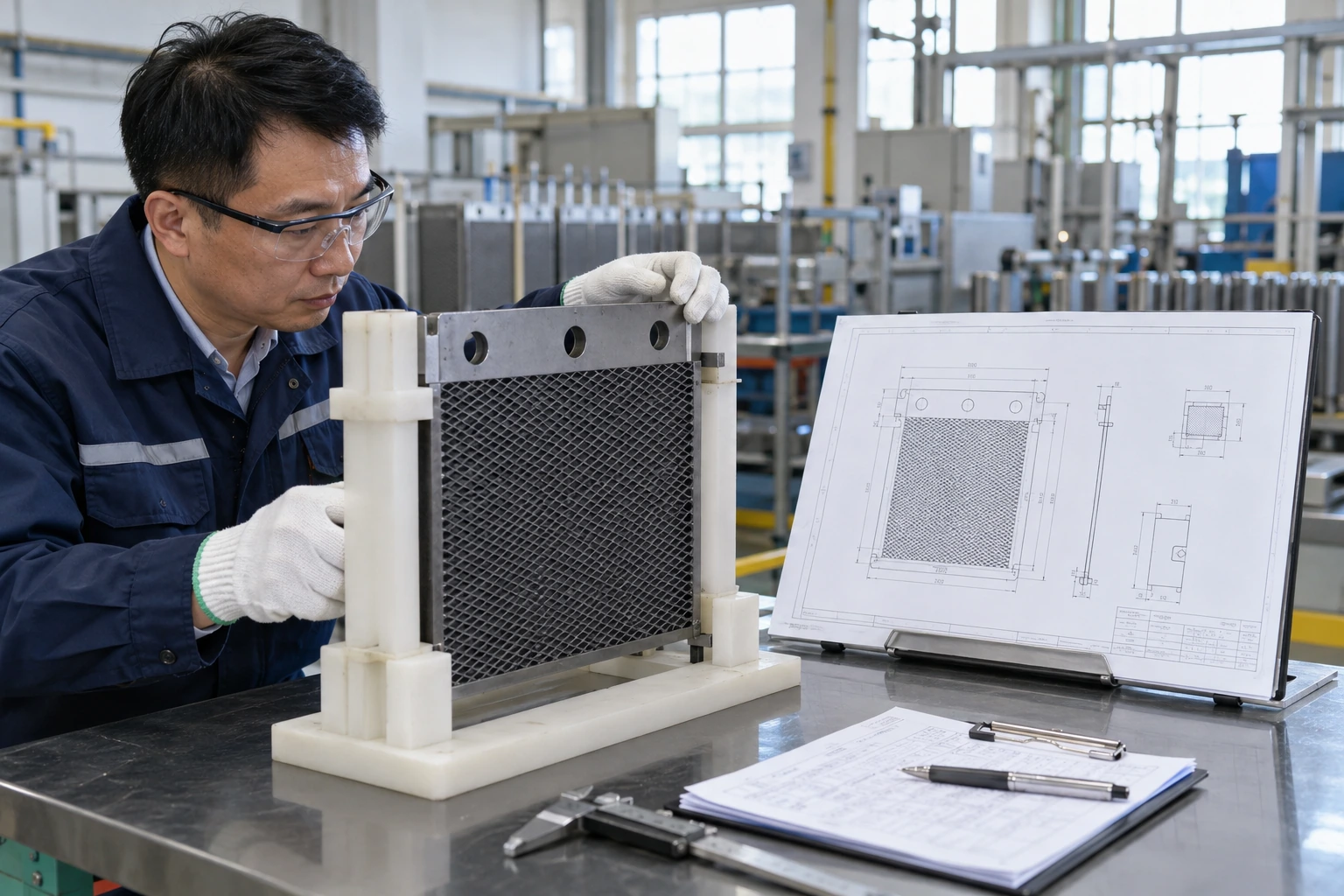
Titanium electrode sample approval should confirm geometry, coating boundaries, assembly fit and the intended test basis. A visually acceptable sample does not by itself qualify all production variation.
What exactly are you approving?
Attach approval to a revision. Record sample identity and any agreed exceptions. Keep functional testing separate from purely dimensional and appearance acceptance.
- Retain an approved reference sample where practical.
- Define which characteristics production must reproduce.
| Check | Decision |
|---|---|
| Sample appearance approval | Limited acceptance scope |
| Documented multi-criterion approval | Clearer production reference |
Avoid expanding a sample sign-off beyond its evidence. Key Takeaway: Approve named characteristics against a controlled specification.
10. What Titanium electrode masking details should you send?

A Titanium electrode masking request should include active faces, coating boundaries, dry connections, seal lands and dimensional acceptance. These details prevent similar-looking parts from carrying different functional assumptions.
Release a manufacturable surface map
Send every relevant view. When you contact us today, we can review drawing-based electrode scope and clarify coating regions before quoting. Our position is that a useful specification should guide both production and inspection.
- Include application conditions and immersion level.
- Identify the active-area convention used in tests.
| Check | Decision |
|---|---|
| Surface map complete | Supports consistent manufacturing review |
| Boundary assumptions unresolved | Requires clarification before release |
Resolve ambiguity while the design remains editable. Key Takeaway: Order a defined surface treatment, not merely a titanium shape.
Frequently Asked Questions
Can I assume both faces are coated? No. Specify each face and relevant edge explicitly, including any uncoated terminal or assembly region.
How do I know if my current-density area is correct? Use the agreed active-area convention. Tie it to immersed coating geometry and keep that basis consistent across reports.
What's the best masking tolerance? It depends on manufacturing capability and function. Agree on a tolerance that protects sealing, loading and assembly requirements.
Can I machine a coated edge after delivery? Only with supplier-approved instructions. Unplanned machining can damage coating or change qualified dimensions.
Can I approve a sample from photographs alone? Only for limited visible characteristics. Dimensions, fit and operating performance may require separate checks.