
Choose a Titanium electrode trial electrolyte that supports your intended reaction and matches material and product requirements, rather than selecting a salt for conductivity alone. A convenient laboratory solution can produce a clean current trace while introducing chemistry your production process never uses. That mismatch makes a successful trial difficult to transfer. Define reactions, impurities and measurement conditions before preparing the comparison.
1. What does a Titanium electrode electrolyte do?

A Titanium electrode electrolyte carries ionic current and supplies the chemical environment around each reaction surface. Its composition can affect resistance, competing reactions and product analysis.
What role should the liquid play?
Start with the intended reaction. Identify which constituents participate and which are meant mainly to support conductivity. Treat that distinction as something to verify under your actual operating potential and chemistry.
- List feed constituents and their functions.
- Define the desired product or treatment outcome.
| Check | Decision |
|---|---|
| Reaction species | Part of the intended chemistry |
| Supporting species | Still needs compatibility review |
Build the trial around its chemical objective. Key Takeaway: An electrolyte is part of the experiment, not a neutral background assumption.
2. Are Titanium electrode salts interchangeable?
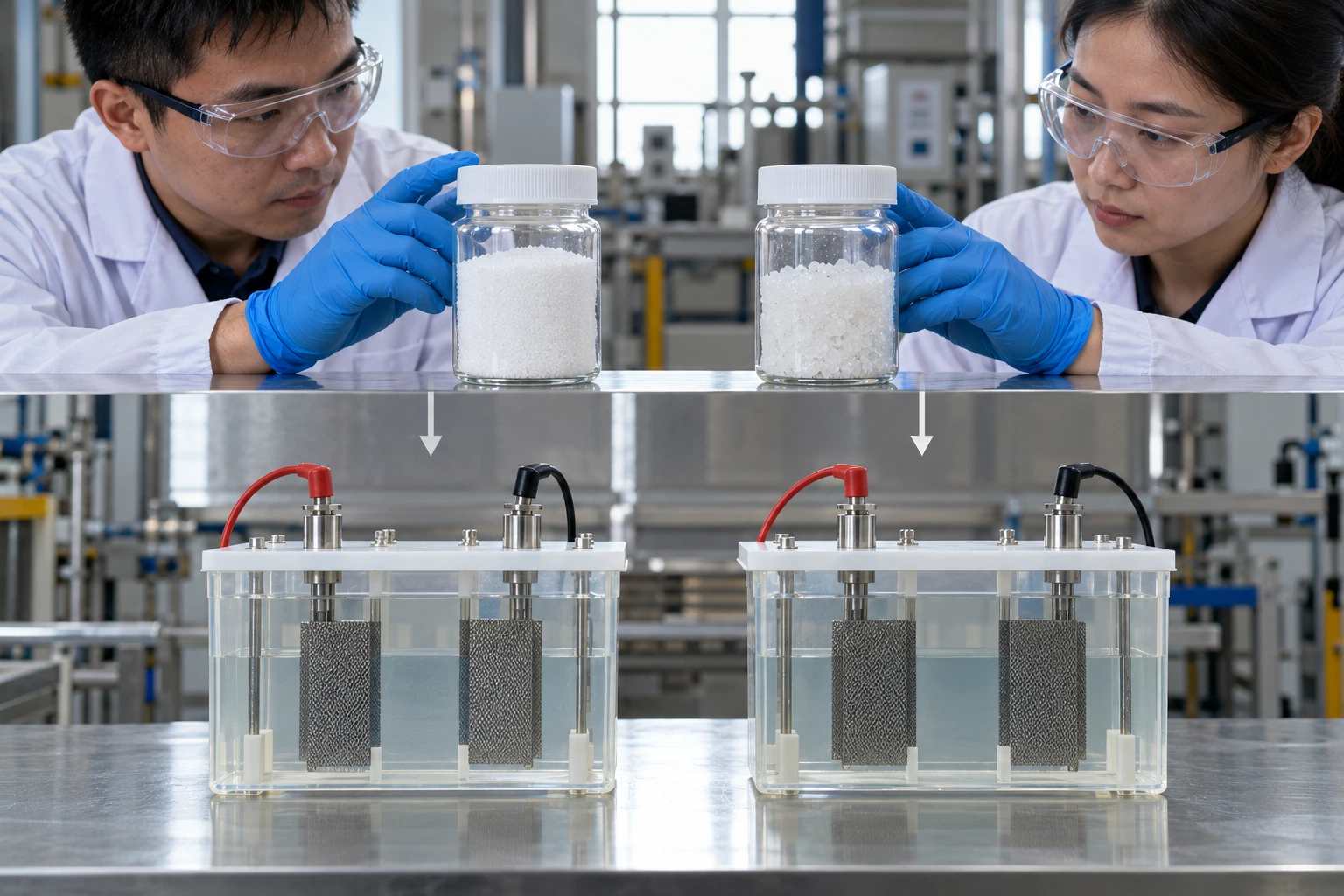
Salts are not interchangeable in a Titanium electrode trial merely because they produce similar conductivity. Changing ions can alter reaction pathways, deposits, material exposure and analytical interference.
Can equal conductivity hide different chemistry?
Compare composition explicitly. Keep salt identity, grade and concentration in your trial record. Do not substitute a cheaper salt without reviewing the full chemical consequence.
- Record supplier batch and preparation method.
- Retain feed samples for disputed results.
| Check | Decision |
|---|---|
| Equal conductivity | Similar bulk conduction only |
| Different ions | Potentially different process chemistry |
Use conductivity alongside composition, never instead of it. Key Takeaway: A salt substitution is a chemistry change that needs review.
3. How does chloride change Titanium electrode chemistry?
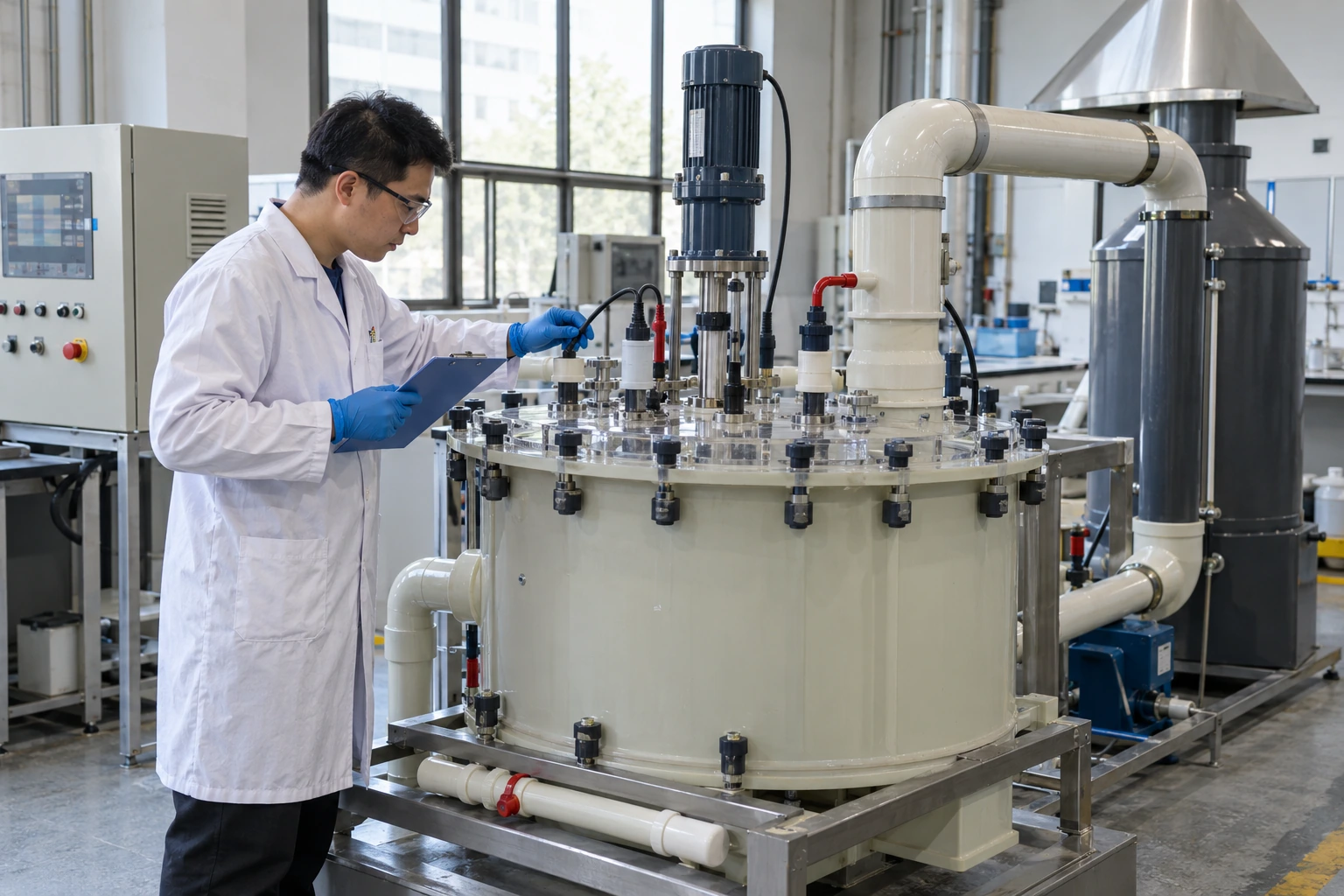
Chloride can participate in anodic reactions in a Titanium electrode cell and lead to chlorine-related products under suitable conditions. Adding it to a nonchlorine process therefore requires explicit review.
Are chlorine-related reactions intended?
Name the unintended products too. Have qualified process personnel assess gas management, materials and product analysis. Avoid treating chloride addition as a harmless way to improve a voltage reading.
- State whether chlorine chemistry is desired.
- Include relevant product and by-product checks.
| Check | Decision |
|---|---|
| Chloride intentionally used | Qualify the complete duty |
| Chloride introduced incidentally | Review changed reaction risks |
Match electrolyte choice with the intended process route. Key Takeaway: Lower resistance does not justify an unreviewed change in reaction chemistry.
4. Does sulfate make a Titanium electrode process inert?

Sulfate does not make a Titanium electrode process universally inert; electrolyte and water reactions still depend on electrode conditions. A supporting salt description is not a guarantee of chemical inactivity.
What does inert mean in this test?
Define the operating window. Include intended potential or current duty and product criteria in a custom engineering review. Ask what evidence supports treating a constituent as nonparticipating under those conditions.
- Identify plausible competing reactions.
- Record the coating and polarity used.
| Check | Decision |
|---|---|
| Assumed inactivity | Needs evidence |
| Qualified operating window | Supports a limited claim |
Keep chemical claims tied to the tested duty. Key Takeaway: Use precise reaction assumptions instead of calling an electrolyte universally inert.
5. Why measure Titanium electrode feed conductivity?

Titanium electrode feed conductivity helps characterize ionic conduction but must be recorded with temperature and measurement method. A nominal salt concentration alone may miss preparation errors or contamination.
What should a conductivity record include?
Measure the prepared feed. Use a suitable calibrated instrument and document temperature compensation settings. Compare the same sampling point across trials.
- Record actual temperature and reported conductivity.
- Note dilution and instrument range.
| Check | Decision |
|---|---|
| Recipe concentration | Describes preparation intent |
| Measured conductivity | Checks a bulk liquid property |
Resolve disagreement before starting the comparison. Key Takeaway: Measured feed properties make trial conditions more reproducible.
6. Can impurities change Titanium electrode trial results?
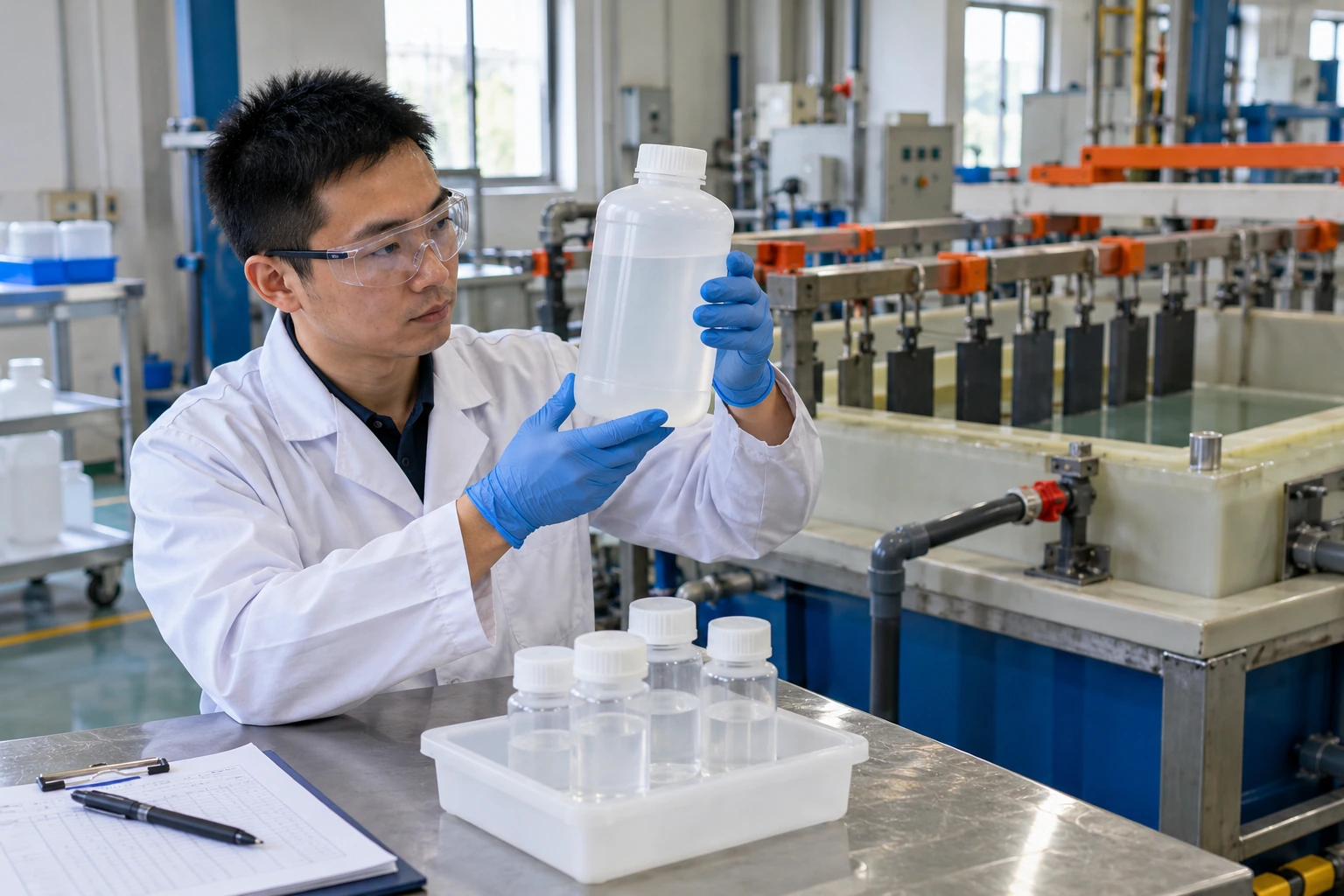
Impurities can change Titanium electrode trial results through deposits, competing reactions or contamination of the measured product. Their relevance depends on concentration, chemistry and your acceptance objective.
Which impurities could answer the wrong question?
Choose purity for the trial's purpose. A mechanism study and a production-feed trial need different impurity controls. Record that choice rather than presenting laboratory-purity results as guaranteed field behavior.
- Review source water and salt certificates.
- Identify impurities relevant to product quality.
| Check | Decision |
|---|---|
| Controlled laboratory feed | Useful for isolating variables |
| Representative production feed | Useful for application validation |
Use each feed type for its intended evidence. Key Takeaway: Clean laboratory performance does not automatically transfer to variable plant feed.
7. How should Titanium electrode pH be recorded?
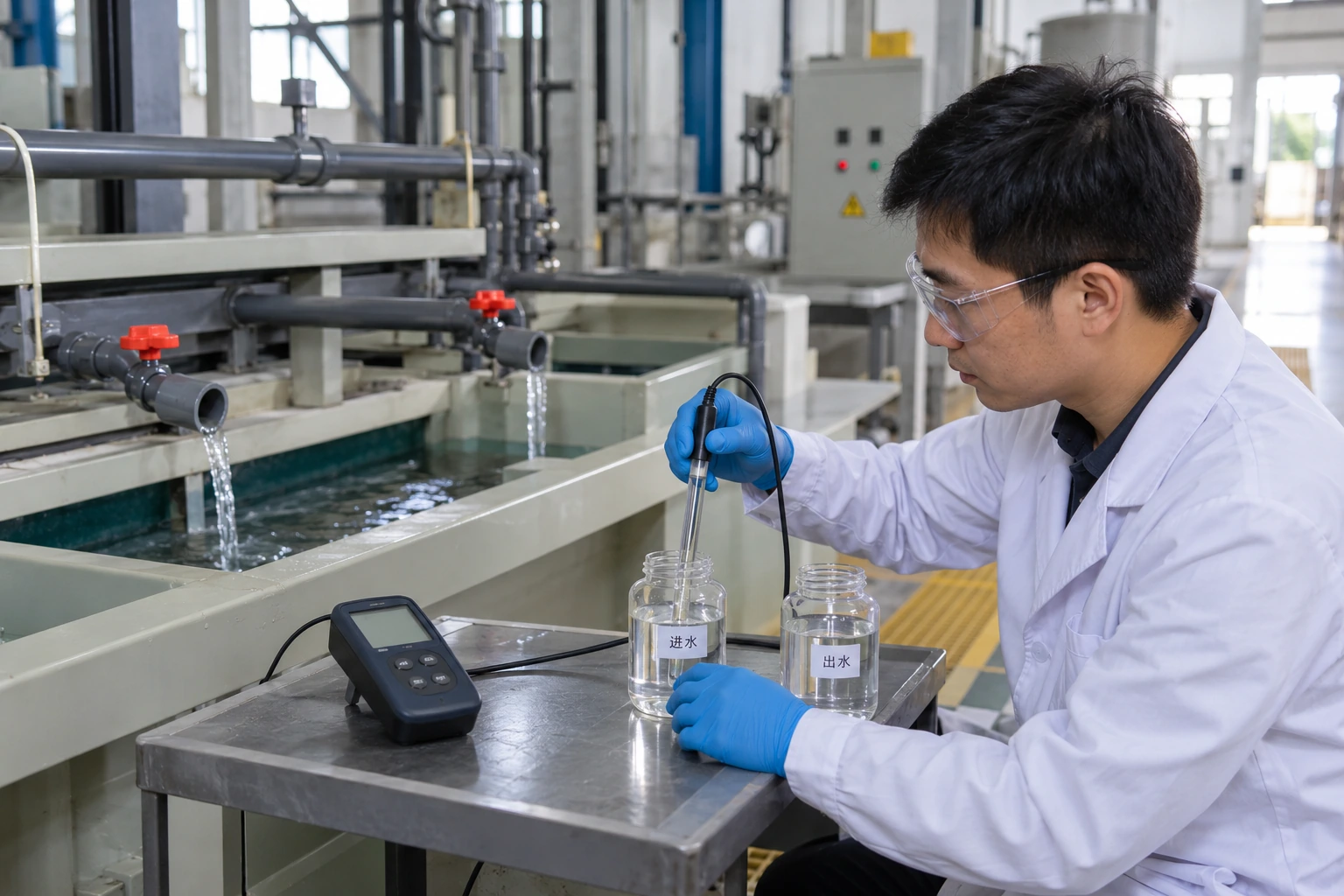
Titanium electrode pH should be recorded at defined locations and times because electrolysis can change local and bulk chemistry. One inlet reading cannot describe every reaction surface.
Where was that pH measured?
Keep sampling boundaries visible. Identify inlet, outlet and separate compartments where applicable. Use a method suitable for the liquid and avoid comparing samples after different storage delays.
- Record temperature and sampling time.
- Document any dilution required by the method.
| Check | Decision |
|---|---|
| Inlet pH | Describes incoming feed |
| Outlet or compartment pH | Describes changed process liquid |
Compare pH records with the same boundaries. Key Takeaway: A useful pH value needs a location and timing context.
8. What must stay fixed in Titanium electrode trials?

A Titanium electrode electrolyte comparison should keep electrode geometry, coating, current basis, temperature and sampling method consistent. Changes outside the electrolyte need explicit disclosure.
What are you really comparing?
Control the rest of the test. When applying results to water-treatment applications, include relevant feed contaminants rather than claiming broad transfer from one laboratory salt. State which conditions remain untested.
- Use comparable electrode history and preparation.
- Define output and material-condition endpoints.
| Check | Decision |
|---|---|
| Electrolyte-only change | Supports a focused comparison |
| Multiple uncontrolled changes | Limits causal interpretation |
Write the comparison basis before collecting data. Key Takeaway: A disciplined trial produces a narrower but more defensible finding.
9. What belongs in a Titanium electrode electrolyte spec?

A Titanium electrode electrolyte specification should identify composition, preparation, relevant impurities, temperature and analytical acceptance checks. It should distinguish nominal recipe values from verified feed properties.
What should be reproducible next time?
Document the preparation chain. Include water source, salt grade, batch identity and handling controls. Leave no ambiguity about whether concentration refers to stock solution or actual cell feed.
- Use consistent concentration units and basis.
- Record accepted preparation and storage conditions.
| Check | Decision |
|---|---|
| Preparation record | Supports reproducibility |
| Feed verification | Checks the actual supplied liquid |
Keep both records with your electrode trial results. Key Takeaway: A repeatable electrolyte specification prevents accidental experiment changes.
10. How should you request Titanium electrode chemistry review?

A Titanium electrode chemistry review needs the intended reaction, complete feed analysis, electrical duty and product limits. These inputs reveal whether an electrolyte change supports your process or changes its purpose.
Ask a chemistry-specific question
Send composition with the objective. When you contact us today, we can review electrode and coating requirements for the supplied operating conditions. Our position favors application evidence over claims that any conductive salt will work.
- Include normal and variable feed constituents.
- Identify who approves chemical and product acceptance.
| Check | Decision |
|---|---|
| Defined chemistry | Supports a material review |
| Undefined salt substitution | Needs process clarification |
Resolve the reaction basis before comparing samples. Key Takeaway: Qualify an electrode-electrolyte combination, not a salt name alone.
Frequently Asked Questions
Can I add salt to reduce voltage during a trial? Only after chemistry review. The added ions can affect products and material exposure beyond changing conductivity.
What's the best supporting electrolyte for titanium? No universal choice applies. Match the coating, intended reaction, analytical goal and operating conditions.
Can I use tap water for a laboratory comparison? Possibly, if it matches the trial objective. Measure and record its relevant variability rather than assuming a fixed composition.
How do I know if a salt is truly inactive? You need evidence within the operating window. A supporting-electrolyte label does not guarantee inactivity at every electrode potential.
Can I transfer a laboratory result to production feed? Only with appropriate validation. Real impurities, temperature variation and handling can change performance.