
Verify Titanium electrode coating quality with agreed material, dimensional, surface, and functional checks rather than appearance alone. A delivery looks identical to an approved sample but behaves differently during commissioning. Without a defined test method and batch identity, neither purchasing nor production can explain the mismatch. Build an acceptance plan that states what each check proves and where its limits begin.
1. What Should Titanium electrode Quality Testing Prove?

Titanium electrode quality testing should prove conformity with a defined part and operating specification. Different checks answer different questions, so one certificate cannot establish every property.
How do you build a test matrix?
Start with the buying decision. Fit, coating identity, surface condition, and functional behavior each require suitable evidence. Assign a method, sampling plan, and acceptance rule to each risk.
- List drawing and coating requirements separately.
- Identify destructive and nondestructive checks.
- Agree which records accompany each batch.
| Check | Decision |
|---|---|
| Dimensional evidence | Supports installation acceptance |
| Functional evidence | Supports performance under stated duty |
A test becomes useful when its result can change a release decision. Key Takeaway: Write the acceptance matrix before ordering samples.
2. Can Titanium electrode Color Prove Coating Composition?
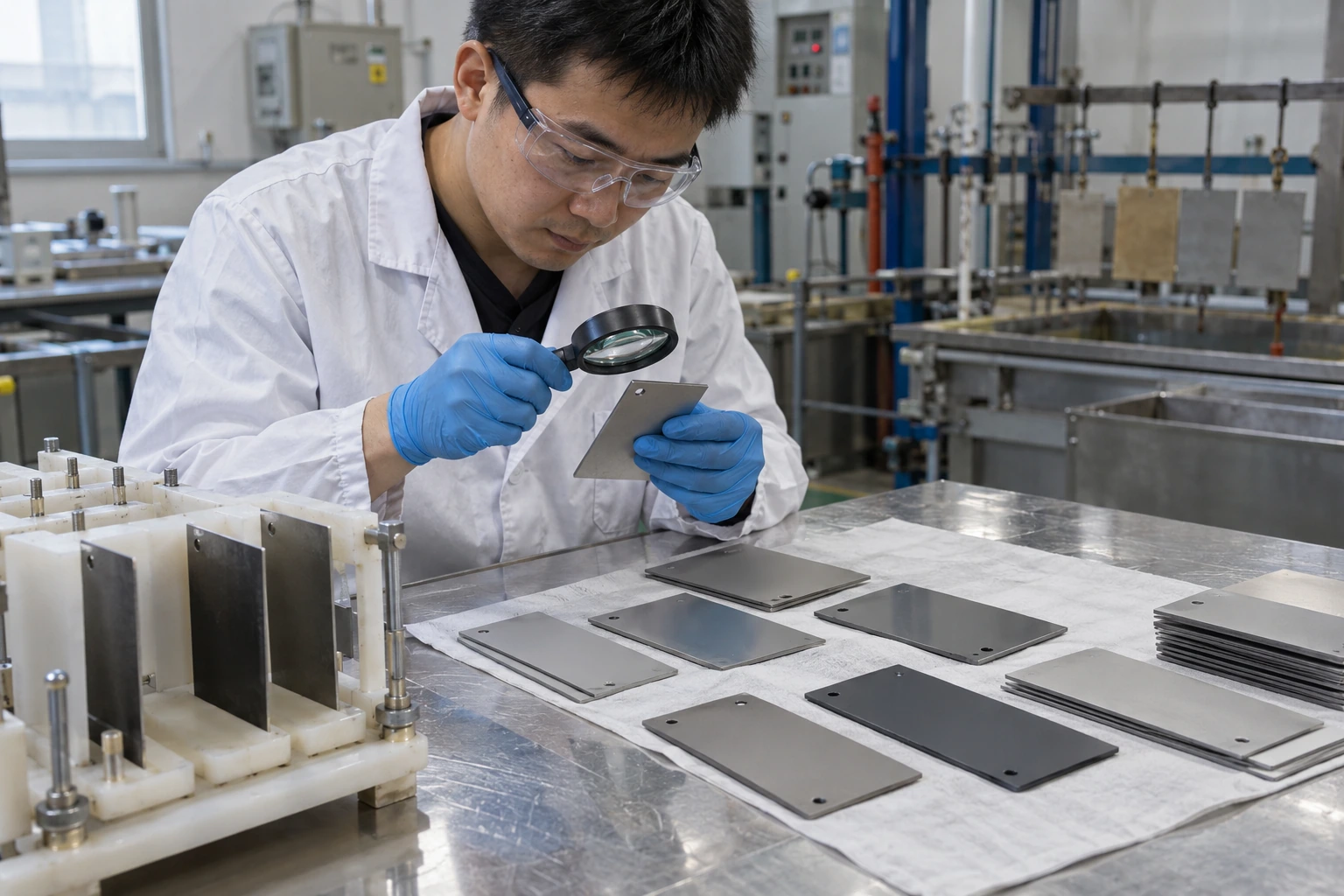
Titanium electrode color cannot prove coating composition or loading by itself. Lighting, surface texture, processing, and contamination can change appearance without identifying the underlying chemistry.
What is a visual check good for?
Use appearance to find visible defects. Compare coverage, scratches, residues, and unexpected differences against an approved reference. Escalate discrepancies through a defined method instead of guessing chemistry from shade.
- Use consistent lighting and viewing distance.
- Photograph edges, welds, and masked boundaries.
- Record damage separately from acceptable color variation.
| Check | Decision |
|---|---|
| Visual inspection | Finds visible condition changes |
| Composition test | Needs an appropriate analytical method |
An attractive surface can still lack the required functional evidence. Key Takeaway: Keep visual acceptance separate from chemical verification.
3. What Can XRF Tell You About a Titanium electrode?
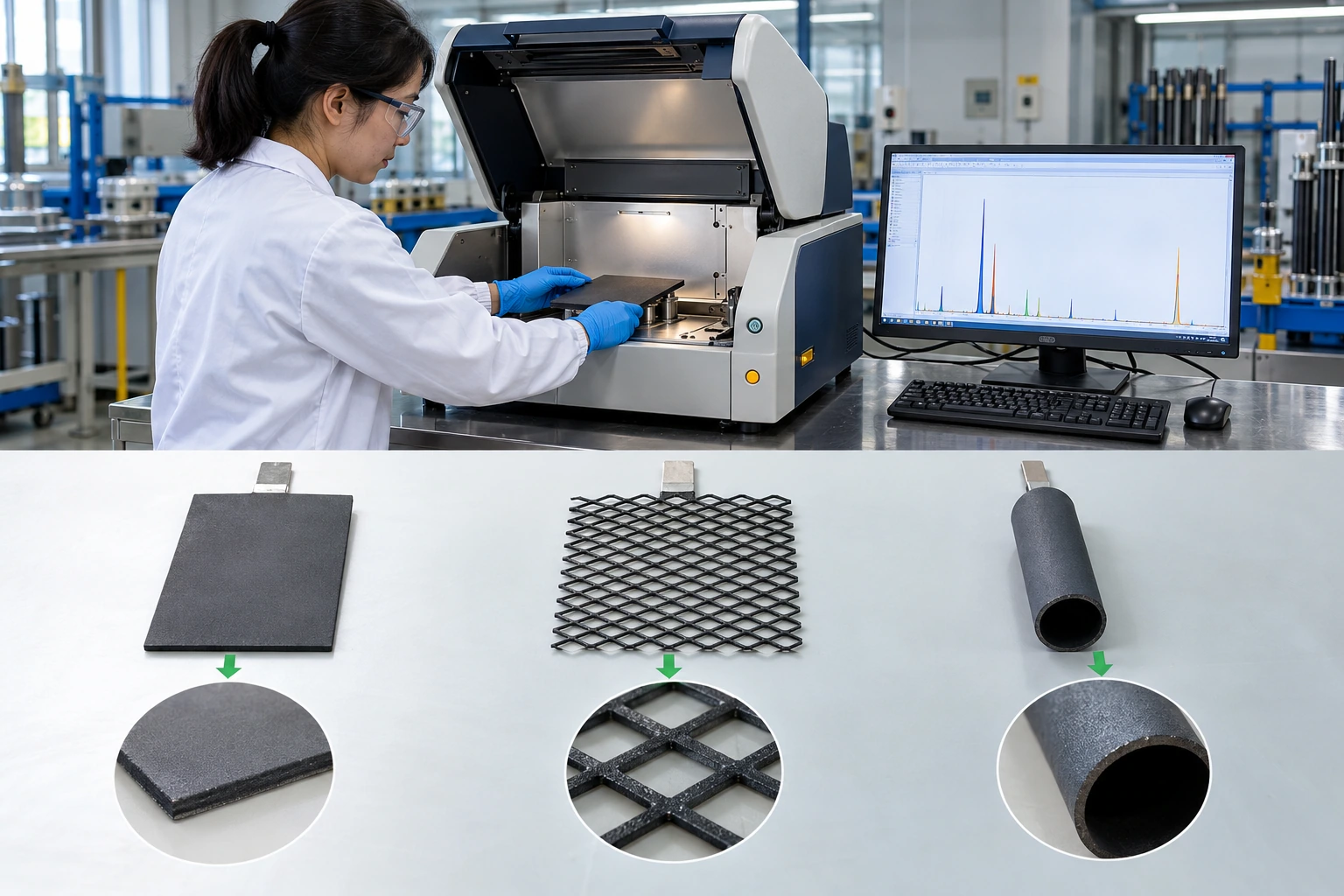
XRF can support Titanium electrode elemental and coating analysis when calibration, geometry, and the layer model suit the sample. Detection of an element does not independently prove adhesion or service life.
Which assumptions must the laboratory explain?
Ask what the instrument has been calibrated to measure. Curved surfaces and mesh openings can affect the result. A method designed for one coating and substrate may not transfer directly to another.
- Identify reference standards and measurement spots.
- State whether results represent composition, mass per area, or thickness.
- Report method limits and measurement uncertainty.
| Check | Decision |
|---|---|
| Elemental signal | Supports composition analysis |
| Qualified coating model | Supports a defined coating measurement |
Instrument precision cannot correct an unsuitable calibration or sample model. Key Takeaway: Request the method and geometry alongside the reported result.
4. How Should You Specify Titanium electrode Coating Loading?

Specify Titanium electrode coating loading with its chemical basis, area convention, units, and measurement method. Metal mass, oxide mass, and film thickness describe different quantities.
Why do quotations sometimes disagree?
Read the definition before comparing the number. Your custom specification review should resolve whether a value covers precious metal, total oxide, or another stated basis. Porosity and composition can complicate conversion from mass into thickness.
- State grams per square meter or micrometers explicitly.
- Identify the area used for mesh calculations.
- Separate target values from acceptance limits.
| Check | Decision |
|---|---|
| Mass per area | Requires a composition and area basis |
| Thickness | Requires a suitable layer model or direct method |
Two equal-looking numbers may describe different properties. Key Takeaway: Make coating-loading definitions part of the purchase specification.
5. Can Microscopy Verify a Titanium electrode Coating?
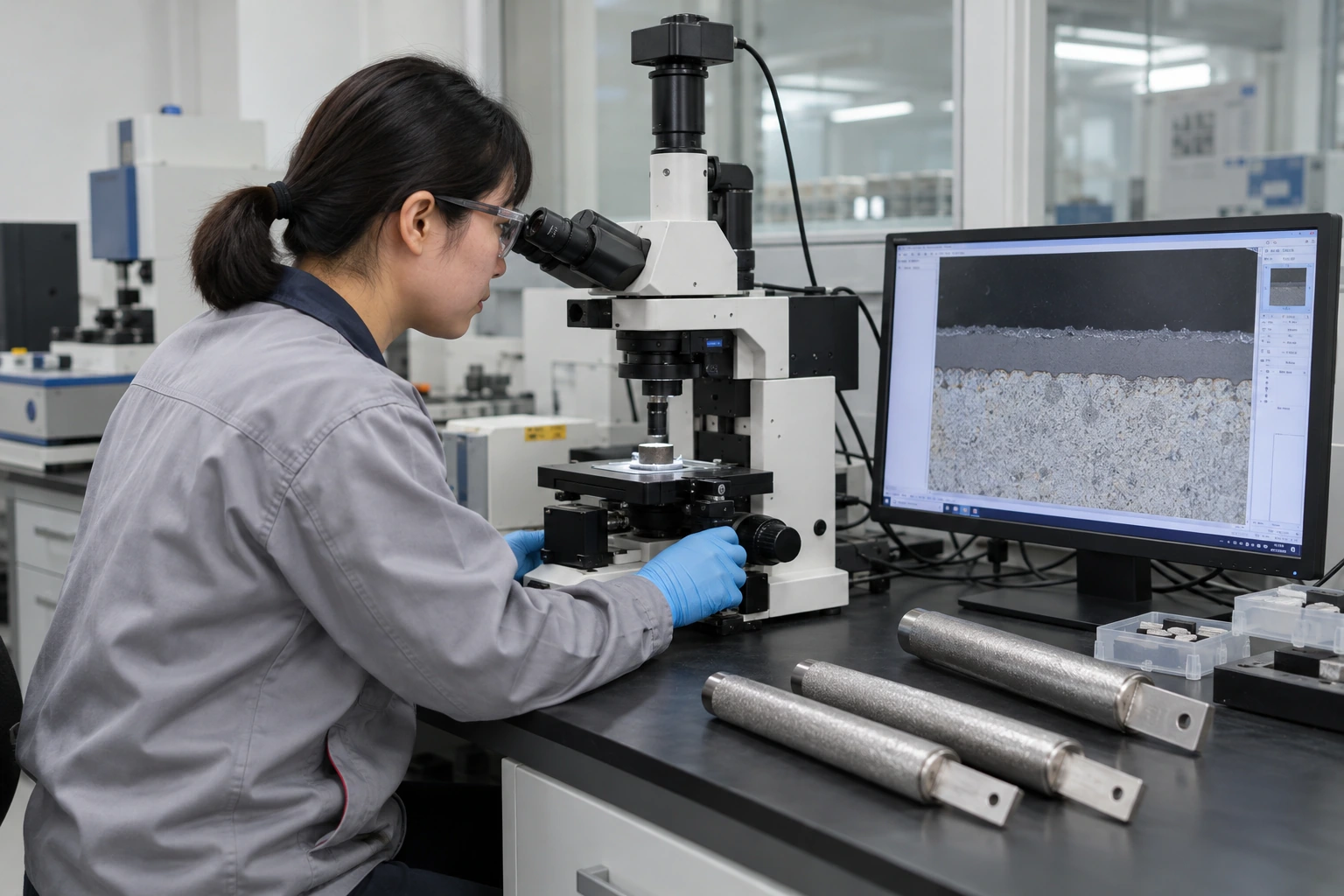
Microscopy can reveal Titanium electrode surface features or cross-sectional structure when sample preparation and resolution suit the question. A small observed area may not represent the whole part.
Where should samples be taken?
Choose locations that match manufacturing risk. Edges, weld zones, flat faces, and complex features can differ. Cross-sectional work may be destructive and should use agreed samples or witness coupons.
- Document preparation and measurement location.
- Distinguish surface images from cross-sectional measurements.
- Avoid treating one field of view as batch-wide proof.
| Check | Decision |
|---|---|
| Surface microscopy | Shows local morphology and defects |
| Cross-section microscopy | Examines local layer structure |
A detailed image has limited value if its location and preparation are unknown. Key Takeaway: Use microscopy to answer a specific question within a sampling plan.
6. How Do You Test Titanium electrode Coating Adhesion?
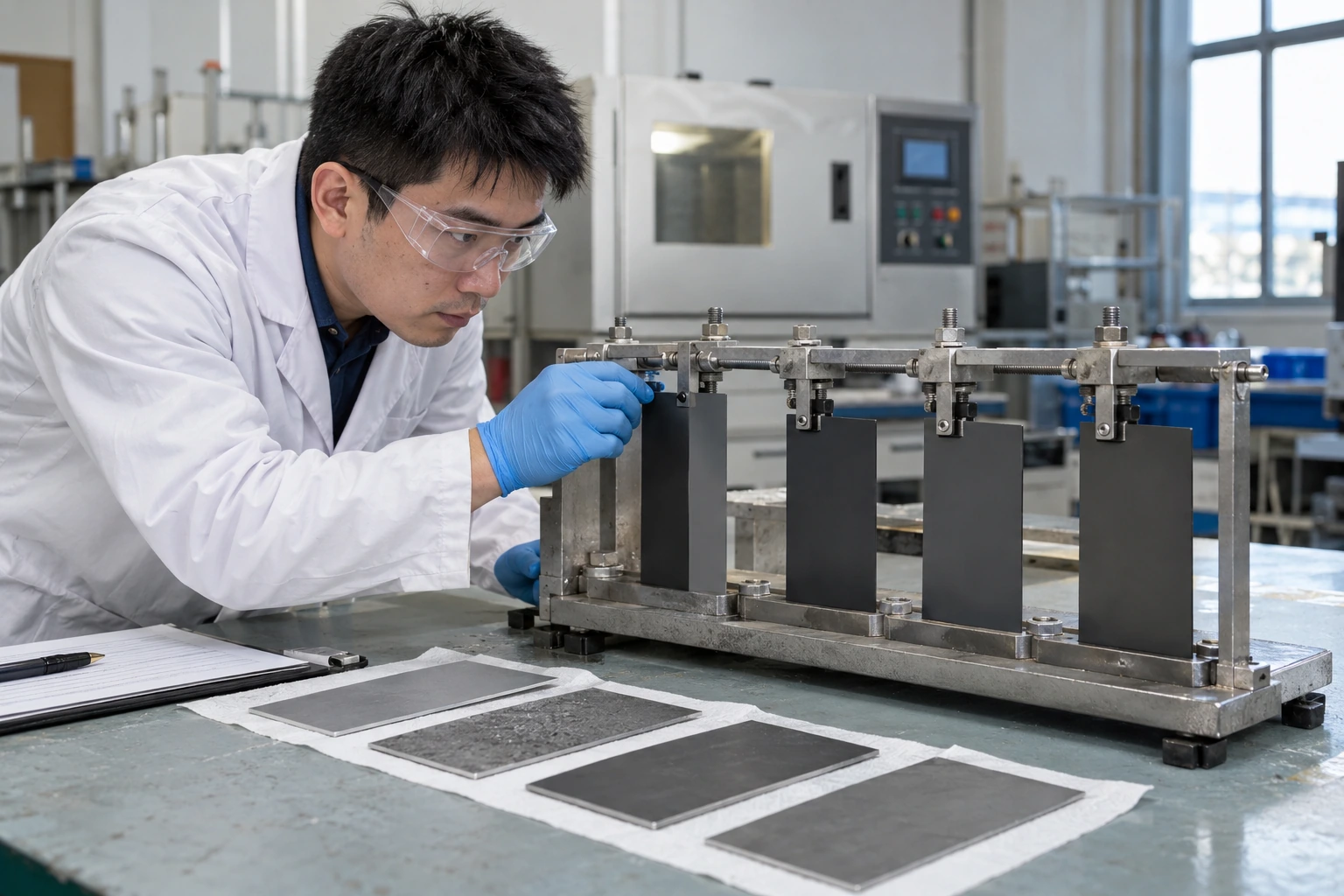
Test Titanium electrode coating adhesion with a method agreed for that coating and geometry. A generic paint test may not suit a thin catalytic oxide on expanded titanium.
What makes an adhesion check interpretable?
Define the stress and the acceptance rule. Ask which failure the method is designed to detect and whether sample preparation changes the surface. Record any destructive consequence before testing production parts.
- Use an agreed fixture and specimen type.
- Record observed failure location and extent.
- Link results with coating-process records where available.
| Check | Decision |
|---|---|
| Method suitability | Connects stress to the coating system |
| Defined endpoint | Makes results comparable |
A pass has meaning only within the method that produced it. Key Takeaway: Approve the method before adding adhesion testing to a supplier checklist.
7. Which Titanium electrode Dimensions Need Inspection?

Inspect Titanium electrode dimensions that control fit, spacing, current connection, and active boundaries. Coating conformity does not compensate for a warped plate or misplaced mounting hole.
How do you choose critical dimensions?
Measure what the assembly depends on. A hole pattern, tab position, or flatness requirement can determine whether a cell can be built. Define datums and measurement methods with your mechanical team.
- Mark critical-to-fit dimensions on the drawing.
- Check active and uncoated contact zones.
- Use a mating fixture when practical.
| Check | Decision |
|---|---|
| Dimensional report | Confirms drawing conformity |
| Assembly fixture | Checks functional fit |
A long inspection report can miss a single dimension that prevents installation. Key Takeaway: Prioritize dimensions by assembly consequence.
8. What Does a Titanium electrode Functional Test Establish?

A Titanium electrode functional test establishes behavior under its recorded cell conditions. It does not automatically prove durability across different electrolytes, waveforms, or geometries.
Which operating details belong in the report?
Keep the test conditions attached to the result. For electroplating and electrowinning duty, bath chemistry and target metal process matter. Compare current, voltage, output, temperature, and surface condition against a qualified baseline.
- State cell geometry and active-area convention.
- Record electrolyte composition and temperature.
- Define test duration and output measurement method.
| Check | Decision |
|---|---|
| Matched test conditions | Allow useful comparison |
| Changed conditions | Require a new interpretation |
A voltage value without its duty data cannot establish coating quality. Key Takeaway: Use functional testing within a bounded acceptance plan.
9. How Many Titanium electrode Samples Should You Test?
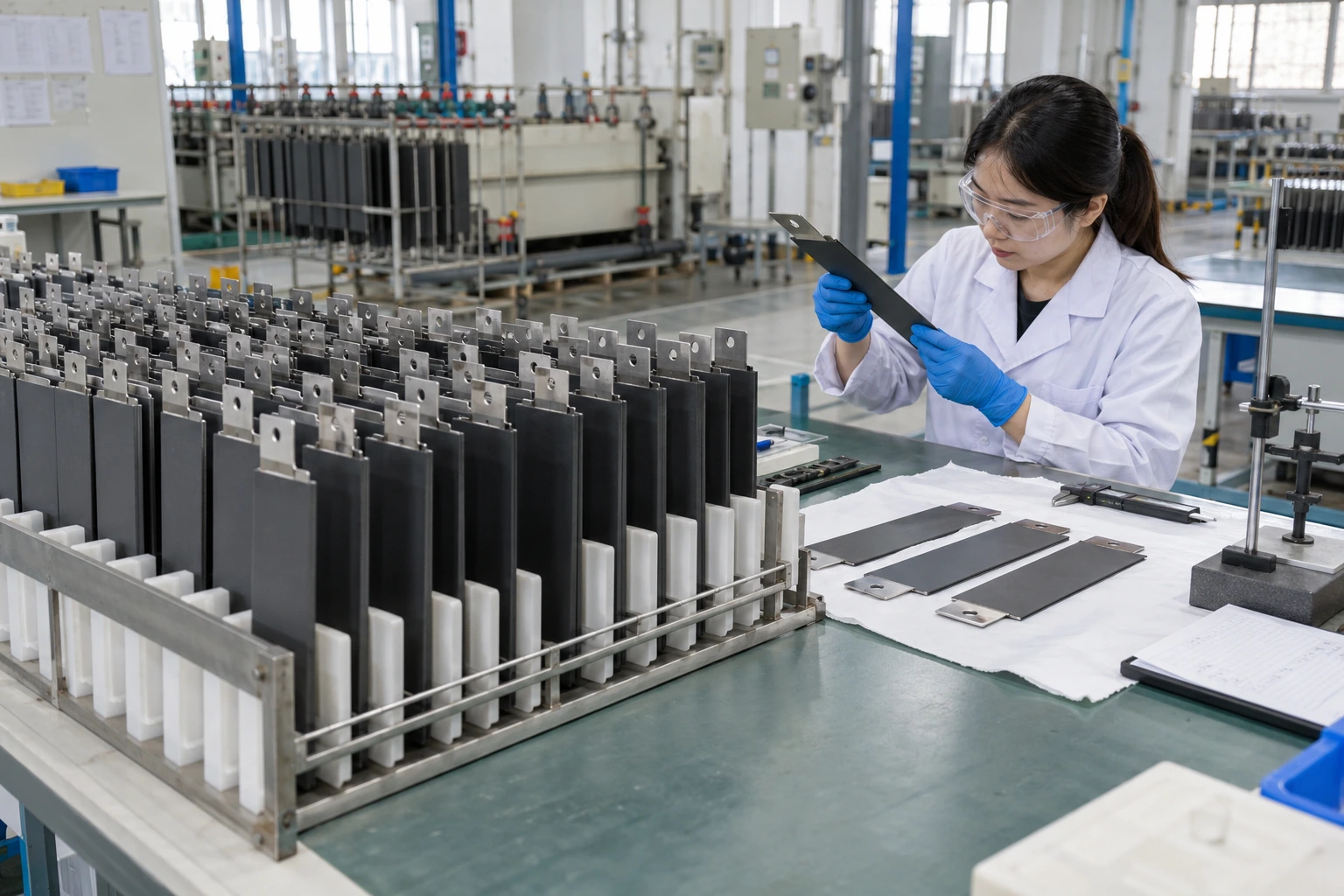
A Titanium electrode sampling plan should reflect batch size, process risk, variation, and test destructiveness. One demonstration sample cannot establish every unit's conformity.
What should the plan make explicit?
Separate process qualification from routine release. Initial validation may need broader evidence than repeat-batch checks. Your quality team should select a documented sampling approach appropriate to failure consequences.
- Define lot boundaries and sample selection.
- Retain representative samples where justified.
- State how a failed sample changes batch disposition.
| Check | Decision |
|---|---|
| Qualification sampling | Examines process capability and variation |
| Routine sampling | Supports controlled batch release |
Increasing sample count without a clear selection method can still miss variation. Key Takeaway: Agree sampling and failure response before shipment.
10. What Titanium electrode Quality Records Should You Request?

Request Titanium electrode records that connect part revision, material identity, coating specification, inspection, and functional evidence. Each document should answer an acceptance question.
How can we help clarify a quality package?
Send the drawing and the checks your cell requires. We can review practical electrode inspection and sample-validation requirements; contact us today with your acceptance criteria. Our position is that a quality claim should be traceable to a method and a part.
- Identify required batch and revision information.
- List analytical methods and operating test conditions.
- Agree deviations and release responsibility.
| Check | Decision |
|---|---|
| Traceable records | Connect evidence to delivered parts |
| Clear acceptance rules | Support a consistent release decision |
This package reduces disputes about what a supplier's test result actually establishes. Key Takeaway: Buy against a defined evidence package.
Frequently Asked Questions
Can I verify MMO coating by looking at its color? No. Visual inspection can find visible defects, but composition and loading need suitable analytical evidence.
What's the best test for coating quality? No single test covers every property. Choose methods for chemistry, coverage, dimensions, adhesion, and application performance.
How do I know if an XRF result is reliable? Review calibration, sample geometry, layer assumptions, and uncertainty. Ask whether the method was qualified for your coating and substrate.
Can I compare coating thickness with coating mass? Only with justified assumptions. Composition, density, porosity, and area convention affect the conversion.
Can I accept a batch because one sample works? Only if that fits your approved sampling plan. A demonstration does not establish every unit's conformity.