
A Titanium electrode cell can generate oxidant for a cooling-water process, but it cannot guarantee growth control by itself. Cooling-water performance depends on demand, injection, mixing, contact, biological indicators, and discharge boundaries; a process owner must define and test the duty.
1. What Does a Titanium electrode Control in Cooling Water?
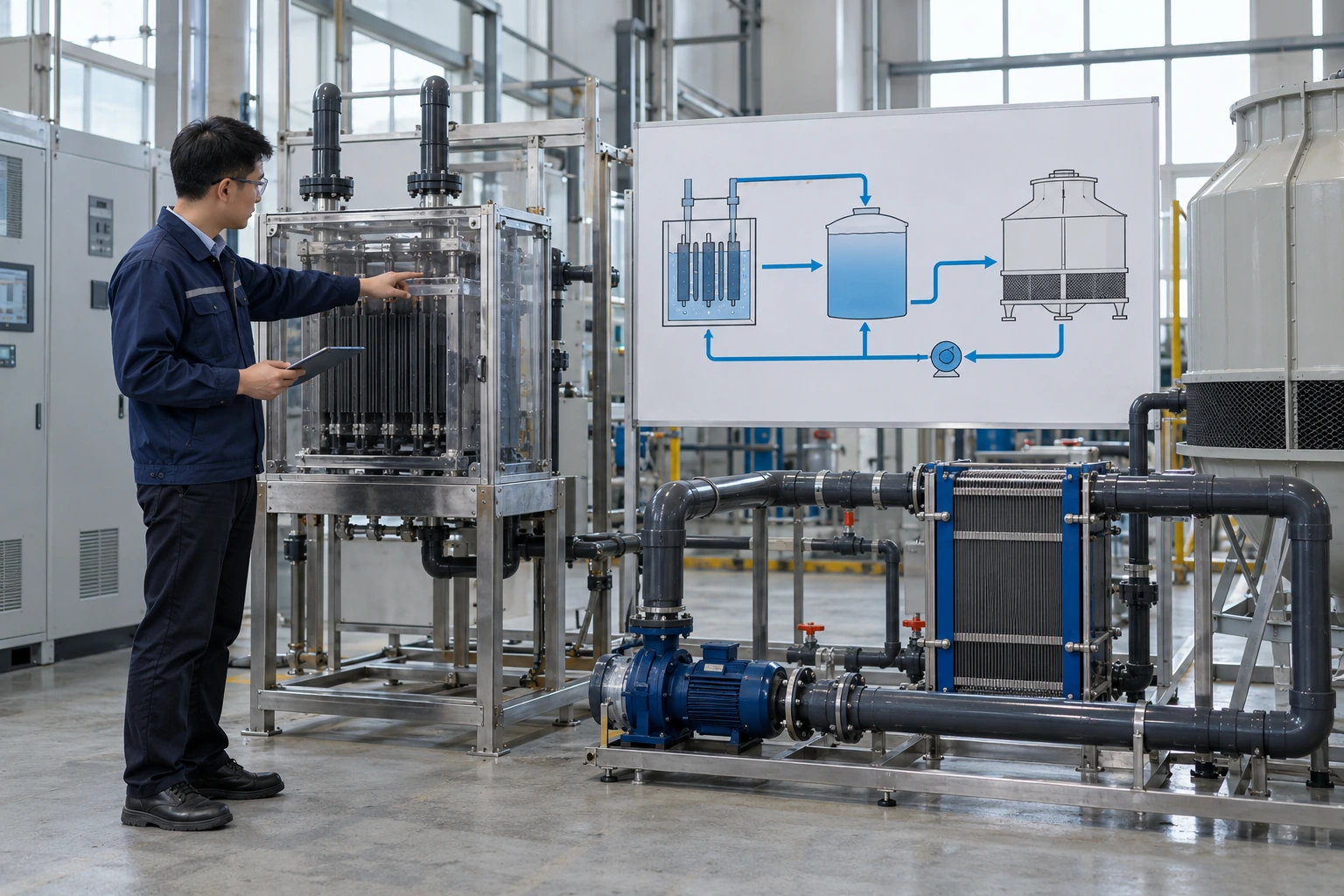
A Titanium electrode can supply an oxidant-generating anode for a cooling-water process, while system conditions determine whether treatment meets its biological objective.
Separate electrode output from biological outcome
A cell generates a chemical input; circulation, demand, contact, and target organisms shape what reaches a fouled surface. Keep process boundaries in view. An electrode drawing cannot prove control in a heat exchanger or tower, and no single result applies across different water systems.
- Name a biological indicator and surface or zone under assessment.
- Separate electrode supply questions from full-system treatment and performance responsibility.
| Check | Decision |
|---|---|
| Electrode role | Oxidant generation |
| System outcome | Measured biological response |
A generator can operate as specified while a process objective remains unverified. Key Takeaway: Define the water-treatment objective before selecting an electrode interface.
2. How Does Oxidant Reach a Titanium electrode Cooling Duty?
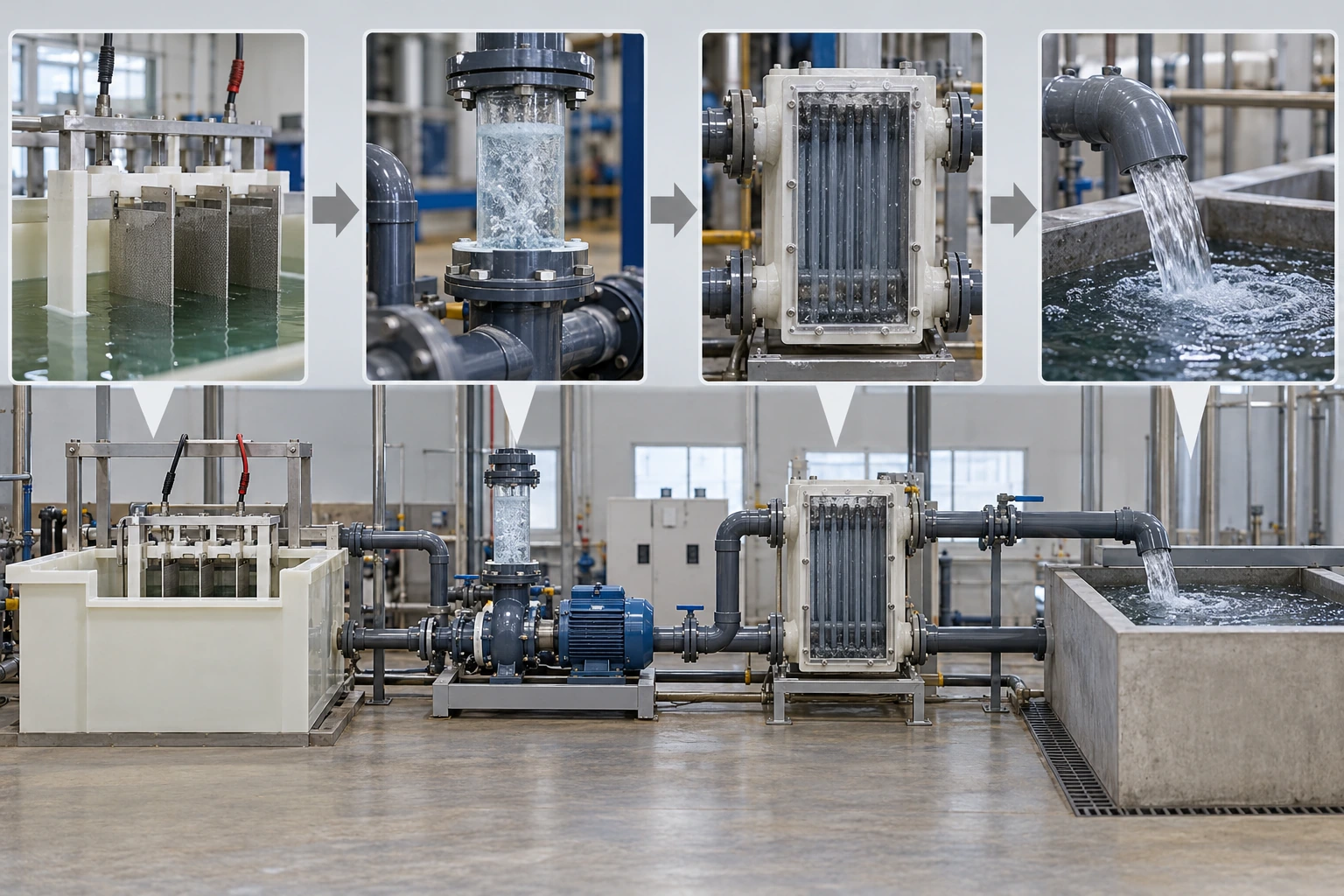
A Titanium electrode cooling-water duty has separate generation, mixing, contact, demand, and monitoring stages.
Trace oxidant through the loop
Treatment begins at generation but ends at a measured point in circulating water. Follow each stage in order. A process-flow diagram should label injection, mixing, contact, and monitoring points so engineers can trace where oxidant reaches its target.
- Map the cell outlet, injection point, mixing zone, target equipment, and sample locations.
- Show flow direction and any side-stream, bypass, or recirculation path.
| Check | Decision |
|---|---|
| Upstream stages | Generation and distribution |
| Downstream evidence | Contact and response |
Distance, flow, and process mixing can separate a cell reading from conditions at a target surface. Key Takeaway: Review circulation paths with cooling-water operators.
3. What Changes Oxidant Demand in a Titanium electrode Loop?
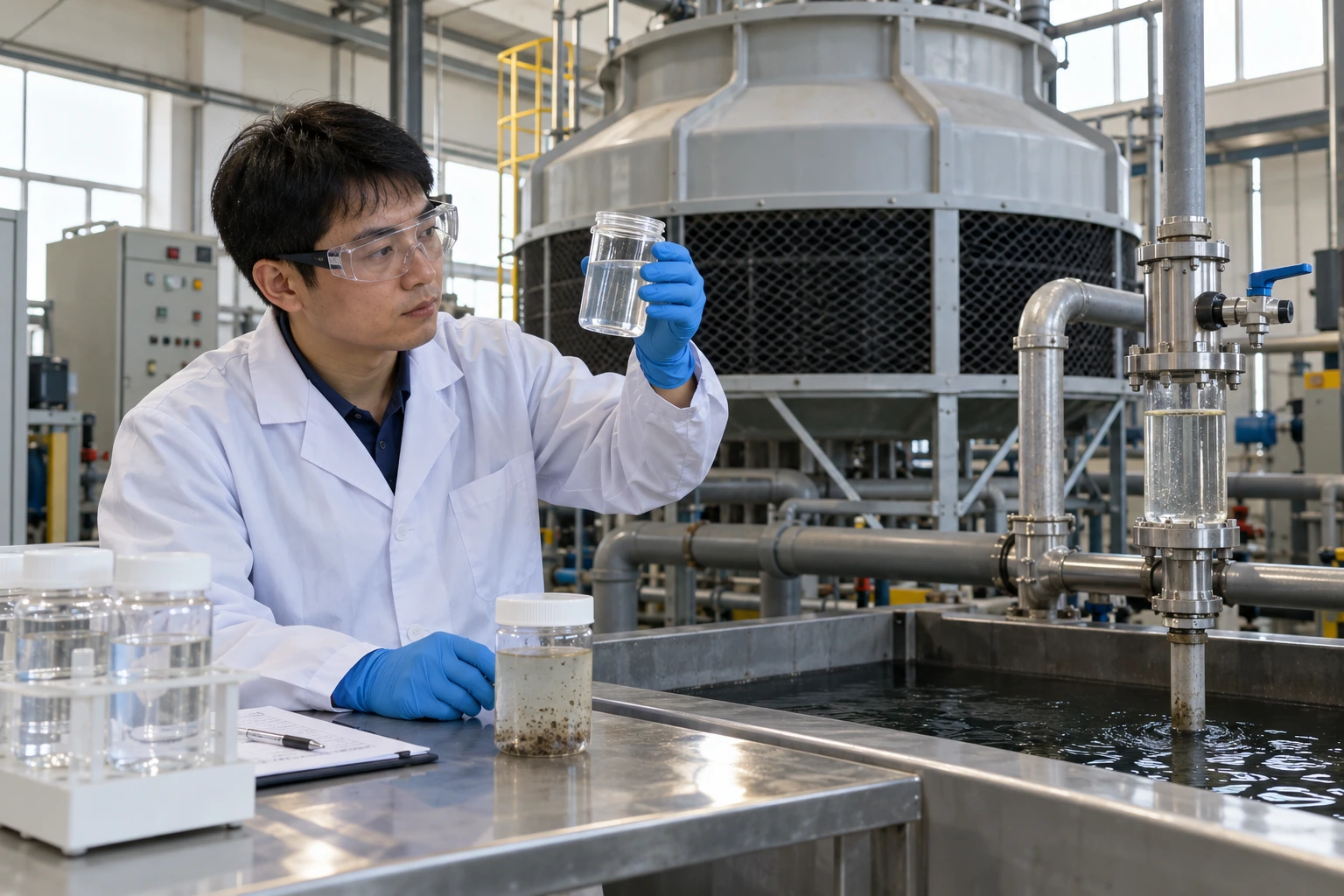
A Titanium electrode oxidant demand changes with water composition, temperature, circulation, and other process conditions.
Collect water data that explain demand
Ammonia, organic matter, suspended material, and changing source water can consume or alter oxidant before it reaches a monitored point. Sample the actual circulating loop. Historical cooling-water studies show strong site variation, so one make-up-water sample cannot represent every circulating condition.
- Include make-up, circulating, and relevant side-stream samples in a site review.
- Record seasonal source changes, process additions, solids, and operating temperature.
| Check | Decision |
|---|---|
| Make-up water | Incoming chemistry |
| Circulating water | Process-conditioned matrix |
Feed water chemistry may differ from conditions around fouled surfaces. Key Takeaway: Use representative loop samples when estimating process demand.
4. Why Does Contact Matter for a Titanium electrode Duty?
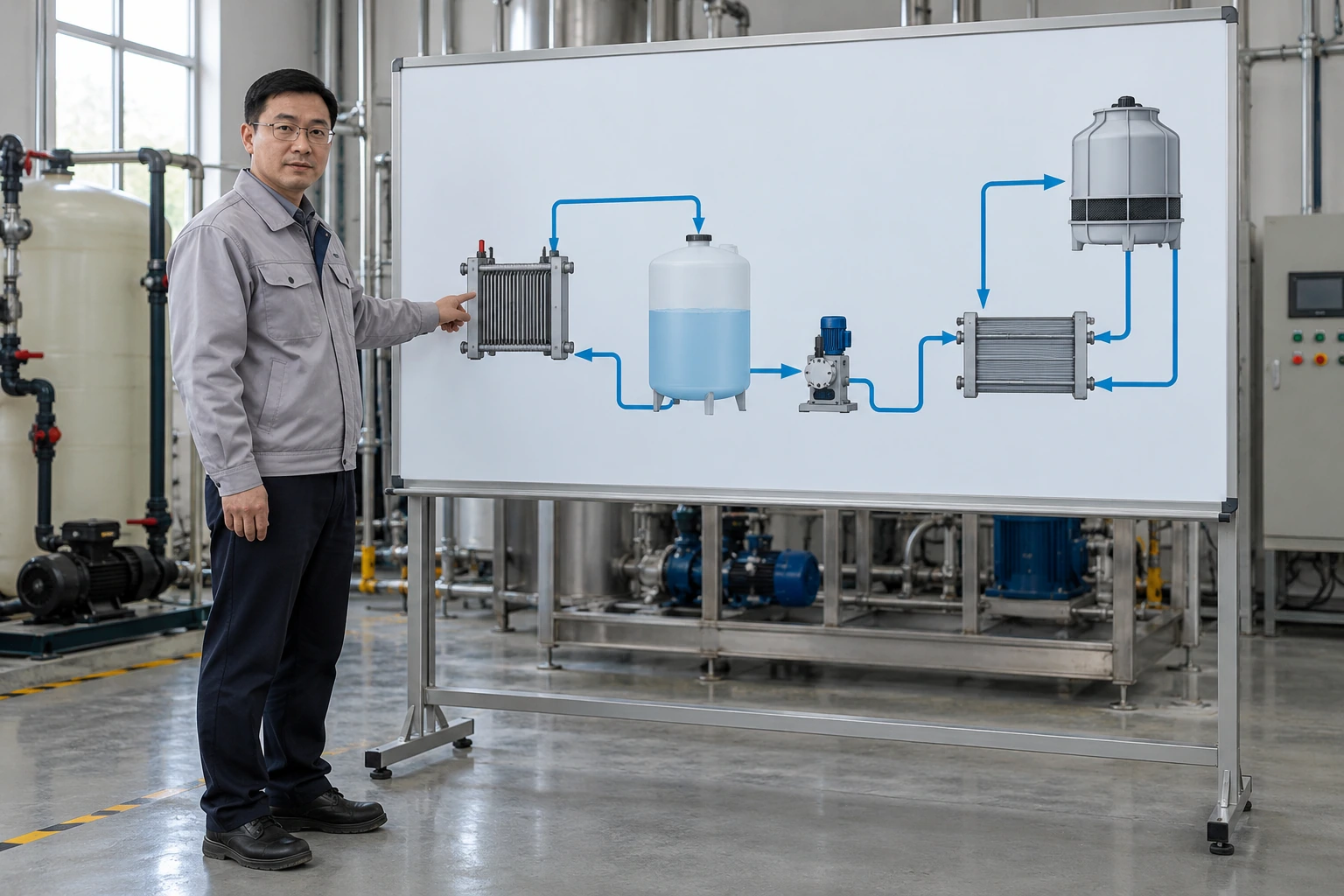
A Titanium electrode application needs sufficient distribution and contact at its target location, which requires evaluation in the operating loop.
Check where treatment meets the target surface
A bulk residual at one point does not describe every branch, exchanger tube, or low-flow zone. Map target access and contact conditions. For a custom cell review, review injection mixing, circulation balance, side-stream flow, and representative sampling locations before interpreting a treatment result.
- Mark low-flow and difficult-to-sample zones on a loop drawing.
- Compare sample points with locations named in the biological objective.
| Check | Decision |
|---|---|
| Injection point | Where oxidant enters |
| Target zone | Where response is assessed |
A well-mixed sample may still miss a shielded or poorly circulated surface. Key Takeaway: Match monitoring points with surfaces or zones under review.
5. How Can Biofilm Affect a Titanium electrode Treatment?
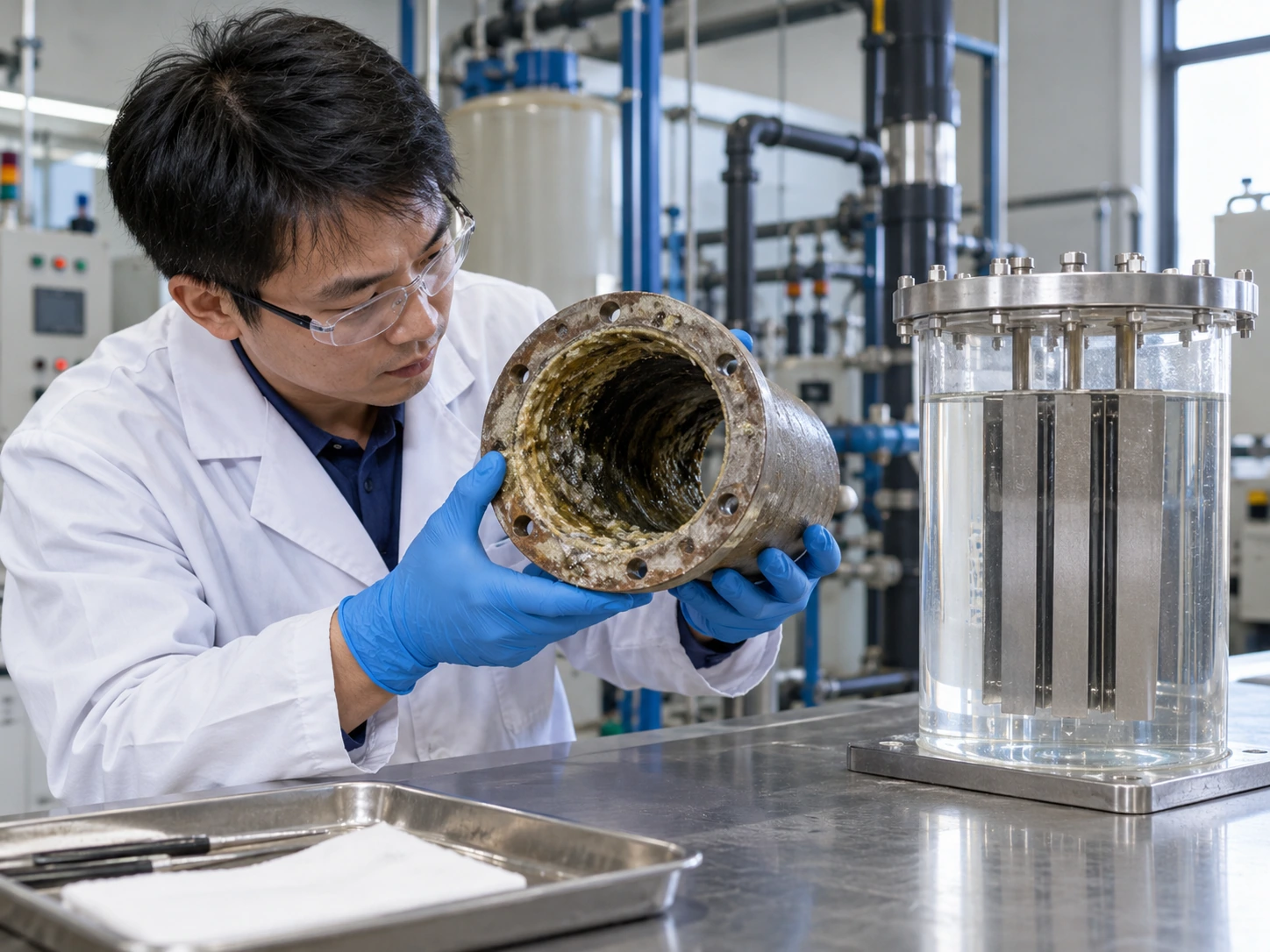
A Titanium electrode treatment review should account for deposits and biofilm because surface condition can change exposure and sampling interpretation.
Inspect the surface as well as the water
Deposits, scale, and established biofilm create a different boundary from clean bulk water. Keep surface evidence alongside chemistry. A coupon, inspection, or biological test may answer different questions; define methods and locations before comparing results.
- Document surface condition and cleaning history near each monitoring point.
- Use an agreed biological method instead of treating visual appearance as a complete efficacy result.
| Check | Decision |
|---|---|
| Bulk water | Chemistry at sample point |
| Surface evidence | Condition at target area |
A clean water sample does not establish what remains on an exchanger surface. Key Takeaway: Pair water measurements with a defined surface or biological indicator.
6. What Should Sampling Show for a Titanium electrode Loop?
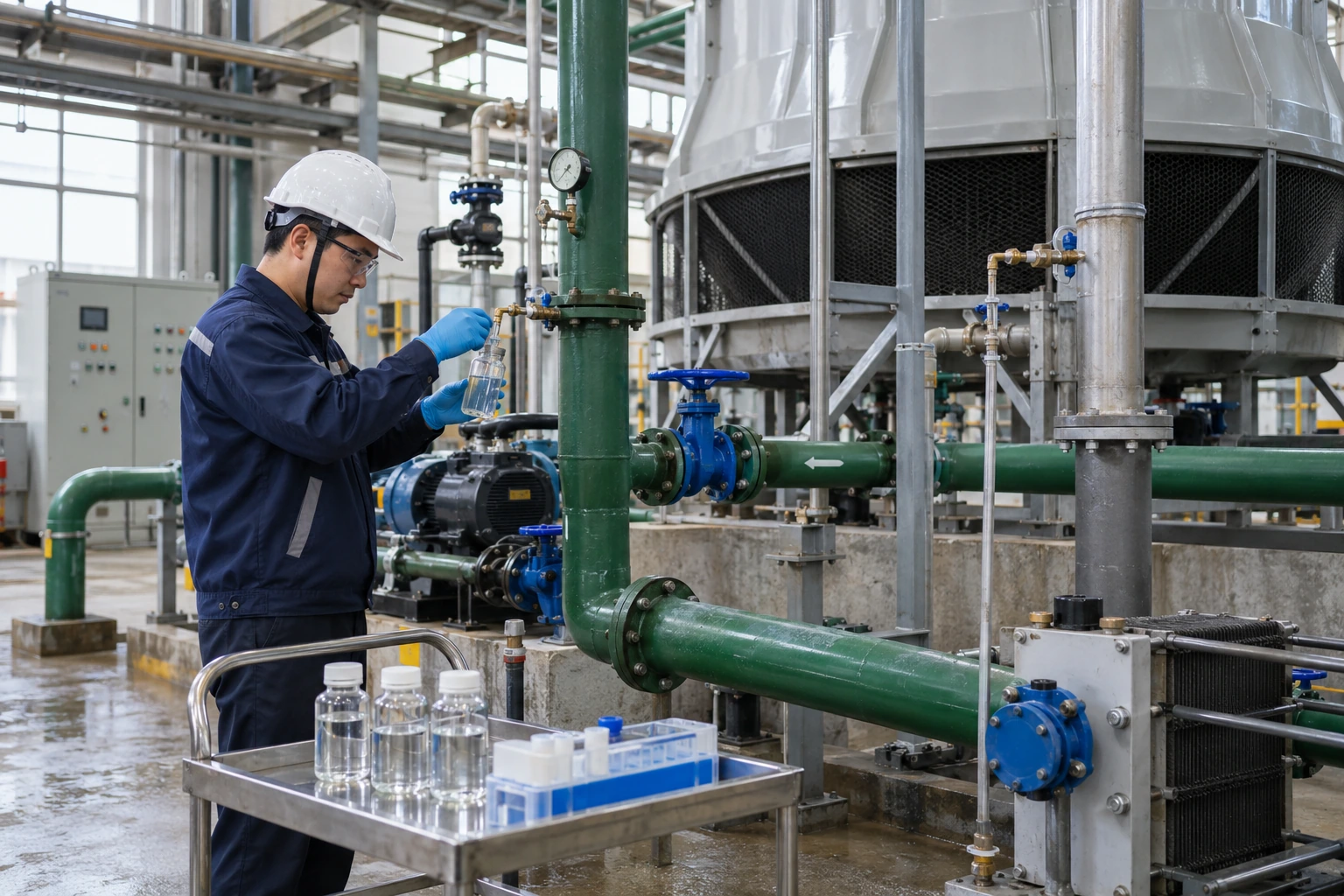
A Titanium electrode loop sample plan should capture supply, return, and treatment-relevant locations under documented circulation conditions.
Make each sample answer one process question
Sampling near injection can characterize a concentrated local zone, while return or side-stream samples describe different exposure histories. Label each sample with its process location. Keep collection time, flow state, method, and sample handling with every result.
- Pair supply and return samples where the loop question requires comparison.
- Repeat measurements under the same operating mode before interpreting a trend.
| Check | Decision |
|---|---|
| Supply point | Condition before loop passage |
| Return point | Condition after circulation |
Samples from different locations cannot be treated as a before-and-after pair without context. Key Takeaway: Agree on the sample map before starting a cooling-water trial.
7. How Should a Titanium electrode Growth Indicator Be Read?
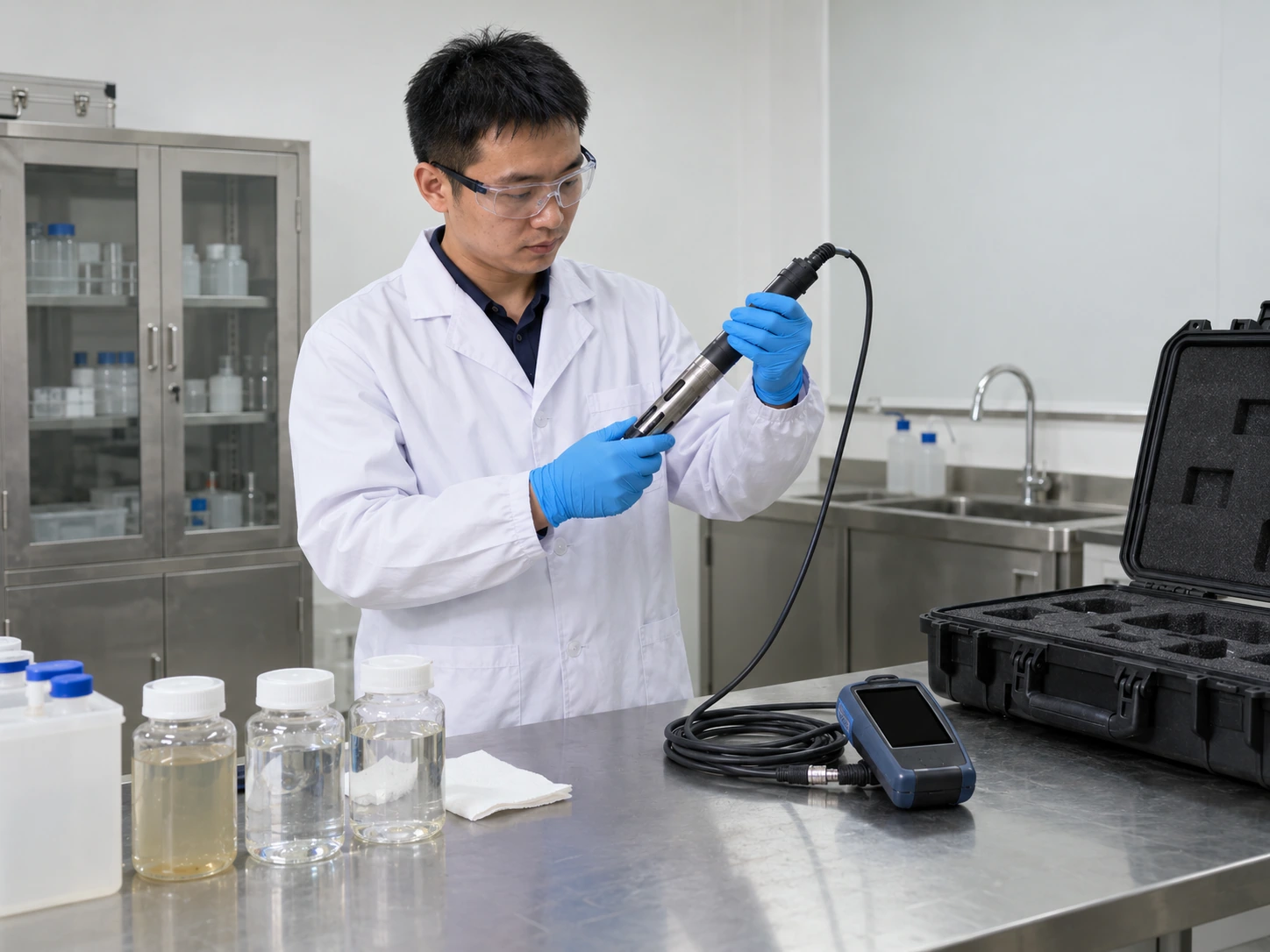
A Titanium electrode growth indicator should be interpreted alongside water chemistry, surface condition, flow, and the study's stated endpoint.
Use indicators that match the biological question
Visual deposits, microbial assays, heat-transfer observations, and oxidant measurements do not measure the same outcome. Keep indicators in their lane. Choose a method with the facility's water-treatment specialist, then record what each result can and cannot establish.
- State whether the goal concerns deposits, attached growth, suspended organisms, or equipment operation.
- Keep biological, chemical, and operational results in separate fields before drawing conclusions.
| Check | Decision |
|---|---|
| Biological measure | Organism or growth response |
| Operating measure | Flow or equipment behavior |
A lower reading on one indicator cannot stand in for every biological or equipment outcome. Key Takeaway: Define success with the process owner before reviewing trial results.
8. Which Discharge Questions Fit a Titanium electrode Review?

A Titanium electrode cooling-water review must identify the discharge point, receiving boundary, and site-specific permit conditions.
Keep treatment duty inside the discharge boundary
Oxidant management and discharge approval belong to facility process and environmental owners. Define permit boundaries before sampling. For a water-treatment duty, provide the blowdown route, receiving-water context, sampling point, and permit owner; no universal residual limit applies across facilities.
- Identify whether water is recirculated, reused, or discharged and where that boundary lies.
- Have the facility owner confirm applicable permit terms and measurement requirements.
| Check | Decision |
|---|---|
| Process boundary | Blowdown or reuse route |
| Review owner | Facility environmental lead |
A treatment result inside a loop does not by itself establish discharge compliance. Key Takeaway: Keep discharge endpoints inside application review.
9. What Data Define a Titanium electrode Cooling Trial?

A Titanium electrode cooling trial needs a baseline, representative operating cases, agreed indicators, and a sampling plan before treatment changes begin.
Design a trial around a decision
A team should define which uncertainty a trial can resolve, such as demand variation, contact, surface response, or measurement reliability. Record the decision in a study brief. Note normal loop operation and water conditions so the trial has a useful comparison case.
- Document baseline chemistry, circulation, surface condition, and current biological indicators.
- Agree on sample frequency, methods, data review, and the party responsible for interpretation.
| Check | Decision |
|---|---|
| Baseline | Current loop evidence |
| Trial record | Changed condition and response |
A trial without a baseline can confuse seasonal change with treatment response. Key Takeaway: Approve the study method with operations and environmental reviewers before testing.
10. What Should Buyers Specify for Titanium electrode Cooling Duty?

A Titanium electrode cooling-duty request needs water analysis, loop drawings, target surfaces, operating patterns, discharge boundaries, and defined evidence.
Send the application context with the electrode request
Share the cell interface, process flow, materials, chemistry, biological objective, sample plan, and discharge owner. Keep component scope clear in each request. For an electrode discussion, contact us today with those records; ARY Titanium can review titanium electrode products, while full-system performance remains project-specific.
- Attach water reports, loop drawings, current treatment arrangement, and target monitoring points.
- Name the process and environmental owners who will approve an application trial.
| Check | Decision |
|---|---|
| Buyer input | Water, loop, target |
| Review outcome | Interface or study gap |
An electrode product review cannot replace cooling-water process design or biological verification. Key Takeaway: Request a product review after defining the trial boundary and endpoint.
Frequently Asked Questions
Can I use a titanium electrode to guarantee cooling-water growth control? No; oxidant generation alone cannot establish biological control across a cooling-water loop.
What's the best sample point for a cooling-water trial? A suitable location depends on the target zone and process question. Map injection, supply, return, and surface-monitoring points before testing.
How do I know if oxidant reaches a fouled surface? Pair loop-flow review and representative water samples with a defined surface or biological indicator at the target equipment.
Can I use one residual target for every cooling-water loop? No; water chemistry, process objectives, and discharge conditions vary by site. Confirm criteria with responsible process and environmental owners.
How do I know if an electrode fits my cooling-water project? Provide cell geometry, water analysis, loop flow, target surface, monitoring plan, and discharge boundary for application review.