
A Titanium electrode system can address variable demand by separating cell production from process feed schedules. Staging or storage depends on approved design. Buyers need a demand profile, cell operating envelope, and evidence plan before they request a turndown range.
1. What Does Variable Demand Mean for a Titanium electrode?

A Titanium electrode system faces variable demand when the process consumes hypochlorite at a changing rate while cell production follows its own operating conditions.
Separate production timing from feed demand
A generation cell produces solution; a downstream metering system delivers it as process demand changes. Draw production and feed rates together. If product storage sits between them, tank inventory can absorb timing differences, although it cannot prove that the cell has an unlimited turndown range.
- Sketch cell production, storage level, and process feed on the same time axis.
- Record peak, typical, and low-demand periods from real site operation.
| Check | Decision |
|---|---|
| Cell production | Equipment operating rate |
| Process feed | Changing use rate |
A demand curve does not automatically become a cell operating specification. Key Takeaway: Compare demand with the cell's documented operating envelope.
2. Why Does Titanium electrode Output Have an Operating Window?
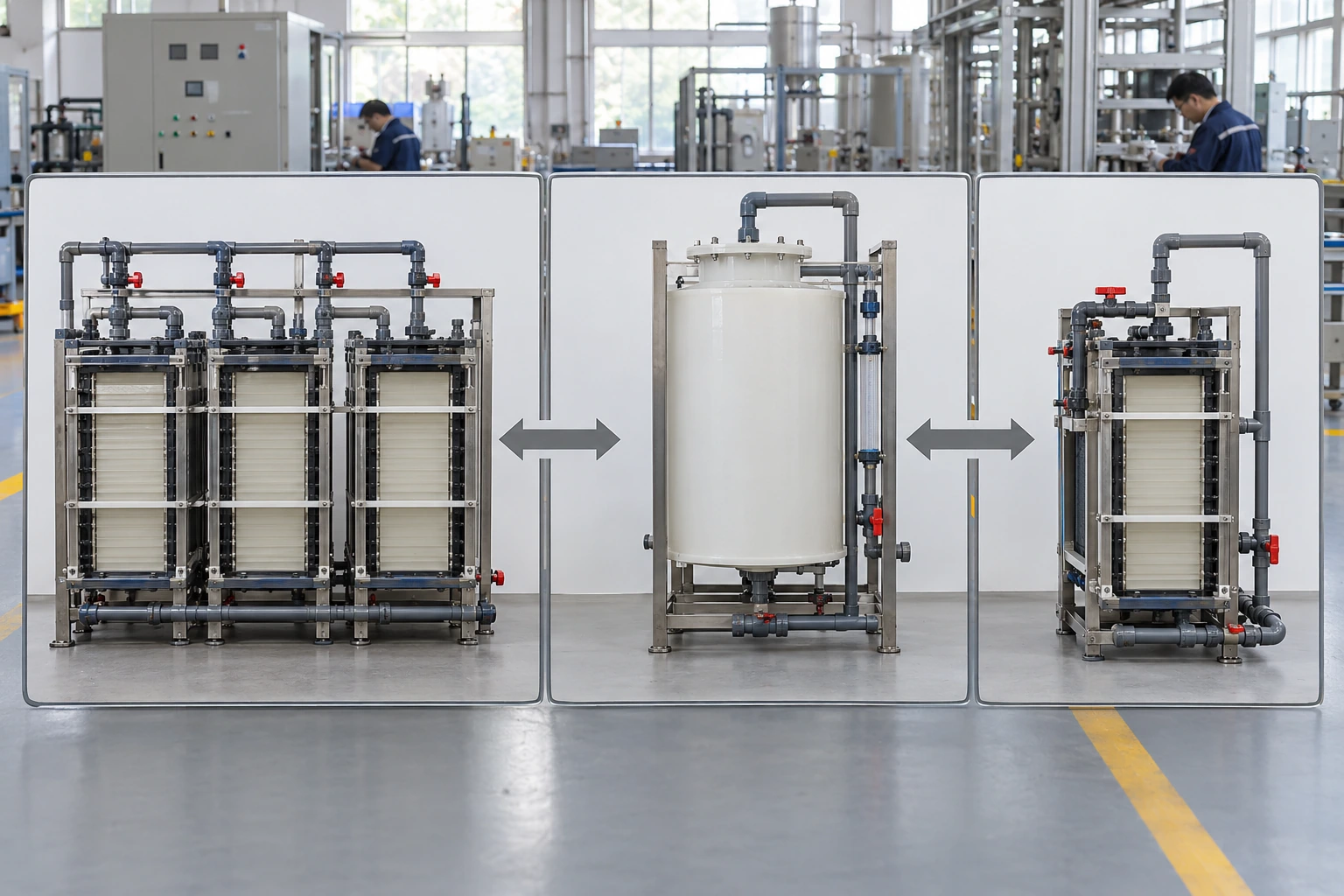
A Titanium electrode cell has an operating window defined by its design, feed conditions, electrical input, flow, and product requirements.
Ask what remains stable at each operating point
A lower current or changed flow may alter product concentration, temperature, gas behavior, or other conditions for that specific system. Stay within supplier-qualified operating conditions. An operator should not infer a new minimum setting from one stable observation at a different load.
- Request the equipment supplier's approved production and standby modes.
- List which product properties and process conditions must remain within acceptance criteria.
| Check | Decision |
|---|---|
| Operating mode | Supplier-qualified range |
| Acceptance evidence | Measured output and conditions |
A low production rate may still fail a product or process requirement. Key Takeaway: Define minimum operation by evidence and supplier approval, not assumption.
3. Which Conditions Define a Titanium electrode Operating Window?

A Titanium electrode operating window depends on feed-water quality, flow, electrical conditions, cell configuration, and required product strength.
Name the inputs that set the window
An archived system evaluation tied product concentration to feed-water and electrical conditions, showing why another installation needs its own documentation. Keep each input beside measured output. Add water analysis, flow range, current or power conditions, temperature, and method used for product measurement to the review.
- Collect representative feed-water data and identify expected seasonal changes.
- Ask which measurements establish stable operation at low, typical, and high demand.
| Check | Decision |
|---|---|
| Input record | Water and cell conditions |
| Output record | Product and flow evidence |
Two cells with similar nameplate capacity may not share the same qualified operating window. Key Takeaway: Tie every requested production point to its feed and measurement conditions.
4. How Can Staging Support Titanium electrode Demand Changes?
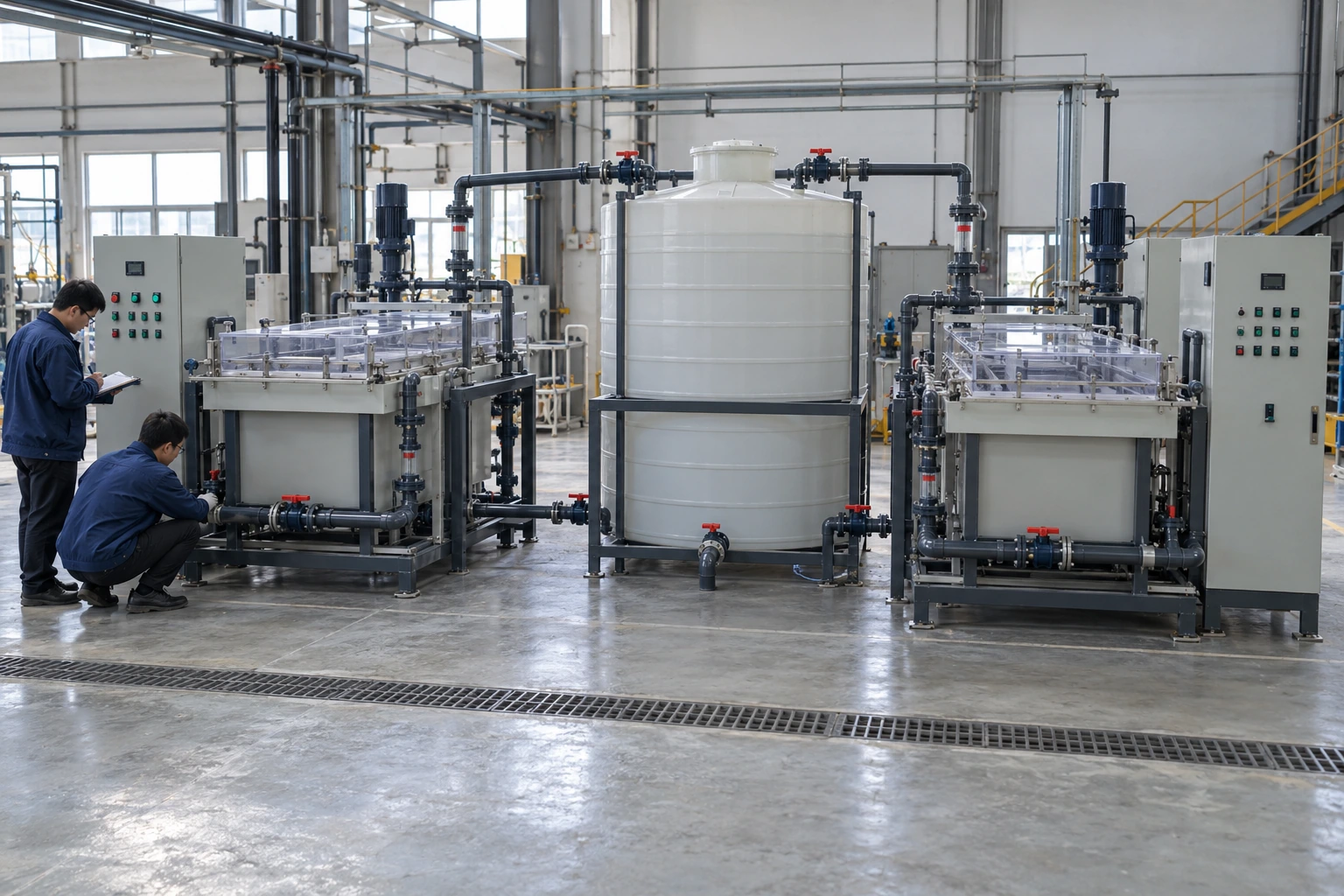
A Titanium electrode system may use staged modules when a supplier-designed configuration supports switching units around changing demand.
Compare staging with single-cell modulation
Parallel units can offer a way to match capacity in some system designs, while a single cell still needs an approved operating range. Compare the whole arrangement before selecting. For a custom cell review, share unit count, duty schedule, storage role, and control boundaries rather than asking only for a turn-down percentage.
- Ask whether staging, standby, or batch operation belongs to the selected generator design.
- Define who owns unit sequencing, minimum run conditions, and product-quality checks.
| Check | Decision |
|---|---|
| Staged units | Capacity changes by module |
| Single cell | Within approved modulation range |
Adding a module changes equipment scope, controls, maintenance, and available operating modes. Key Takeaway: Review staging as a system choice, not an electrode-only feature.
5. How Does Buffer Storage Separate Titanium electrode Production?
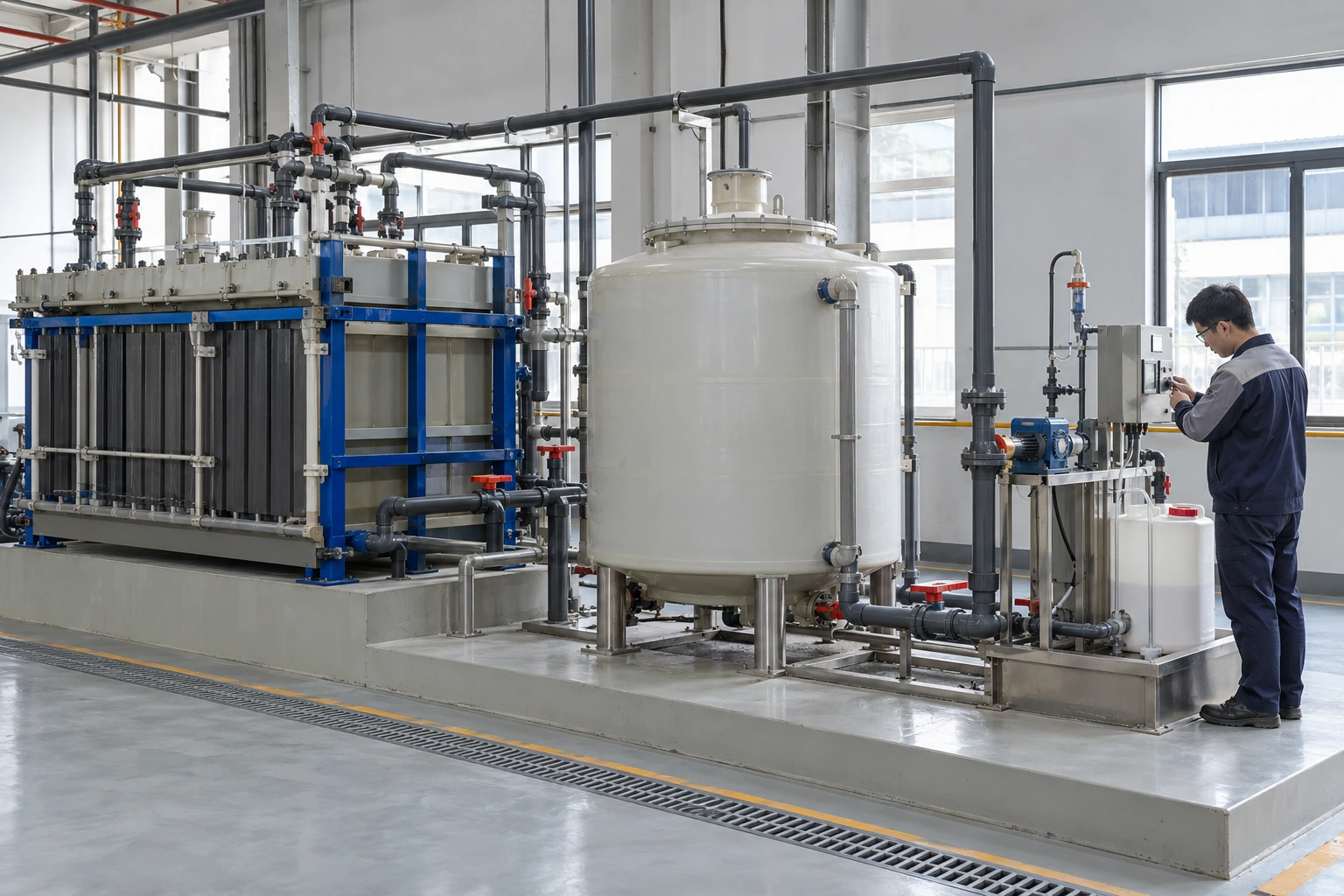
A Titanium electrode buffer tank can separate generation timing from process feed timing when its design, gas handling, and product quality permit storage.
Use storage for timing, not as a hidden guarantee
A tank can hold product made during a production cycle and supply a later demand peak. Track strength as well as level. Storage age, turnover, and sampling remain relevant, so available volume alone cannot prove that every litre meets the process target.
- Compare tank inventory history with production batches and metered feed.
- Include product assay and storage review alongside volume and level data.
| Check | Decision |
|---|---|
| Tank level | Available volume |
| Product assay | Measured solution strength |
A buffer can smooth schedules while product chemistry continues to change during storage. Key Takeaway: Specify storage and assay rules with the demand profile.
6. What Changes at Low Titanium electrode Demand?
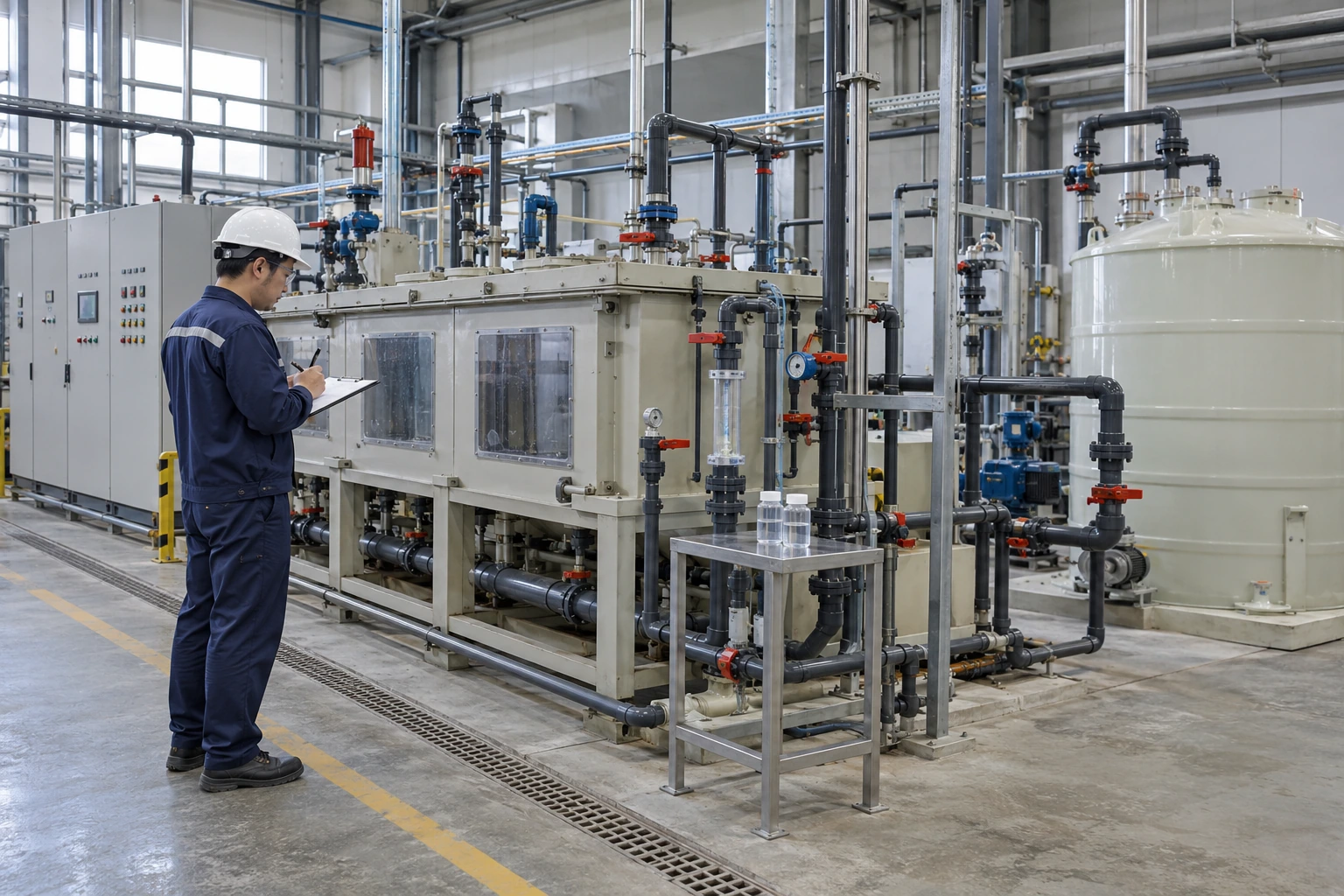
A Titanium electrode system at low demand may spend more time in standby or storage cycles, depending on its approved control design.
Check standby and restart behavior
Long idle periods can affect product age, start sequence, flushing, and the point where operation resumes. Review expected transition cases with the supplier. Ask the manufacturer how its selected cell handles standby, restart, repeated short batches, and low inventory.
- List expected low-demand duration and the likely restart frequency.
- Confirm which startup checks and product tests apply after extended standby.
| Check | Decision |
|---|---|
| Low-demand period | Standby or reduced operation |
| Restart | Supplier-approved sequence |
A stable continuous run does not describe every stop-and-start pattern. Key Takeaway: Qualify transitions that site operators expect to use.
7. How Should a Titanium electrode Control Signal Be Reviewed?
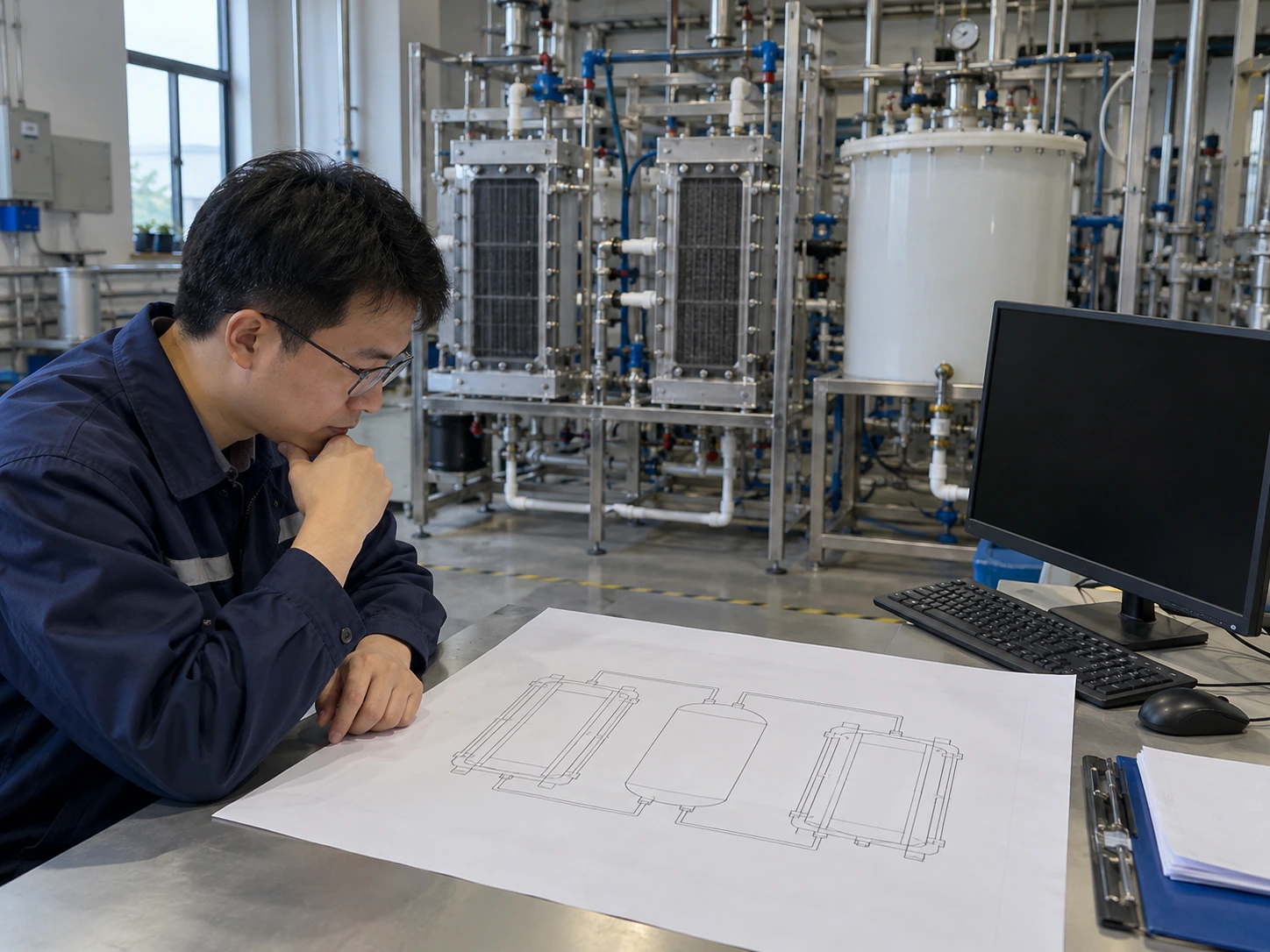
A Titanium electrode control signal should coordinate demand, storage, production permission, and verified product conditions within the supplier's design.
Review the signal path and its owners
Demand may originate from a process flow, schedule, or tank level, while cell production follows its defined control logic. Map each handoff across signal boundaries. Ask which instrument starts generation, which confirms product availability, and which owner approves any control response.
- Draw demand input, cell command, tank level, product verification, and feed output.
- Identify who maintains each signal and who reviews abnormal or missing data.
| Check | Decision |
|---|---|
| Process input | Demand or inventory |
| System response | Approved mode transition |
A connected signal does not establish that every operating mode has been qualified. Key Takeaway: Document each control responsibility before defining an operating range.
8. What Should a Titanium electrode Range Qualification Record?

A Titanium electrode range qualification should record measured product, feed conditions, operating mode, and acceptance method at each requested demand point.
Make every range claim traceable
A qualification record should show how samples were collected and what operating conditions existed when they were measured. Keep the test case reproducible in records. For a water-treatment duty, align product targets, water analysis, flow, temperature, control mode, and acceptance owner before a trial.
- Define stable-operation criteria for each demand case before testing begins.
- Keep out-of-range conditions and instrument uncertainty visible in the final record.
| Check | Decision |
|---|---|
| Test case | Demand and cell mode |
| Evidence | Sample method and result |
A turndown ratio without a test method or product boundary is difficult to compare. Key Takeaway: Require a documented operating envelope before accepting a range claim.
9. Which Data Should a Titanium electrode Trial Collect?

A Titanium electrode trial should collect time-linked demand, production, tank, feed-water, electrical, and product-quality data.
Choose records that answer a real design question
Collect only data needed for the requested comparison, but preserve enough context for explanation. Let each question set its log fields. Avoid interpreting an isolated low-demand period without feed, inventory, and measurement history around it.
- Pair cell conditions and product assays with process demand and tank records.
- Keep sample method, time, and operating mode in each data row.
| Check | Decision |
|---|---|
| Cell record | Mode and feed conditions |
| Process record | Demand and product quality |
Paired data can show whether storage or cell operation created the observed response. Key Takeaway: Agree on trial data and sample boundaries with the process owner.
10. What Should Buyers Define for Titanium electrode Turndown?

A Titanium electrode turndown request needs a demand profile, operating envelope, storage strategy, and measurable acceptance criteria.
Send the range request with its process context
Share the lowest and highest expected demand periods, water analysis, cell layout, product target, storage role, and control boundary. Make each requested range testable before review. To discuss an electrode interface, contact us today with current drawings and the generator's approved operating documents; ARY Titanium does not claim a turnkey electrochlorination system.
- Attach demand history, process flow, cell information, and storage details.
- Separate electrode fit from generator capacity, controls, and process qualification.
| Check | Decision |
|---|---|
| Buyer input | Demand and system envelope |
| Review outcome | Interface or evidence gap |
An electrode review cannot establish a generator's capacity or control range by itself. Key Takeaway: Request a review after the process boundary and acceptance method are defined.
Frequently Asked Questions
Can I assume one cell can run at any low current? No; minimum operation depends on cell design, feed conditions, product target, and its approved operating envelope.
What's the best way to handle changing hypochlorite demand? A suitable approach compares qualified production range with demand history, then reviews staging or storage allowed by that design.
How do I know if storage can cover demand peaks? Compare inventory, turnover, product assay, and peak feed history. Tank volume alone does not prove usable supply.
Can I use parallel cells to improve turndown? Some manufacturers offer modular parallel arrangements, but unit sequencing and operating modes must be confirmed for the selected system.
How do I know if a turndown claim is qualified? Ask for a test record that connects demand, cell conditions, sample method, product results, and acceptance criteria across the claimed range.